The truck was taken to a repair shop late Tuesday (35 miles away, because insurance). We’re hoping the estimate will be completed by the end of Monday. Once that is in, we’ll learn if the truck will be fixed or if insurance will deem it a total loss. If a total loss, we will need to start looking for a replacement truck asap.
We’re in a hotel until Monday, at which point we’ve hired a tow truck to pick up the trailer and tow it to a nearby campground that allows you to stay up to 30 days. That will reduce our out of pocket expenses significantly (hotel and eating out) and give us plenty of leeway, if the truck is to be repaired.
The biggest downside is that the weather looks like it’s going to fall apart for the next week or so. Back to the layer cake of blankets, movies, and lots of day trips to keep warm and dry. Someday we’ll laugh about all this inconvenience and hassle.
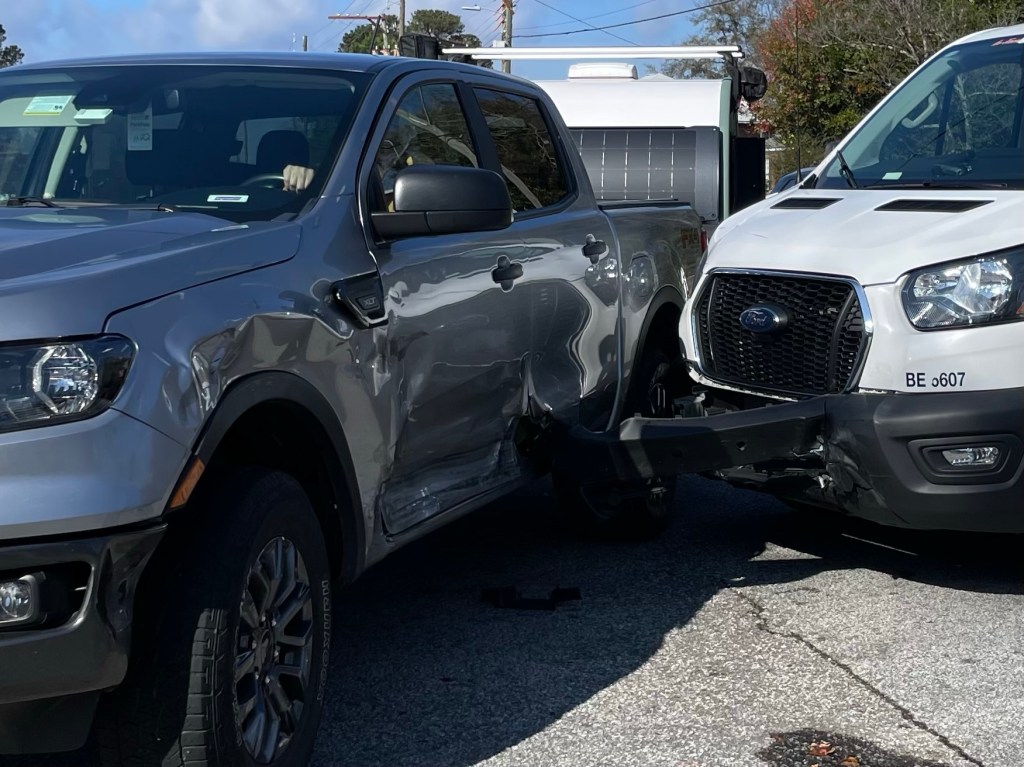
Around 11:30 am, a driver ran a red light and crashed into the side of the truck. There is extensive damage to at least four panels, the front wheel, maybe the tie rod, and possibly the electrical system. At this point, we don’t have any idea of when it’ll be repaired or if it’s going to be considered a total loss. The trailer was thankfully unaffected. That would have been a true disaster, in our opinion.
We appear to be fine physically. I’m sure Jeff will be pretty sore and achy over the next 48-72 hours. We’re in a hotel until we can talk with our insurance agent on Monday morning. We have no further info at this time. Fingers crossed, everyone, for the best possible outcome. I’m hoping that we can find some humor in the situation in the future. We’re not there yet.
I’ll put something up soon about last week’s campground. It was a nice, relaxing one.
We fairly raced south from Kentucky. The weather projections were looking quite bad across KY, with heavy rain and extreme cold in the forecast, even the possibility of tornadoes in northern Tennessee. Waking early, we slid well south to Chattanooga and set up camp for a week.
How’d we fare? Well, the rain missed us. The cold didn’t. Like the rest of the region, we were below freeing for two nights and barely made it above freezing the day in between. We made that day our Planet Fitness, laundry, and library day. Back at the trailer, we watched a few downloaded episodes of Ken Burns’ epic Civil War series, had easy snack-style meals, and cuddled up under a layer cake of blankets. All in all, we made do. My heart went out to the campers trying to stay warm in tents on those cold, cold nights.
If living in the road has taught me anything so far, it’s that there’s a wide difference among laundromats. While I’m not yet a laundromat connoisseur, I feel I will be by New Year’s Eve. My essentials are: scrupulously clean machines, a working change machine, and very few machines out of order. An owner on duty and credit card readers on the machines are a huge bonuses, and the more clothes trolleys available the better. I despise tv’s at the laundromat almost as much as I hate the invasive Asian beetle.
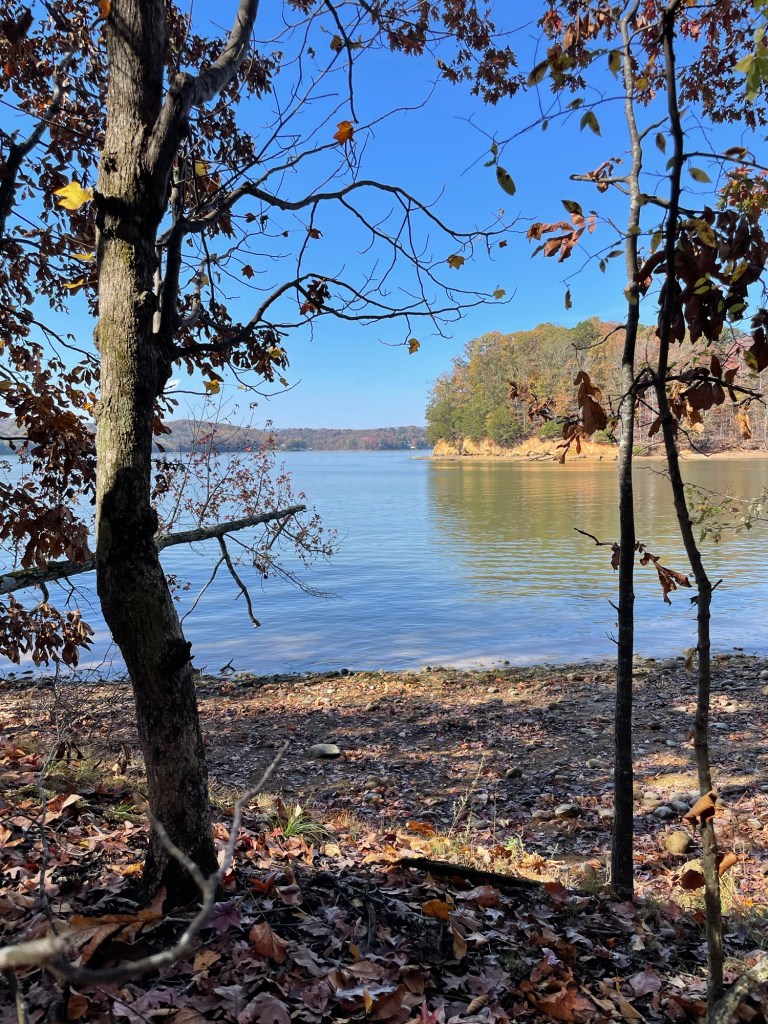
Since much of Harrison Bay State Park is near the shores of a massive reservoir, its hiking trails tend to hug the waterline. On the nicer days, we rode our bikes around, walked all the trails, and read about astronomy and the night sky by following their cute little Star Walk path. It had lots of informational boards and talked about the wide variety of problems associated with light pollution.
Did any of you happen to see the recent auroras? Sadly, we missed them.
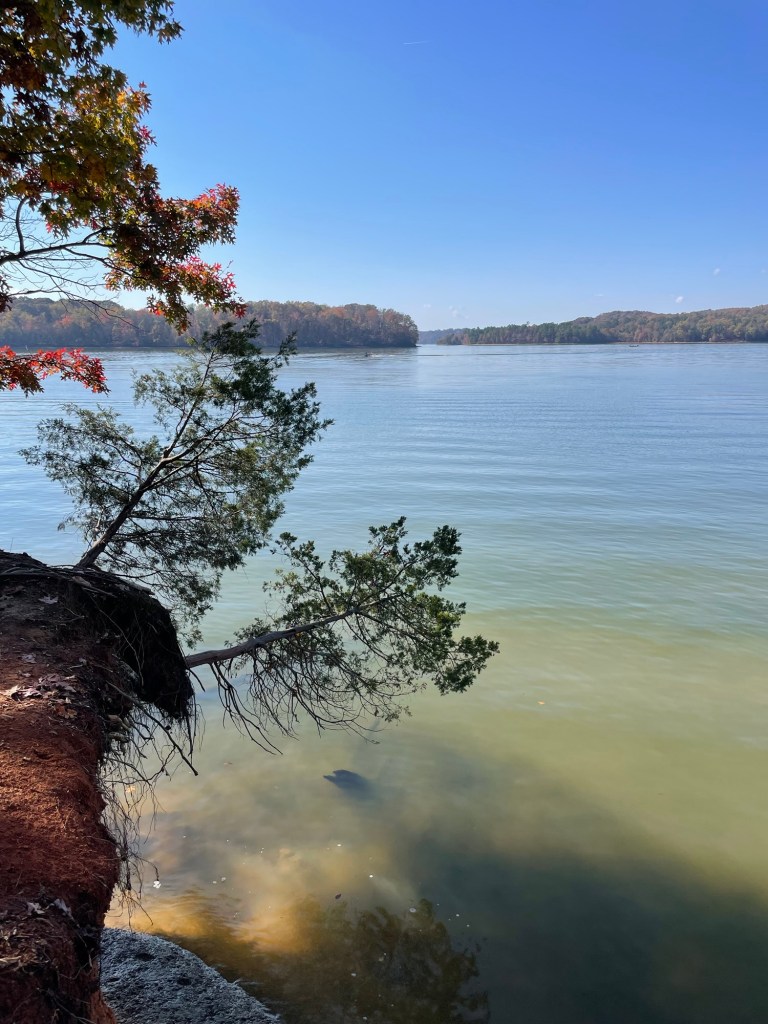
The park’s shoreline is getting undercut and eroding away in several spots, leaving trees like these reaching out above the water. For now.
Driving in, we saw that the park opened in 1937, the same year that the Ohio River had its devastating flood. Things are starting to knit together in my mind’s history calendar.
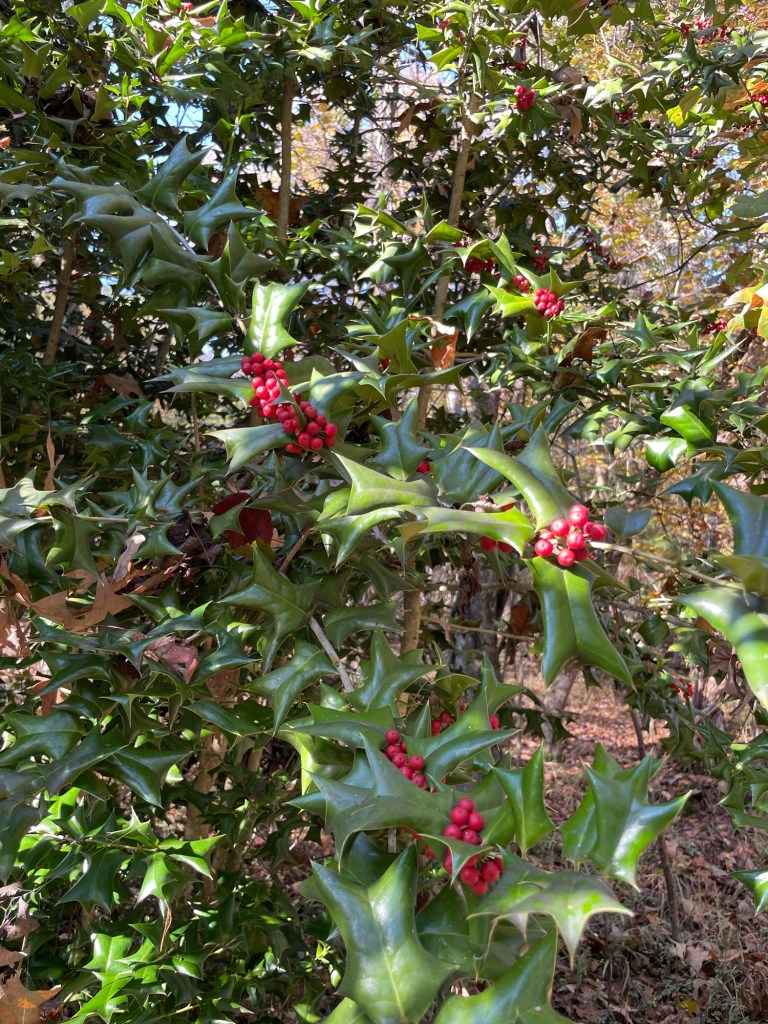
Christmas holly? I didn’t expect to see that growing hereApioperdon pyriforme
There was one log on a hike that was absolutely COVERED in these little pear-shaped puffballs. Don’t they look like a cartoon depiction of mushrooms? Wikipedia tells me that they’re “considered a choice edible when still immature and the inner flesh is white.”
Yeah, thanks, no.
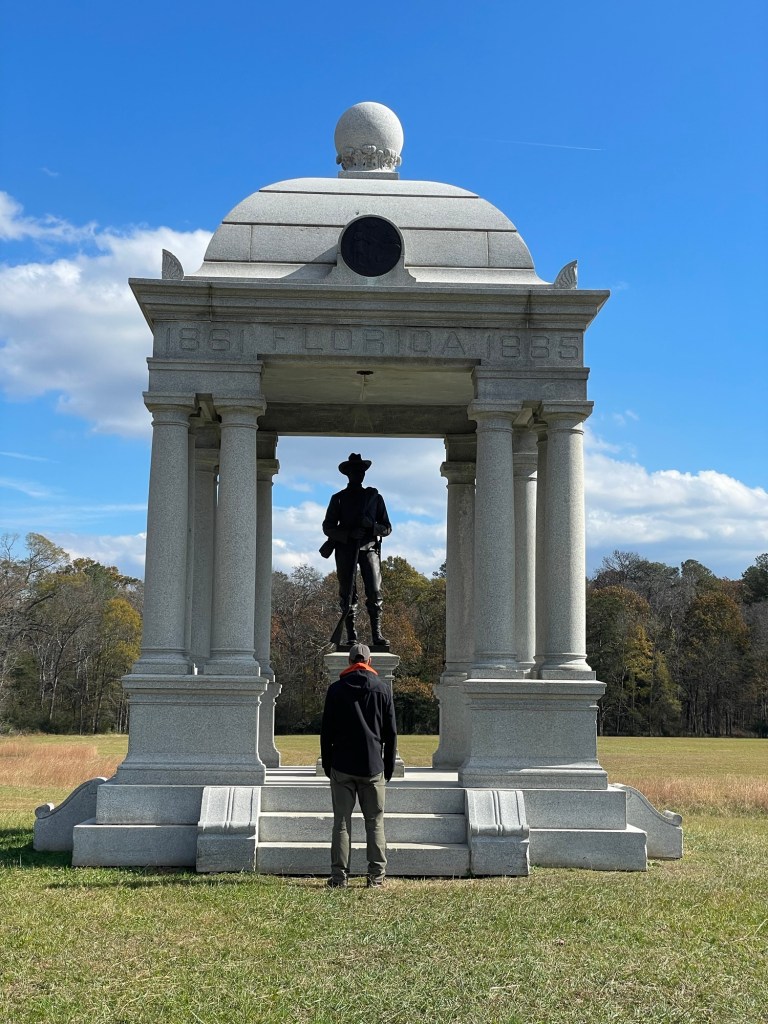
Florida
Despite the government shutdown, we wanted to see the nearby Chickamauga Battlefield site. I’m so glad we did. Five years ago we were planning to take a three week tour of the major Civil War sites. Instead we, like the rest of the world, were hunkering down in our home. We’re finally getting our chance now.
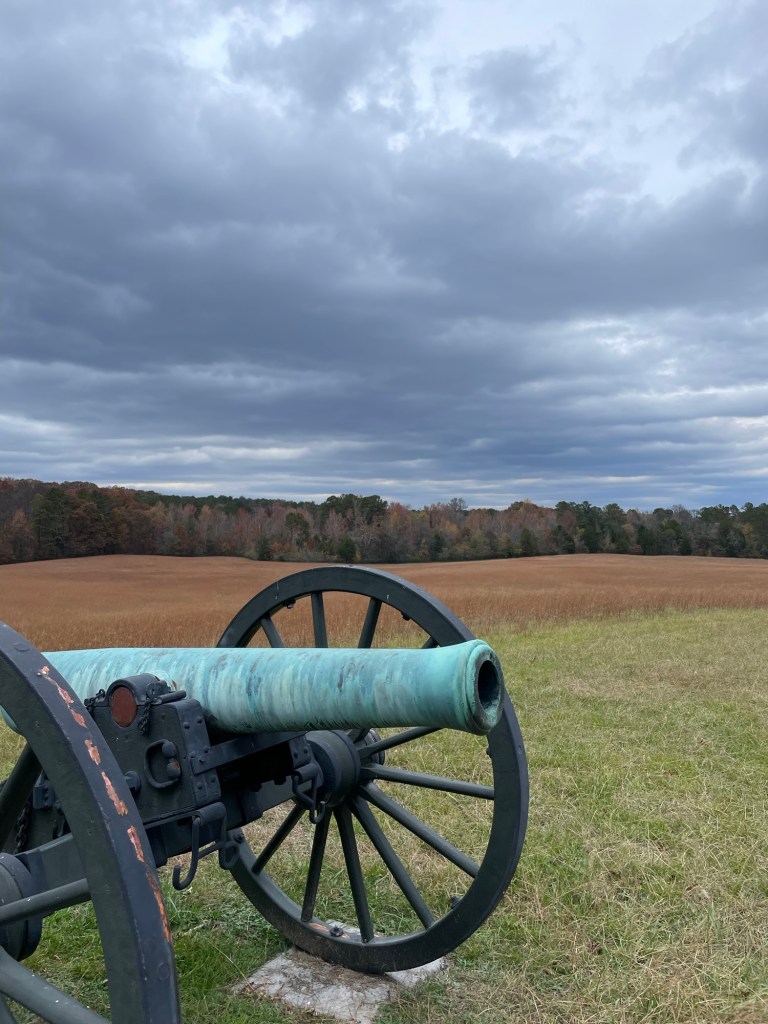
We spent most of one day following the NPS audio driving tour and wandering around at the stopping points. We both got fairly overwhelmed by the sheer volume of monuments, informational plaques, and the number of men that had assembled for battle in such a relatively small space. Since cannon and rifles were often firing at point blank range, the tallies of dead, injured, and missing for each company shouldn’t have been so shocking, yet they were. I don’t know if it’s possible to truly comprehend the human devastation wrought during the Civil War.
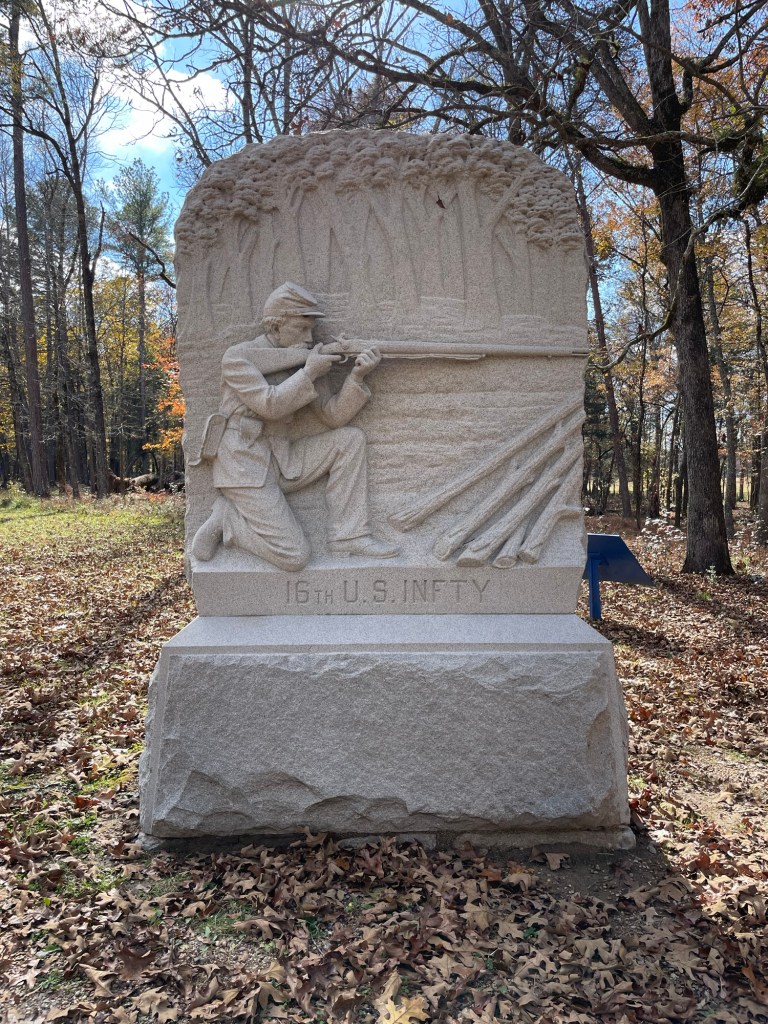
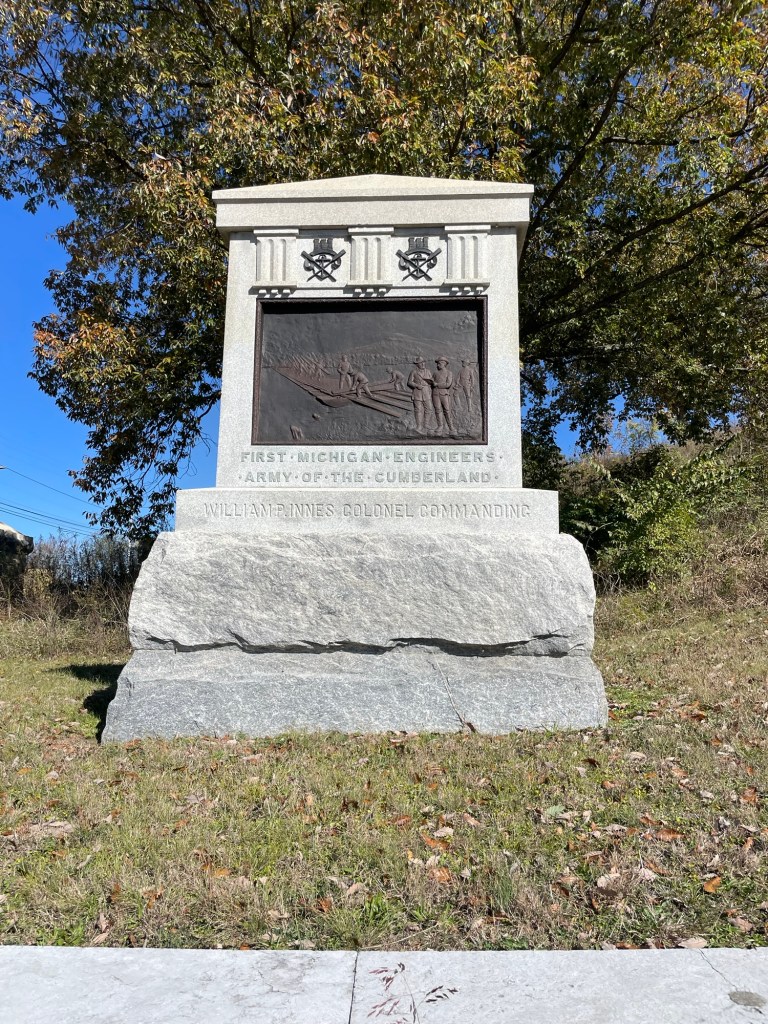
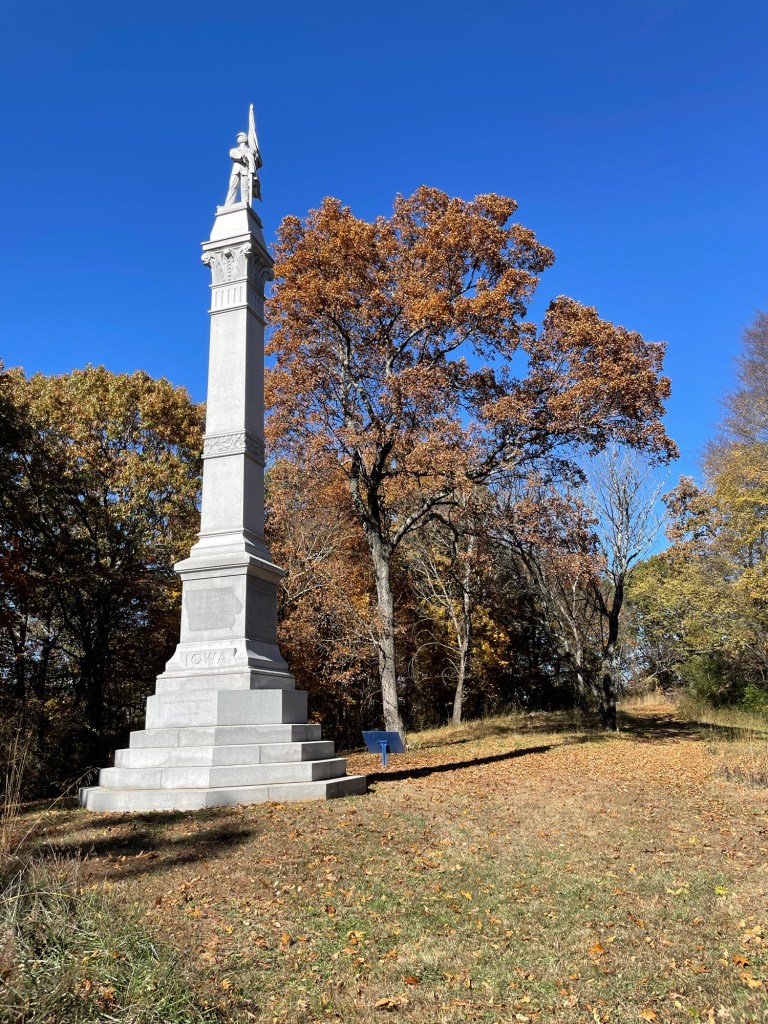
16th US Infantry – BattlefieldWilders Brigade – Battlefield1st MI Engineers – Orchard KnobIowa – Missionary Ridge
We initially read every plaque we came across. How can you not? Men fought and died there. But we’d still have been there four months from now if we’d kept at it. Everywhere you looked there was another red or blue plaque, a cannon, or a stone monument installed by the returning survivors in the 1890s. In the end, I had a fair bit of guilt driving past so many. It felt deeply disrespectful to bypass any of their stories.
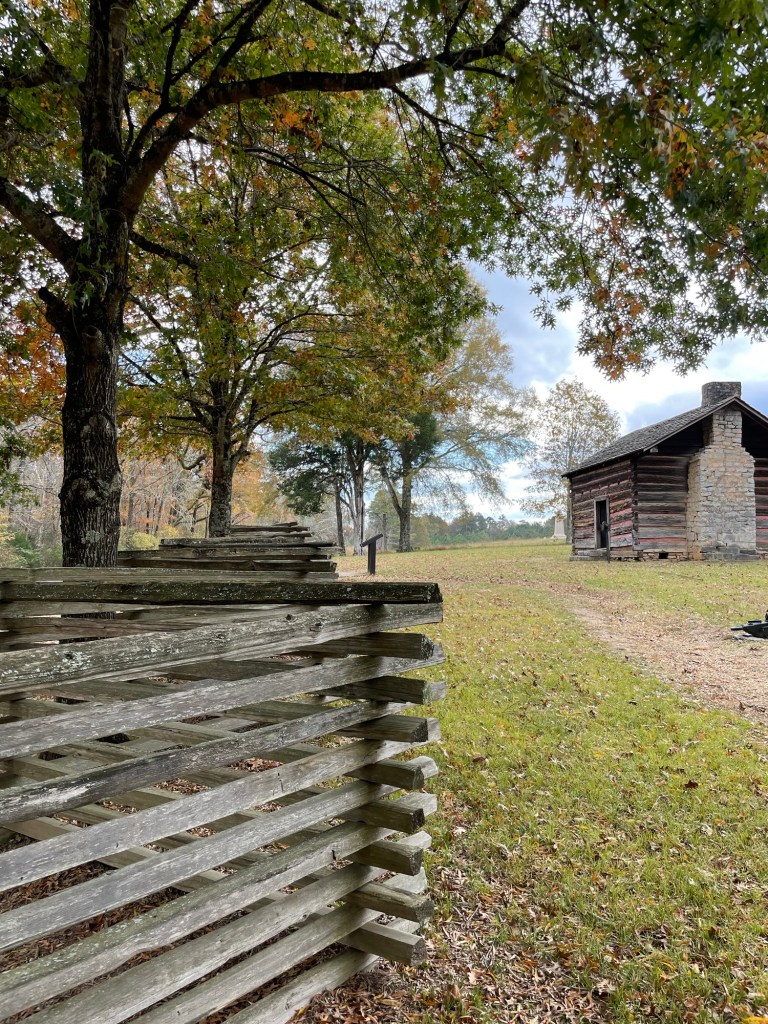
Split rail fencing could be put up quickly
A general said afterwards that one battlefield was so thickly covered by fallen soldiers that you could walk from one end of the field to the other without ever touching the ground. Look out across an empty field, even a playground, football field, or soccer pitch if nothing else is available and just try to imagine it. Now multiply that image by eight or ten or twelve in your mind. That was the horror of Chickamauga.
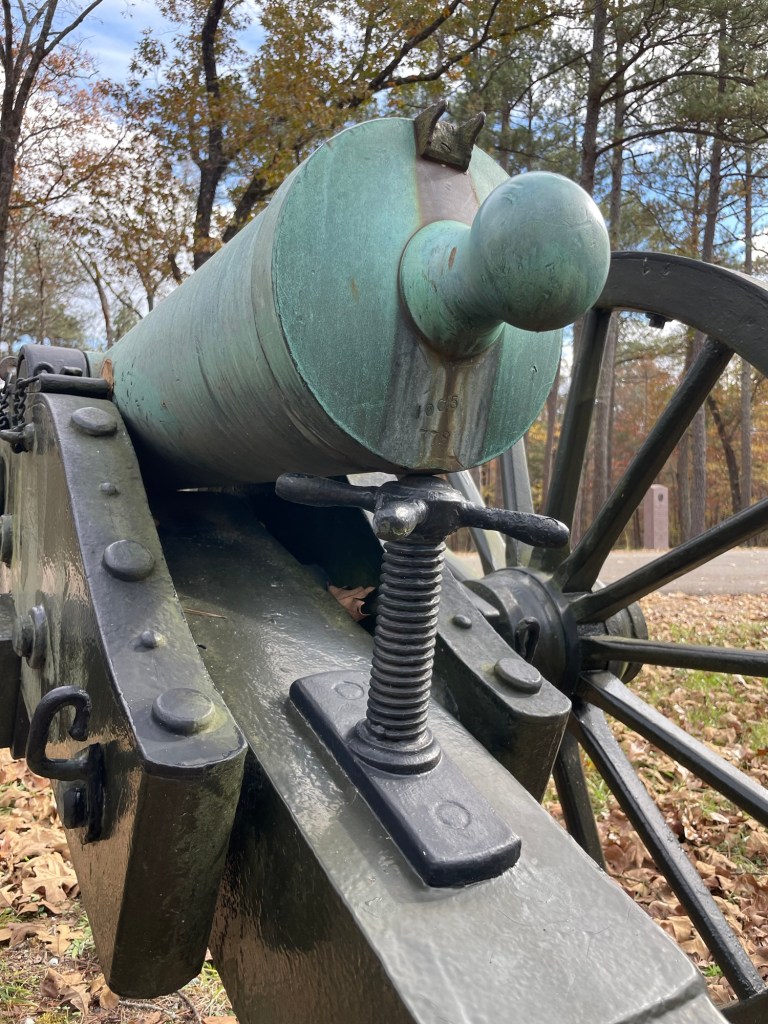
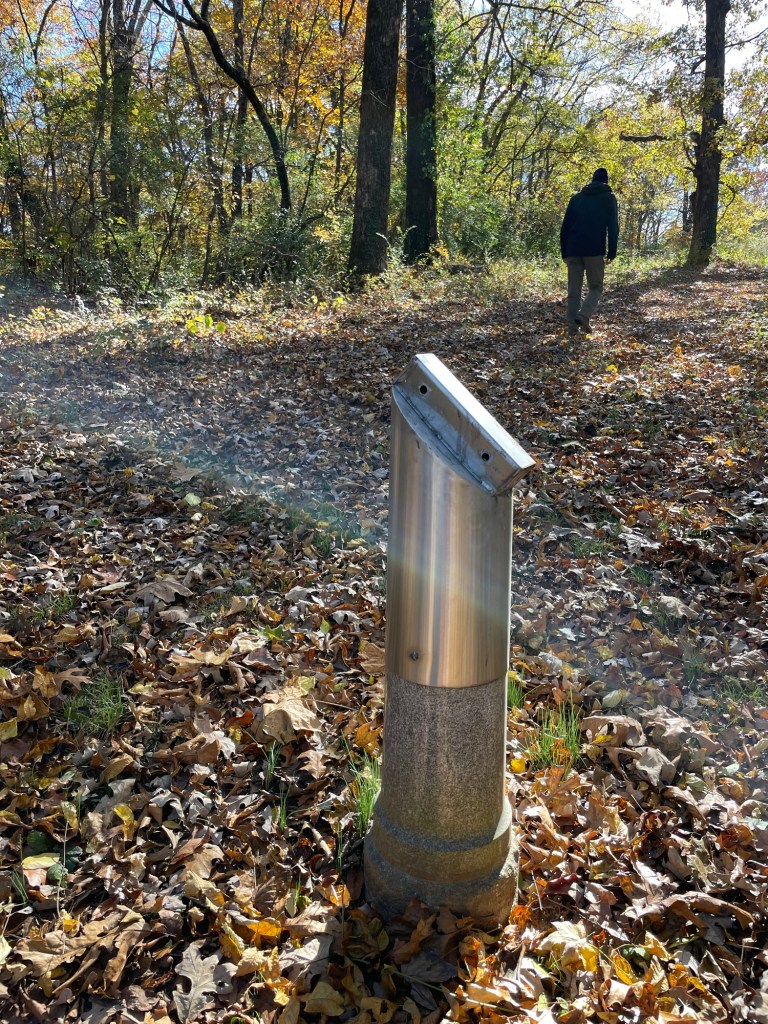
All the cannon on site are genuine period pieces. The bases are reproductions.The pitch adjustment screw
In the days following, we drove to the other half of the Chickamauga and Chattanooga National Military Park, Lookout Mountain, as well as to Orchard Knob and Missionary Ridge. The Lookout Mountain site was closed for safety reasons, so we couldn’t even walk around up there, but driving back down the hill we stopped at The Cravens House on a whim and got our fill of the views denied us above. Additional information located around the grounds told us about its importance for both sides’ Generals watching troop movements in the Chattanooga valley and across to Missionary Ridge. It’s also where William T Sherman began his march to Atlanta and ultimately to the sea.
Here’s my completely bare bones, probably not altogether perfectly remembered, rundown of the battles. Mistakes and omissions are inevitable. I recommend you look it up if you want a definitive timeline of events.
Near a small creek in Georgia called Chickamauga, the Federal Army (US) was facing SE toward Atlanta and the Confederate Army (CSA) was facing NW toward Chattanooga, Tennessee.
There was a stalemate on September 19, 1863. Despite fighting all day, neither army had gained more than a few yards anywhere along the line.
Late in the afternoon of September 20, the Federal General mistakenly told a portion of his line to move, creating a gap which the CSA exploited, splitting the US forces in two. Ultimately routed, the US retreated back to the Federally held part of Chattanooga.
In an effort to buy the retreating soldiers some time, US Corporal Wilder and his mounted cavalry unit, the Lightning Brigade, bore down on the CSA from a hilltop with their relatively new repeating rifle technology, mowing down any troops unfortunate enough to be charging at them.
The US troops led by General George Henry Thomas (the Rock of Chickamauga) stayed in action, allowing the rest of the US troops to retreat in relative safety.
It’s worth noting that, at this time, the CSA was still in command of Lookout Mountain and the strategically high points in the Chattanooga valley.
In November, US Generals Ulysses S Grant and William T Sherman arrived under the cover of night, crossing the Chattanooga River from the north and northeast.
Flanking Lookout Mountain from the southwest, one portion of Grant’s advancing forces snuck up Lookout Mountain during the night amid thick fog and drove out the CSA, which crossed the Chattanooga valley, climbing to the relative safety of CSA-held Missionary Ridge. This became known as the Battle above the Clouds.
US troops soon followed and crossed the valley as well, scaling Missionary Ridge under heavy fire, despite receiving no orders to do so, yelling, “Chickamauga! Chickamauga!” The CSA was driven back toward Georgia. Chattanooga, home to several converging rail lines and the CSA’s seat of industry, remained under US control for the duration of the war, greatly affecting the CSA’s ability to move troops and supplies.
From Chattanooga, General William T Sherman then led his famous march to Atlanta and then to Savannah, destroying all goods, property, and crops in his path.
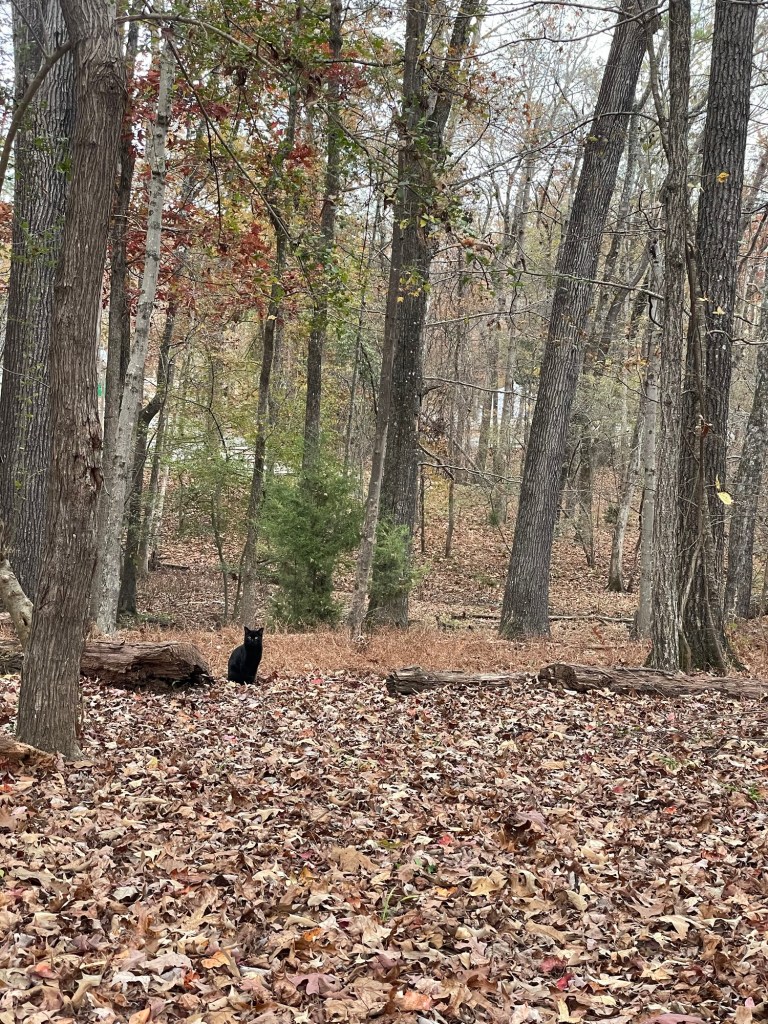
Our brave kitty friend
Mental relief moment: This sweet camp cat came by to visit us frequently, always staying outside of reach, but getting far closer to us than we expected. We enjoyed watching it hunt squirrels and birds, although we never saw it catch anything.
Ok, back to it.
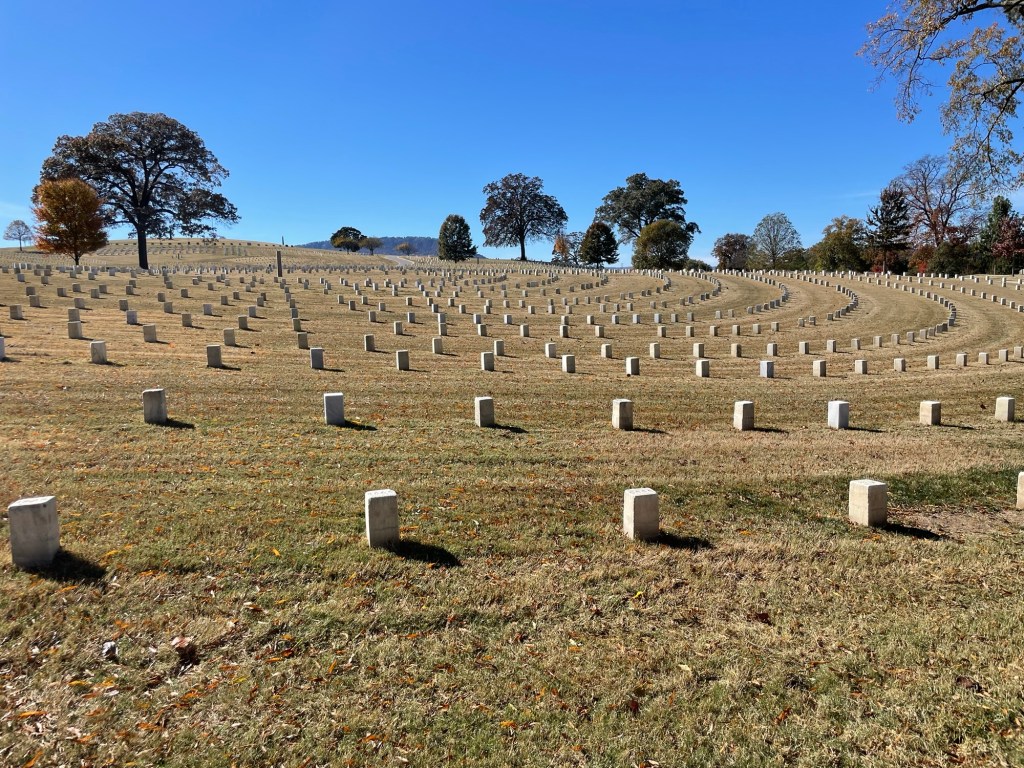
At the Chattanooga National Cemetery, each of the 6×6 markers above is for an unknown Union soldier, most from the battles of Chickamauga & Chattanooga. There are many more such markers throughout this cemetery, as well as regular military tombstones from the Civil War through today. The Confederate dead from the battle were interred in Georgia at the Marietta Confederate Cemetery.
Instead of leveling the ground, the gravestones were placed so as to complement and emphasize the natural terrain. Curves and swirls are fitted between the precise lines that we are traditionally used at military cemeteries.
I stood teary-eyed looking out across this patch of land, thinking, ‘Each of these unknown soldiers left people behind. People who mourned their soldier, mourned their inability to say a final goodbye, mourned their loved one’s’ lost future.’
Back at the trailer, I’d almost finished reading a book about Charleston, South Carolina’s role in pushing for secession in 1860 and 1861. I stood there remembering the cavalier, almost carnival atmosphere leading up to the vote for secession.
I took a moment to re-read Lincoln’s Gettysburg Address. I see too many similarities between his world and mine. I looked back over the graveyard stretching out before me and thought, ‘This is what happens when politicians and pundits encourage us to hate one another.’
A few of the effects of another year’s government shutdown. Some people clearly have no sense of shame or decency.
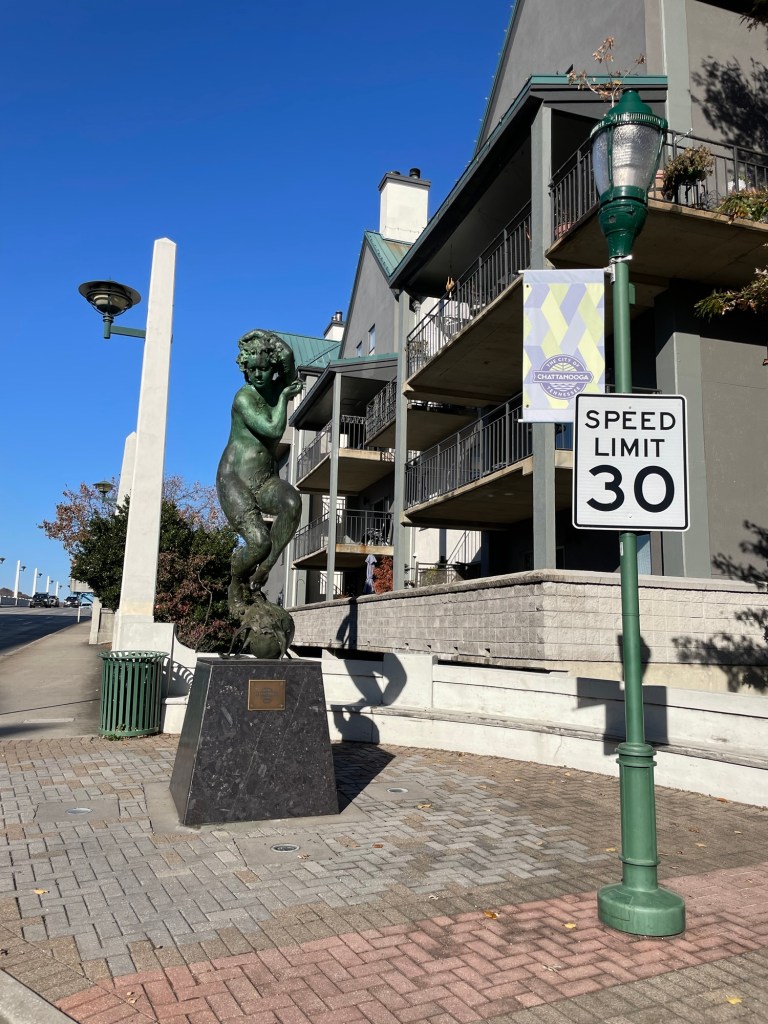
Finally, on the day that I had to get some bloodwork done, we wandered around the Chattanooga city center afterwards. While there’s nothing specific we could put a finger on, we both agreed that Chattanooga probably wasn’t for us. Not every place can be.
The day before we were scheduled to leave this campground, we saw that the government shutdown had ended. Finally! On the off chance that things had opened up already, we called ahead and learned that the Visitor Center at Chickamauga and Chattanooga National Military Park was indeed open. We packed up quickly and headed straight there.
Having seen so much of the physical sites, the introductory video and historical exhibits made so much sense. It acted as a ribbon tying all the pieces together. Seeing a diorama with a piece of equipment that I’d heard mentioned often but didn’t quite understand, I asked one of the park rangers for a brief explanation, knowing how much catch up work they likely have ahead of them.
What I got was a personal walk through, with visuals, of how the batteries were composed, what each of their pieces of equipment did, how many men and horses and cannon and munitions were needed for a complete fighting unit, and so much more. Afterwards, he even showed us an absolutely massive firearms collection that was donated to the Park, pointing out which guns were used during the Chickamauga and Chattanooga campaign, why the different guns styles mattered, and how they impacted the final outcomes.
Seriously, National Park Service staff are a class above. They often go out of their way to help you, clearly love the places they care for, and protect it all for us. For all of us. Indeed, that’s the beauty of our National Parks. They tell our story, the good the bad the pretty the ugly, and protect our most precious and unique landscapes. For all of us.
And in my opinion, that’s as good a reason as any why they shouldn’t be getting put through the financial, professional, and emotional wringer. Ever. Leave our National Park Service alone.
(Jeff said that my last post, a ‘Why can’t I sleep?’ special, sounds like everything was all done in a single day. It was not. It covered four days.)
It’s no Mackinaw, but it’s pretty
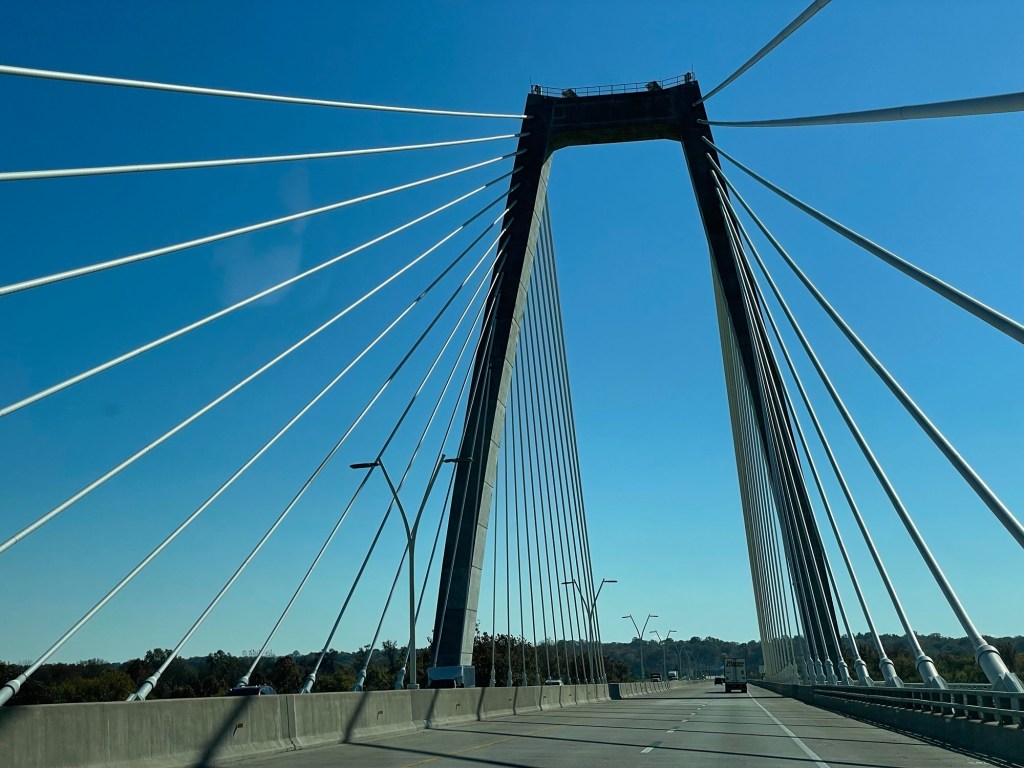
After leaving Indiana, we crossed into Kentucky and headed west for Bourbon Country, a little American Revolution history, and unknowingly a lot of Daniel Boone. While music dominates our driving time, we’re also fond of podcasts with Ologies, National Park After Dark, and various Old West related ones at the fore. On our way out of Michigan we listened to a triple episode series on Legends of the Old West about Daniel Boone, without realizing how often we were about to see his name.
If you’re like me, Daniel Boone was a name I’d heard a few times in elementary school and he always seemed like an amalgamation of many people of the period. Because, really, how important could one frontiersman be? Quite impactful, and interesting, as it turns out. More on that later.
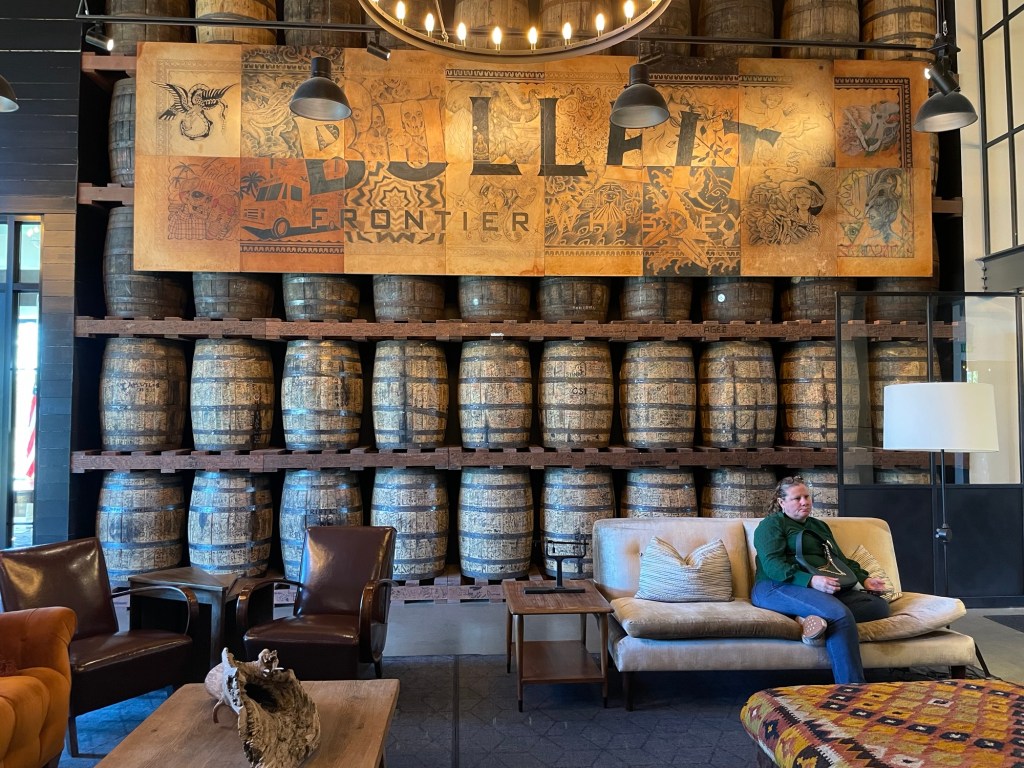
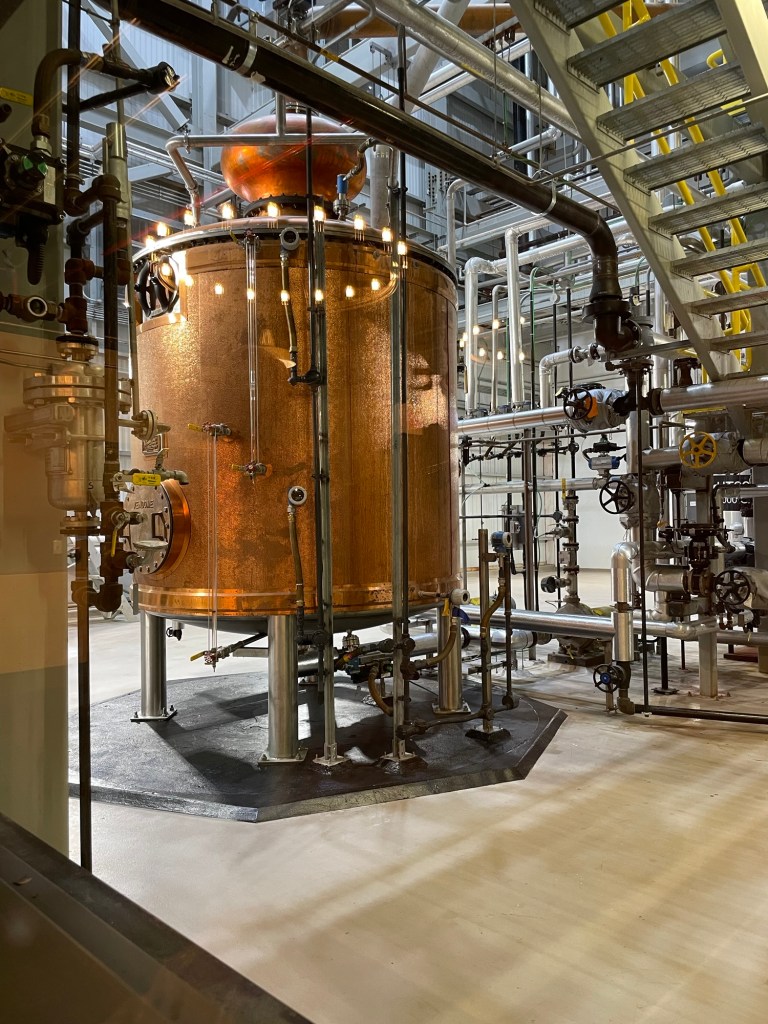
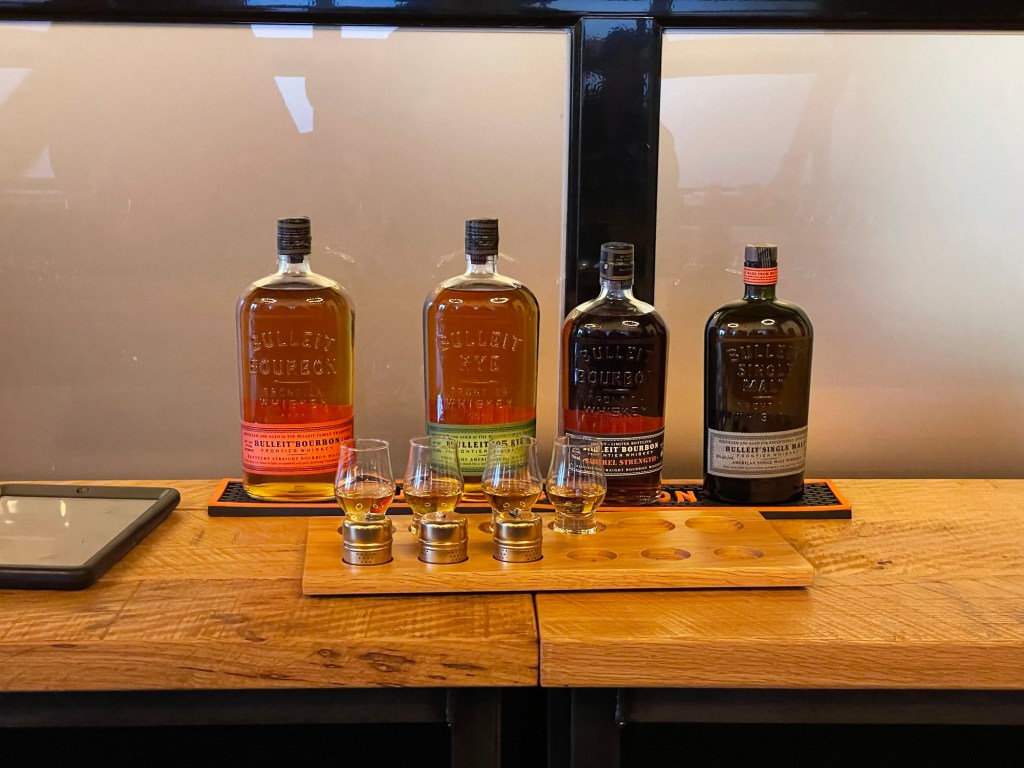
Our first stop was the Bulleit Distillery in Shelbyville, Kentucky, for a distillery tour and tasting. Since it’s one of Jeff’s two favorite bourbons for mixing and sipping and it was right on our way to Blue Licks Battlefield State Resort Park, it was a no brainer. Later we did a tour at Four Roses too and Jeff picked up a small bottle of his favorite batch. Bulleit won our unofficial tour and tasting award though.
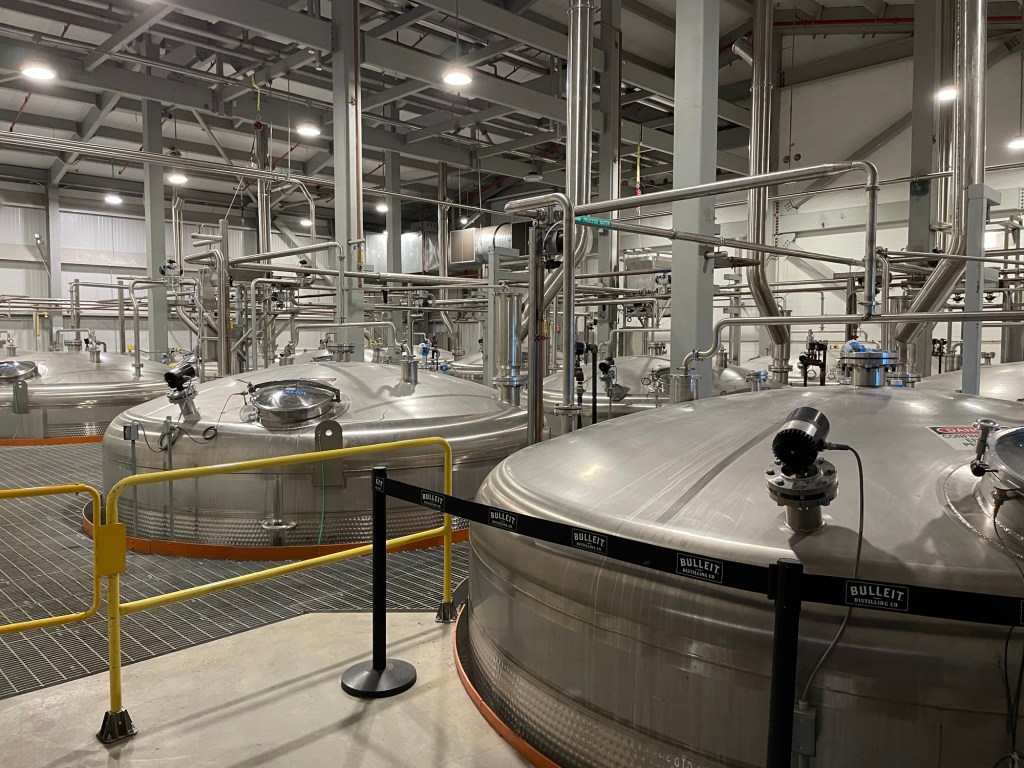
When one is in Bourbon Country, one does a Bourbon tour (or two)Mash tanksDistillation tanksTwo workhorses (L) and their spendy friends (R)
The three small containers you see before the four tasting glasses are full of spices, herbs, and florals. They really brought out the different notes in each of the bourbons. I rarely drink alcohol, but I was glad I made an exception here. This tasting experience was superb. Did you know that women tend to have more discerning noses and therefore be better at blending bourbons? Tis true.
Blue Licks Campground turned out to be a bit of a bust this time of year, since the museum is closed, the hotel’s front desk and store were closed, and even the campground host was AWOL the four days we were there, but it was a good launching pad for other things.
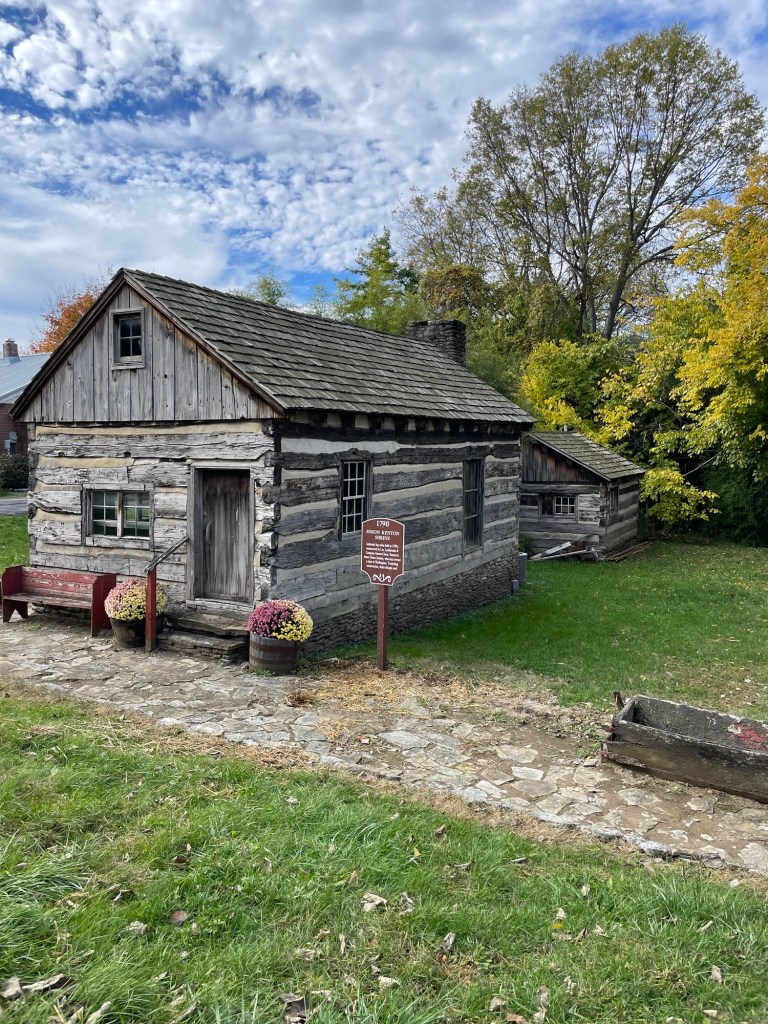
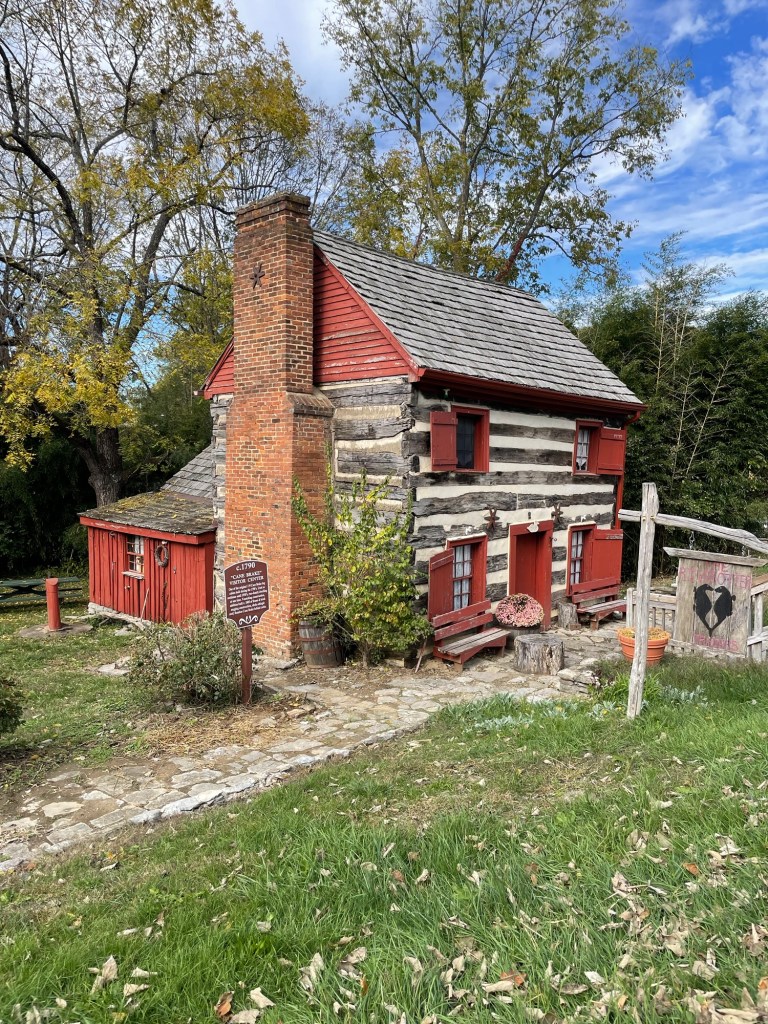
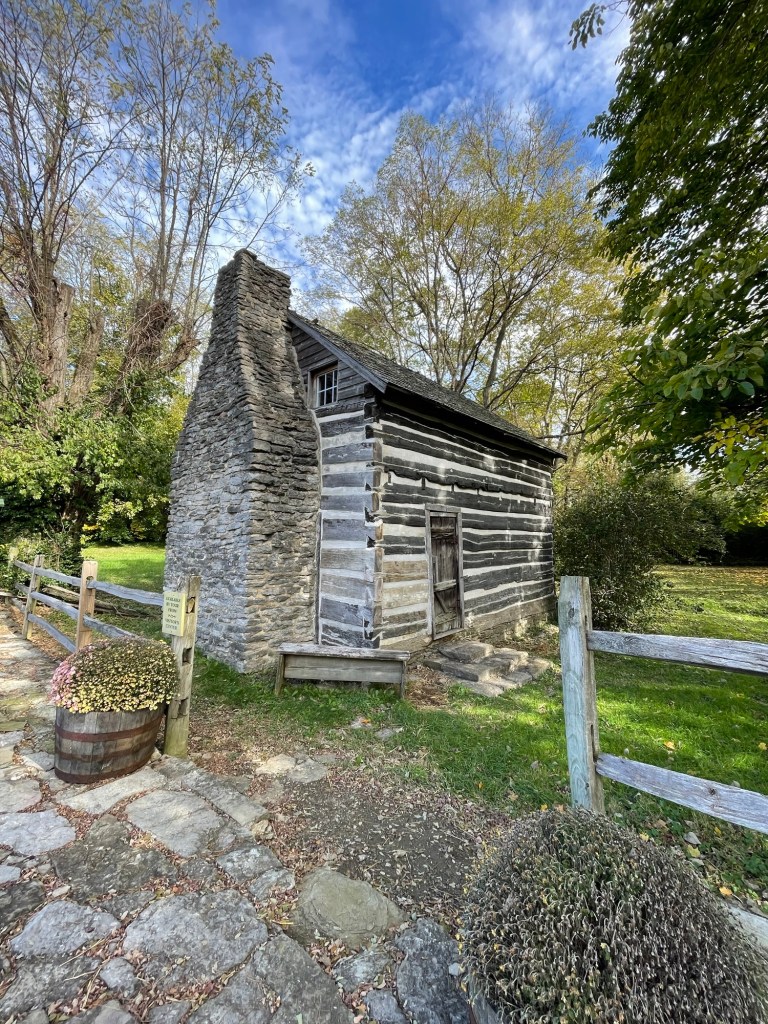
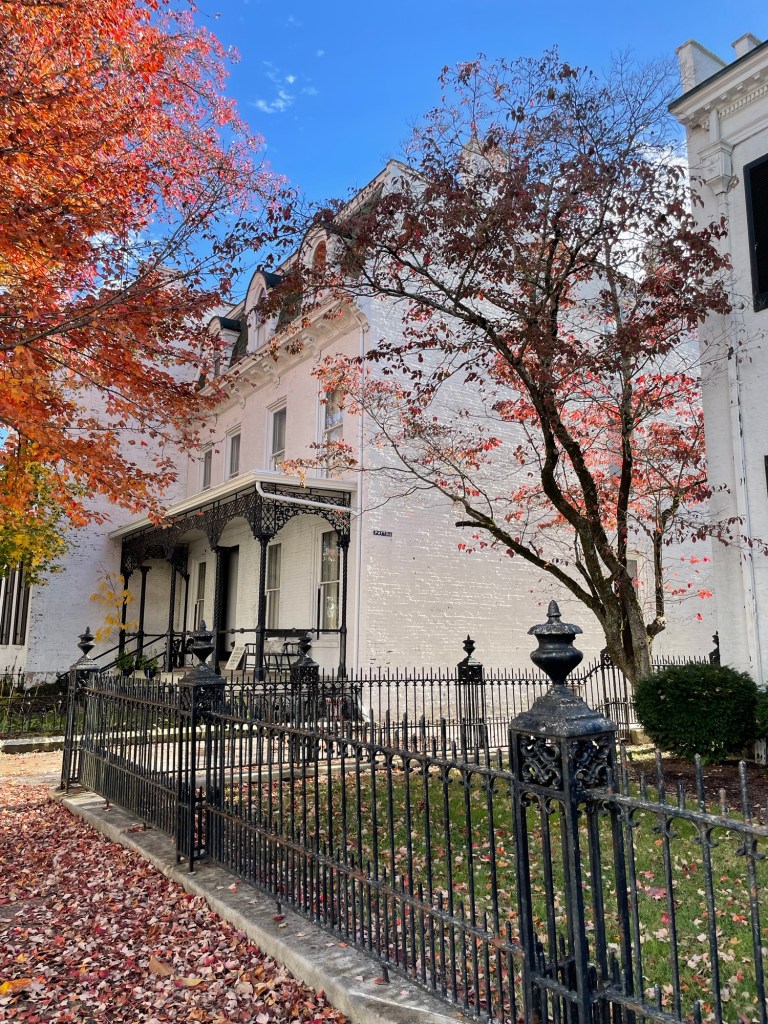
On a whim, we drove to a small village that was eventually rolled into the county seat. It was supposed to have an old frontier house and tiny local museum, but what we found was a rather large collection of frontier buildings. Unfortunately the museum was not open. (Don’t go to Kentucky for touristy things in November, is my advice.) We had a nice walk around though and ogled the buildings along Old Washington Road. They’re quite well maintained.
Apparently when the visitor center IS open, you can get inside a few of these buildings. I wonder if I could have gotten access if we’d thought to call ahead. Guilt, pleading, bribery. I would have been open to a few options.
Mefford’s Fort
Mefford’s Fort (actually just a home) was built from the planks of the raft on which George Mefford, his wife, and their THIRTEEN children floated down the Ohio River, moving from Maryland in 1787. Thirteen children. Folks, this cabin is not at all big. Fifteen people on two floors under one small roof. Yikes and no thanks.
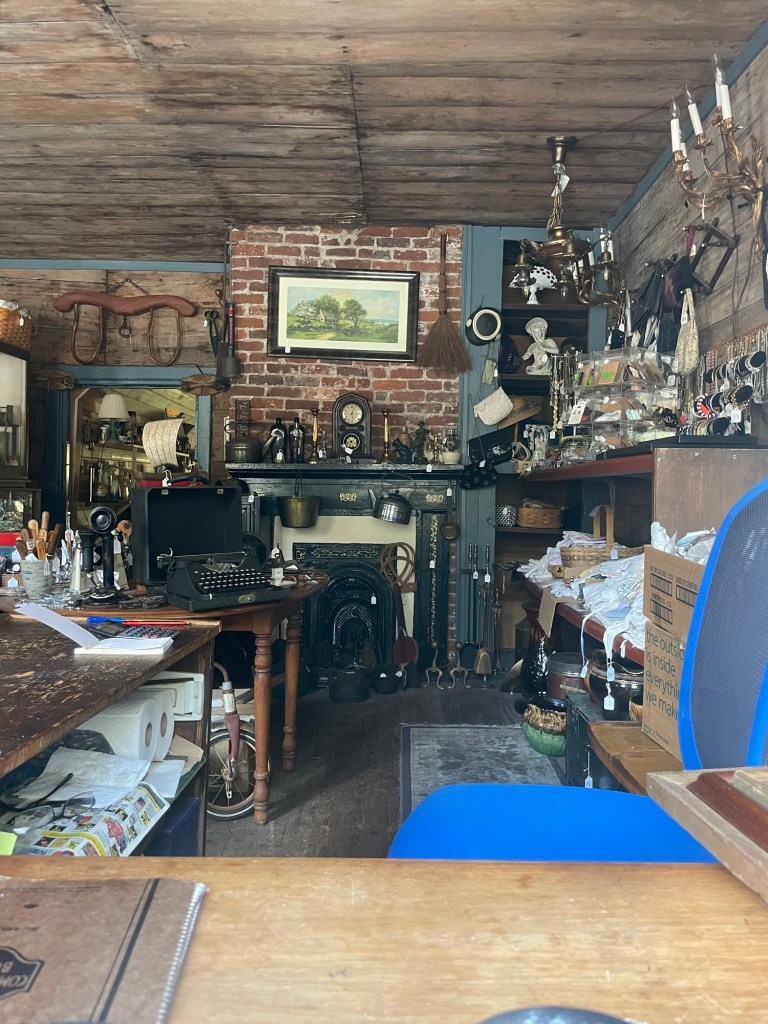
I wanted to poke around this antique store so badly, but it’s closed for the season tooI don’t think the window AC unit is original
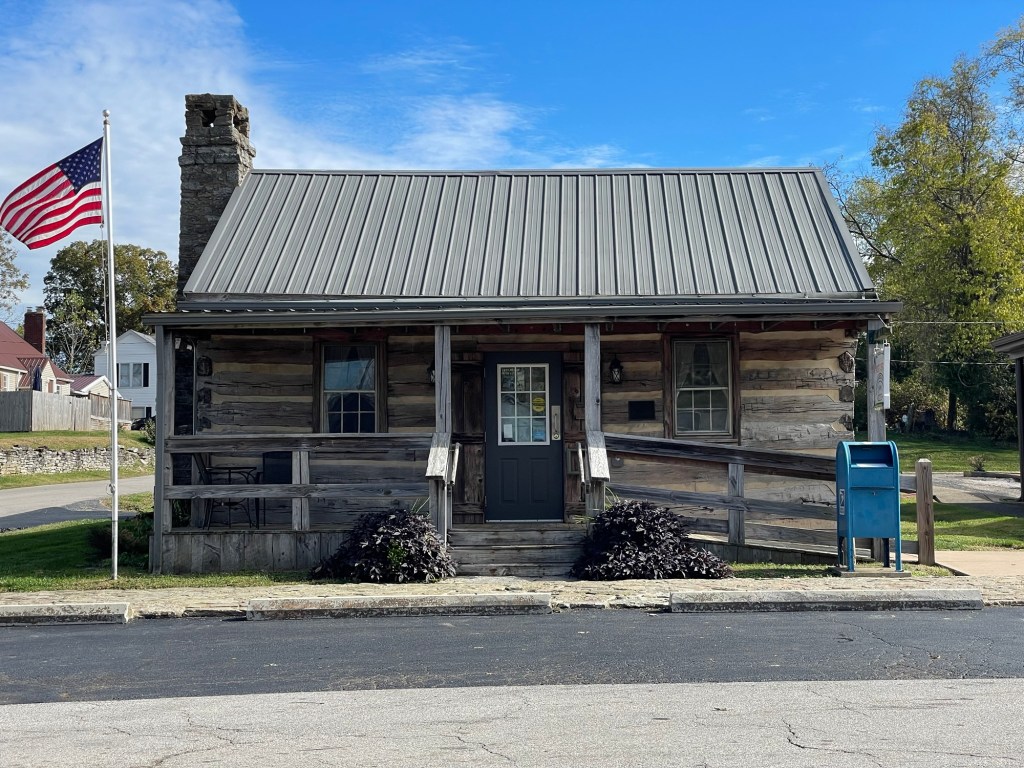
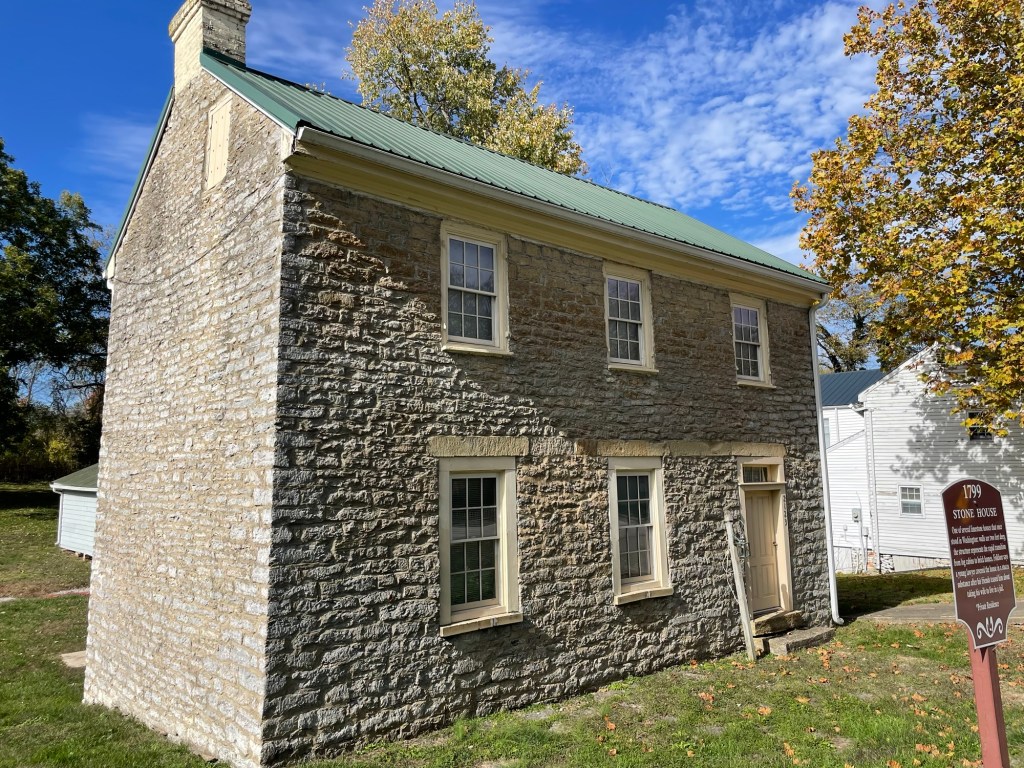
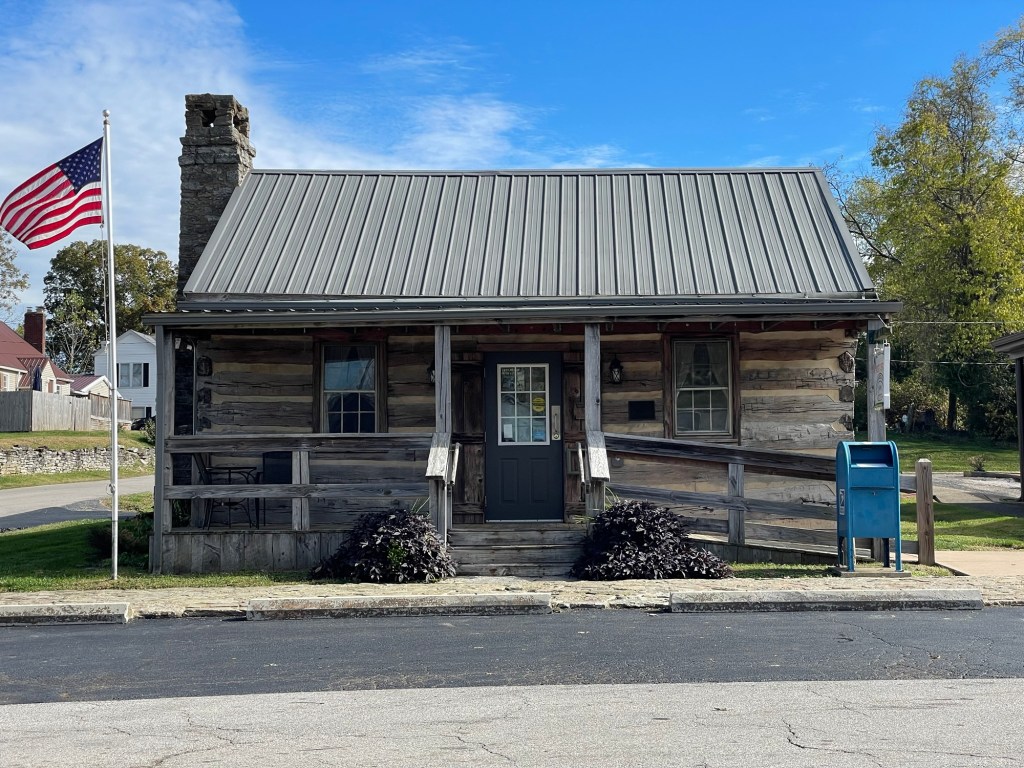
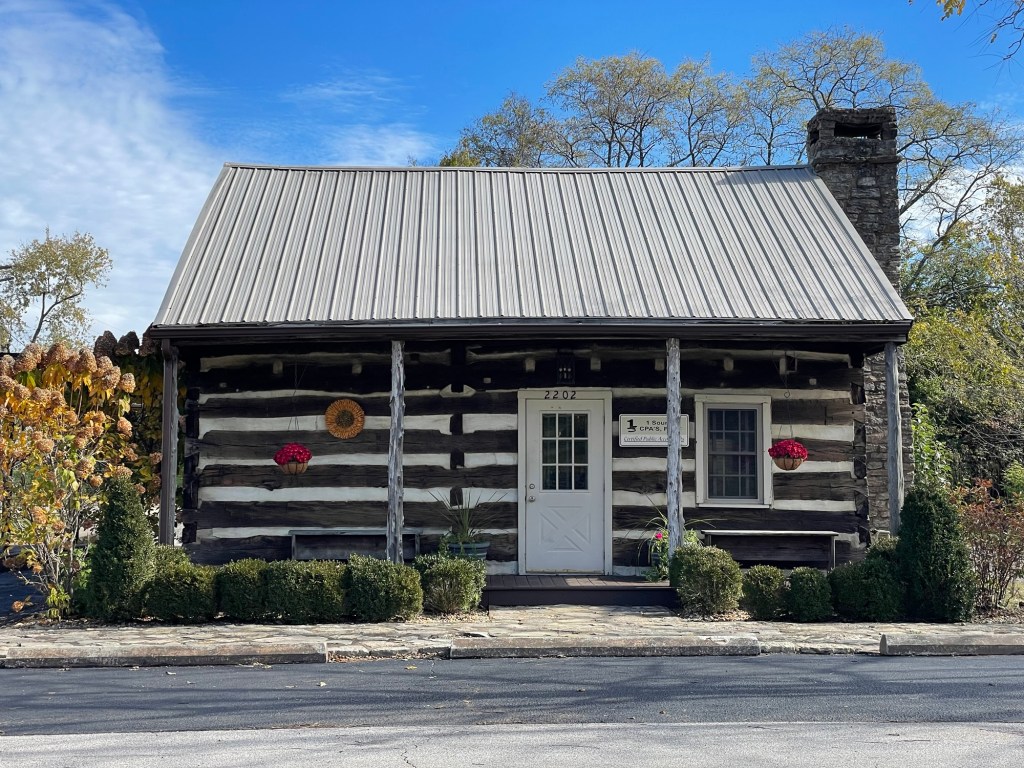
This is what really gets me though, many of these original log structures — like the one above and the ones below — are still being used as homes and businesses. Amazing structures, they are. I’m so glad they’ve been valued and kept in use.
Not logs, but still pretty coolAll post offices should be so adorableCutest counseling office ever
It was pushing on lunchtime and there wasn’t much to do at the campground, so we drove a little further to Maysville.
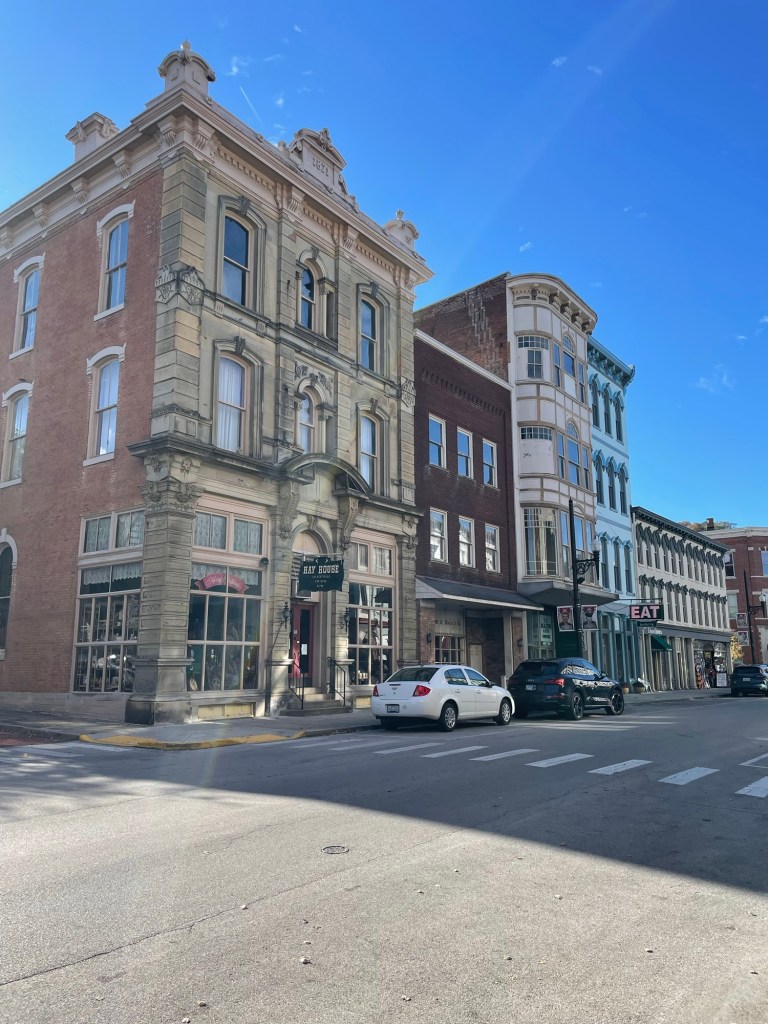
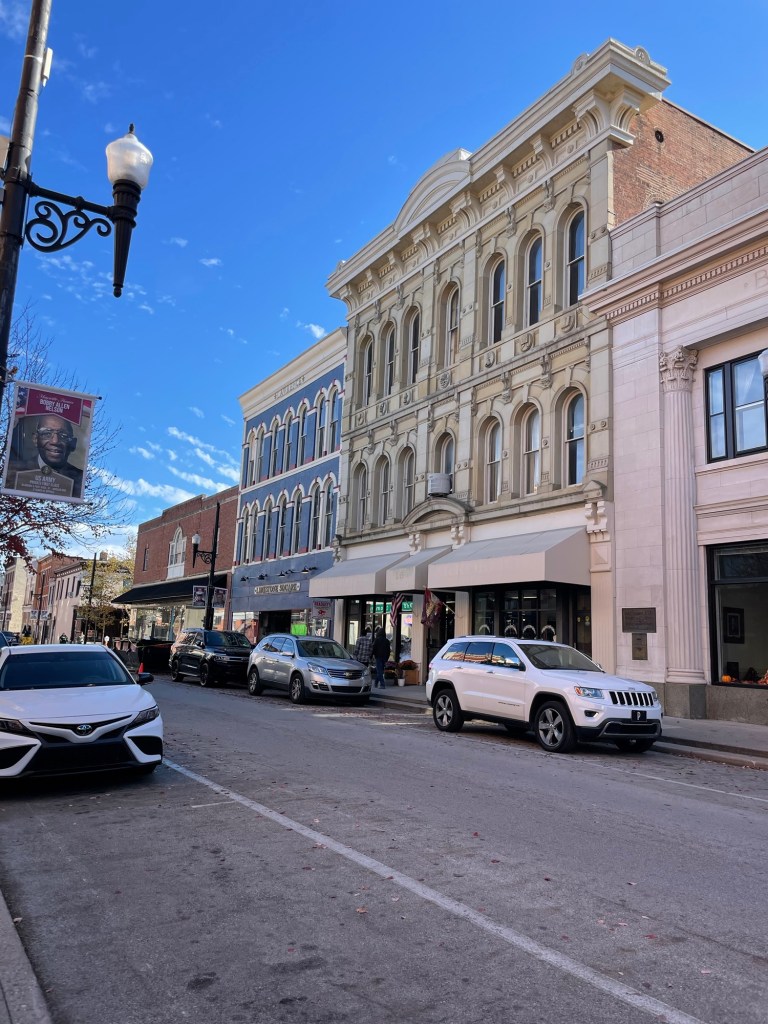
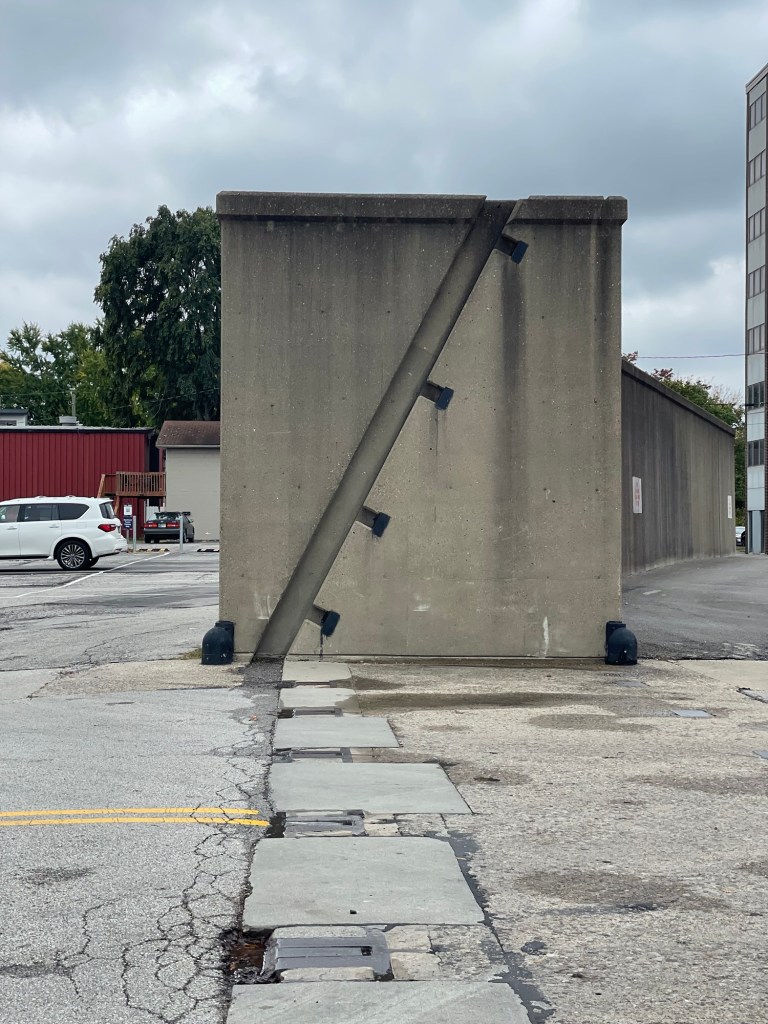
Maysville, another city on the Ohio River, was also inundated during the 1937 flood that hit Louisville and Rose Island so hard. Main Street was obliterated and all buildings were torn down. Second Avenue, also somewhat flooded but far enough up the bank to avoid complete destruction, became Maysville’s new Business District. A massive flood wall and earthen levee system was built afterwards to protect the city from further damage, effectively cutting off the city’s view of the river. Worth it, I know, but a bit sad too.
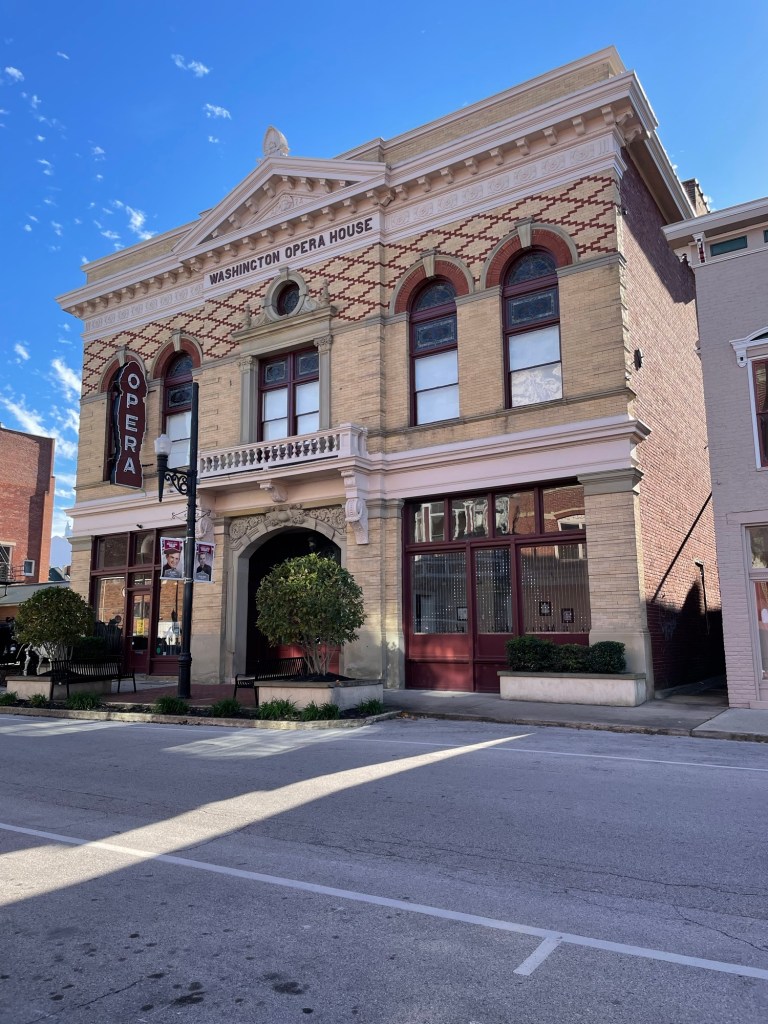
This poor Washington Opera House has been designed, used, nearly destroyed, abandoned, and redesigned more times than you’d believe, but it just keeps on going. I wish the current theater group that’s putting it through its paces again the very best of luck. Such a nice building deserves a future.
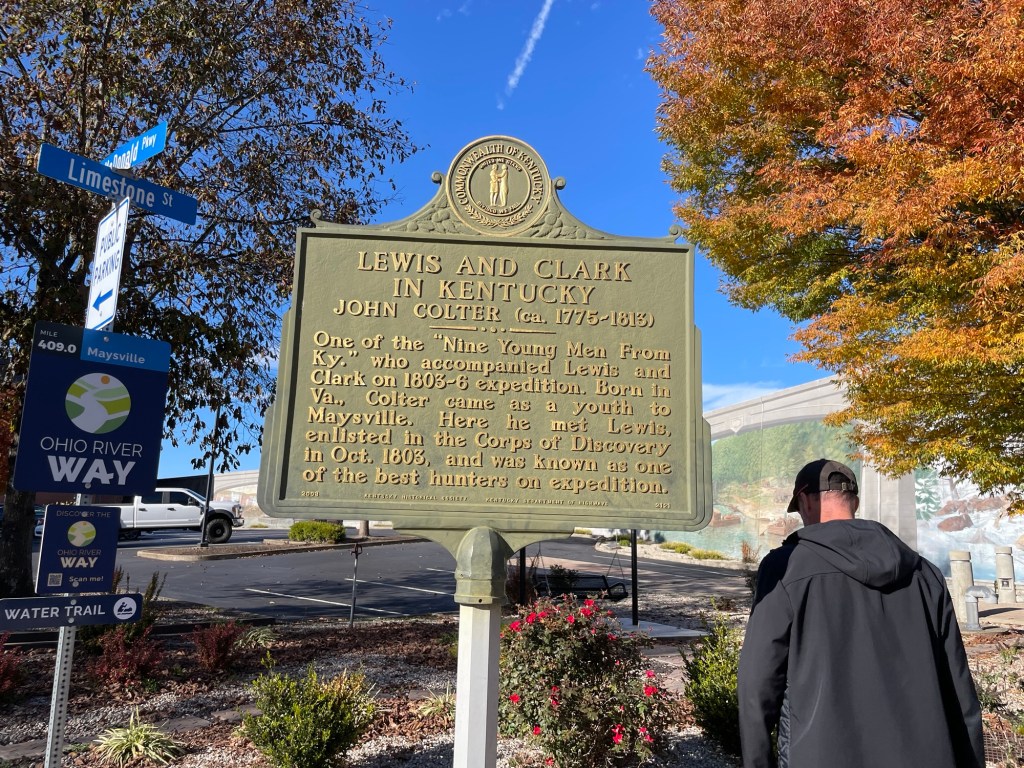
Maysville has a tie to Lewis and Clark’s famous Corps of Discovery, being home to one of the men who traveled with them. Afterwards, he went on other adventures in the frontier West.
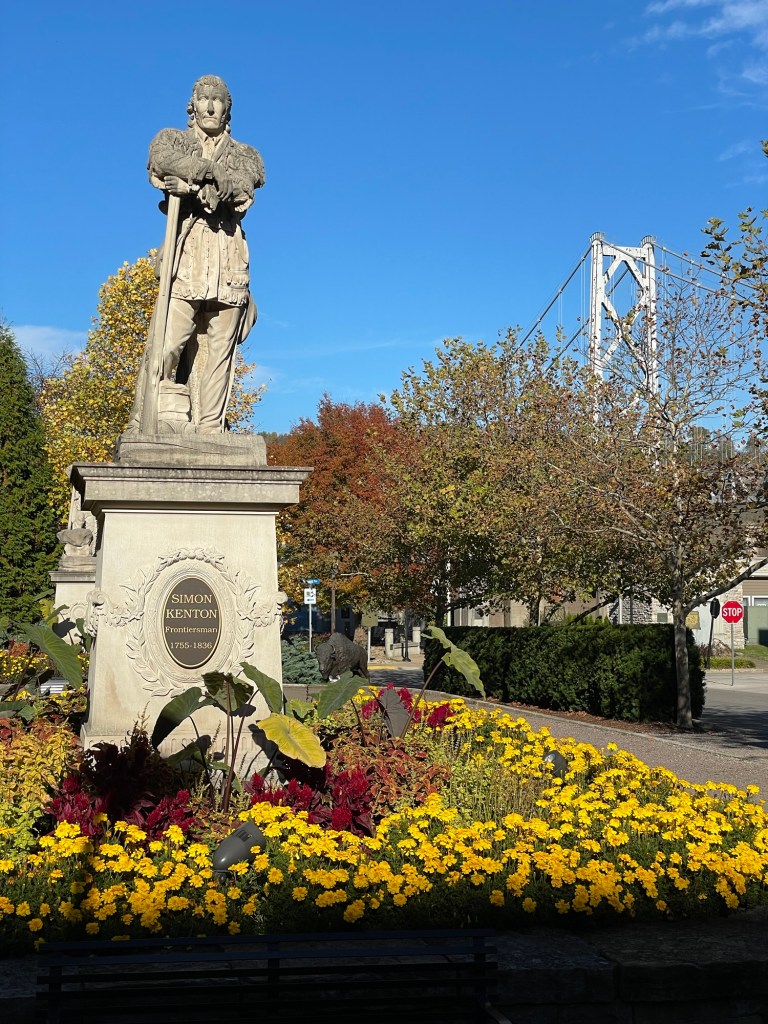
Simon Kenton (below) is a name we started seeing a lot. There was a plaque and statue for him on Old Washington Road, but we didn’t think too much about it. In Maysville, we saw that he donated the land that the city of Maysville was built on, as well as the land in the Old Washington Road area. He was also a friend to and fellow soldier in the American Revolution with Daniel Boone.
Before leaving Maysville, we learned that Rosemary Clooney, perhaps best known for her role in White Christmas with Bing Crosby, was born in Maysville. The debut of her first film, The Stars Are Singing, was at the city’s Russell Theater. She’s buried in a little cemetery at the end of Old Washington Road, where that day’s exploring had begun. If only we’d known.
Musical interlude.
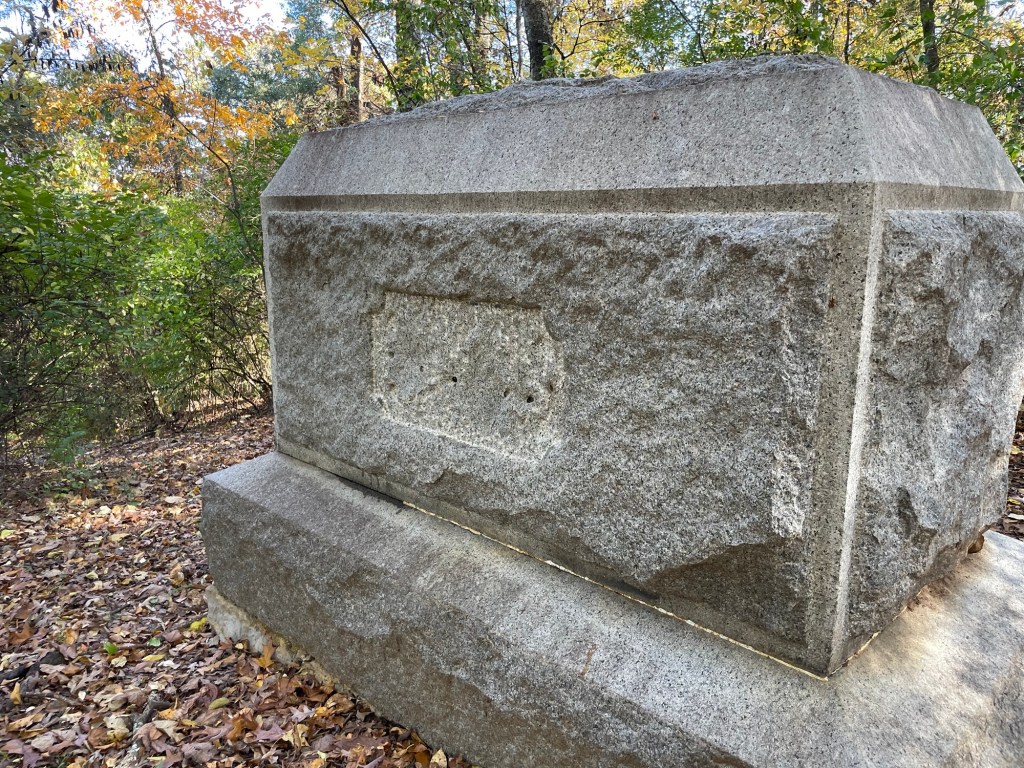
Since the museum and interpretive center at Blue Licks was closed, on our full last day there, we took a closer look at the monuments placed around the grounds and saw an obelisk installed to commemorate one of the last battles of the American Revolution — an 1782 battle between Shawnee warriors fighting on behalf of the British — a year after the official end of the war — and a small band of American fighters, including Simon Kenton, Daniel Boone, and Boone’s son, Issac. While attempting a retreat from an overwhelming Shawnee force, Issac was killed and Daniel had no choice but to leave his son’s body where it fell. There is a small mass grave above the obelisk honoring the soldiers who died in that battle. “War is hell,” as William T. Sherman so succinctly said a century later.
Now, why do so many places in Kentucky have the word Lick in their name? Well, salt is essential for all animals and it’s not always easy to access. So where it was found, the animals (humans included) came running from far and wide to get that good, good NaCl to keep their systems up and running. In the case of the Blue Licks area, the salt was dissolved in salt water pools, so while the animals drank from the pools, the humans boiled the water to solidify the salt.
Later that day, we walked on the park’s Buffalo Trace Trail, a path cut by migrating bison before they were exterminated east of the Mississippi. We watched the sun move into the west.
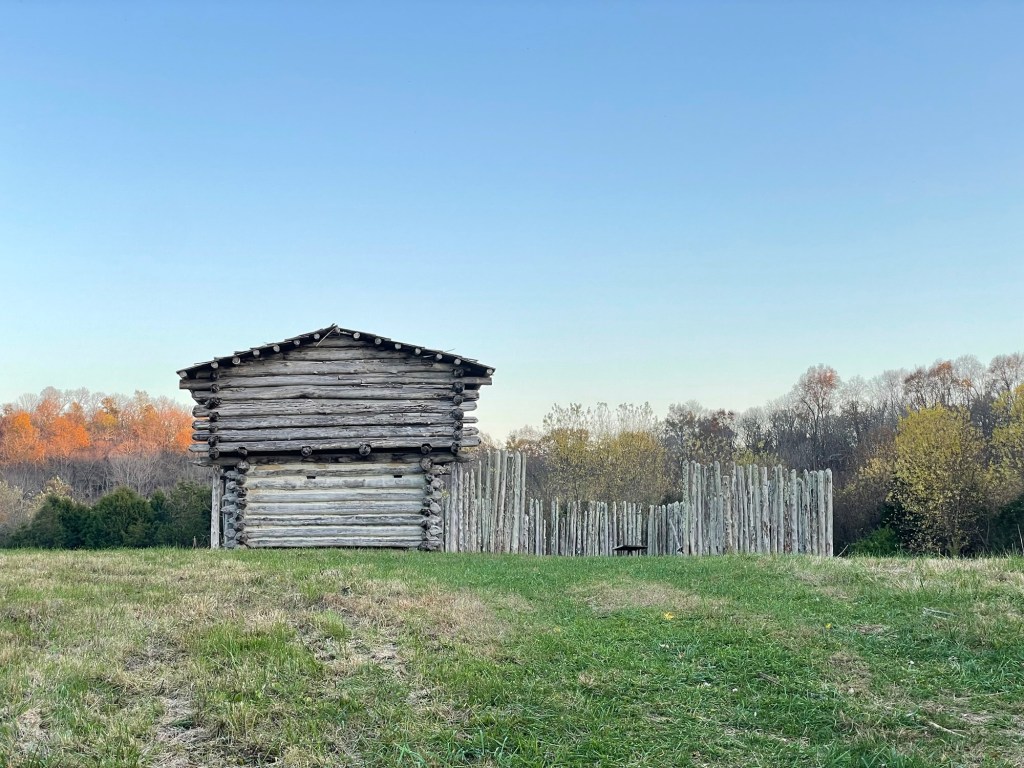
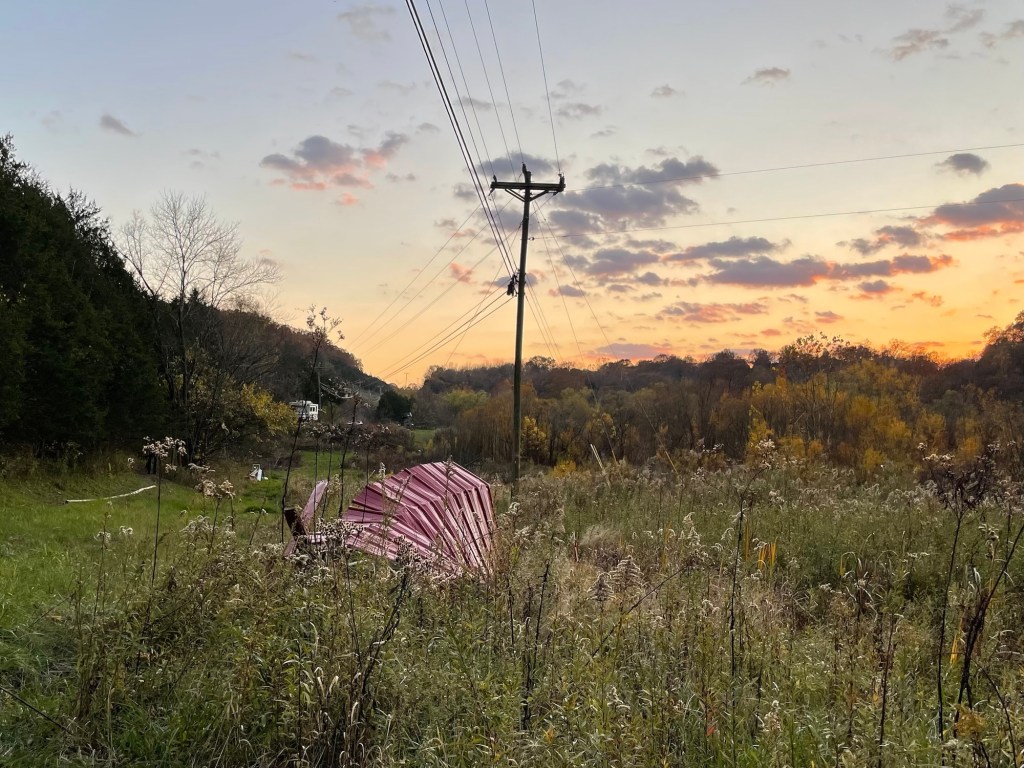
We came across an educational stockade reproduction (above). Further down the trail we were appalled to see piles and piles of junk covering the ground next to the park boundary (below), where the privately owned and trash-clogged salt springs are. I just don’t get people sometimes.
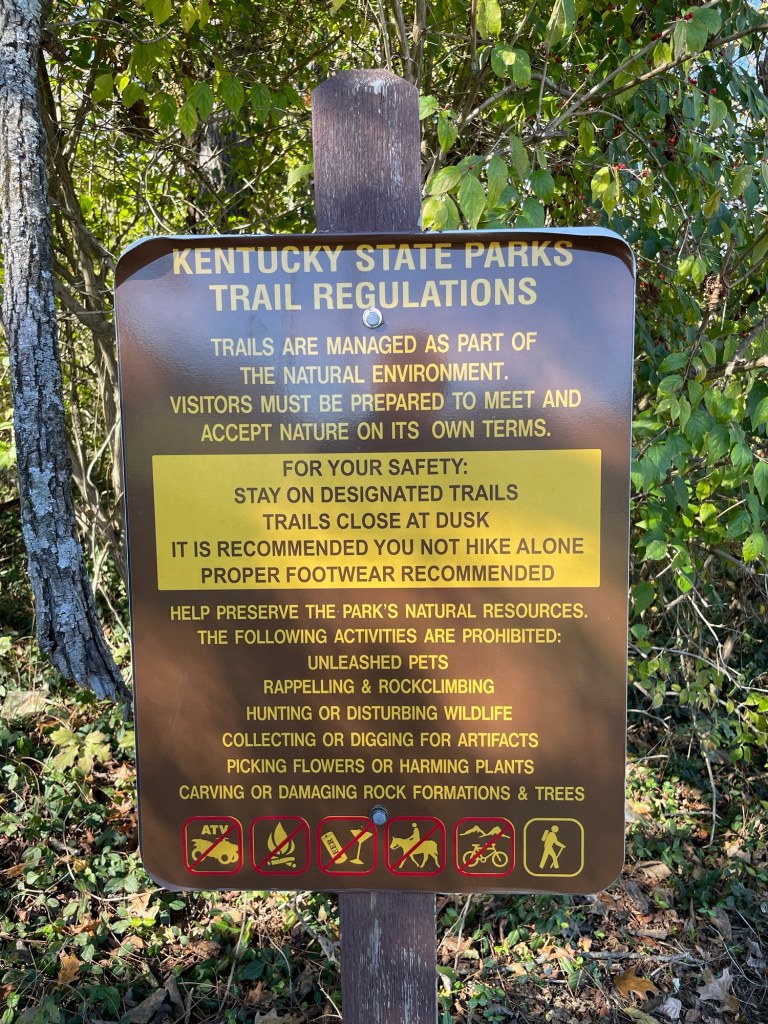
Kentucky doesn’t play around about who is responsible for your safety. Be prepared to meet and accept nature on its terms. Perfectly stated.
On our way south, we stopped at Boonesbourough State Park, the location where **surprise!!!** Daniel Boone located his self-titled encampment and fort after leaving North Carolina. It was closed. I know, it was a theme. So we just wandered the trails a bit, saw the outside of the re-created fort, and stretched our legs.
I highly recommend you listen to that three part series if you’re at all interested in Boone’s history. We found it quite interesting.
A trail walk at Boonesbourogh State Park
We arrived a couple of hours later for an overnight at a private campground just north of the Tennessee border with enough time for a quick walk in the woods. The trail behind our trailer? The Boone Trace. The trail blazed by Daniel Boone and his settlers on their way from North Carolina to Boonesborough, Kentucky. Because of course it was.
Although our plan is to chase the good weather, the reality is that poor weather is going to find us sometimes — especially since we headed south about two weeks later than we probably should have for those warmer temps. Luckily we’re sturdy folk and can tolerate some cold temps.
We left Michigan in cold and sun and arrived at our Hueston Woods State Park campsite in cold and sun. We had a quick easy dinner and made a little fire to chase away the chill. Then the rain started and the temps dropped even more. It rained through the night. We woke to even colder rain and didn’t feel like fighting the elements, so we drove a few miles into Oxford, OH, for breakfast. Then we learned that Oxford, Ohio, is home to Miami University. You can almost always find something interesting to do at a university.
While driving around looking for rainy day activities, we stopped in at the Richard and Carole Cocks Art Museum, which is part of the University. It’s free to visit and gets you a visitor’s parking pass around campus. Very nice.
Although not overly large, the museum did have a decent number of pieces, with an emphasis on local, modern works of art.
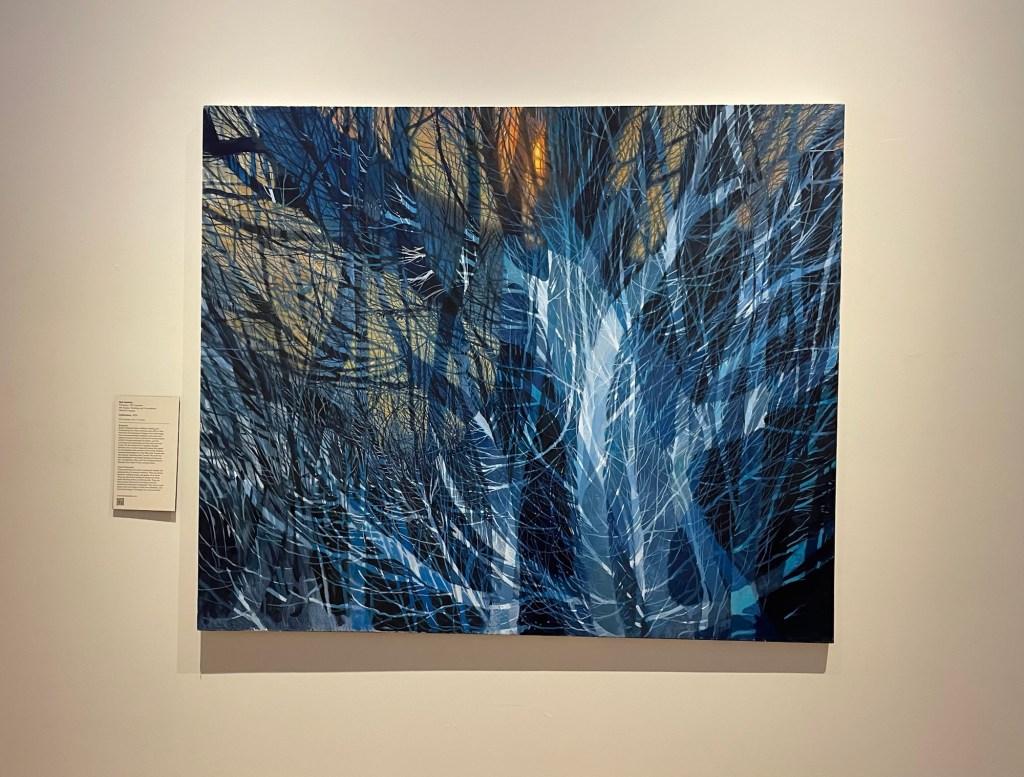
Wandering the art museum was a good way to warm up and feed our minds after breakfast. I stood in front of the above piece for quite a while, enjoying the way it played with my optics, the lines seeming to move a bit and the orange spot seeing to grower brighter and dimmer the longer I looked at it.
Something I found strange (and a bit off-putting) was the way non-American and non-northern European pieces were displayed. The room housing the African, Asian, Greek, and South American works was all the way to the back of the building and felt cramped and dark, quite different from the open, bright, and airy rooms at the front of the museum. And nearly everything was clustered together in small glass cases rather than having any visual ‘breathing room’ around them. Perhaps ancient pieces made primarily of clay, wood, grass, and other natural materials need to be more sheltered from bright or direct light? Perhaps the lights in the cases were just on the fritz and a work order has been put in? I don’t know; I meant to ask.
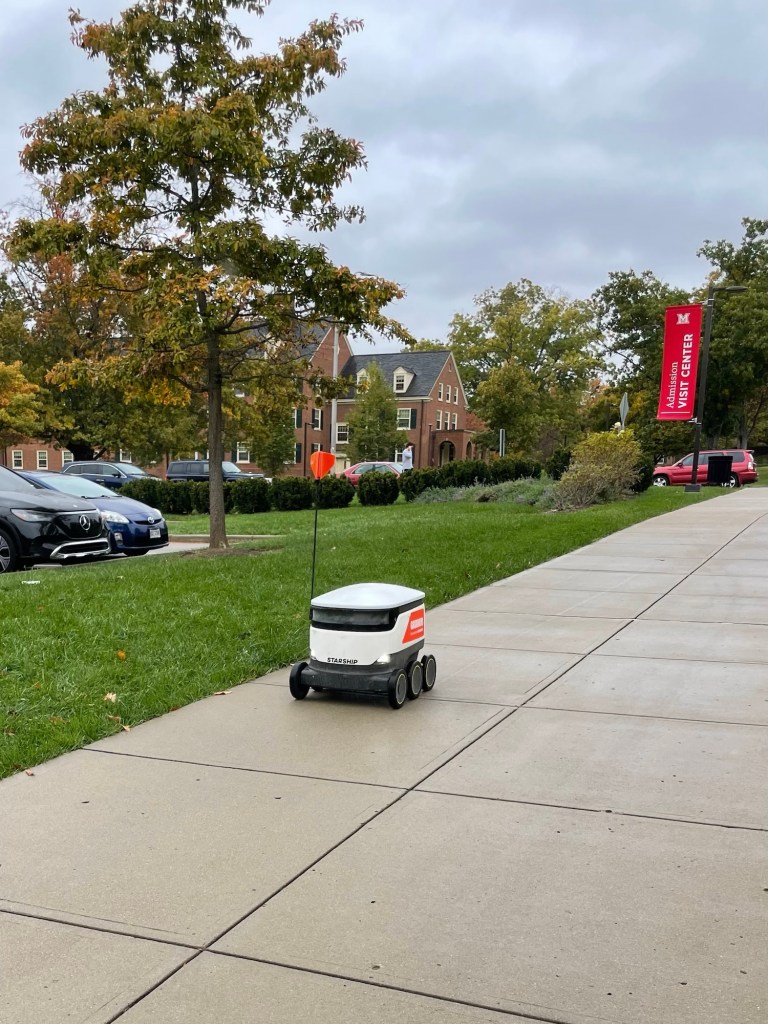
Heading into the campus proper, we saw a few of these little GrubHub delivery bots cruising around. They even navigated busy roads at pedestrian crossings. The intermittent rain didn’t seem to affect them at all.
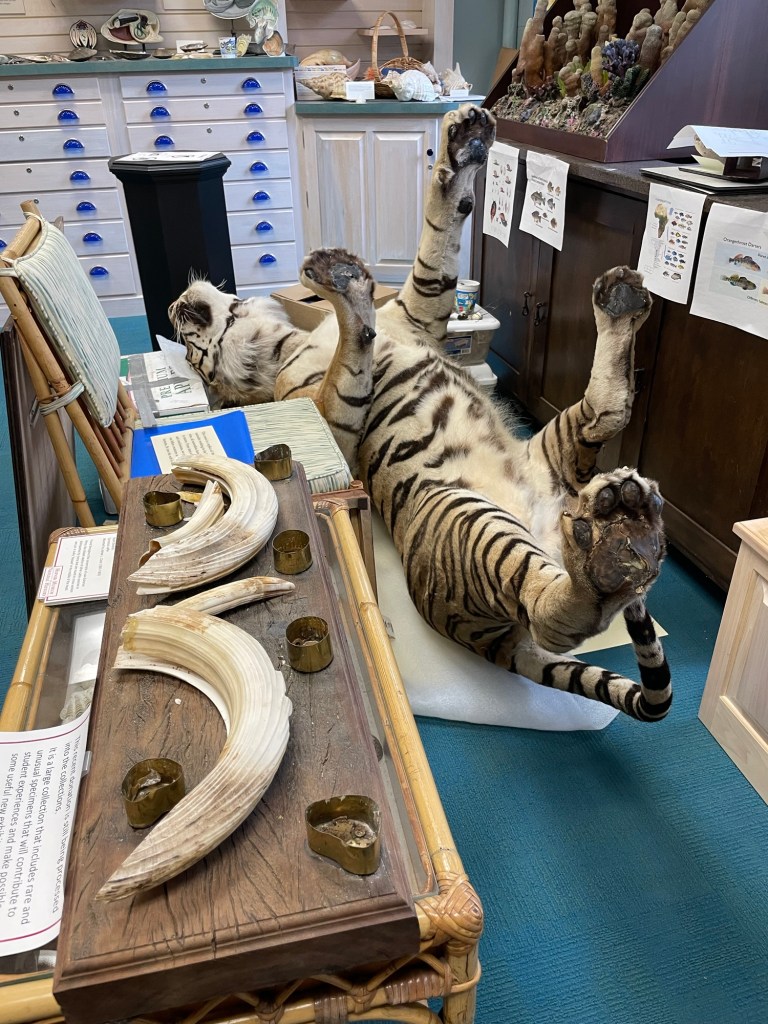
After visiting the Hefner Museum of Natural History, an absolute wonder of assorted taxidermy, we wandered the rest of the basement’s hallway and checked out a few of the other specimen rooms in Upham Hall. At the back of the mollusk/shells room, we came across a poor upside down tiger. That was a belly just begging to be rubbed! I ask, how often do you get the chance to see murder paws up close? Yes, we refrained from touching it, knowing that the oils on our hands would be detrimental to the skin and fur in the long run, but it wasn’t easy.
On our way back to the campground, we visited one of the local covered bridges. It’s called the Black Bridge, the former owner’s name, despite never being painted black.
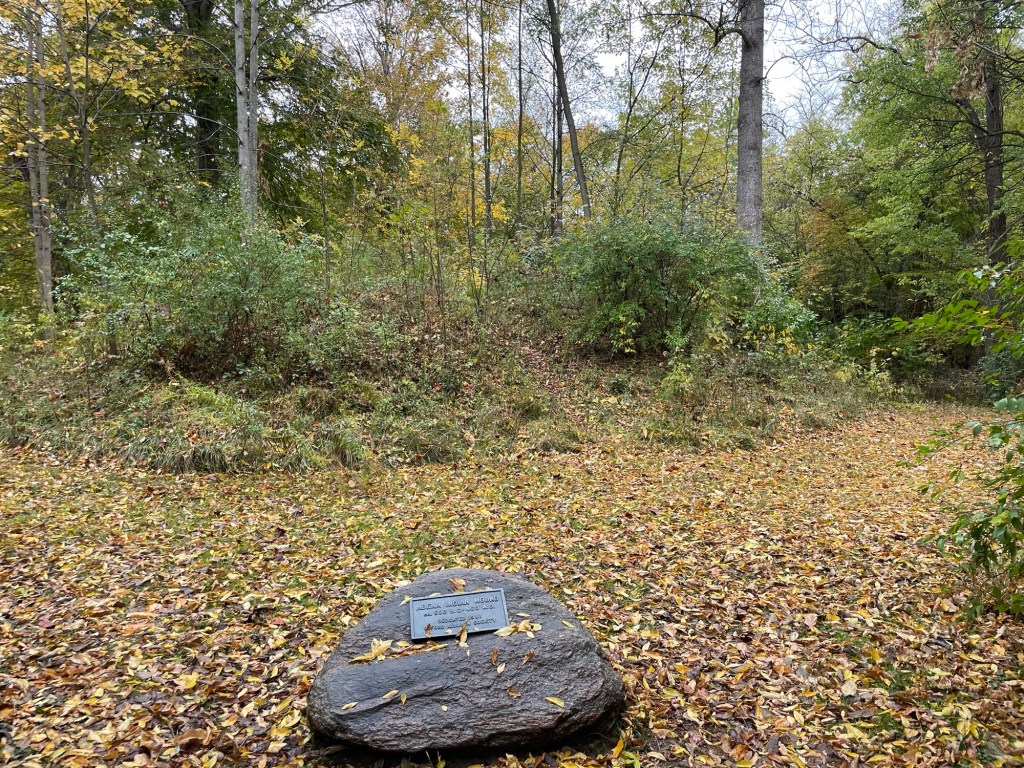
Growing up in West Michigan, we’d learned about the indigenous mound builder tribes that inhabited the Great Lakes region, but we were still surprised to see that the campground had a burial mound at the end of our line of campsites. There wasn’t any information posted about it, and the rain started coming down hard again as we walked the path around it, so I’m not sure if there are more of them nearby or just the one remaining. Someday I hope to see the astrological Serpent Mound in south central Ohio.
The next morning, we heard an early lull in the rain, so we hooked up quickly and drove east toward Louisville, Kentucky, where the weather promised to be dry.
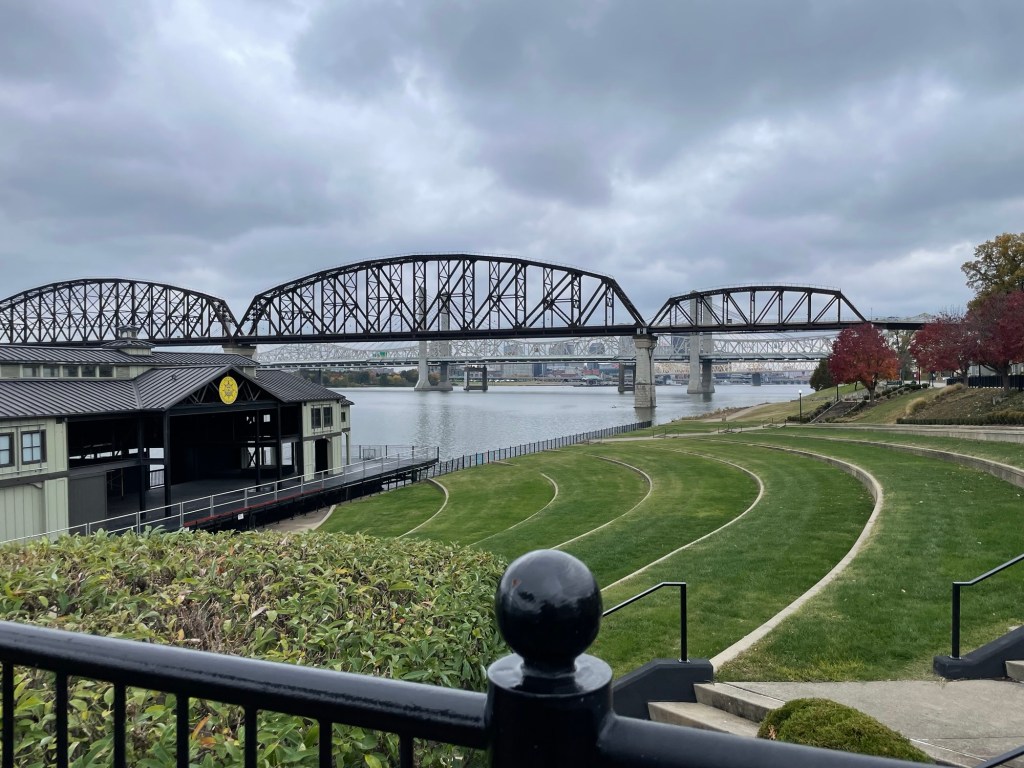
Charlestown State Park is right along the Ohio River, on the Indiana side of the Louisville metro with a nice campground. Since some friends, Shannon and Chris, moved to the metro just a few months ago, it seemed like a good time to visit.
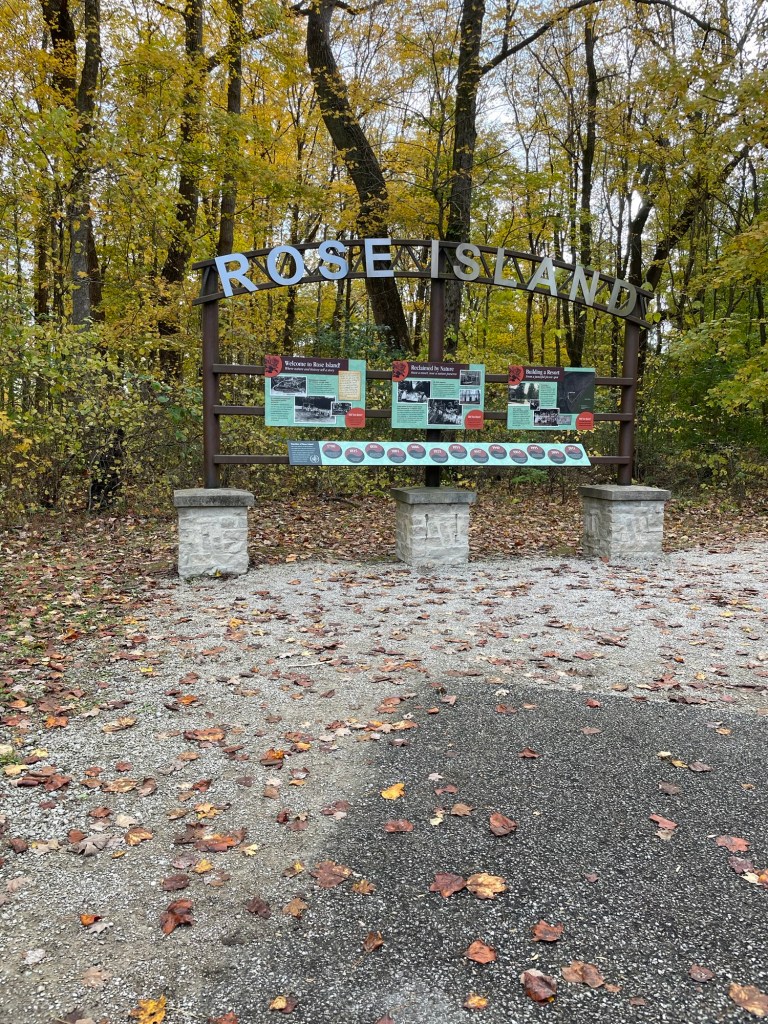
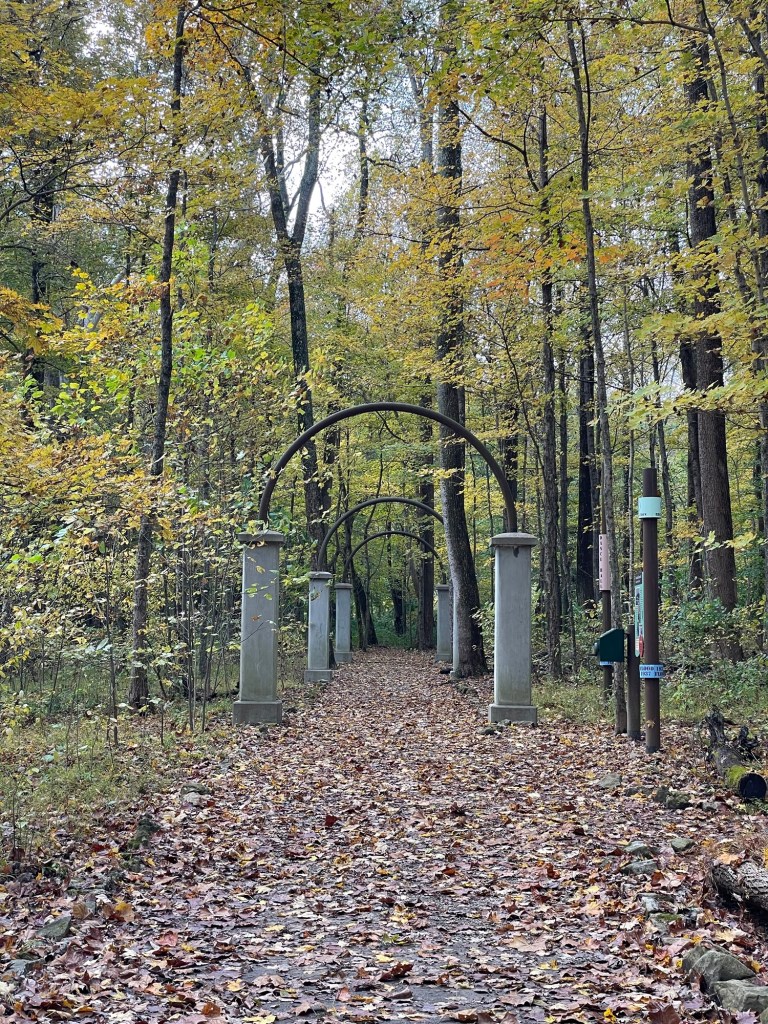
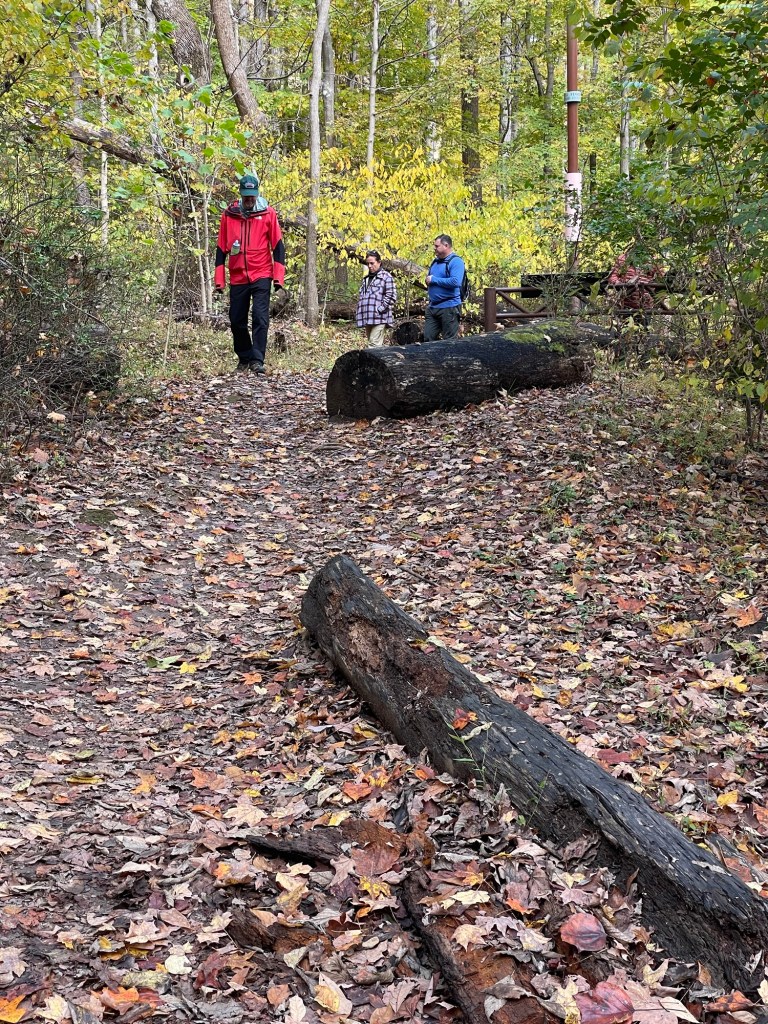
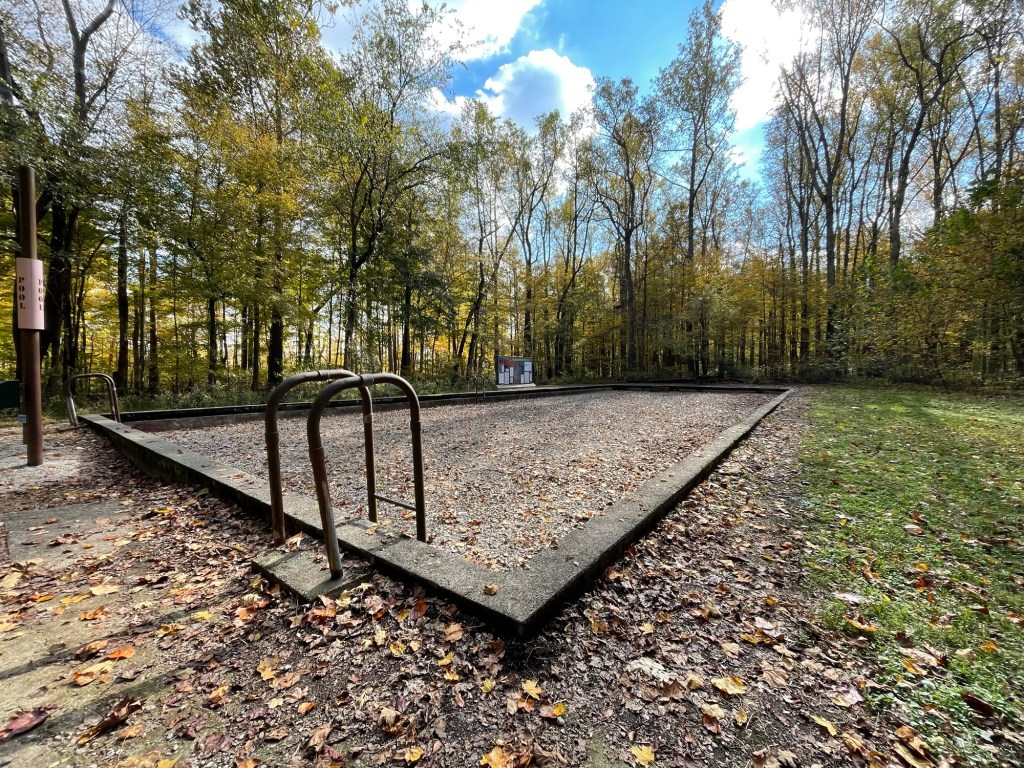
Charlestown State Park is a fairly new state park (1996) for Indiana, on the site of an old ammunition factory, but its hidden gem is an old picnic ‘island’ (peninsula) from the 1800s that had another Resort-style rendition and a name change, Rose Island, in the early 1900s. After a massive flood of the Ohio River in 1937, the park was abandoned and all but forgotten until it reopened to the public in 2011 when a bridge was installed. Nature has reclaimed nearly every inch of the once glamorous summer resort, but a few bits of its history still peak out here and there.
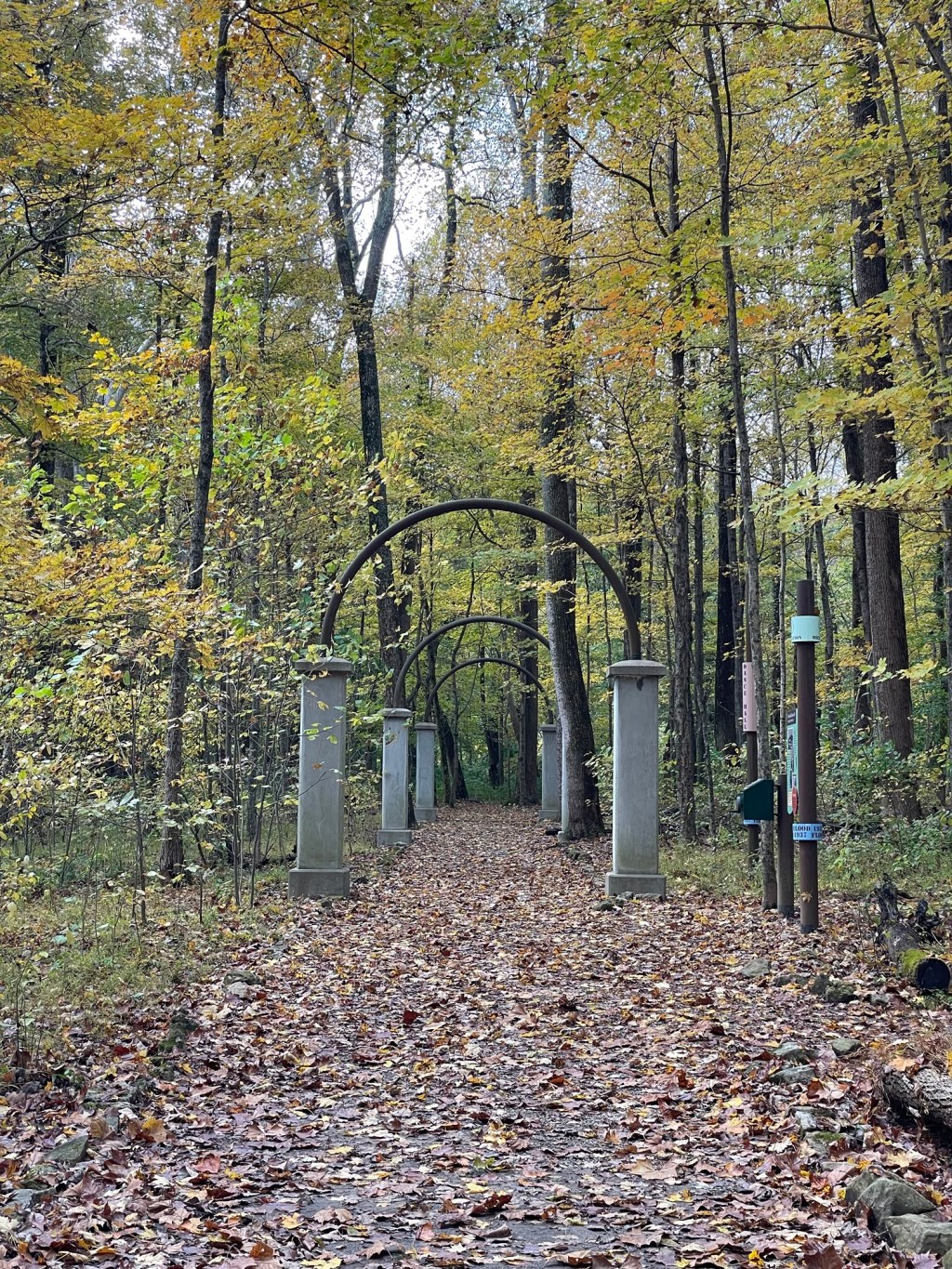
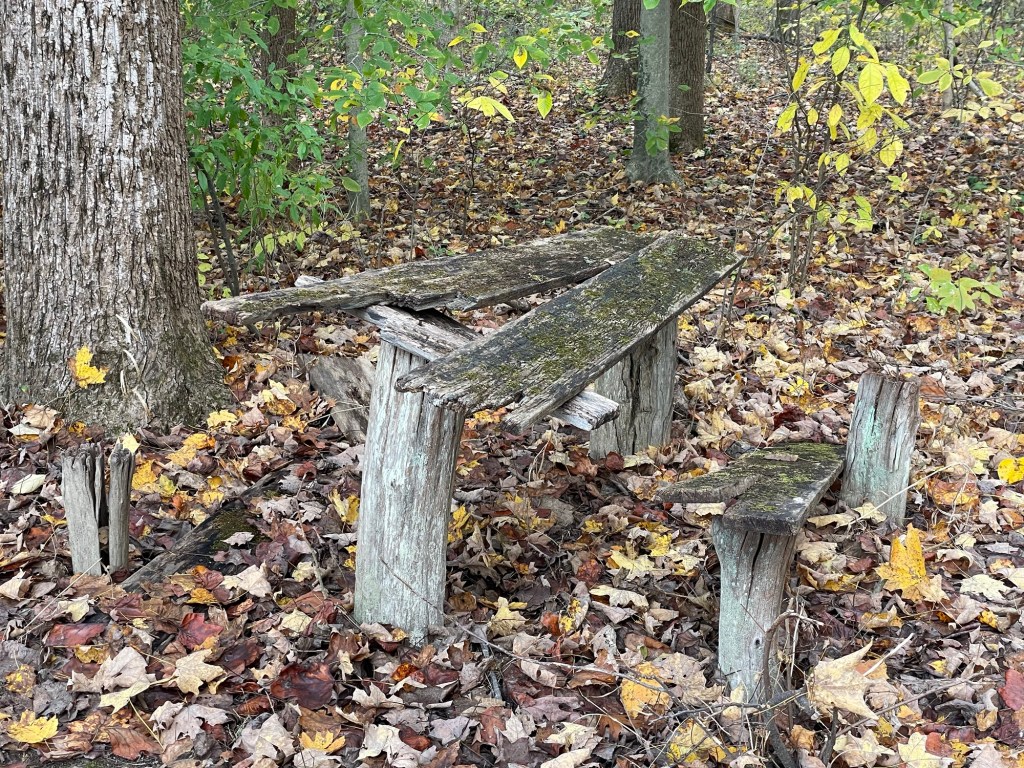
The arched walkway once ran the entire length of the midway, connecting various attractions. The green circle indicates the water level at the height of the 1937 flood. The Olympic size pool was a rarity in its day An old picnic table
After breakfast in Jeffersonville with Shannon and Chris, we all took a stroll down to the Ohio River. The area clearly learned a painful lesson in 1937. Flood walls like this are everywhere throughout the region.
When I return to a region so full of family and friends, not a lot of pictures get taken. Sorry, but it’s always been this way. For nearly three weeks, we barely saw the inside of the HMS Beangle, as we curled up in the homes of others.
Running water? Right there. Heat? Turned on. Hot coffee, hot tea, hot delicious meals? They regularly arrived with little to no effort on our part.
It was remarkably nice, not gonna lie. We found ourselves missing the trailer more than we expected though, which was a nice realization. We followed the Grand River in reverse, working our way from Lake Michigan.
After arriving downstate, we were thrilled to see Linda and Gary again after many, many years. We grabbed dinner at a local Mexican place which had normal and large margaritas as big as a baby’s head. You can guess the size that Gary and Jeff ordered. Since retiring, they’ve kayaked down the entire Mississippi River, the entire Missouri river, as well as many other kayaking and cycling trips since then. They often camped along the way, fund-raising for Water for People‘s clean water initiatives. (Please donate something, if you can. Safe, plentiful clean water isn’t a luxury, even if our politicians act like it is.) It did our hearts good to talk with them about the inconveniences and uncomfortable moments they encountered during those months-long trips. They sent us off the next morning with probably the best frittata I’ve ever eaten and some gluten and dairy-free granola that I’m still portioning out like the chunky gold it is.
We got lucky and had a chance to see nearly ALL of Jeff’s and my family members. That almost never happens. Granted, we had to chase down my sister at work, but ya do what ya gotta do. Three generations packed into Jeff’s sister’s house. Breakfast called my brother to the western suburbs. And we even pulled the trailer over to Jeff’s parents’ place so that they could see it and to his nephew’s house so we could cuddle the one-eyed pirate cat.
We camped one evening in Georgetown, on the Grand River, and you would have thought this campground was protecting the nation’s plutonium reserves. There is a gate to enter the campground, a license plate reader that activates the gate, a per person fee for visitors, and (we found out later) a requirement that you pre-register all visitors. My friend Sherry and her husband Rob came to collect us for dinner that evening and she had to make a case on the after-hours number for getting their vehicle past the gate after hours. It all felt rather excessive, to be honest. But if anyone was going to get past that gate after hours and without pre-registration, it was Sherry.
Big color, little traffic
Pam, who met up with us in Colorado in May with the beautiful Airstream, invited several of Jeff’s former coworkers to meet up with us for lunch at one of their old favorite lunch haunts. It was so nice to see them all and lovely for them all to make time for us.
After lunch, we followed Pam back home and stayed with her and Bob for several days. And Pam’s niece and nephew-in-law (if there is such a title), as it’s bow hunting season. J&T woke up at unreasonable times, tiptoed out of the house, and sat in a little covered stand down in the valley for hours on end. And then, after a few hours’ nap, they did it again. My guess is that it helps to be relative newlyweds for the level of near cuddling required. I can only imagine their thoughts when they heard that two absolute strangers were going to be sharing their weekend get-a-way with family. Both were very friendly and welcoming, though, so I’m going to believe they didn’t mind. Since their freezer still has some of last year’s venison, they said their goals were larger bucks and/or a turkey. You can imagine the surprise (and laughter) when 19 turkeys casually walked past the front of the house–with J&T sitting down just a 5 minute walk away!
Imagine Dragons Turkeys
After taking a nice walk on Sunday, Pam pulled out her impressive cooking skills and made the most incredible venison black bean bowls. I enjoy venison in general, but she made a marinade that took these steaks to a new level. It was yummy hot. It was yummy cold. It smelled delicious and looked even better. I’m drooling just thinking of it.
We found some impressive contestants for Death or Dine, but this puff ball, with its skull-like cap, feels appropriate for this time of year. A quick internet search into its edible-ness doesn’t lean toward safety. It’s got discolorations, blemishes, and rough patches. All warning signs. Don’t say I didn’t warn you.
Deathshroom
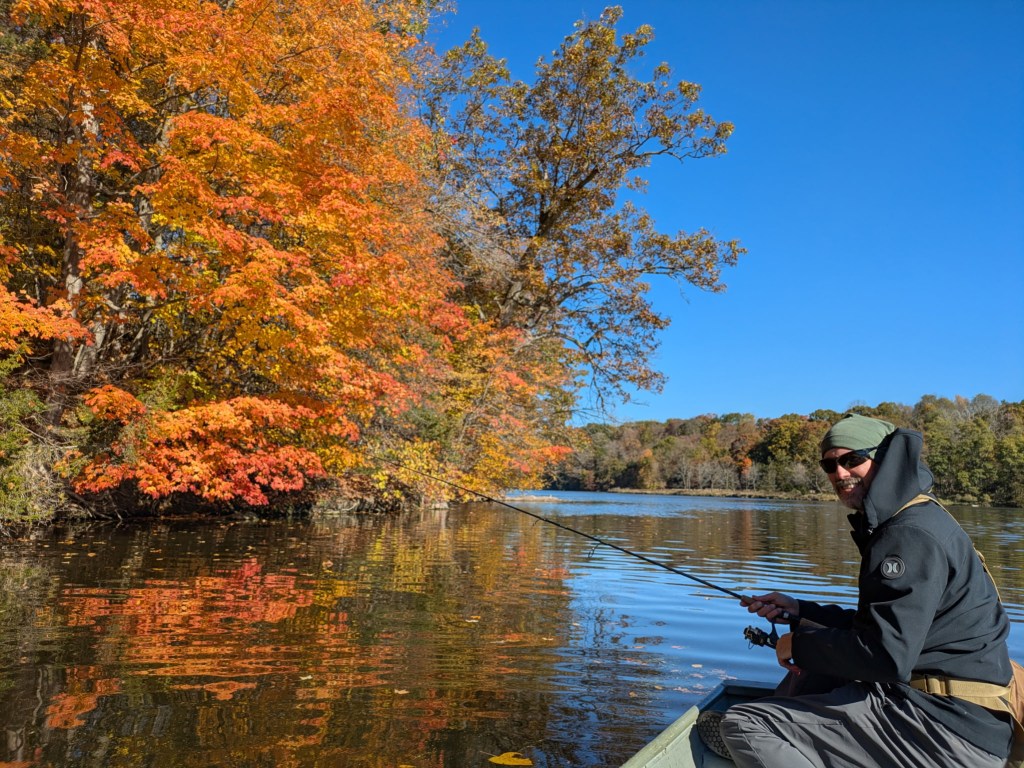
While Pam and I cruised for groceries, Jeff and Bob got back out in the river for a spot of fishing.
In his element (photo by Bob)
Throw in evening fires where the living room’s wood burner glowed scarlet, where we read for hours on end, where football and baseball played out, and where we all quoted the five hour BBC version of Pride and Prejudice by heart, and it was hard to leave that little piece of heaven. But back on the road we are.
Wouldn’t you know it though, I left the book I was reading at my mom’s house and 2 pounds of ground venison, gifted to me from Bob’s hallowed vaults, in the freezer the morning we left! This colander brain of mine. Oh, and Bob texted to let us know that we forgot their would (not) like to be adventure cat, Kitty, a stray that they’ve had for 14 years. I don’t see her getting harness trained any time soon.
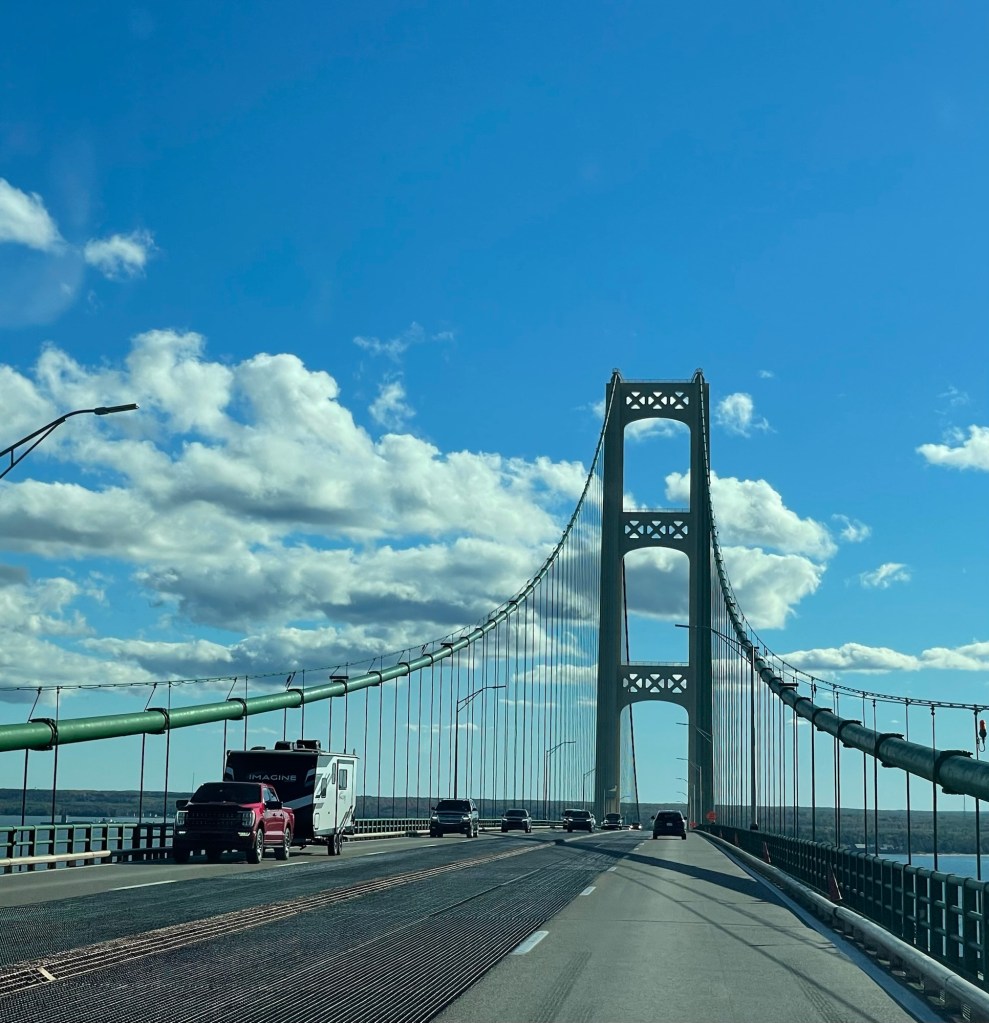
Mack-a-naw or Mack-in-awe, I’ve heard both, but it’s definitely not Mack-in-ack. Go ahead and take a sec to practice, if needed.
The Mighty Mac can be five miles of swaying suspension terror on high wind days, makes a truly horrendous sound when driving on the inner metal grates, and the edge rails feel far farrrrr too low any day of the week. That said, Michiganders in general love the Mackinac Bridge, straining to catch that first glimpse of the industrial green towers when about to cross from one peninsula to the next.
Up North
The 45th parallel marks the halfway point between the equator and the North Pole and is the unofficial definition to me when someone from the lower peninsula says they’re going “up north.”
We relaxed at the folk’s place Up North for over a week, eating, sleeping, doing laundry, putting puzzles together, seeing extended family, and just relaxing in general.
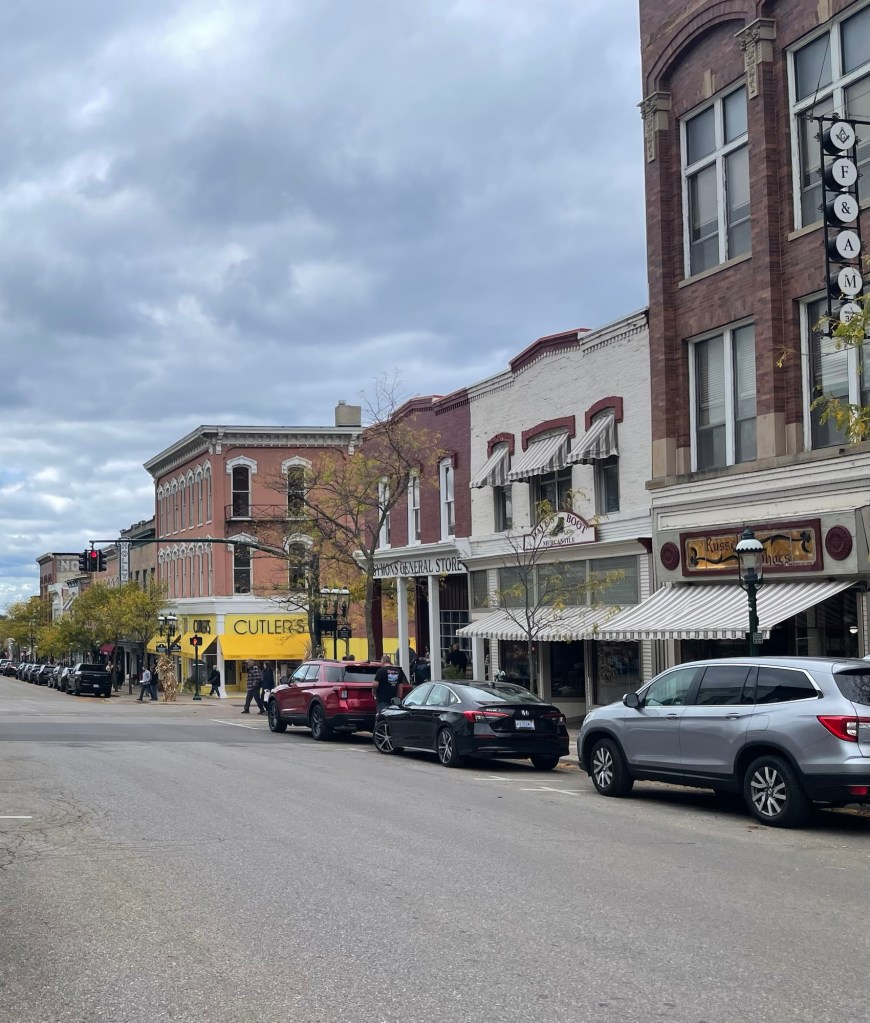
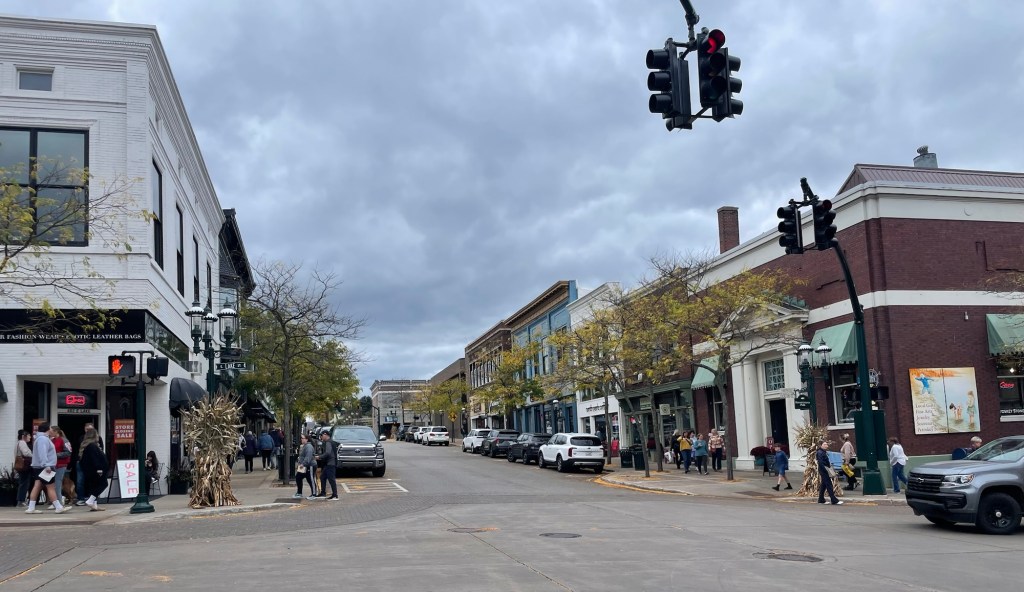
Petosky business district
There were a few side trips to Petoskey, Elk Rapids, and Traverse City.
Petosky business districtPetosky Harbor
But most of our time was spent hanging out, playing games, making jokes, and catching up. As you can see, it was pretty cloudy our entire stay up there, which is pretty par for the course near the Lake Michigan side of the state. Those giant inland seas have an outsized impact on the weather. The upside is these clouds create a giant, moody light box and if you catch it just right, good things happen.
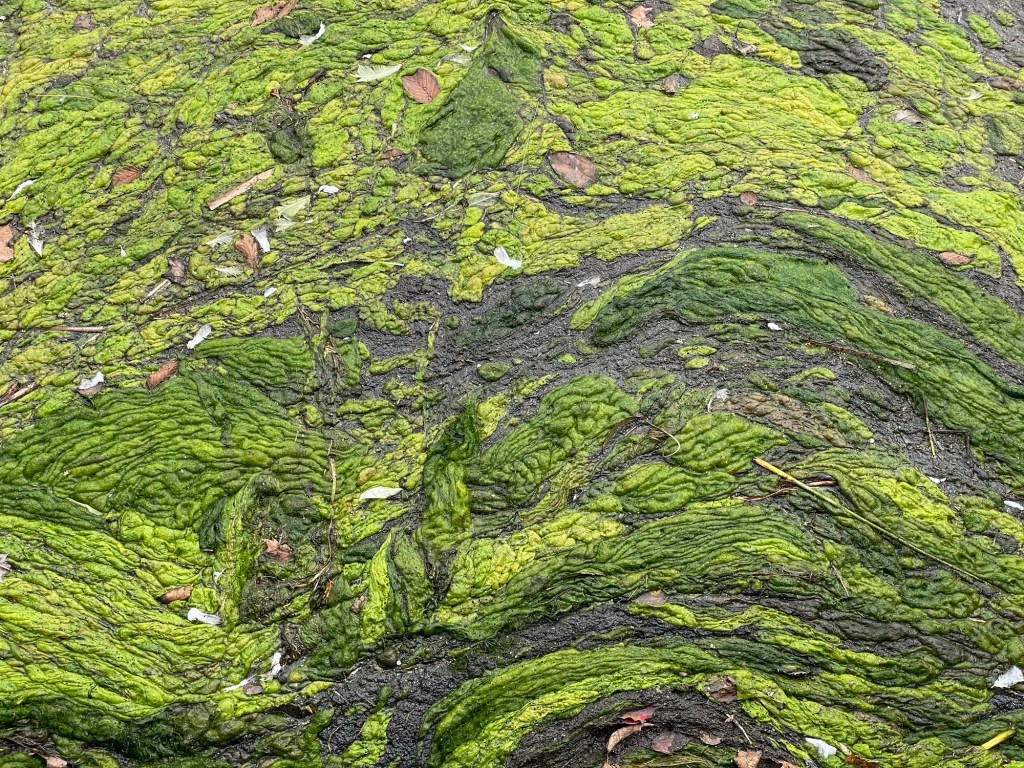
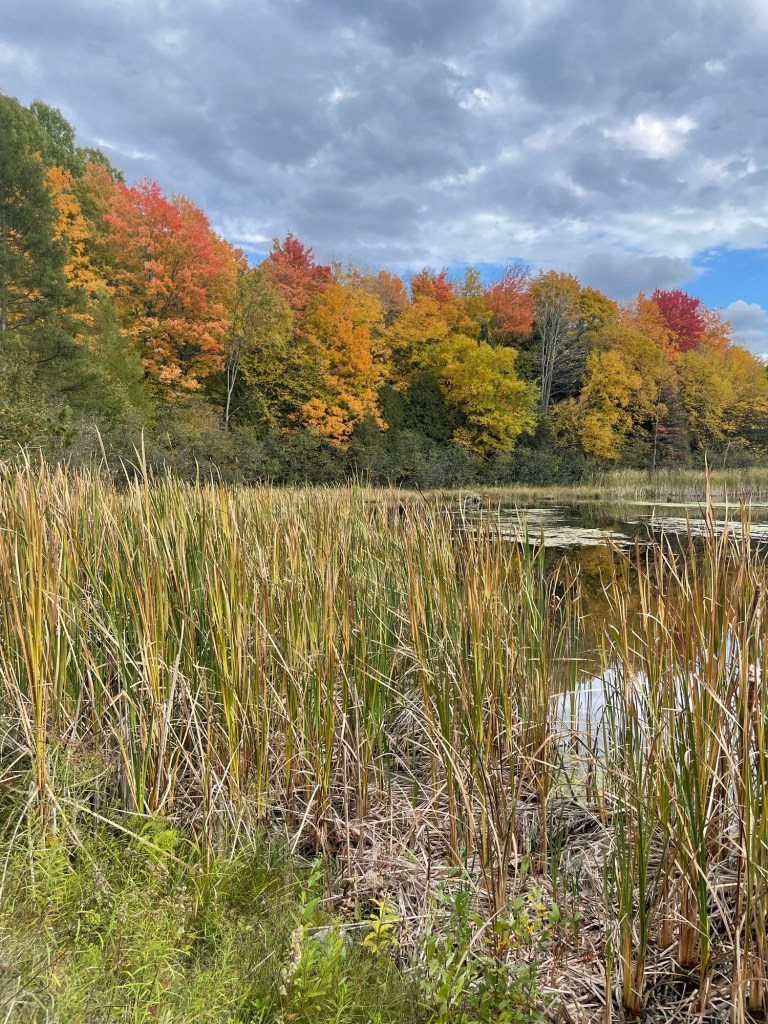
Seven BridgesEven pond scum is pretty from the right angle
Rugg Pond Dam’s claim to fame is that Hemingway is said to have once fished there. The dam is scheduled for demolition soon, with differing opinions on the desirability of that event. No matter the opinions for or against, the dam currently appears to be unstable and at risk of failure if left as is. Only time will tell what the long term effects of the change will be.
Rugg Pond
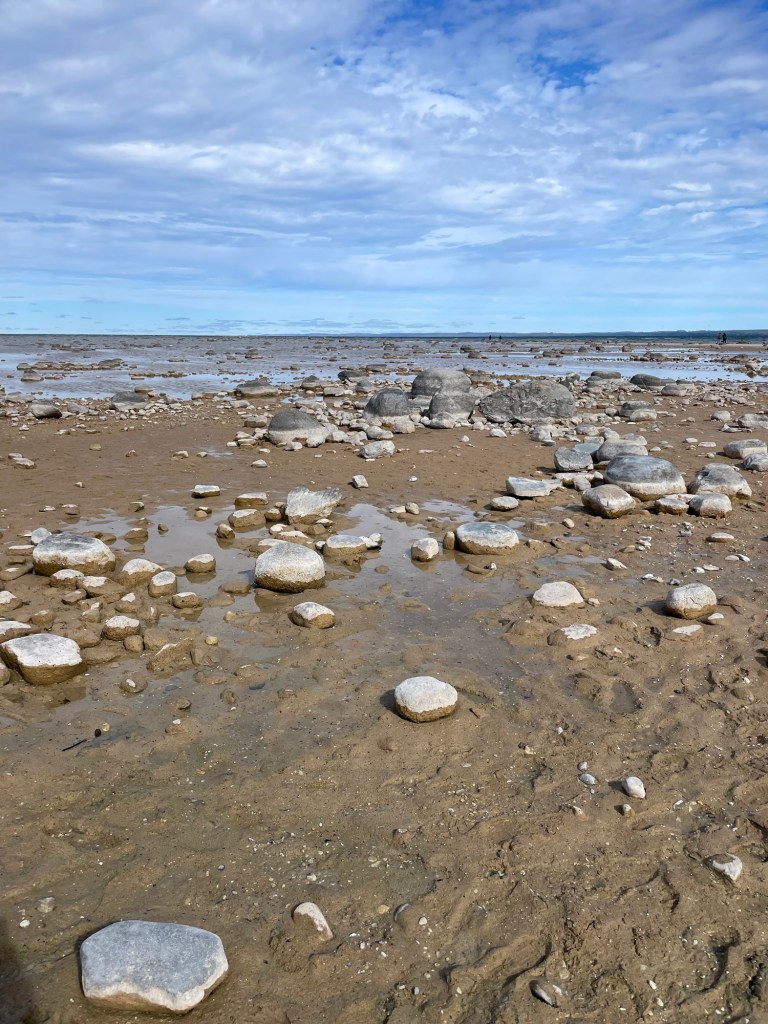
A drive through the Mission Point peninsula reminded us how beautiful the West Michigan shoreline can be. The Lake appears to be pretty low at the moment (yes, locals?) as seen by the water lines on these larger exposed rocks.
Mission Point shorelineAll kinds of crushed shells intermixed with the white sand
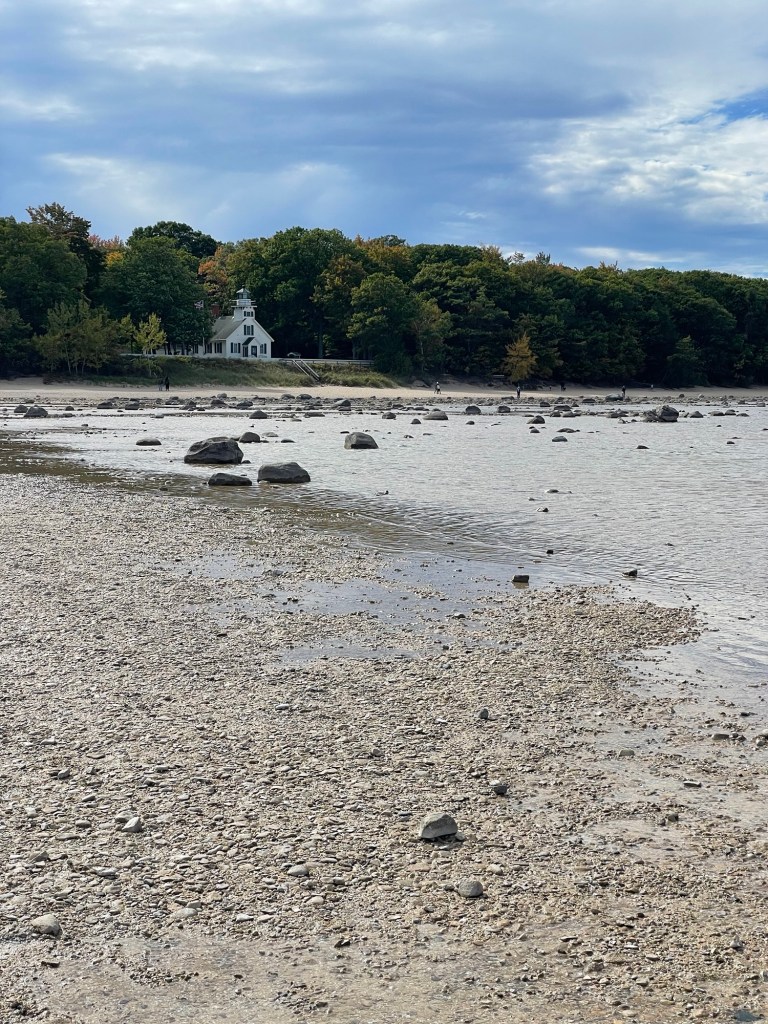
There are lots of decommissioned lighthouses along the miles and miles of Michigan shoreline, and I love them all. I’ll never not want to look at a lighthouse.
The decommissioned Mission Point Lighthouse
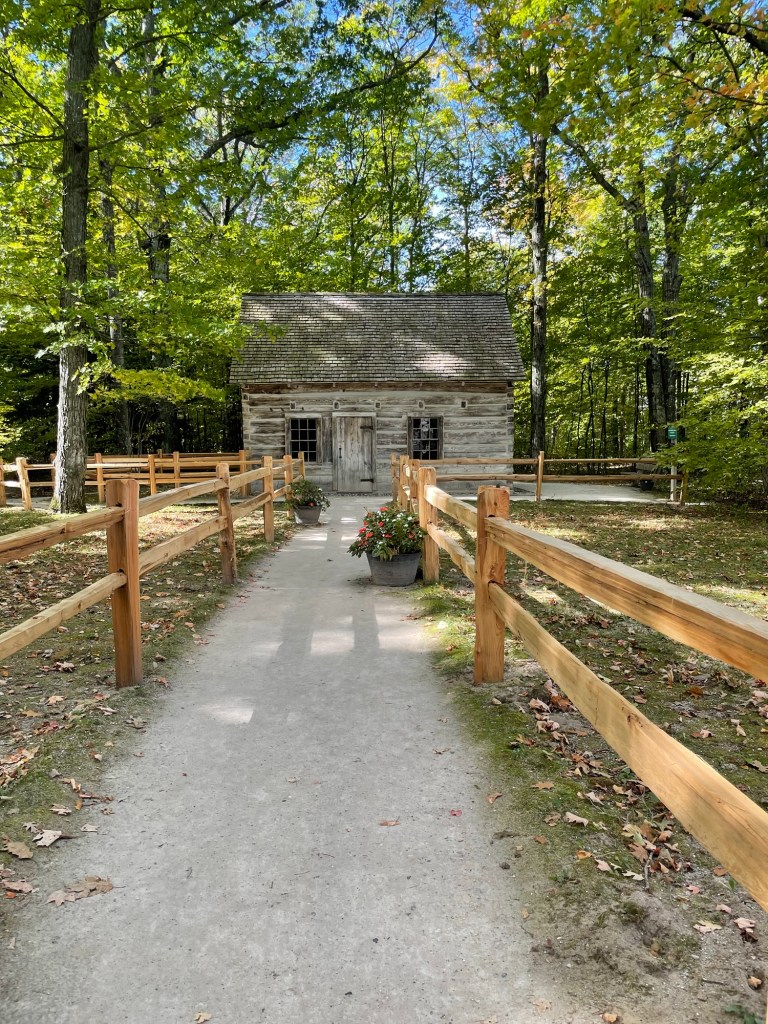
Throw a log cabin into the mix, and you might not get me back to the car before nightfall. Jeff is very patient with my ogling at log cabins and lighthouses, which makes him a veritable saint.
This visit’s saint maker log cabin Grand Traverse Bay, Mission Point side
We walked around some short trails, through a hemlock forest. Don’t make tea from these needles.
Hemlock forest
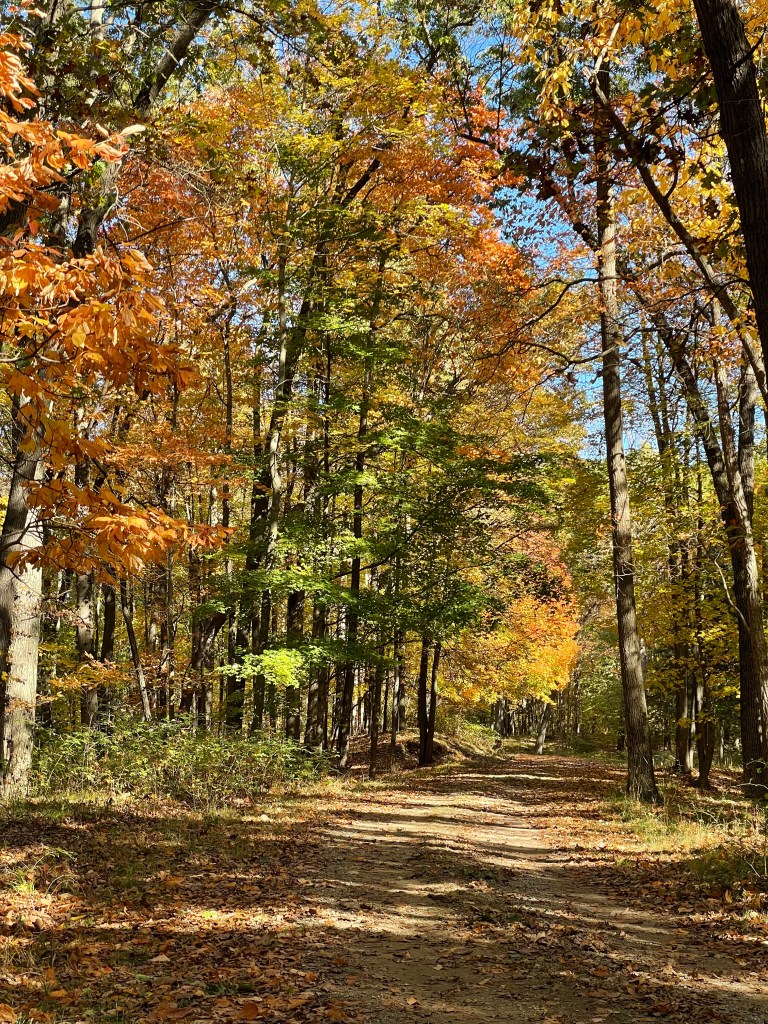
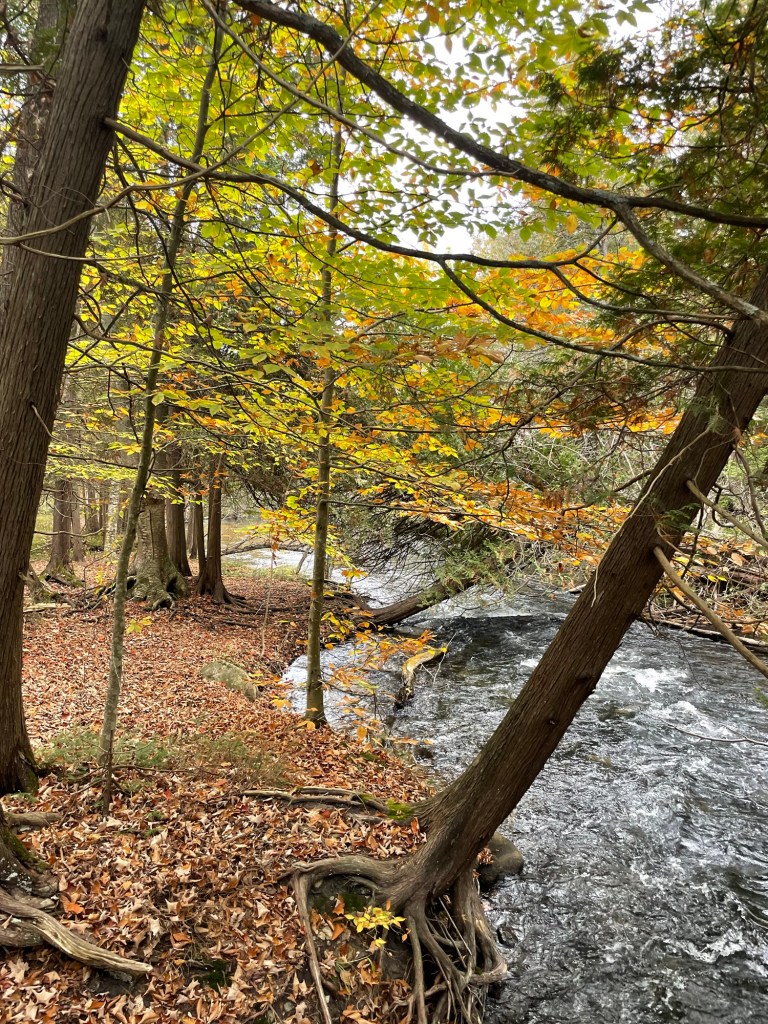
The cabin and surrounds were at peak color during our visit. I feel like we won the autumnal lottery this year, hitting one peak color spot after another.
Peak colorMore peak colorSeriously, this is embarrassing It’s all fun and games until the fire department shows up
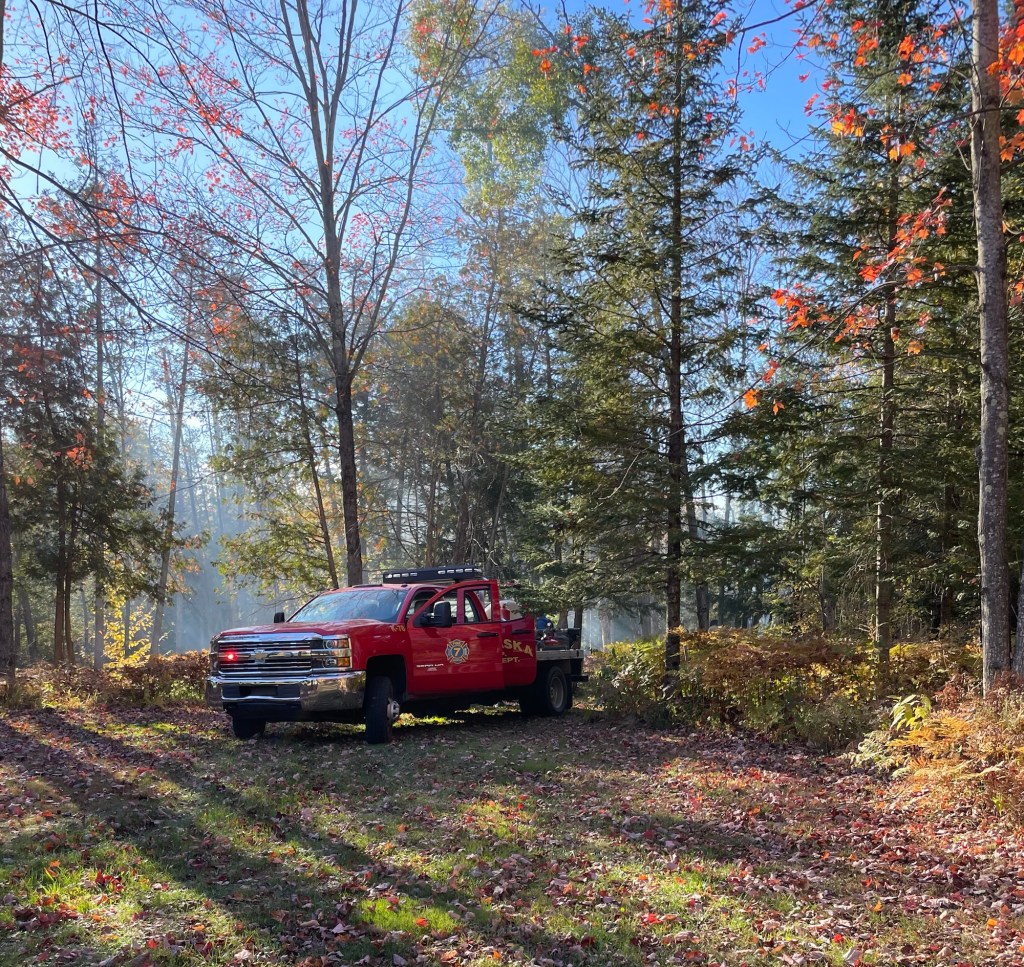
Right before we headed out, a neighbor called to warn us not to worry but we might hear some sirens. We heard some sirens. We saw some lights. Two volunteer departments arrived. Don’t say they don’t know how to have a good time Up North. Thankfully it wasn’t a big deal and the brush fire was knocked down and under control again even before the first truck arrived, but always better to be safe than sorry.
When we heard that some of our favorite people were going to be camping near Pictured Rocks National Lakeshore, we decided to head to Munising, MI. We didn’t know what to expect with the governmental shutdown, but even if we couldn’t get into the park, we knew we wanted to see Rob and Kate.
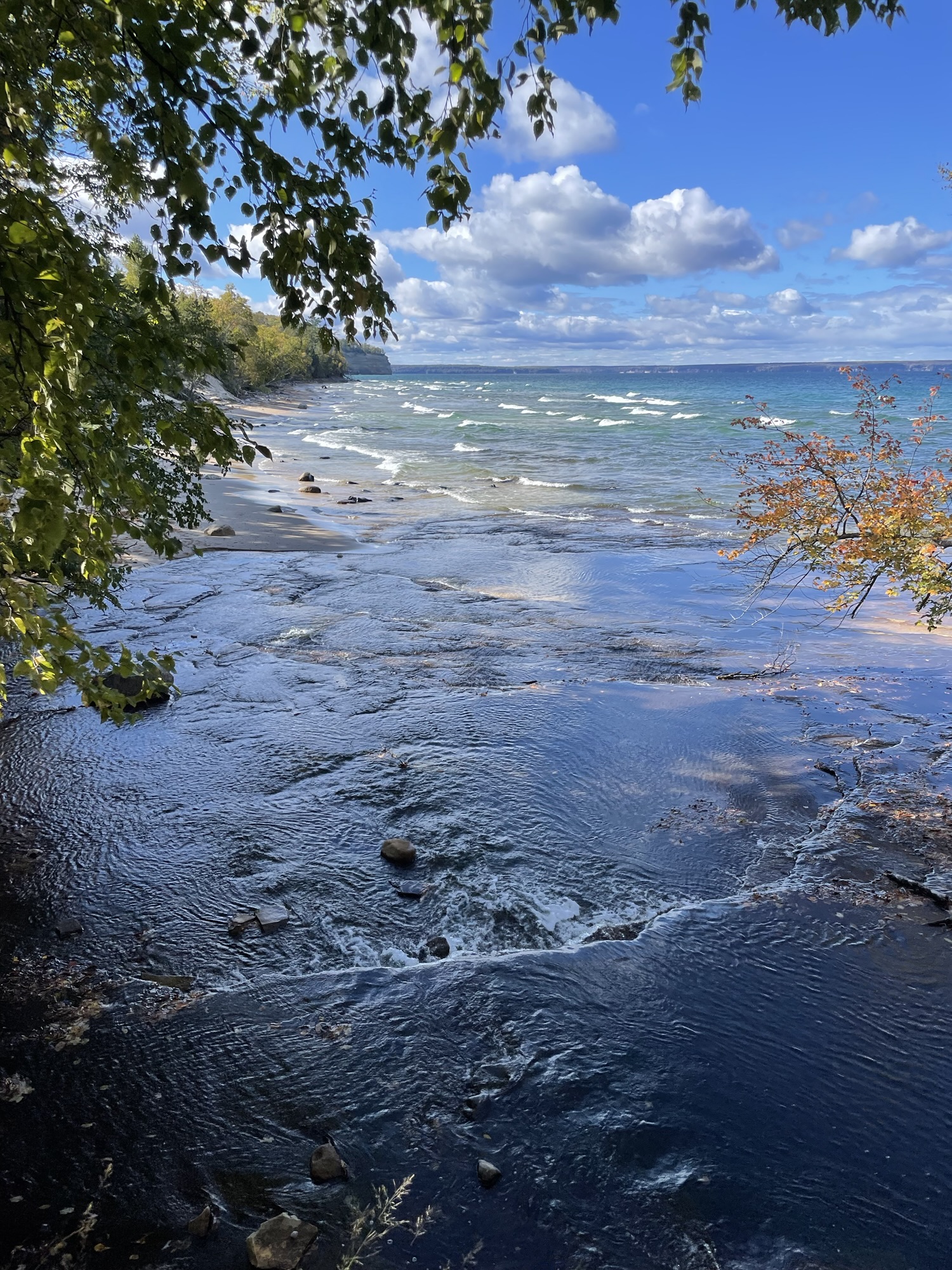
If you haven’t heard of Pictured Rocks yet, the region is all about water. Without a doubt, the best way to see the cliffs’ varied colors and dramatic rock formations is from a boat, but seasickness plus high waves kept Jeff and me on land. Visitors come to see waterfalls and the 12 miles of mineral-stained, erosion-carved sandstone for which the National Lakeshore is famous. Pictured Rocks was designated the very first National Lakeshore for a reason.
Because high waves caused their boat tour reservation to get pushed back two days, we headed out first to see some waterfalls. Rob and Kate are responsible dog owners, so they checked to see which ones allowed pets and which didn’t. The Visitors Center was closed, so we just headed to our first stop. I wonder how much revenue the nation has lost by not having Park staff on site to collect entrance fees or sell annual passes.
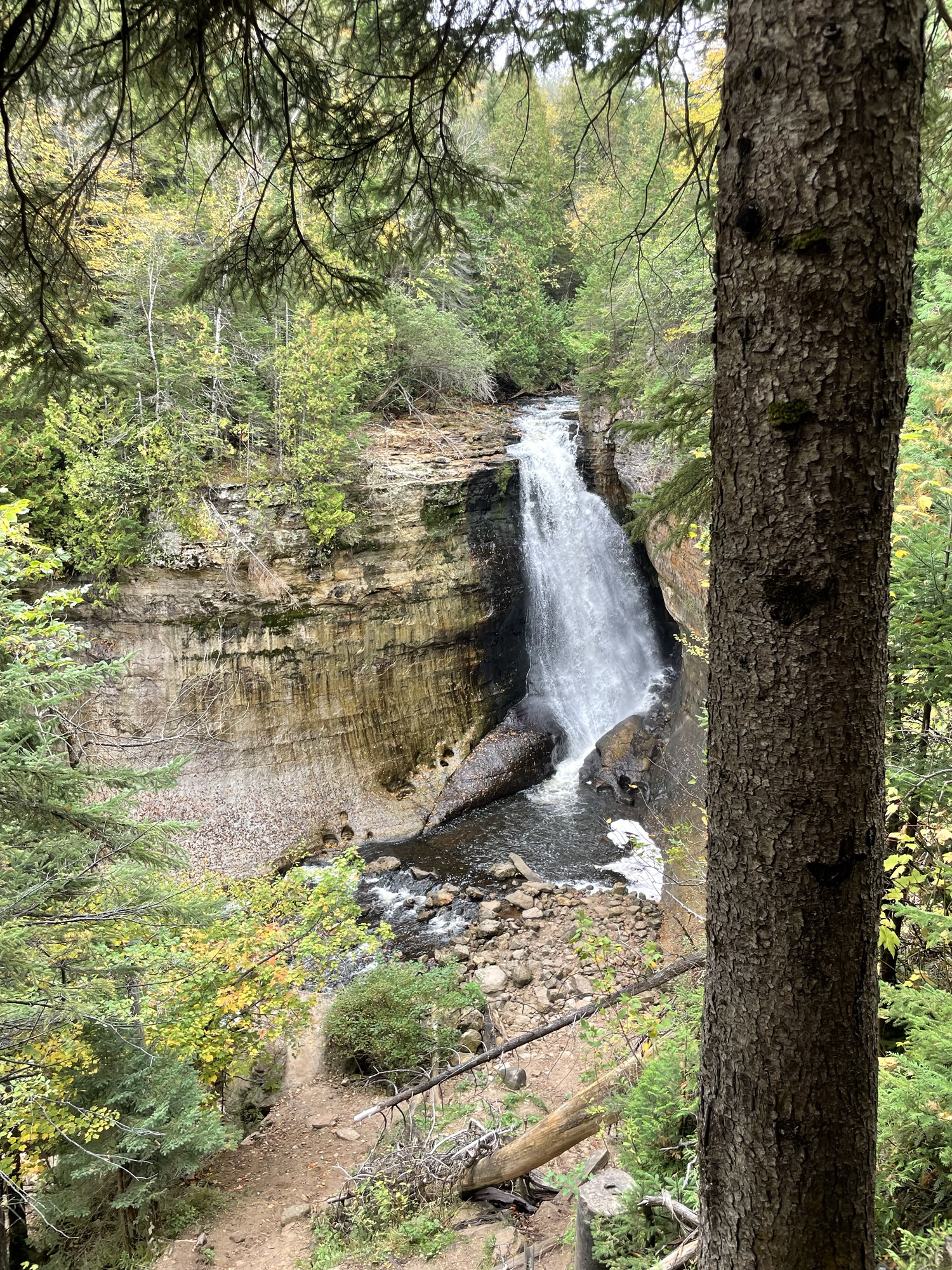
Miners Falls
Miners Falls is an easy, half mile walk from the parking lot, with two viewing areas. Only one requires a flight of stairs. Despite fences around the viewing areas, we saw a young couple climb over the railings to get closer to the falls. A quick instagram search shows me that the internet is full of people doing that during the governmental shutdown. It makes me sad and angry to see things like that going on, as the barriers are there to protect both visitors and the waterfall area, but I’m not surprised. Selfish and destructive people come out of the woodwork at times like this.
Anyway.
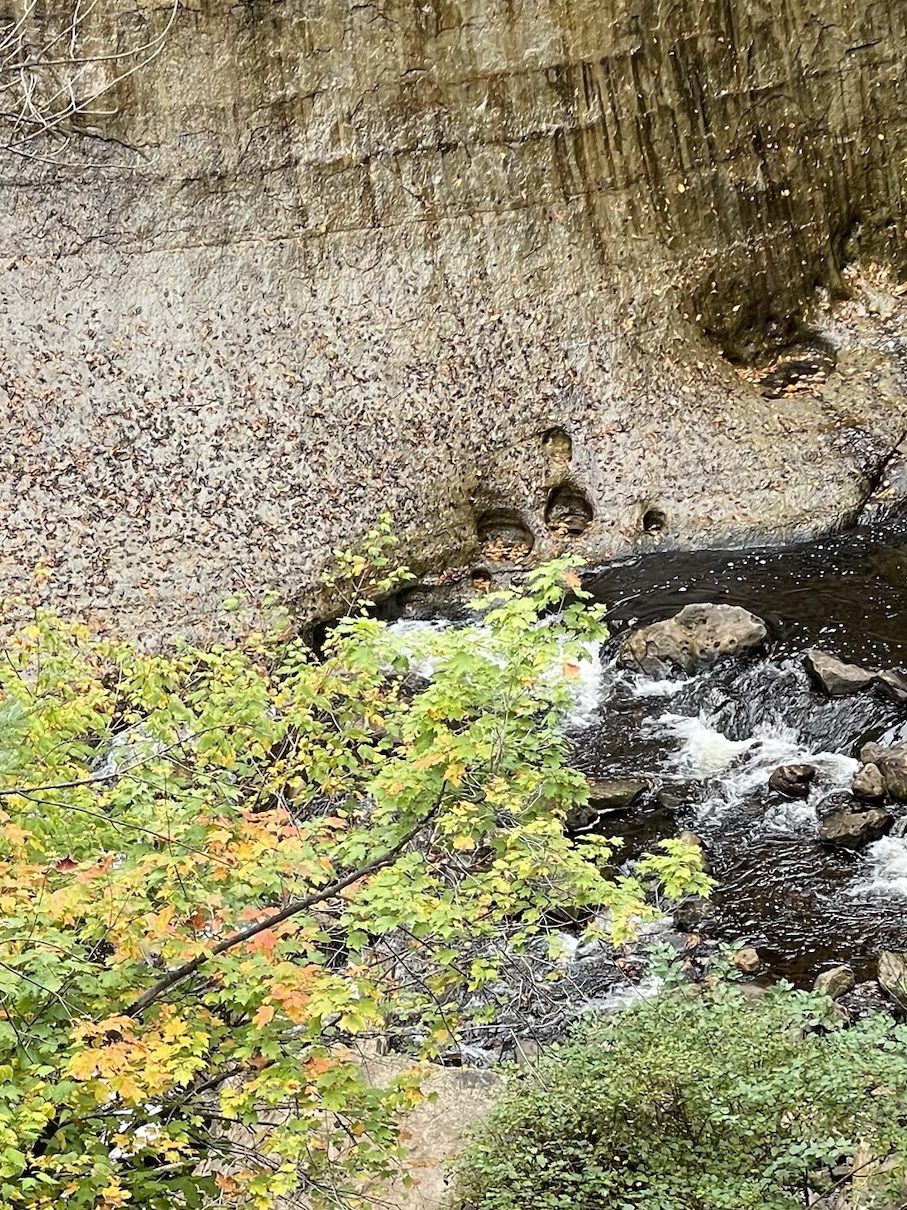
Did you notice the little circles at the base of the falls? They were created by water, rock, and a geological spin cycle. Called kolk basins, they’re formed when very fast water gets into a depression and spins a small object inside of it, eroding the slight depression into a deep, circular pit.
Yeah, I admit it. I’m feeling pretty good about the 20+ episodes of How the Earth was Made we watched last summer. Look at me tossing out geological tidbits on a whim.
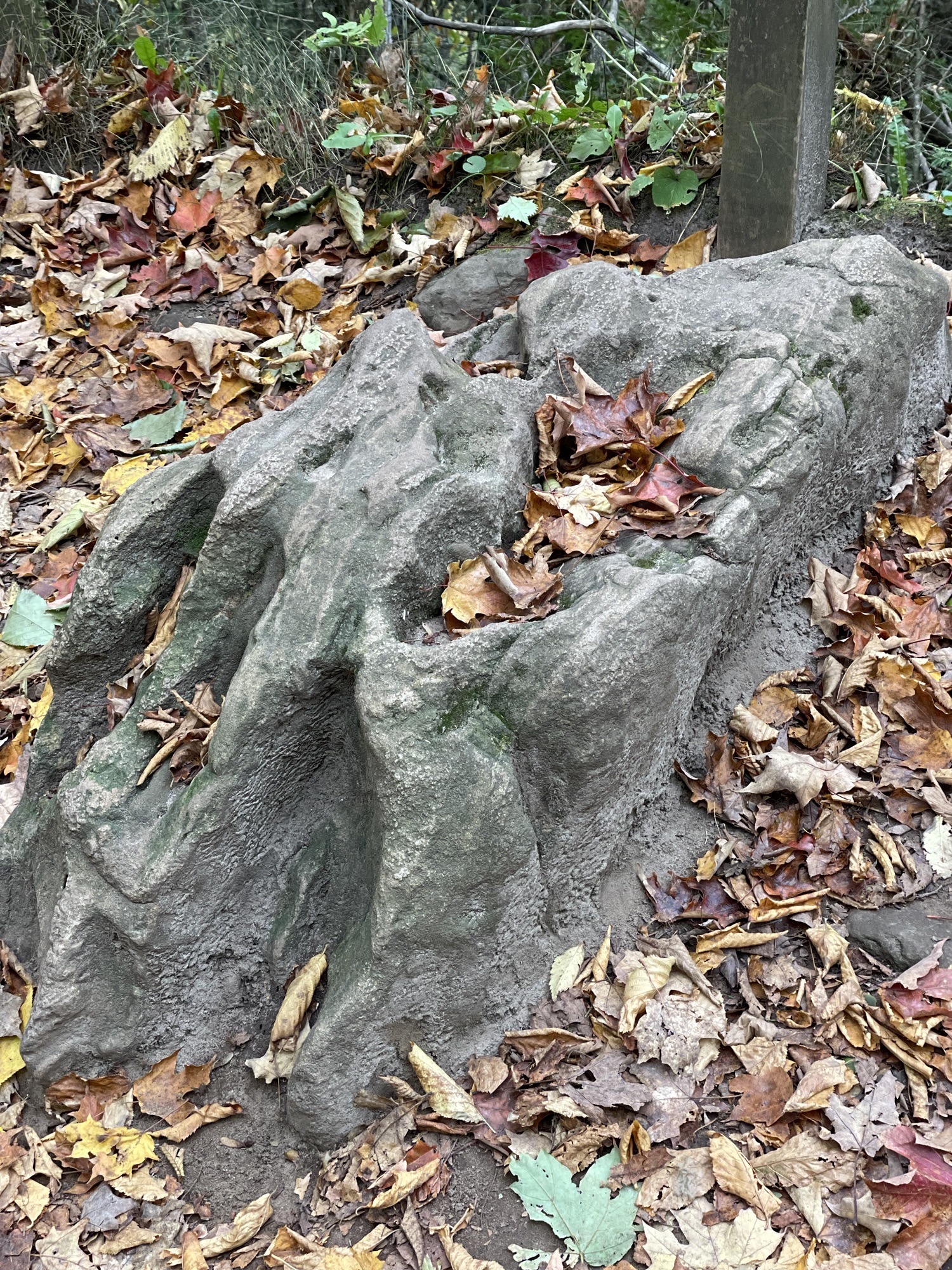
This walk made me extra happy, because not only did I see kolk basins at the base of the waterfall, but I also noticed this big rock full of glacial scrapings on our walk back to the truck. What’s that, you want an explanation? Don’t mind if it do. As mega-ton glaciers advanced and retreated from the poles across the earth, rocks and boulders trapped beneath the ice sheets carved grooves into the landscape behind them. Geology, man. It’s pretty cool to see physical evidence of the changes the earth has undergone across eons.
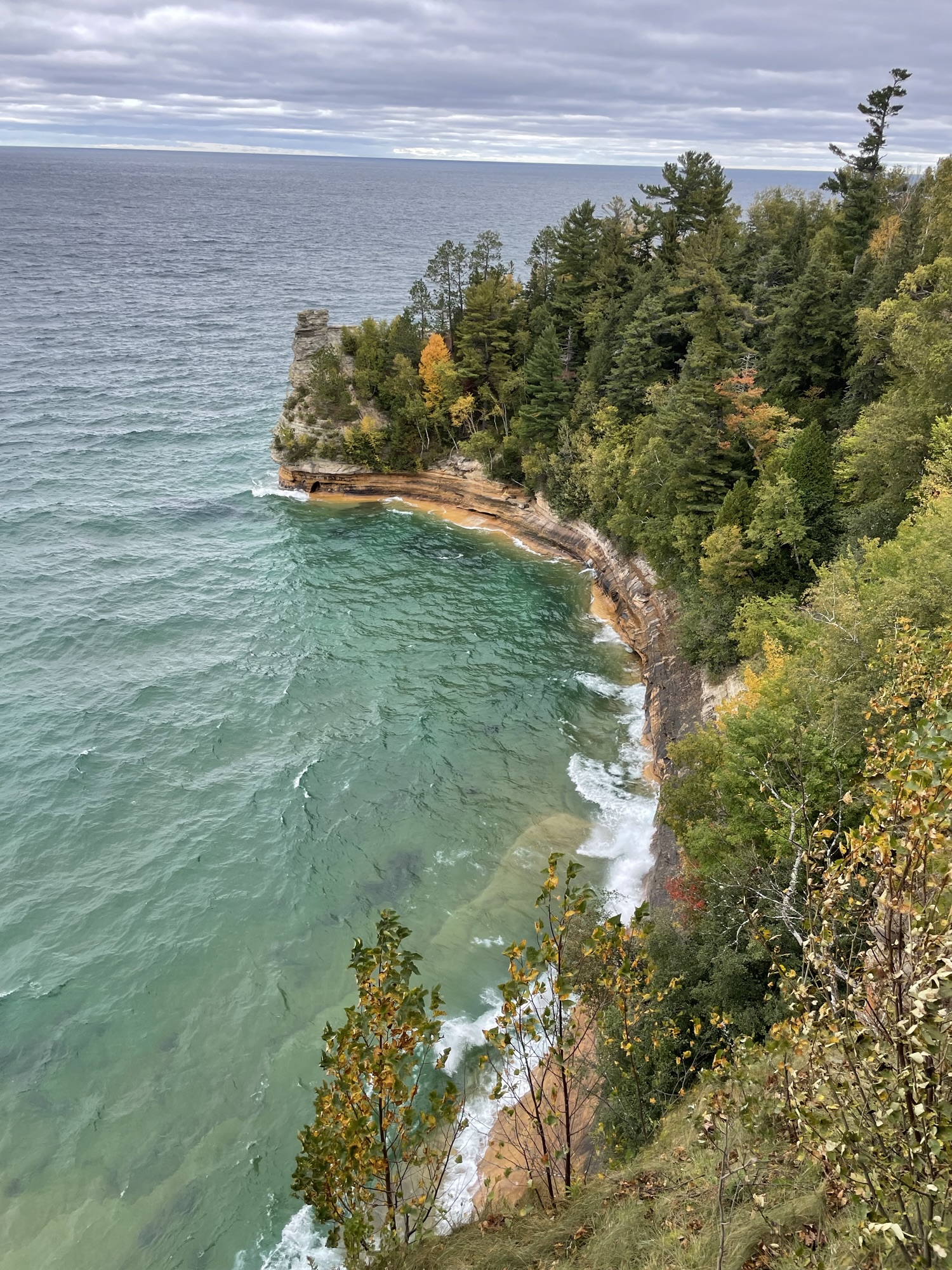
Miners Castle from the Upper Overlook
I want to start by saying that my photos can’t and don’t do the cliff’s colors justice, but again, turn that brightness up all the way and turn nightshift off to get the best shot at it.
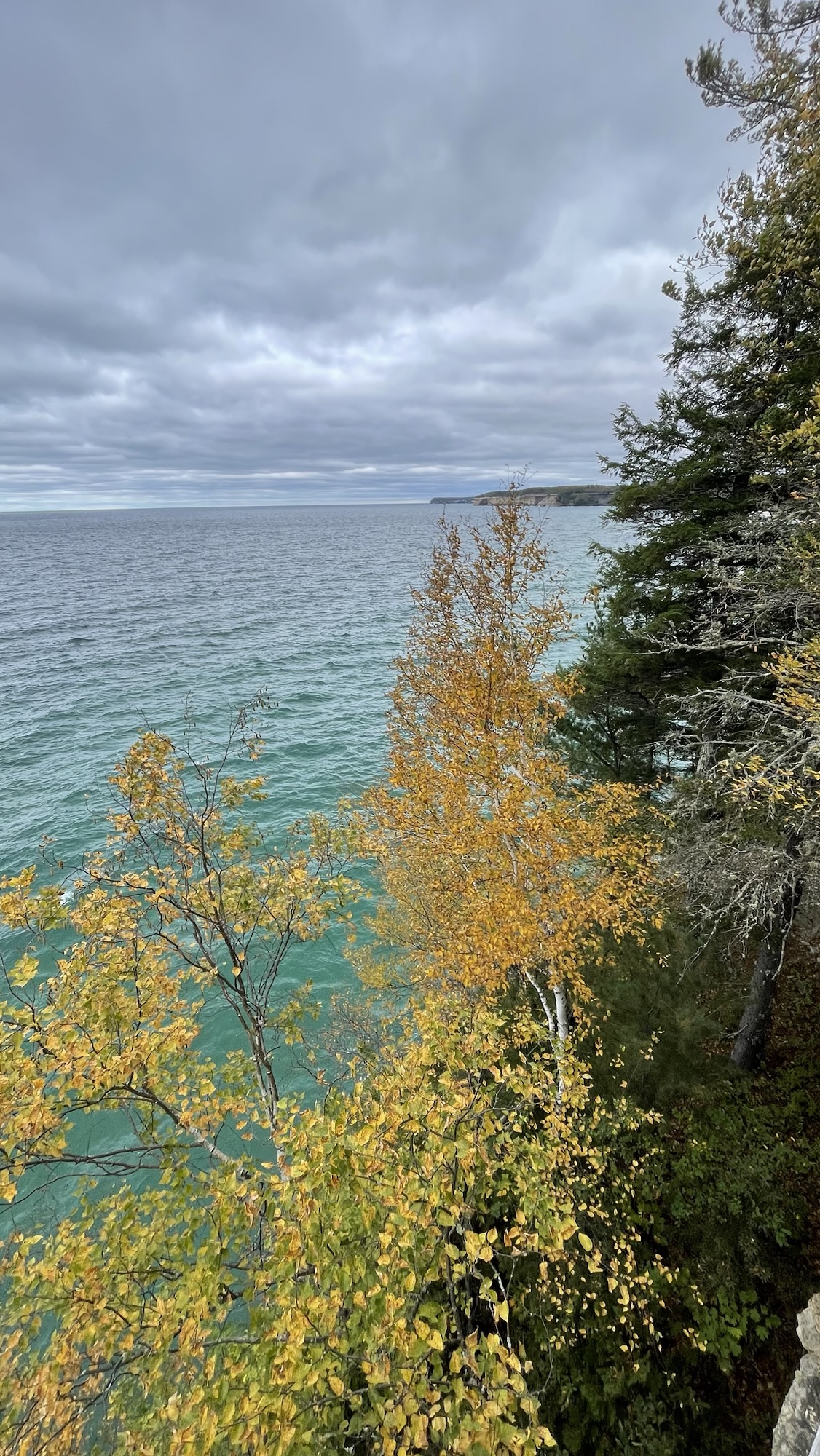
If the sun had been shining and we’d been on a boat, the brown, orange, yellow, red, green, and black bands of color would have really stood out. But trust me, no one wants a seasick Jeff on their boat. (I recommend you go to the Pictured Rocks NL website to see what the pros have captured.) From up above on the observation decks, you get a good look at the stunning water variations though. Every shade of blue and green seemed present out there.
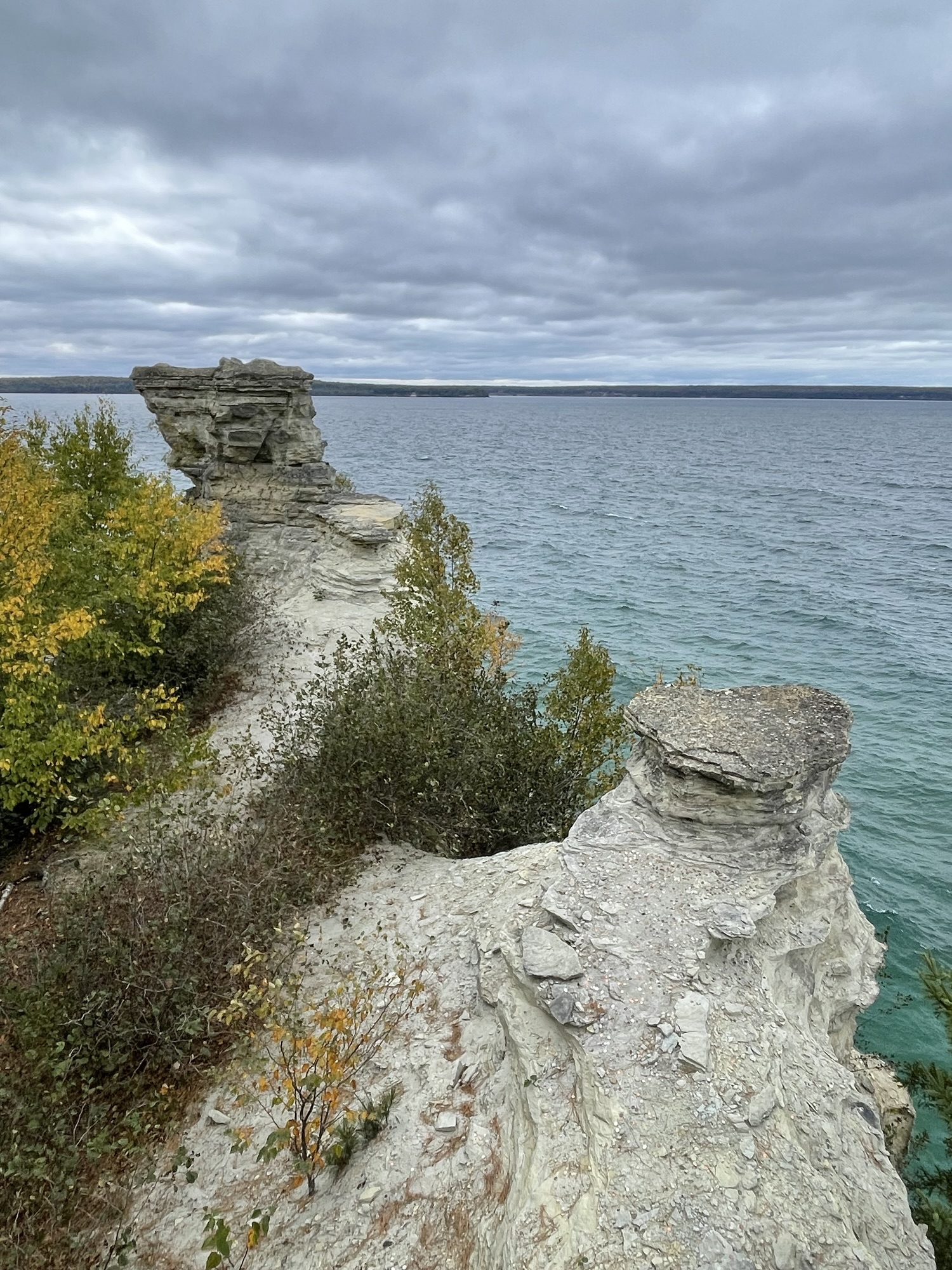
Miners castle, minus a turret
When we were here 20 years ago (‘Back in my day…’), the Castle formation had both its tall turrets, but erosion is a sandstone fact of life, and a rockfall back in 2006 took one of the tall turrets with it in a race to Lake Superior. The formation must be fairly unstable because there are signs ev.er.y.where stating, point blank, that you are “highly unlikely to survive a fall” from this cliff. You just know people are still doing it though. Stupid is gonna stupid.
Looking east from the Miners Castle eastern viewing platform
I would like to note that it made my eye twitch not placing an apostrophe between the r and the s when typing Miners Castle and Miners Falls, but I didn’t do the naming.
Moving on.
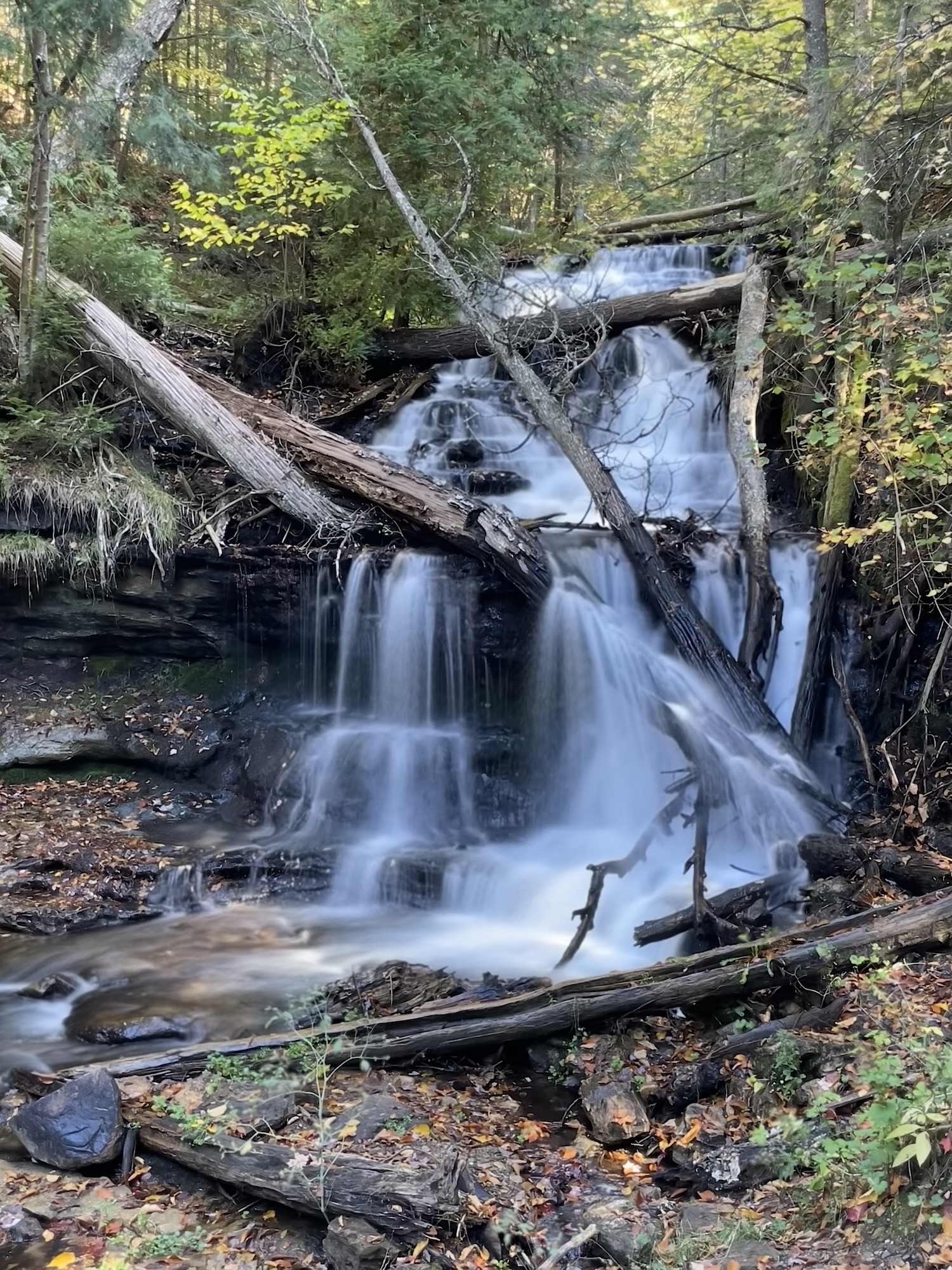
The following morning, we all headed over to Wagner Falls and I broke out my iPhone’s long exposure setting to get this waterfall effect. All the pretty, none of the skill.
After that, Rob and Kate took the dogs for a drive and Jeff and I checked out the town of Munising. He and I started at the Pictured Rocks Interpretive Center and then walked around the neighborhood.
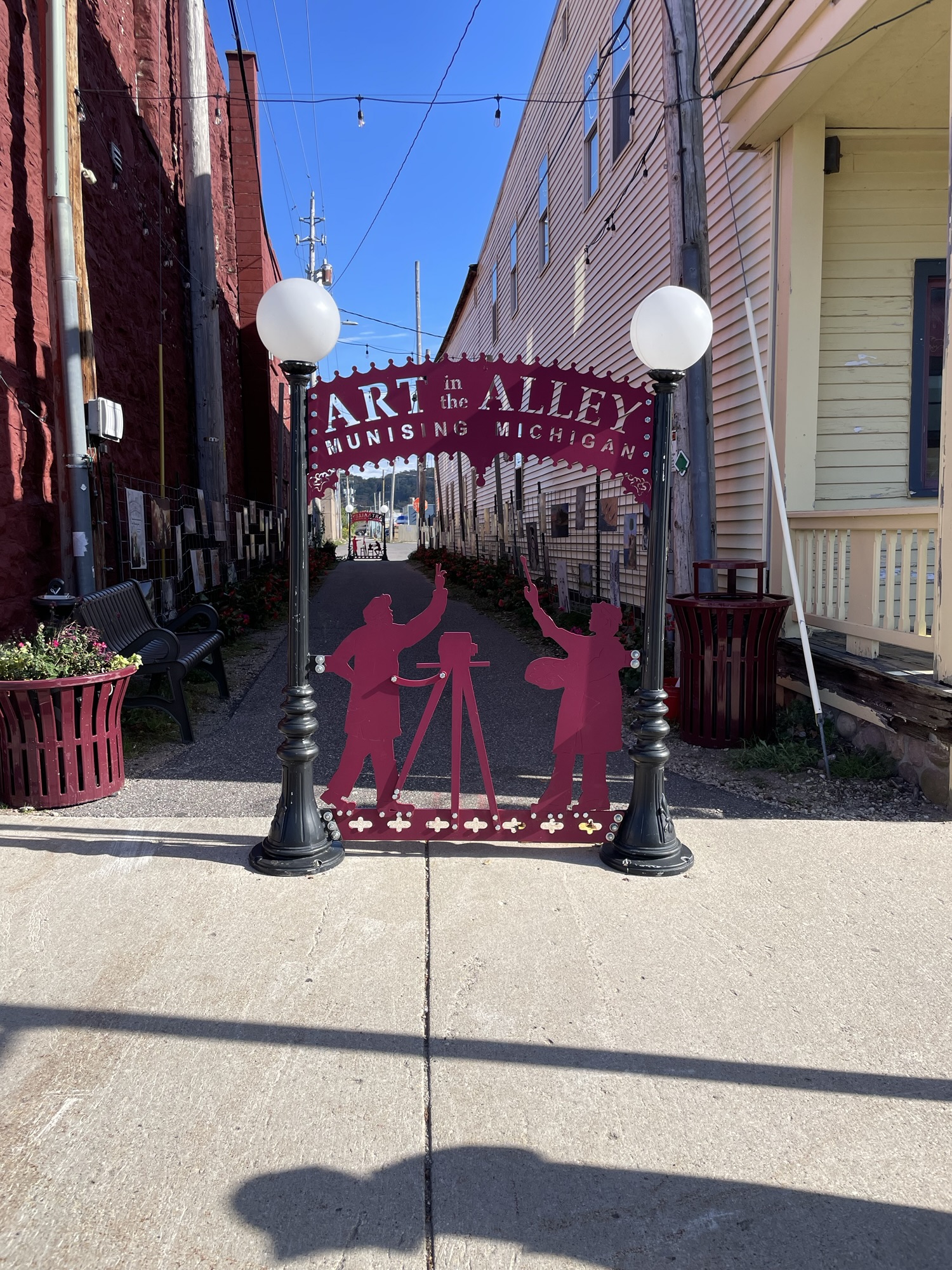
We found this sweet Art in the Alley corridor, each finding a local artist whose paintings spoke to us. I only wish I’d written their names down. Rookie move, I know. Still, I think it’s pretty encouraging to see even a small community like Munising devoting part of their commercial district to promoting and highlighting local artists.
Overall, it was a very nice day of hanging out together and doing our own things. Later, we all headed to Muldoon’s to dine on the only thing you simply MUST have while visiting the northern half of the Upper Peninsula — a Cornish pasty. That’s past-ee, by the way, not paste-ee. Let’s keep things clean here.
What’s the story behind this tasty link between the U.P. and Cornwall, England? Well, copper and iron mining were once major industries in the U.P., and some of the world’s best miners came from Cornwall. When they emigrated to work the mines, they brought their tradition of handheld mining meals with them. Since they worked long hours completely below ground, the miners could pull a hearty warm meal out of their lunch tins without hassle. (For the record, Kate makes a really delicious pasty herself.)
Mosquito Beach trail
The following morning, Jeff and I headed to a no dogs allowed waterfall trail while Rob and Kate prepared for their rescheduled Pictured Rocks boat tour.
The Mosquito-Chapel parking lot was pretty full of vehicles when we arrived, but we hardly saw anyone going on the Mosquito Beach and Falls loop. Nearly everyone turned towards the taller Chapel Falls instead. We didn’t mind.
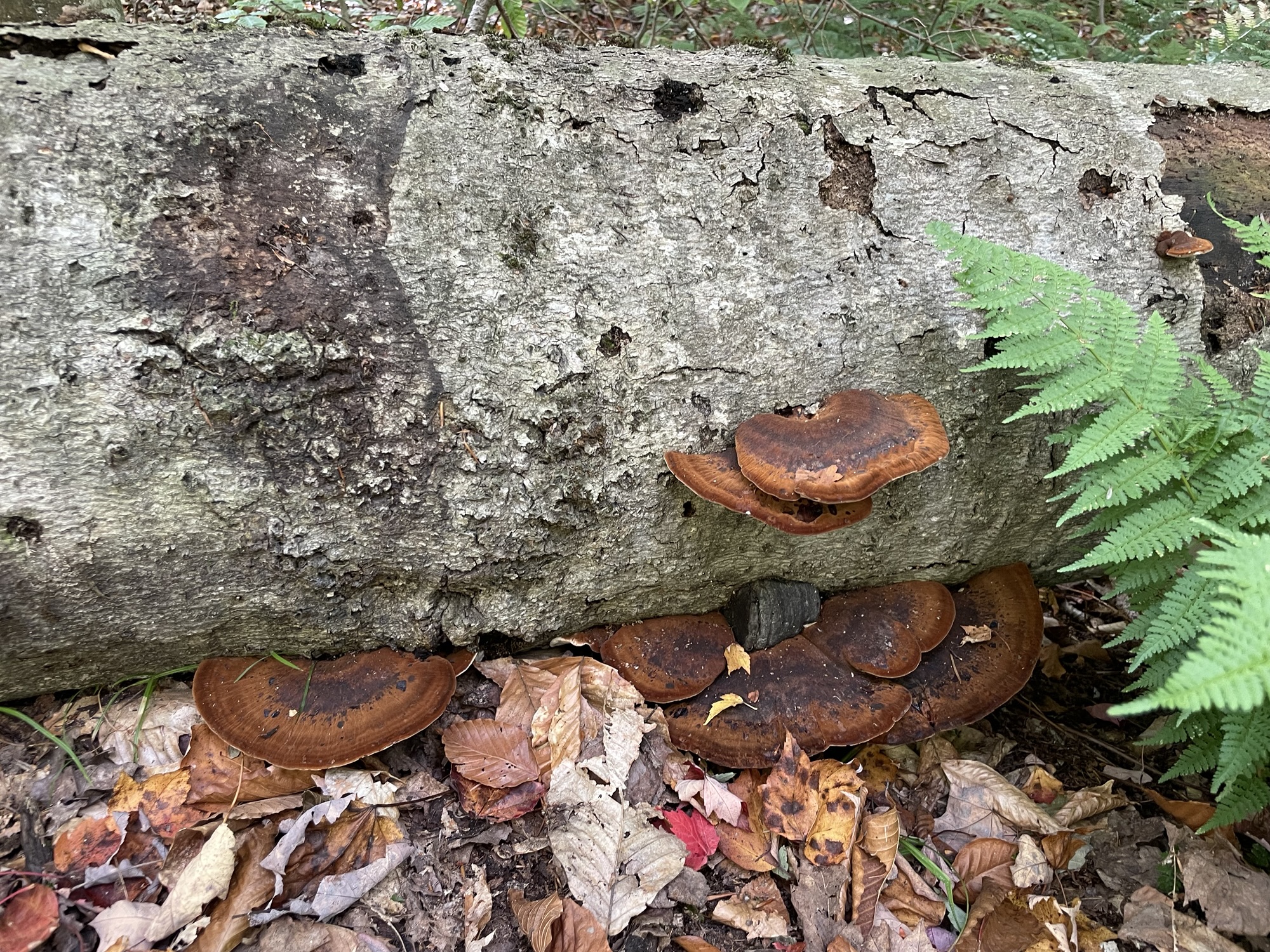
Resinous Polypore
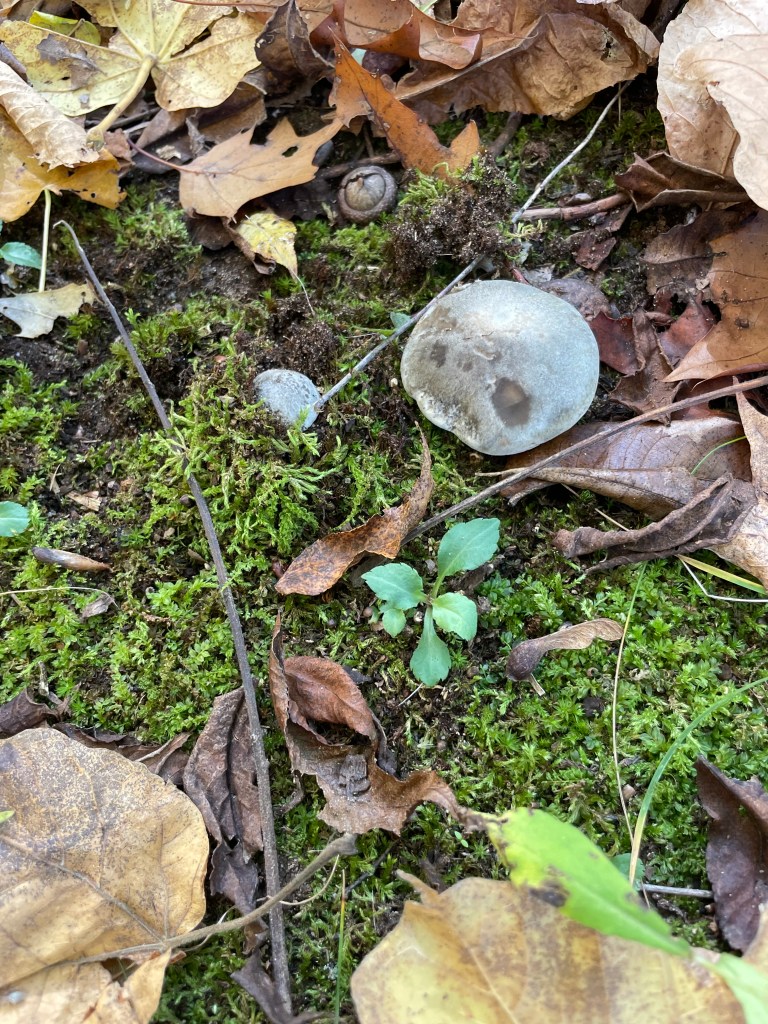
Dine or Die had an impressive new contestant last week. Without looking it up first, what’s your vote on this firm, brown shelf mushroom? I think the darker central ring should get bonus points for ominous flair.
We were very grateful that the Mosquito Beach and Falls trail didn’t live up to its name this visit, but I wouldn’t count on it in the height of summer. My guess is that some recent hard frosts and cool temps had killed off this year’s batch. Good riddance to them.
Mosquito Beach
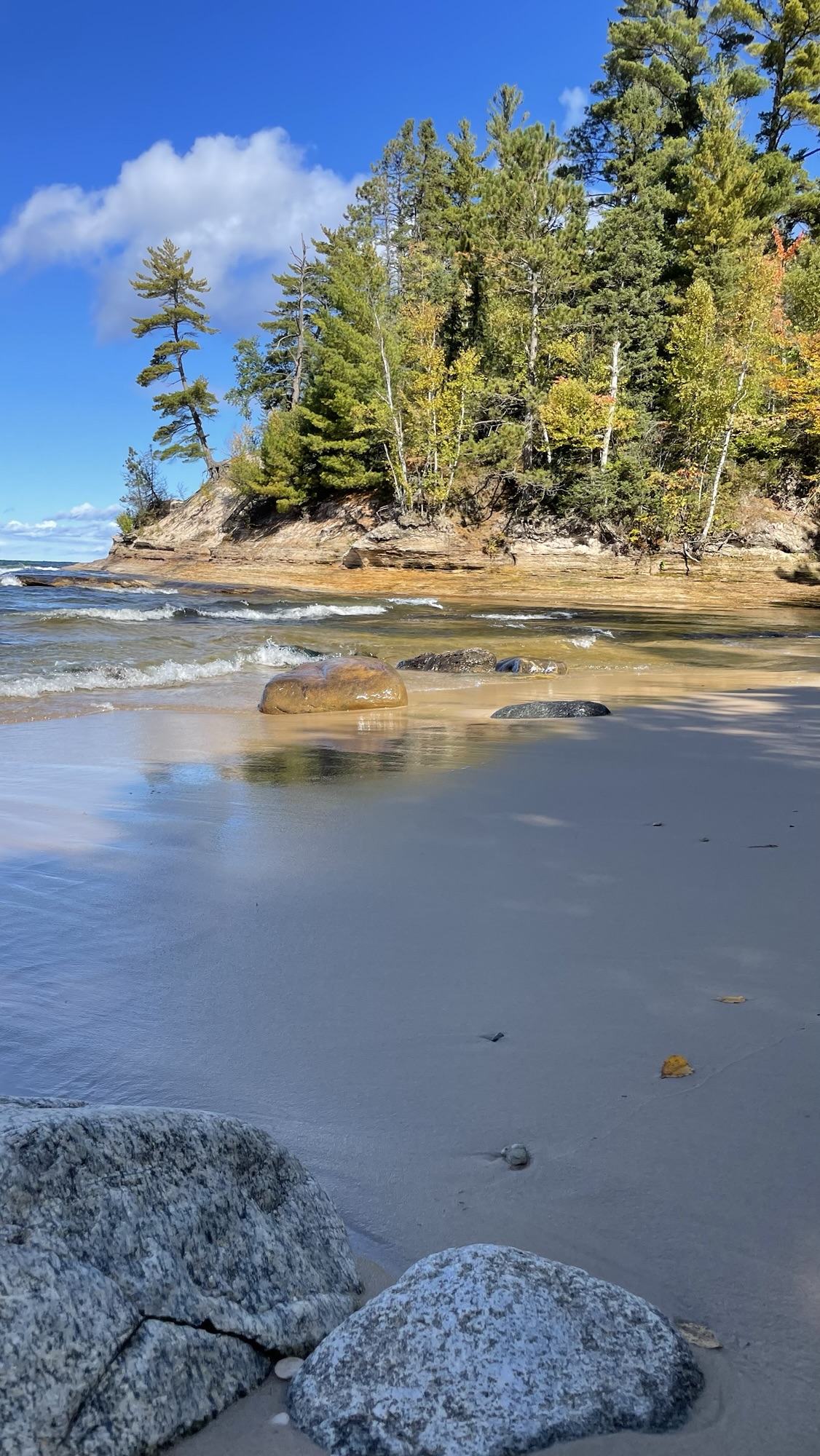
We noticed some backwoods camping sites, heard the crash of waves, and then suddenly Mosquito Beach peeked through the trees in all of its white sand and turquoise water glory. Later, we heard that—according to the boat tour guide—backcountry campers are known to enjoy some baignade nue time on that beach, much to the surprise of boat tour guests.
Not a soul in sight, clothed or otherwiseImagine the power of a glacier to carry and deposit erratics such as these (thanks, PBS for teaching me so many cool things over the years)
We followed the return path toward Mosquito Falls and were reminded that water always runs downhill. It wasn’t a steep climb back up, but it certainly wasn’t as quick a hike as down from the parking lot either.
Mosquito Falls
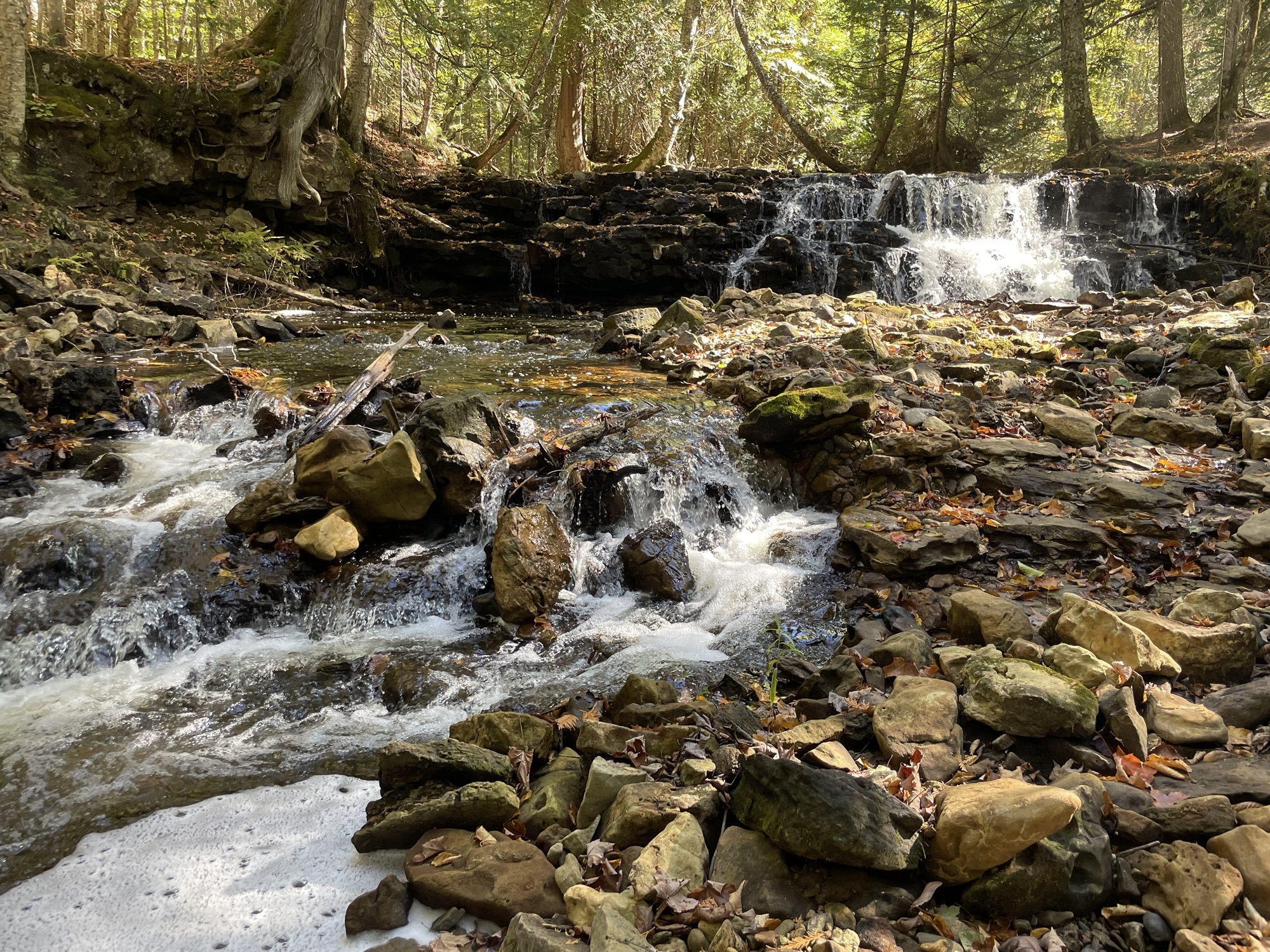
It’s just a small waterfall, but it gave me such joy — and not just because it was our hiking snack spot. We roamed around it from all angles, with me taking more photos than was reasonable because that’s what I do. We stayed on the trail as instructed, of course, because it’s the right thing to do to protect our public lands. I may still be chasing those gold stars from 3rd grade, too. Only a trained professional could say for sure.
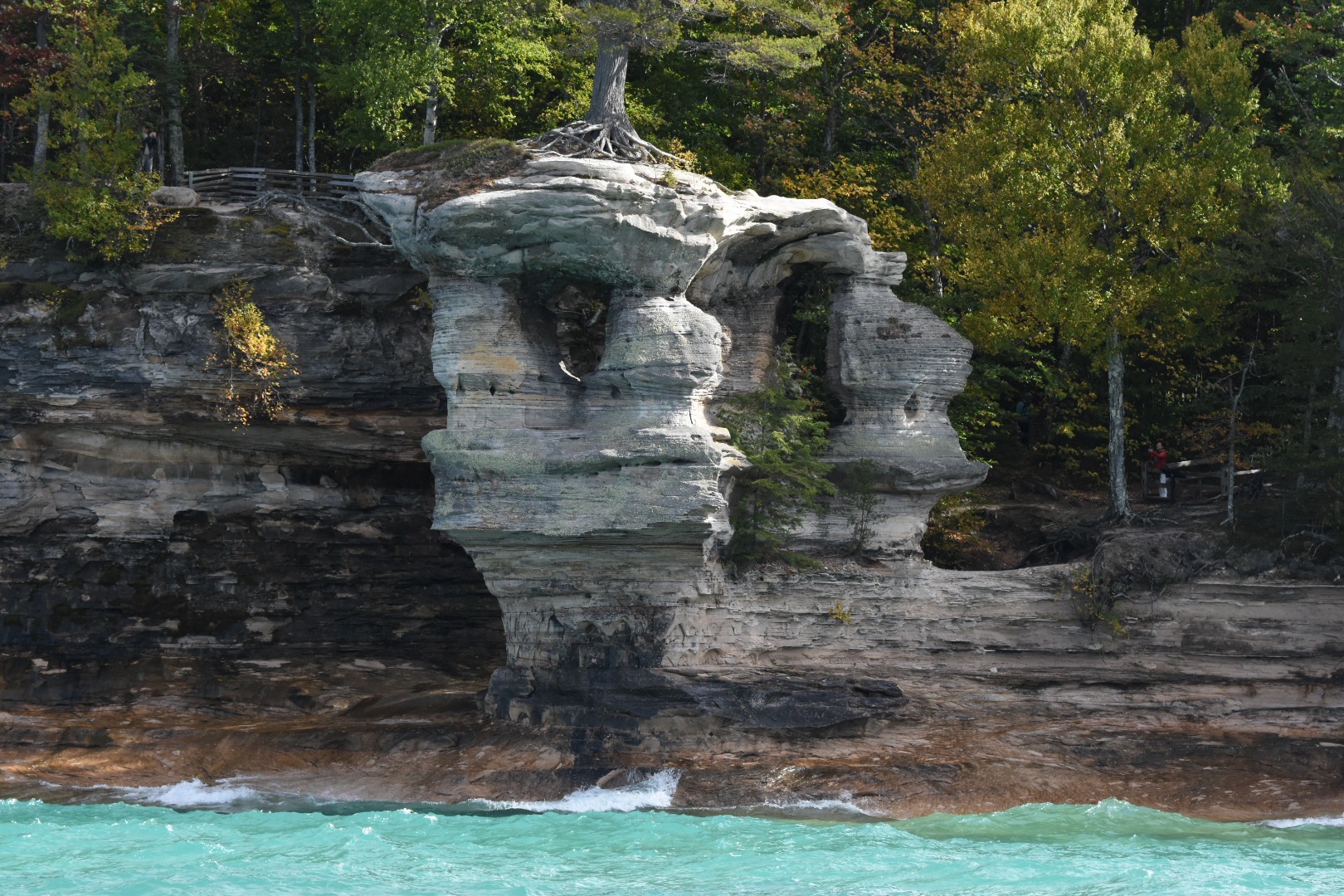
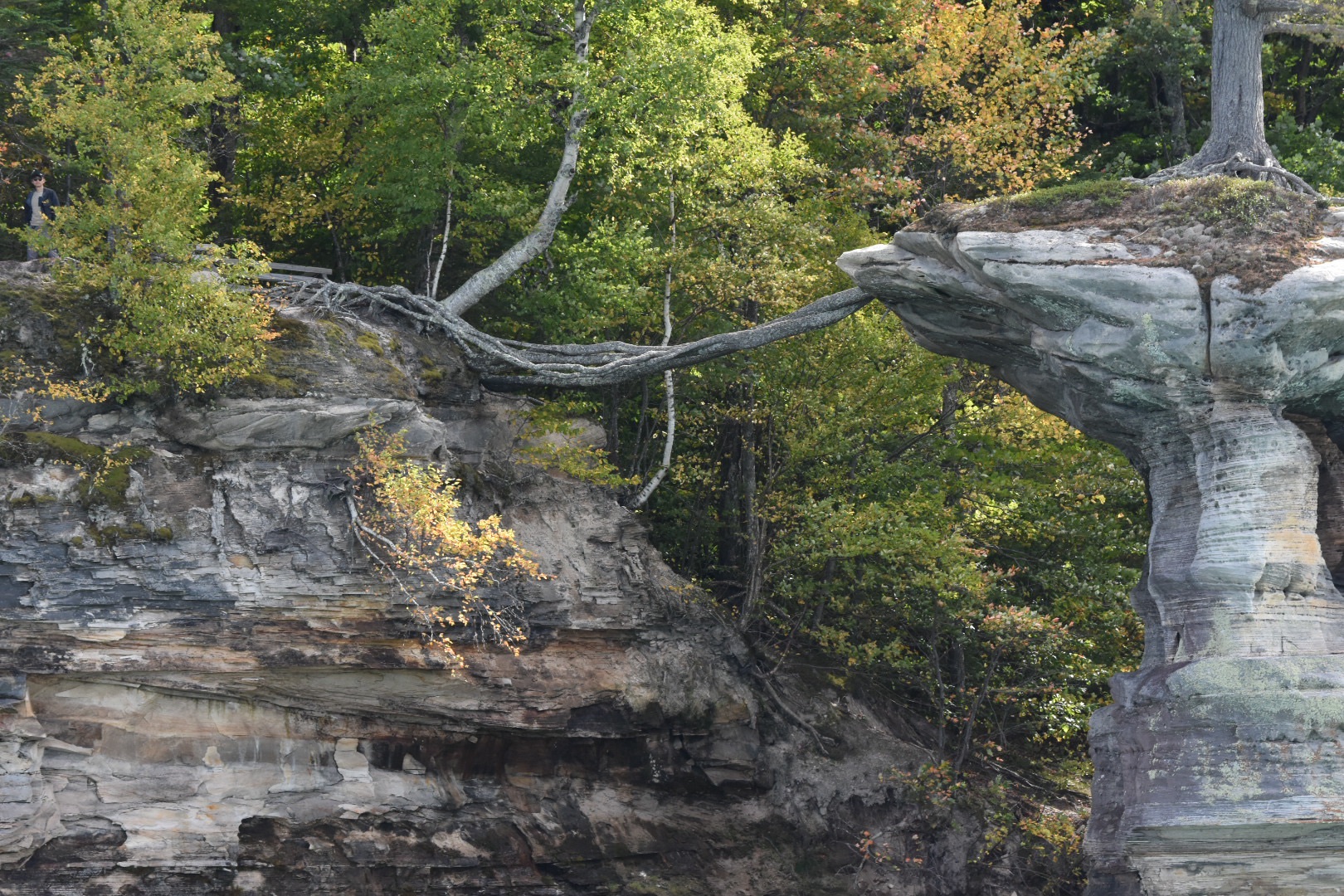
One of the things I most regret about not seeing Pictured Rocks from the water is missing the chance to see Chapel Rock’s famous tree. Rob was kind enough to share two photos of it and I found 99.1 WFMK’s fantastic write up of it online.
“If there were a Mount Rushmore for trees in Michigan, the scrappy little pine in Pictured Rocks National Lakeshore on Chapel Rock would be dead center holding a pasty. If Paul Bunyon had a bonsai, it would be this tree.”
The article goes on to note that this lone White Pine is older than the US itself, having begun to grow when the region was still part of the British territory of Quebec. Not bad for a tree whose entire nutrient system now lives on another rock which spans the open air and defies the elements to deliver the goods. Long may you defy all logic, you magestic Pinus strobus.
Chapel Rock, photo by RobThe lifeline, photo by Rob
And suddenly it was time to say goodbye to our friends and head out, but not before we mooched a little more coffee from their RV’s plush setup.
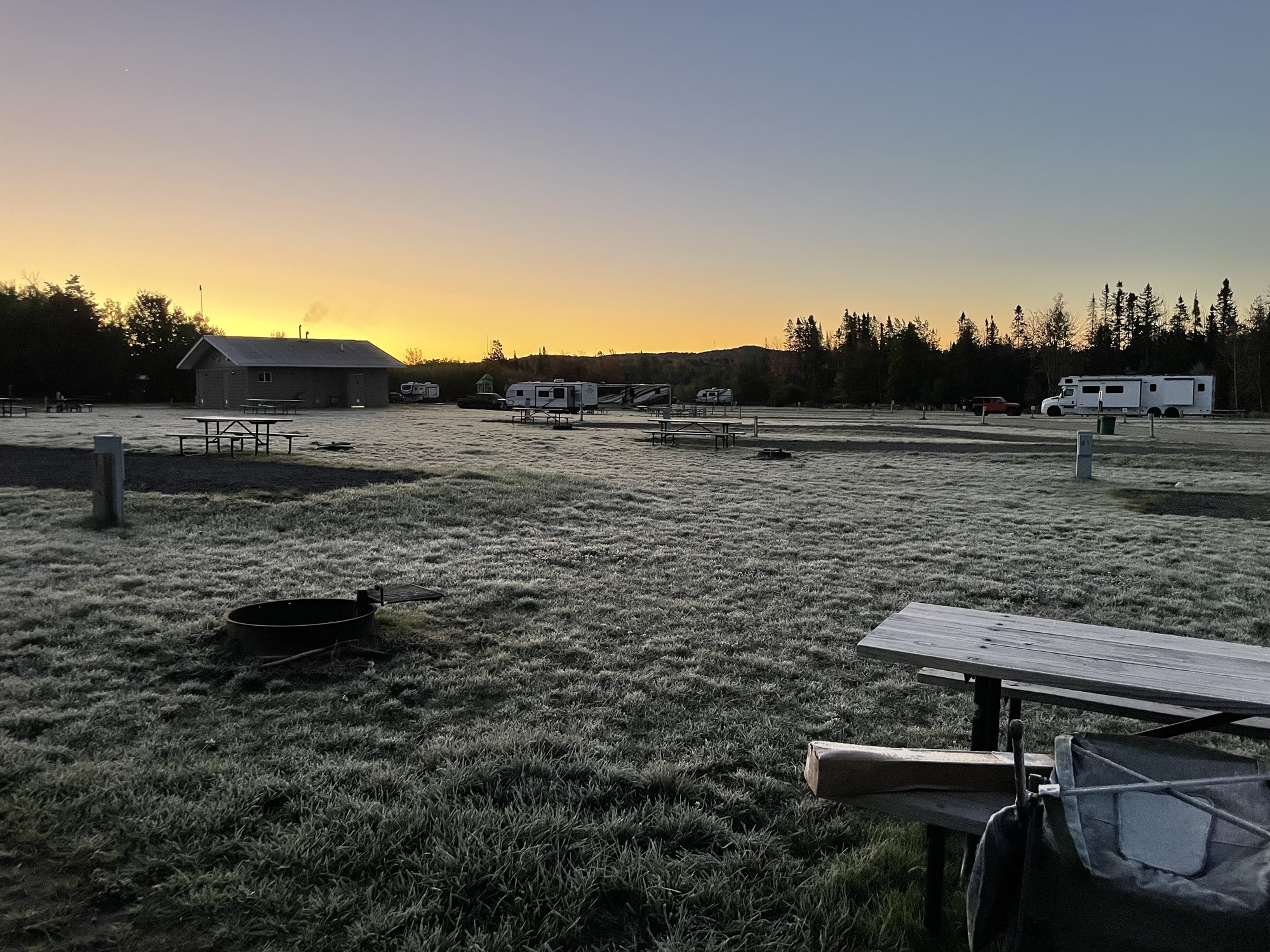
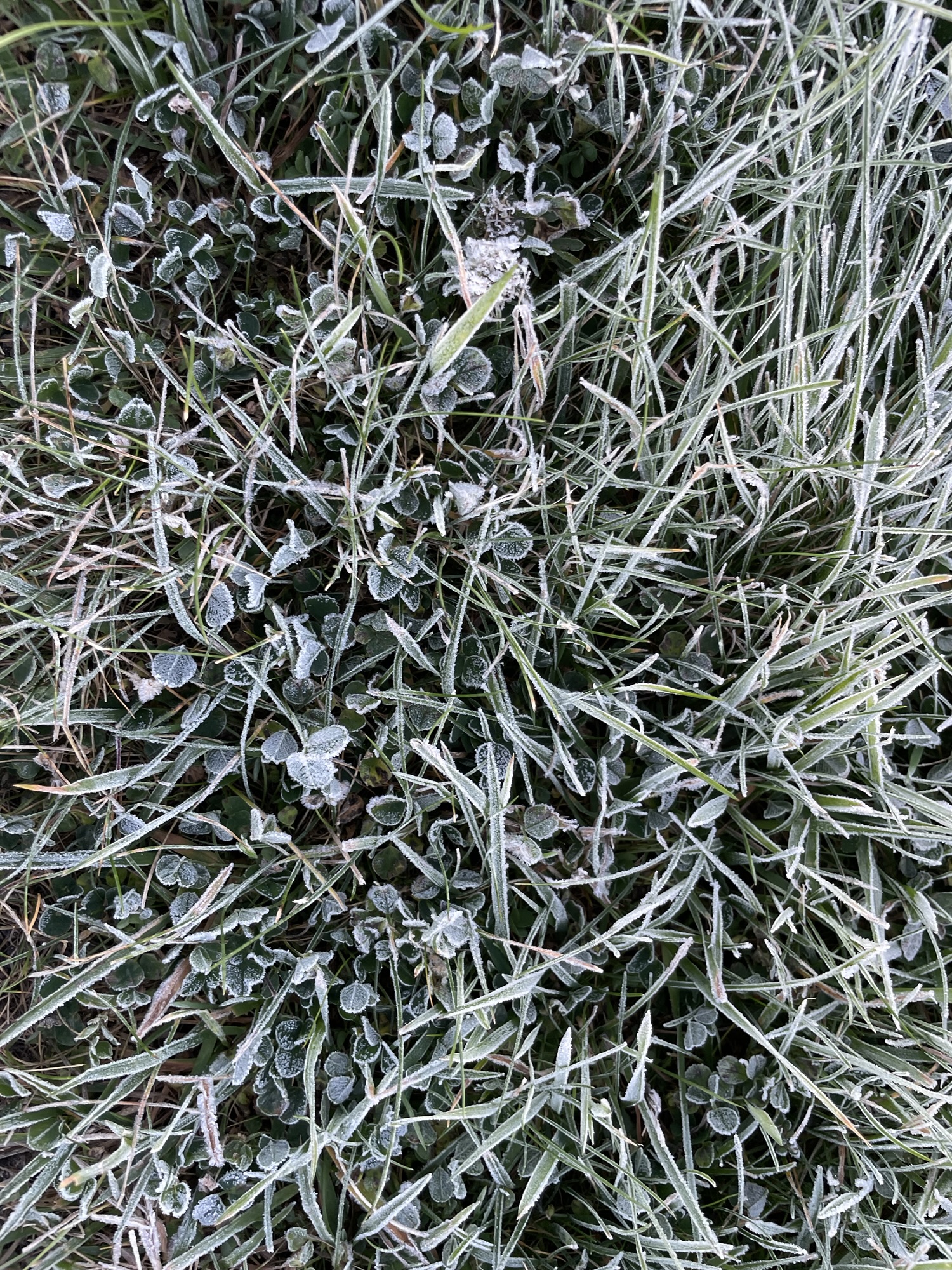
Sunrise frost
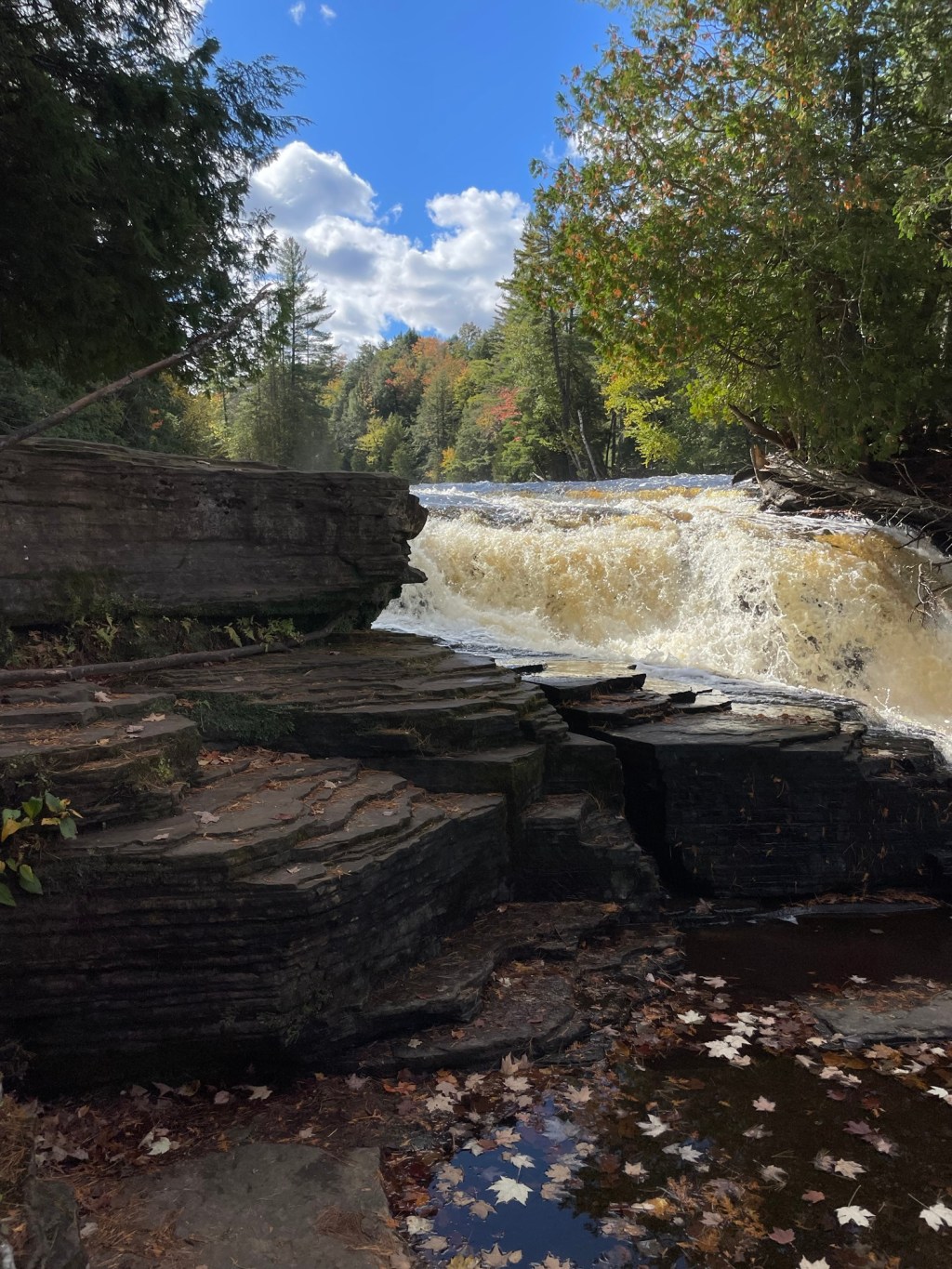
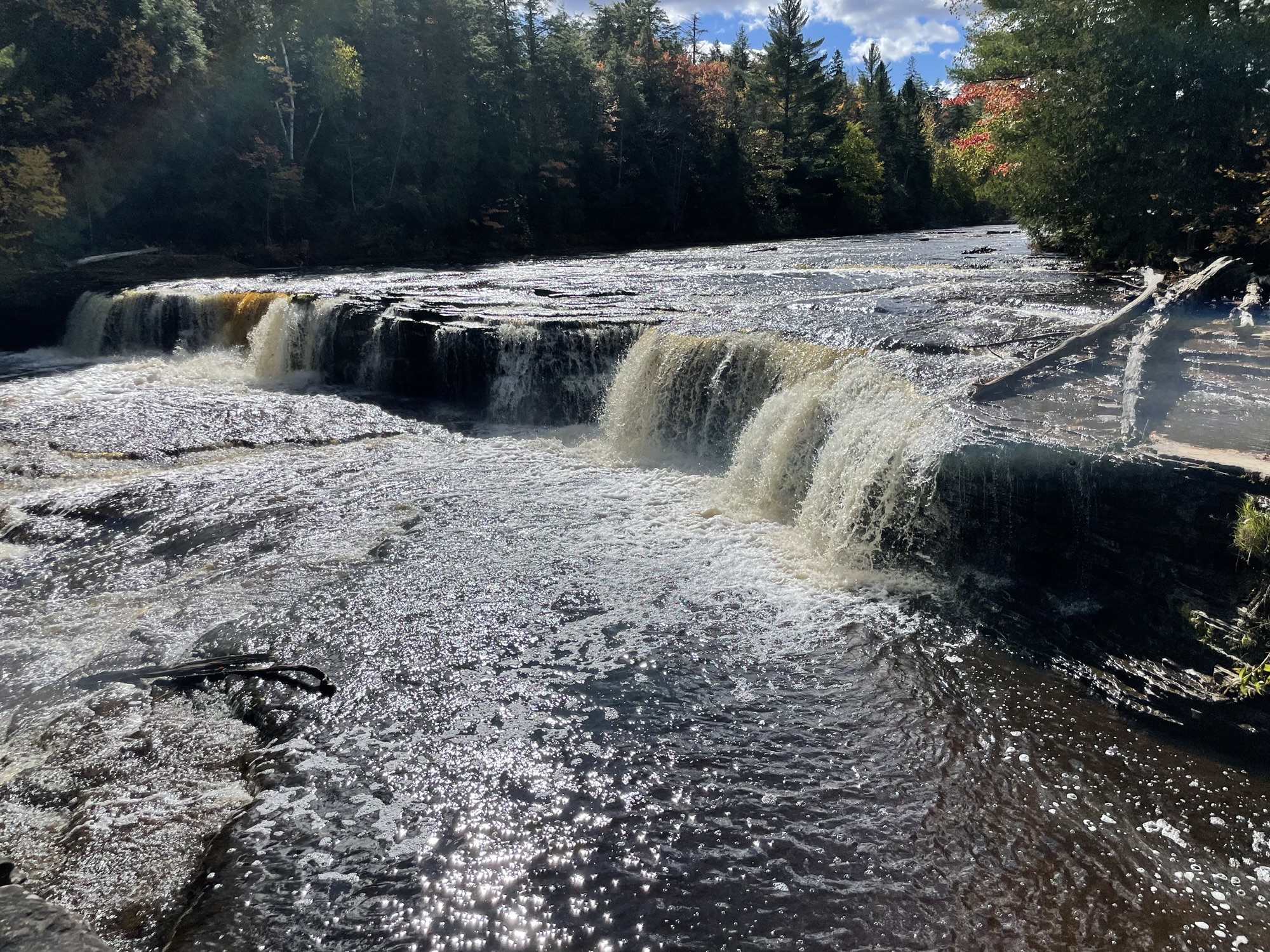
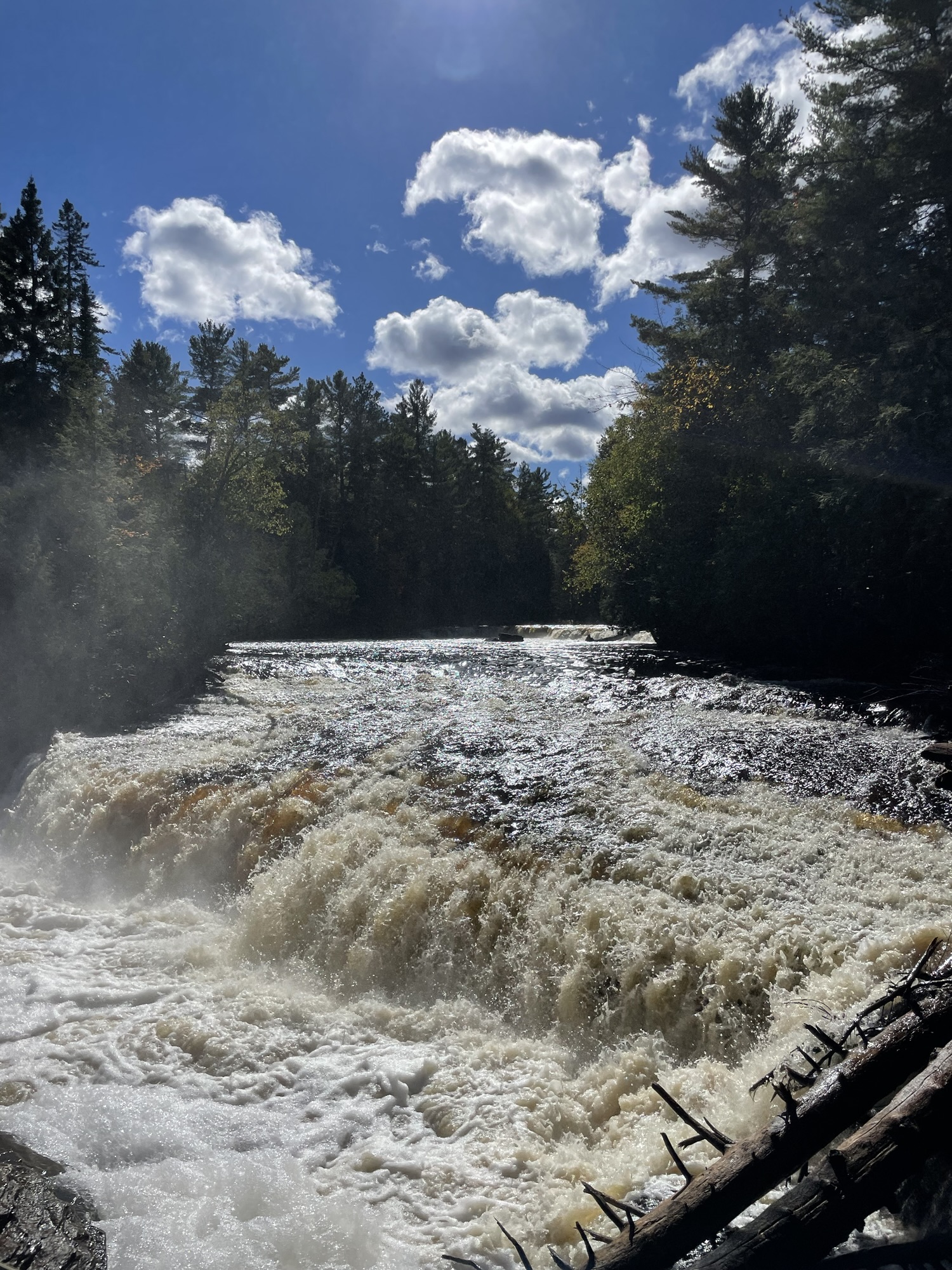
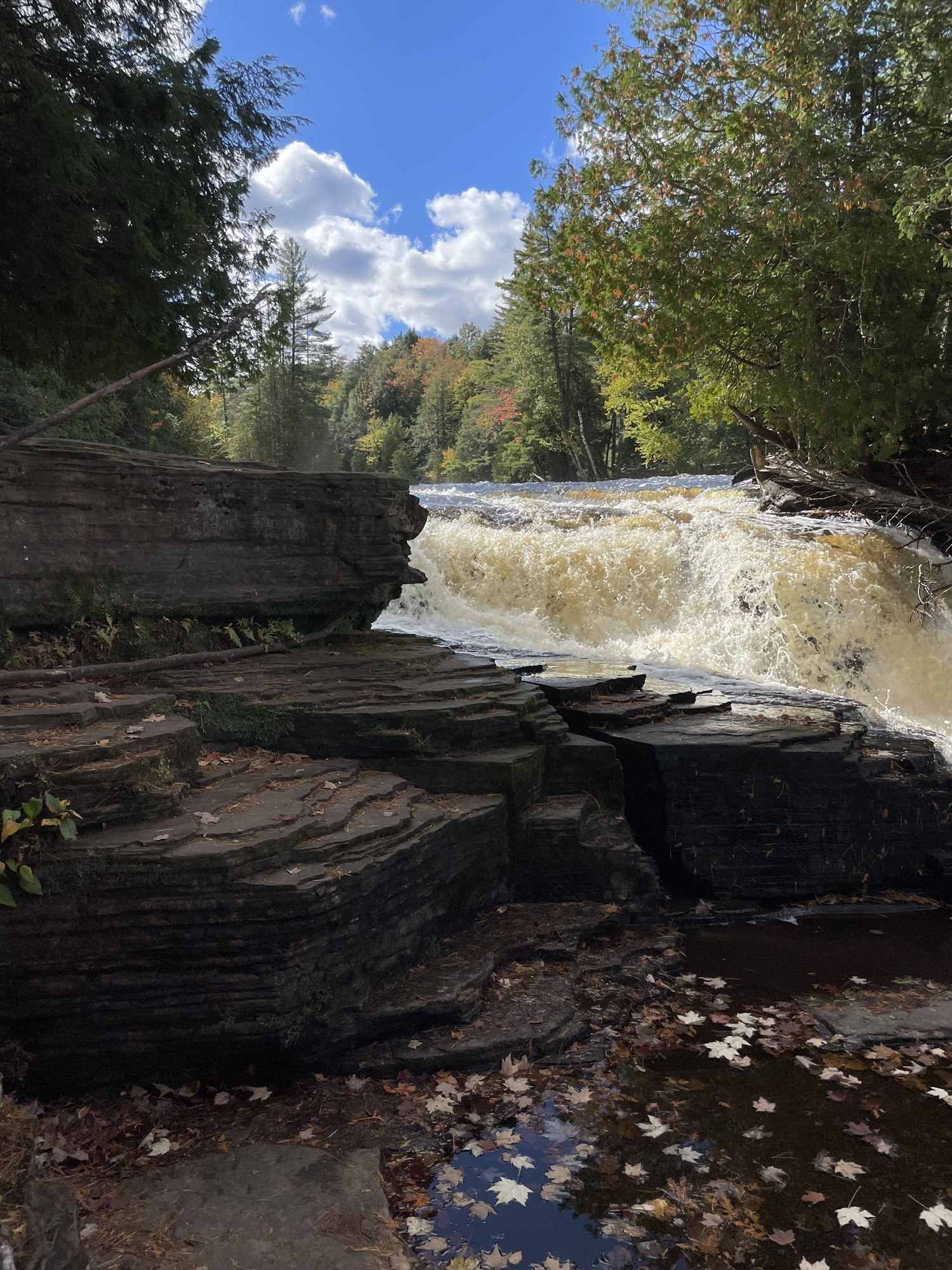
After breakfast, we headed out to the scene of one of our favorite memories, the Lower Falls at Taquamenam State Park. We went there with The Boy when he was just 8 or 9 years old and took a photo of him jumping from some low rocks. That photo has sat on our kitchen counter ever since. We wanted to find that happy spot for Ian again.
Nearing peak color in the eastern UP
We had hoped to stay in one of the nearby state or federal campgrounds, but they were all fully booked for the weekend. Such is the eastern UP during leaf peeping season. We arrived and walked around the entire island, hunting out the photograph’s spot.
Pretty, but not the spotAlso not the spotWe really hope The Boy likes this view
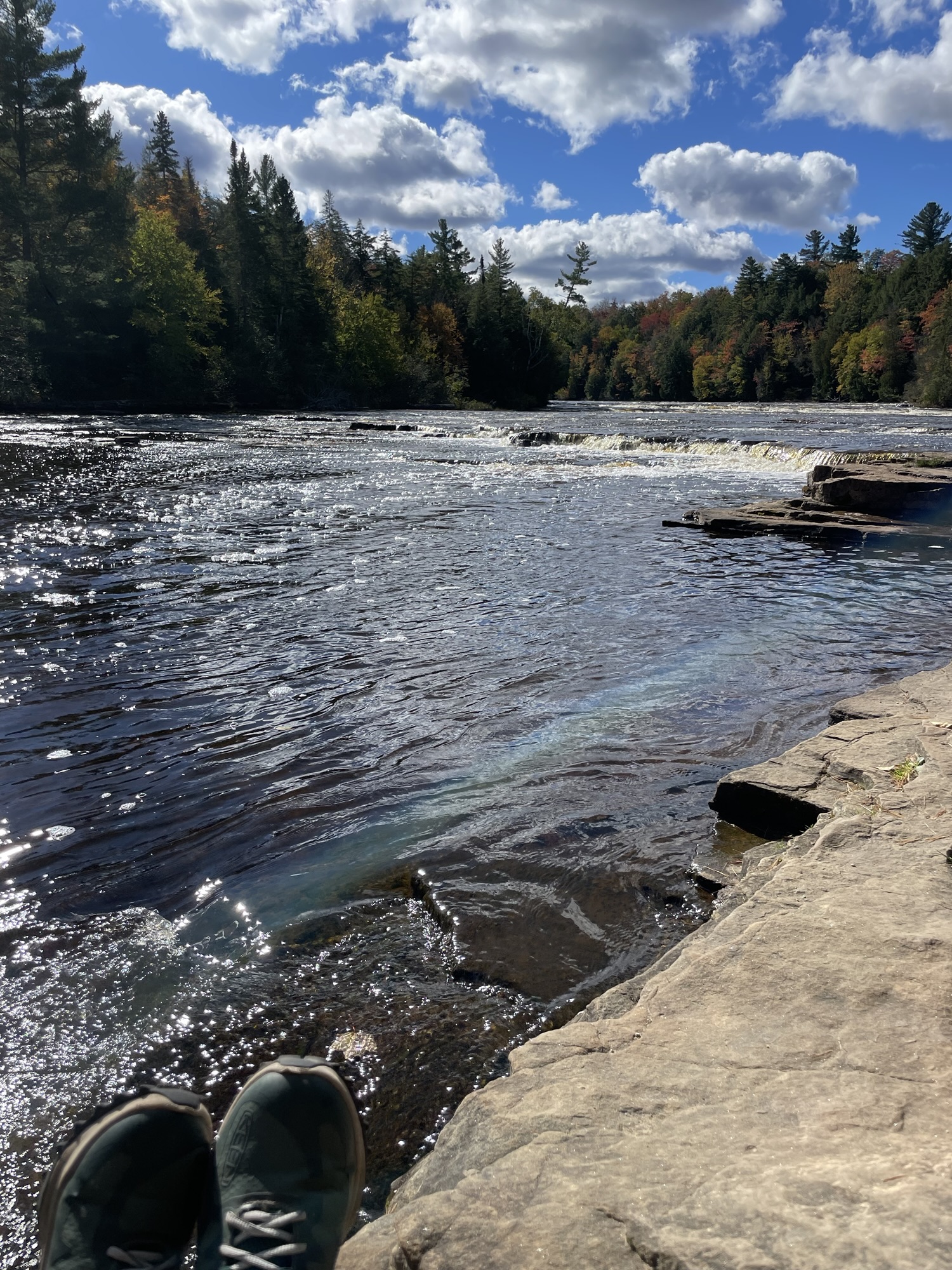
There were crazy amounts of people on the island for a Thursday, but we lucked out and had a few moments to ourselves at the serene spot you see above. There was even a rainbow light flare that cruised across every photo.
The Spot
And then we found it. The spot. The small stack of eroded rocks. A small section of the waterfall to the right. The very shallow pool below. The spot. We sat a while. We took a few photos. We shed a few tears and smiled and remembered.
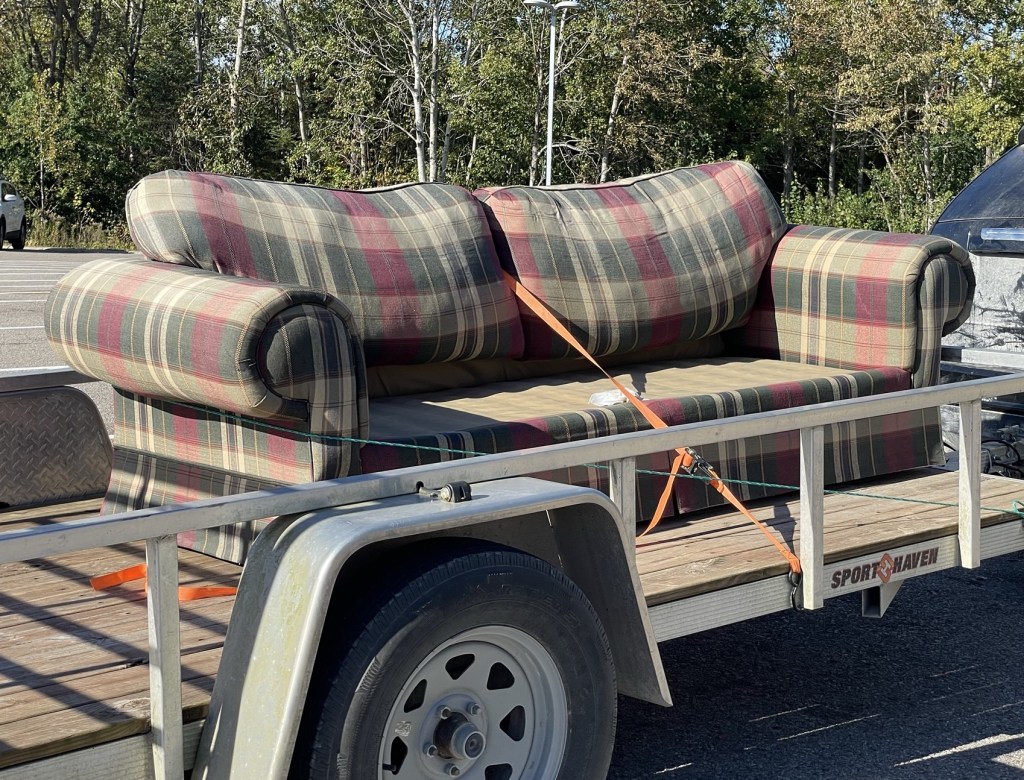
The couch
Back on the road, we realized the time and decided to stop for a quick snack. Pulling into a fast food place, we were shocked to see a couch on a flat bed trailer. To be more specific, we saw what looked like Ian’s couch, right down to its missing its feet and looking a bit faded and worse for wear. Several staff members went out to see it while we were there, as its owner was trying to find a new home for it. We got a hearty laugh out of the whole situation.
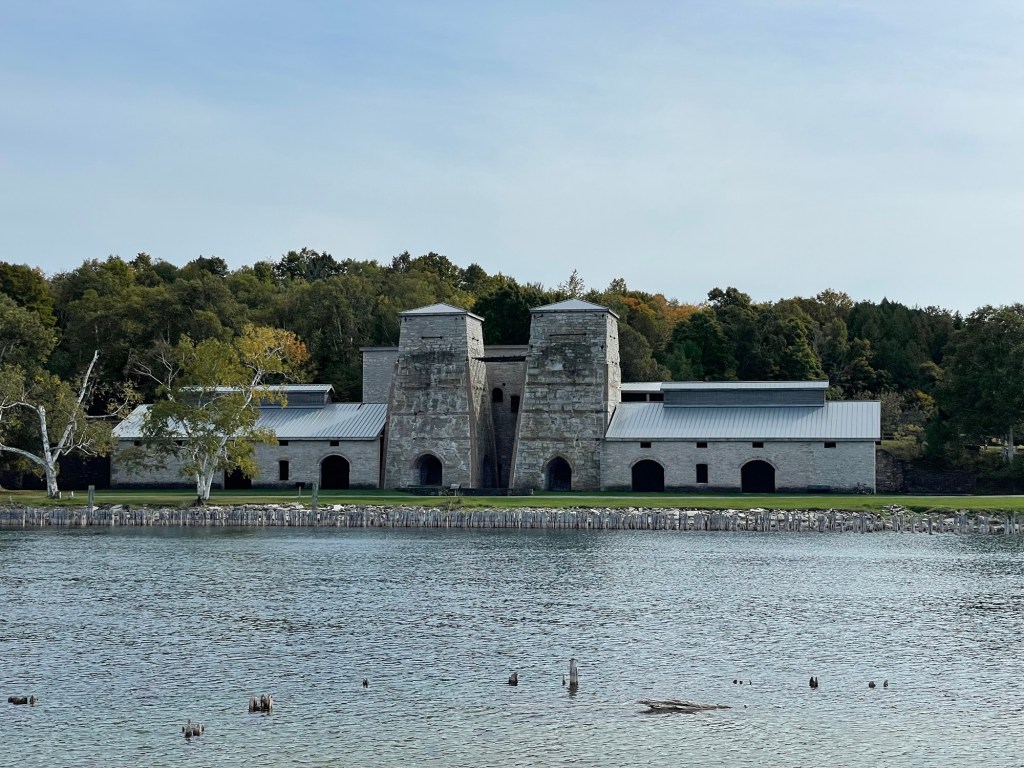
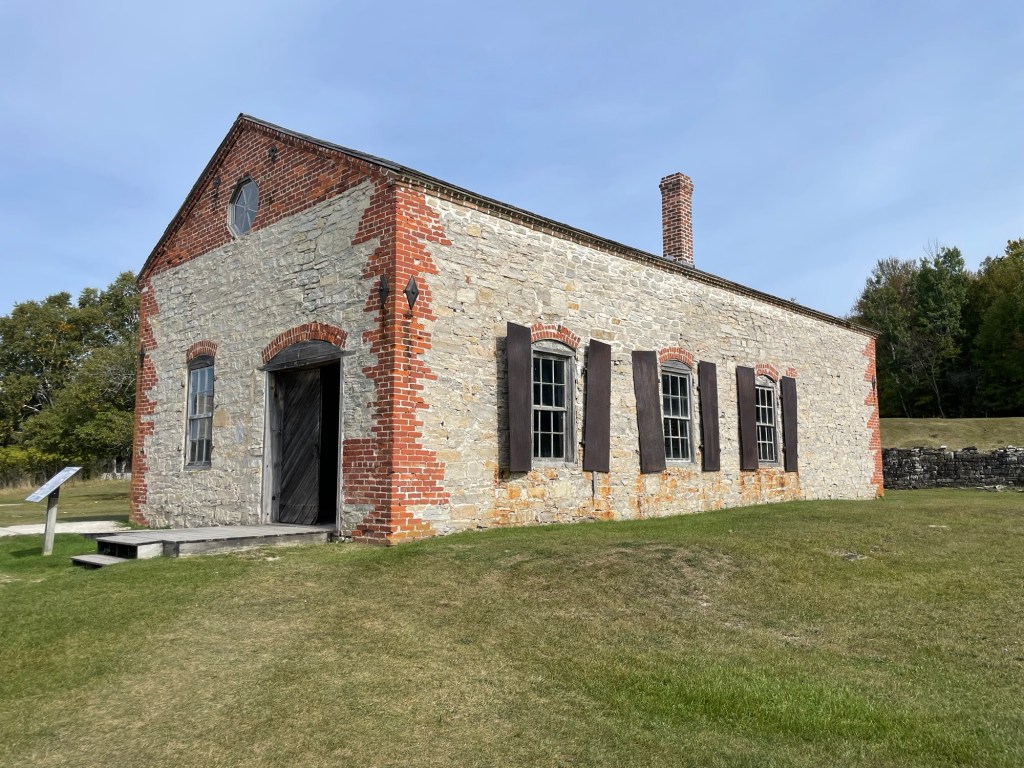
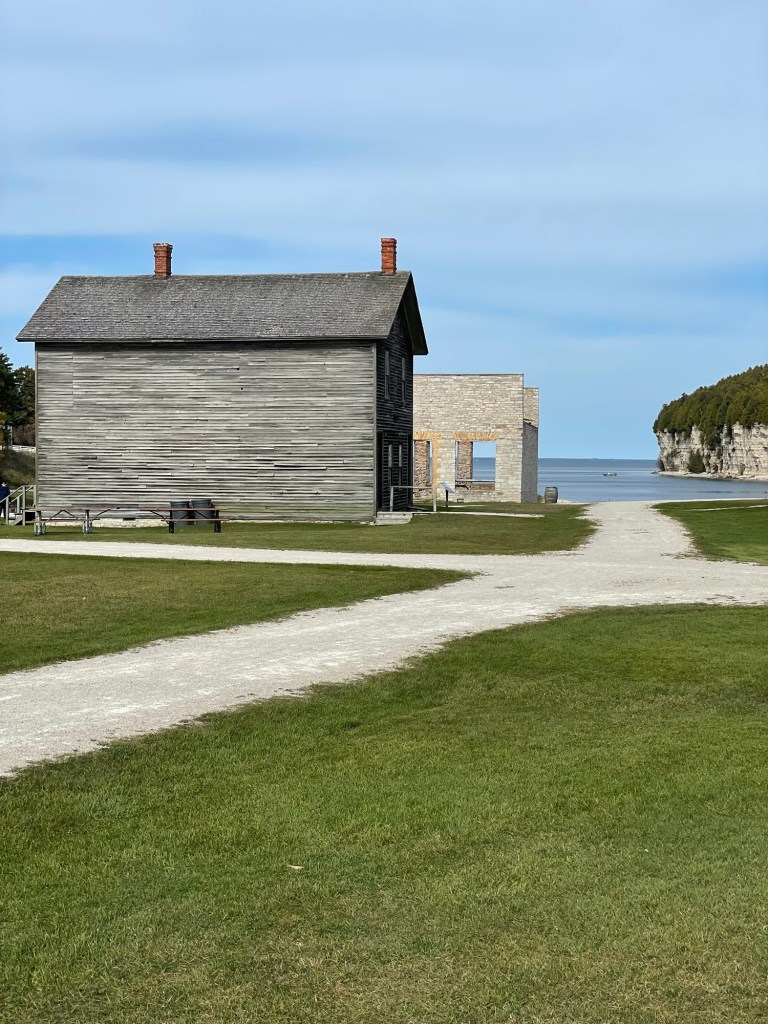
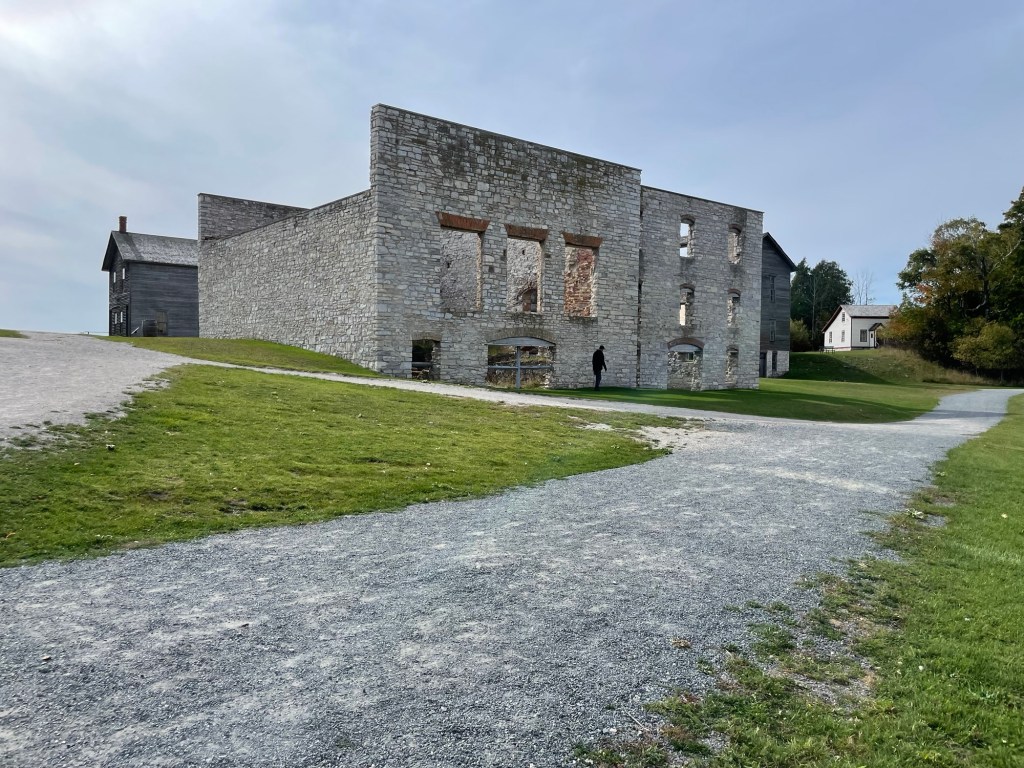
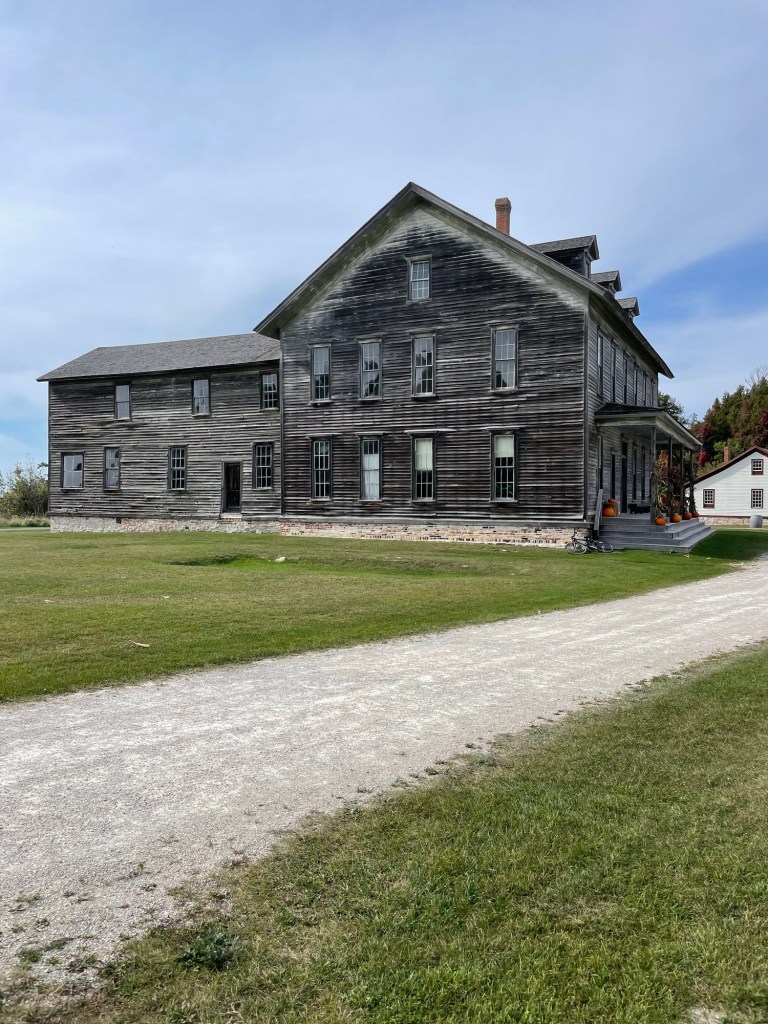
There’s no getting around the fact that Fayette — a company town on the shores of Big Bay de Noc, a peninsula on the southern shore of Michigan’s Upper Peninsula — was a major contributor to America’s Industrial Revolution and the northern states’ wealth after the Civil War. Now the Fayette State Historic Park, it’s well worth a visit if you find yourself in the area. We expected to stay an hour; we stayed most of the day.
To fast walk you through the process of making pig iron:
Iron ore was brought to Fayette and the Escanaba region on ore boats from places where it was mined, such as Michigan’s ingeniously named Ironwood, Iron Mountain, and Iron County.
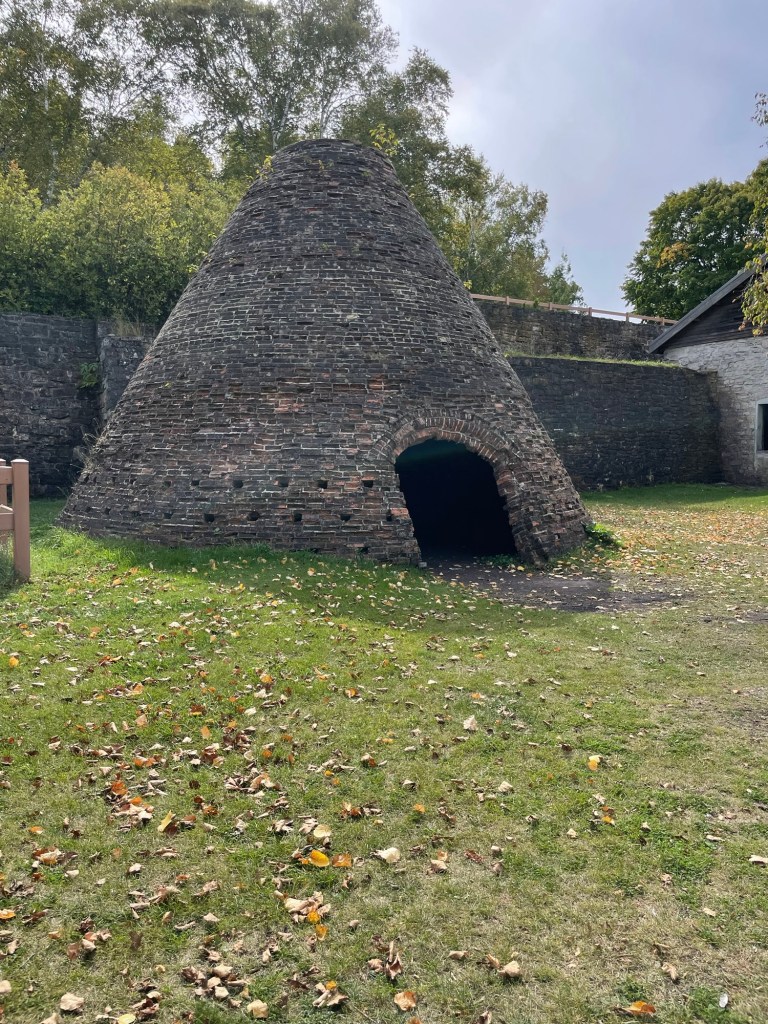
The surrounding hardwood forests were logged, floated into the harbor, and turned into charcoal in huge brick, beehive-shaped ovens.
Charcoal ovens
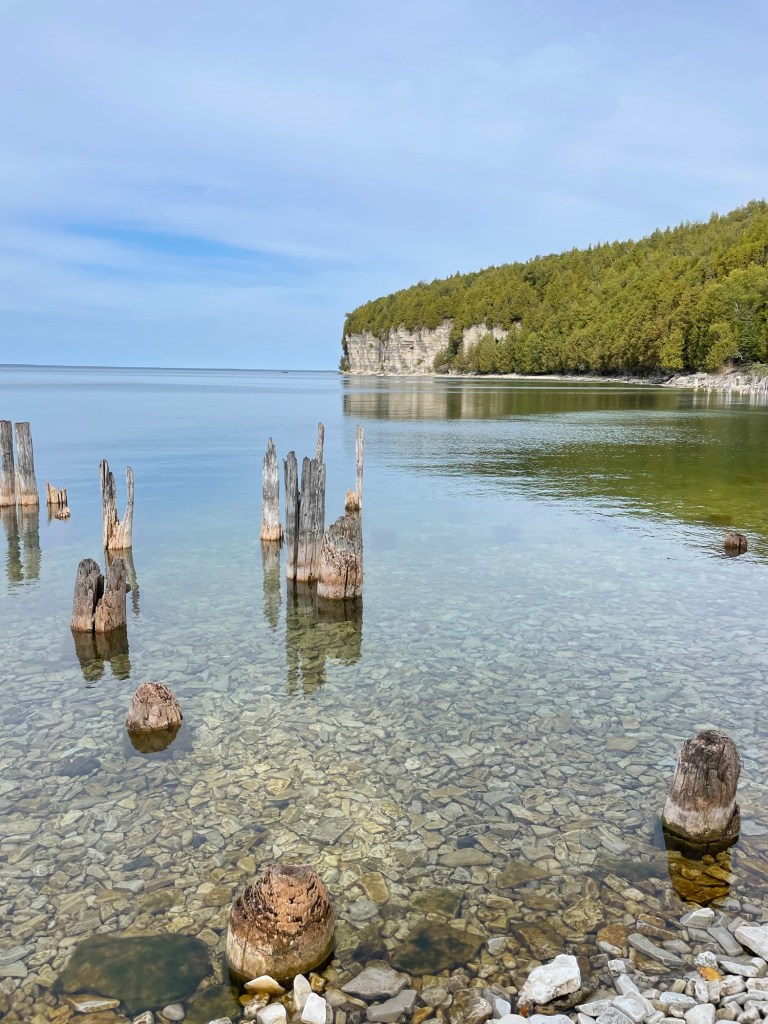
Flux and stone slabs were extracted from the limestone cliffs surrounding Fayette’s horseshoe-shaped Snail Shell Harbor.
Disintegrating shoreside dock pilings facing limestone cliffs
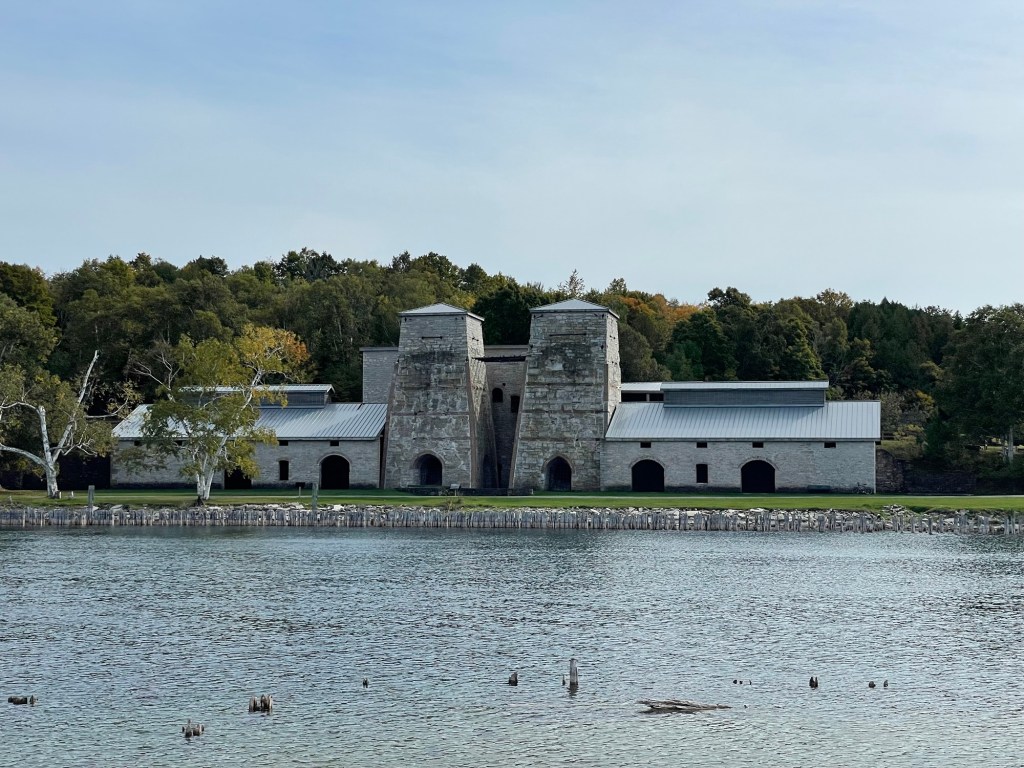
Charcoal (which burns far hotter than unprocessed wood) was used to heat the twin blast furnaces, while flux was used to refine the smelting iron ore at extremely high temperatures.
The tall central furnaces are flanked by twin smelting rooms
This liquid crude iron was poured into a series of hand-dug pits which branched off a thin central line. While hot, they were thought to resemble nursing piglets. Hence the name.
Once cooled, the pig iron ingots were loaded onto ore boats and floated to the steel mills that lined the Great Lakes.
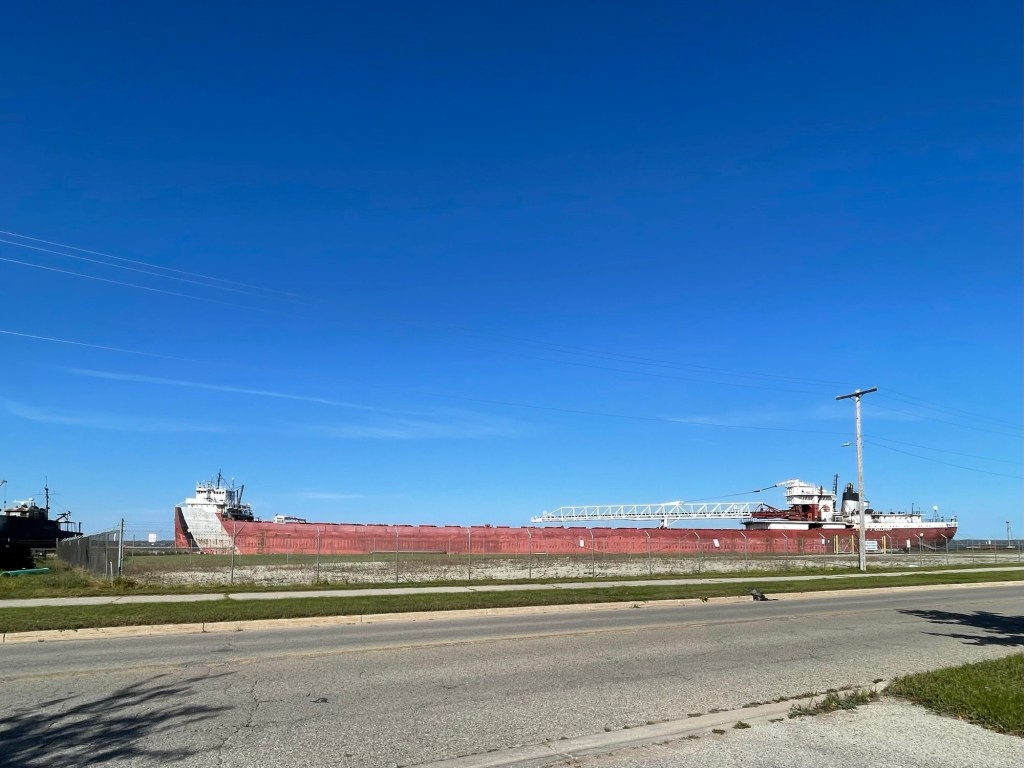
Cities like Detroit, Chicago, Toledo, Milwaukee, and Pittsburgh owe their manufacturing success to pig iron smelting towns like Fayette. Even today, large iron ore barges from Duluth, Minnesota are floated down the Great Lakes and the St. Lawrence Seaway to places far and near, as water still provides the cheapest (if not quickest) form of transportation.
Iron ore carrier, the Cason J Calloway, docked in Escanaba, Michigan
Few people today are involved in procuring or processing the raw materials that still drive our steel-dependent modern lives. After last week’s visit to Fayette, I find myself consciously thinking about the manufacturing processes and raw materials that have gone into creating the big and little things that make our current travels possible. The truck that pulls our trailer? The frame the trailer sits on? The bikes we cruise around on? The cast iron pans we cook all our meals in? Each and every one of them started with a combination of pig iron and carbon which became steel.
Machine shop
The machine shop was responsible for fixing anything and everything mechanical or electrical that broke or was causing the larger pig iron process to run inefficiently. Every day for these engineers was different. Every problem that arrived was a ‘needed that fix 20 minutes ago’ situation. The metal shutters and extra thick walls protected the rest of the site from explosions.
Pay master office and manager‘s office building
The men would line up each week in the above wooden building to get their pay packets from an iron-bar and safe-protected office door which was along the corridor that stretched from one of the building to the other. The Manager had his office next to the Pay master’s, and the men would pass it on their way out of the building.
Company store
Fayette was a company town, which meant that the company owed all the facilities, lodgings, and services available. Fayette was known for having fair prices and good services, which was not often the case, and was therefore a popular place to work — despite the harsh climate and hard, dirty work.
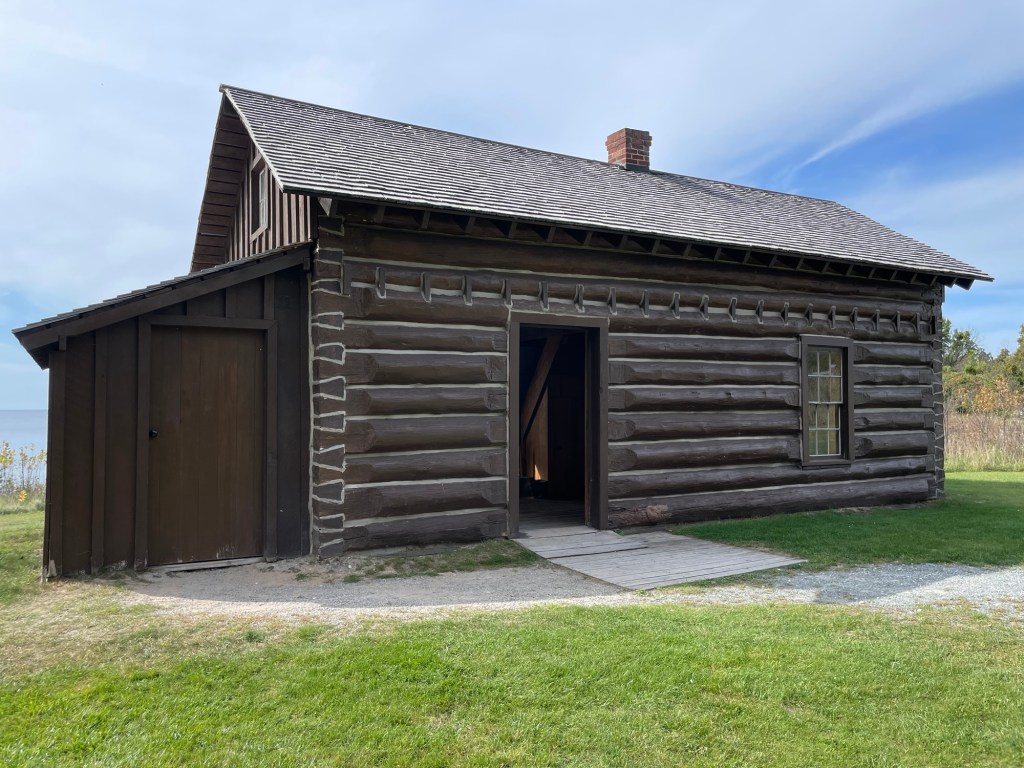
Unskilled laborer’s cottage
Entire families, with often a boarder or two, would live in a small cottage like the one above. Packed tightly one after the other, the conditions in one report were referred to as being dirty, loud, brutish, congested, blanketed in foundry smoke day and night, and disease-promoting with hordes of barefoot, filthy children intermixed with discarded bones, garbage, and animal feces.
Skilled labor and middle management townhouse
The better paid employees enjoyed a more pleasant home environment, as well. Farther from the sounds and smells of the foundry, they had more personal space and cleaner living conditions. They were able to travel occasionally to Escanaba, as well, where lower prices and a larger variety of goods were available for purchases.
To the right —> The White House
The company manager lived in the largest and grandest building, dubbed The White House. From its distant, harbor-side location, he could see the entire foundry and services operation. His family and servants enjoyed the cleanest and quietest home in town.
The Fayette Hotel
This large hotel welcomed all kinds of guests and had two signature, two-story privies with covered walkways, to accommodate its winter guests in comfort and style. Even after the company town closed, the hotel continued on its own, welcoming recreation-focused guests until the Second World War.
“I thought the earth remembered me, she took me back so tenderly, arranging her dark skirts, her pockets full of lichens and seeds.” From ‘Sleeping in the Forest’ by Mary Oliver
It’s hard not to relax when a forest welcomes you with a warm, colorful embrace. Sylvania Campground on Clark Lake is a National Forest campground in Michigan’s Upper Peninsula, near the Wisconsin border. We stayed there after leaving Duluth. Hovey Lake Campground is a National Forest campground not far from the southern coast of Lake Superior. We stayed there last weekend. For the most part, National Forests campgrounds appear to be rather rustic, but Sylvania had paved parking spots and even a few sites with power. Hovey Lake, on the other hand, was definitely rustic with only four no frills campsites and a pair of pit toilets, but it was also free. And we don’t argue with free these days.
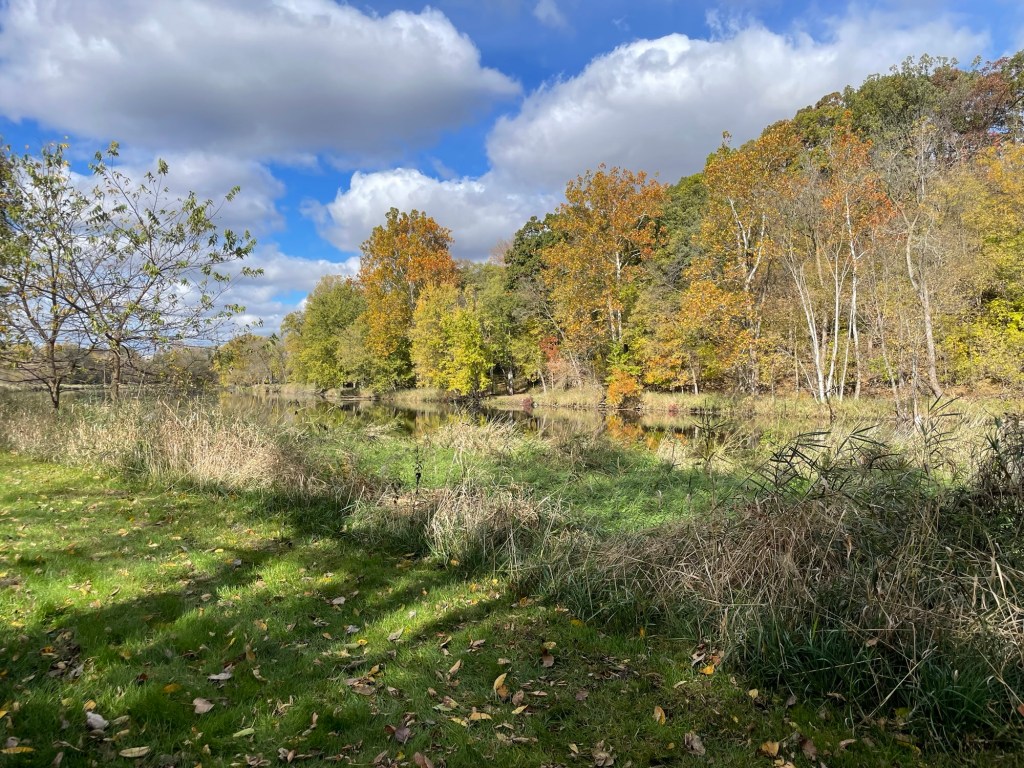
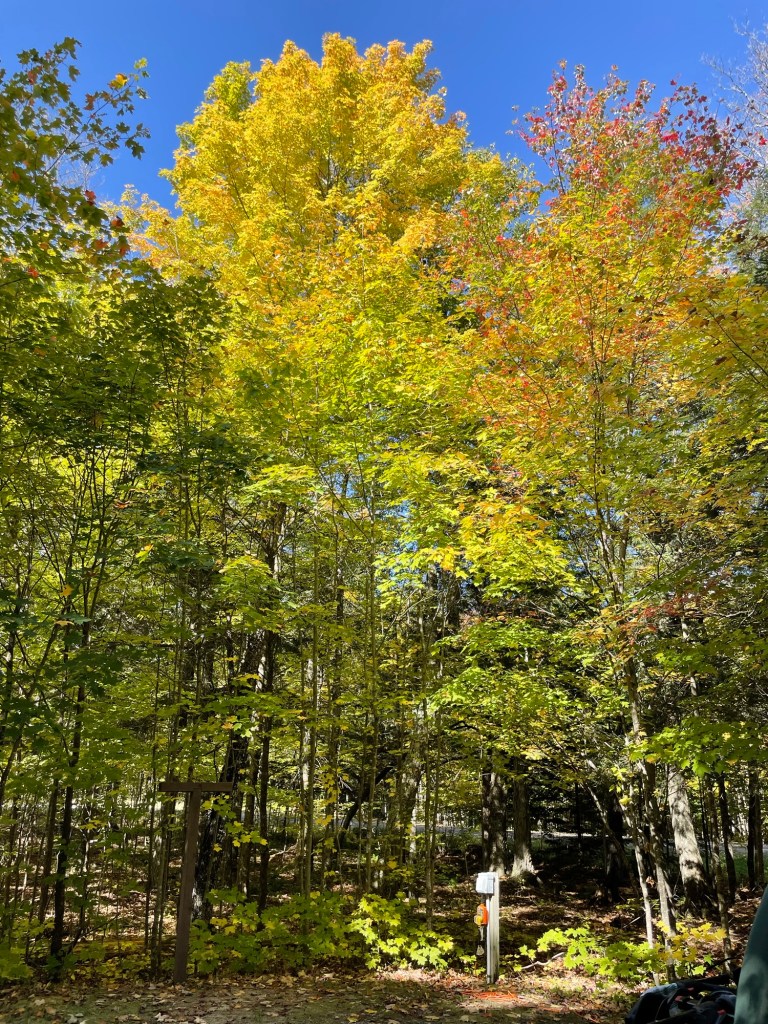
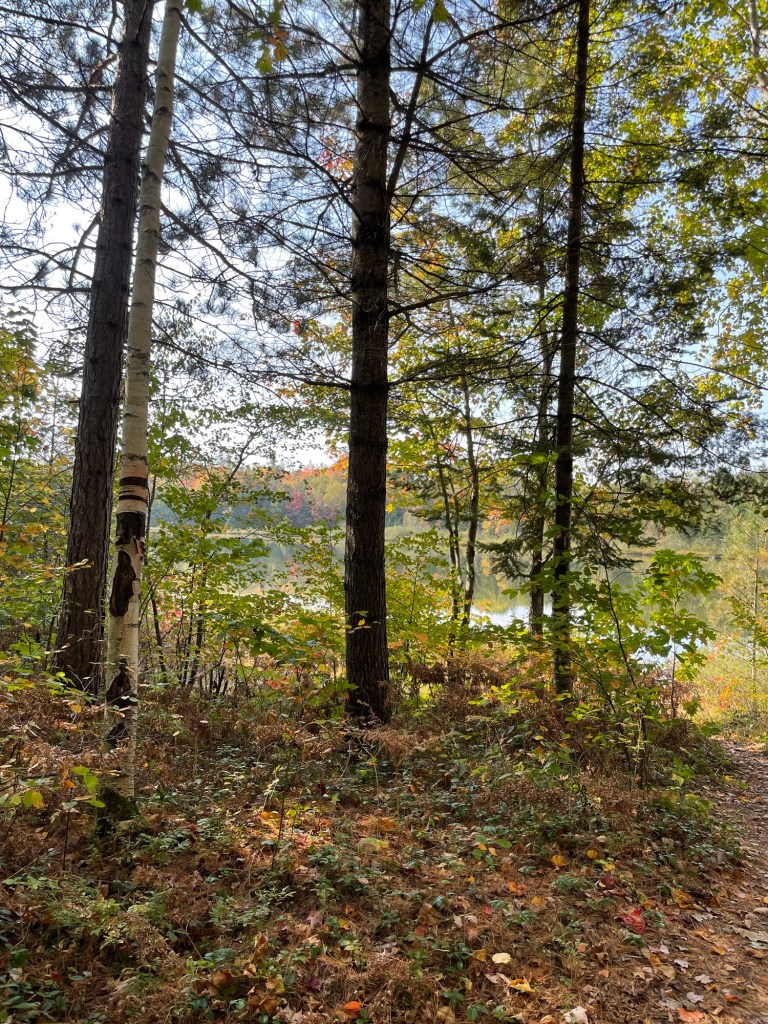
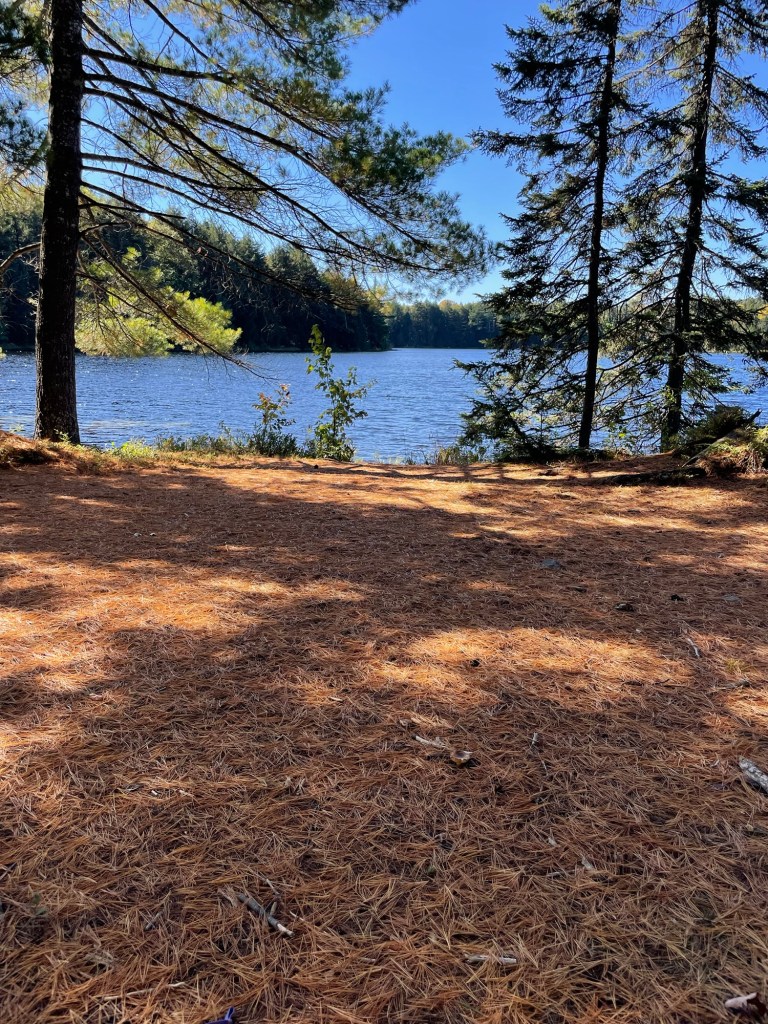
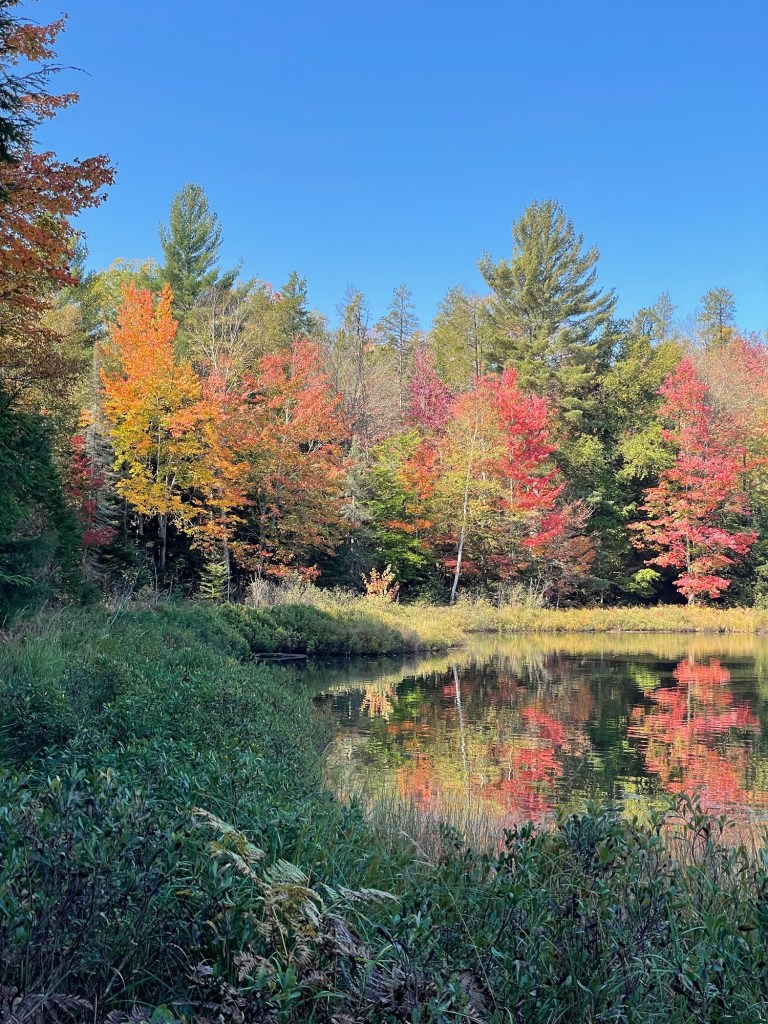
At Sylvania (campsite view, above), the colors were just beginning to turn in the campground, around the lakes, and along the hiking trails. Everything there was still mostly green, with reds, oranges, and yellows peeking out here and there. At Hovey Lake (the view from our campsite, below), autumnal color was out in force. The area isn’t at peak yet, but with the rate of change we noticed after just two nights, it will be very soon.
Something we’re getting more comfortable with as we travel is not making reservations. Because the camping season isn’t at peak anymore, we just look at which camping areas are along the way, decide which might work best for our current mood (hike, bike, fish, read, save money, sight-see, visit others, etc) and check if there’s a spot open for us. We’ve had good luck so far. If we have signal and there’s reservation info online, we’ll see how the numbers look. But if not, like for Hovey Lake, we just drove up on Friday looking for possible places to fish and hoping for an open spot. Not 15 minutes after we set up the trailer, another camper came and took the last site. Later, he told me that he’d been by the evening before and all four were full. Luck of the draw.
Jeff took his fishing gear on our hike at Sylvania and caught quite a few fish in Katherine Lake, above. I listened to an audiobook and enjoyed the soft, bouncy feel of layers of pine needles beneath my feet. Nature’s gymnastics mat.
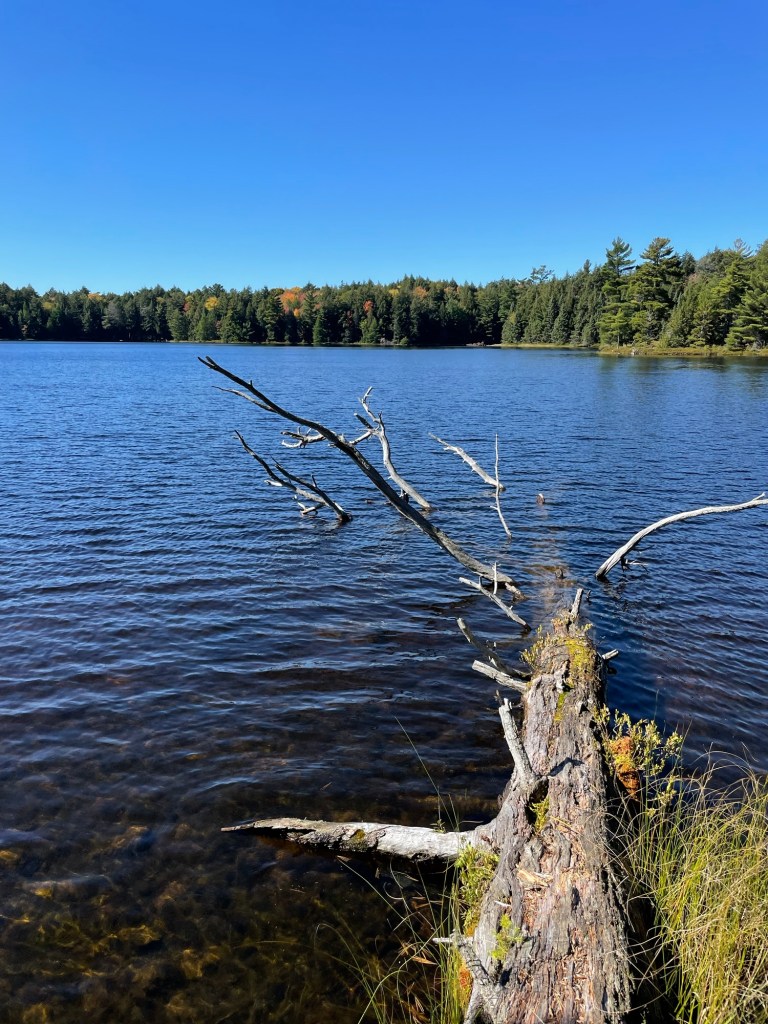
Although he saw a few Perch* and Bass and a ton of minnows at the Hovey Lake campsite (below), they weren’t biting. At least he only had to take about 20 steps to cast a line. While wading out, he realized that the lake was quite shallow all the way across, and thus not good habitat for the larger fish that like deeper water.
I was astounded by how clear the water was and by how many large clams (mussels?) there were. Someone help a non-water gal out. They were easily as long as my hand. Something had been dining well recently, as evidenced by a messy pile of shells strewn over a small area on the opposite bank.
Something that I’ve found disturbing this week is fires being left unattended. One evening last week, while staying at a municipal campground (more on that next time), I woke up to relieve myself and found an abandoned fire pit with coals still so red hot that I could see them from our trailer without my glasses on. The local yokels who randomly pulled up around 6pm were long gone when I went to bed at 10pm. So there I was, pumping water into buckets at 1am to drown someone else’s fire because they didn’t have the good sense to do it themselves before they left.
And on Saturday, while we were hiking the Hovey Lake area, we came across smoldering logs in a fire pit, at noon. Not a soul around. I can only wonder at how long it had been burning. My only hope is it was a breakfast fire and not from the night before. We used our water bottles to drench it as best we could. It’s not like you can just turn a blind eye to something like that. What is wrong with people who behave so irresponsibly?
There are Moderate fire danger signs all over that area, for Pete’s sake. I know that the threat of wildfires is ever-present to those of us who live in the arid, mountainous west and that makes me hyper vigilant, but come on. Smokey the Bear has been having this conversation with the nation for decades.
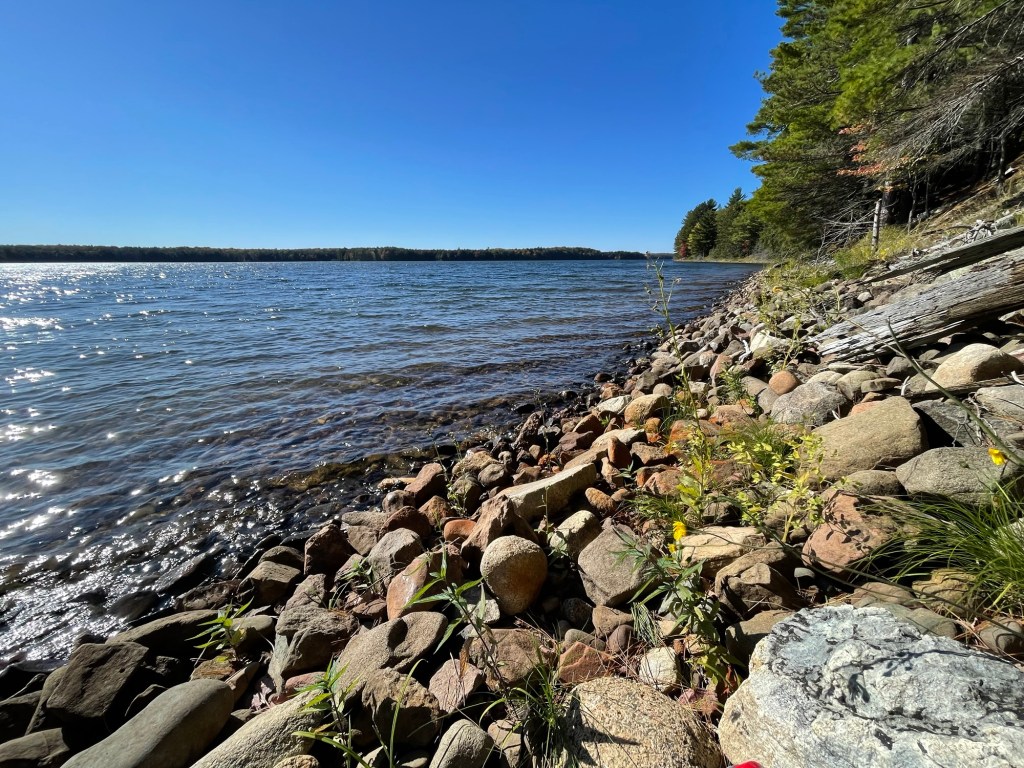
At one point, while I sat on this log, doing nothing but being, staring across the water, Jeff walked out onto it as well and it was immediately clear that it was unlikely to hold us both for long. A yellow canoe on the opposite side of the lake (sorry, no photo) glided into and out of view. I couldn’t have ordered up a more perfect accompaniment.
“Many of these trees were my friends” — Treebeard
A few times on our five-mile, four-lake hike, we ran across trees bent over at a 90° angle. I assume it’s due to time or disease, but I can’t say for sure. They weren’t snapped off high up the trunk like the derecho-hit trees we saw in Bemidji, Minnesota. They remind me of that scene late in The Twin Towers during the last march of the Ents to destroy Isengard.
Hey, I know you
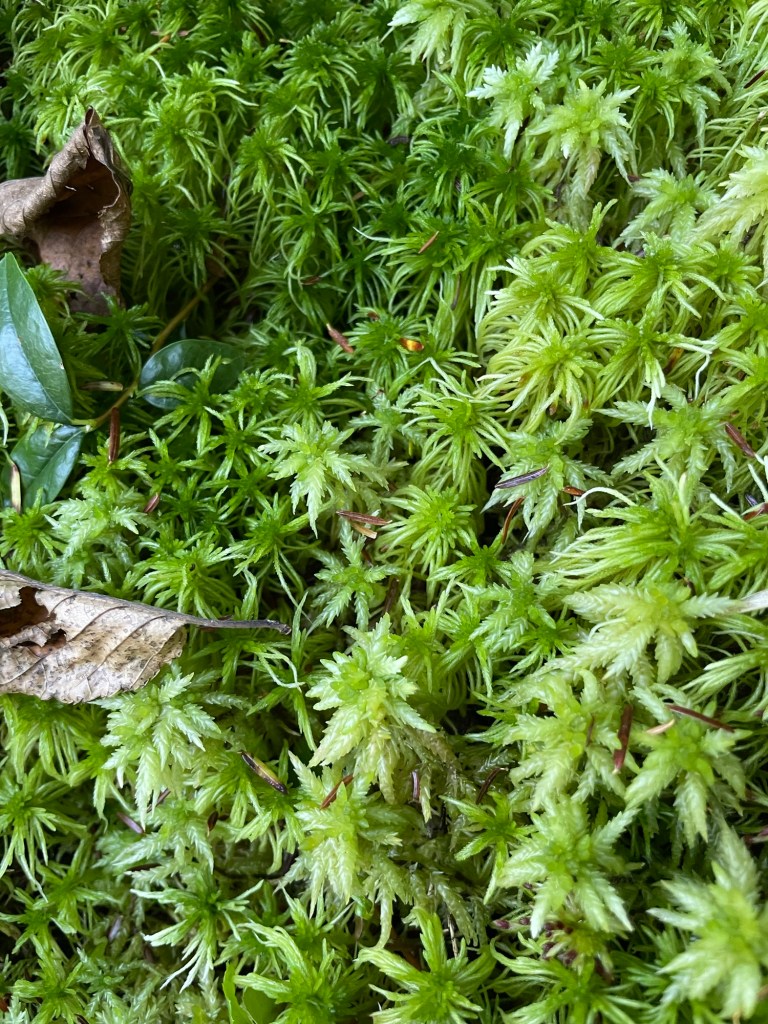
Some more Sphagnum Moss up close and personal. Isn’t it beautiful?
Clark Lake is the largest of the four Sylvania lakes we hiked to. It had a lot of wave action for such a calm day. A group of college friends must have had the same idea as us, because they kept meeting up with us at each stop. Even being so close to the Wisconsin border, we were surprised to be the only non-Wisconsin plated vehicle in the parking area. Where are all the Michiganders?
Water, trees, leaves, and a setting sun? Who needs amenities when Hovey Lake gives views like these while making dinner?
Our plain o’ public lands. I sure do love them.
Si quaeris paludem amoenam circumspice
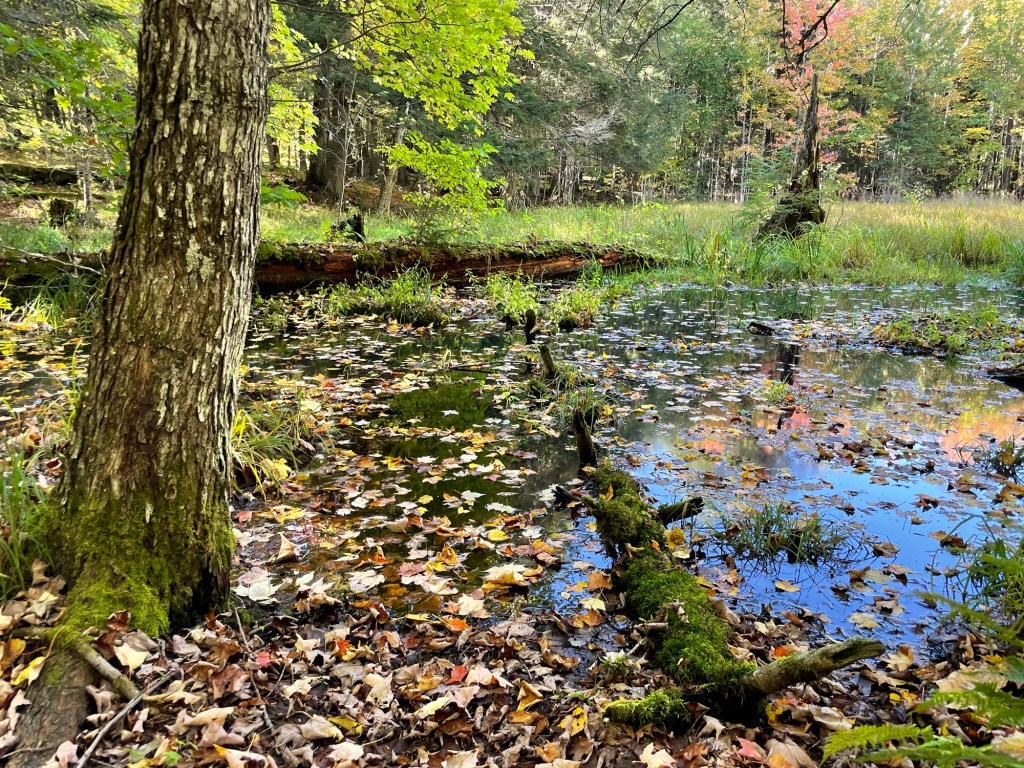
If you seek a pleasant swamp, look about you. (Sorry, Michigan.)
*Not pike, as originally written. Someone was supposed to edit for fish and other details that I don’t know anything about but didn’t really read closely because he was chatting with friends