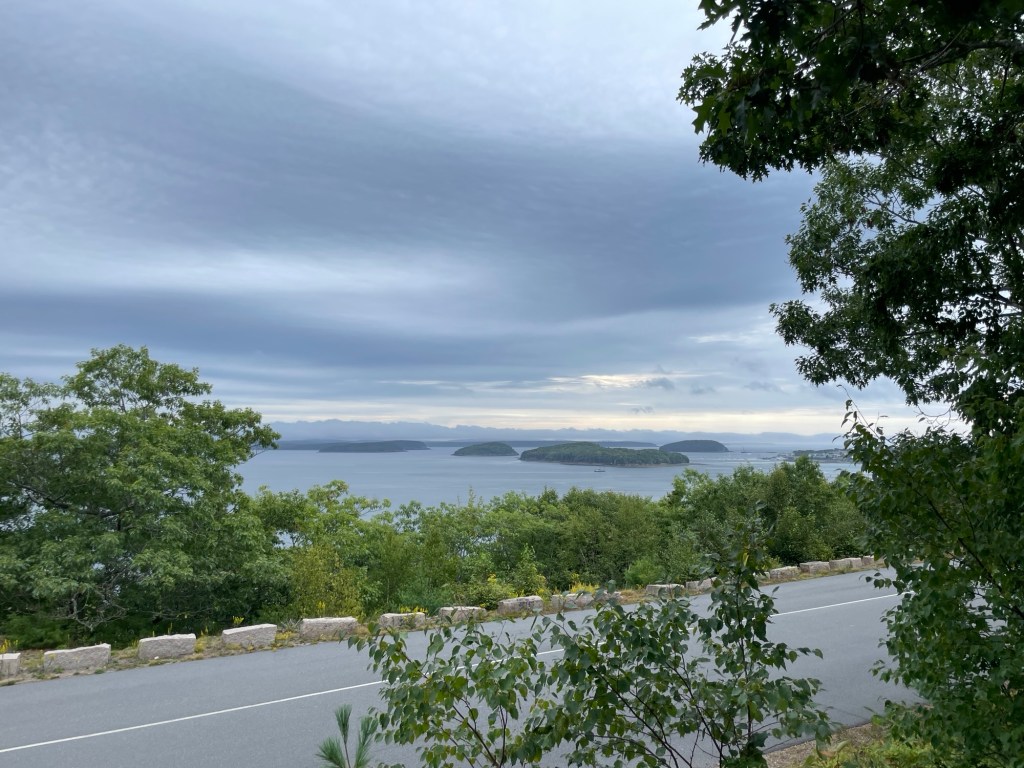
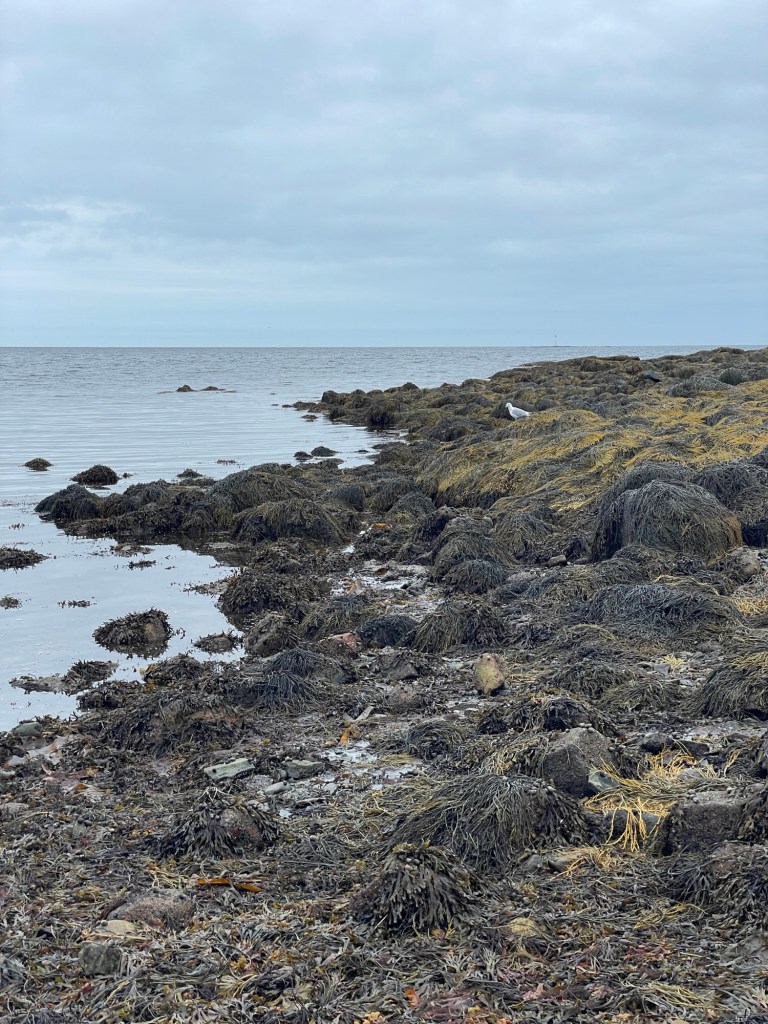
I touched seaweed and let its slimy tendrils slip through my fingers, explored its air filled buoyancy bladders/pods, peeked at the marine world living beneath it all, and found it fascinating. This is a big step for someone who could barely stand to touch cooked spaghetti for decades.
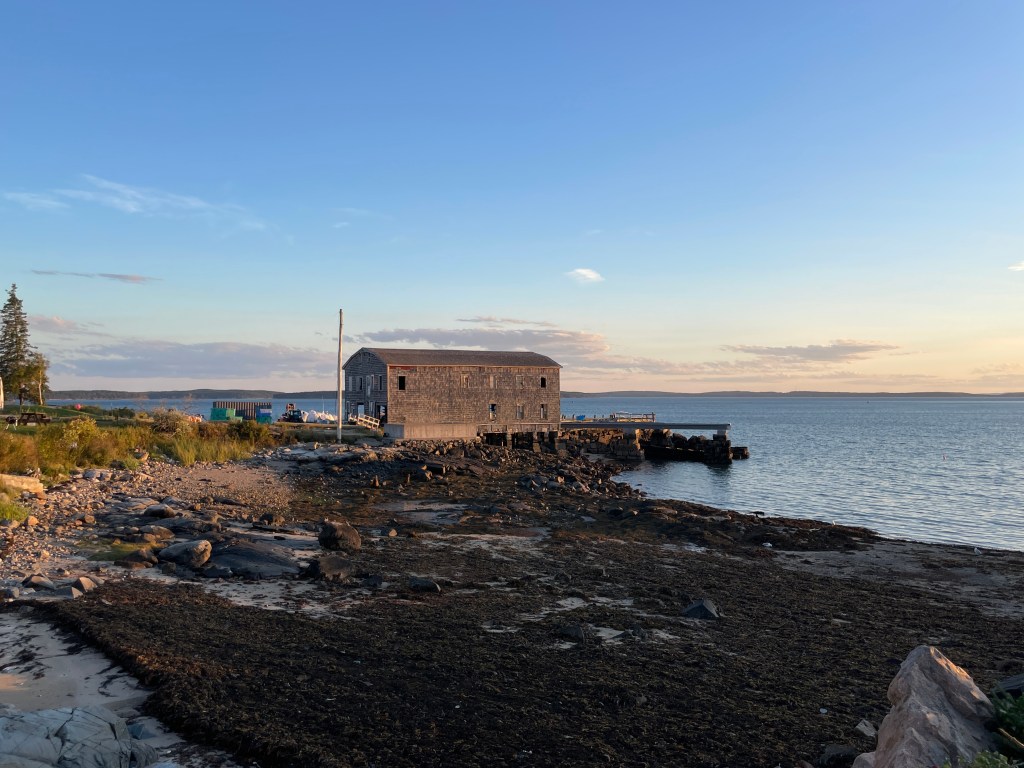
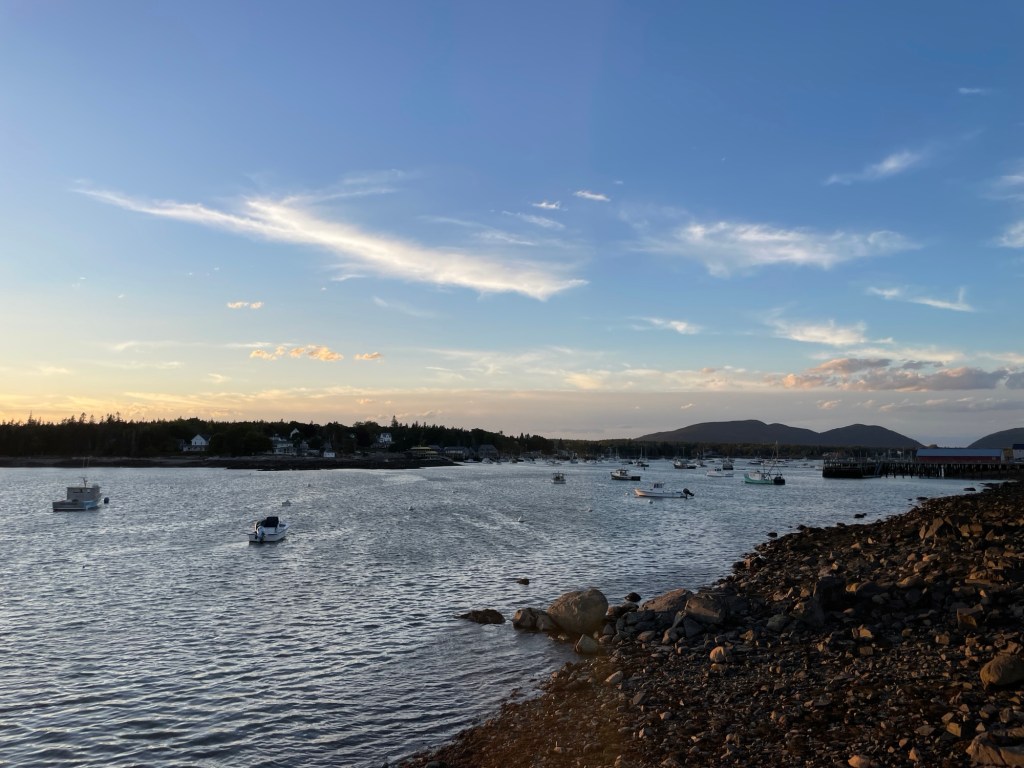
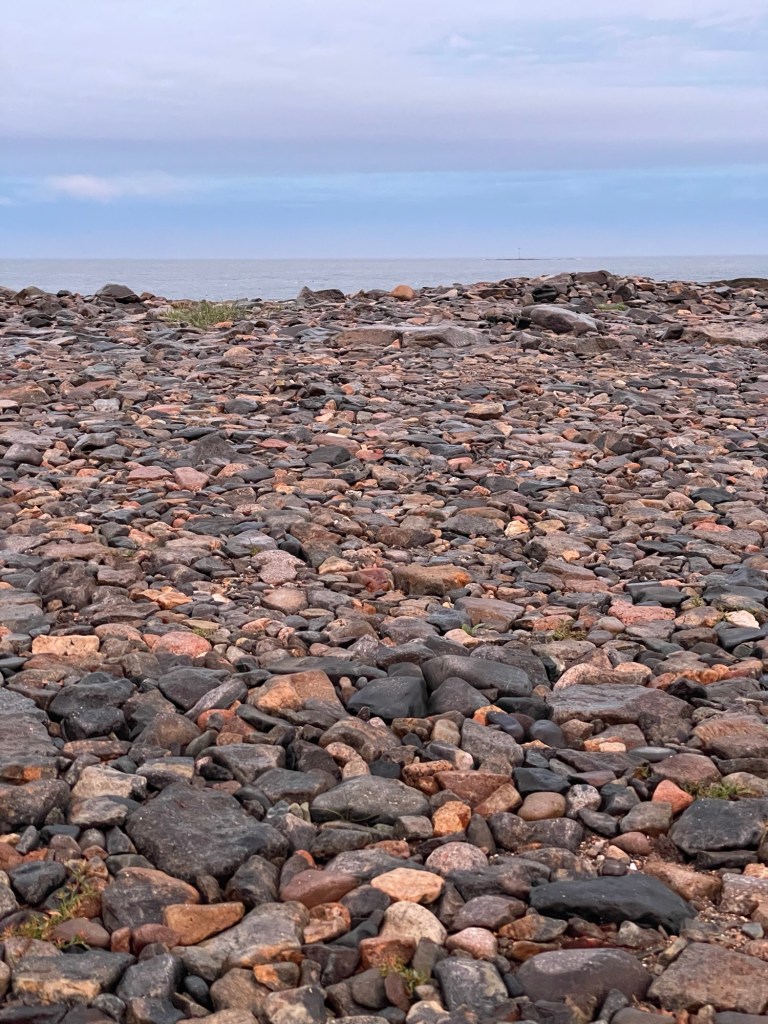
The Atlantic was just a short walk from our spot at Seawall Campground, during our much too short of a stay at Acadia National Park in Maine, and I spent a fair bit of time on its shore. We drove to lots of beaches, trails, and cliffs in and around Acadia, but our campground’s little day park was probably my favorite spot. Few people visited it for more than a couple of minutes, which is a shame because the beach’s atmosphere felt different every time I saw it. The tide pools, the multicolored water-smoothed rocks, the sunrises and sunsets, the high and low tides — I loved it all.
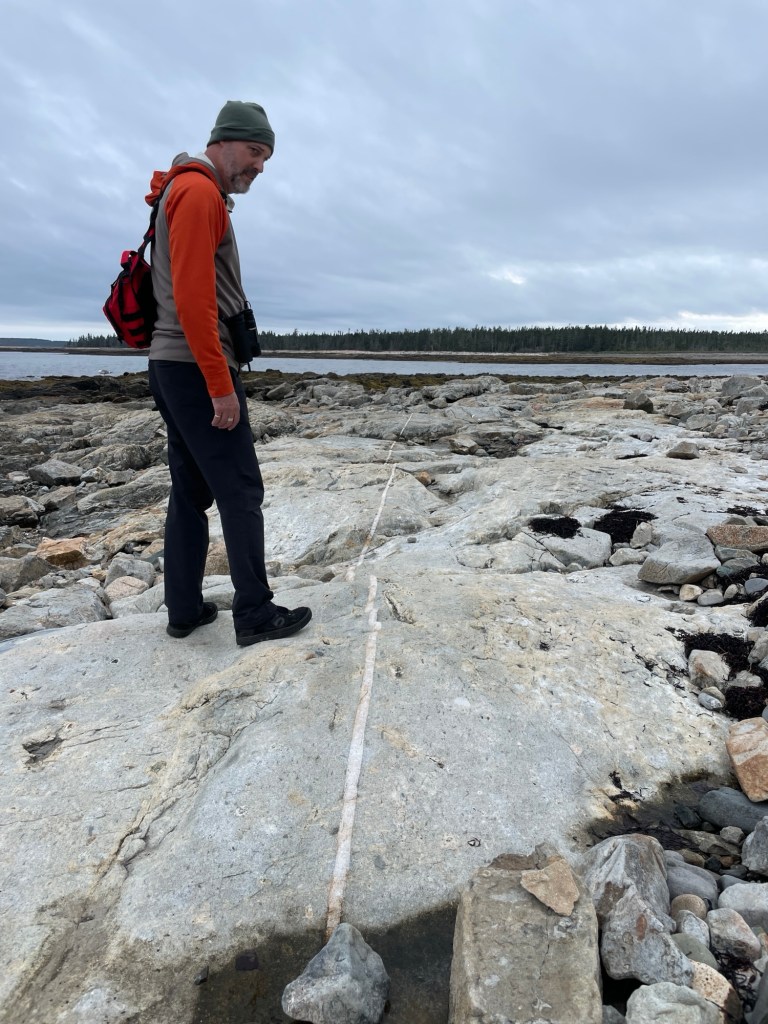
Volcanoes! Earthquakes! Tectonic plates! Glaciers!
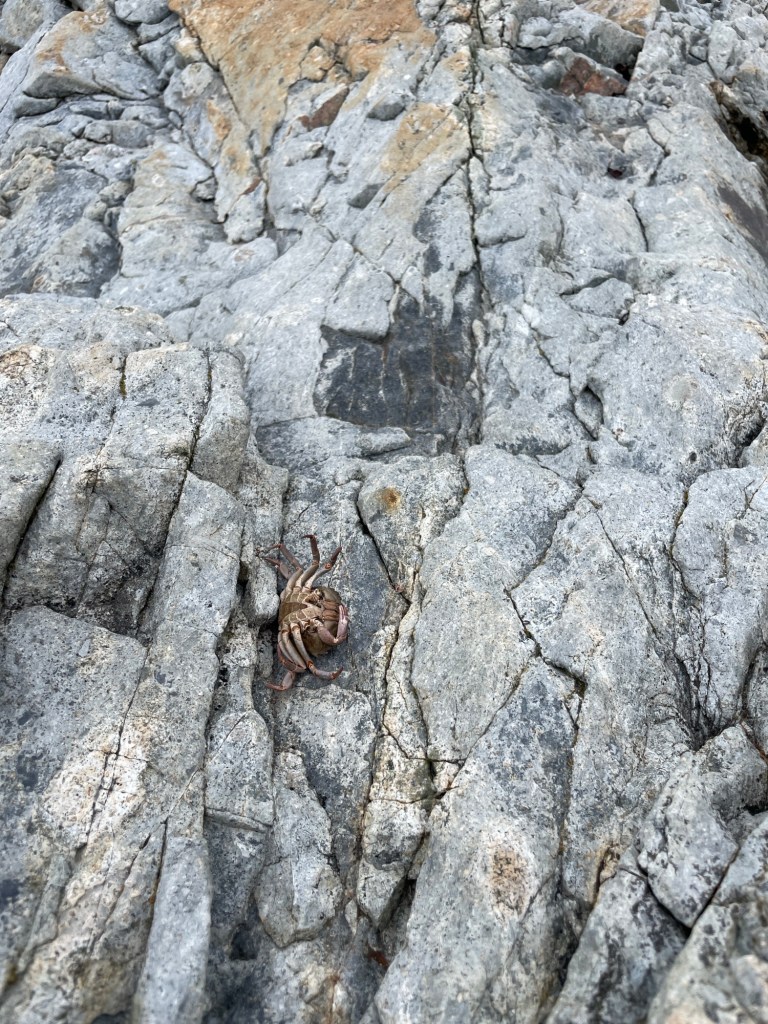
Because of where things were in the tide cycles, we usually saw the coastline when it was around low tide, so we had lots of rock hopping and tide pool exploring time. The local gulls had a smorgasbord of shellfish and crustaceans to pick from based on the number of claws, carapaces, and even entire bodies we found. Imagine being a crab. You’re scurrying around in a rock pool, minding your own business, when suddenly a seagull snatches you up and you’re flying through the air, only to get dropped onto a jagged boulder field below. Lights out. Game over. The indignity of it all.
For things to make sense, going forward, I should give you an idea of how Acadia National Park is set up, if you haven’t been there already. Imagine two oddly shaped lungs, attached at the top. That is the island that Acadia NP is on. You drive onto a bridge from the mainland, cross into Mt. Desert (pronounced dessert but we’ll get to that later), and almost immediately have to turn east or west. The eastern “lung” has Bar Harbor and most of the things that Acadia is famous for, as well as the main visitor center. The western “lung,” where we were camping, is known as the quiet side. It has a smaller section of the park, but also far less traffic. It’s a fair trade off in my book.
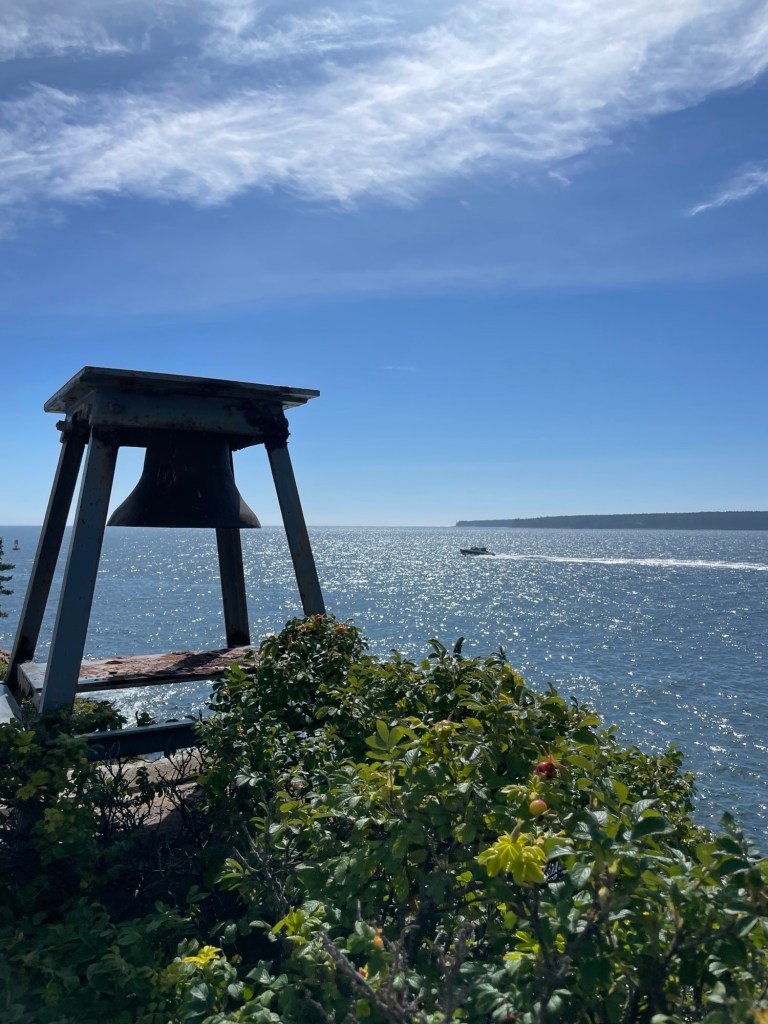
On our first full day, we stuck close to camp. The whole of Acadia runs up alongside and weaves between the local communities, rather than being a stand-alone park with clearly defined inside and outside boundaries. Because of this, you run into interesting little towns constantly, especially on the western peninsula.
We found cute little shops and a very good breakfast restaurant, several tiny post offices and libraries, and according to one travel book, the best lobster pound in the region. Of that we can neither confirm nor deny, as it’s only open one day a week and we missed that day. If you’re wondering what a lobster pound is, like I was after seeing the term for the umpteenth time, it’s a tidal enclosure designed to temporarily hold live lobsters in a natural, controlled marine environment until conditions are favorable for their release. One condition, of course, being that a paying customer wants a cold (mayo-heavy) or hot (butter-drenched) lobster roll.
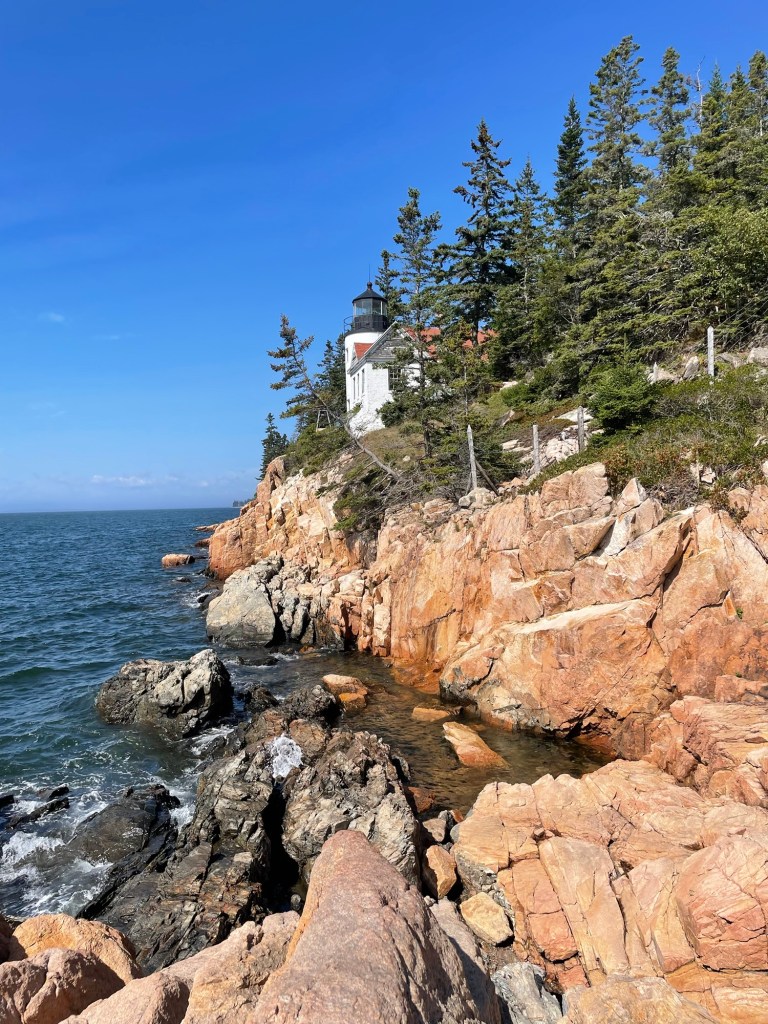
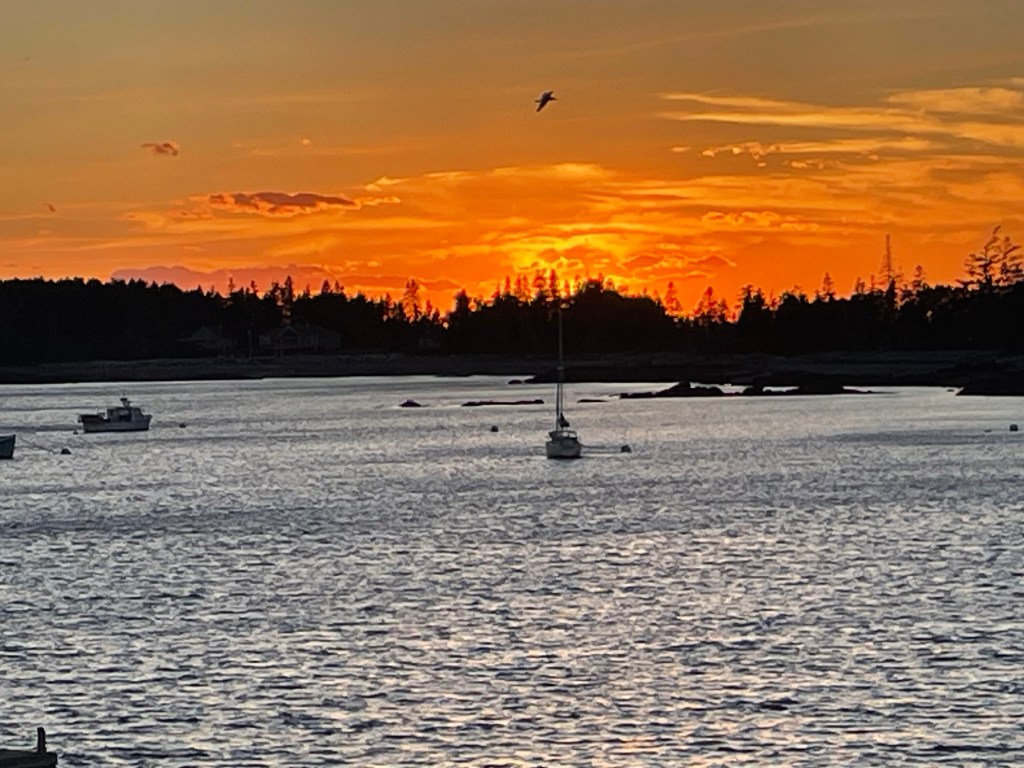
After doing some hiking along the coastline with about a hundred others, we headed back to camp for a meal, some cycling, and then quiet reading. On a whim we decided to hunt out a spot to catch the sunset, as the skies looked promising.
Waking early the next morning, we decided to head to the island’s biggest town and tourist draw: Bar Harbor (Ba Hahba). Since Acadia is one of the most visited National Parks in the United States and a bit of a congestion nightmare, we made full use of the free Island Explorer buses that loop between multiple points in and around Acadia NP. Those bus drivers are gods of the asphalt. They stick to the posted schedule, even if it means cutting their own breaks short. They deal with clueless tourists, inconsiderate drivers, and distracted cyclists nonstop, and they do it with jokes, smiles, a helping hand, and genuine kindness towards their passengers.
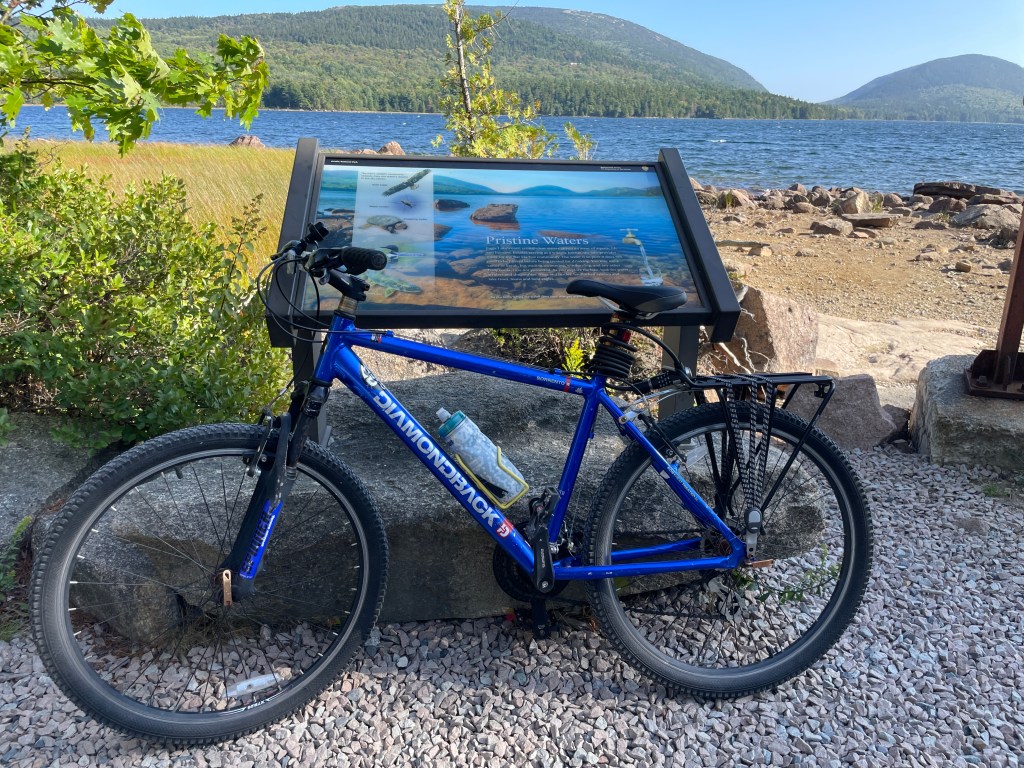
The #7 goes from Seawall Campground to Bar Harbor, stopping at the northern end of Eagle Lake. After doing the obligatory day in Bar Harbor, highly overrated in our opinion, we decided to take our bikes along on the next trip (each bus can carry up to 6 bikes) and rode around on a few of the carriage roads. John D. Rockefeller was a waste of carbon for many of the things he did in life, but his decision to have a series of crushed stone, recreational carriage roads built was pure brilliance. He and landscape architect Frederick Law Olmstead really did make the carriage roads and their unique stone bridges look somehow inevitable.
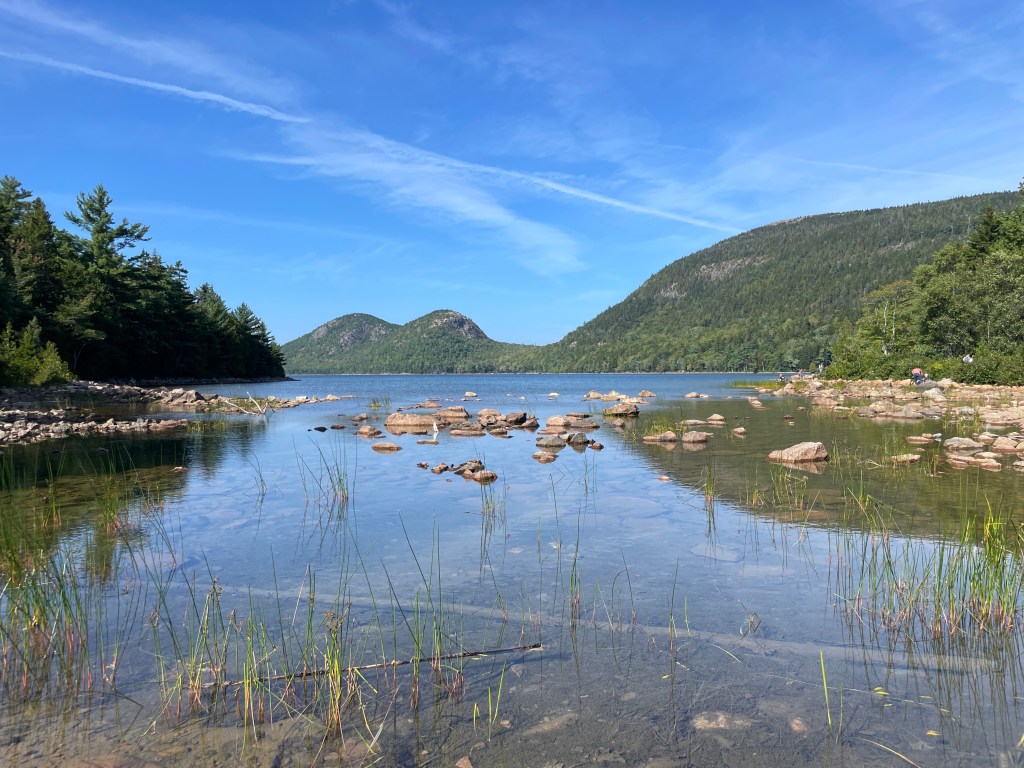
While most people zoomed by us on rented e-bikes, we labored up the many hills under our own power. My thighs and lungs had a not so quiet conversation with my oxygen-starved brain about the wisdom of taking my 35 pound, vintage mountain bike along on this road trip. With over 50 miles to choose from, these carriage roads would be the ultimate running & cycling training course.
There are a few things you can be sure of at Acadia.
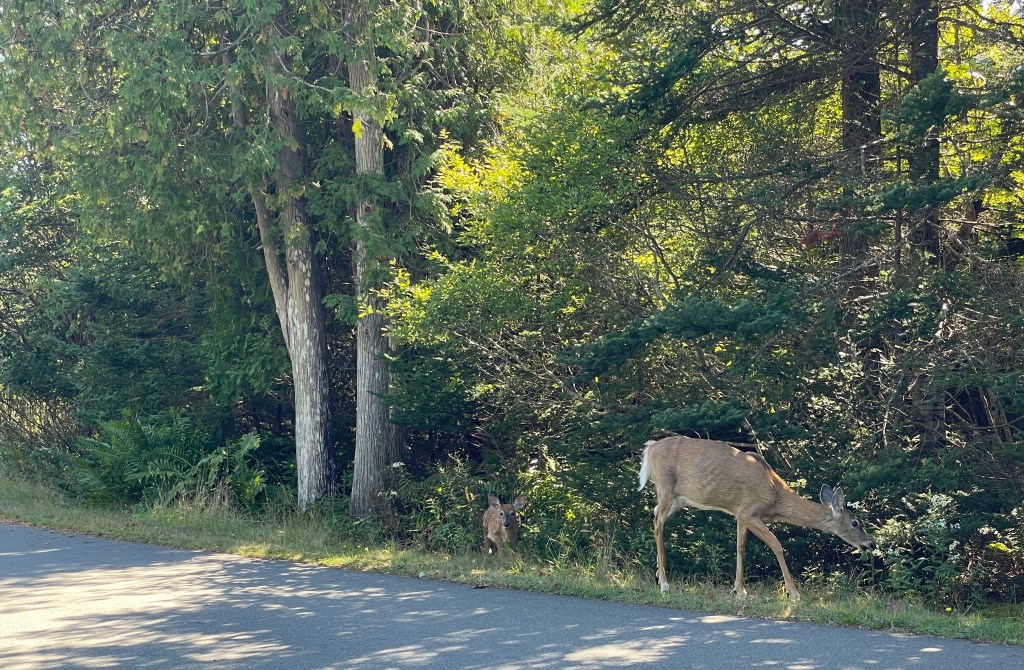
1. You’re going to see deer, a lot of deer. They’re as common as ticks and just as brazen. They will graze within a few feet of you and hold up traffic like an influencer trying to get the perfect “All alone on the beach in Ibiza” shot, while 200 people fume on the stairs behind them.
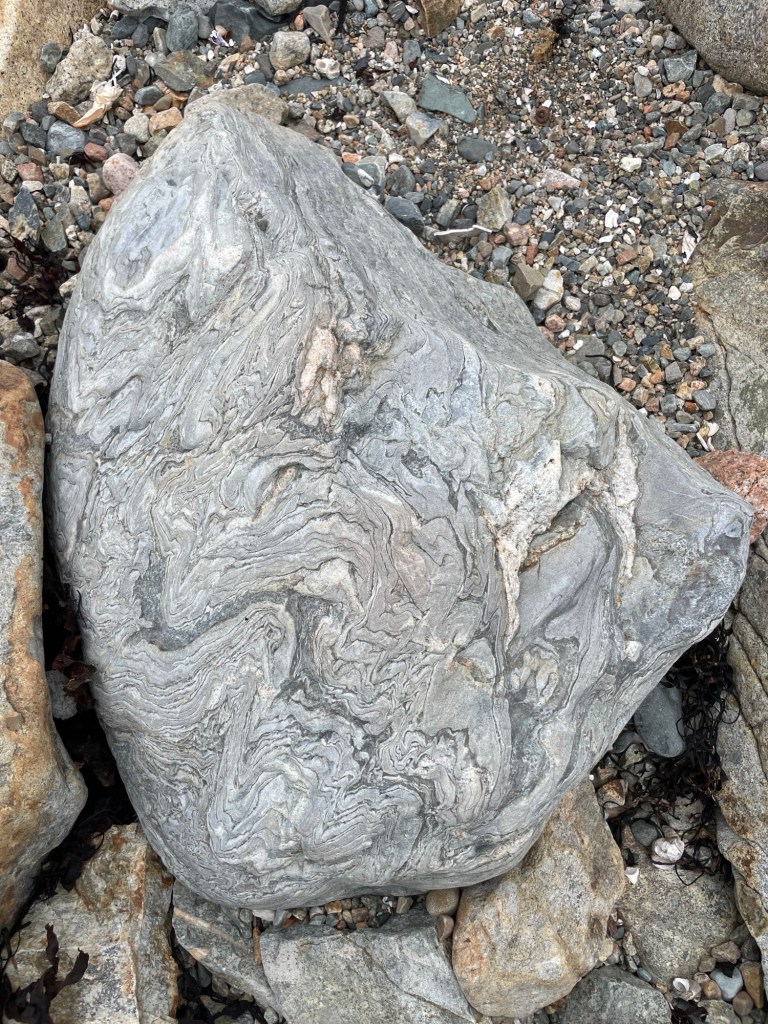
2. You’ll scratch your head over some seriously weird rocks. The large, strangely shaped rock with folds aplenty below is a sea-polished chunk of Gneiss from the Cambrian age. From what I’ve read, it likely broke off fromup on the (Mt Desert) Ellsworth Schist range. We found it on Seawall Beach. As you can see, it really stands out amongst all the other beach rocks. Gneiss (pronounced nice) is a metamorphic rock tightly folded over eons by extreme heat and pressure deep within the earth. Now I know to look for alternating layers of light and dark within the tight folds.
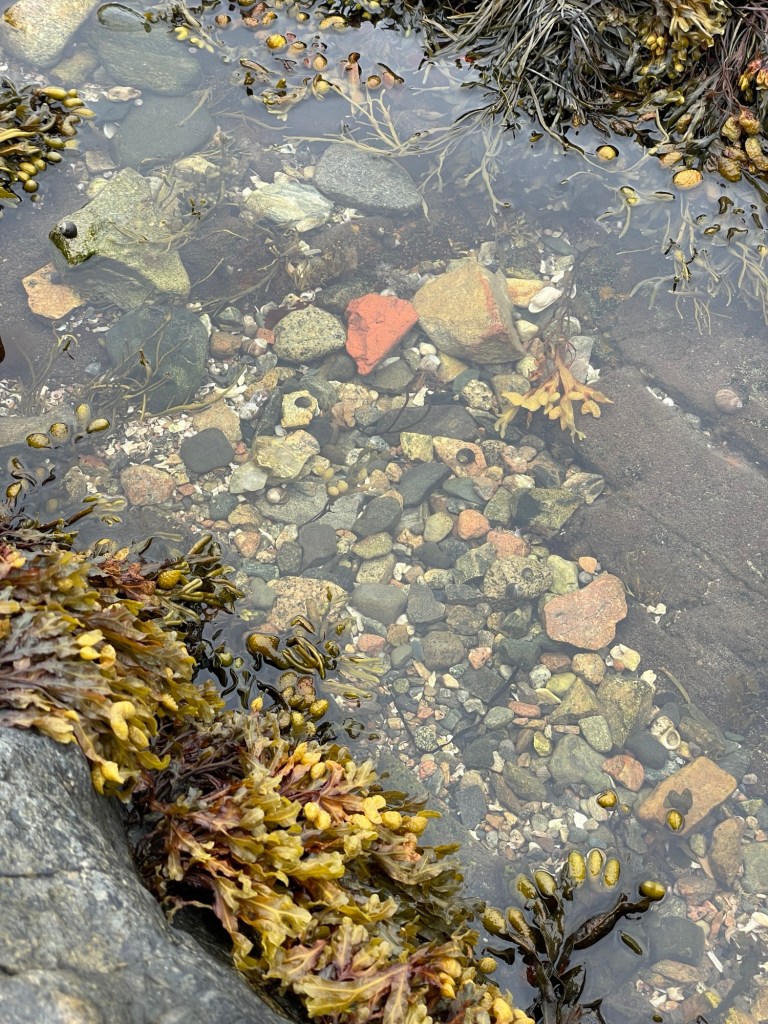
3. You’ll see more snails in a single rock pool than you ever thought possible. What first looked like holes carved into rocks turned out to be small snails. I’m not sure if they get bigger with time or just stay small. Either way, Jeff was fascinated by them.
4. Everyone will look confused the first time they hear Mt Desert pronounced as Mt Dessert, a bastardization of the French pronunciation. When French explorer Samuel de Champlain was exploring the coast in 1604 — yes, that de Champlain — he noted that a prominence on the island looked barren and so named the area Mont Désert (Bare Mountain).
Our last full day was forecast to be a rainy one, so we headed out early to drive the loop road before the deluge arrived. In the end, I think we both enjoyed the trip at least, if not more, than if the weather had been clear. The clouds made certain aspects of the landscape really pop out, and it all looked “moody.” My guess is there were probably far fewer cars on the road, too.
We started at the visitor center, which did not have an intro film. Jamie and Jeff’s second rule of Visitor Centers: Have a free introduction film. (First is clean bathrooms.) Then we joined the automobile queue and began the one-way trip past the eastern coast, of the eastern peninsula. It is, no surprise, gorgeous.
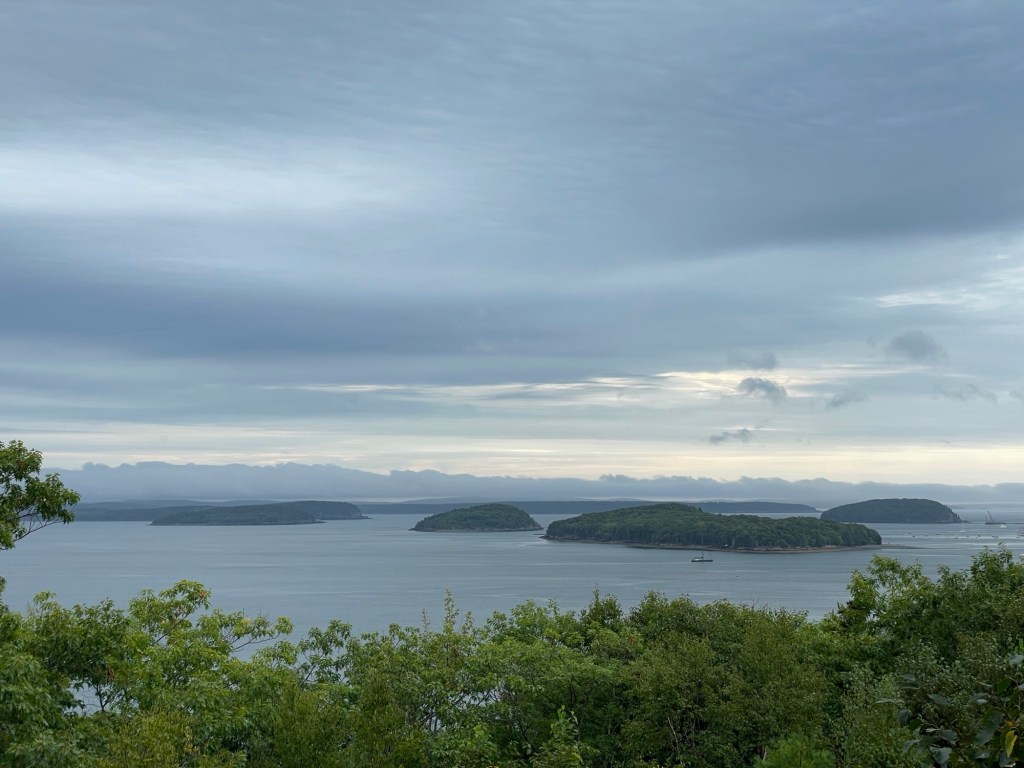
The loop road hugs the jagged coastline, darting in and out of rocky overlooks, giving great views of the cliff edges during low tide. Parking is allowed in the right hand lane for parts of the one way section, and it really comes in handy. I imagine that in the height of summer it’s nothing but a parking lot with a slow crawl of cars going past, hunting for an opening.
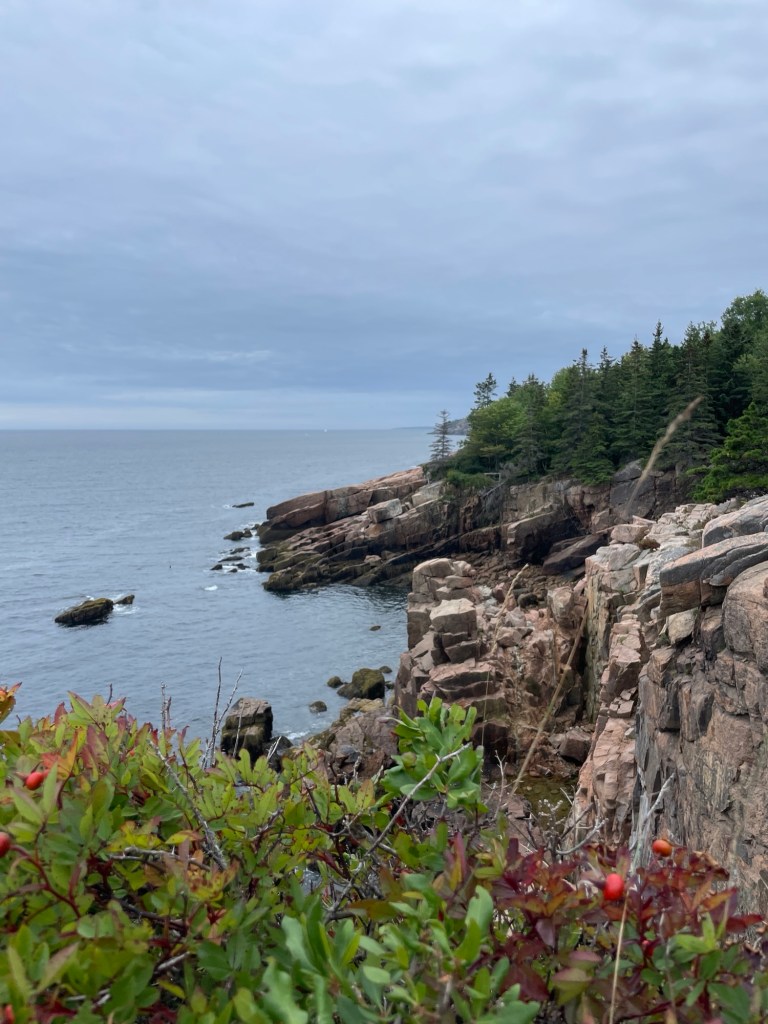
We noted what a great variety of rock hopping and scrambling spots there were all alone the coast. We laughed and could easily imagine trying to keep Ian from his eternal quest of getting as close as possible to a rocky ledge, always intent on getting the perfect shot from some extreme angle. We were reminded of the time he loped back to us on a visit to Northern Ireland and announced that he had just scared the life out of another tourist by nearly falling off the edge of an island near the Giant’s Causeway. But not to worry, he’d gotten a great shot!
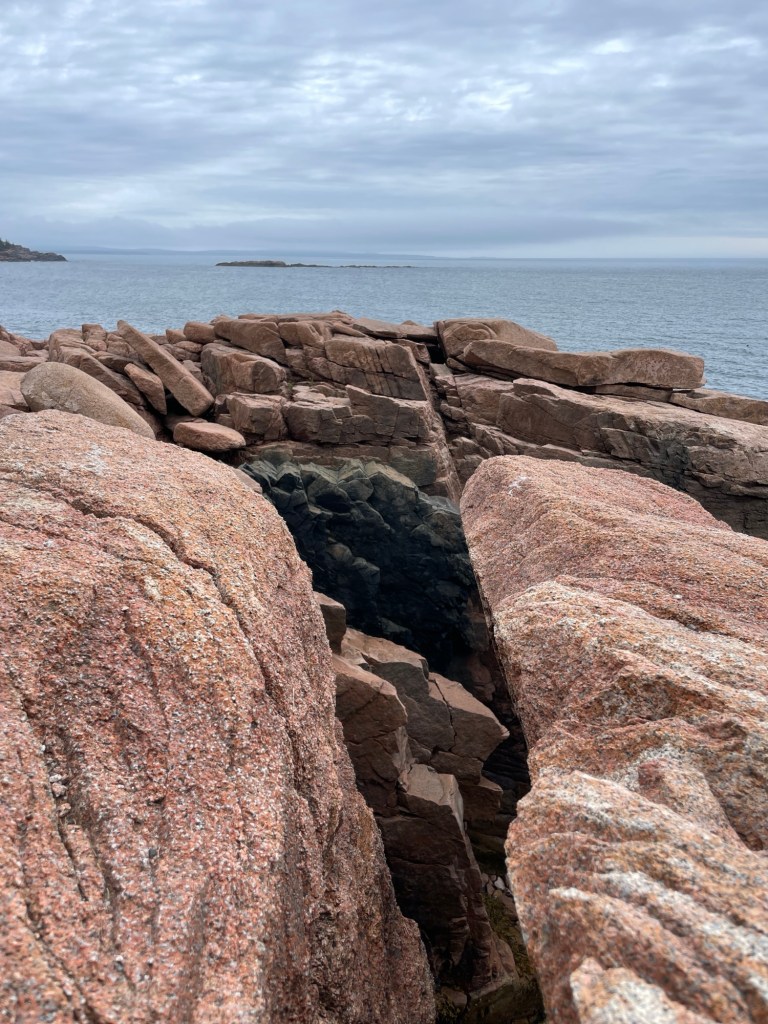
At one point, Jeff noticed that we were alone and asked if people were allowed to release ashes there, since we always have a small amount with us. I said, “Oh, absolutely not.” Ya know, our boy sure did love forbidden things.
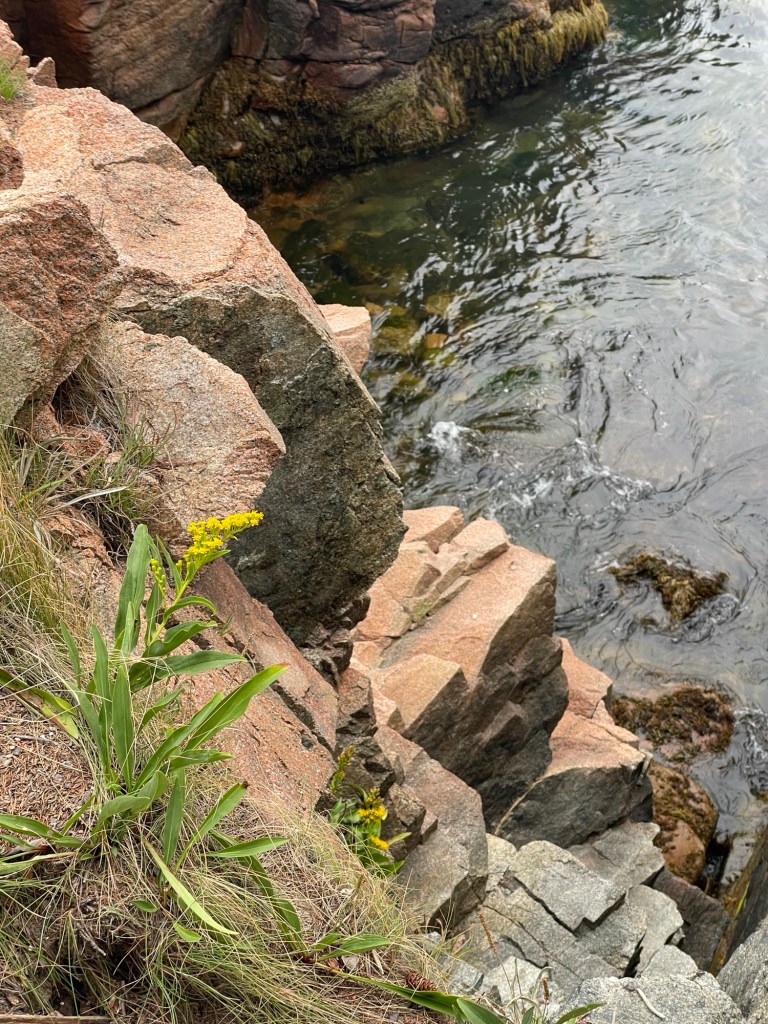
I’m just saying. Moving on!
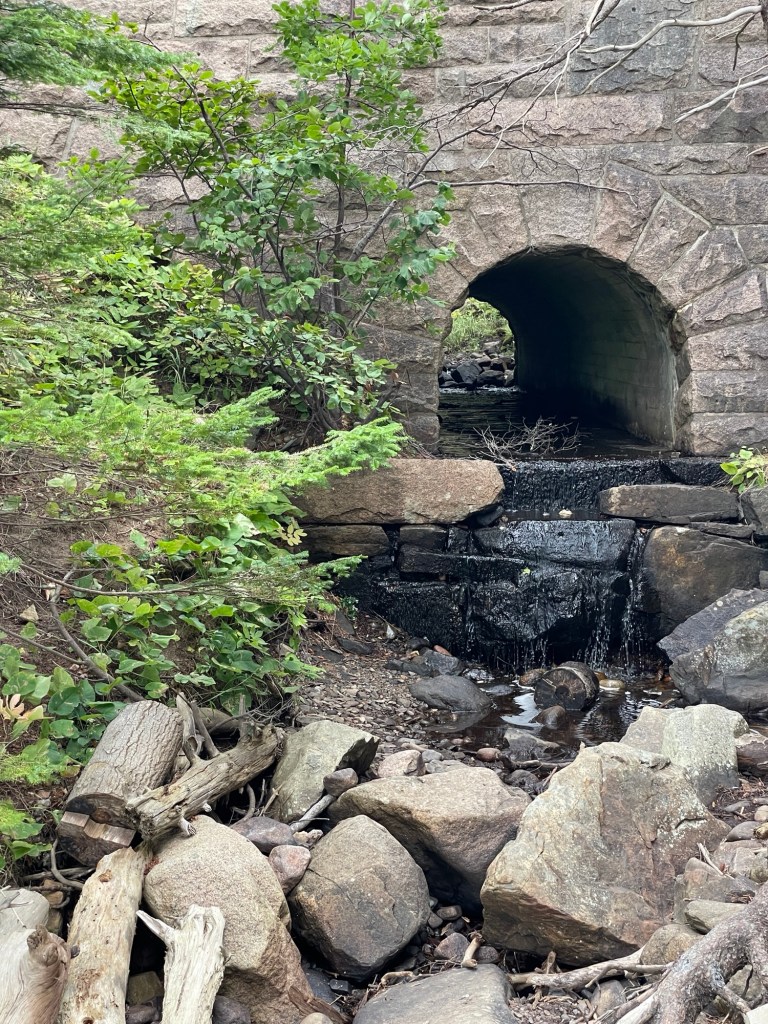
We didn’t see anywhere near all of the stone bridges in the park, but we enjoyed the ones we did see immensely. This one was very very tall, solidly bridging the two sides of a steep valley above a fairly modest creek opening. There were a LOT of steps to get down to the tumbled stone beach, as one woman kept announcing on her descent.
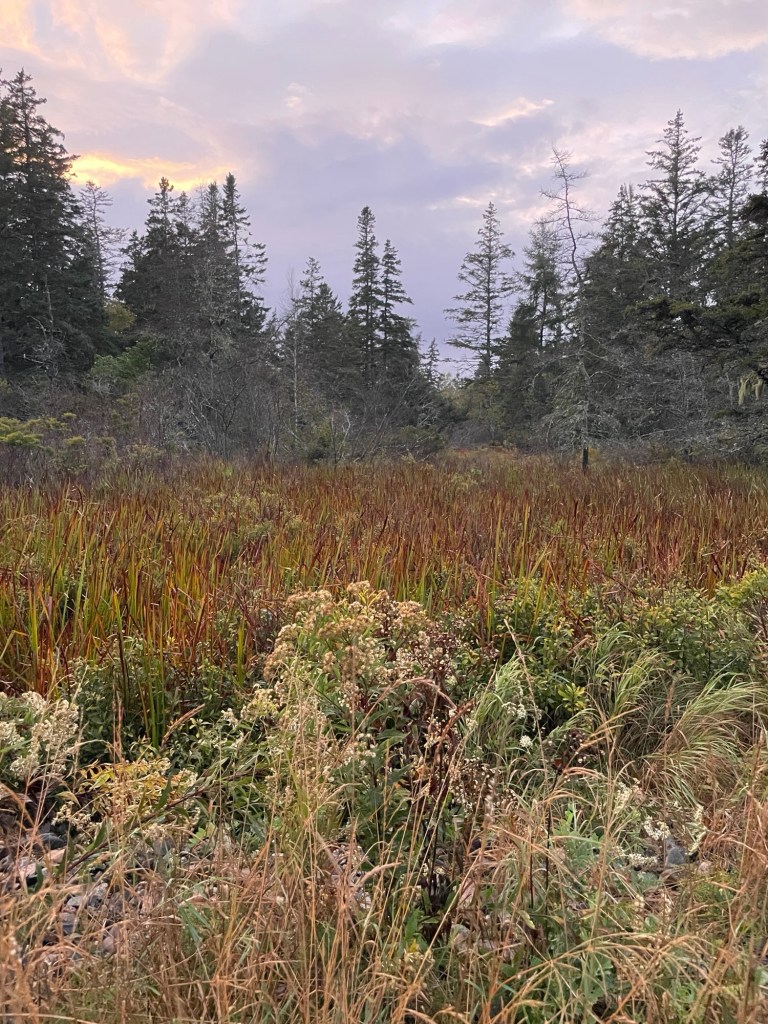
After an overpriced dinner with a nice view, we caught a final (reverse/east facing) sunset from our beach, laughed about the deer hanging out with us, and headed back to pack things up and prepare for the morning’s departure. Books and movies in the trailer made a cozy end to the day.

Leave a comment