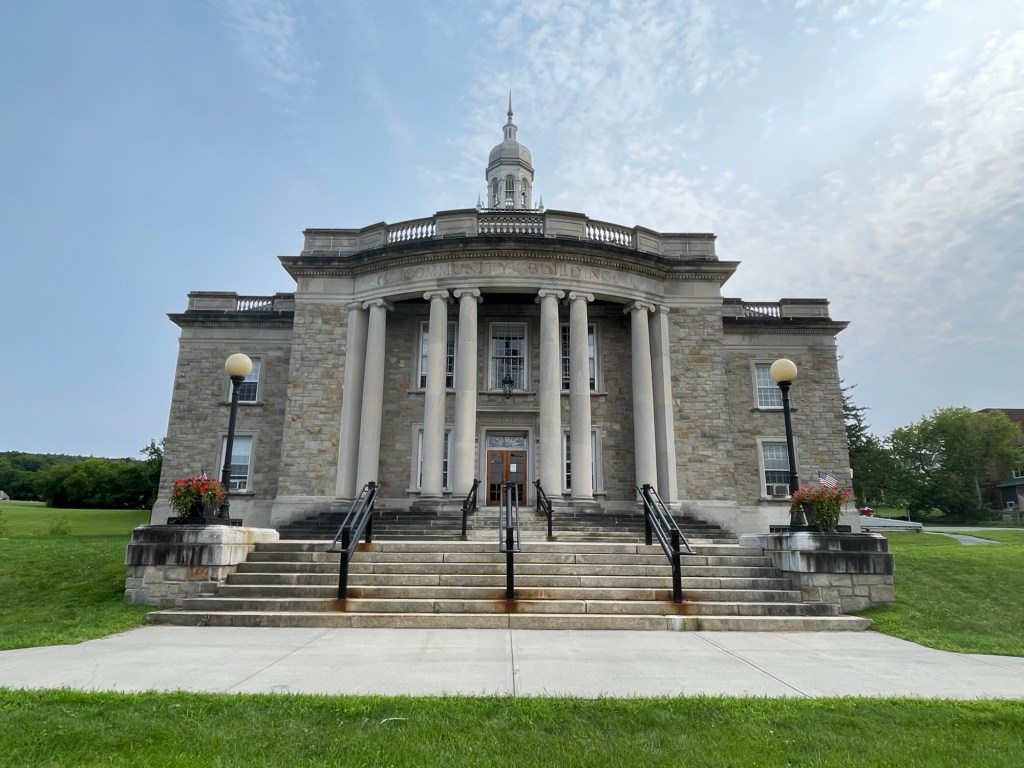
When I was in elementary school, the day after Labor Day always brought two unsharpened Ticonderoga #2 pencils, an unopened box of 8 Crayola crayons, and a fresh Pink Pearl eraser from my public school teachers. How or where the teachers got these supplies for their working class students never crossed my mind, but looking back they were probably supplied by the manufacturers to build brand loyalty in our still forming consumer minds. If so, it worked. From that point on, Ticonderoga, Crayola, and Pink Pearl were the gold standards. There might be differences in peanut butter brands among the elementary set — I mean, everyone knew that kid with Peter Pan brand peanut butter on his sandwich — but the playground brooked no dissent about The Big Three. We all knew it was better to have 8 Crayola’s in a basic box than a 64 pack of cheapo crayons, even if that big box did come with a built in sharpener. Jeff, a private school kid, says he did not share this experience.
Imagine my surprise this week when I learned that my beloved pencils weren’t actually made in Ticonderoga, NY. Only the graphite was (originally) mined in the region and then processed in a mill along Ticonderoga’s swift little La Chute River. The pencils were actually made in New Jersey.
Yeah. New Jersey.
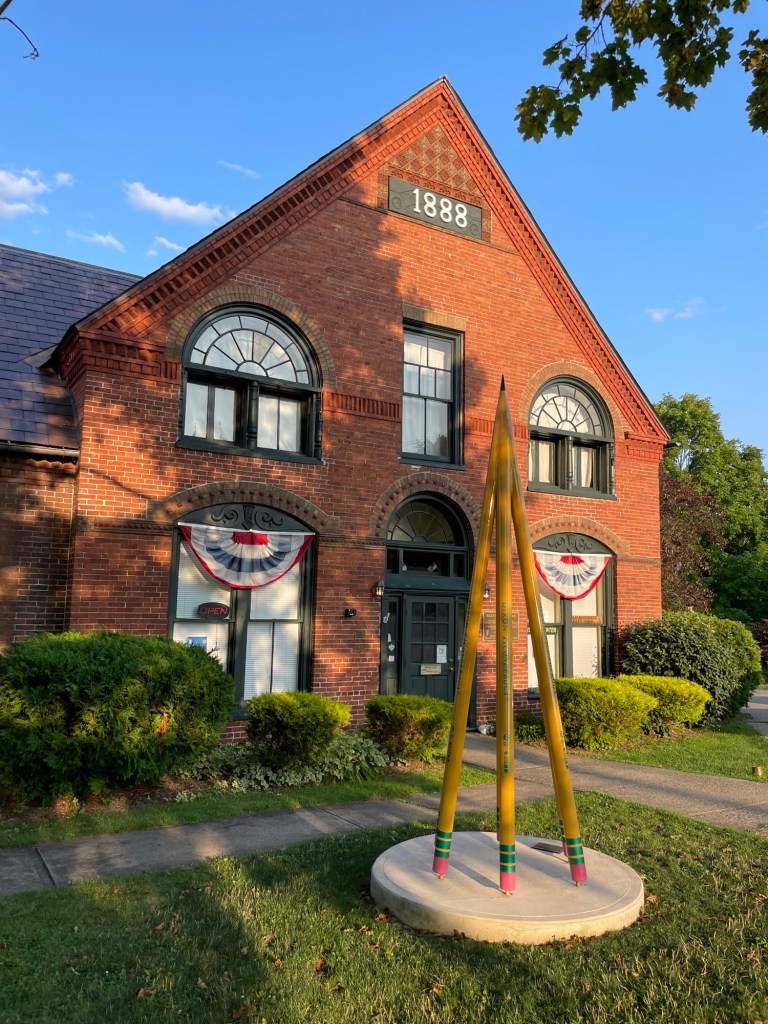
Even more than for graphite, grain, and lumber, the La Chute River powered multiple paper mills after the wood pulp process was improved and industrialized. By buying up their competitors, International Paper ended up running mills across a significant part of the town’s river frontage. After deciding to move to a larger and more modern facility a few miles away, the company dismantled their buildings and donated the land to the city for parks and green space.
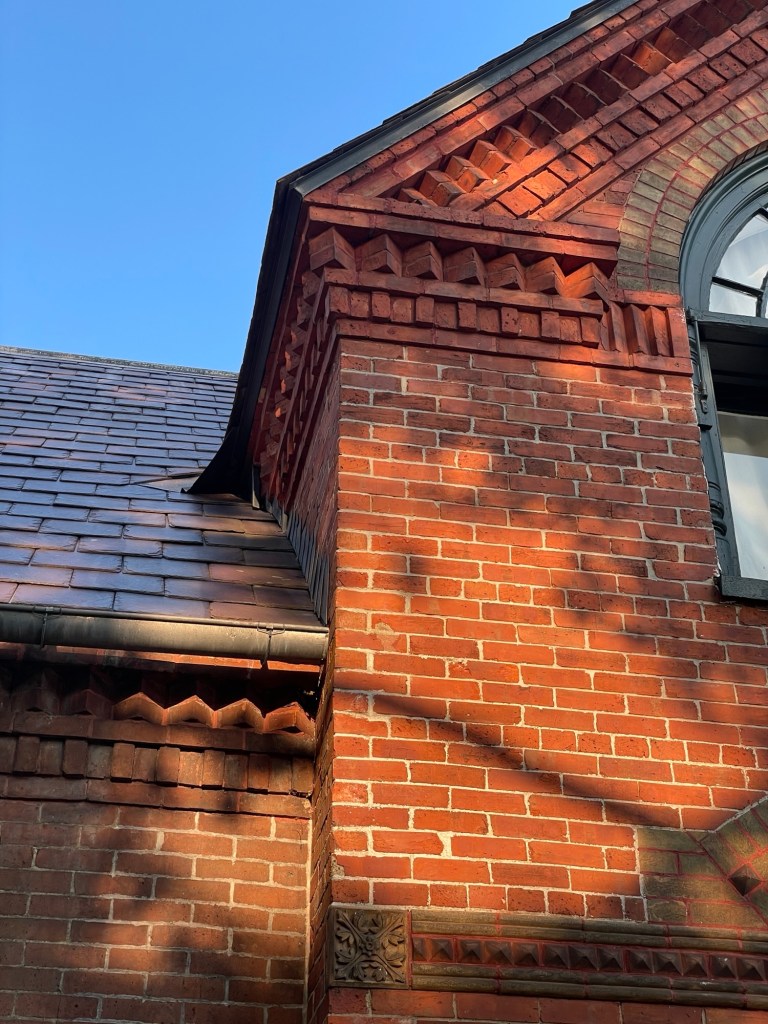
The photo above and below, of a building that was once part of the the International Paper office complex, is now home to the city’s historical society. It has some interesting features and is a lovely tie between the eras. I’m glad they were able to save and repurpose it.
A helpful woman at the historical society desk took the time to tell us about the museum, the historically accurate diorama sets painstakingly built by a local woman over many years, and pointed out significant spots on a ‘past & present’ map for further exploration on foot. She didn’t have to. She could have stayed in her seat and just waved us in, but she took the time. And I appreciate that. It’s people like her that help locals and visitors alike feel connected to a region’s history.
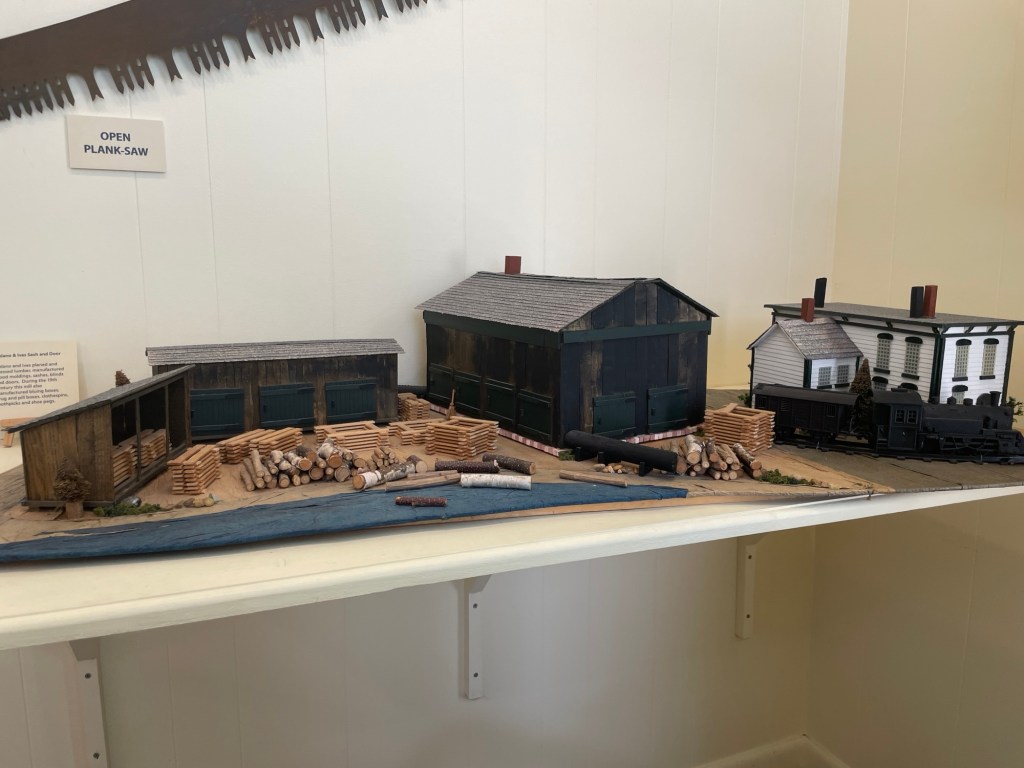
“Delano and Ives planed and processed lumber, manufactured wood moldings, sashes, blinds and doors. During the 19th century this mill also manufactured bluing boxes, drug and pill boxes, clothespins, toothpicks and shoe pegs.”
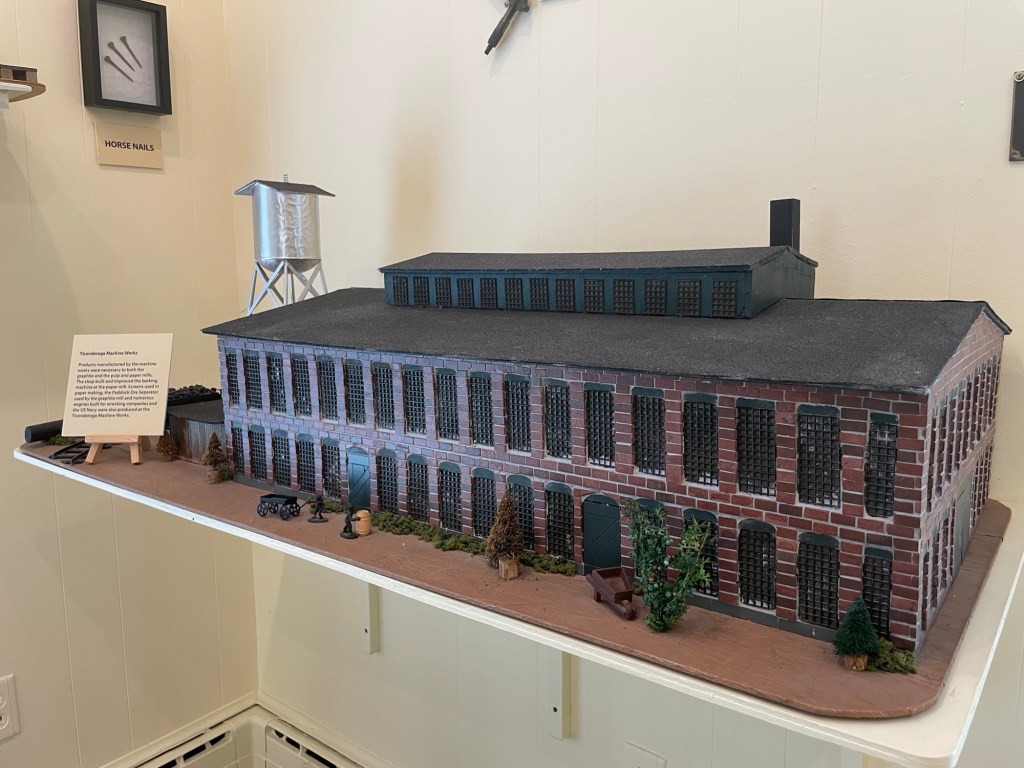
“Products manufactured by the machine works were necessary to both the graphite and pulp and paper mills. The shop built and improved the barking machine at the paper mills. Screens used in paper making, the Paddock Ore Separator used by the graphite mill and numerous engines used for wrecking companies and the US Navy were also produced at the Ticonderoga Machine Works.”
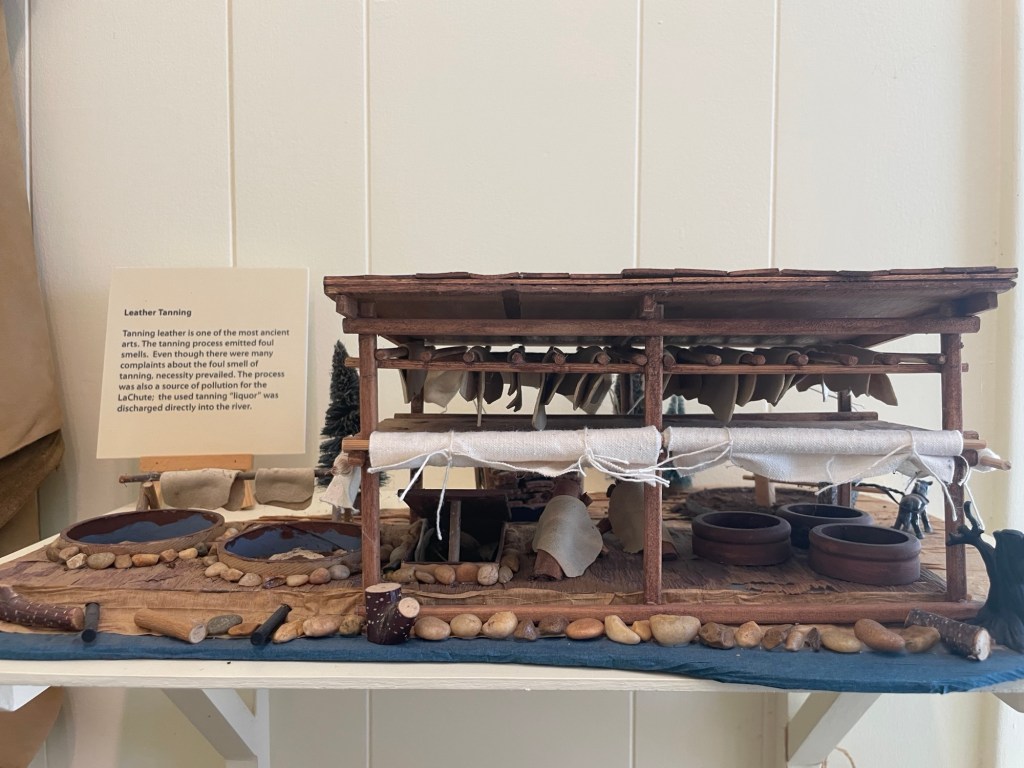
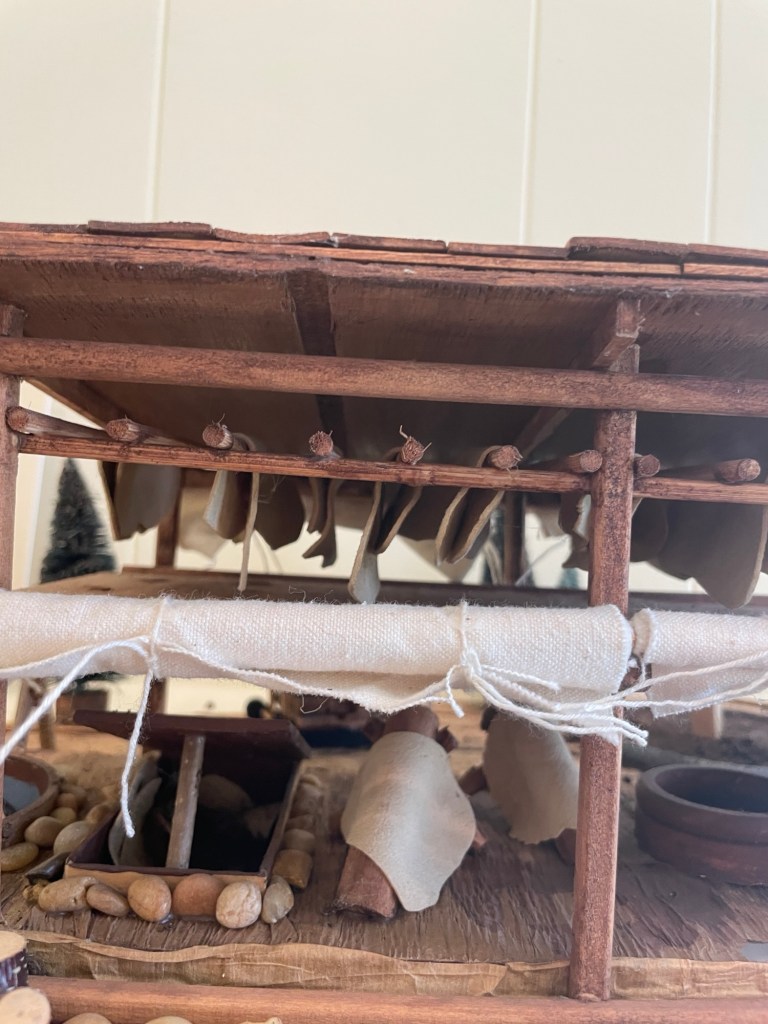
“Leather tanning is one of the most ancient arts. The tanning process emitted foul smells. Even though there were many complaints about the foul smell of tanning, necessity prevailed. The process was also a source of pollution for the La Chute; the tanning ‘liquor’ was discharged directly into the river.”
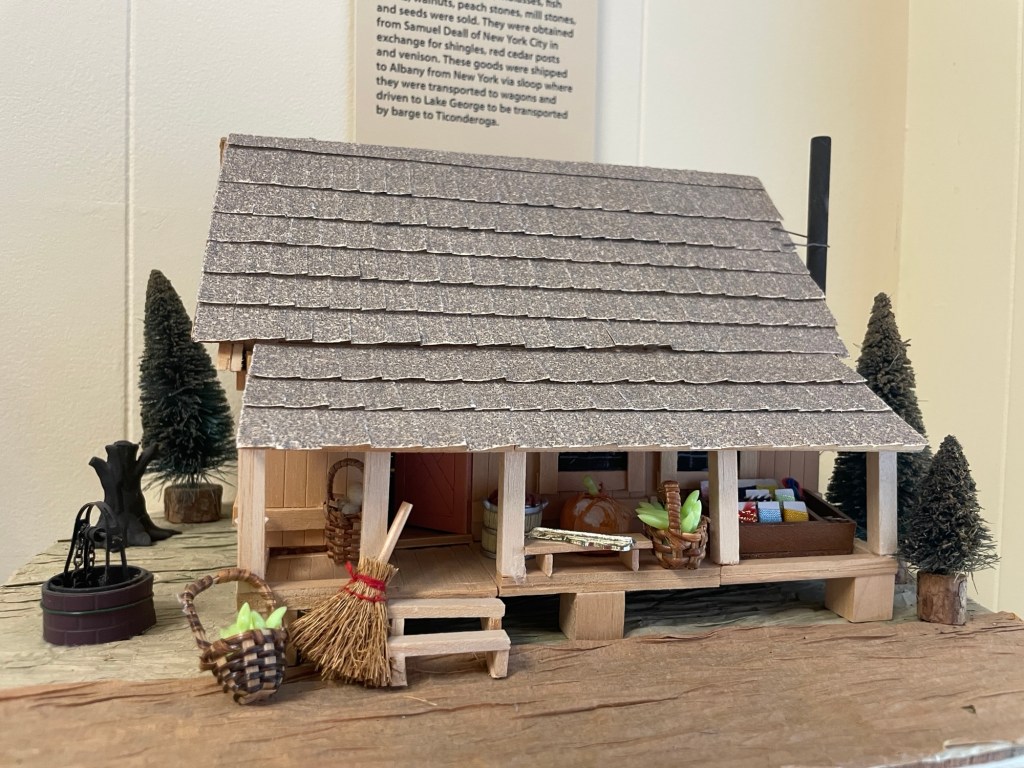
“This store, 1764, was located near the lower falls where casks of fine Jamaica Spirits, powdered sugar, molasses, fish hooks, walnuts, peach stones, mill stones, and seeds were sold. They were obtained from Samuel Deall of New York City in exchange for shingles, red cedar posts and venison. These goods were shipped to Albany from New York via sloop where they were transported to wagons and driven to Lake George to be transported by barge to Ticonderoga.”
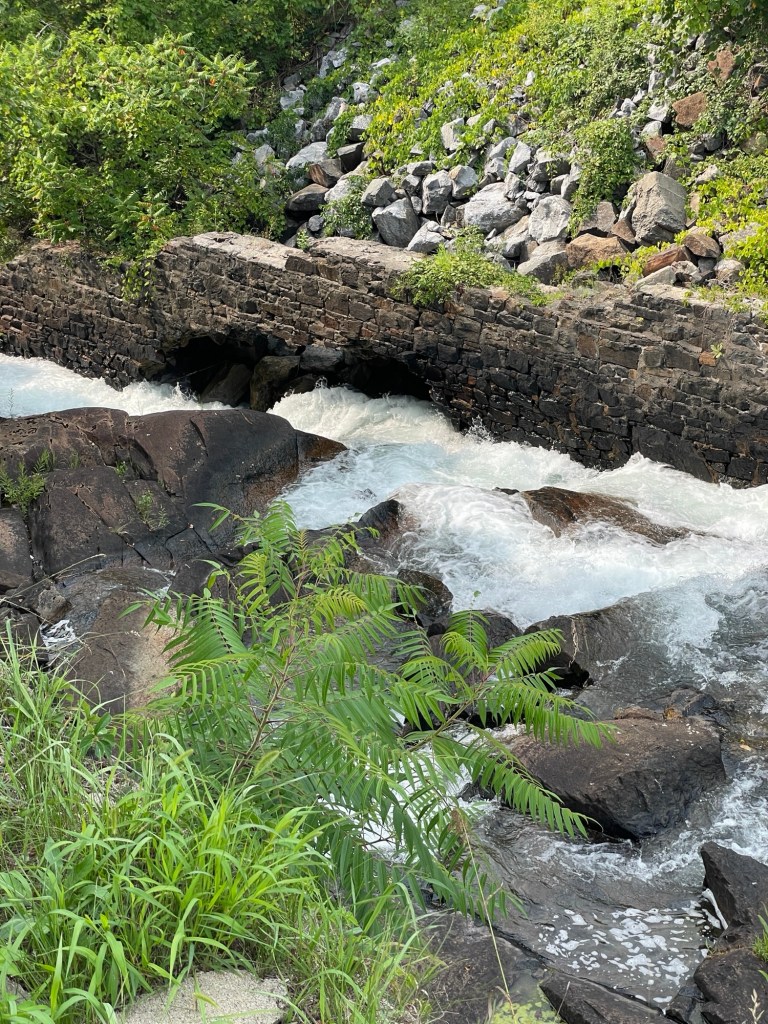
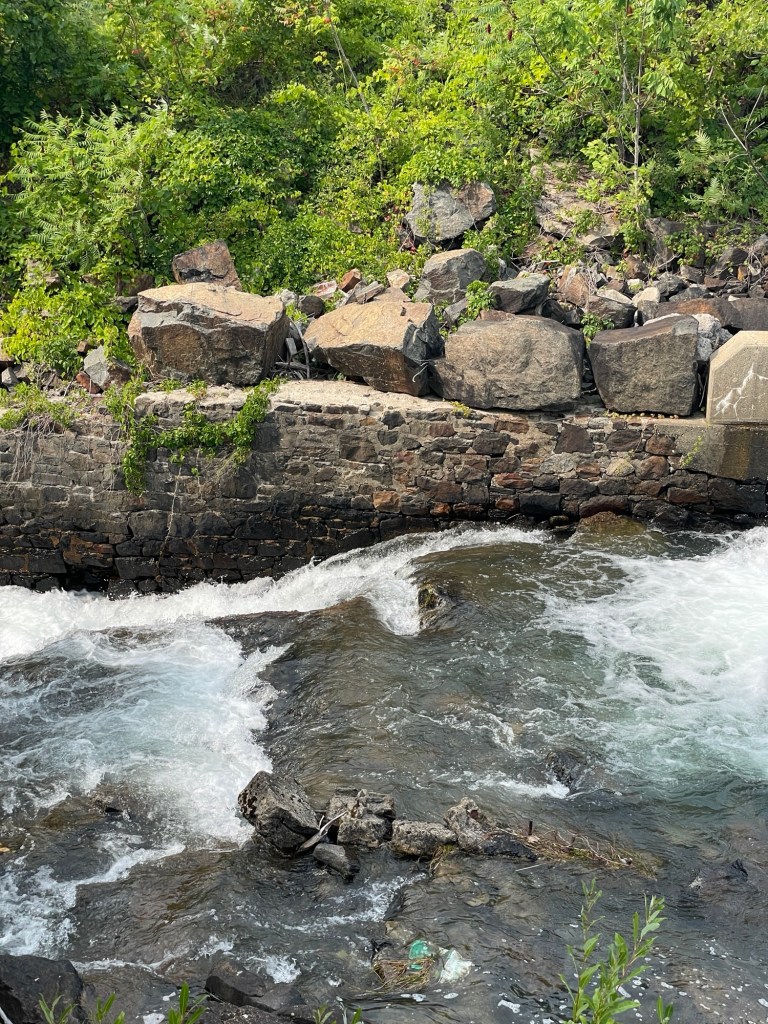
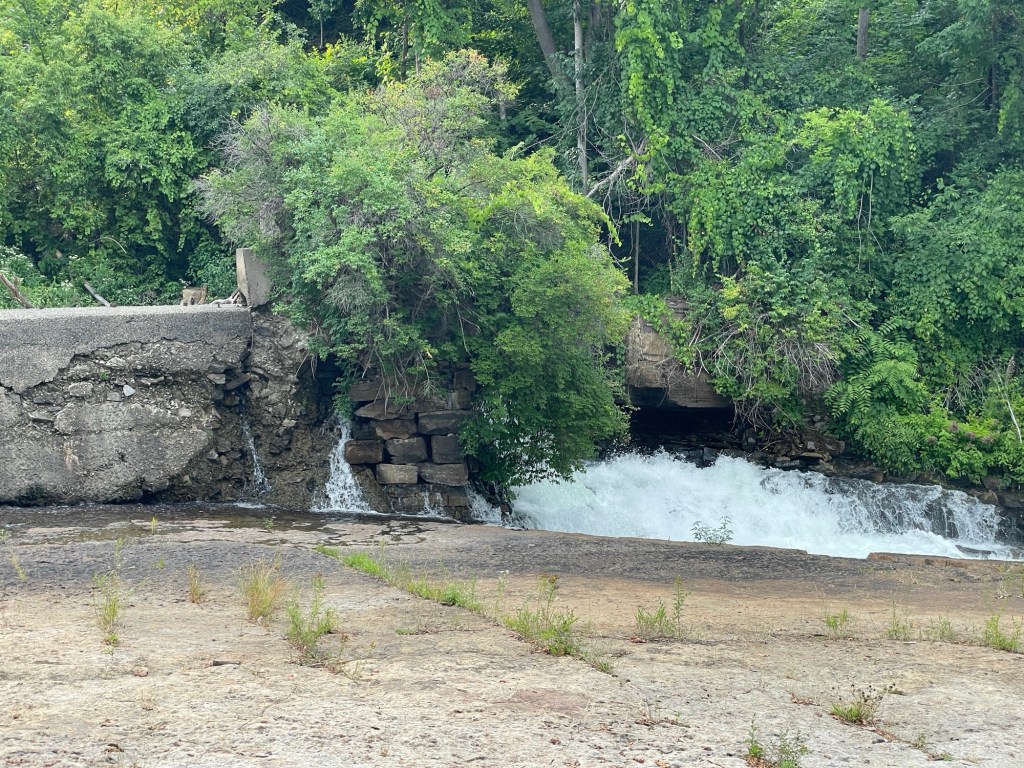
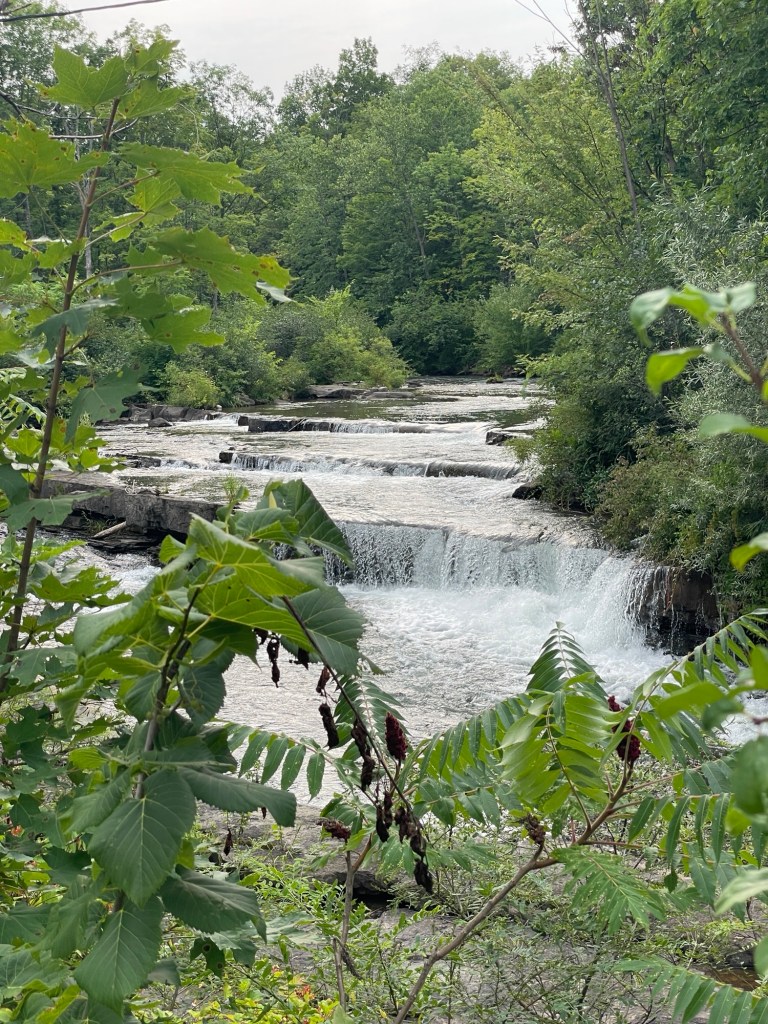
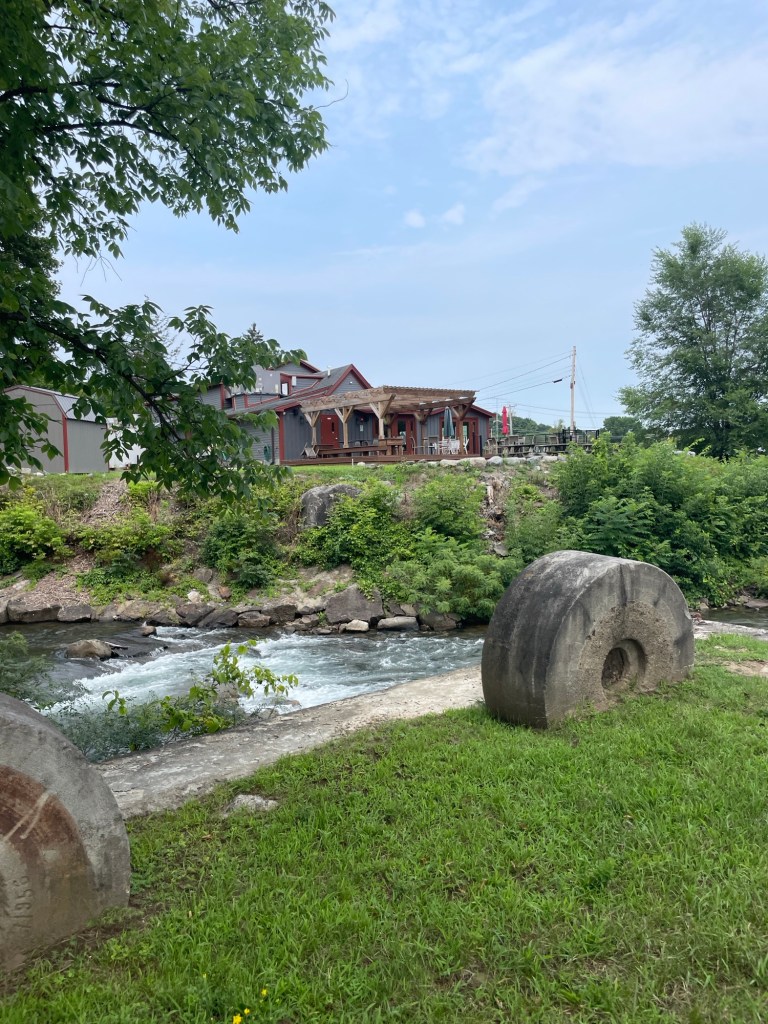
While walking the town’s three mile La Chute waterfall trail, we followed the river’s 200 foot drop across several falls down from the level of Lake George to that of Lake Champlain. Below you can see examples of the scouring effect of fast moving water on rock.
Ticonderoga has several beautiful murals around town, including this one related to its paper making past.
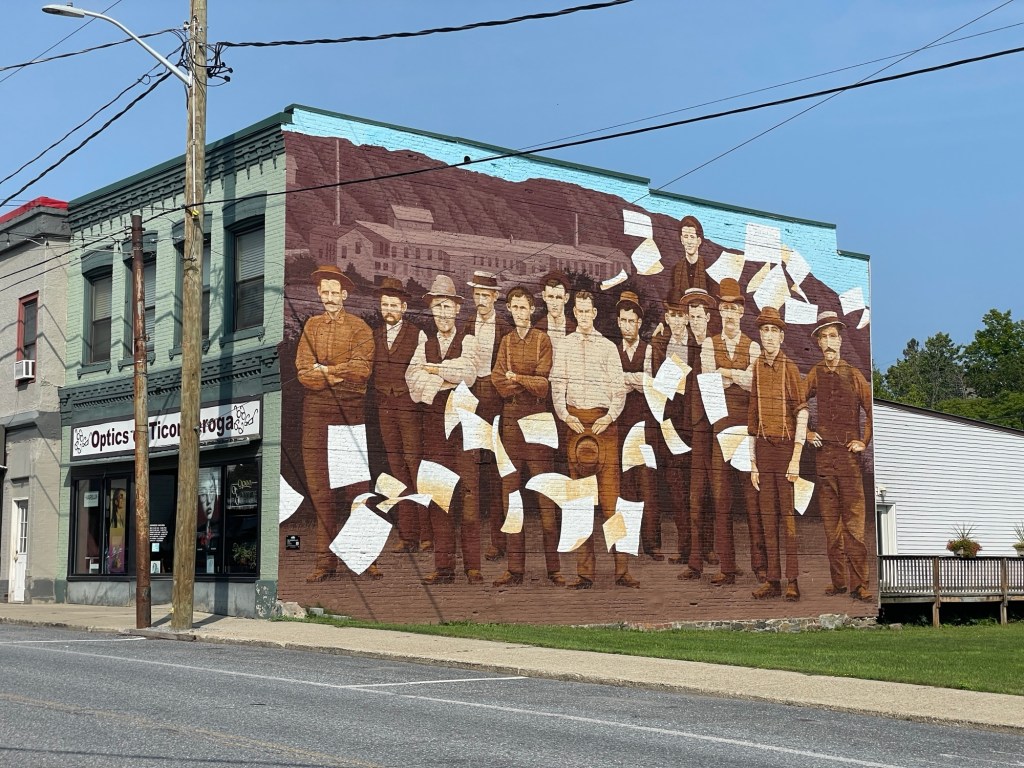
Like many American post-industrial towns, downtown Ticonderoga is struggling and there doesn’t appear to be much for people, teens especially, to do. Tourist lodging appears to be the main draw these days, with most storefronts shuttered, although a few restaurants seem to be holding their own.
We read that Paper & Pencil, the only spot open for dinner on Sunday nights, was in a former factory building. What we didn’t know until a few days later is that the building was a former coffin factory. Probably best that they didn’t go with that fact for the name.
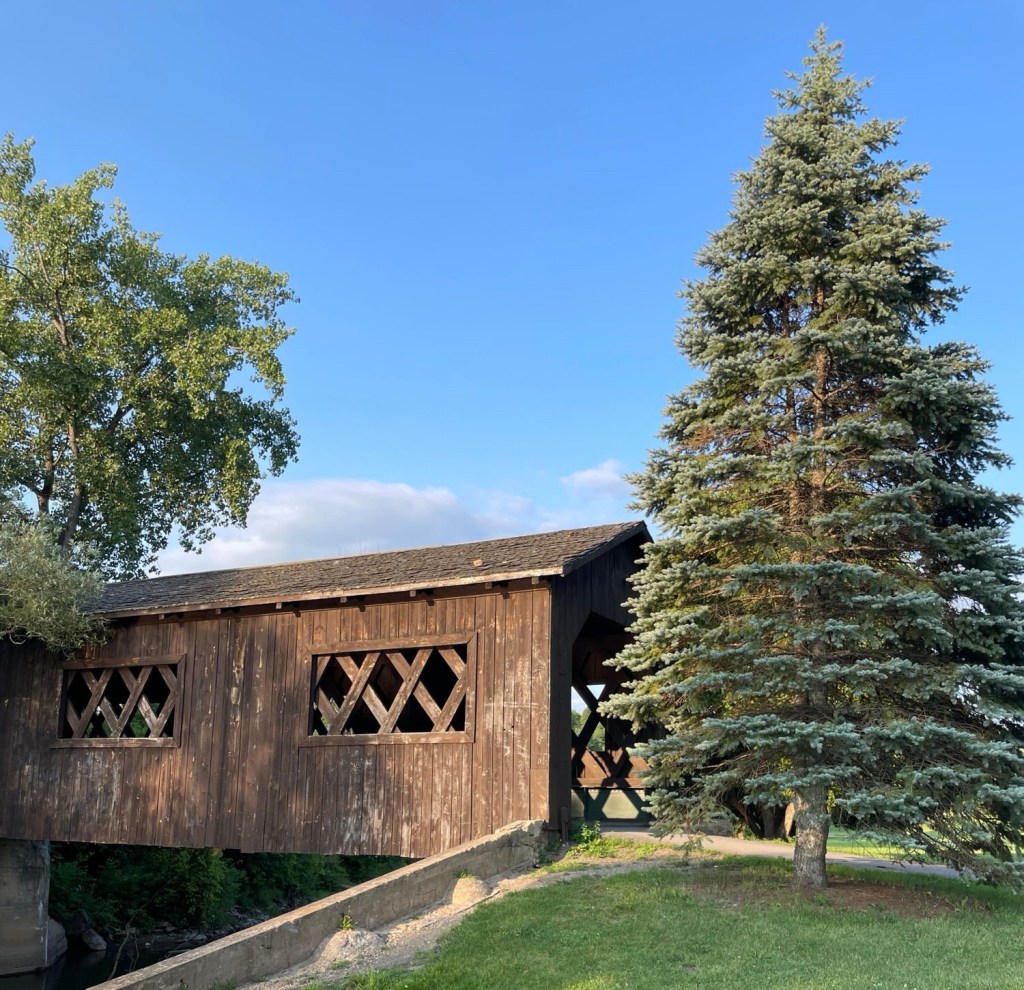
Side note: pleasing photography is often as much about what isn’t shown. For example, I cropped this little covered bridge in the city park quite tightly to hide the ugly features surrounding it on all sides. Pixel magic and pixie dust.
Now, why is tourist lodging Ticonderoga’s main industry these days? Because Fort Ticonderoga, which had an outsized role in driving the British from Boston during the Revolutionary War, is right down the road. But that’s getting ahead of ourselves.
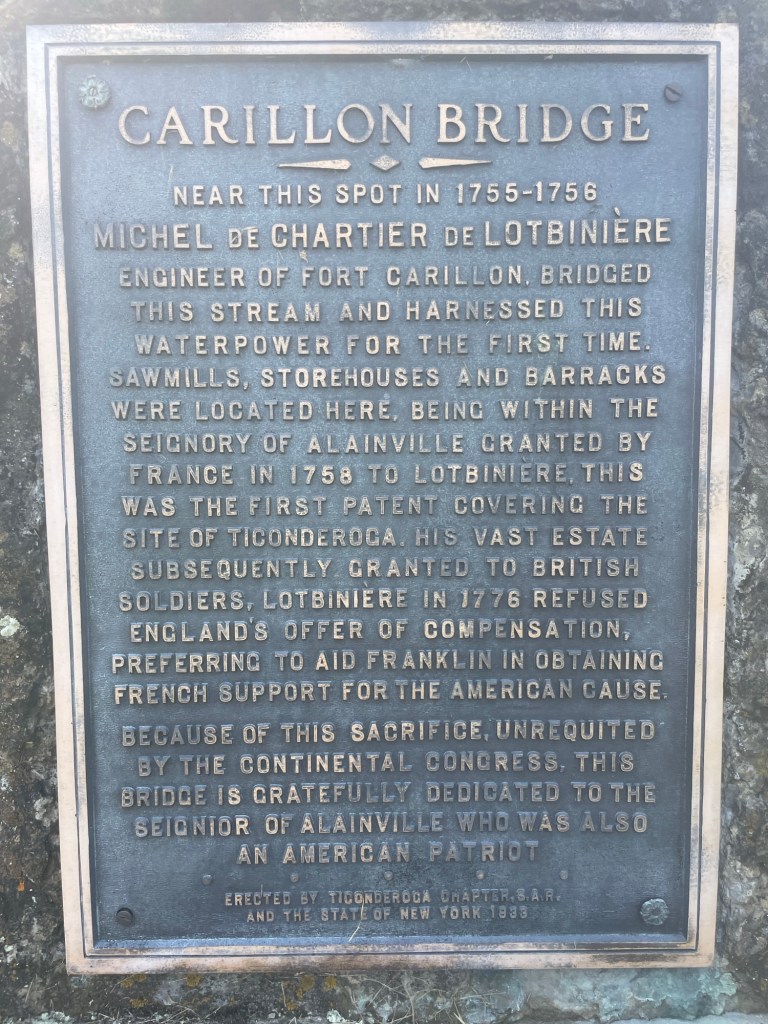
Before it was Fort Ticonderoga, it was a French fortification called Fort Carillon, begun in 1755 from wood they milled at the very first lumber mill on the shores of Rivière de La Chute.
In 1759 the British captured Fort Carillon and renamed it Fort Ticonderoga after the nearby settlement, which is still referred to by its Iroquois term, meaning between two waters. Fort Ticonderoga fell to Ethan Allen and Benedict Arnold for the Americans in 1775 (before Arnold’s sneaky snake traitor move). Henry Knox later led a train of desperately needed cannon and field artillery in the dead of winter south from Fort Ticonderoga, via Lake George, and then east overland to a much relieved George Washington, waiting uneasily outside of Boston.
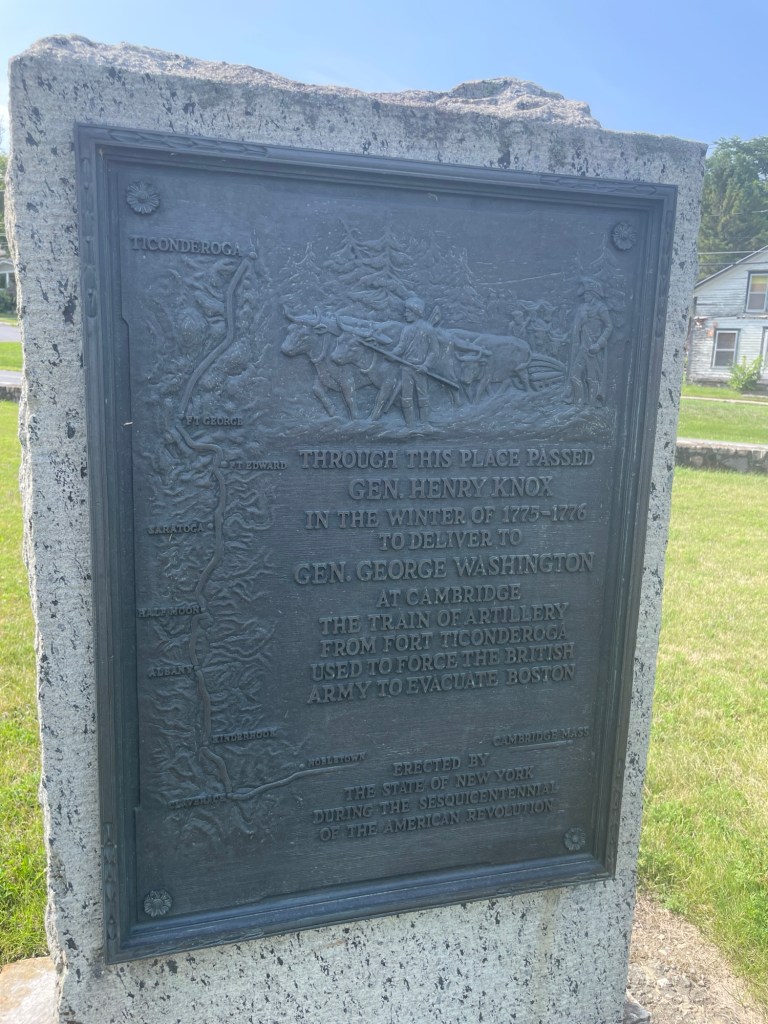
The British eventually retook the fort and held it the remainder of the war.
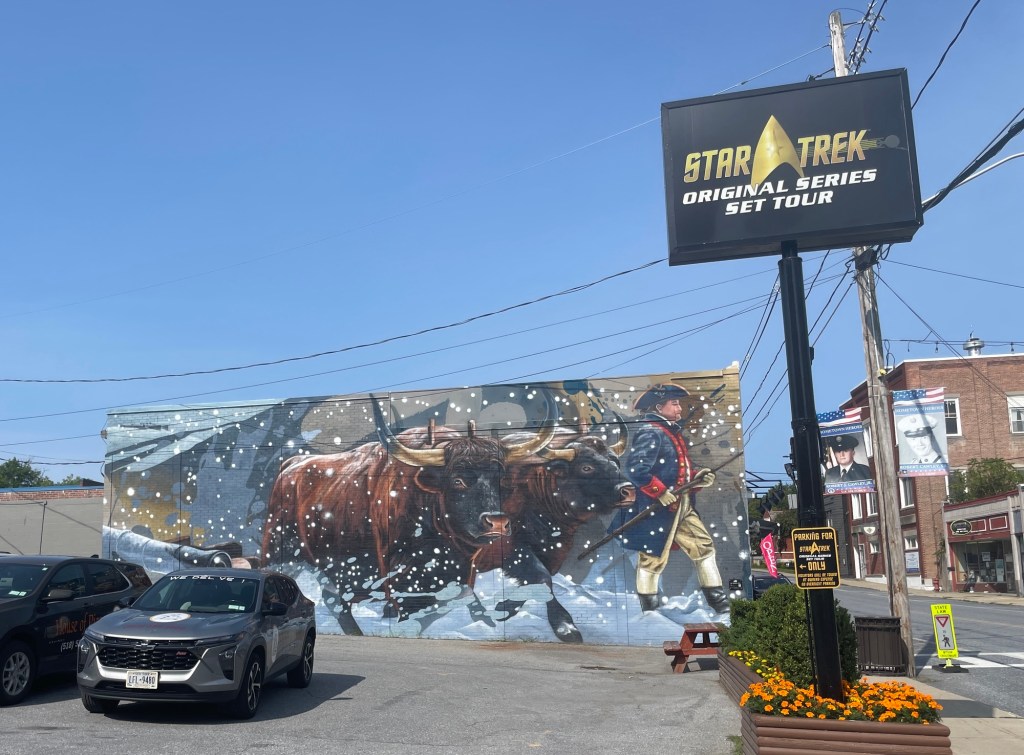
For reasons that are unknown to me, Ticonderoga is also home to a full and exact set of replica studio sets based on blueprints from the original Star Trek series. I love the juxtaposition in this photograph. I certainly didn’t expect to find a gorgeously painted, history-rich mural of Henry Knox beside a minimalistic sign for the ultra campy futuristic TV show.


Leave a Reply