• The Village Square

    is struggling.

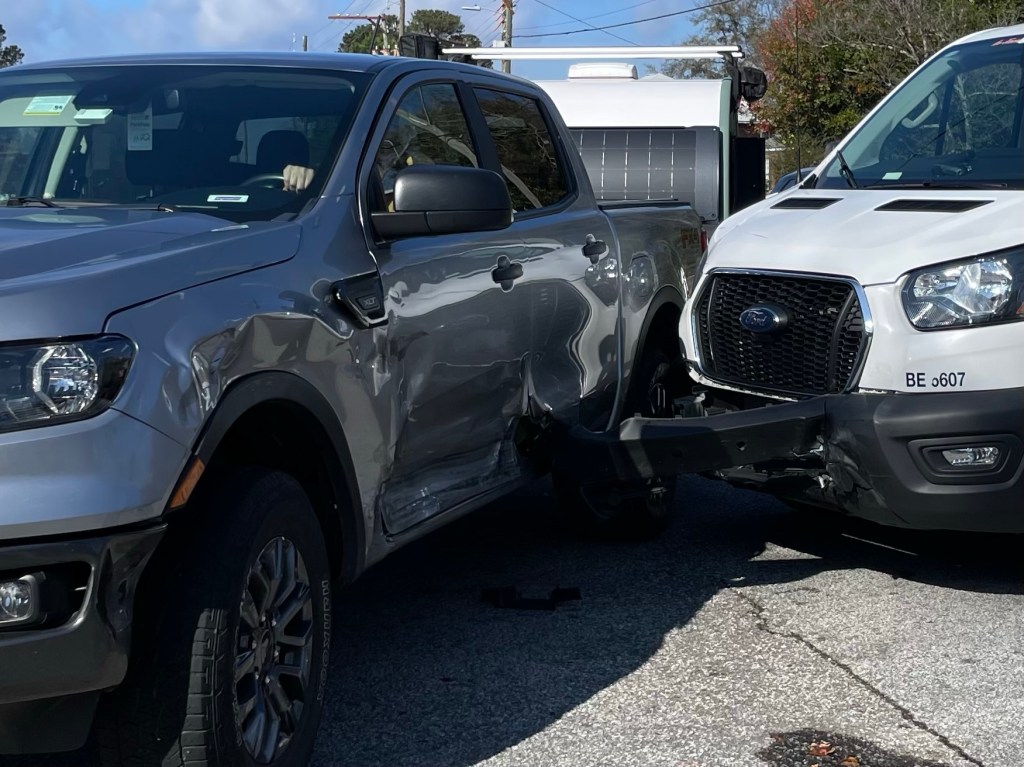
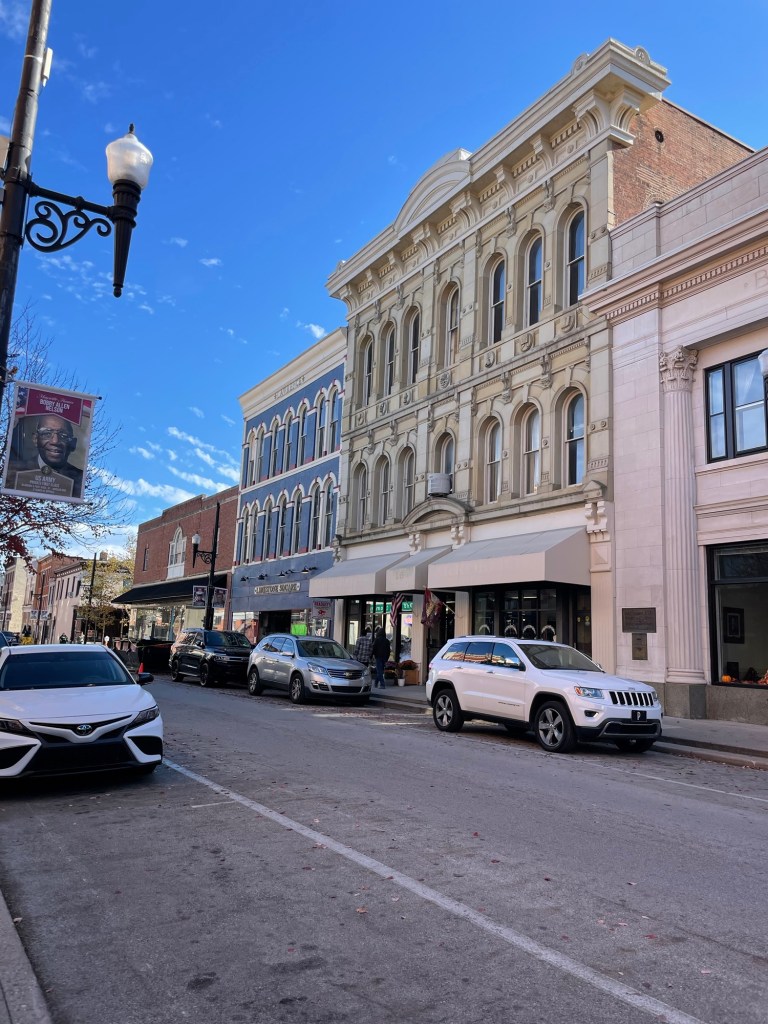
    We enjoy walking around the traditional business districts in the rural areas that we’ve been visiting. Happily there are frequently clear signs that efforts were or are being made to salvage the more architecturally and historically interesting buildings. Unfortunately, I haven’t been taking too many photos the last couple weeks, being a bit down after the truck’s accident, so bear with me.
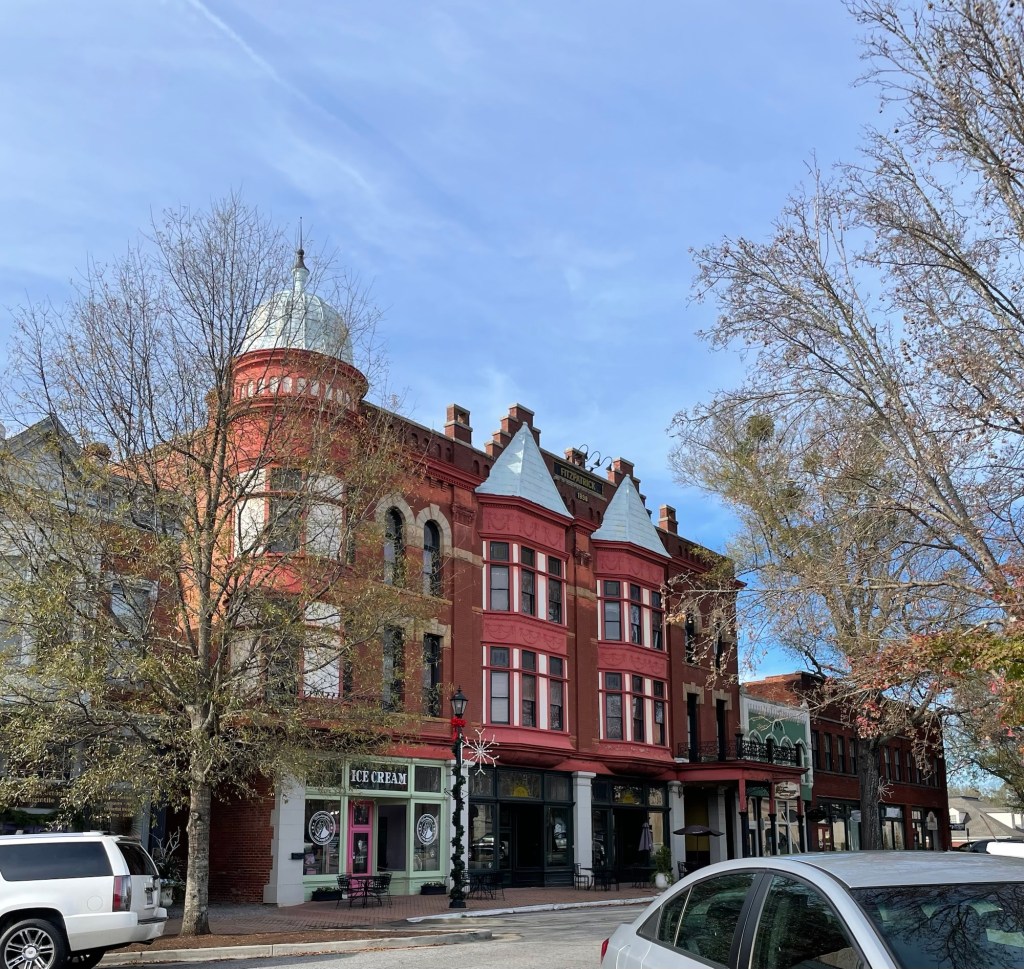
    A turreted former bank — Washington, Georgia

    One inevitable sight is a former bank building, like above, often found on one of the corners. There are also the deep merchandising windows of early department, general and hardware stores. And strangely enough, the frontier jail site (usually long since moldered into dust) is likely to still noted somewhere around the town. The buildings square are almost exclusively made of brick.

    While walking around, we’ll inevitably see a brass plaque commemorating the great fire (or fires) that ripped though the village and destroyed much (if not all) of the original wood-fronted businesses. Since eastern Georgia and western South Carolina, the area we’re in now, was colonized well before the American Revolution, those towns (full of fireplaces, blacksmith shops, open cooking hearths, and the like) inevitably had at least one massive conflagration in their several hundred years of existence.

    Among the retail buildings, flat fronts with large plate glass windows and wrought iron or carved wooden window/door frames are common at ground level, with varying degrees of stone and brick window ornamentation on the upper floors. Upper floors were frequently added on as time and profits allowed. Bay windows on upper floors and false rooflines are commonly seen, with each little detail adding another delicious bit of visual interest. I’m especially found of the fact that these older buildings have a bit of individuality, even among various “types,” versus the homogeneous nature of modern business architecture. We’ve noticed that during the 1930s, builders still seemed to be adding decorative details to windows, door frames, and the cornices of commercial and residential buildings.

    Although some buildings, like the livery stable below, served the most basic (and dirty) of a town’s needs, builders still seemed to understand that the eye deserves a bit of beauty.

    Around 1940, the level of ornamentation dropped significantly, and by the 1950s and 1960s, buildings were becoming plain and utilitarian at best (see the two on the right hand side, below). John Calvin would have been so proud. But wait, pride is a sin. (Bit of a catch-22 there). Don’t even get me started on the “renovations” that happened to some of the more elaborate buildings during the 60s and 70s. It was like taking a razor blade to Venus or Aphrodite.

    Abbeville, South Carolina

    What’s most noticeable about these little business districts, however, is how many of the buildings are now sitting empty. I’d estimate that about 30-50% of the store fronts we come across are empty. In the six above, for example, only one building is occupied. Some have active for sale or for rent signs. Some signs are so old they can barely be read anymore. Some businesses were clearly abandoned mid-renovation quite a while ago, if the thick layer of dust on saw horses and tools are any indicator.

    How does a town come back from this? Must we really accept the Dollar General, Amazon, and WalMart -ification of America? What will become of our small towns and rural hamlets? Can they keep more than a Mexican restaurant (almost always excellent), a musty antique/junk store, a hair salon or barbershop, and a liquor store with bars on its windows, in business again? I dearly hope so, but I have my fears. It’s a bit circular, isn’t it?

    People frequently claim they want unique products, locally grown fresh foods, and a thriving local shopping district, but they shop at big box stores or one of the online behemoths for a smaller price or one stop convenience. Small stores go out of business and the village center becomes a ghost town. Heads shake. “Someone should do something,” is said. A brave entrepreneur goes out on a limb and carries unique items or local perishables. They charge a bit more to cover their costs and can’t carry everything imaginable. Shoppers go back to the big names. The village core erodes.
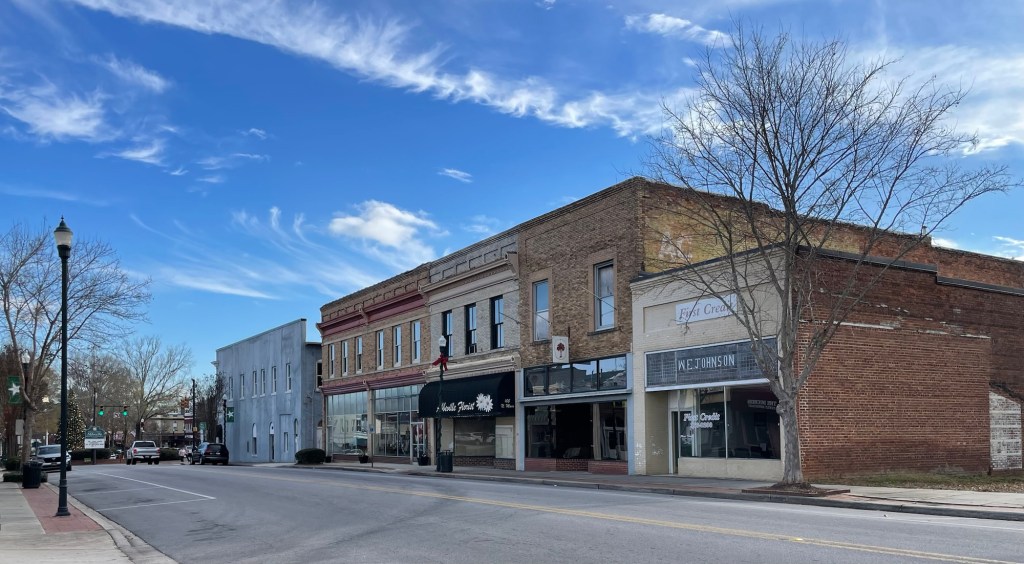
    Abbeville

    Don’t get me wrong, I see some encouraging things, too. Local chambers of commerce are trying so hard to keep a sense of community alive.

    For example, the holiday decorations and Christmas tree in Abbeville, South Carolina, below, must have taken a team of volunteers days to put up. They also had signs for a musical public event, to give people a fun reason to come back to the business district this holiday season.

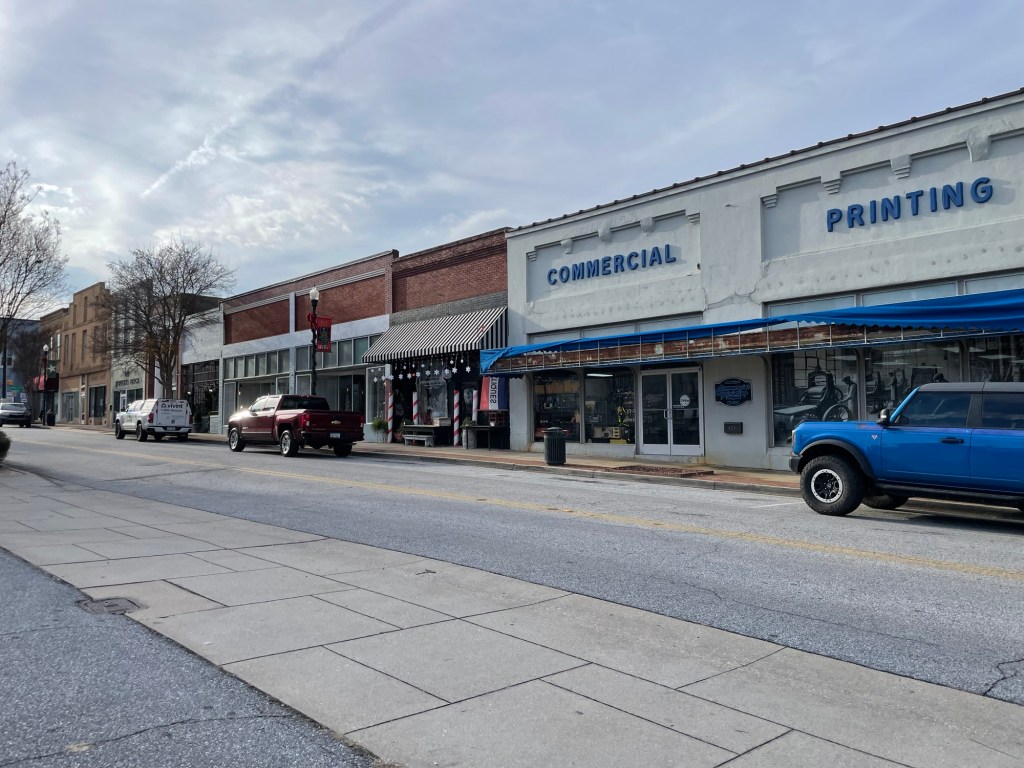
    Abbeville’s charming brick streets
    Abbeville

    Another business district that is still doing rather well, Hartwell, Georgia, had a variety of public events listed this month — a tree lighting event, a holiday-themed theatre production, a local home tour, and a Christmas parade. But even they’re struggling to pull people into town due to the economy. We were often the only people in the shops when we visited them. And their annual home tour usually sells out almost immediately we were told, despite its $25 per person price tag, but this year there were still a lot of tickets left only a week before the event.

    Walhalla, South Carolina — amazing museum telling the story of the Cherokee population that lived and continues to live in the area. Washington, Georgia — home of firsts: first county in GA, first library in GA, first cotton mill in the South, first gold stamping mill in the world. Anderson, South Carolina — ‘the electric city’ that early on powered its community with a hydroelectric dam.

    Royston, Georgia. Seneca, South Carolina. Toccoa, Georgia. Westminster, South Carolina. I could go on and on. All of them are worth visiting and filled with interesting history, but for the most part that hasn’t been enough to keep the businesses open and the employees paid.

    I don’t have the answers needed, and I certainly don’t want to knock these communities. They’re lovely. I hope they can find a way to thrive in the coming years.
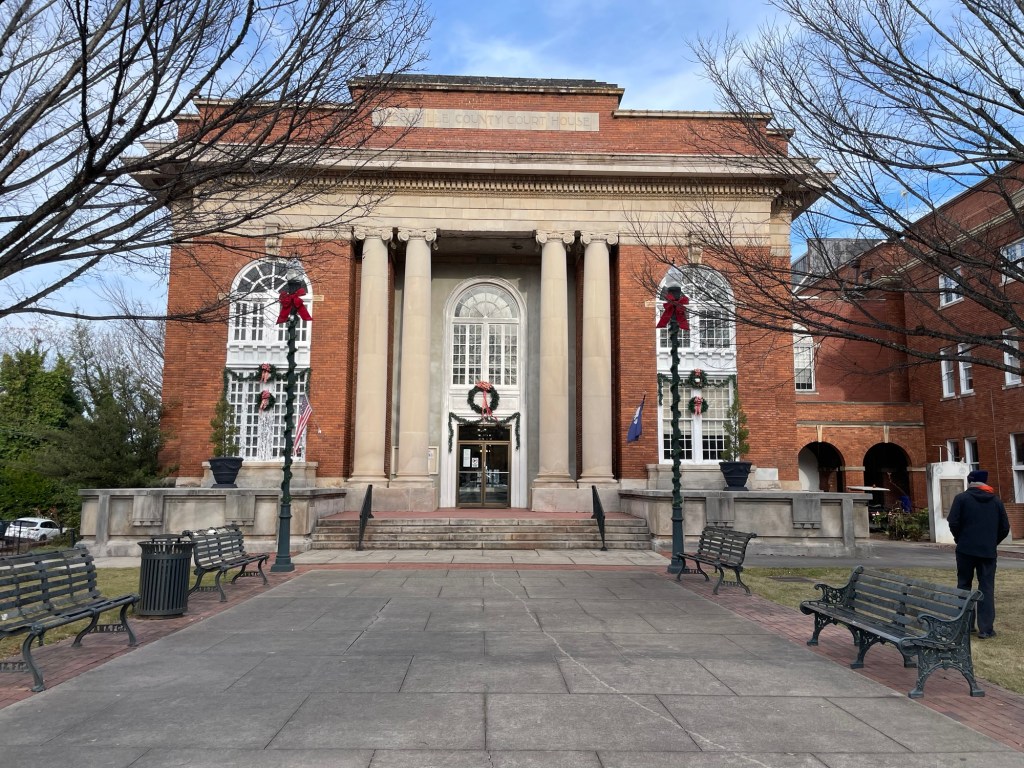
    Abbeville police station
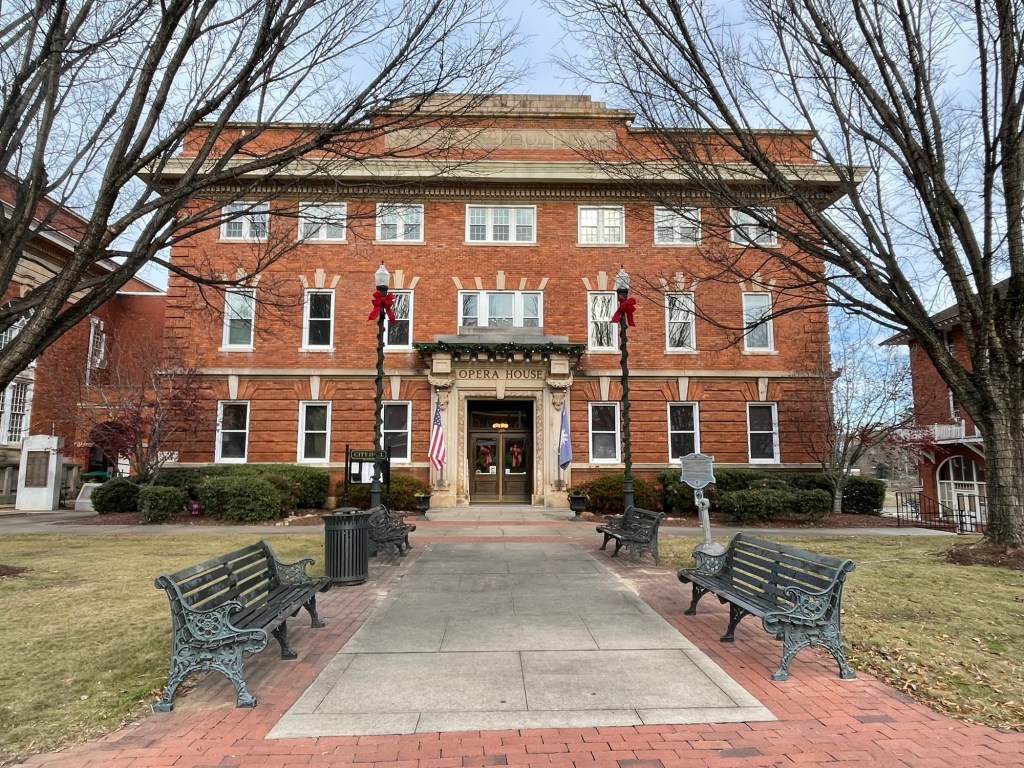
    Abbeville Opera House

    In honor of these sweet little towns, may I suggest that you buy less, if you must, but definitely buy better when you can? Find your next must-read at a local bookstore. Buy from farmers markets, crafts stalls, and roadside stands. Meet the people who grew/raised/made the things you purchase whenever you can. Eat at family run restaurants. Stuff your stockings with things an individual made. (Such as some fun stationary, pretty pottery, or even a lump of coal.)
  • The Estimate

    We spoke with the repair shop on Monday and drove up there today. The truck’s one-piece ‘cage’ was damaged along the driver’s side bottom, so they’re going to shave a portion of the entire driver’s side off (an inch, two, three? I have no idea) and weld a new edge back on. Apparently that is a thing. Who knew.

    They’ll pull the truck bed off and set it aside while the cutting and welding is being done. After they ensure the new driver’s side doors, front quarter panel, and bumper fit correctly, they’ll put the truck bed back on and send it over to the paint room.

    They have to replace the front tire since it has gouges in it, possibly replace the rim, and balance & realign the front end as well. We asked that they swap out the other three tires as well (at our expense), since we were planning to replace all four in the spring anyways. This way all four will have the same amount of wear going forward.

    We’re settled in at the local campground and can stay here until New Year’s Eve, if need be. The repair shop estimates that truck will be finished around the 22nd. Luckily we can keep the car rental until the end of the month, if things do take a touch longer. We really really hope that they don’t.

    On a ‘It’s a small world’ note, we found out yesterday that our campground neighbors are from the small town where Jeff’s dad spent the bulk of his career. He was their kids’ elementary school principal!

  • Hotels are odd things. Strangers packed into too small a space each morning, huddling over a meagre spread in a kitchenette. Pardon me and Excuse me and May I and Oh, I’m sorry around a warming dish with watery powdered eggs and mass produced sausage patties, a platter of single serve bowls of artificially colored, machine extruded cereals next to a bin of apples and ripe bananas. How long has the oatmeal been out? Am I in your way? Is there decaf? Hotels are liminal, hermetically sealed spaces where no one belongs and everyone exists. Exists. Exists, until they leave for someplace else. Always someplace else.

    Yesterday a woman sat waiting in the lobby while I read in a corner, letting Jeff enjoy a few hours of Hollywood with its flashing lights and percussive bangs. She needed something, someone, somehow either for a room or a ride to appear in her name. She sipped lobby coffee. I sipped tea. Snatches of a one-sided telephone conversation spiked the silence, ending with Please, help me. Help me. I’m counting on you. I’m counting on you. She was there when I left; she was there when I got tea later.

    So far breakfast places that use a K in place of a C are abysmal. If doubled, such as Kountry Korner, oh baby, that place is to be avoided no matter how busy it is. Yes, it’ll be cheap, but at what cost? Go hungry before setting a foot across that threshold. If, on the other hand, there is almost no interior seating, there’s a janky drive up window, and the words Biscuit Barn follow a first name (for example Ben’s or Tammy’s), tuck that napkin in tight around your collar and get ready for your eyes to roll to the back of your head. In the spirit of ‘Since we’re in the south,’ we’ve eaten at both a Waffle House (in Chattanooga) and a Huddle House (today). Once was more than enough for both, but Huddle House was the better (and definitely the cleaner) of the two.

    We’re trying to spend some time outside each day, so we wandered around a small, local botanical garden yesterday, despite nothing being in bloom. It’s completely volunteer funded, run, and maintained; it looks to be well arranged. There must be a few master gardeners in this part of Georgia. I imagine it’s a lovely place to visit when the heat of summer comes barreling in. We read all the plaques, enjoyed the sculptures, sat on the benches, and watched numerous songbirds flit between feeding stations. We had the place to ourselves.

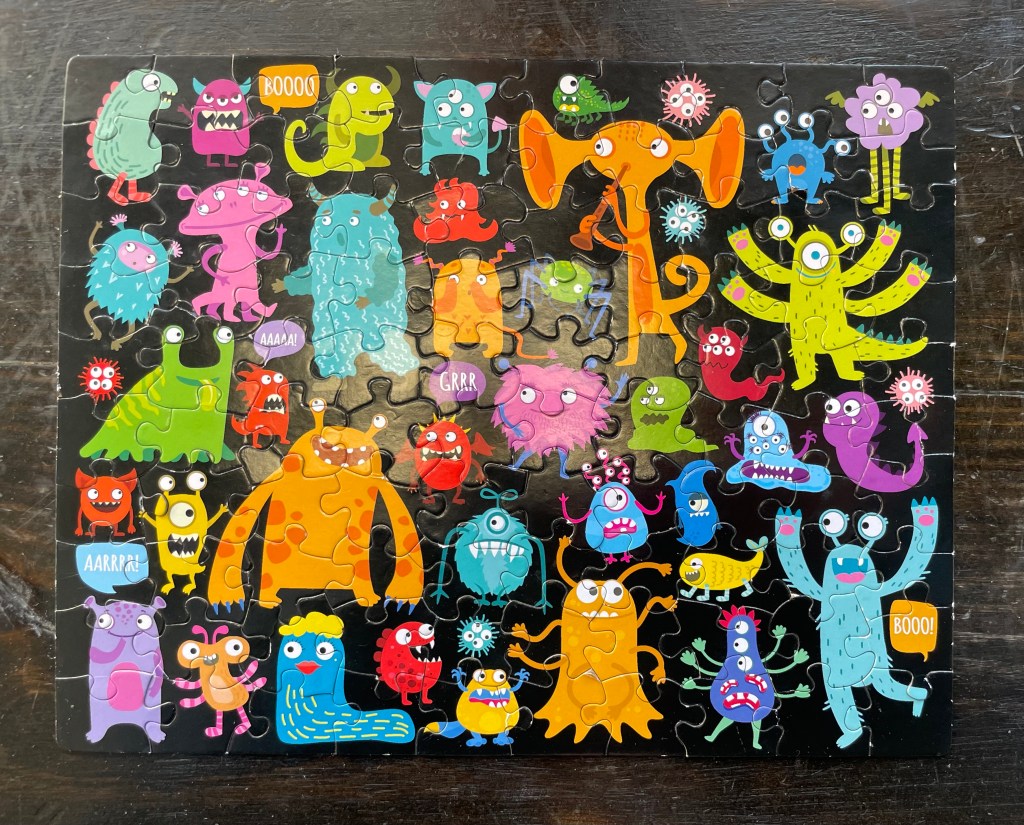
    It’s a small thing, but I’ve come to the conclusion that all coffee shops should have a pile of puzzles on hand for patrons. The little café here does and it was a nice mental break to put together a tiny 100 piece puzzle while sipping on a latte. When we got back to the hotel, we broke out the Backgammon board and Jeff proceeded to win three games in a row. Games, especially ones that include a hefty dose of chance, are underrated.

  • Tallulah Gorge
    It has party lights! Very cool.

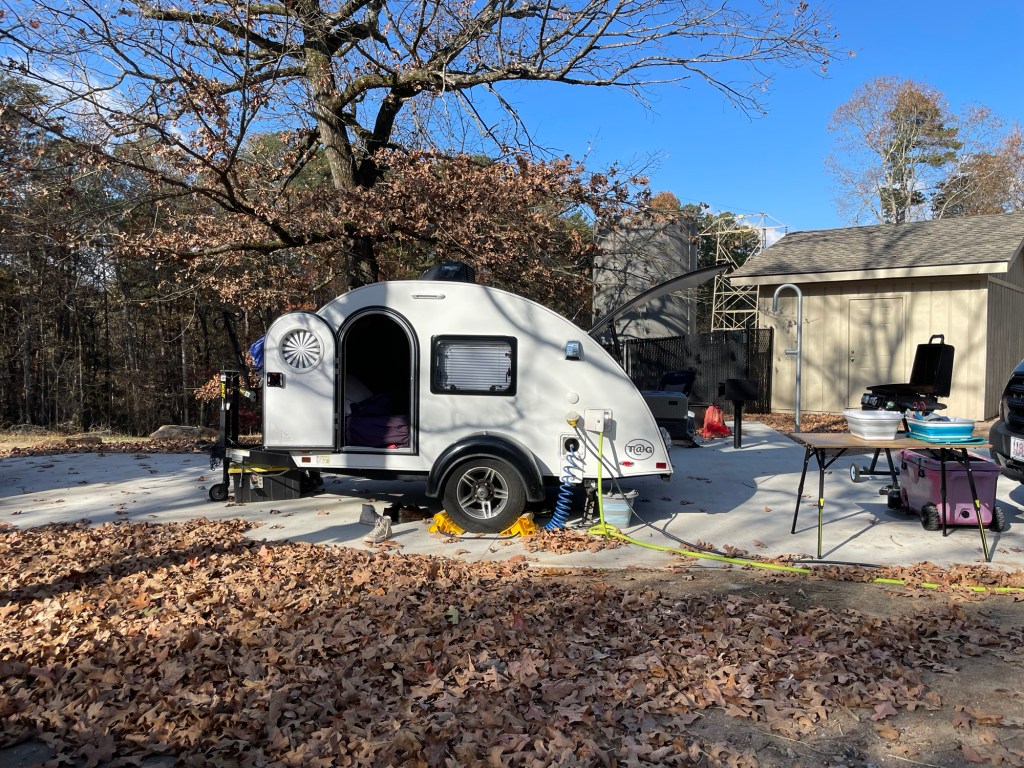
    Well look at that. The first thing we noticed driving into our campsite at Tallulah Gorge State Park was a teardrop trailer in the site next to ours. (The second was that the previous campers at our site hadn’t left on time.) It made my heart happy to see another proponent of the tiny travel life. What really blew our minds though was hearing that she was scheduled to pick up her own Bean Trailer in the spring! Sunny is going to be a great part of the larger Bean family.
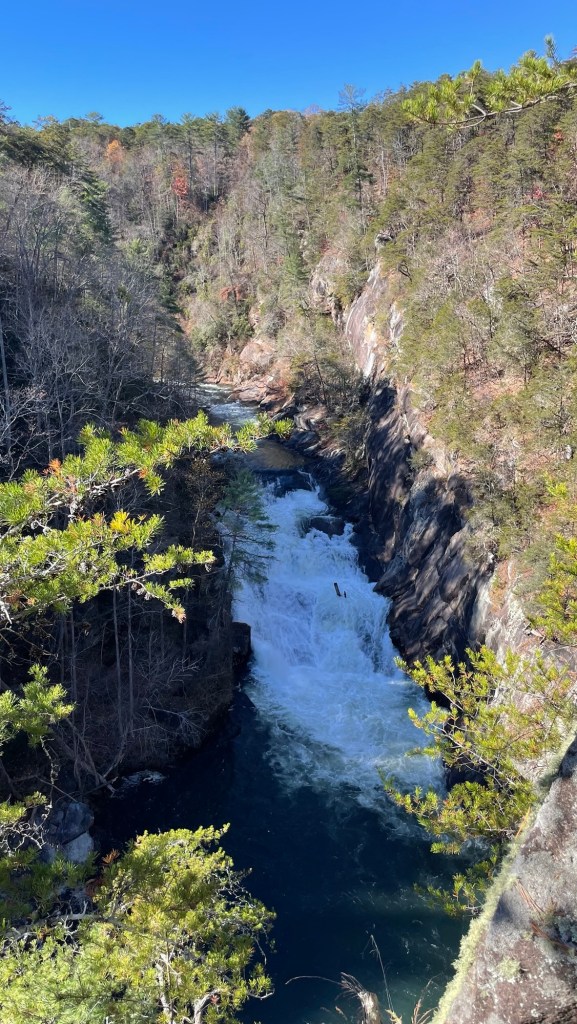
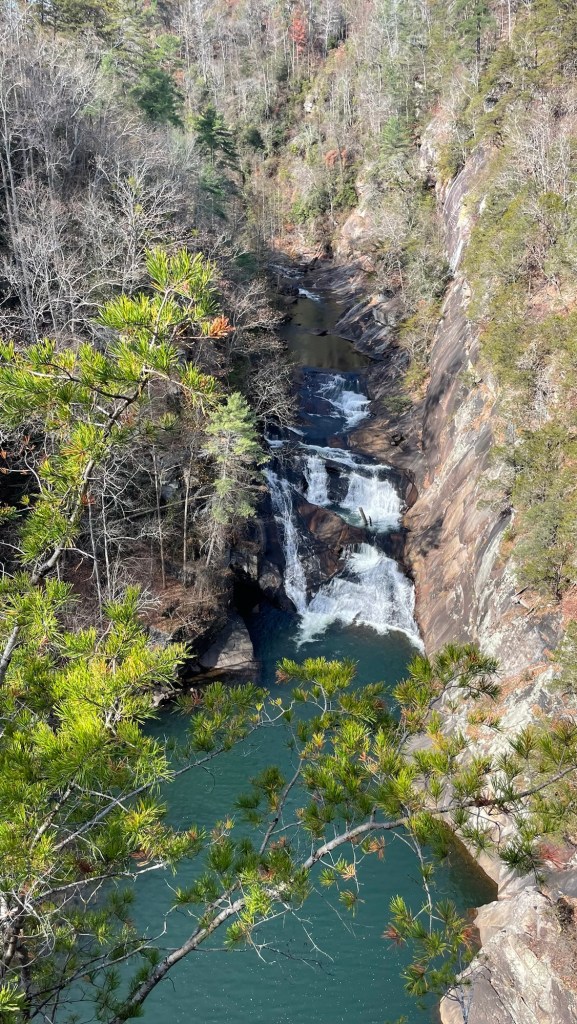
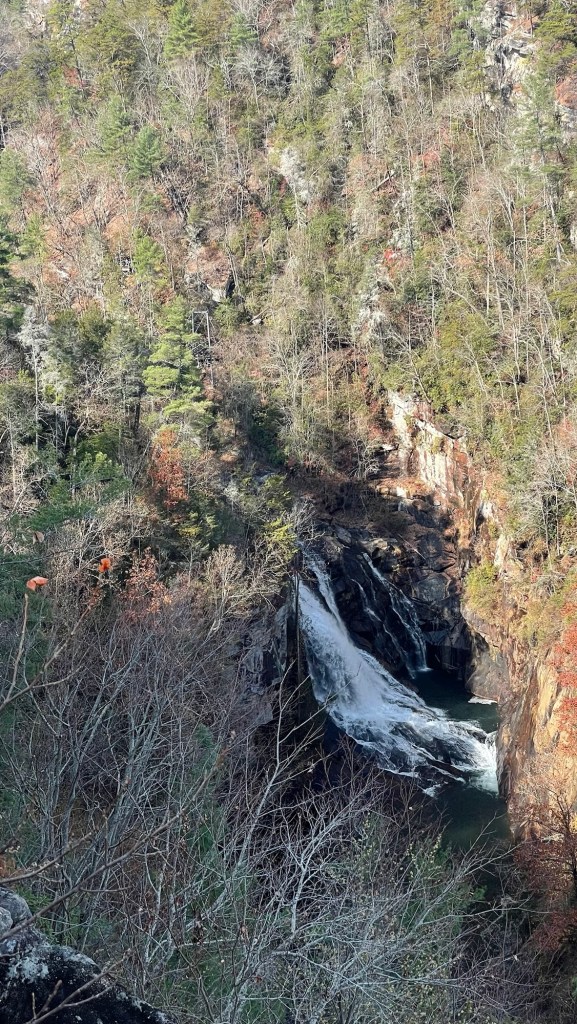
    When booking, we were surprised to only find one campsite available. That was because the Tallulah Gorge Dam only does a big water release a few times a year, allowing people to experience the roar and volume of the falls as they once were. During this time, kayakers can run the rapids and we were lucky enough to catch the last weekend of this year’s releases.

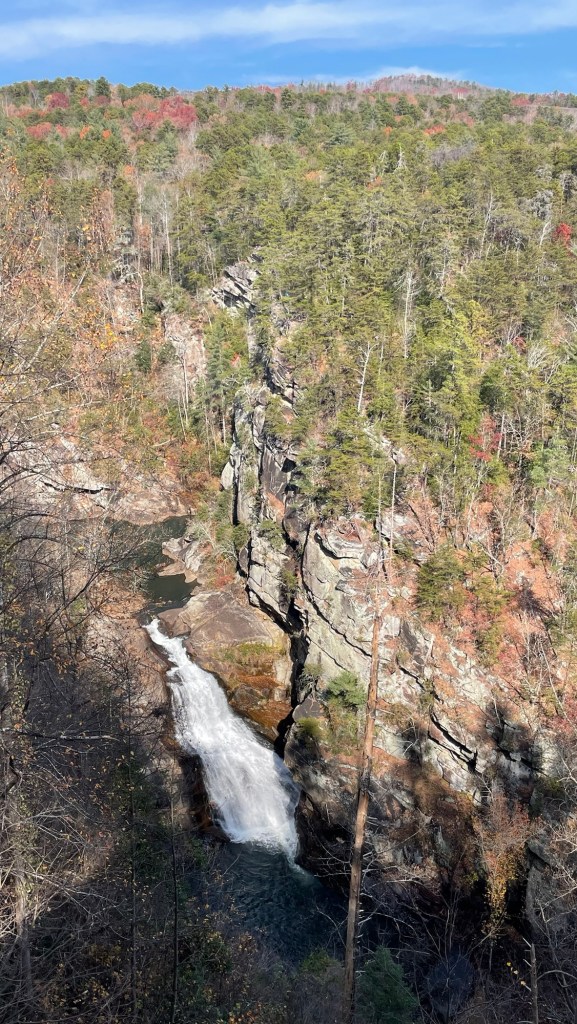
    During the release
    After the release
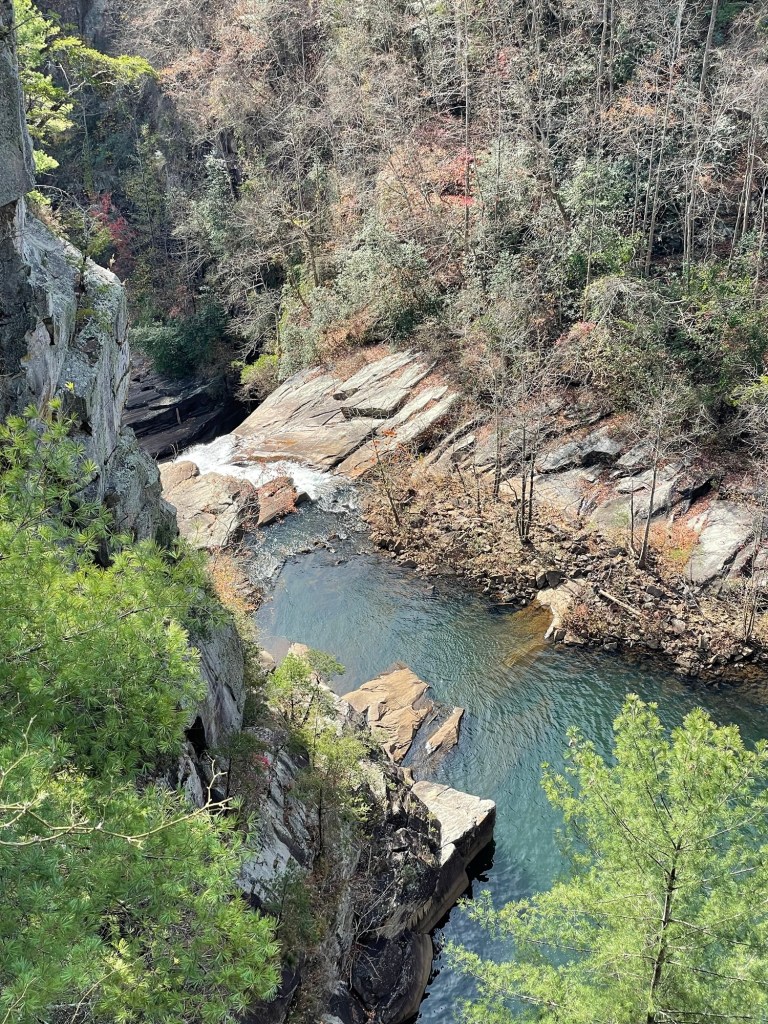
    After the release, we could see this narrow neck holding back a small pond between waterfalls
    Downstream from that narrow neck

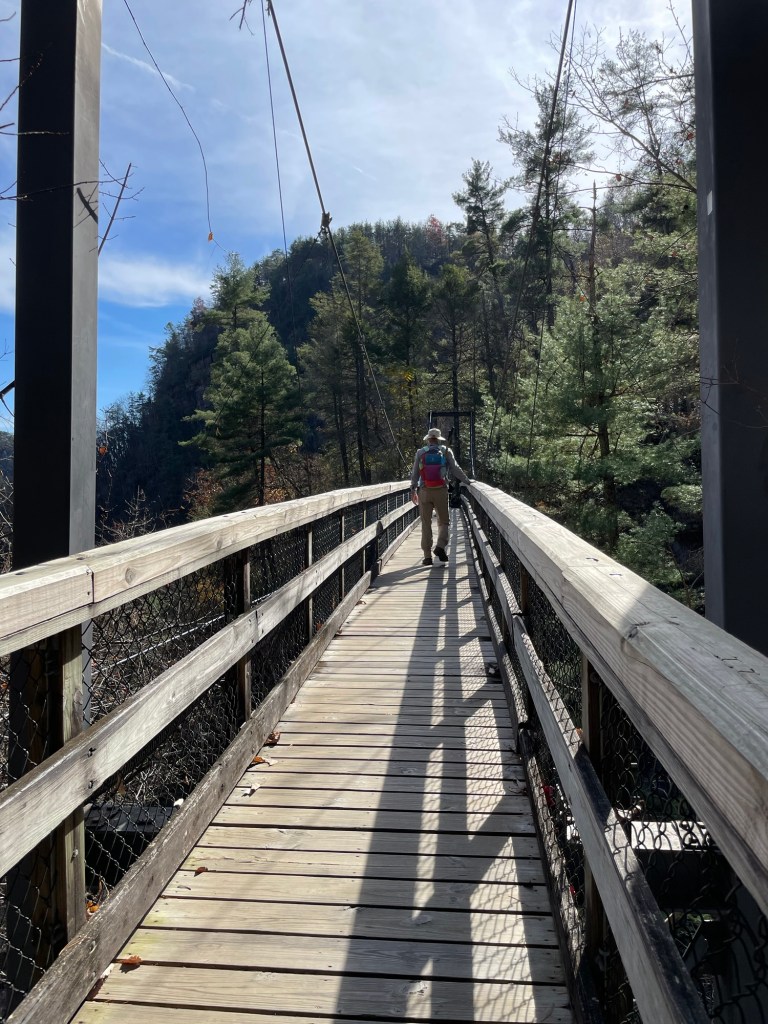
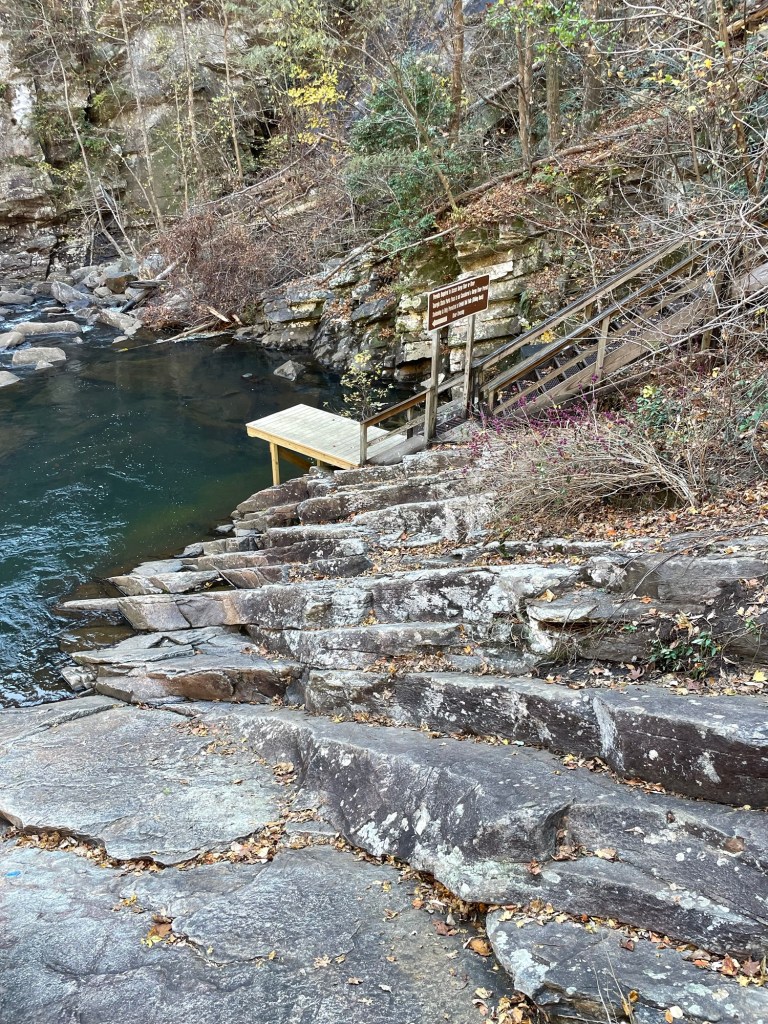
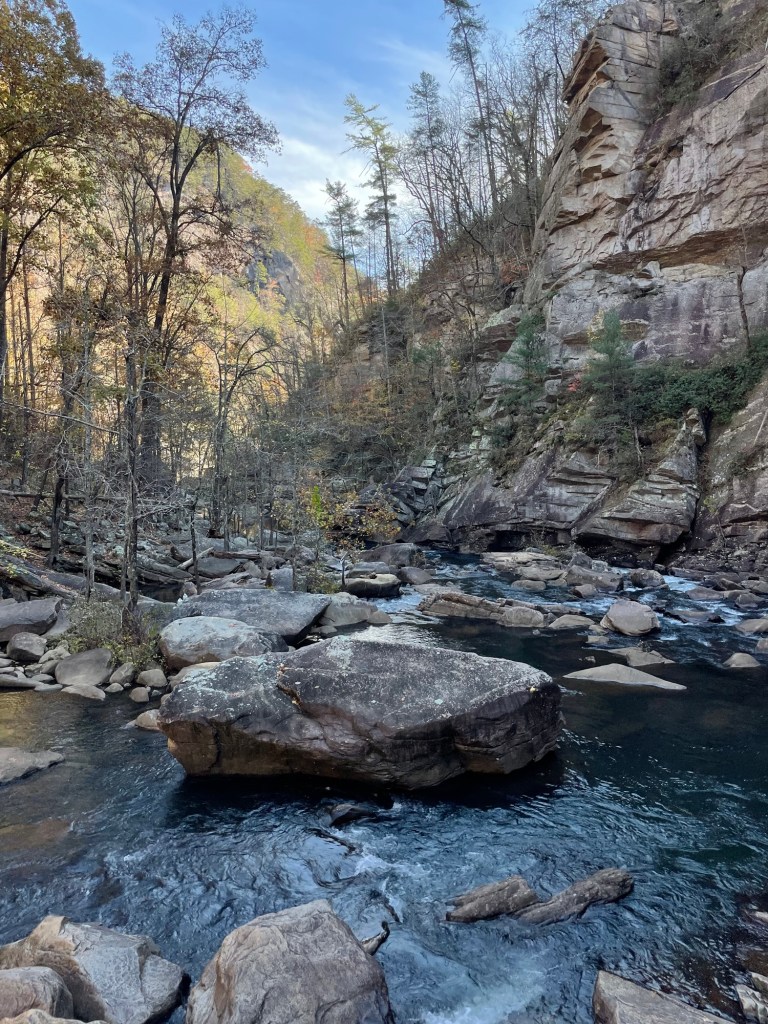
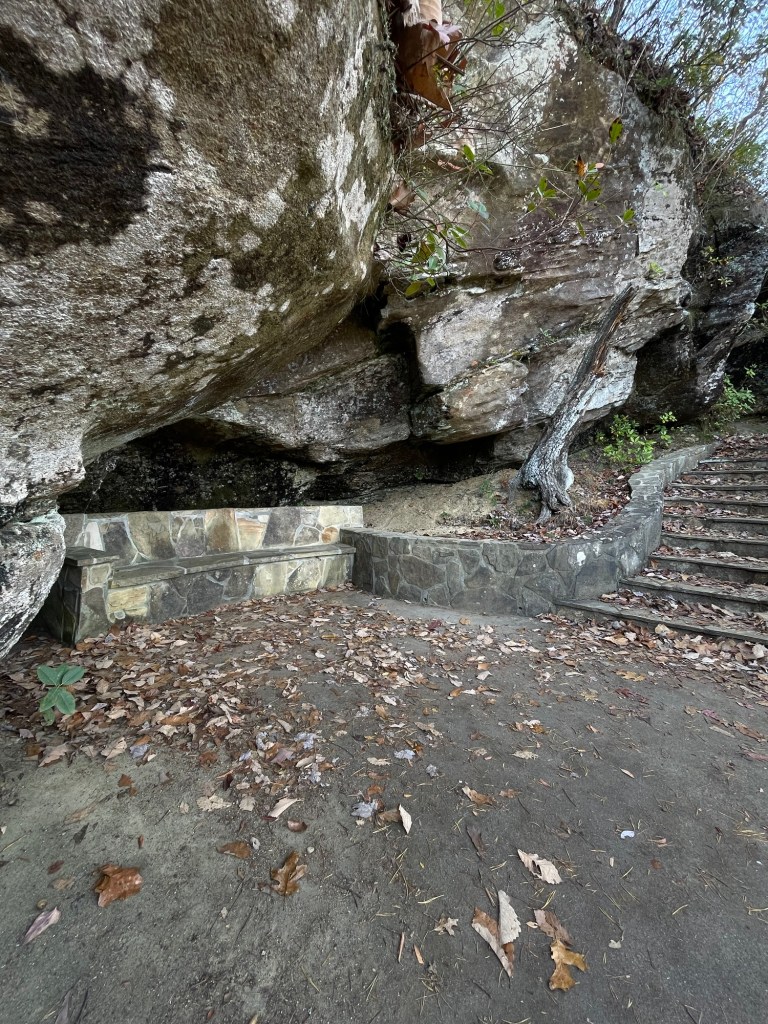
    There are ten different viewing platforms, some on the north and some on the south sides of the gorge. Two of them lead down to a suspension foot bridge, and then even further down to a water’s edge kayak launch area and gorge river trail. Going up and down, we covered about 1,000 steps on a day after the weekend’s crowds had left. My legs were shaking and my lungs groaning when the steps were all said and done. I’m glad we did it; I am in no rush to do it again.

    We really enjoyed the lower platform and might have given the gorge floor trail a try, but a special pass was required. We didn’t know what the trail involved, so afterwards we stopped at the Visitor’s Center to ask about the details. The floor trail was open, but it required multiple water crossings which seemed unpleasant for this time of year. Another upper trail that required a pass was closed, as it went through a National Forest area open to seasonal hunting. Getting shot at does indeed seem like a bad idea.

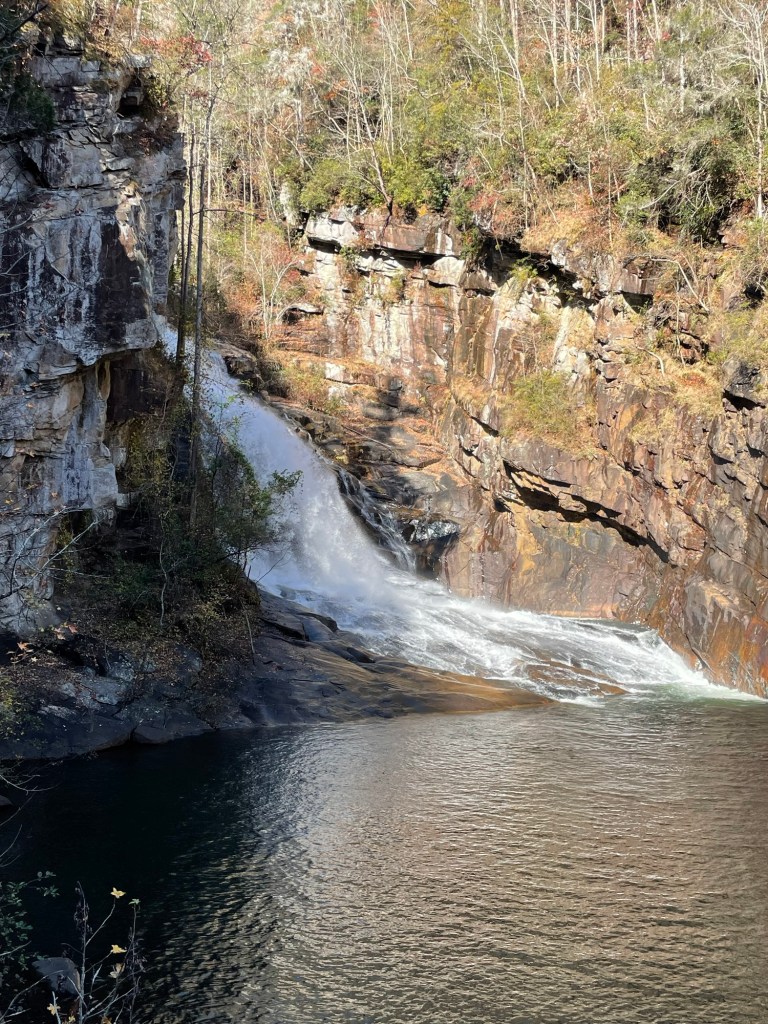
    The fall at the lower platform
    View from Platform 9 (no 9 3/4 that we could see)
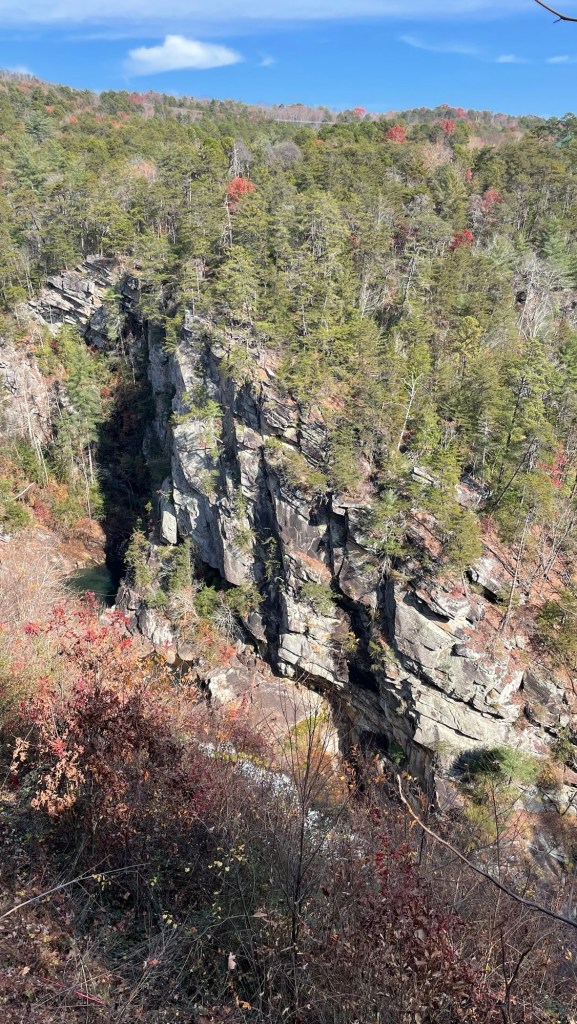
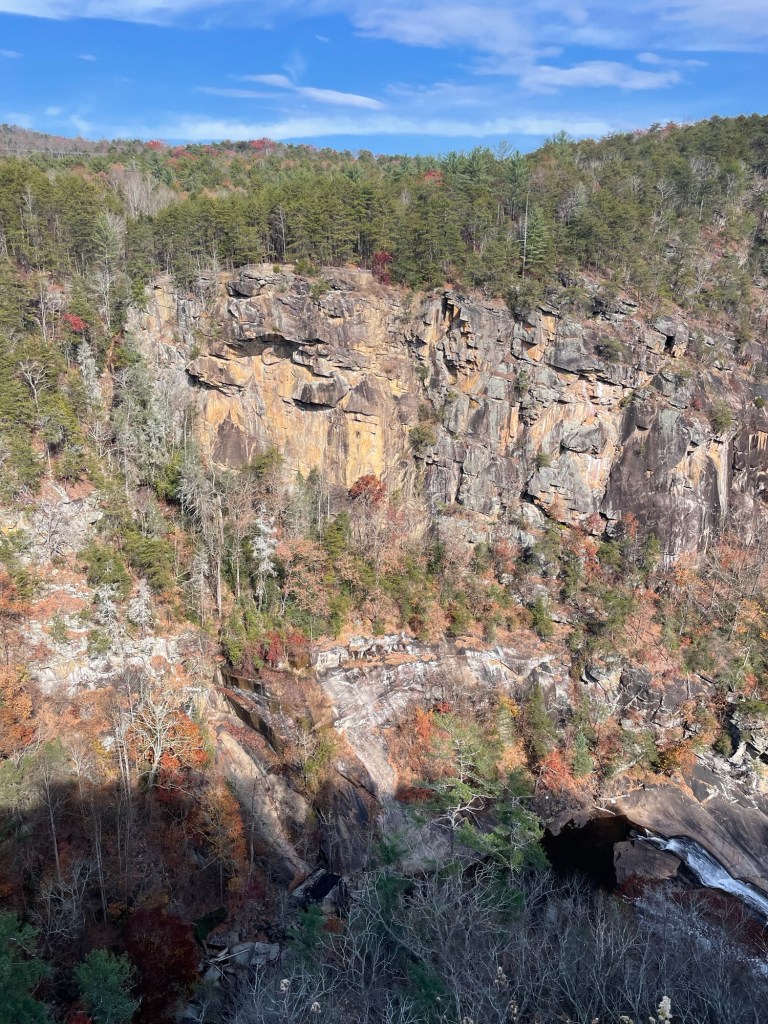
    Gorge(ous) walls

    Down below, you get a good view of the rock layers, faulting, and erosion. We spend a lot of time thinking about the geological processes that have gone into making the dramatic landscapes all around us.

    At some point, this seating area and a few others were built along the viewing trails we stopped here for a snack, munching our apples with a pretty remarkable view of an upper viewing platform and the climbing wall below it directly in front of us.

    Climbing wall
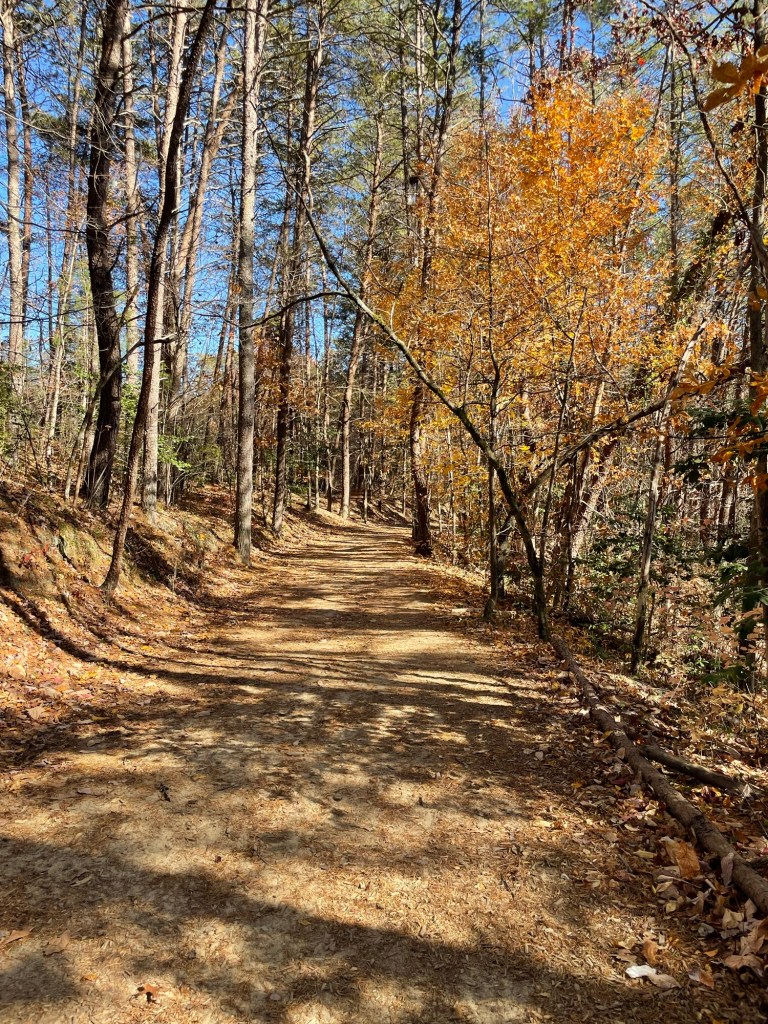
    Georgia is pretty even when the leaves are mostly fallen

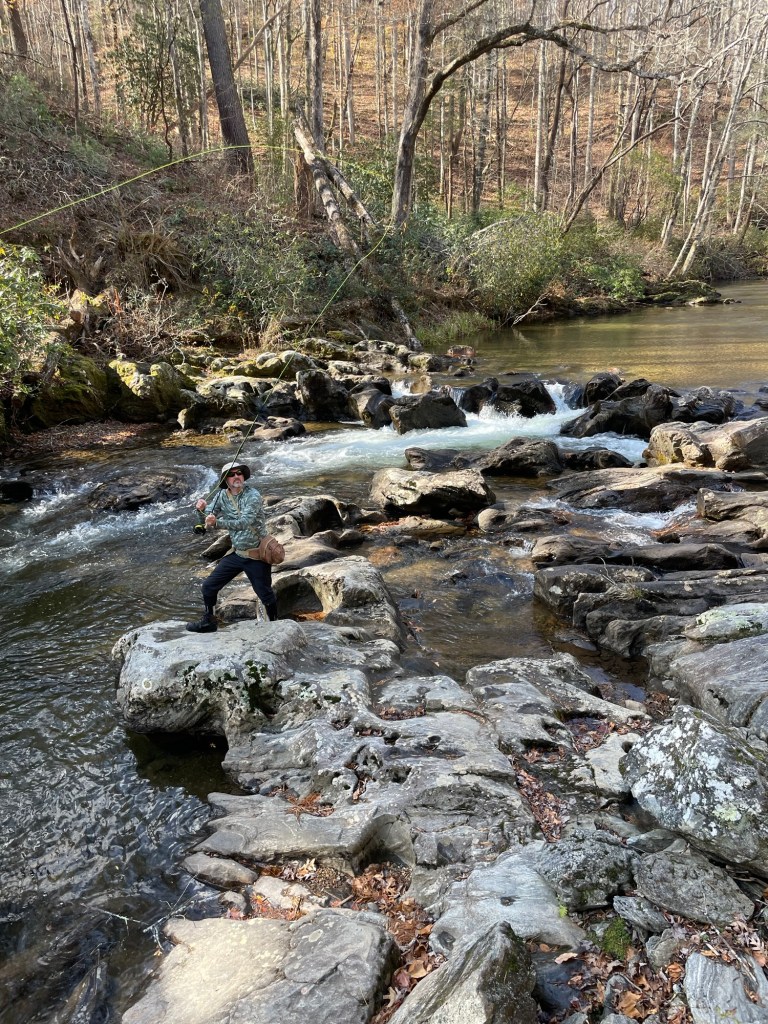
    A local fly fishing outfitter, in nearby Clayton, gave Jeff directions to a quiet stream that often has good fishing. It’s a bit late in the season, but he never seems to mind so long as he can swing a rod across a gurgling river. I just love to watch the snap and swish of a fly rod, in between chapters of a good book. Any other fly fishing anglers here?

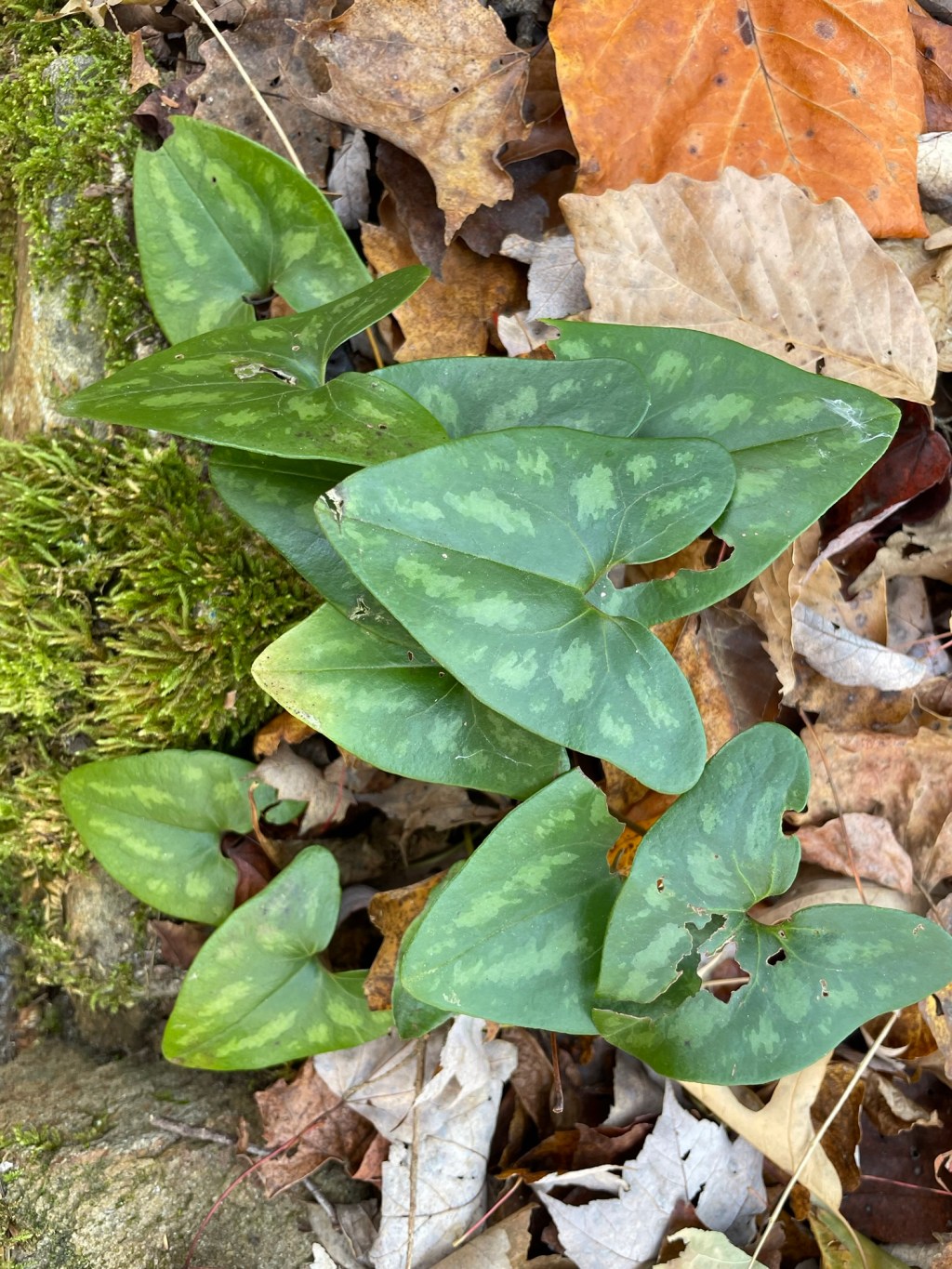
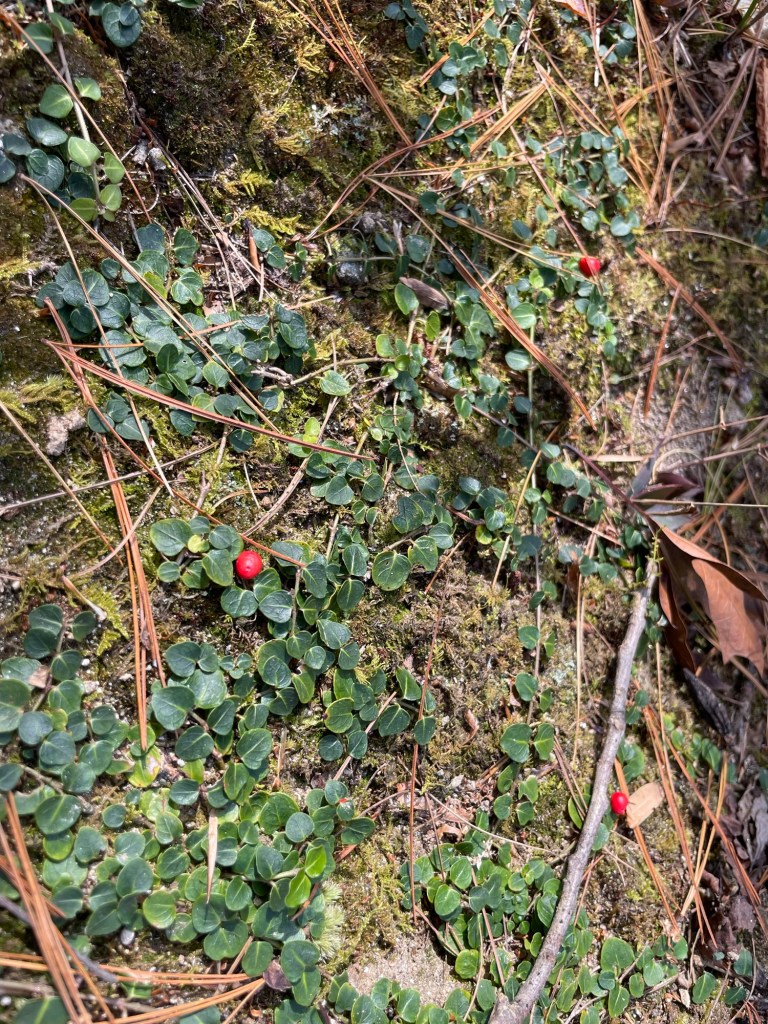
    Pretty forest ground cover (Mitchella repens, Partridgeberry)
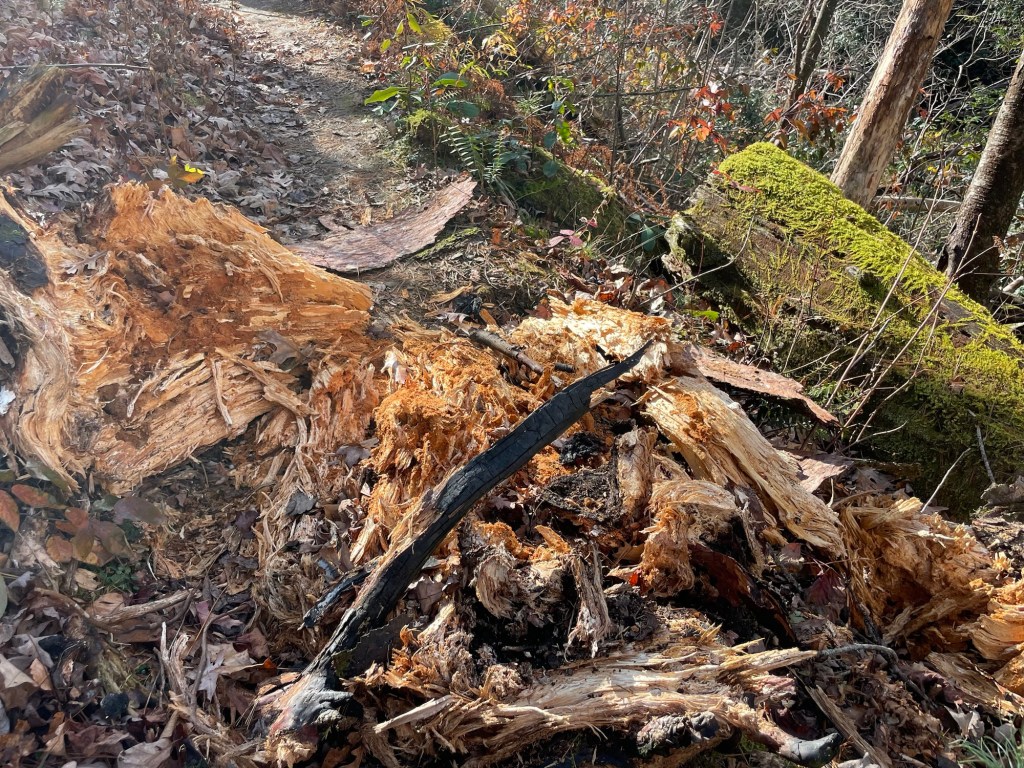
    We wondered if a bear had torn up this decomposing stump looking for insects

    After Jeff was done fishing, we decided to go on a walk in the nearby National Forest. About a 1/2 mile in, we remembered that its hunting season and that hunting is allowed in most National Forests. We beat a hasty retreat.

    Our only complaint about our stay has to due with the unsupervised kids on the last weekend. Now I get it, we’re decades past the little kids stage. Parents to an only, we were also never used to being around loads of kids. I think we can take issue, however, to a passel of young kids screaming, running, and riding bikes through the campground and trashing the bathrooms until 11:30pm. The parents at the four different sites, we saw, were busy tying one on and the camp host was nowhere to be seen. What do you think, too much to ask?

    Yes, I take quiet hours seriously. I want to relax and sleep. The kids themselves were friendly, especially after I rendered first aid to one who crashed his bike, but they really needed some adult supervision.

  • The truck was taken to a repair shop late Tuesday (35 miles away, because insurance). We’re hoping the estimate will be completed by the end of Monday. Once that is in, we’ll learn if the truck will be fixed or if insurance will deem it a total loss. If a total loss, we will need to start looking for a replacement truck asap.

    We’re in a hotel until Monday, at which point we’ve hired a tow truck to pick up the trailer and tow it to a nearby campground that allows you to stay up to 30 days. That will reduce our out of pocket expenses significantly (hotel and eating out) and give us plenty of leeway, if the truck is to be repaired.

    The biggest downside is that the weather looks like it’s going to fall apart for the next week or so. Back to the layer cake of blankets, movies, and lots of day trips to keep warm and dry. Someday we’ll laugh about all this inconvenience and hassle.

  • Life has thrown us a curveball

    Around 11:30 am, a driver ran a red light and crashed into the side of the truck. There is extensive damage to at least four panels, the front wheel, maybe the tie rod, and possibly the electrical system. At this point, we don’t have any idea of when it’ll be repaired or if it’s going to be considered a total loss. The trailer was thankfully unaffected. That would have been a true disaster, in our opinion.

    We appear to be fine physically. I’m sure Jeff will be pretty sore and achy over the next 48-72 hours. We’re in a hotel until we can talk with our insurance agent on Monday morning. We have no further info at this time. Fingers crossed, everyone, for the best possible outcome. I’m hoping that we can find some humor in the situation in the future. We’re not there yet.

    I’ll put something up soon about last week’s campground. It was a nice, relaxing one.

  • Chattanooga, Chickamauga, and Chance

    Grab a cup of something, this is a long one.

    We fairly raced south from Kentucky. The weather projections were looking quite bad across KY, with heavy rain and extreme cold in the forecast, even the possibility of tornadoes in northern Tennessee. Waking early, we slid well south to Chattanooga and set up camp for a week.

    How’d we fare? Well, the rain missed us. The cold didn’t. Like the rest of the region, we were below freeing for two nights and barely made it above freezing the day in between. We made that day our Planet Fitness, laundry, and library day. Back at the trailer, we watched a few downloaded episodes of Ken Burns’ epic Civil War series, had easy snack-style meals, and cuddled up under a layer cake of blankets. All in all, we made do. My heart went out to the campers trying to stay warm in tents on those cold, cold nights.

    If living in the road has taught me anything so far, it’s that there’s a wide difference among laundromats. While I’m not yet a laundromat connoisseur, I feel I will be by New Year’s Eve. My essentials are: scrupulously clean machines, a working change machine, and very few machines out of order. An owner on duty and credit card readers on the machines are a huge bonuses, and the more clothes trolleys available the better. I despise tv’s at the laundromat almost as much as I hate the invasive Asian beetle.

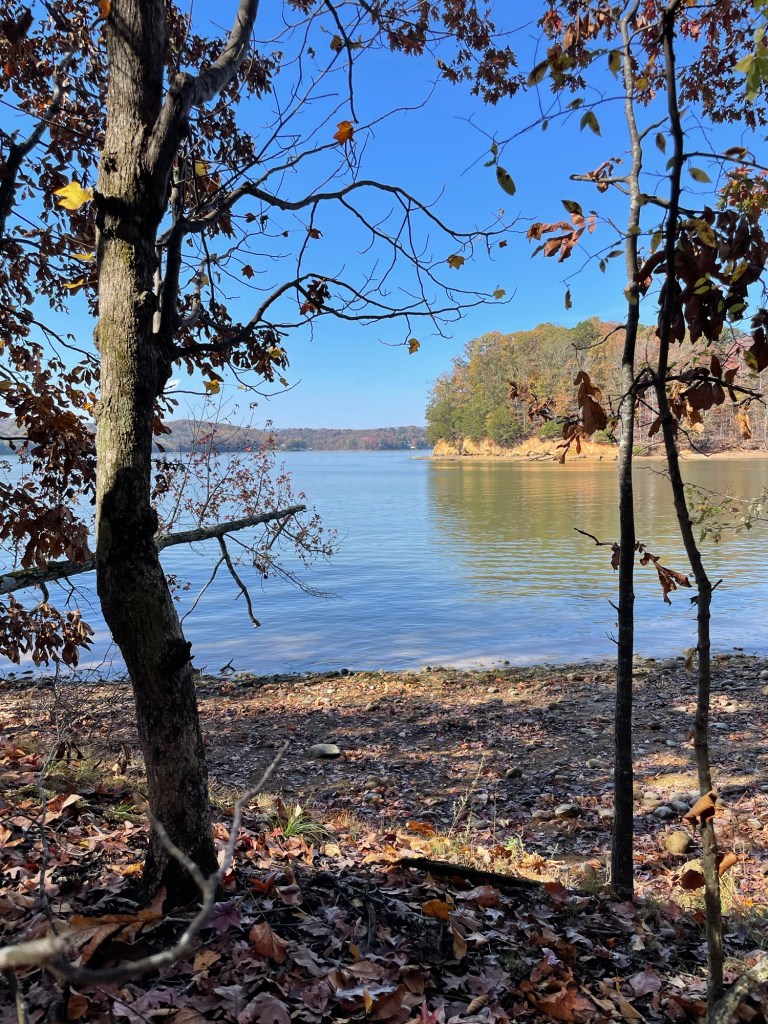
    Since much of Harrison Bay State Park is near the shores of a massive reservoir, its hiking trails tend to hug the waterline. On the nicer days, we rode our bikes around, walked all the trails, and read about astronomy and the night sky by following their cute little Star Walk path. It had lots of informational boards and talked about the wide variety of problems associated with light pollution.

    Did any of you happen to see the recent auroras? Sadly, we missed them.

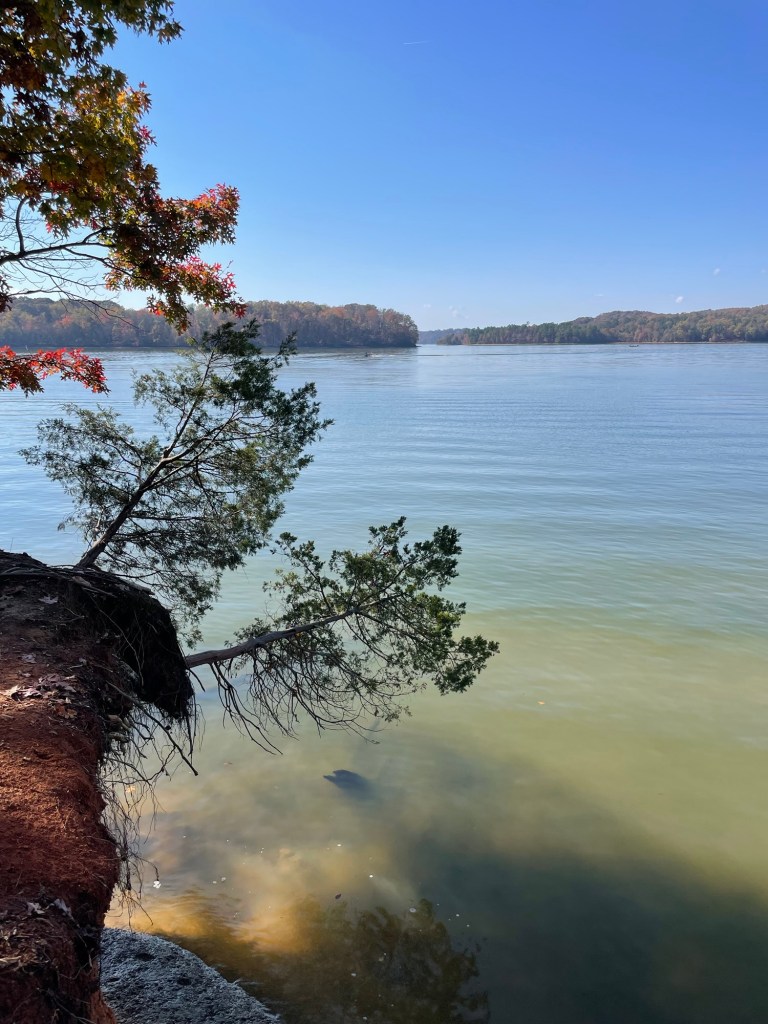
    The park’s shoreline is getting undercut and eroding away in several spots, leaving trees like these reaching out above the water. For now.

    Driving in, we saw that the park opened in 1937, the same year that the Ohio River had its devastating flood. Things are starting to knit together in my mind’s history calendar.

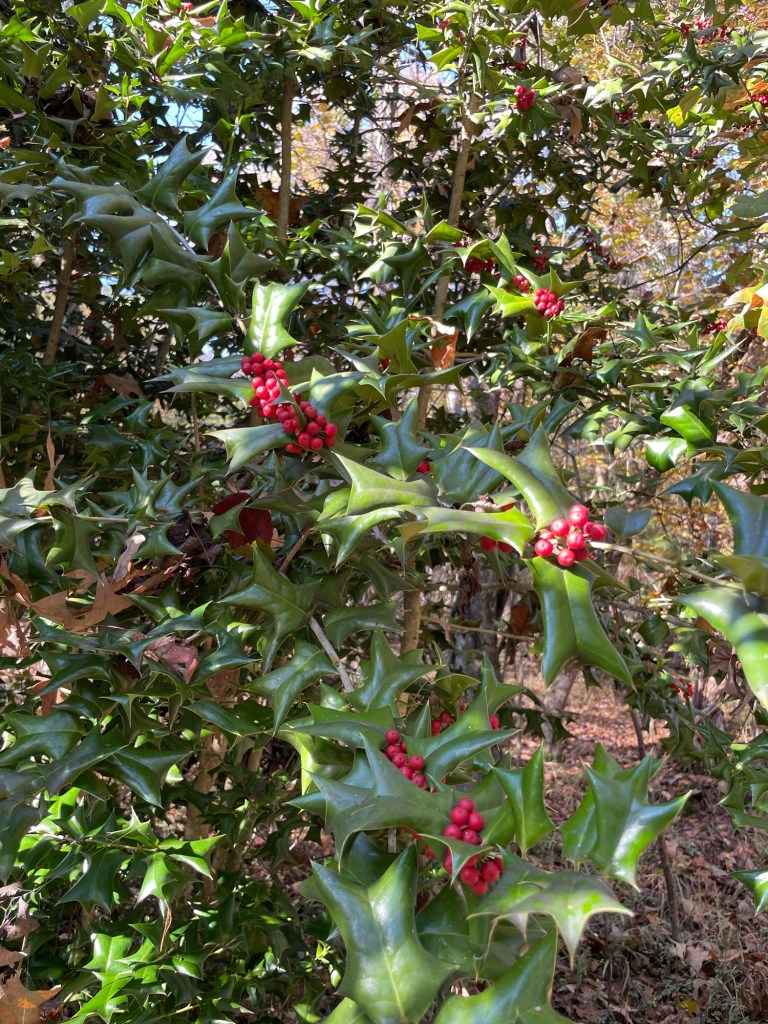
    Christmas holly? I didn’t expect to see that growing here
    Apioperdon pyriforme

    There was one log on a hike that was absolutely COVERED in these little pear-shaped puffballs. Don’t they look like a cartoon depiction of mushrooms? Wikipedia tells me that they’re “considered a choice edible when still immature and the inner flesh is white.”

    Yeah, thanks, no.

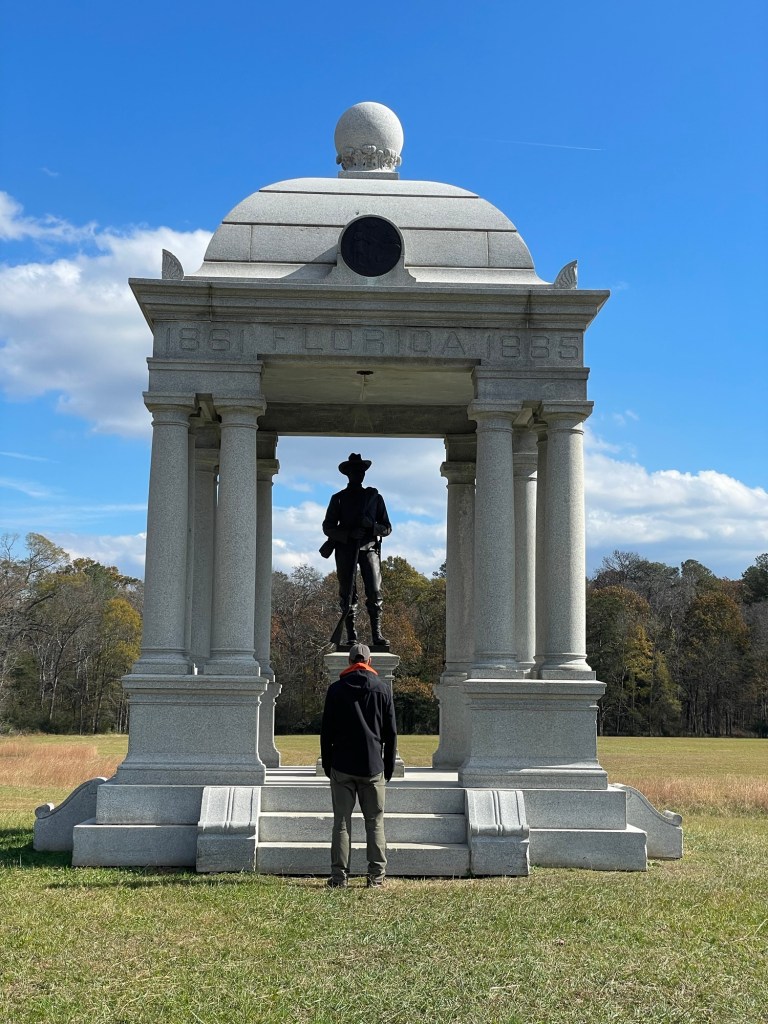
    Florida

    Despite the government shutdown, we wanted to see the nearby Chickamauga Battlefield site. I’m so glad we did. Five years ago we were planning to take a three week tour of the major Civil War sites. Instead we, like the rest of the world, were hunkering down in our home. We’re finally getting our chance now.

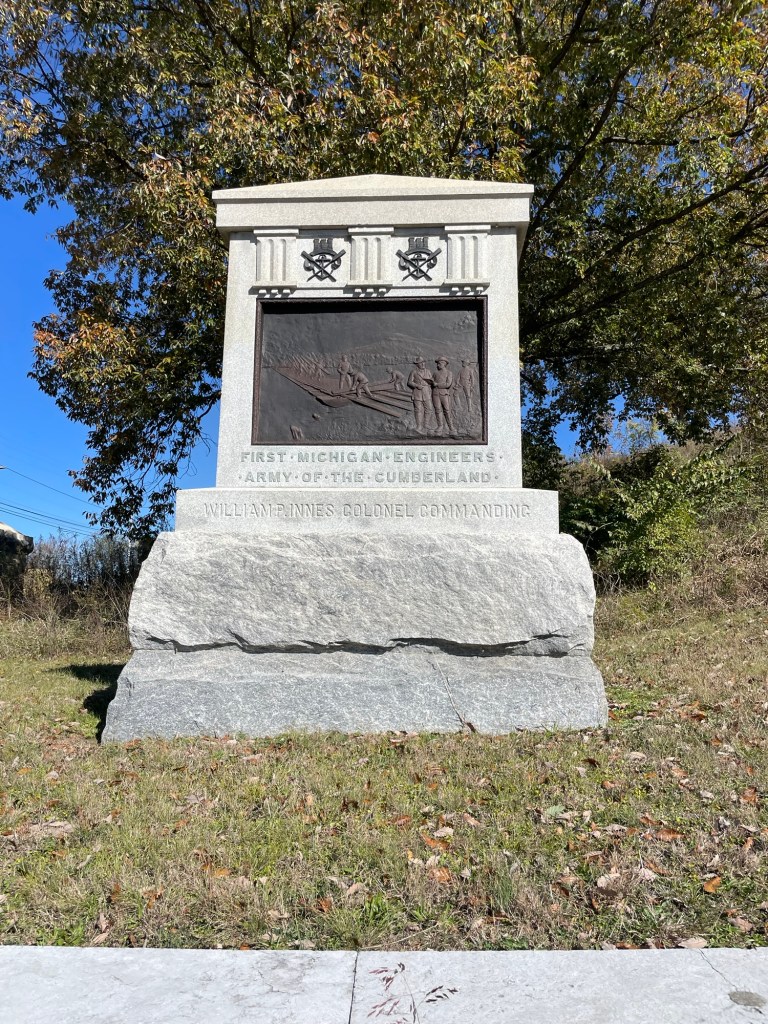
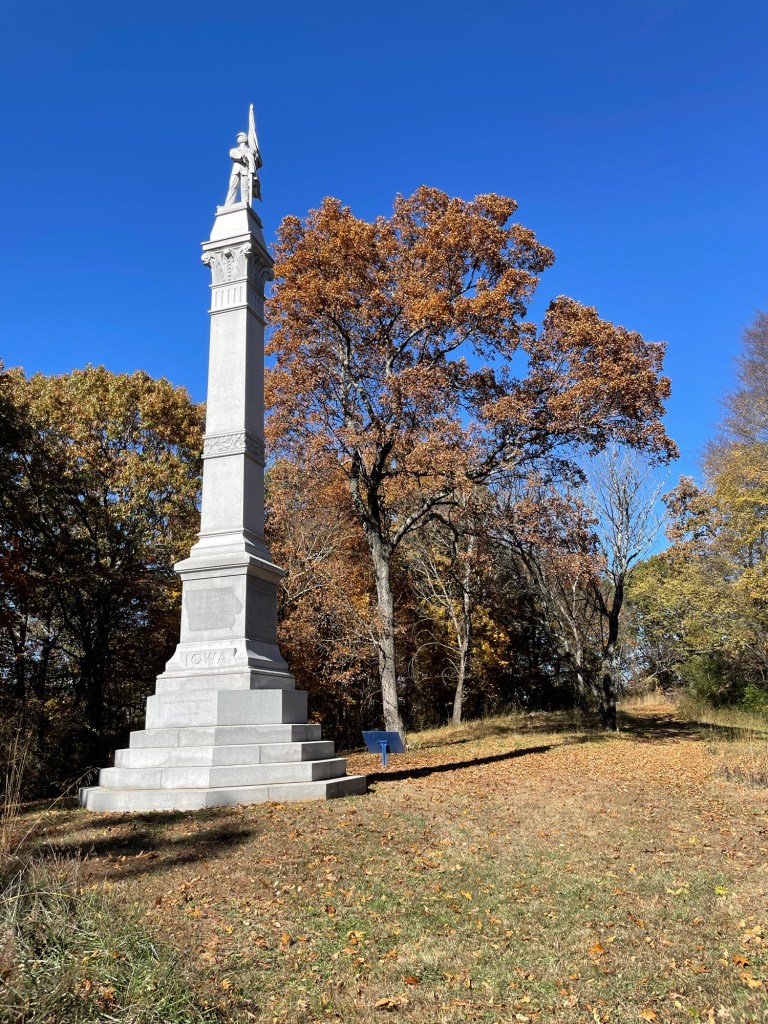
    We spent most of one day following the NPS audio driving tour and wandering around at the stopping points. We both got fairly overwhelmed by the sheer volume of monuments, informational plaques, and the number of men that had assembled for battle in such a relatively small space. Since cannon and rifles were often firing at point blank range, the tallies of dead, injured, and missing for each company shouldn’t have been so shocking, yet they were. I don’t know if it’s possible to truly comprehend the human devastation wrought during the Civil War.

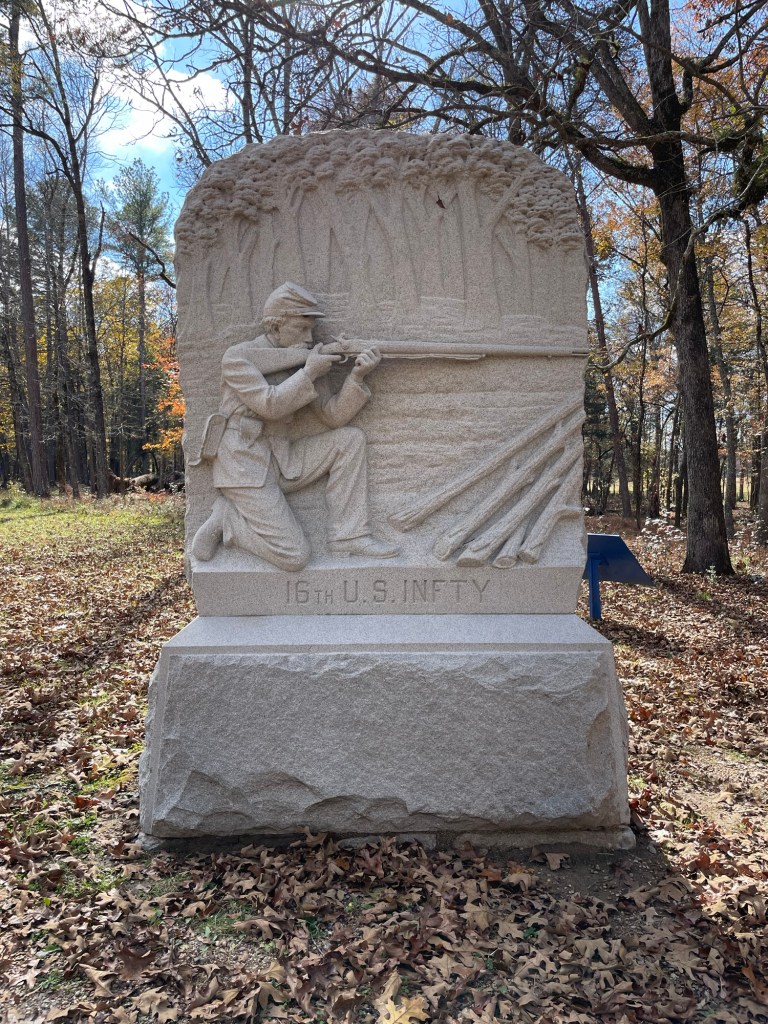
    We initially read every plaque we came across. How can you not? Men fought and died there. But we’d still have been there four months from now if we’d kept at it. Everywhere you looked there was another red or blue plaque, a cannon, or a stone monument installed by the returning survivors in the 1890s. In the end, I had a fair bit of guilt driving past so many. It felt deeply disrespectful to bypass any of their stories.

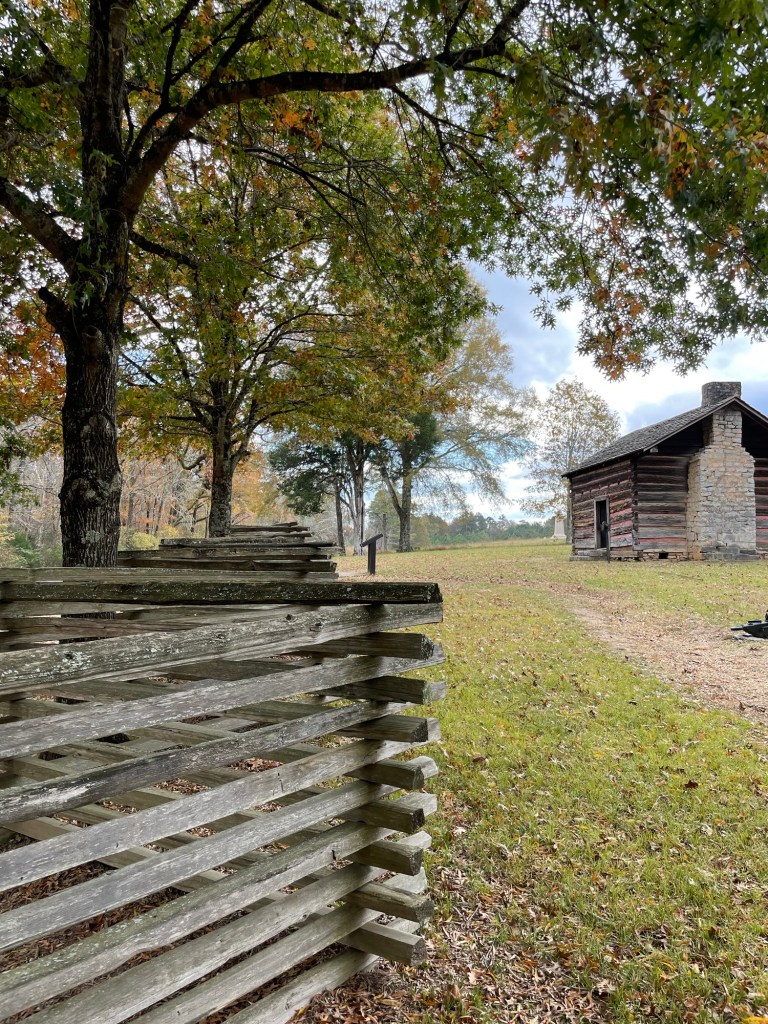
    Split rail fencing could be put up quickly

    A general said afterwards that one battlefield was so thickly covered by fallen soldiers that you could walk from one end of the field to the other without ever touching the ground. Look out across an empty field, even a playground, football field, or soccer pitch if nothing else is available and just try to imagine it. Now multiply that image by eight or ten or twelve in your mind. That was the horror of Chickamauga.

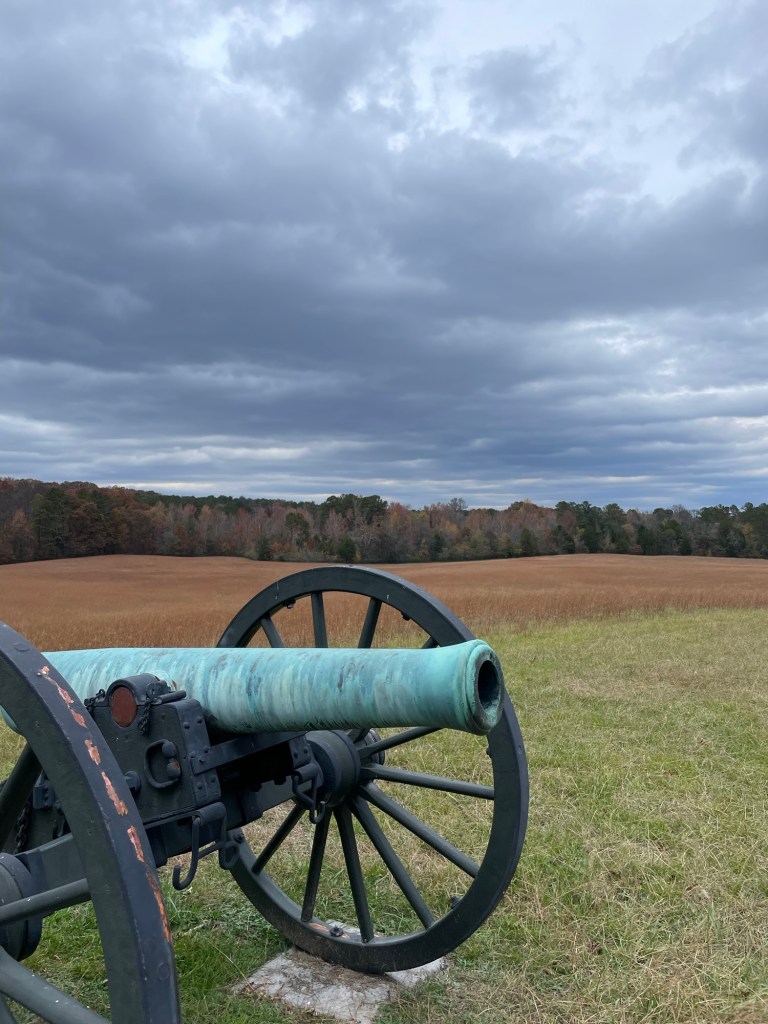
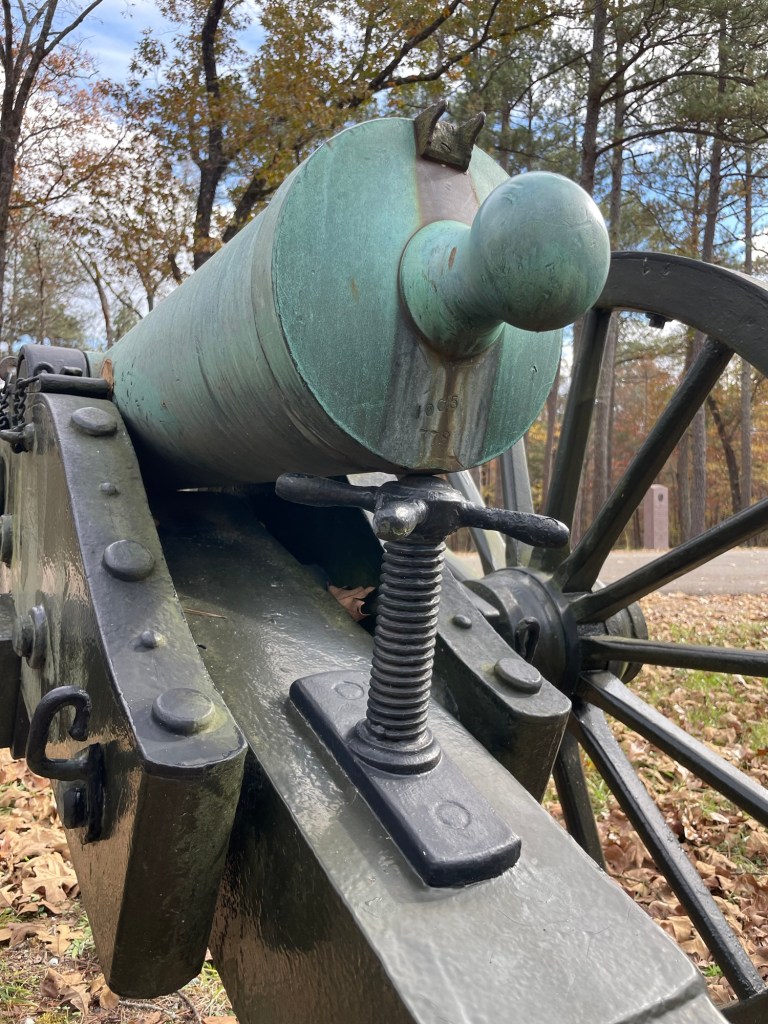
    All the cannon on site are genuine period pieces. The bases are reproductions.
    The pitch adjustment screw

    In the days following, we drove to the other half of the Chickamauga and Chattanooga National Military Park, Lookout Mountain, as well as to Orchard Knob and Missionary Ridge. The Lookout Mountain site was closed for safety reasons, so we couldn’t even walk around up there, but driving back down the hill we stopped at The Cravens House on a whim and got our fill of the views denied us above. Additional information located around the grounds told us about its importance for both sides’ Generals watching troop movements in the Chattanooga valley and across to Missionary Ridge. It’s also where William T Sherman began his march to Atlanta and ultimately to the sea.

    Here’s my completely bare bones, probably not altogether perfectly remembered, rundown of the battles. Mistakes and omissions are inevitable. I recommend you look it up if you want a definitive timeline of events.

    • Near a small creek in Georgia called Chickamauga, the Federal Army (US) was facing SE toward Atlanta and the Confederate Army (CSA) was facing NW toward Chattanooga, Tennessee.
    • There was a stalemate on September 19, 1863. Despite fighting all day, neither army had gained more than a few yards anywhere along the line.
    • Late in the afternoon of September 20, the Federal General mistakenly told a portion of his line to move, creating a gap which the CSA exploited, splitting the US forces in two. Ultimately routed, the US retreated back to the Federally held part of Chattanooga.
    • In an effort to buy the retreating soldiers some time, US Corporal Wilder and his mounted cavalry unit, the Lightning Brigade, bore down on the CSA from a hilltop with their relatively new repeating rifle technology, mowing down any troops unfortunate enough to be charging at them.
    • The US troops led by General George Henry Thomas (the Rock of Chickamauga) stayed in action, allowing the rest of the US troops to retreat in relative safety.
    • It’s worth noting that, at this time, the CSA was still in command of Lookout Mountain and the strategically high points in the Chattanooga valley.
    • In November, US Generals Ulysses S Grant and William T Sherman arrived under the cover of night, crossing the Chattanooga River from the north and northeast.
    • Flanking Lookout Mountain from the southwest, one portion of Grant’s advancing forces snuck up Lookout Mountain during the night amid thick fog and drove out the CSA, which crossed the Chattanooga valley, climbing to the relative safety of CSA-held Missionary Ridge. This became known as the Battle above the Clouds.
    • US troops soon followed and crossed the valley as well, scaling Missionary Ridge under heavy fire, despite receiving no orders to do so, yelling, “Chickamauga! Chickamauga!” The CSA was driven back toward Georgia. Chattanooga, home to several converging rail lines and the CSA’s seat of industry, remained under US control for the duration of the war, greatly affecting the CSA’s ability to move troops and supplies.
    • From Chattanooga, General William T Sherman then led his famous march to Atlanta and then to Savannah, destroying all goods, property, and crops in his path.
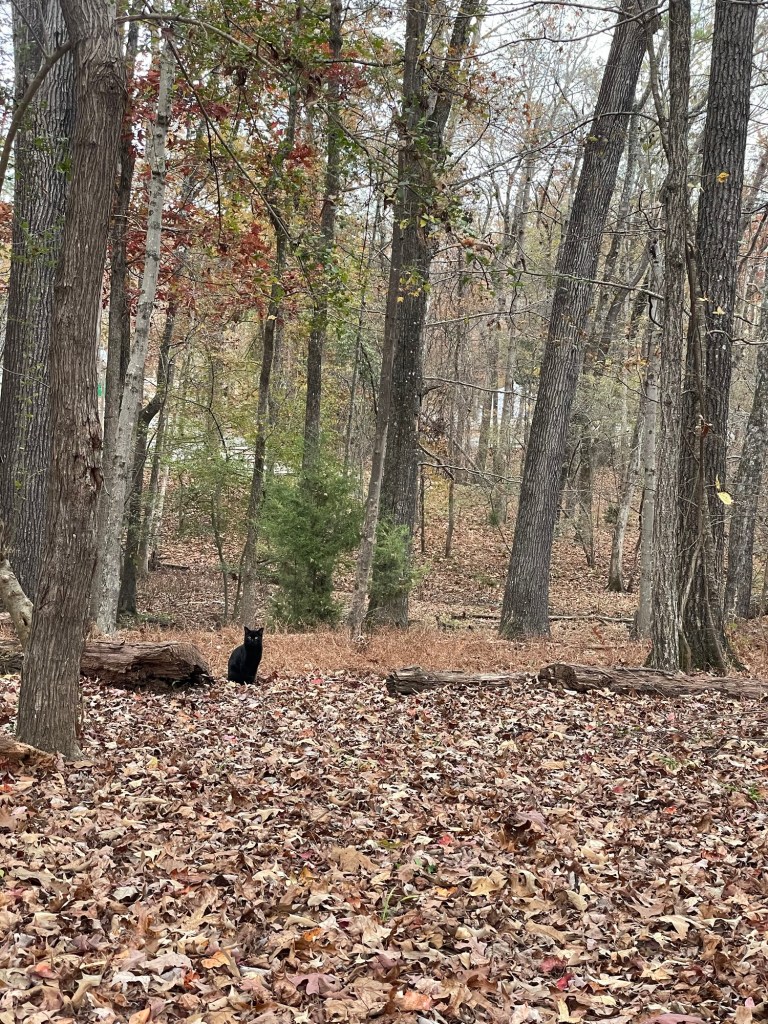
    Our brave kitty friend

    Mental relief moment: This sweet camp cat came by to visit us frequently, always staying outside of reach, but getting far closer to us than we expected. We enjoyed watching it hunt squirrels and birds, although we never saw it catch anything.

    Ok, back to it.

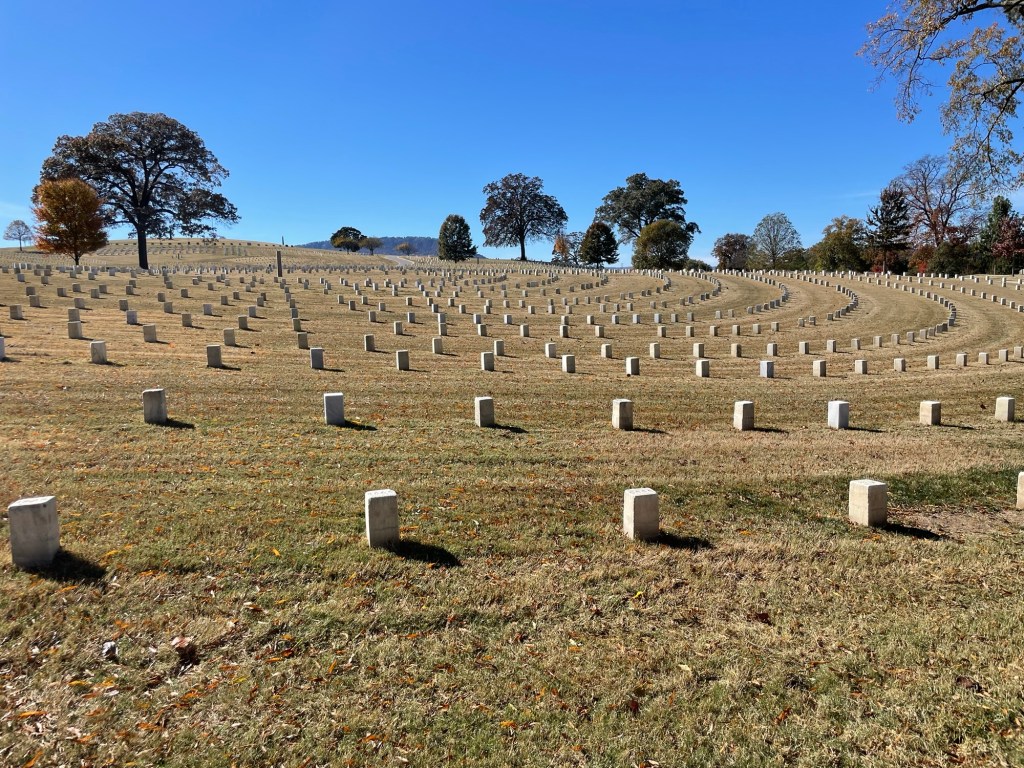
    At the Chattanooga National Cemetery, each of the 6×6 markers above is for an unknown Union soldier, most from the battles of Chickamauga & Chattanooga. There are many more such markers throughout this cemetery, as well as regular military tombstones from the Civil War through today. The Confederate dead from the battle were interred in Georgia at the Marietta Confederate Cemetery.

    Instead of leveling the ground, the gravestones were placed so as to complement and emphasize the natural terrain. Curves and swirls are fitted between the precise lines that we are traditionally used at military cemeteries.

    I stood teary-eyed looking out across this patch of land, thinking, ‘Each of these unknown soldiers left people behind. People who mourned their soldier, mourned their inability to say a final goodbye, mourned their loved one’s’ lost future.’

    Back at the trailer, I’d almost finished reading a book about Charleston, South Carolina’s role in pushing for secession in 1860 and 1861. I stood there remembering the cavalier, almost carnival atmosphere leading up to the vote for secession.

    I took a moment to re-read Lincoln’s Gettysburg Address. I see too many similarities between his world and mine. I looked back over the graveyard stretching out before me and thought, ‘This is what happens when politicians and pundits encourage us to hate one another.’

    A few of the effects of another year’s government shutdown. Some people clearly have no sense of shame or decency.

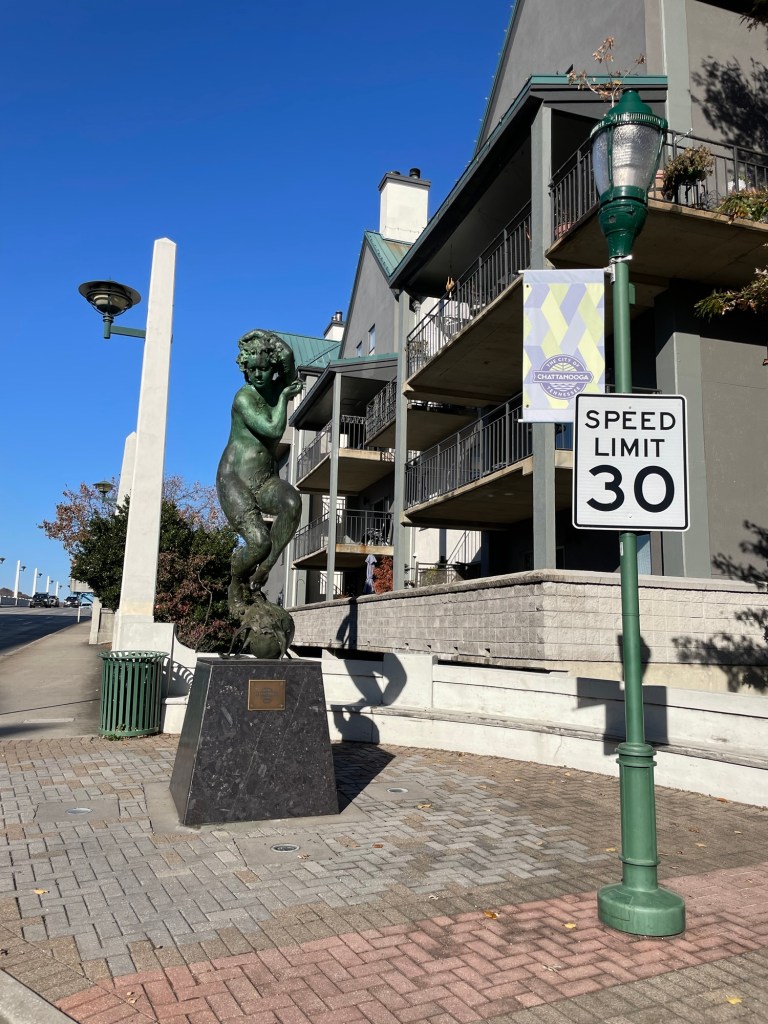
    Finally, on the day that I had to get some bloodwork done, we wandered around the Chattanooga city center afterwards. While there’s nothing specific we could put a finger on, we both agreed that Chattanooga probably wasn’t for us. Not every place can be.

    The day before we were scheduled to leave this campground, we saw that the government shutdown had ended. Finally! On the off chance that things had opened up already, we called ahead and learned that the Visitor Center at Chickamauga and Chattanooga National Military Park was indeed open. We packed up quickly and headed straight there.

    Having seen so much of the physical sites, the introductory video and historical exhibits made so much sense. It acted as a ribbon tying all the pieces together. Seeing a diorama with a piece of equipment that I’d heard mentioned often but didn’t quite understand, I asked one of the park rangers for a brief explanation, knowing how much catch up work they likely have ahead of them.

    What I got was a personal walk through, with visuals, of how the batteries were composed, what each of their pieces of equipment did, how many men and horses and cannon and munitions were needed for a complete fighting unit, and so much more. Afterwards, he even showed us an absolutely massive firearms collection that was donated to the Park, pointing out which guns were used during the Chickamauga and Chattanooga campaign, why the different guns styles mattered, and how they impacted the final outcomes.

    Seriously, National Park Service staff are a class above. They often go out of their way to help you, clearly love the places they care for, and protect it all for us. For all of us. Indeed, that’s the beauty of our National Parks. They tell our story, the good the bad the pretty the ugly, and protect our most precious and unique landscapes. For all of us.

    And in my opinion, that’s as good a reason as any why they shouldn’t be getting put through the financial, professional, and emotional wringer. Ever. Leave our National Park Service alone.

  • Triple Boone

    (Jeff said that my last post, a ‘Why can’t I sleep?’ special, sounds like everything was all done in a single day. It was not. It covered four days.)

    It’s no Mackinaw, but it’s pretty

    After leaving Indiana, we crossed into Kentucky and headed west for Bourbon Country, a little American Revolution history, and unknowingly a lot of Daniel Boone. While music dominates our driving time, we’re also fond of podcasts with Ologies, National Park After Dark, and various Old West related ones at the fore. On our way out of Michigan we listened to a triple episode series on Legends of the Old West about Daniel Boone, without realizing how often we were about to see his name.

    If you’re like me, Daniel Boone was a name I’d heard a few times in elementary school and he always seemed like an amalgamation of many people of the period. Because, really, how important could one frontiersman be? Quite impactful, and interesting, as it turns out. More on that later.

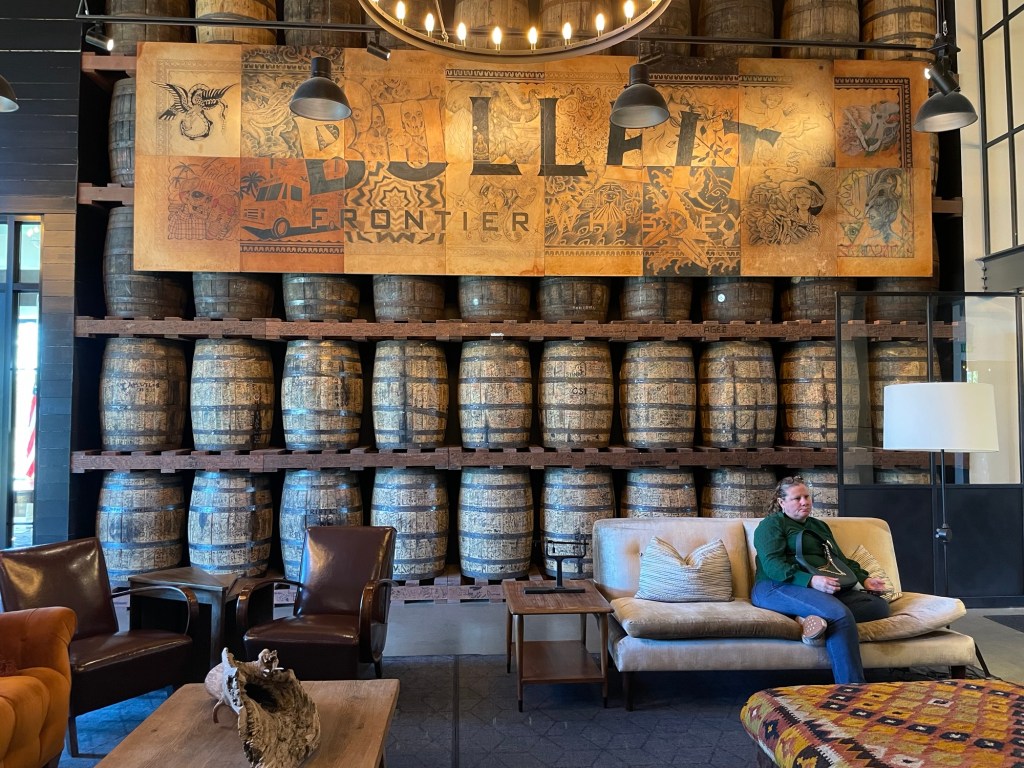
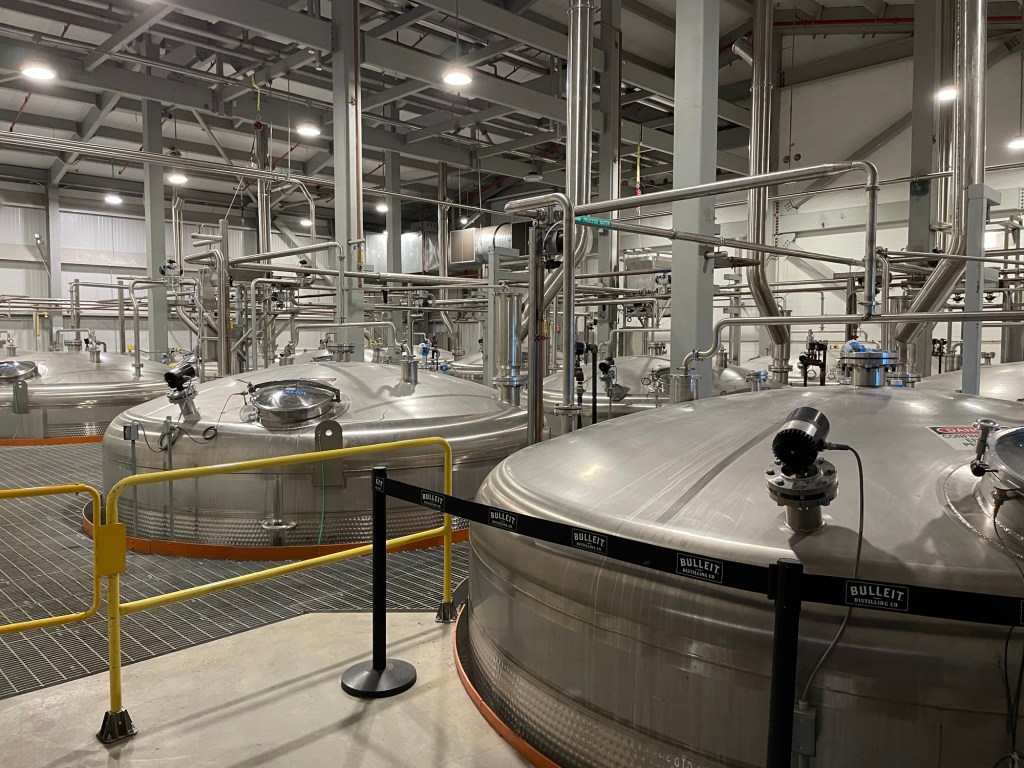
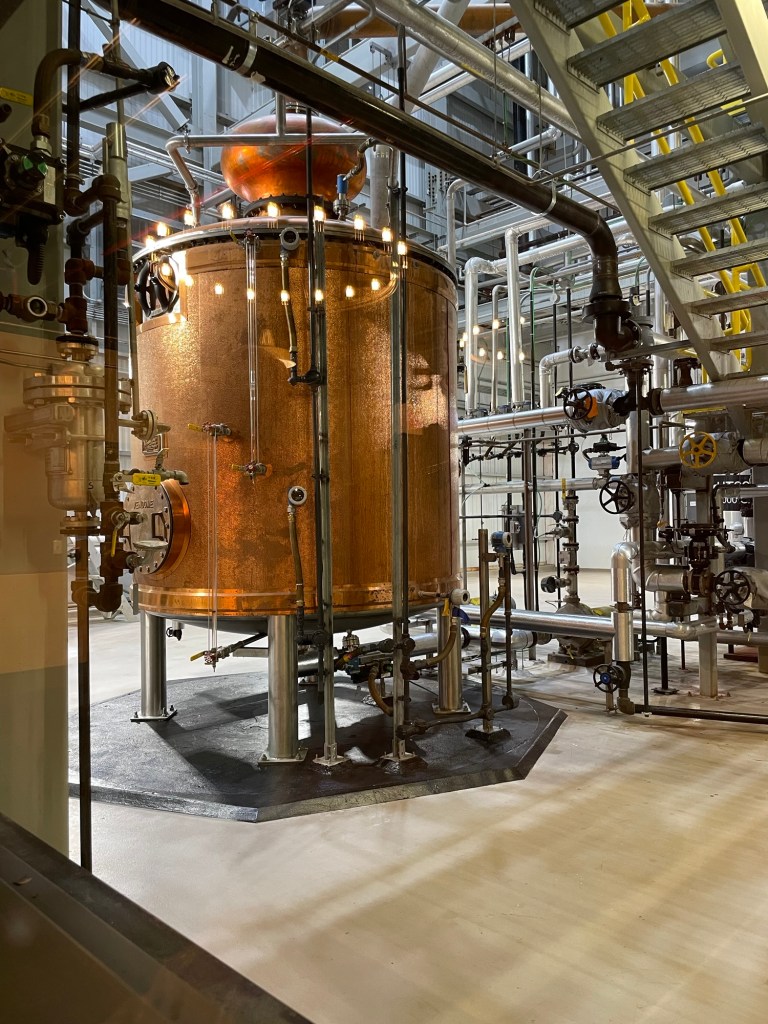
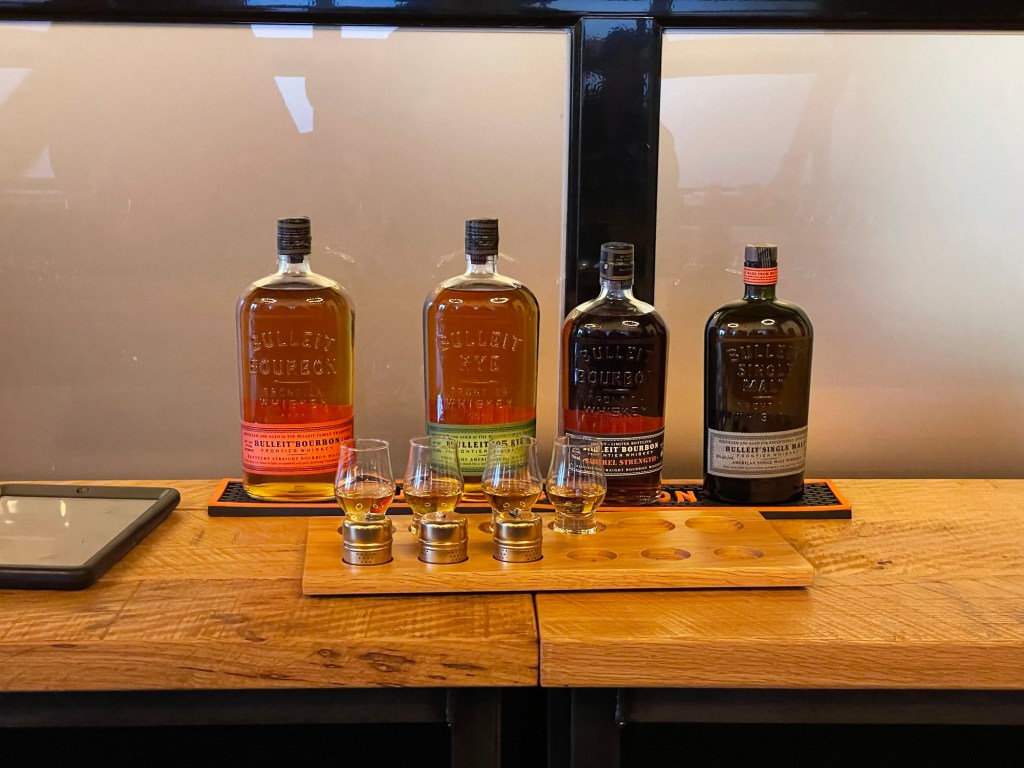
    Our first stop was the Bulleit Distillery in Shelbyville, Kentucky, for a distillery tour and tasting. Since it’s one of Jeff’s two favorite bourbons for mixing and sipping and it was right on our way to Blue Licks Battlefield State Resort Park, it was a no brainer. Later we did a tour at Four Roses too and Jeff picked up a small bottle of his favorite batch. Bulleit won our unofficial tour and tasting award though.

    When one is in Bourbon Country, one does a Bourbon tour (or two)
    Mash tanks
    Distillation tanks
    Two workhorses (L) and their spendy friends (R)

    The three small containers you see before the four tasting glasses are full of spices, herbs, and florals. They really brought out the different notes in each of the bourbons. I rarely drink alcohol, but I was glad I made an exception here. This tasting experience was superb. Did you know that women tend to have more discerning noses and therefore be better at blending bourbons? Tis true.

    Blue Licks Campground turned out to be a bit of a bust this time of year, since the museum is closed, the hotel’s front desk and store were closed, and even the campground host was AWOL the four days we were there, but it was a good launching pad for other things.

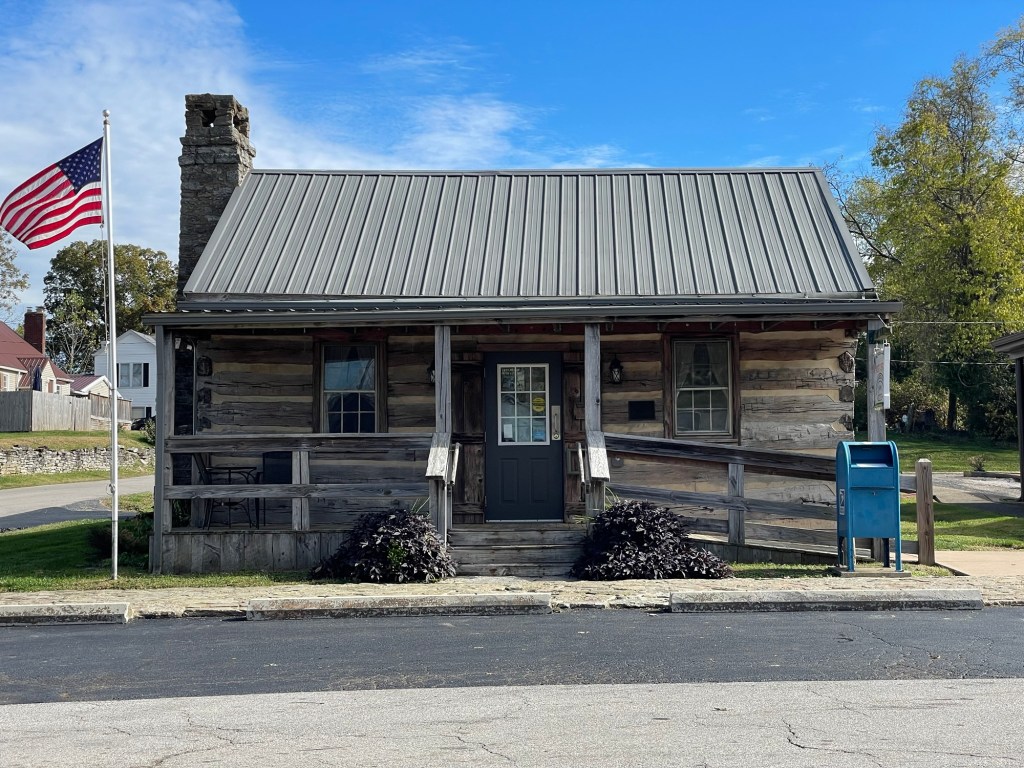
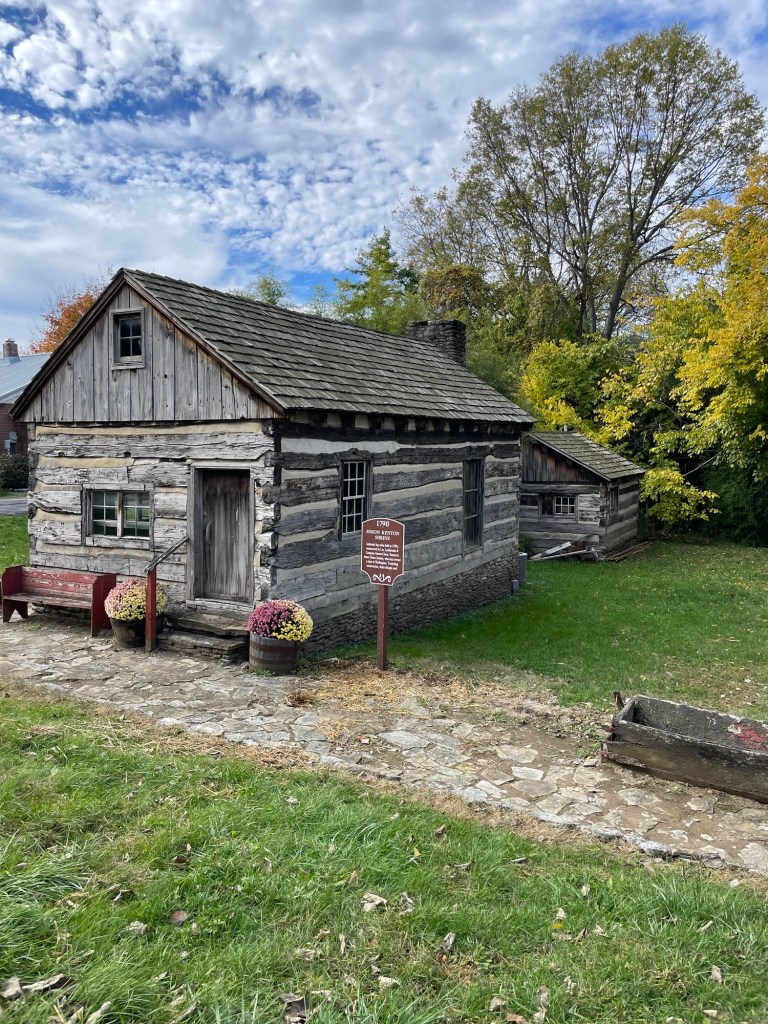
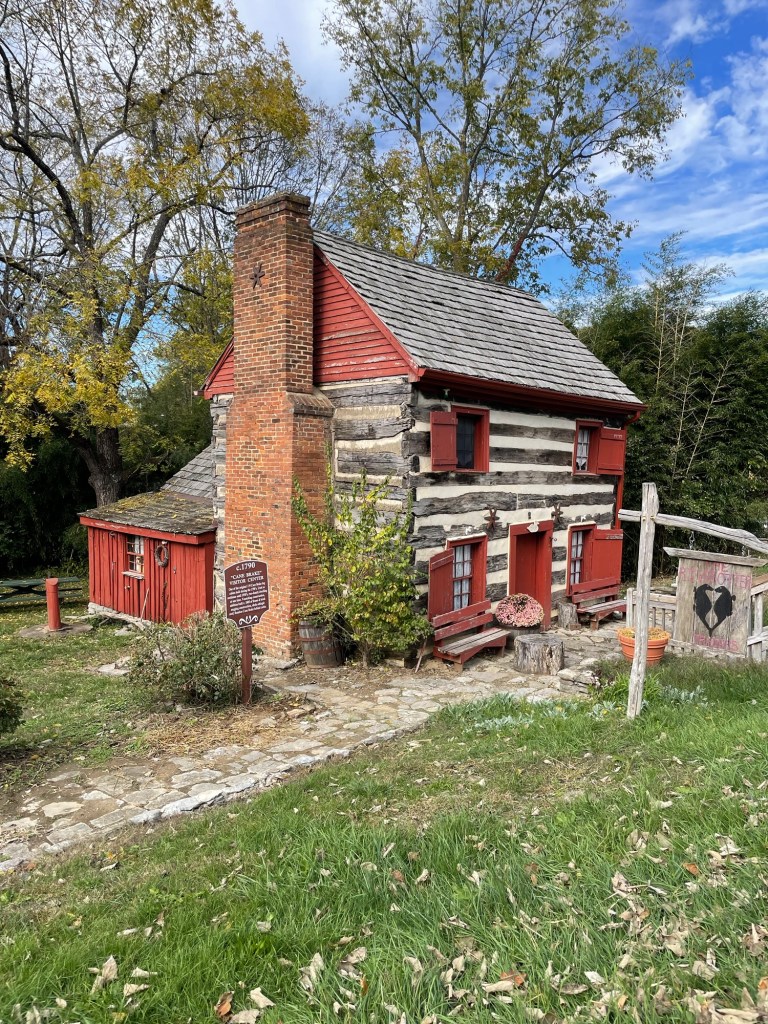
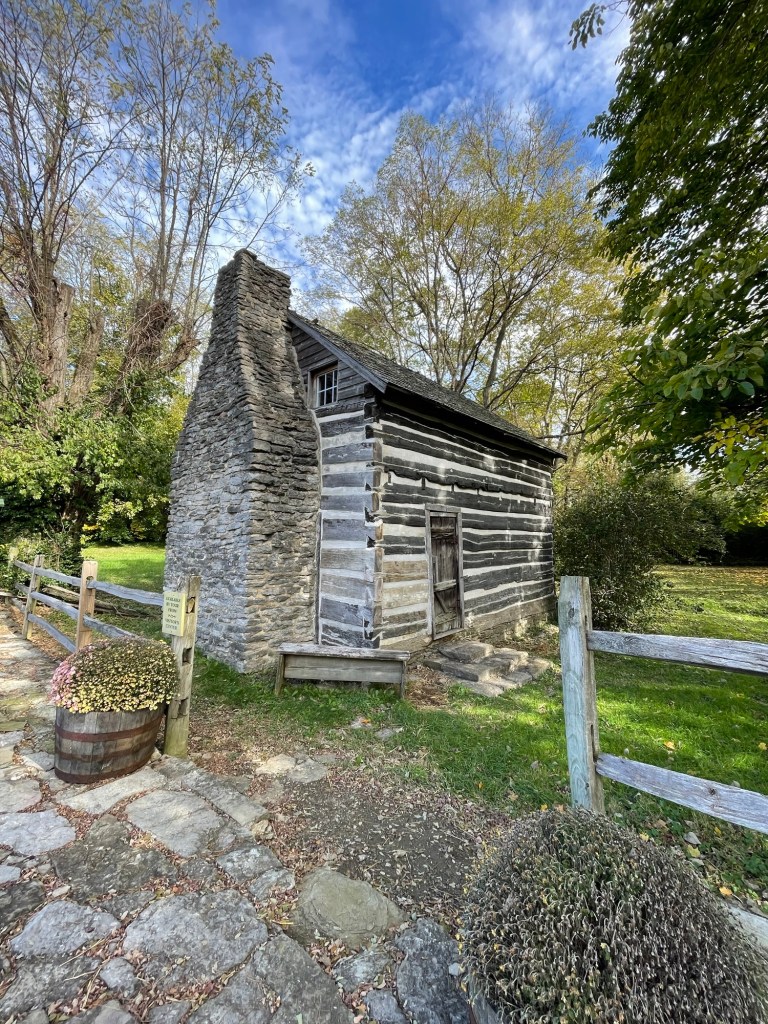
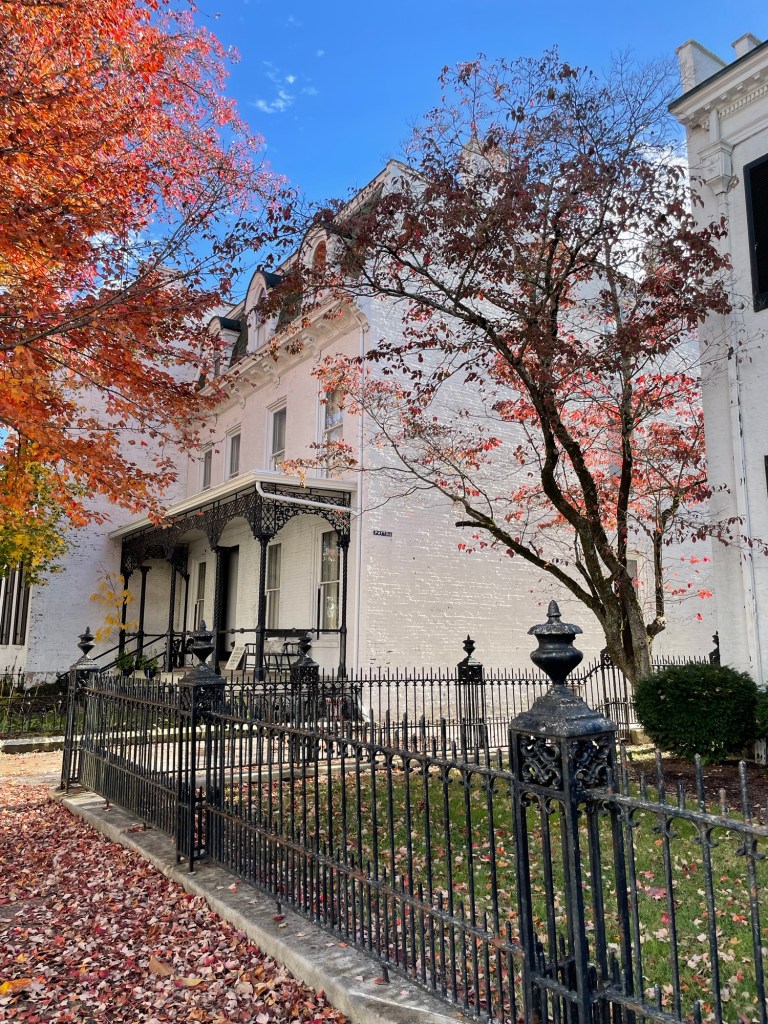
    On a whim, we drove to a small village that was eventually rolled into the county seat. It was supposed to have an old frontier house and tiny local museum, but what we found was a rather large collection of frontier buildings. Unfortunately the museum was not open. (Don’t go to Kentucky for touristy things in November, is my advice.) We had a nice walk around though and ogled the buildings along Old Washington Road. They’re quite well maintained.

    Apparently when the visitor center IS open, you can get inside a few of these buildings. I wonder if I could have gotten access if we’d thought to call ahead. Guilt, pleading, bribery. I would have been open to a few options.

    Mefford’s Fort

    Mefford’s Fort (actually just a home) was built from the planks of the raft on which George Mefford, his wife, and their THIRTEEN children floated down the Ohio River, moving from Maryland in 1787. Thirteen children. Folks, this cabin is not at all big. Fifteen people on two floors under one small roof. Yikes and no thanks.

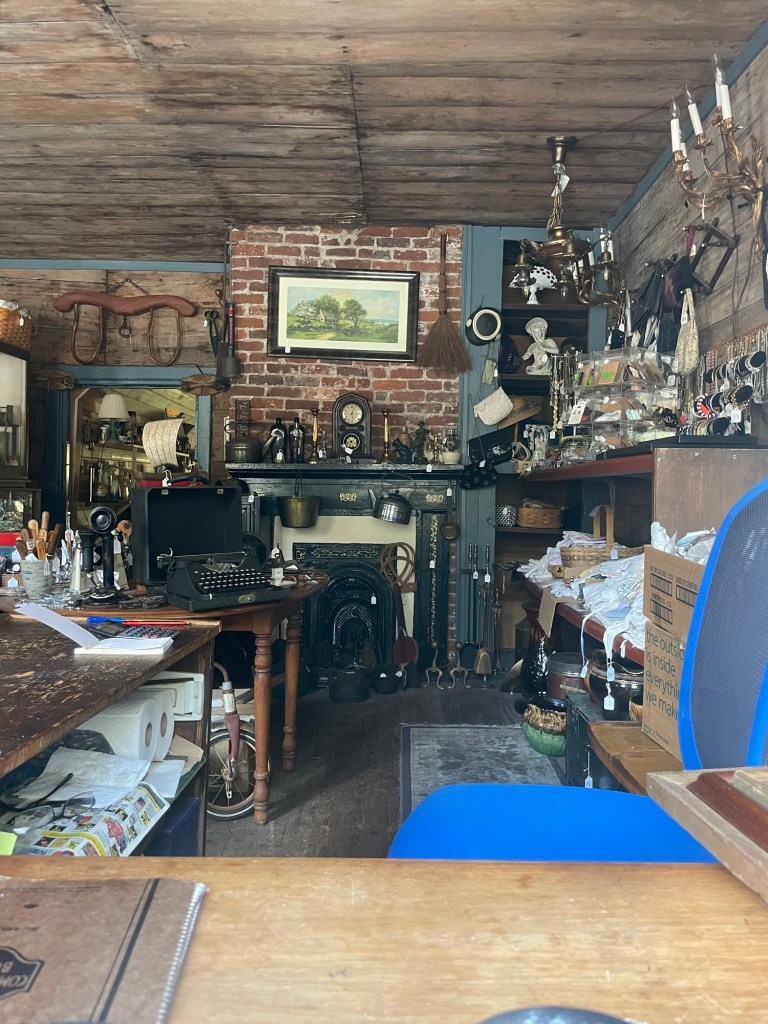
    I wanted to poke around this antique store so badly, but it’s closed for the season too
    I don’t think the window AC unit is original

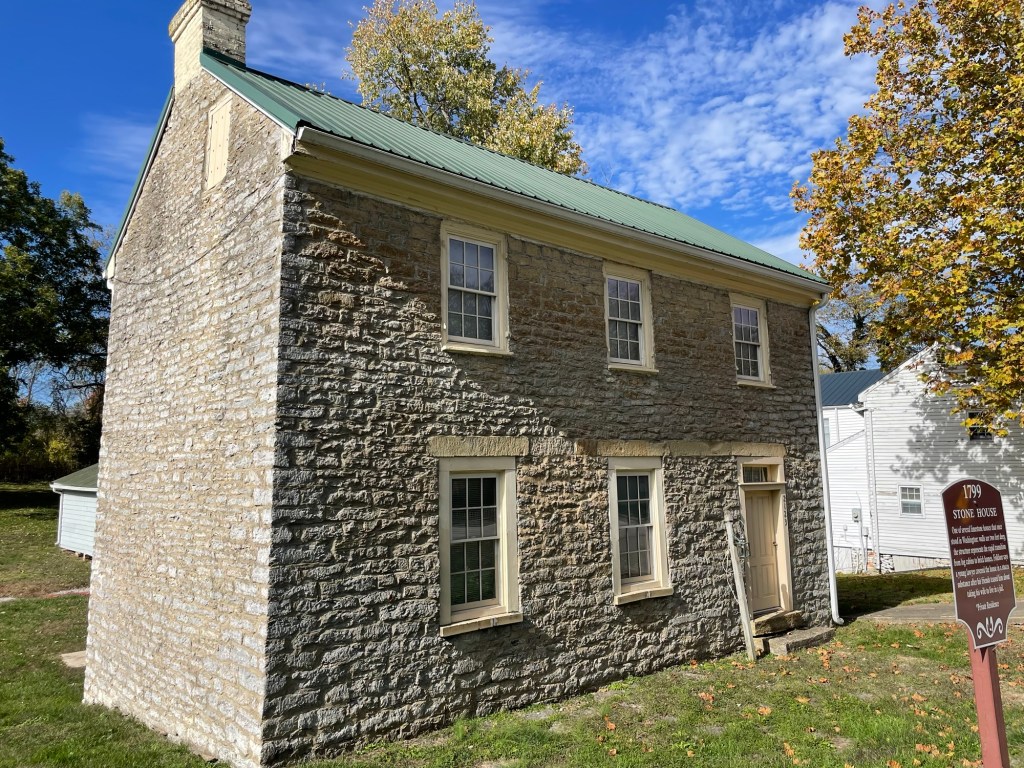
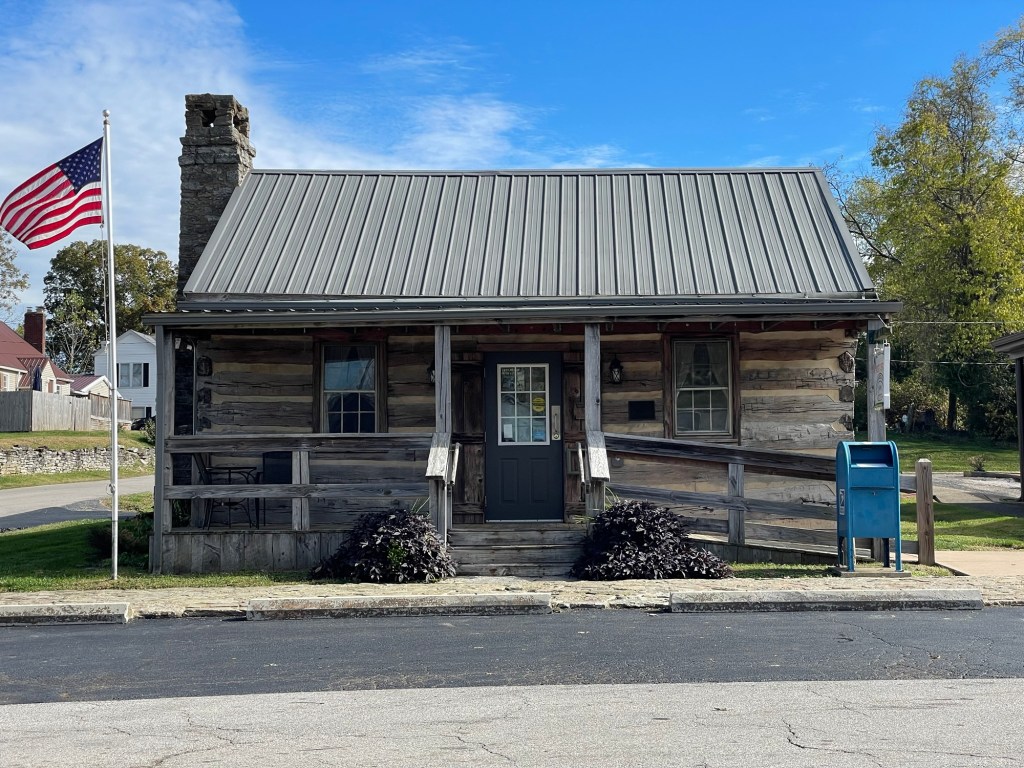
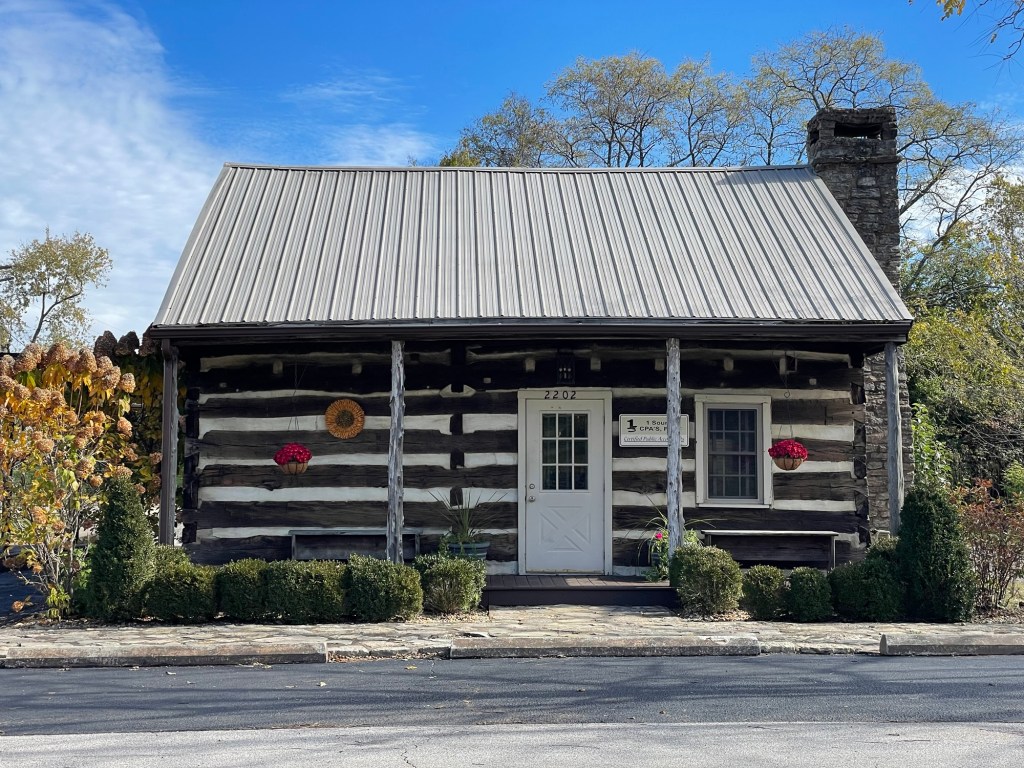
    This is what really gets me though, many of these original log structures — like the one above and the ones below — are still being used as homes and businesses. Amazing structures, they are. I’m so glad they’ve been valued and kept in use.

    Not logs, but still pretty cool
    All post offices should be so adorable
    Cutest counseling office ever

    It was pushing on lunchtime and there wasn’t much to do at the campground, so we drove a little further to Maysville.

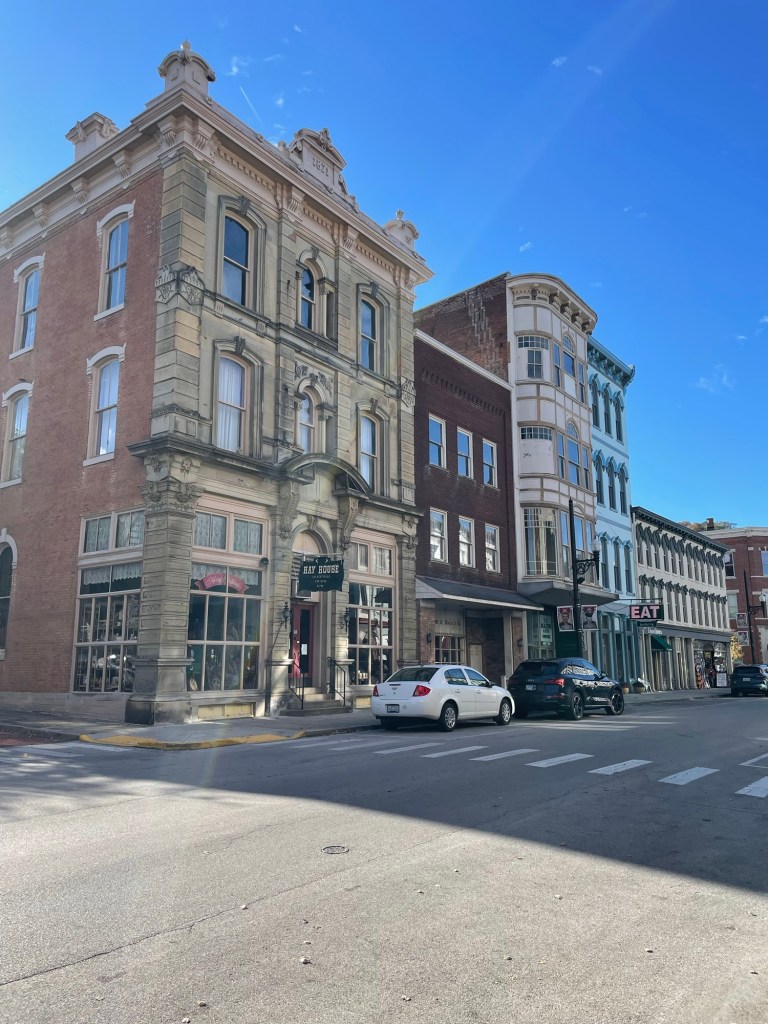
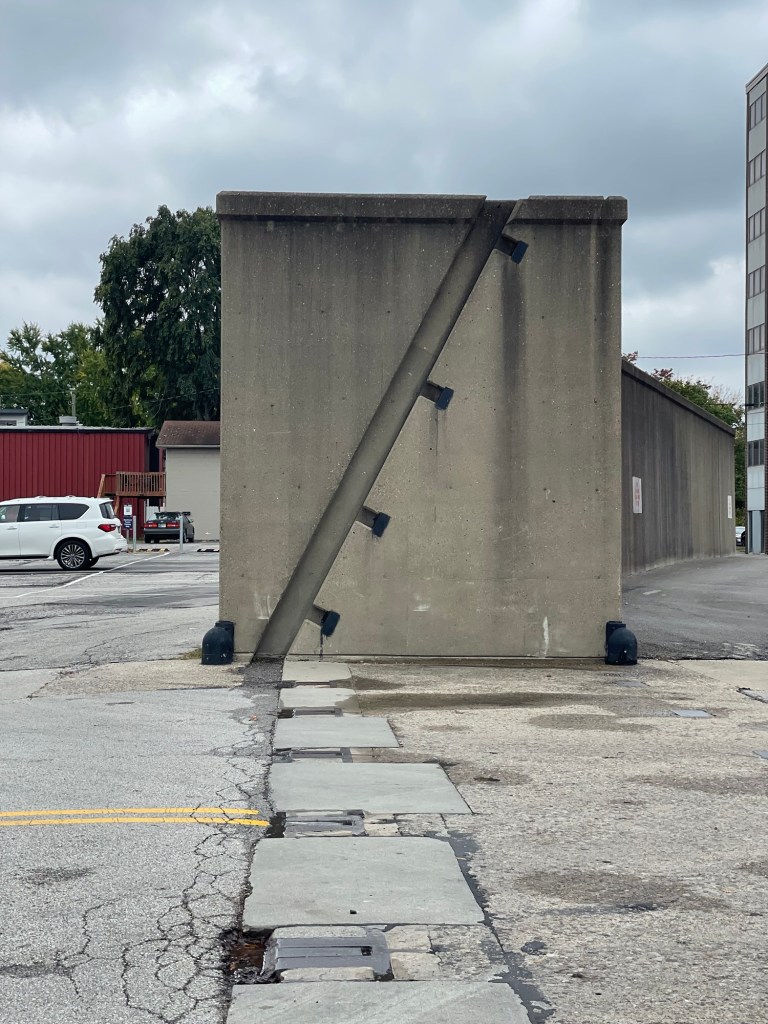
    Maysville, another city on the Ohio River, was also inundated during the 1937 flood that hit Louisville and Rose Island so hard. Main Street was obliterated and all buildings were torn down. Second Avenue, also somewhat flooded but far enough up the bank to avoid complete destruction, became Maysville’s new Business District. A massive flood wall and earthen levee system was built afterwards to protect the city from further damage, effectively cutting off the city’s view of the river. Worth it, I know, but a bit sad too.

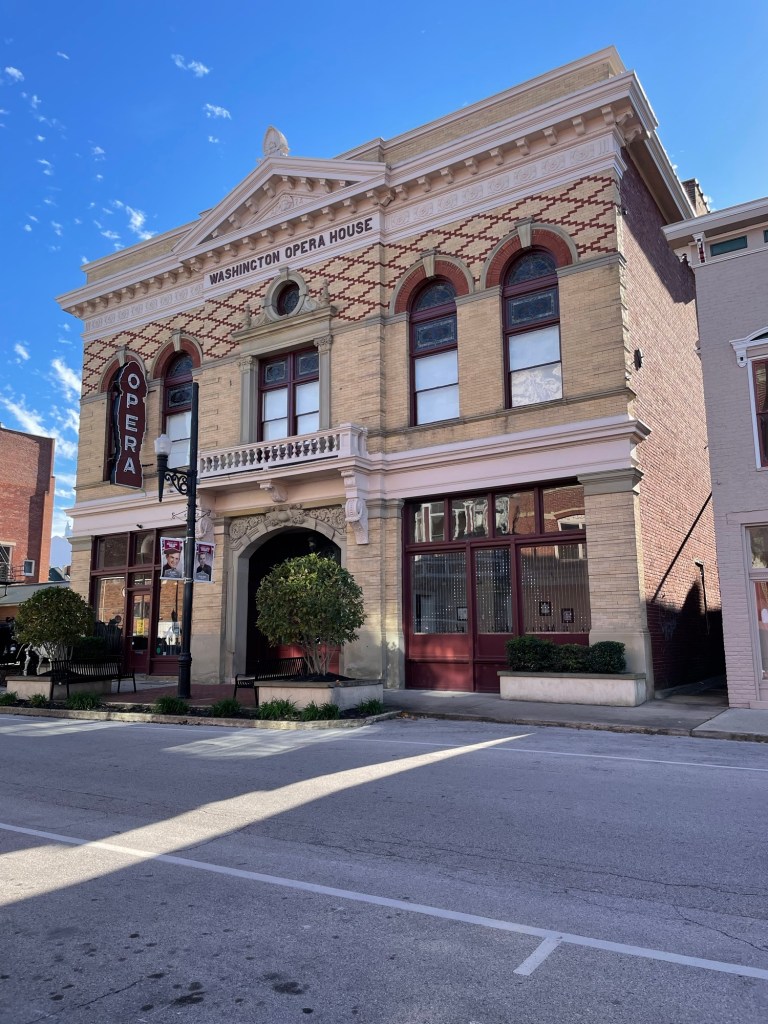
    This poor Washington Opera House has been designed, used, nearly destroyed, abandoned, and redesigned more times than you’d believe, but it just keeps on going. I wish the current theater group that’s putting it through its paces again the very best of luck. Such a nice building deserves a future.

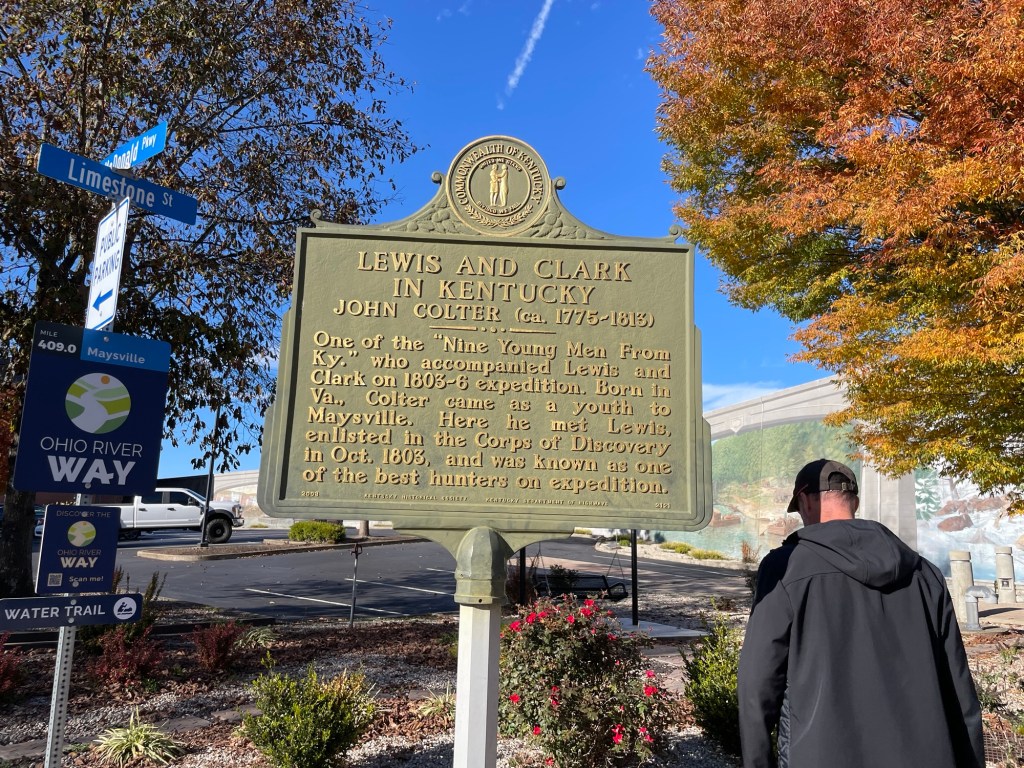
    Maysville has a tie to Lewis and Clark’s famous Corps of Discovery, being home to one of the men who traveled with them. Afterwards, he went on other adventures in the frontier West.

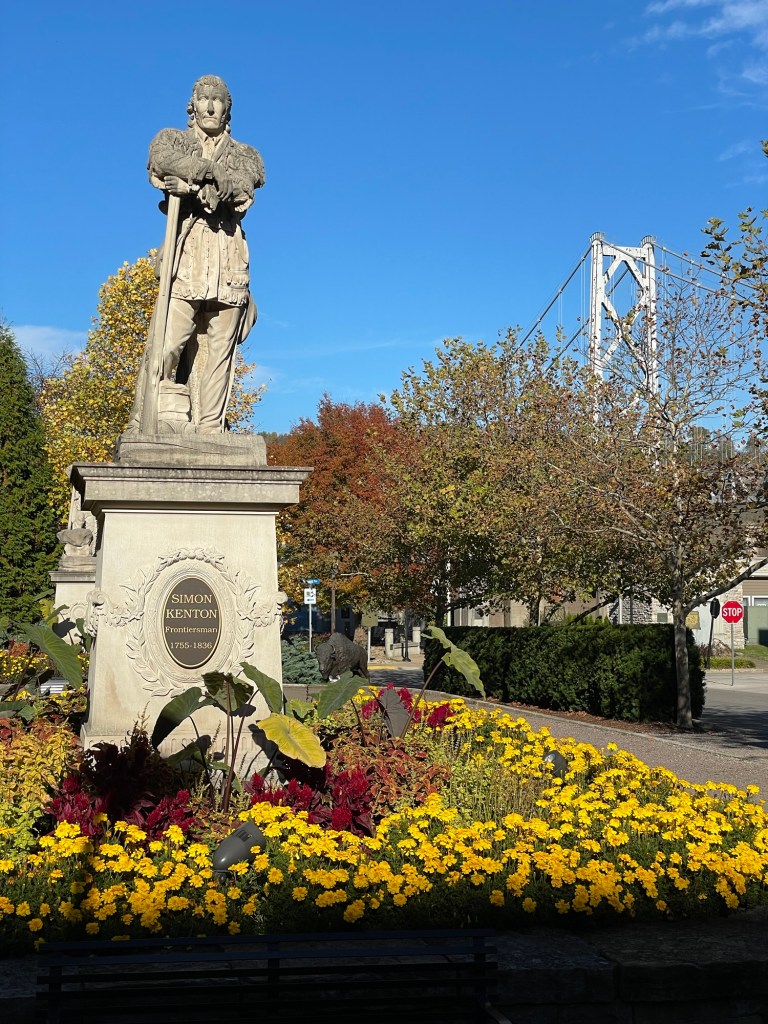
    Simon Kenton (below) is a name we started seeing a lot. There was a plaque and statue for him on Old Washington Road, but we didn’t think too much about it. In Maysville, we saw that he donated the land that the city of Maysville was built on, as well as the land in the Old Washington Road area. He was also a friend to and fellow soldier in the American Revolution with Daniel Boone.

    Before leaving Maysville, we learned that Rosemary Clooney, perhaps best known for her role in White Christmas with Bing Crosby, was born in Maysville. The debut of her first film, The Stars Are Singing, was at the city’s Russell Theater. She’s buried in a little cemetery at the end of Old Washington Road, where that day’s exploring had begun. If only we’d known.

    Musical interlude.

    Since the museum and interpretive center at Blue Licks was closed, on our full last day there, we took a closer look at the monuments placed around the grounds and saw an obelisk installed to commemorate one of the last battles of the American Revolution — an 1782 battle between Shawnee warriors fighting on behalf of the British — a year after the official end of the war — and a small band of American fighters, including Simon Kenton, Daniel Boone, and Boone’s son, Issac. While attempting a retreat from an overwhelming Shawnee force, Issac was killed and Daniel had no choice but to leave his son’s body where it fell. There is a small mass grave above the obelisk honoring the soldiers who died in that battle. “War is hell,” as William T. Sherman so succinctly said a century later.

    Now, why do so many places in Kentucky have the word Lick in their name? Well, salt is essential for all animals and it’s not always easy to access. So where it was found, the animals (humans included) came running from far and wide to get that good, good NaCl to keep their systems up and running. In the case of the Blue Licks area, the salt was dissolved in salt water pools, so while the animals drank from the pools, the humans boiled the water to solidify the salt.

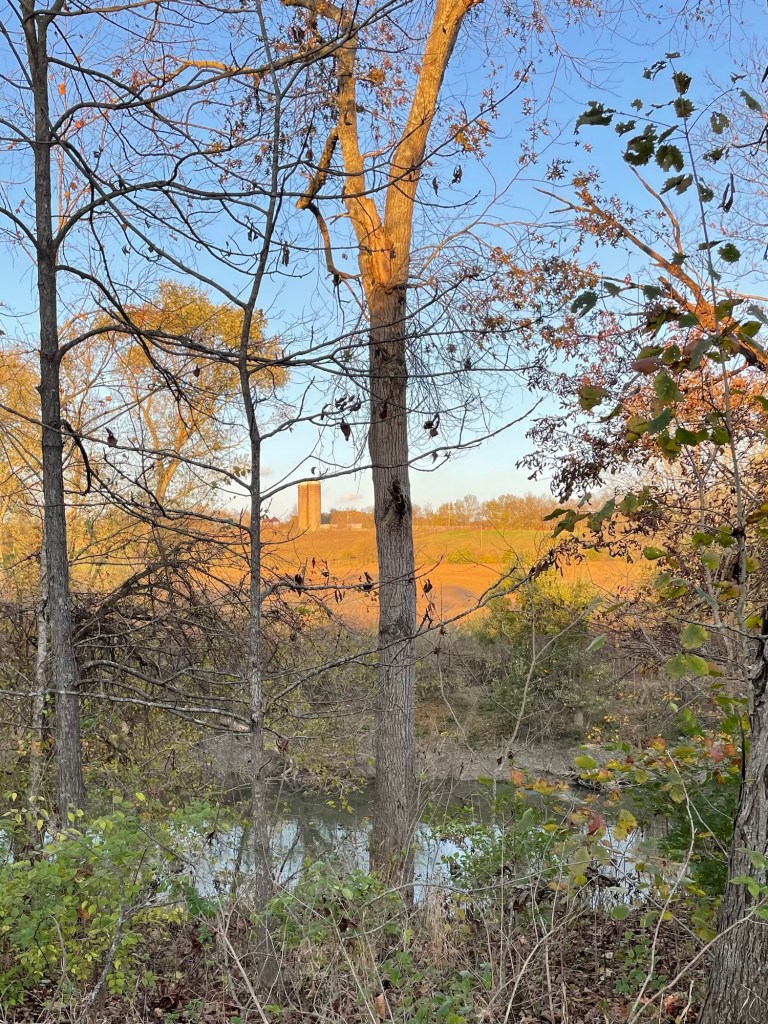
    Later that day, we walked on the park’s Buffalo Trace Trail, a path cut by migrating bison before they were exterminated east of the Mississippi. We watched the sun move into the west.

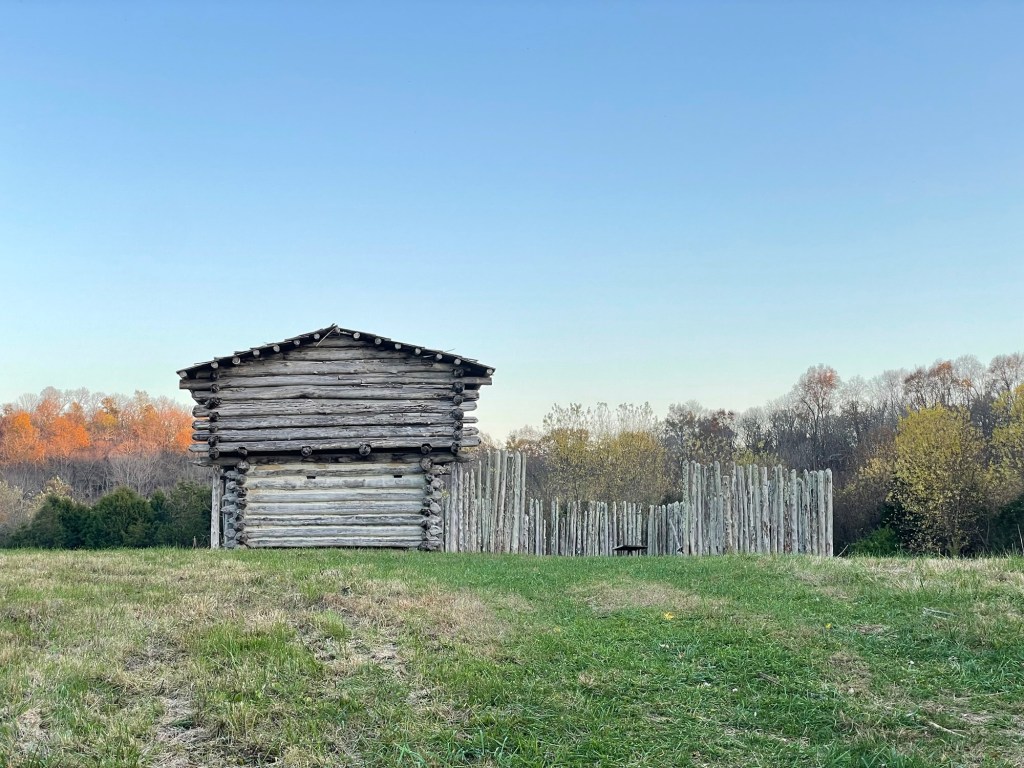
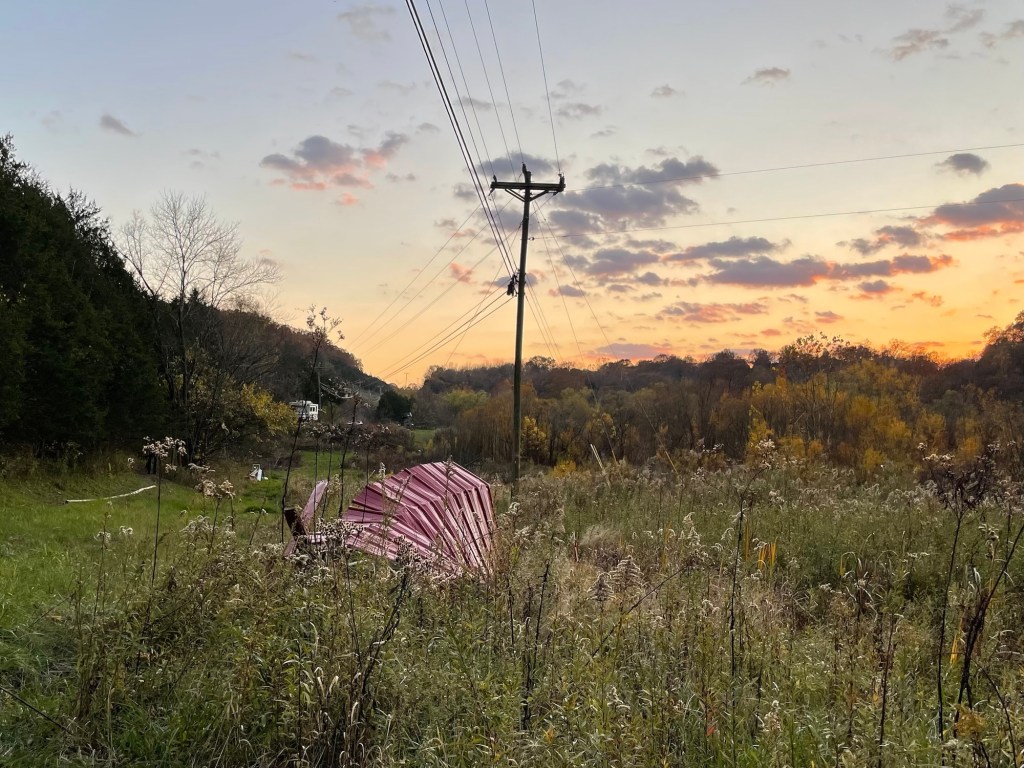
    We came across an educational stockade reproduction (above). Further down the trail we were appalled to see piles and piles of junk covering the ground next to the park boundary (below), where the privately owned and trash-clogged salt springs are. I just don’t get people sometimes.

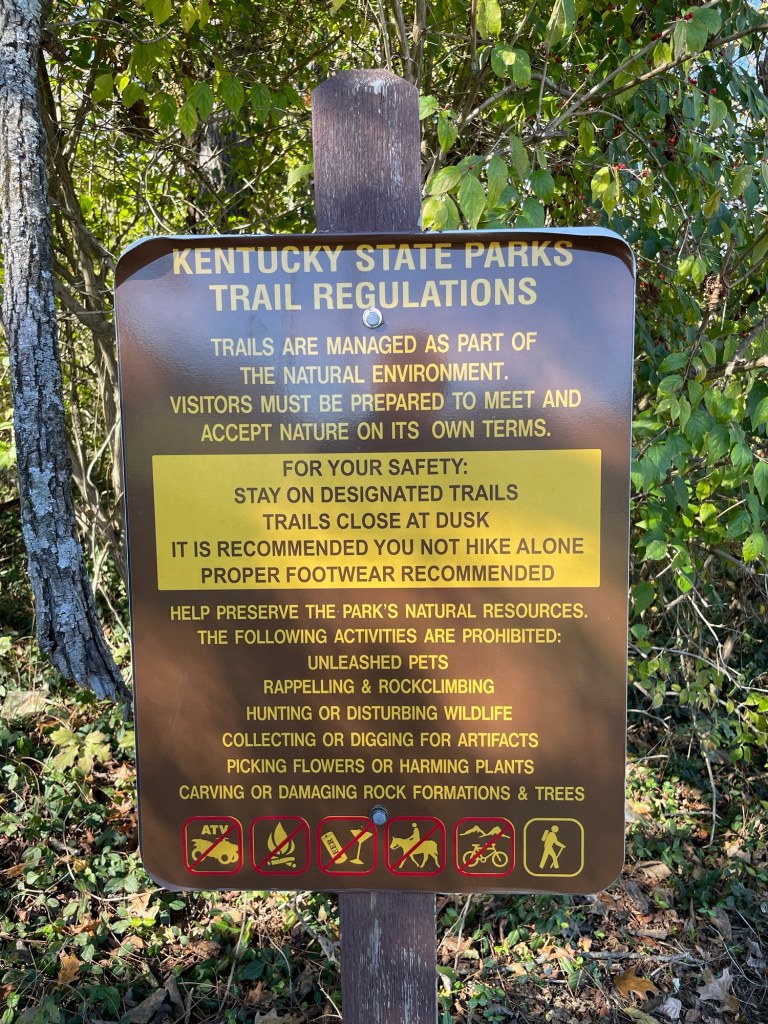
    Kentucky doesn’t play around about who is responsible for your safety. Be prepared to meet and accept nature on its terms. Perfectly stated.

    On our way south, we stopped at Boonesbourough State Park, the location where **surprise!!!** Daniel Boone located his self-titled encampment and fort after leaving North Carolina. It was closed. I know, it was a theme. So we just wandered the trails a bit, saw the outside of the re-created fort, and stretched our legs.

    I highly recommend you listen to that three part series if you’re at all interested in Boone’s history. We found it quite interesting.

    A trail walk at Boonesbourogh State Park

    We arrived a couple of hours later for an overnight at a private campground just north of the Tennessee border with enough time for a quick walk in the woods. The trail behind our trailer? The Boone Trace. The trail blazed by Daniel Boone and his settlers on their way from North Carolina to Boonesborough, Kentucky. Because of course it was.

  • Either cold or wet, but not both please

    Although our plan is to chase the good weather, the reality is that poor weather is going to find us sometimes — especially since we headed south about two weeks later than we probably should have for those warmer temps. Luckily we’re sturdy folk and can tolerate some cold temps.

    We left Michigan in cold and sun and arrived at our Hueston Woods State Park campsite in cold and sun. We had a quick easy dinner and made a little fire to chase away the chill. Then the rain started and the temps dropped even more. It rained through the night. We woke to even colder rain and didn’t feel like fighting the elements, so we drove a few miles into Oxford, OH, for breakfast. Then we learned that Oxford, Ohio, is home to Miami University. You can almost always find something interesting to do at a university.

    While driving around looking for rainy day activities, we stopped in at the Richard and Carole Cocks Art Museum, which is part of the University. It’s free to visit and gets you a visitor’s parking pass around campus. Very nice.

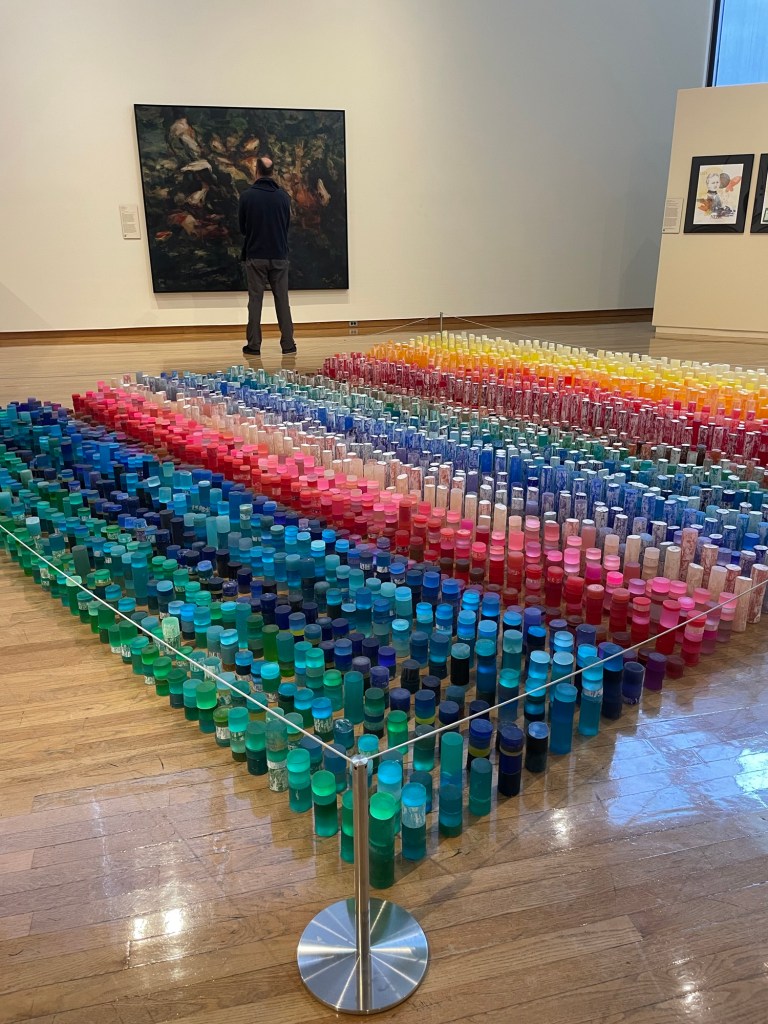
    Although not overly large, the museum did have a decent number of pieces, with an emphasis on local, modern works of art.

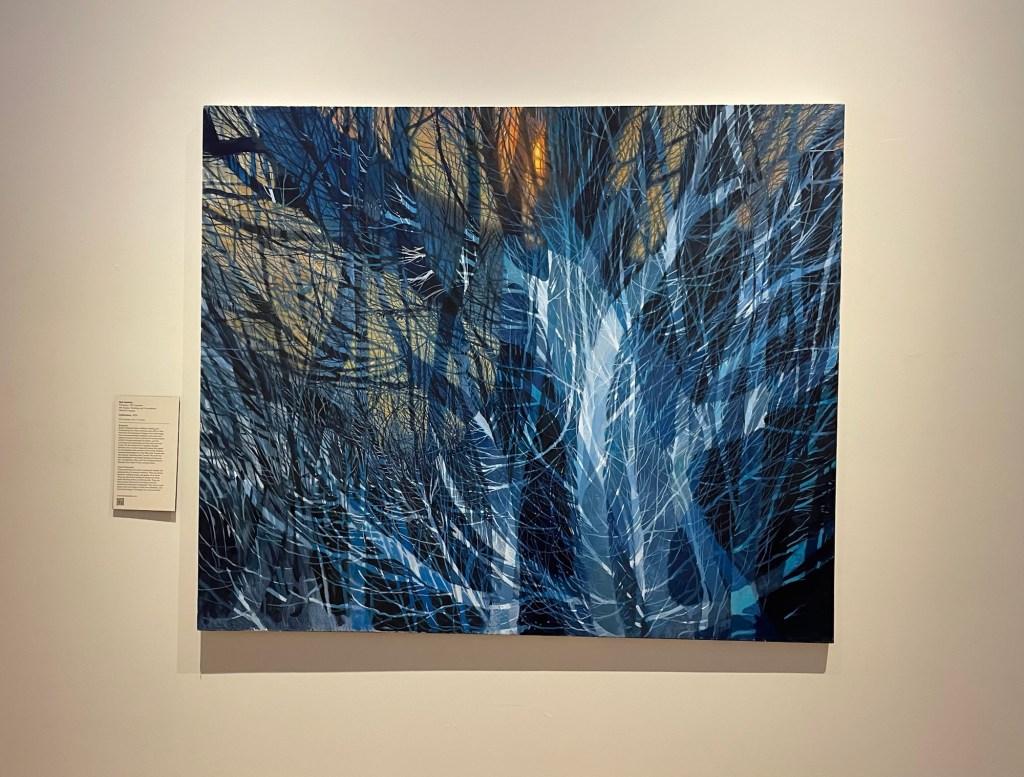
    Wandering the art museum was a good way to warm up and feed our minds after breakfast. I stood in front of the above piece for quite a while, enjoying the way it played with my optics, the lines seeming to move a bit and the orange spot seeing to grower brighter and dimmer the longer I looked at it.

    Something I found strange (and a bit off-putting) was the way non-American and non-northern European pieces were displayed. The room housing the African, Asian, Greek, and South American works was all the way to the back of the building and felt cramped and dark, quite different from the open, bright, and airy rooms at the front of the museum. And nearly everything was clustered together in small glass cases rather than having any visual ‘breathing room’ around them. Perhaps ancient pieces made primarily of clay, wood, grass, and other natural materials need to be more sheltered from bright or direct light? Perhaps the lights in the cases were just on the fritz and a work order has been put in? I don’t know; I meant to ask.

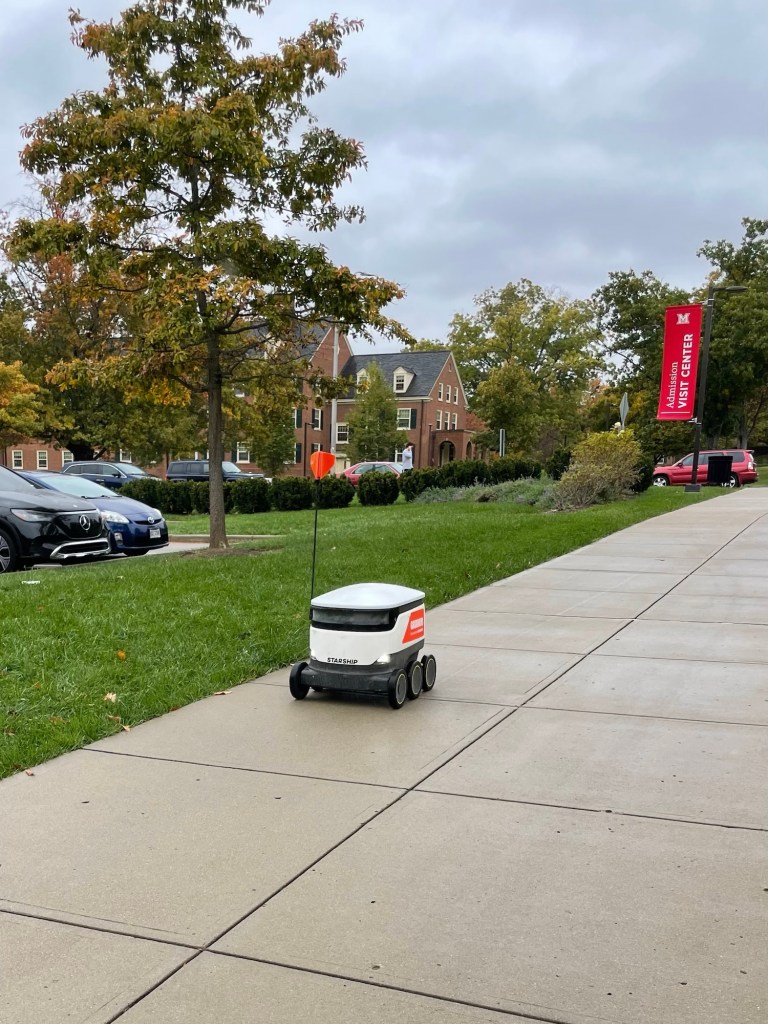
    Heading into the campus proper, we saw a few of these little GrubHub delivery bots cruising around. They even navigated busy roads at pedestrian crossings. The intermittent rain didn’t seem to affect them at all.

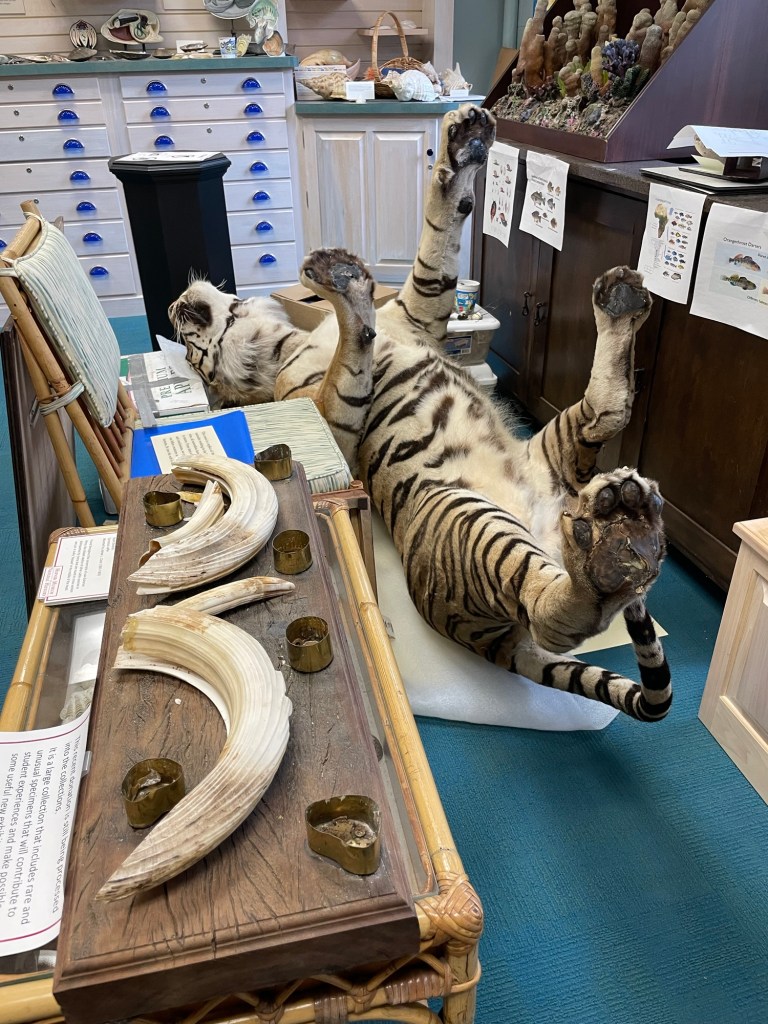
    After visiting the Hefner Museum of Natural History, an absolute wonder of assorted taxidermy, we wandered the rest of the basement’s hallway and checked out a few of the other specimen rooms in Upham Hall. At the back of the mollusk/shells room, we came across a poor upside down tiger. That was a belly just begging to be rubbed! I ask, how often do you get the chance to see murder paws up close? Yes, we refrained from touching it, knowing that the oils on our hands would be detrimental to the skin and fur in the long run, but it wasn’t easy.

    On our way back to the campground, we visited one of the local covered bridges. It’s called the Black Bridge, the former owner’s name, despite never being painted black.

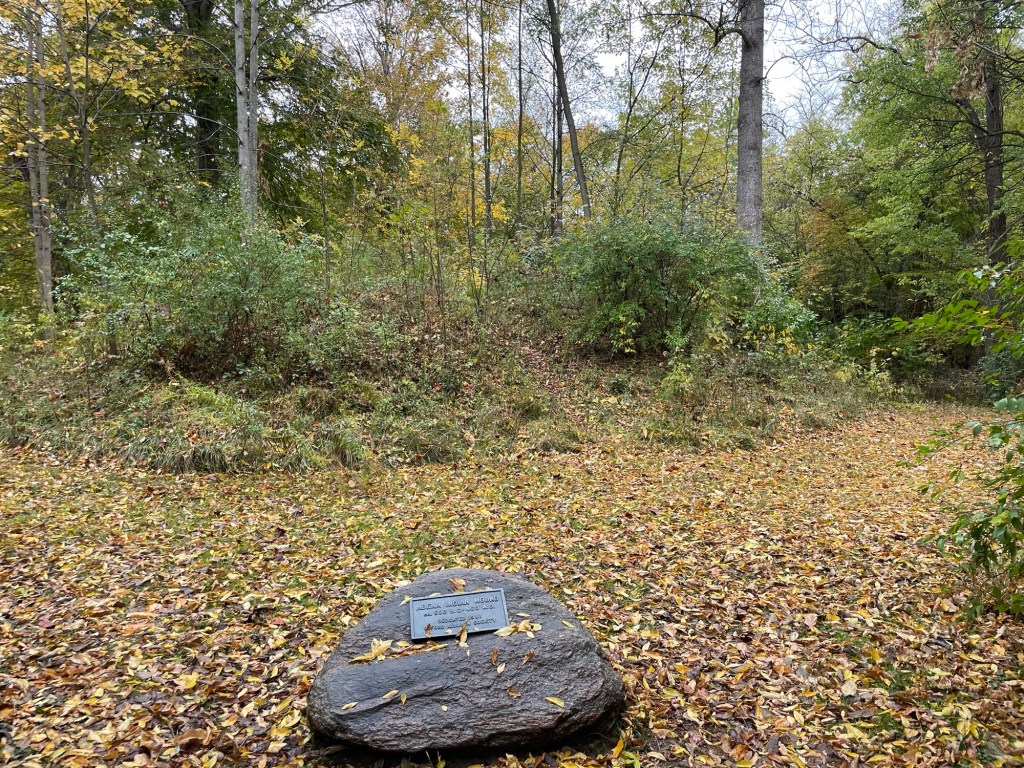
    Growing up in West Michigan, we’d learned about the indigenous mound builder tribes that inhabited the Great Lakes region, but we were still surprised to see that the campground had a burial mound at the end of our line of campsites. There wasn’t any information posted about it, and the rain started coming down hard again as we walked the path around it, so I’m not sure if there are more of them nearby or just the one remaining. Someday I hope to see the astrological Serpent Mound in south central Ohio.

    The next morning, we heard an early lull in the rain, so we hooked up quickly and drove east toward Louisville, Kentucky, where the weather promised to be dry.

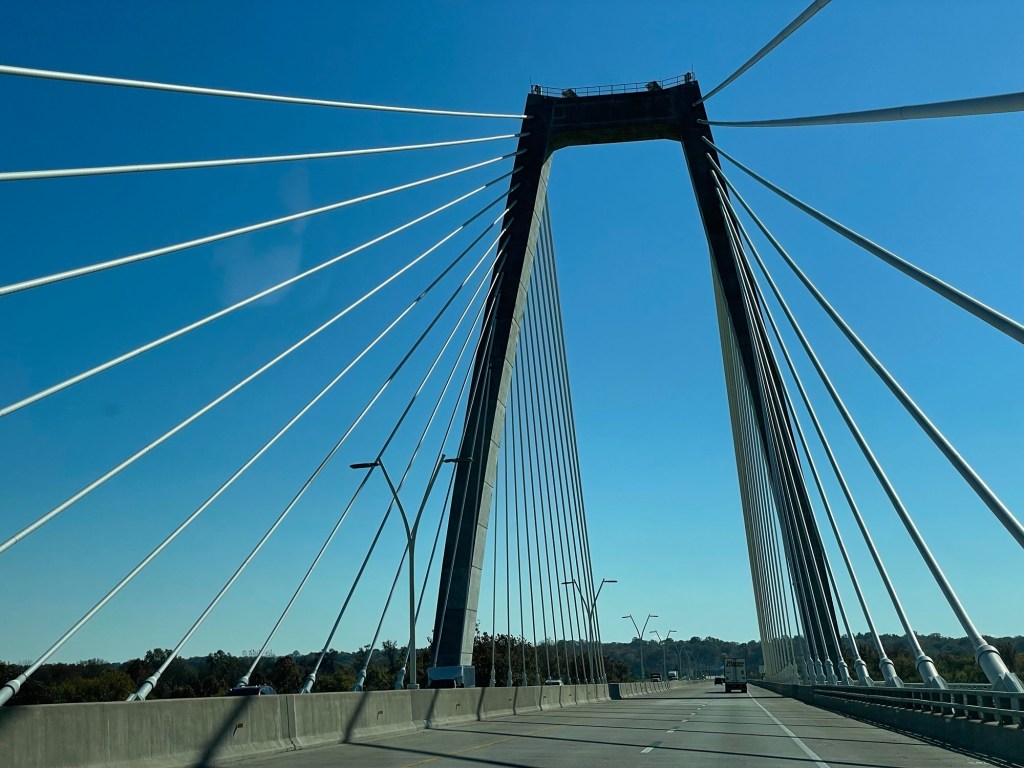
    Charlestown State Park is right along the Ohio River, on the Indiana side of the Louisville metro with a nice campground. Since some friends, Shannon and Chris, moved to the metro just a few months ago, it seemed like a good time to visit.

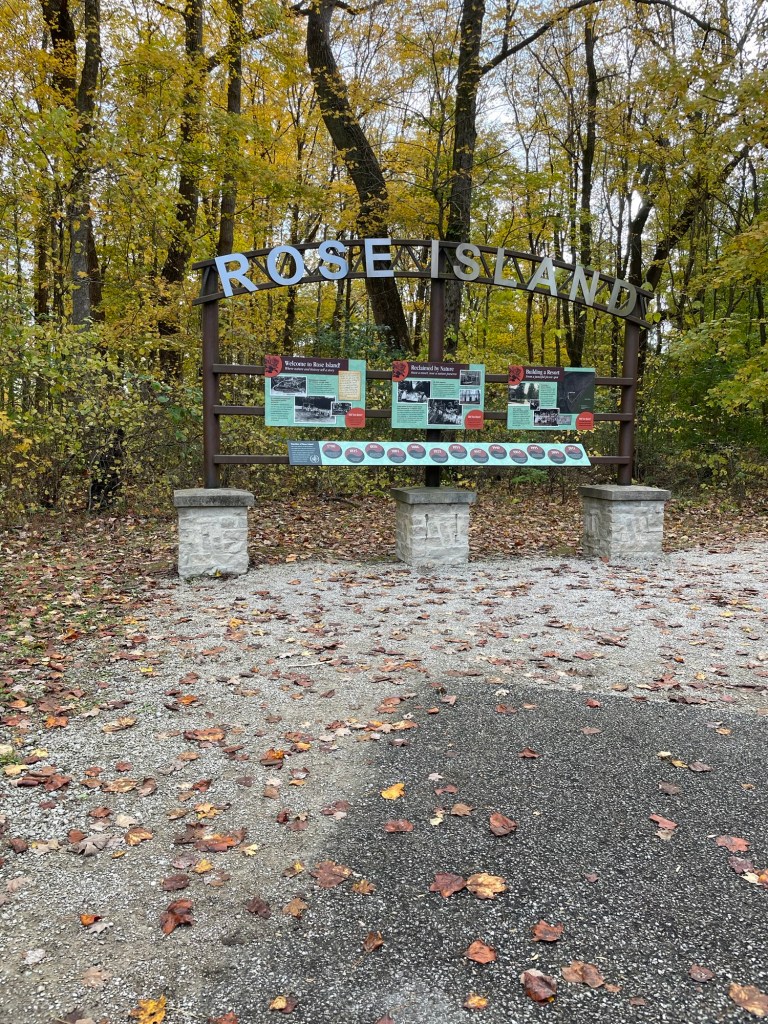
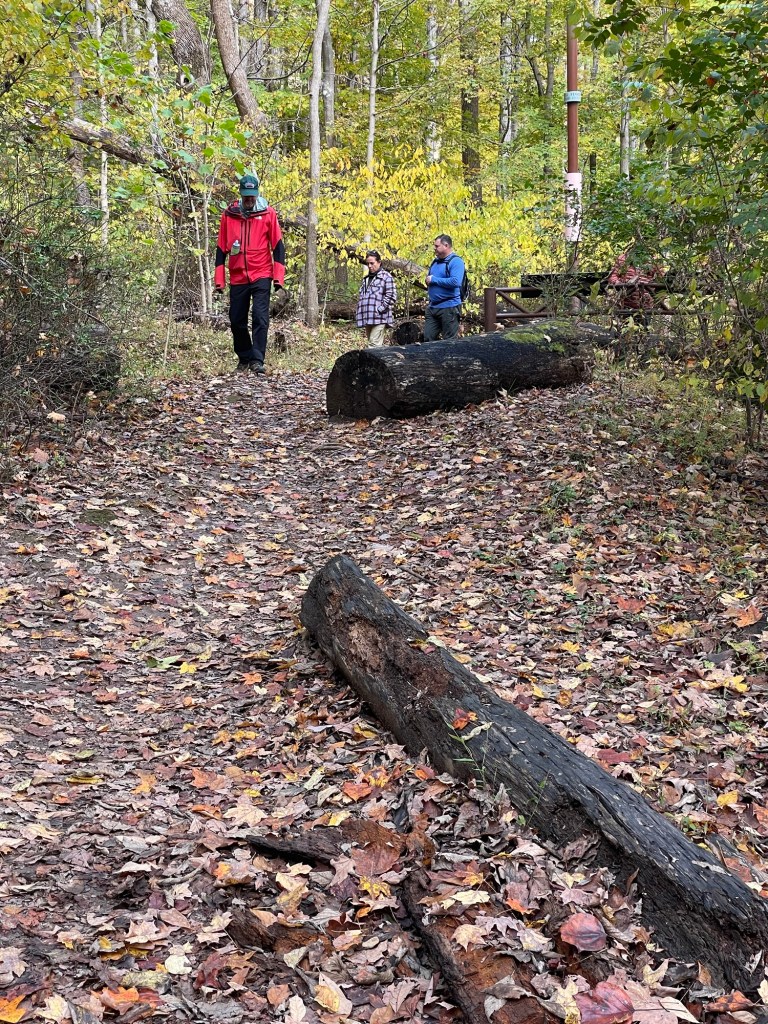
    Charlestown State Park is a fairly new state park (1996) for Indiana, on the site of an old ammunition factory, but its hidden gem is an old picnic ‘island’ (peninsula) from the 1800s that had another Resort-style rendition and a name change, Rose Island, in the early 1900s. After a massive flood of the Ohio River in 1937, the park was abandoned and all but forgotten until it reopened to the public in 2011 when a bridge was installed. Nature has reclaimed nearly every inch of the once glamorous summer resort, but a few bits of its history still peak out here and there.

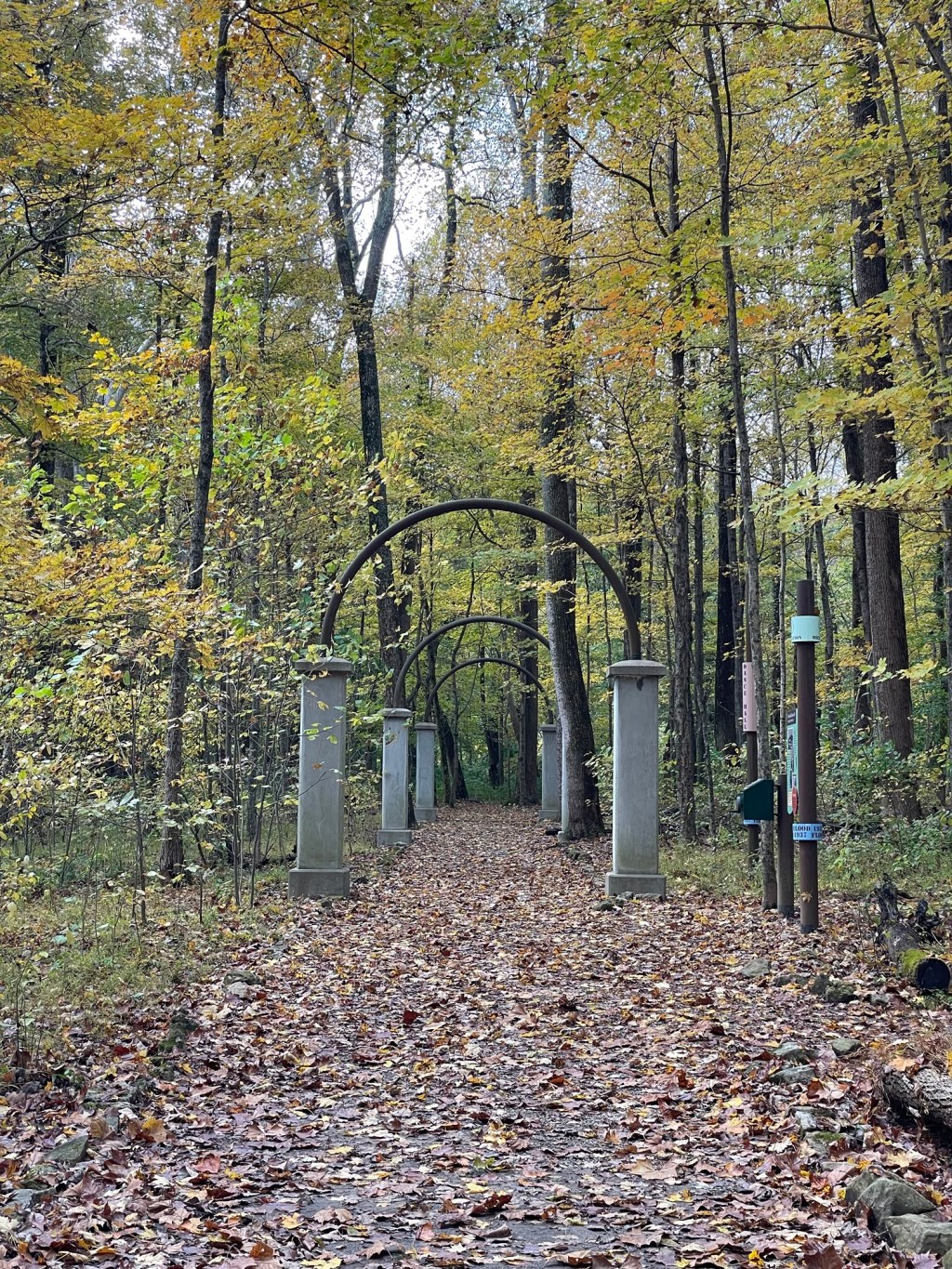
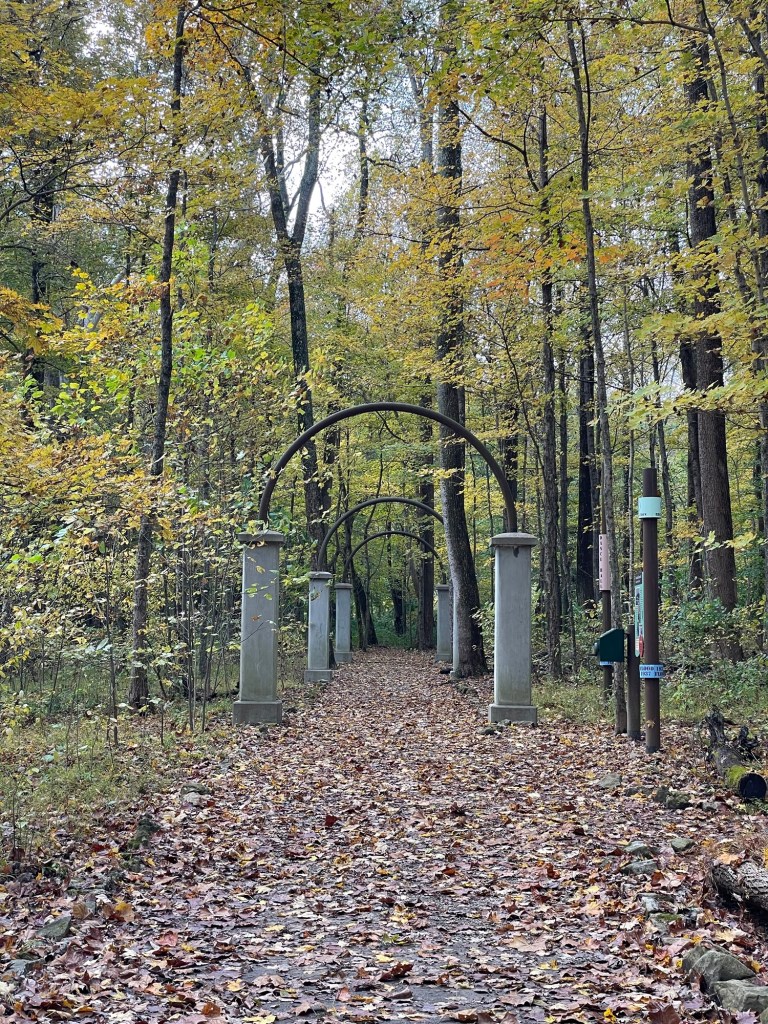
    The arched walkway once ran the entire length of the midway, connecting various attractions.
    The green circle indicates the water level at the height of the 1937 flood.
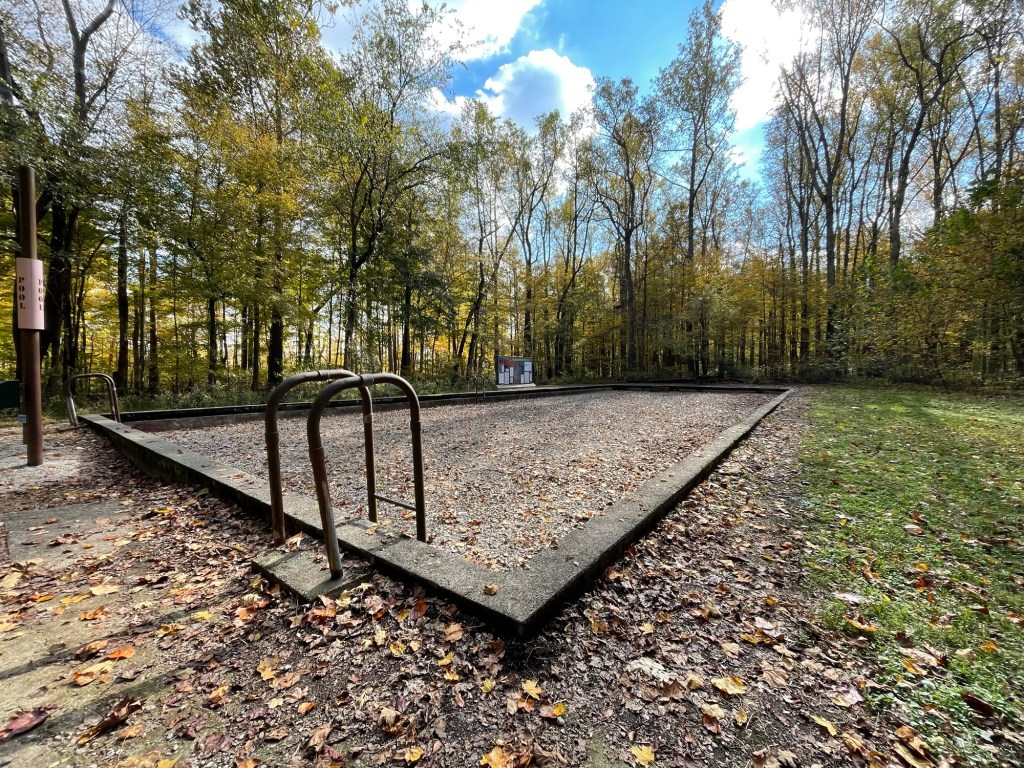
    The Olympic size pool was a rarity in its day
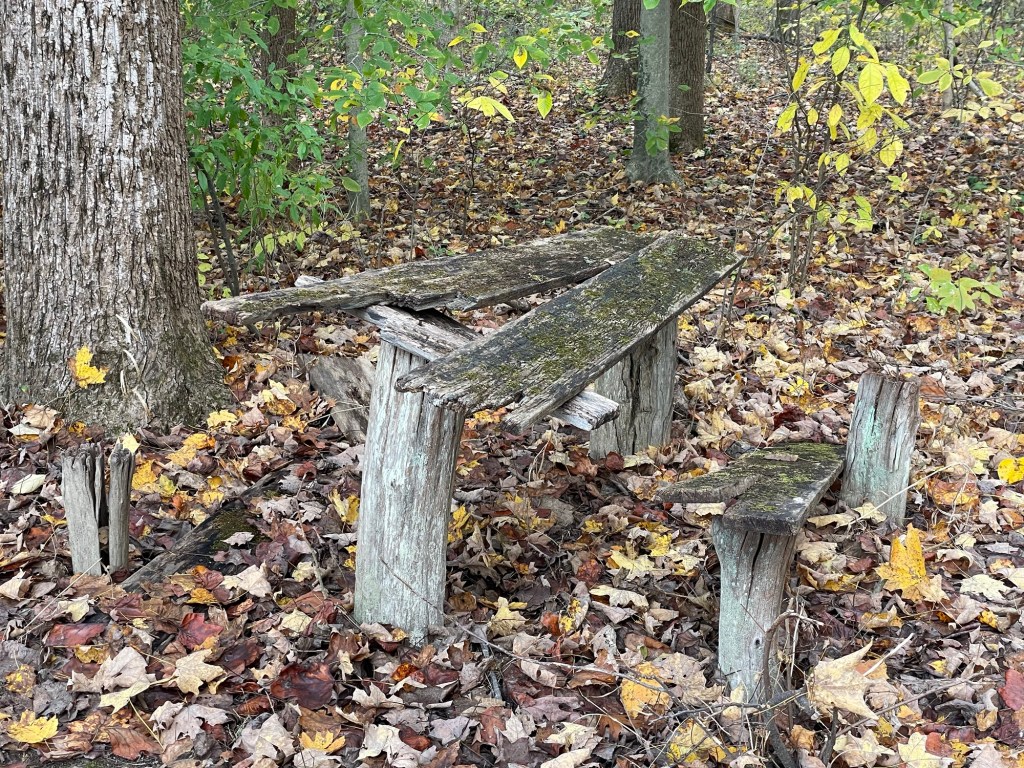
    An old picnic table

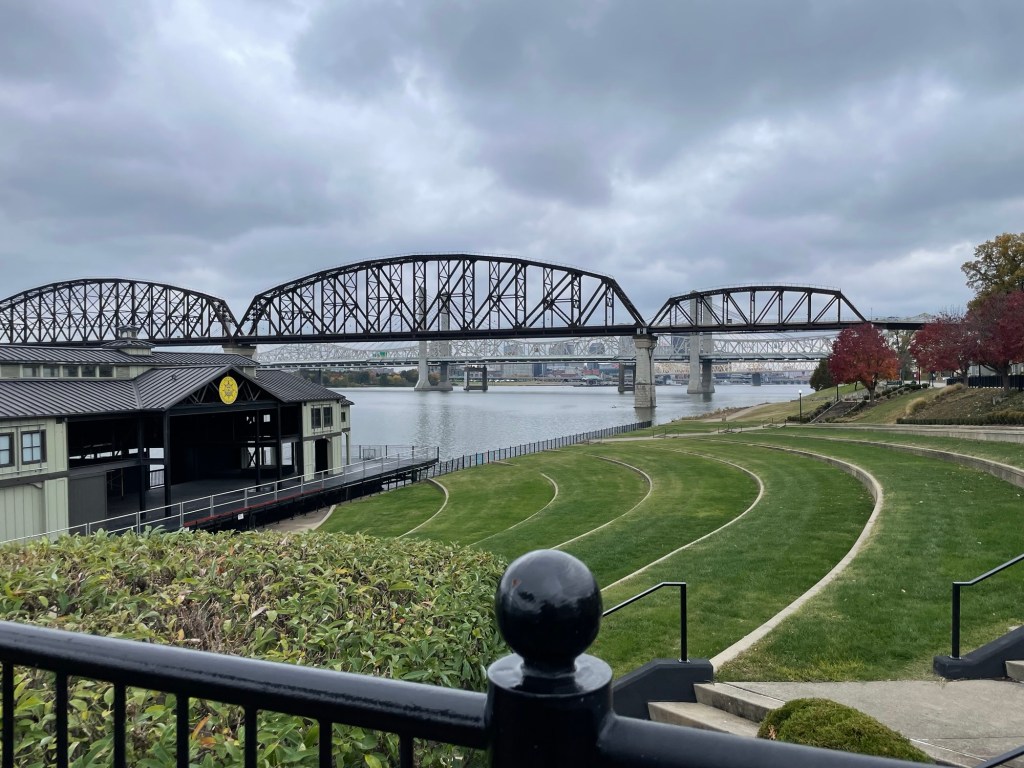
    After breakfast in Jeffersonville with Shannon and Chris, we all took a stroll down to the Ohio River. The area clearly learned a painful lesson in 1937. Flood walls like this are everywhere throughout the region.

    The four bridges area
  • 19 Turkeys

    When I return to a region so full of family and friends, not a lot of pictures get taken. Sorry, but it’s always been this way. For nearly three weeks, we barely saw the inside of the HMS Beangle, as we curled up in the homes of others.

    Running water? Right there.
    Heat? Turned on.
    Hot coffee, hot tea, hot delicious meals? They regularly arrived with little to no effort on our part.

    It was remarkably nice, not gonna lie. We found ourselves missing the trailer more than we expected though, which was a nice realization. We followed the Grand River in reverse, working our way from Lake Michigan.

    After arriving downstate, we were thrilled to see Linda and Gary again after many, many years. We grabbed dinner at a local Mexican place which had normal and large margaritas as big as a baby’s head. You can guess the size that Gary and Jeff ordered. Since retiring, they’ve kayaked down the entire Mississippi River, the entire Missouri river, as well as many other kayaking and cycling trips since then. They often camped along the way, fund-raising for Water for People‘s clean water initiatives. (Please donate something, if you can. Safe, plentiful clean water isn’t a luxury, even if our politicians act like it is.) It did our hearts good to talk with them about the inconveniences and uncomfortable moments they encountered during those months-long trips. They sent us off the next morning with probably the best frittata I’ve ever eaten and some gluten and dairy-free granola that I’m still portioning out like the chunky gold it is.

    We got lucky and had a chance to see nearly ALL of Jeff’s and my family members. That almost never happens. Granted, we had to chase down my sister at work, but ya do what ya gotta do. Three generations packed into Jeff’s sister’s house. Breakfast called my brother to the western suburbs. And we even pulled the trailer over to Jeff’s parents’ place so that they could see it and to his nephew’s house so we could cuddle the one-eyed pirate cat.

    We camped one evening in Georgetown, on the Grand River, and you would have thought this campground was protecting the nation’s plutonium reserves. There is a gate to enter the campground, a license plate reader that activates the gate, a per person fee for visitors, and (we found out later) a requirement that you pre-register all visitors. My friend Sherry and her husband Rob came to collect us for dinner that evening and she had to make a case on the after-hours number for getting their vehicle past the gate after hours. It all felt rather excessive, to be honest. But if anyone was going to get past that gate after hours and without pre-registration, it was Sherry.

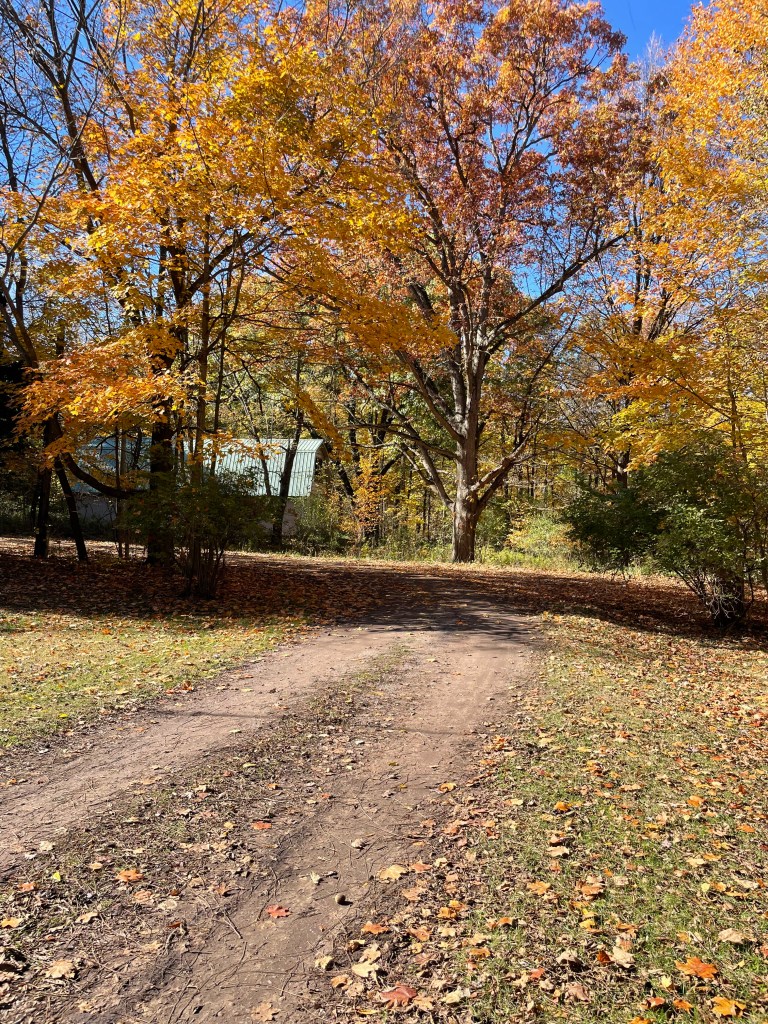
    Big color, little traffic

    Pam, who met up with us in Colorado in May with the beautiful Airstream, invited several of Jeff’s former coworkers to meet up with us for lunch at one of their old favorite lunch haunts. It was so nice to see them all and lovely for them all to make time for us.

    After lunch, we followed Pam back home and stayed with her and Bob for several days. And Pam’s niece and nephew-in-law (if there is such a title), as it’s bow hunting season. J&T woke up at unreasonable times, tiptoed out of the house, and sat in a little covered stand down in the valley for hours on end. And then, after a few hours’ nap, they did it again. My guess is that it helps to be relative newlyweds for the level of near cuddling required. I can only imagine their thoughts when they heard that two absolute strangers were going to be sharing their weekend get-a-way with family. Both were very friendly and welcoming, though, so I’m going to believe they didn’t mind. Since their freezer still has some of last year’s venison, they said their goals were larger bucks and/or a turkey. You can imagine the surprise (and laughter) when 19 turkeys casually walked past the front of the house–with J&T sitting down just a 5 minute walk away!

    Imagine Dragons Turkeys

    After taking a nice walk on Sunday, Pam pulled out her impressive cooking skills and made the most incredible venison black bean bowls. I enjoy venison in general, but she made a marinade that took these steaks to a new level. It was yummy hot. It was yummy cold. It smelled delicious and looked even better. I’m drooling just thinking of it.

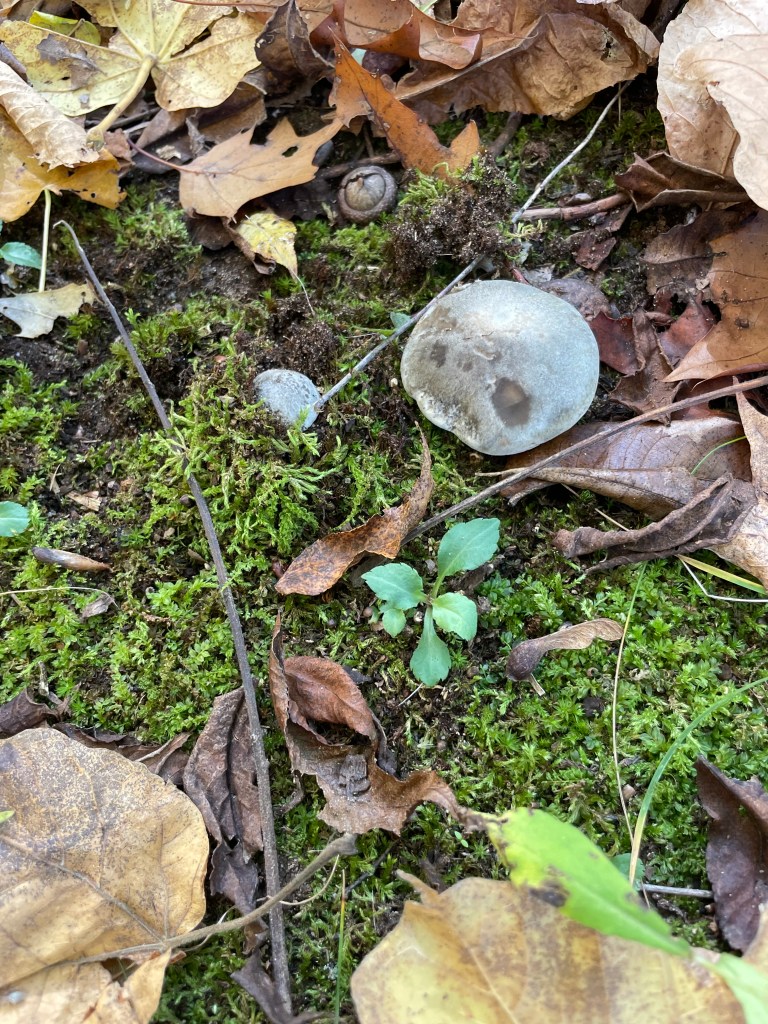
    We found some impressive contestants for Death or Dine, but this puff ball, with its skull-like cap, feels appropriate for this time of year. A quick internet search into its edible-ness doesn’t lean toward safety. It’s got discolorations, blemishes, and rough patches. All warning signs. Don’t say I didn’t warn you.

    Deathshroom

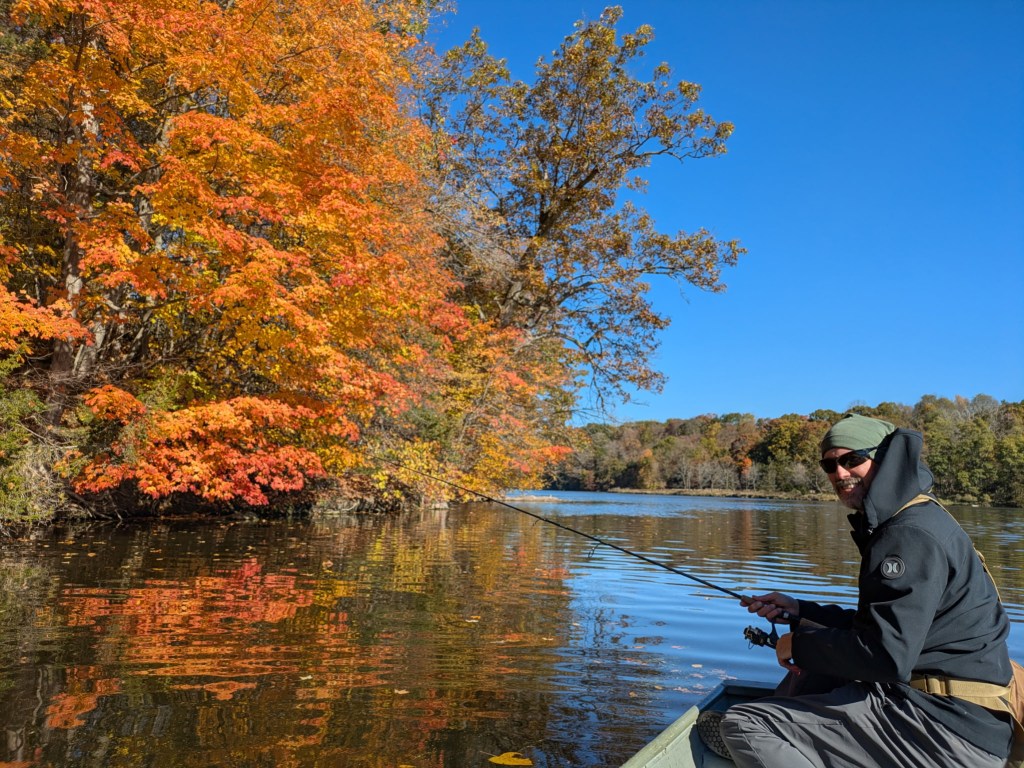
    While Pam and I cruised for groceries, Jeff and Bob got back out in the river for a spot of fishing.

    In his element (photo by Bob)

    Throw in evening fires where the living room’s wood burner glowed scarlet, where we read for hours on end, where football and baseball played out, and where we all quoted the five hour BBC version of Pride and Prejudice by heart, and it was hard to leave that little piece of heaven. But back on the road we are.

    Wouldn’t you know it though, I left the book I was reading at my mom’s house and 2 pounds of ground venison, gifted to me from Bob’s hallowed vaults, in the freezer the morning we left! This colander brain of mine. Oh, and Bob texted to let us know that we forgot their would (not) like to be adventure cat, Kitty, a stray that they’ve had for 14 years. I don’t see her getting harness trained any time soon.