We toured a lesser known plantation that was less flash and more pan, if you get my drift, and walked around the grounds of two others that were near our Buck Hall campsite. Since cost is a factor for us and these places are expensive to visit, we decided to visit one that puts their focus firmly on the labor versus the luxury of plantation life. The long lines of cars waiting to enter the more famous ones on the Ashley River assure me that they didn’t miss our patronage.
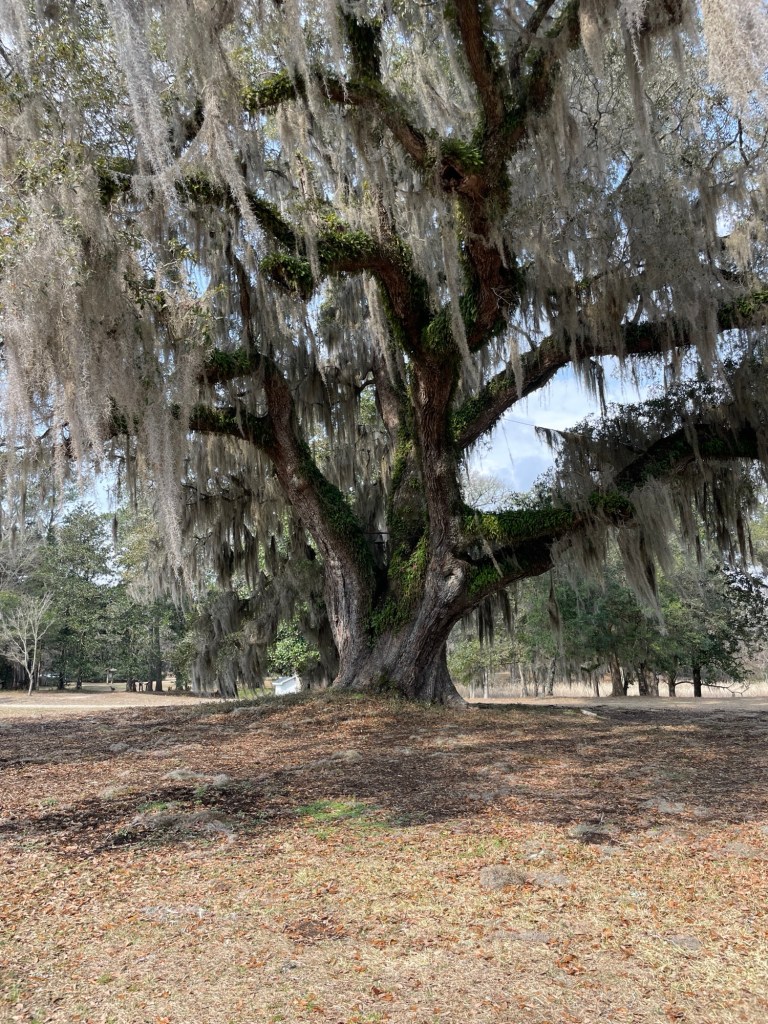
Our excellent guide at McLeod Plantation Historic Site began his tour by pointing to one of the many large trees draped over the home’s long driveway.
“That is a Live Oak. It’s called that because the leaves don’t fall off in the winter. The stuff hanging from it is called Spanish Moss; it is neither Spanish nor a moss. The green plant on the branches is called Resurrection Fern because it appears to die when it dries out, but when the air gets humid or it rains, the fern ‘comes back to life’ and gets green and lush again.”
This seemed an odd start for a tour that focuses on the lives and experiences of the men and women that worked the land and took care of the house and the people within it. But this, and his slightly frustrated tone, made more sense as the tour went on.
We walked past the gin house, where a pair of cotton gins made specifically to handle the delicate, silk-like bolls of sea island cotton were operated, separating the seeds and casings from the precious strands. We looked at fingerprints fired into the building’s unglazed bricks and learned about the brick making process. It was harrowing to see three tiny fingerprints wrapped around the edge of a brick, knowing that such indentations could only have come from a three or four year old child put to work forming, molding, and turning heavy clay bricks.
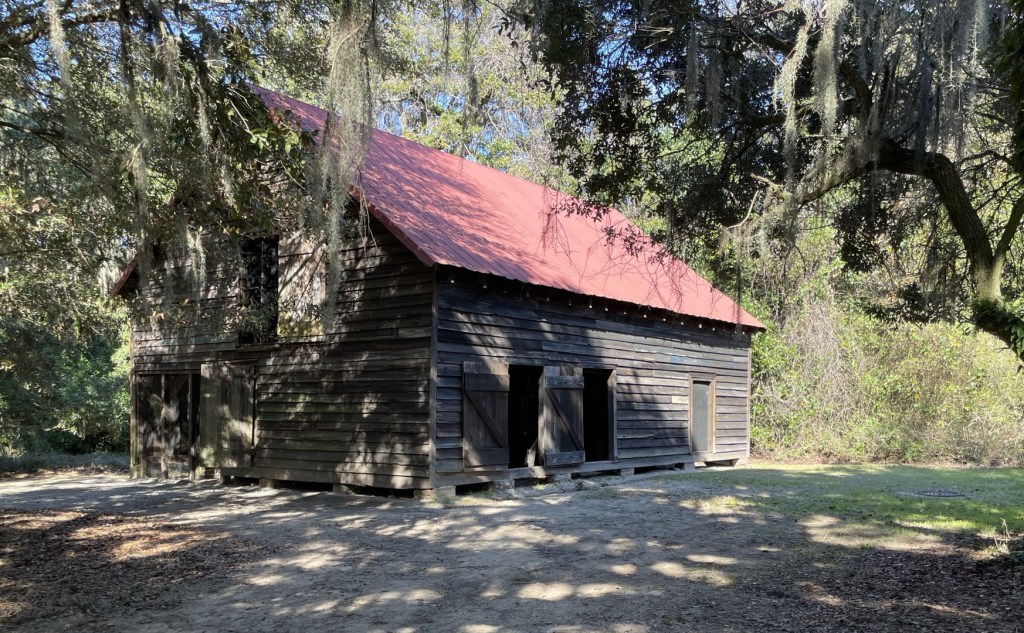
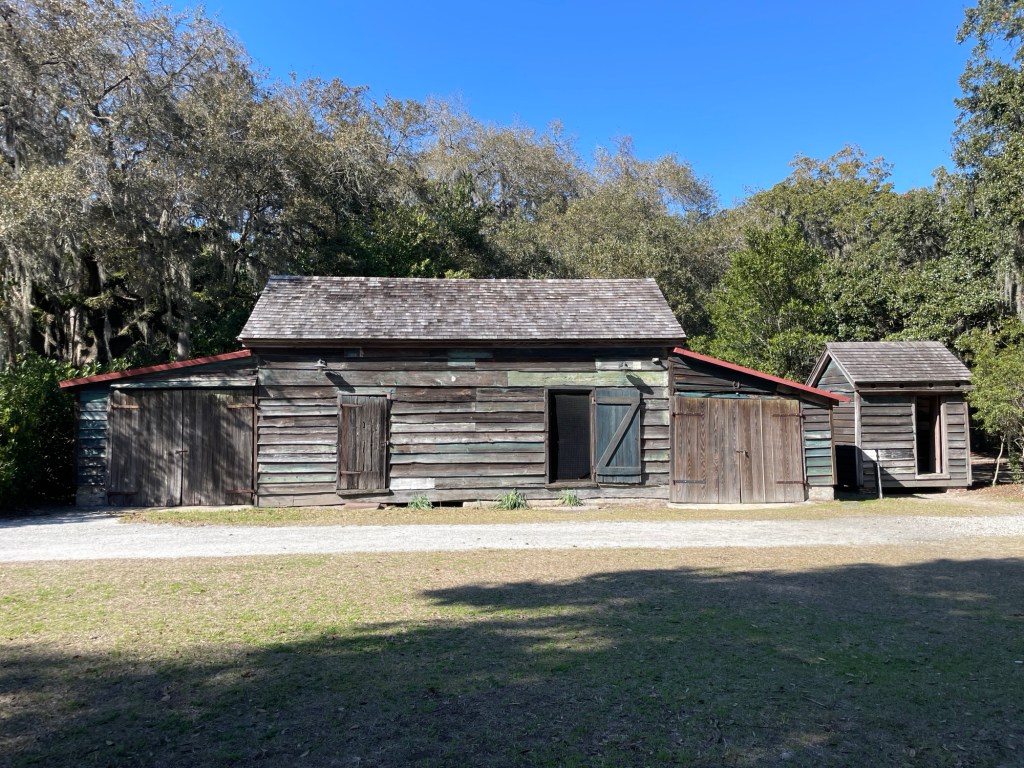
We cruised past the stables and the storage barn. We learned that the four-seater “privy” (below, right) isn’t on any plats, plans, or records related to the house. It also, we learned, doesn’t have a pit or even any disturbed soil underneath it. In other words, it’s a fake. That seemed odd.
Located on James Island, McLoed Plantation primarily grew and processed sea island cotton, the finest cotton grown in the South and some would argue, the world, as well as indigo and rice. Although by the 1920s the region’s cotton plantations had effectively been destroyed by boll weevil infestation, sea island cotton’s long, silk-like fibers were once highly prized and highly priced, but they grew at a high price too. This species’ bolls grew year-round, with multiple stages on the same plant, so it had to be tended and harvested year round.
Being so delicate, the bolls had evolved sharp thorn-like ends that cut skin and drew blood easily. To maximize profit, planters placed rows about a two feet apart, with the plants growing inward on both sides toward the picker. Unfortunately, even a drop of blood on the fresh cotton permanently stained the snowy white fluff, so pickers were severely punished to ‘motivate’ them not to let any blood reach that absorbent treasure.
Working from dawn to dusk in every kind of South Carolina weather, field pickers lasted approximately five years before dying of disease, exhaustion, abuse, or malnutrition. Numerous records list the deaths of enslaved people, most notably children, as Marasmus: a progressive emaciation caused by malnutrition.
At this point in the tour, we’d learned a bit about the McLeod family, seen the handmade bricks, learned about all that went into literally building a plantation from scratch, and heard about the horror of growing one of the world’s most delicate and expensive crops. Our tour guide stopped to ask if there were any questions and someone immediately pointed across the yard and asked, “What’s that tree over there?”
After a full beat he said, “It’s a Live Oak.”
Here is someone talking to us about one of the most painful and important parts of United States history, and the first questions asked were about trees and flowers and if we got to see the inside of the house. I need you to understand the depth of resignation and disappointment that resounded in his reply.
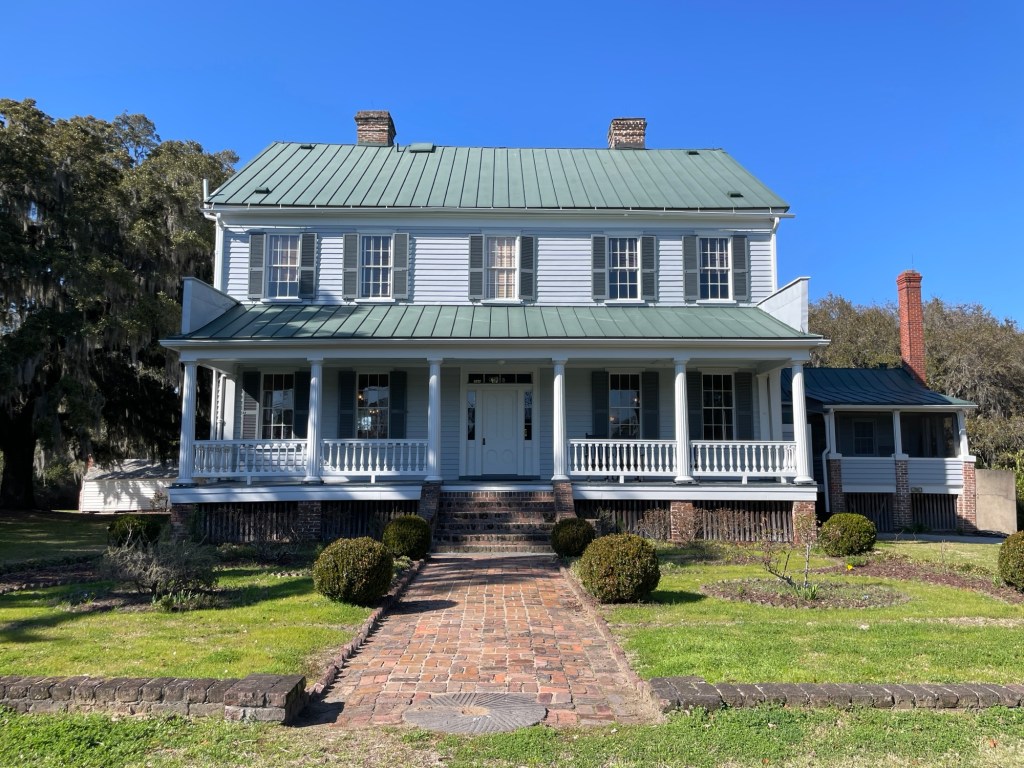
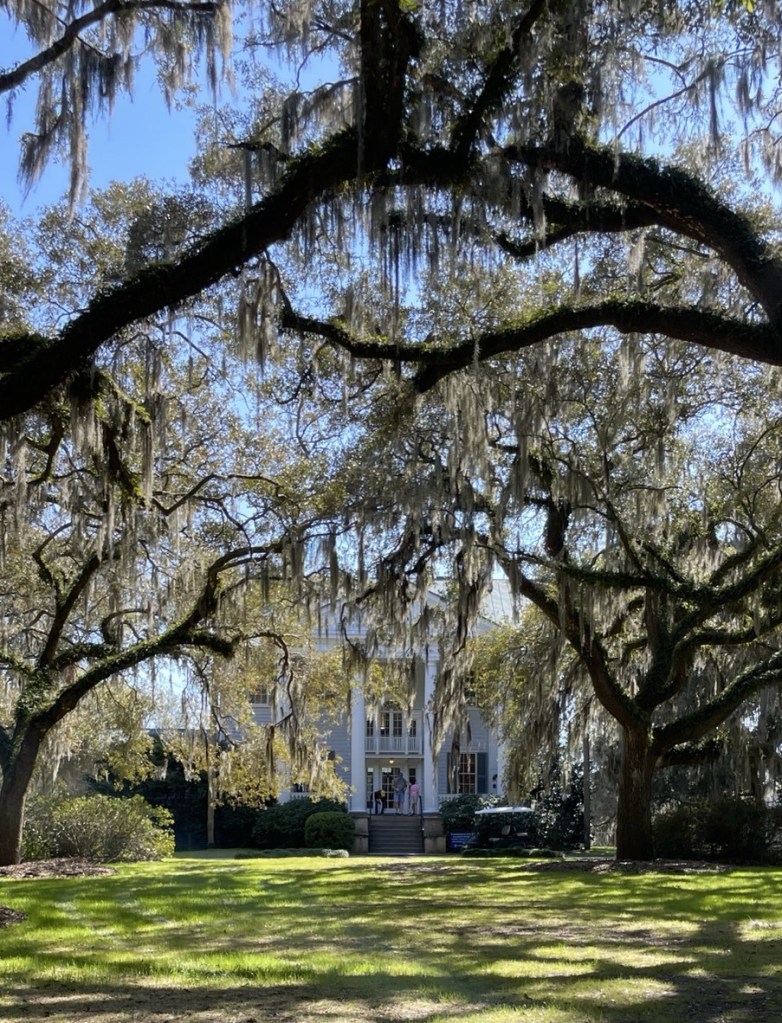
Now here’s where that fake privy starts to make more sense. When this was a functioning plantation, the view above was the front of the house. It’s attractive enough, but this wasn’t a house for show. It was a prosperous working farm with all the usual farm activities and smells attached to it. Useful land was farmed or used for livestock, not made into sweeping drives filled with large trees and decorative borders.
In the late 1920s, after the cotton crop across multiple states was obliterated by boll weevils and plantation owners had failed to maintain their profit margins growing other crops, many plantations were drowning in debt. Around the same time, the Lost Cause Theory took hold throughout the former Confederacy. To stem the tide of bankruptcy, former working plantations like McLeod refashioned themselves into mini palaces and emotional petting zoos. Ta da! Families could tour the grounds, relive the good old days, and actively misremember their own history. Enter Margaret Mitchell in 1936, Vivian Leigh in 1939, and the plantation tourism industry was launched into high gear on the jet-fuel of Gone with the Wind.
After selling off the bulk of the plantation’s fields to pay his debts, William Wallace McLeod II, turned a bit of land into a regal driveway with a fancy gate and some arching trees. He then had a new antebellum façade attached to the back of the house — the one we see and take pictures of these days — and put a new ‘face’ on the family’s story.
A few other things, like the four-seater privy, were added during that time too, to fluff out the Plantation’s story and give it some much needed humanity. Our guide called it the “Gone with the Wind’ing” of slavery. Clean it up. Soften its edges. Make it benevolent, elegant, and righteous.
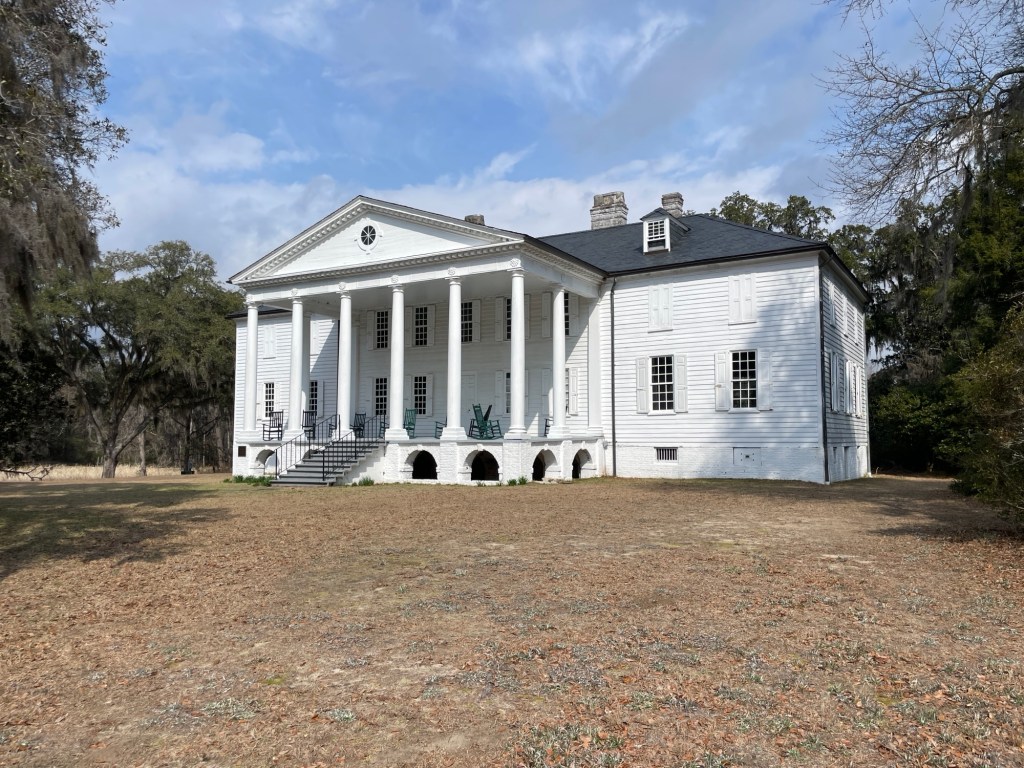
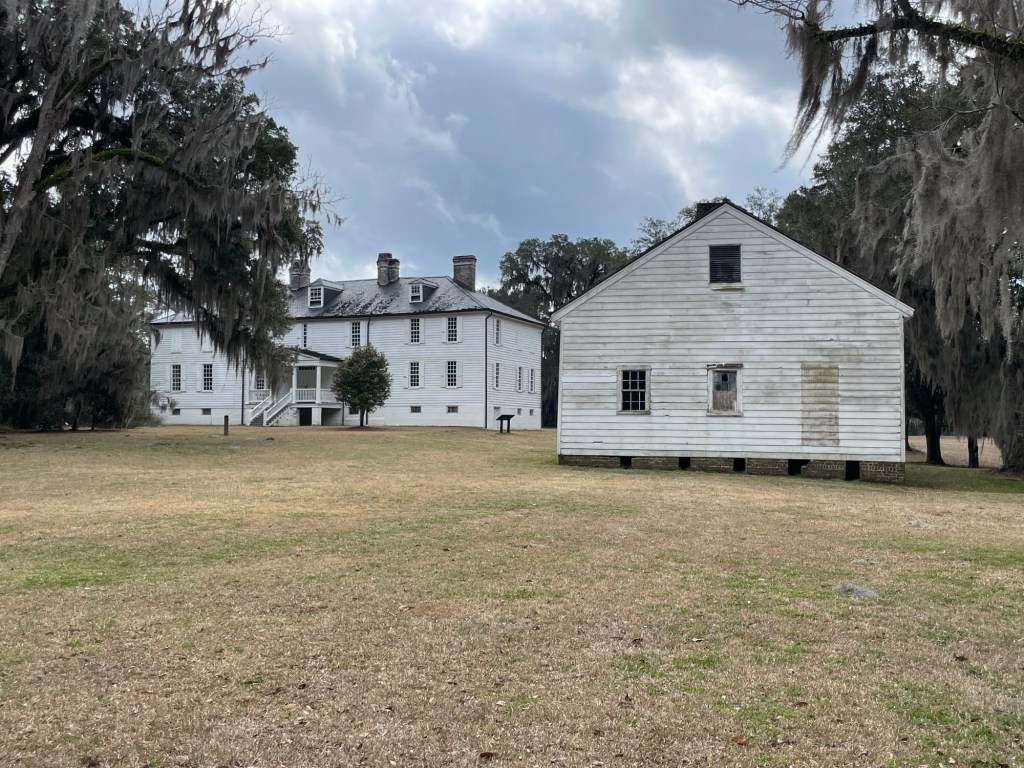
I don’t know what has or hasn’t happened to the Hampton Plantation State Historic Site’s house, but I do wonder if a switch similar to the one at McLeod Plantation was made. Considering the fact that people in the 1800s primarily transported themselves and their goods on the excellent river system versus the terrible roads, it seems possible.
Back at McLeod Plantation, an approximately 600 year old Live Oak found on maps and survey plats from before the house was built, stands next to the main house. A bell is suspended in the crotch of two main branches. The story told was that the bell was used to call field hands in to meals. The problem is that there is no record of a bell ever being in the tree or of workers being called in to meals — until the family started giving tours.
There are, we heard, records of the fact that McLeod field hands took their daily rations into the fields with them, as no excuse was accepted for enslaved workers leaving the fields during work hours. They worked in the fields, gave birth in the fields, ate, drank, and relieved themselves in the fields, and often died in the fields.
After the Civil War, formerly enslaved share croppers lived decidedly difficult lives, often working the same fields for the same people, with the important difference of it usually being based on the task system. A set amount of labor was to be performed each day, but when they finished it, they were finished for the day.
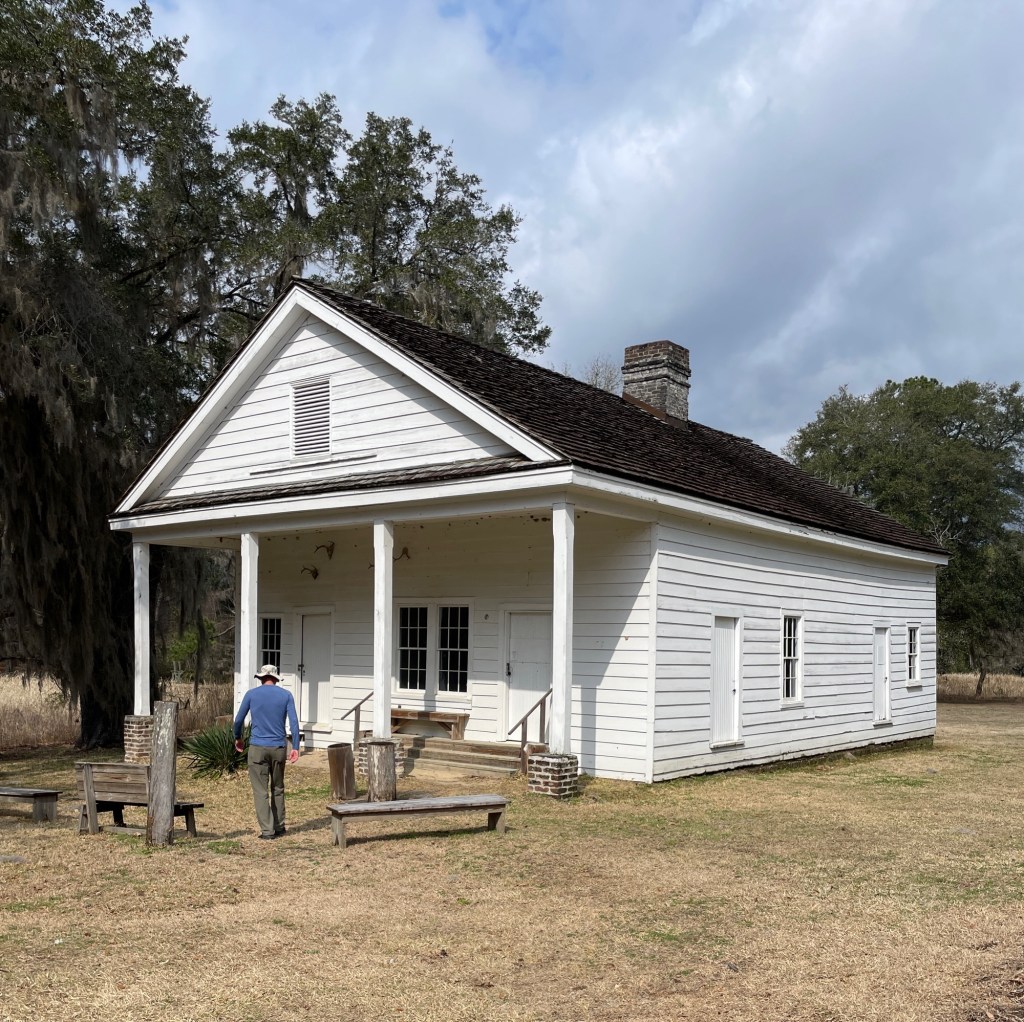
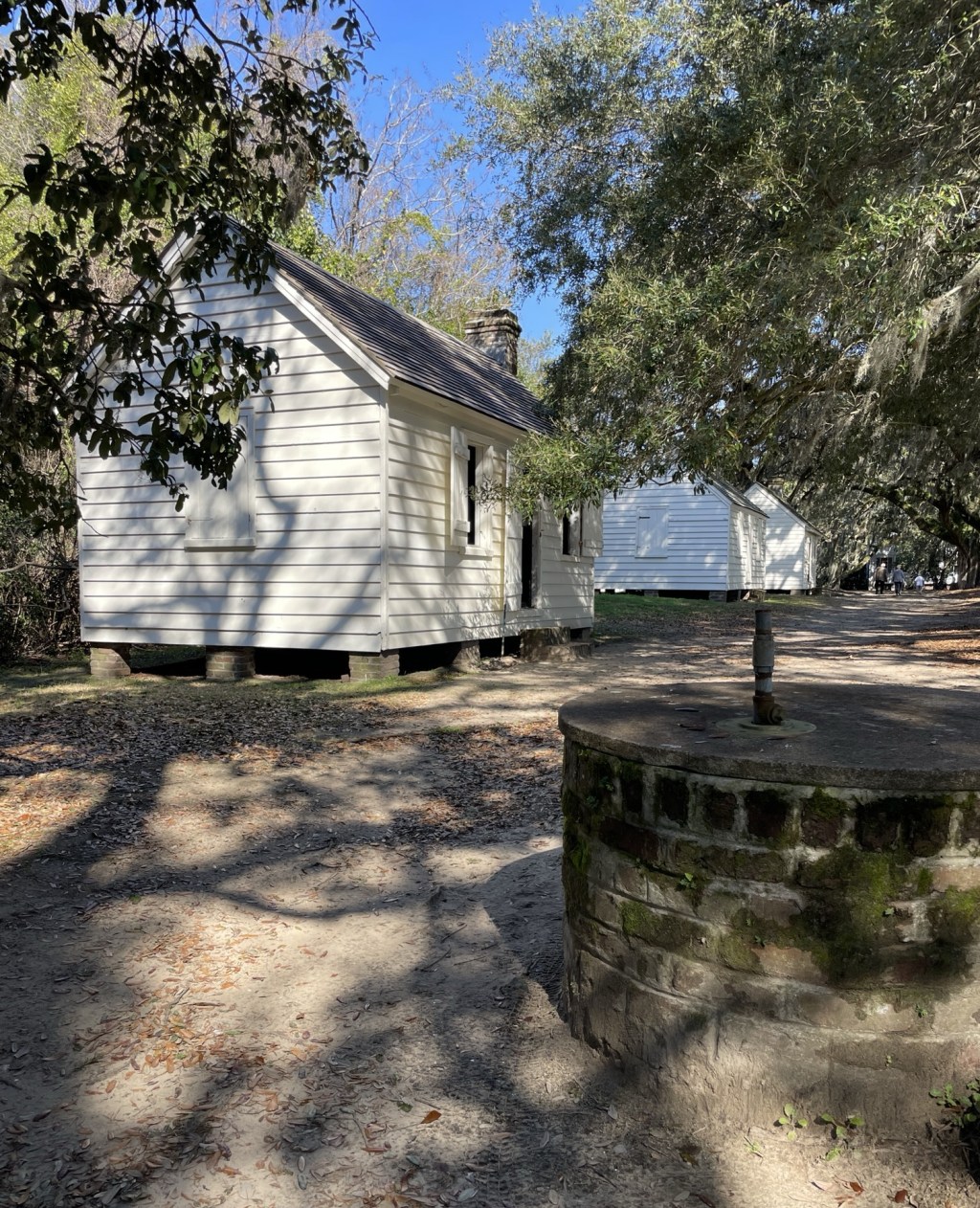
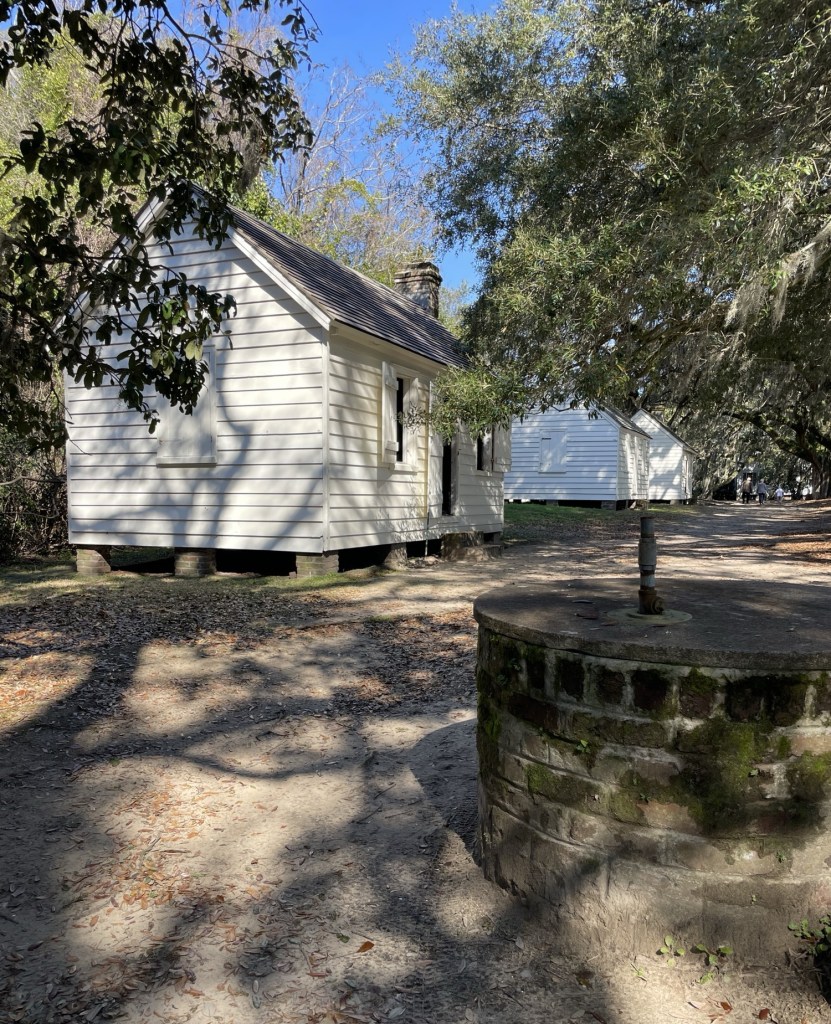
Below is a one of nearly 30 huts that lined both sides of a path near the house. From inside the comfort of the house, McLeod and his family kept a watchful eye on everything and everyone. The well in the foreground was the only source of water for the huts, each of which would have housed 8-10 people at a time.
When the final owner, William Wallace McLeod III, died in 1990 without an heir, he left the property to a local nonprofit organization, to be saved in perpetuity as a museum. His tenants were allowed 48 hrs to find new homes.


Leave a reply to HMS Beangle Cancel reply