At first I was going to write about three different forts individually. Then I decided that three forts in a row, when they all followed the same basic design and were part of the Civil War conflict, was asking a bit much of anyone’s patience. So I’m going to mostly write about Fort Pulaski, which is the best preserved and our favorite. There will only be small side bits about Fort Sumter (where the Civil War began) and nearby Fort Moultrie.
You’re welcome.
***
All three forts (and more up the Eastern seaboard) were built on the same five-sided pattern in the second quarter of the 1800s. It occurred to the United States government, after losing all of its major ports to the British Navy during the War of 1812, that our long Atlantic coastline deserved some defending. Never did the government expect that they would be firing upon some of those same forts within a few decades.
***
Quick timeline:
- After South Carolina votes to secede from the United States, Major Anderson, stationed at Fort Moultrie, moves his Union force to Fort Sumter in the middle of Charleston Harbor, December 1860.
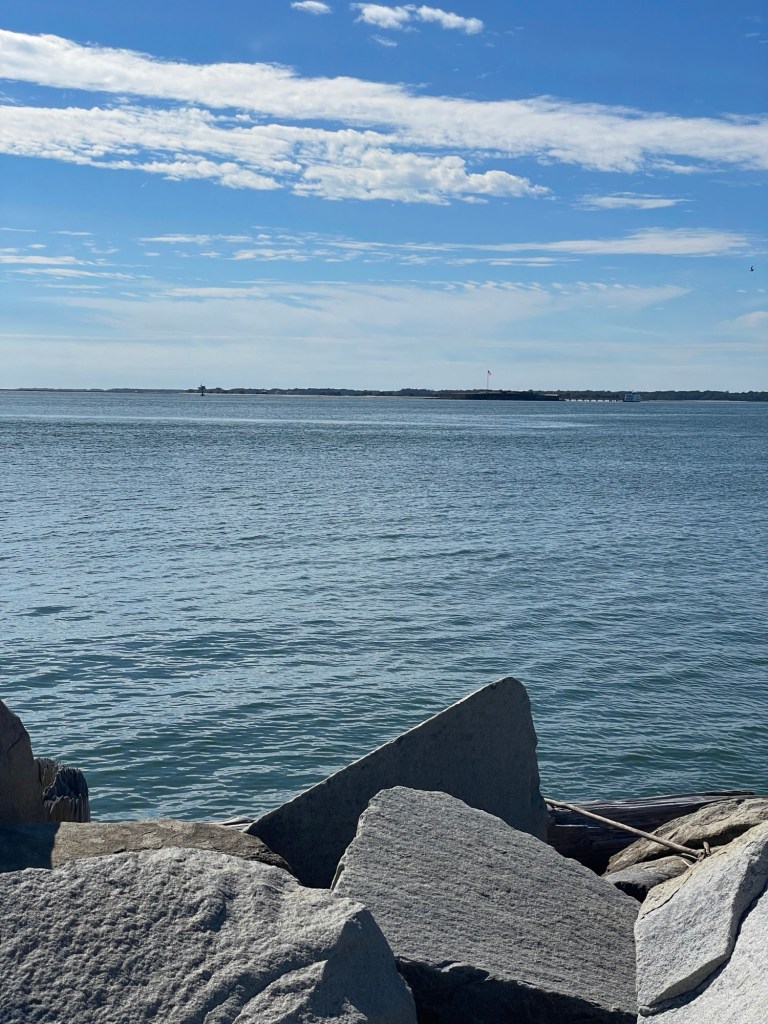
- While the politicians played politics, Confederate militia placed guns all around Fort Sumter. They opened fire on Sumter, April 1861.
- One year later, Union forces take Fort Pulaski.
- Union forces begin the slow process of destroying the port of Charleston’s barrier island defenses, so they could batter the Confederates in Fort Sumter. There wasn’t really a good reason to put so much effort into firing on Fort Sumter, but spite is a powerful motivator.
- December 1864, General Sherman’s forces take Fort McAllister (see earlier post)!— south of Fort Pulaski, finally opening the Savannah River.
- April 1865, Anderson returned to raised the original 1861 flag over Fort Sumter, bringing it all full circle. Circles are powerful things, figuratively and literally.
***
It took thirty hours for the Union army to blast their way through a Confederate-held three story fort. Thirty hours.
Now understand, Fort Pulaski (named after a Polish immigrant and Revolutionary War hero, Count Casimir Pulaski) was considered State of Art. Invincible. Impenetrable. Robert E Lee himself assured Colonel Olmstead that the fort’s nearly 8 foot thick brick walls would protect him and his troops from anything the Union threw at them.
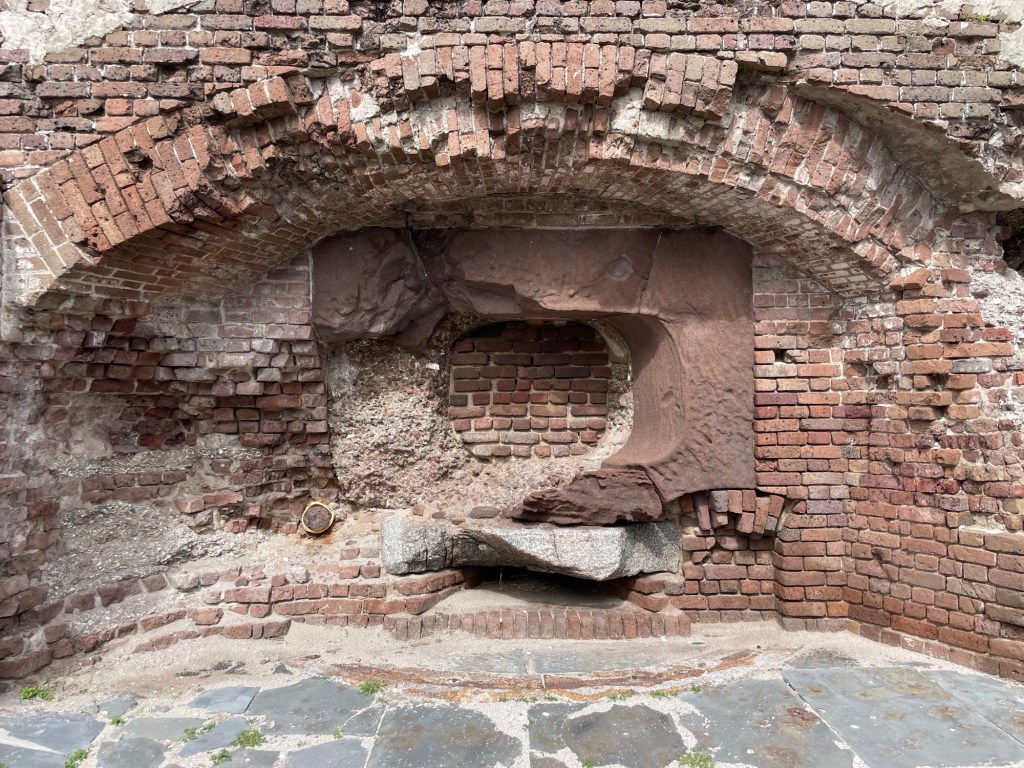
Unbeknownst to Lee, Olmstead, and that unfortunate Confederate garrison, however, was that in addition to the Union’s 36 cannon and mortars, 10 experimentally rifled cannon had also been put into place on Tybee Island, just across the south channel of the Savannah River. After giving Olmstead the chance to surrender, Engineer-Captain Gillmore’s force let go with a bombardment that blasted the fort’s near corner into oblivion. After seeing that cannon balls were now flying through the gaping hole and were threatening to explode the powder magazine on the opposite end of the fort, Colonel Olmstead and his Confederate troops surrendered.
Rifling had put spin on the projectiles coming out of those 10 cannon, vastly improving their accuracy and distance. That simple modification changed everything. Reports about those 10 rifled cannon and the impact they’d had on Fort Pulaski made news worldwide. From that day forward, war tactics and weapons manufacturing around the world changed forever — all because of those 30 hours near Savannah, Georgia.
Walking the exterior of Fort Pulaski, you think:
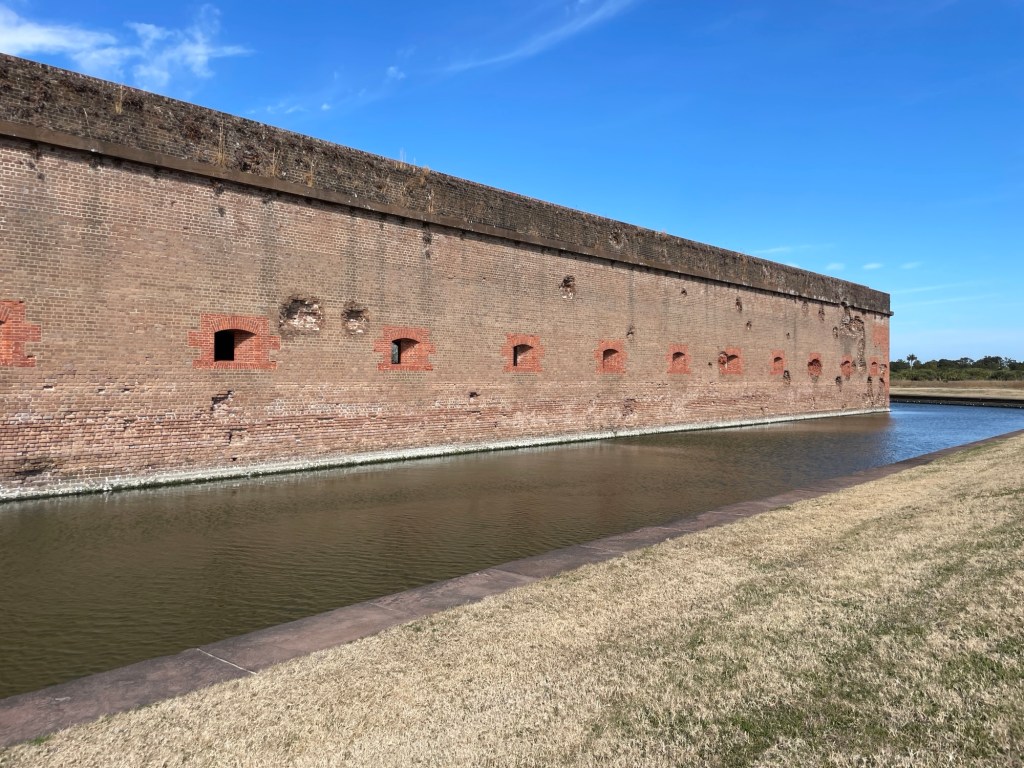
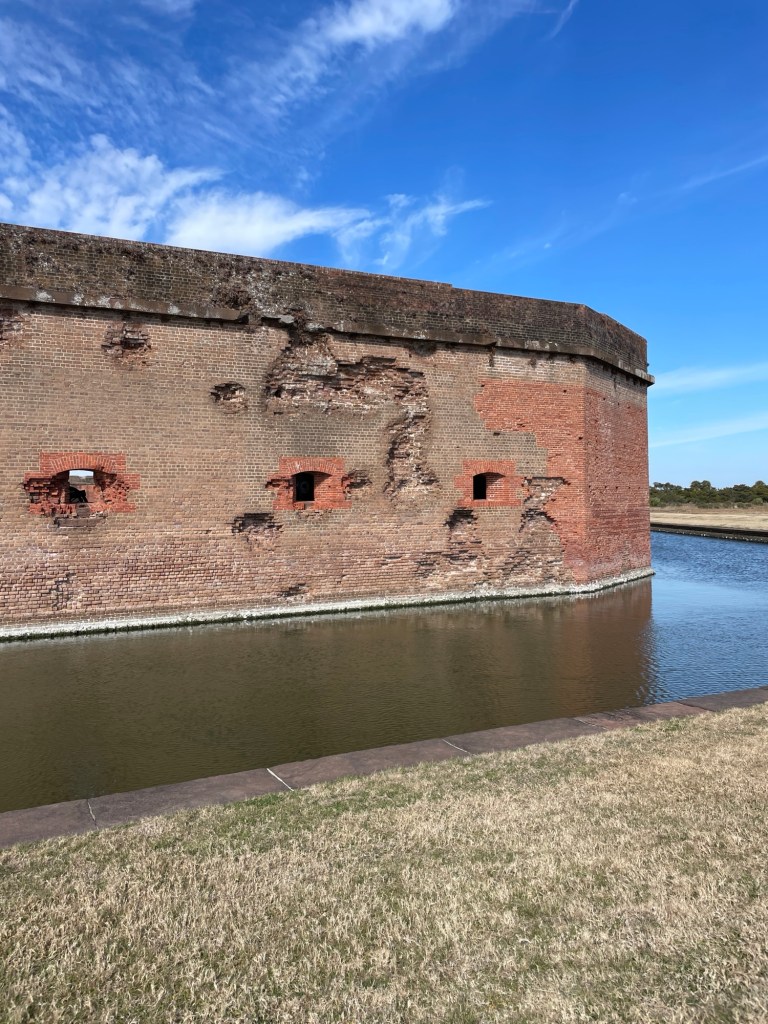
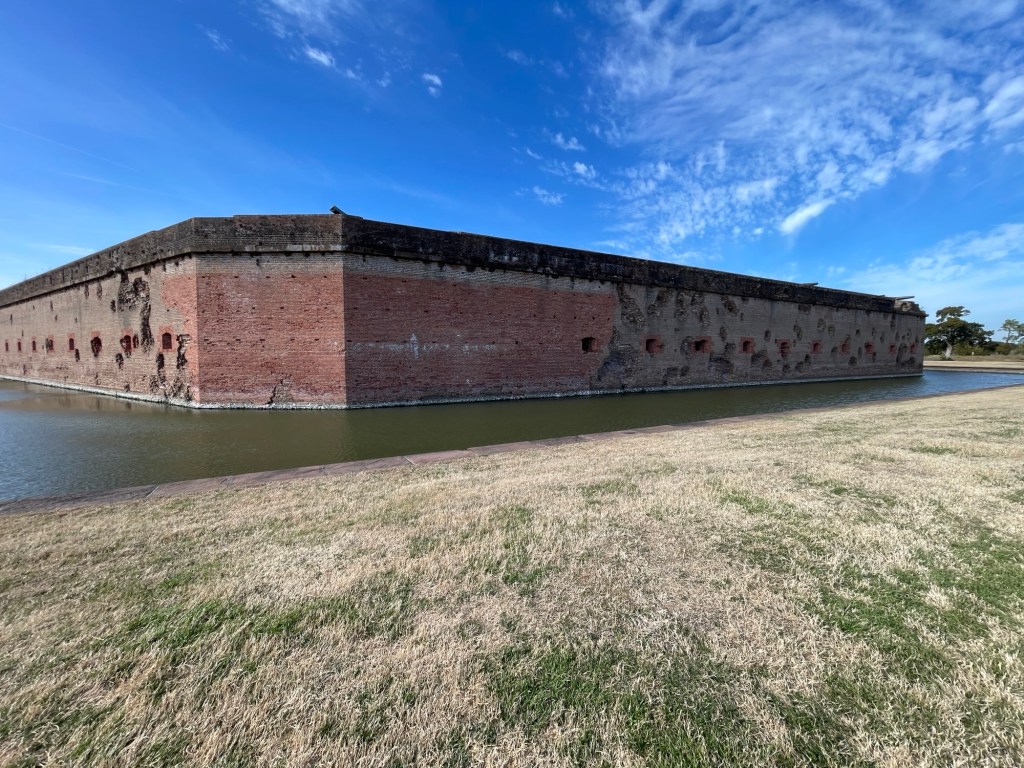
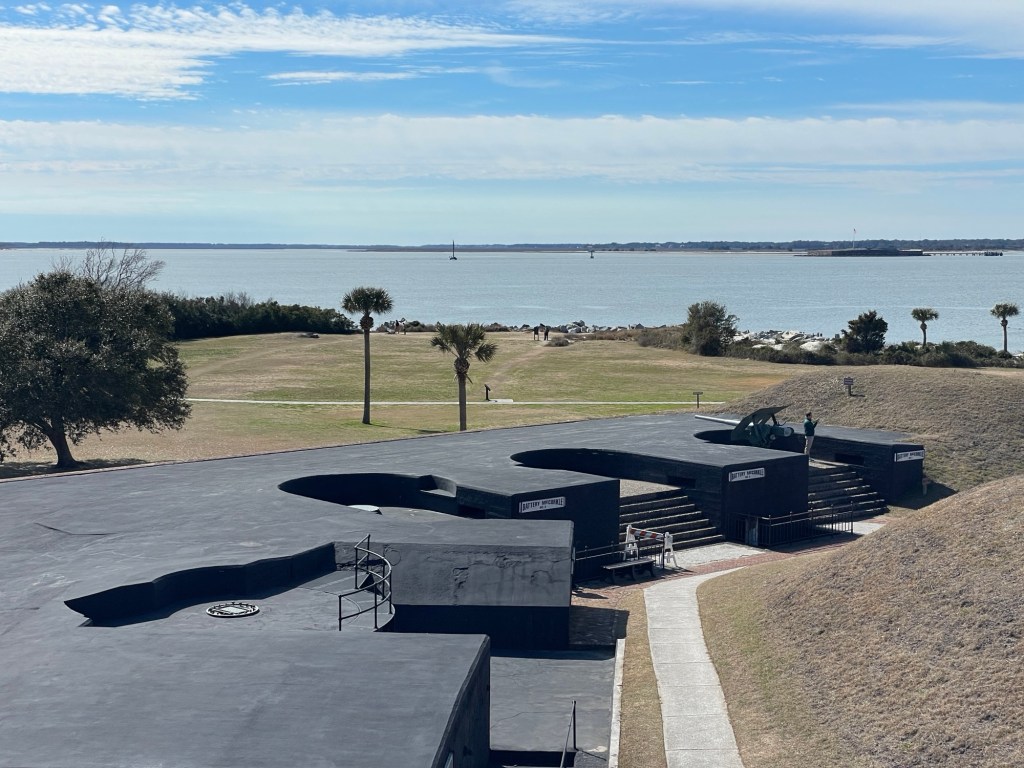
But because Pulaski’s damage was so isolated, the bulk of the fort has survived in relatively good condition. By comparison, Fort Sumter was shelled first by South Carolina’s militia in April 1861 (instigating the official start to the Civil War). And later, in 1863-1865, a reinforced Confederate-held Sumter was bombarded by the Union Army and Navy, reducing it to little more than a memory of its former shape and size.
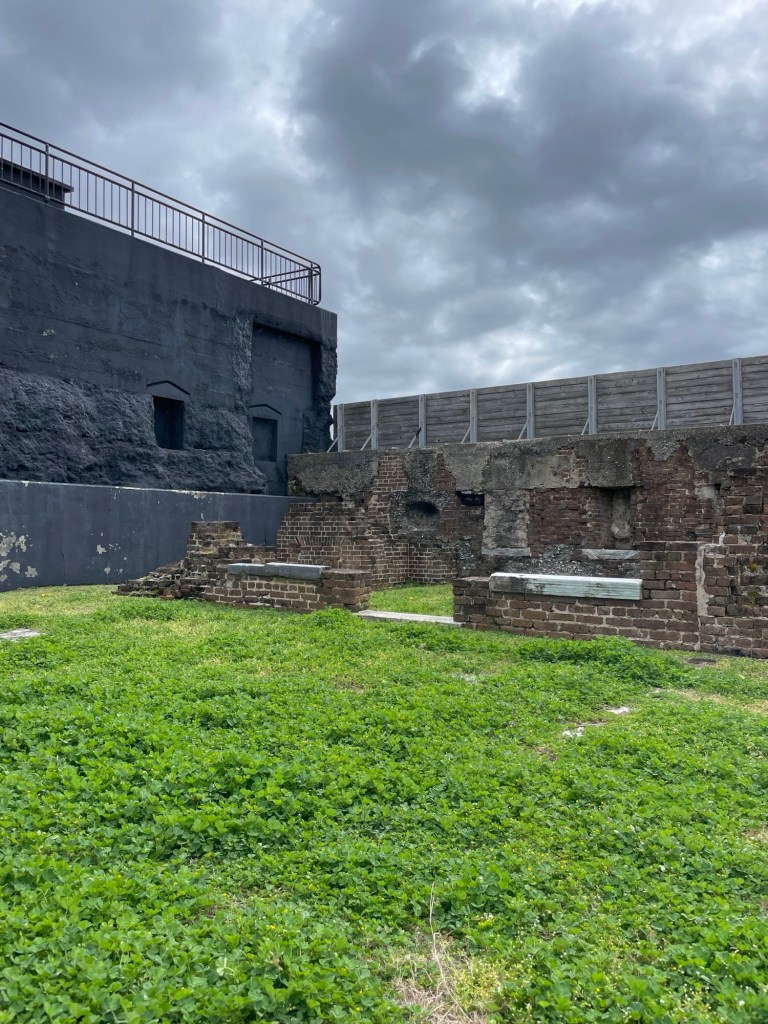
(Side note: The photo below shows where part of Fort Sumter’s original wall, a reconstructed section of the outer and upper wall, and the World War Two-era bunker meet. After visiting Fort Pulaski and Fort Moultrie, we both found our visit to Sumter quite jarring.)
Ok, back to Fort Pulaski.
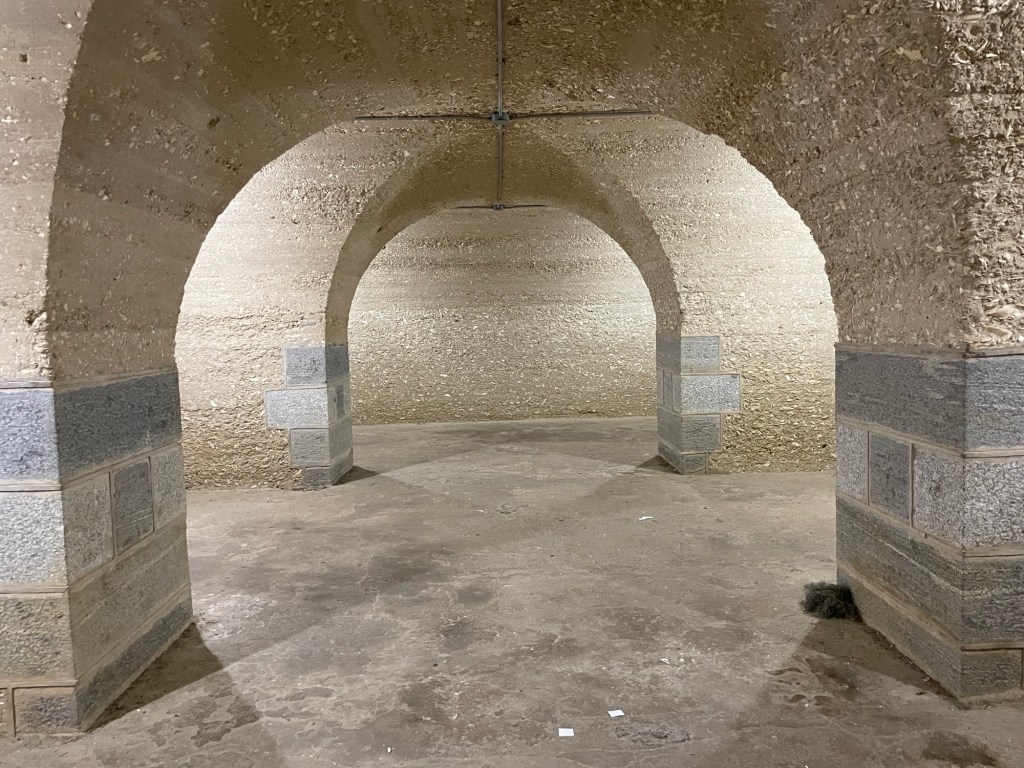
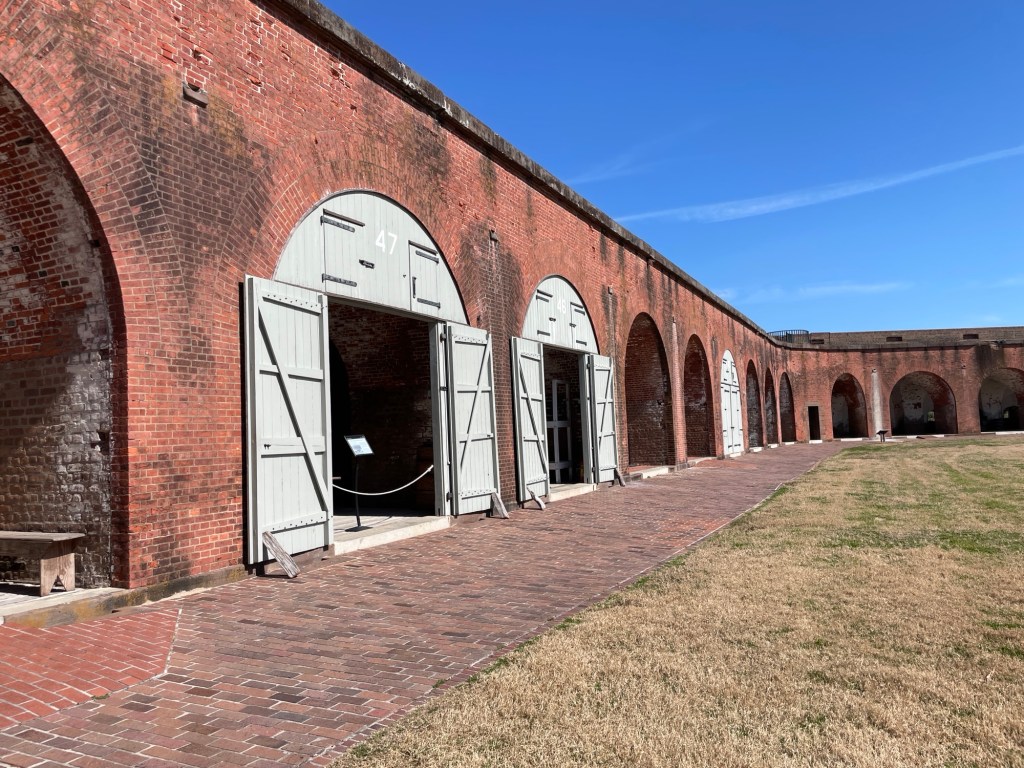
Pulaski’s current entrance begins at these (post Civil War era) storage and gunnery formations, but its actual draw bridge entrance lies just behind the great point you see here. The storage formations are certainly sculptural to look at, and I can attest to the fact that they’re great fun to roam around in.
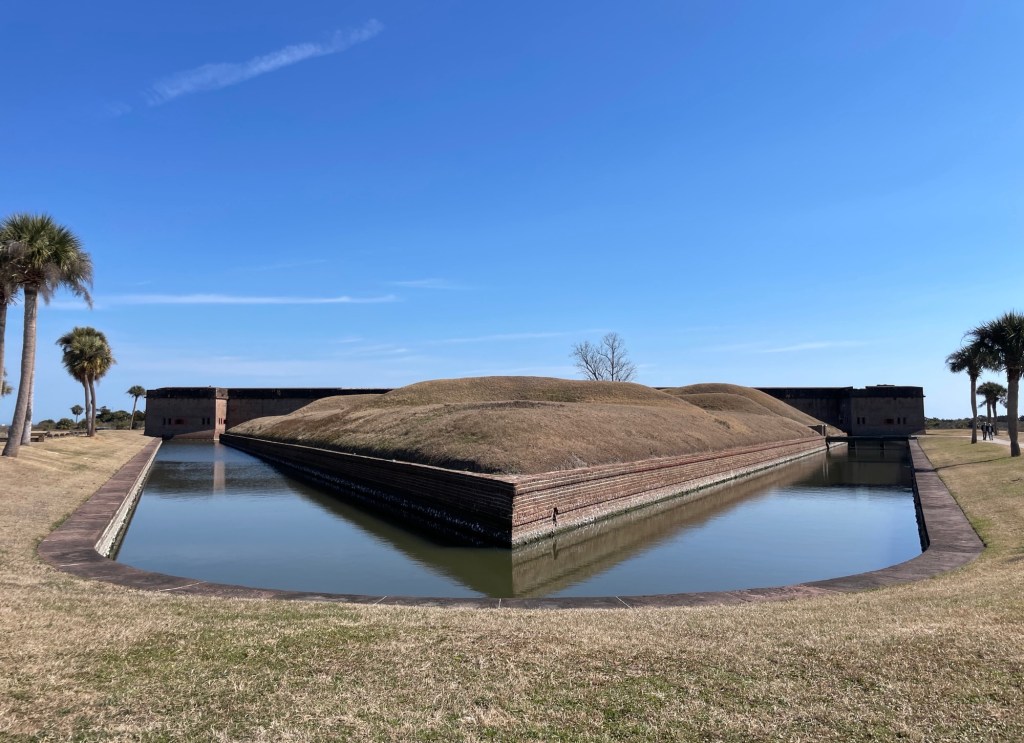
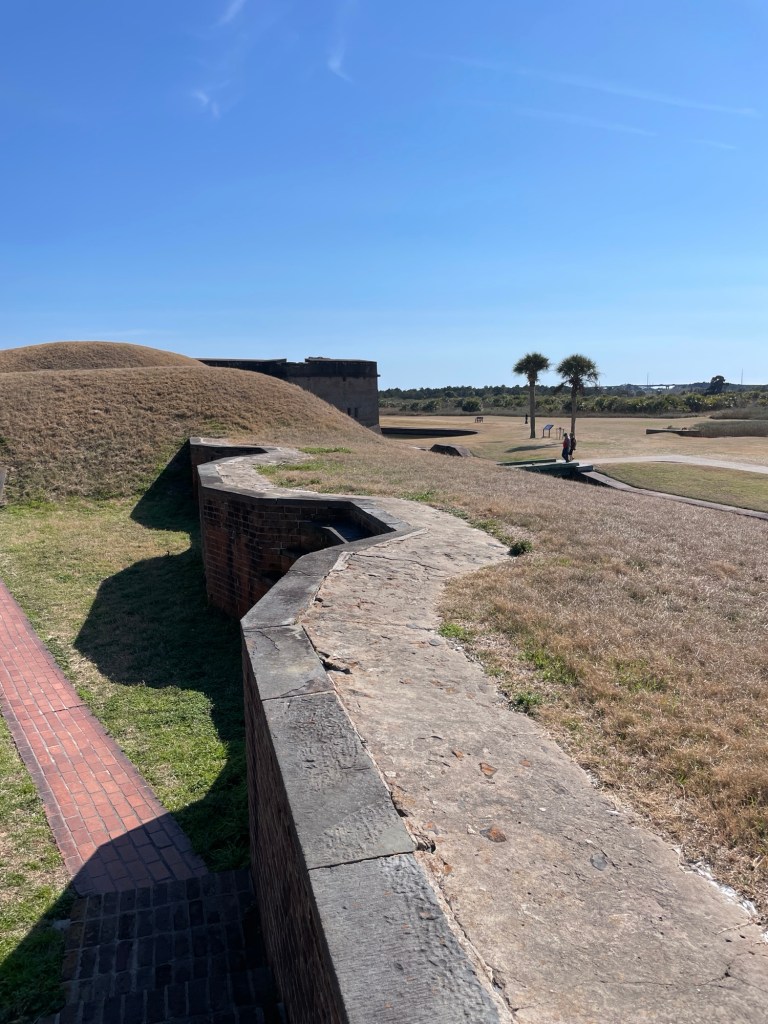
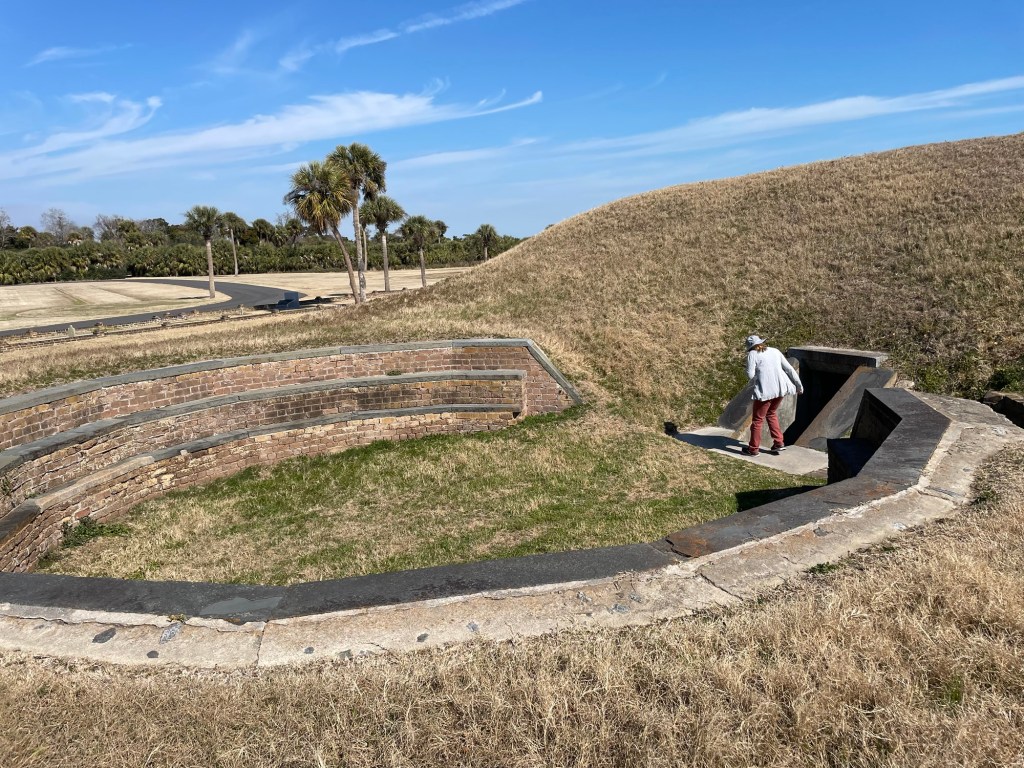
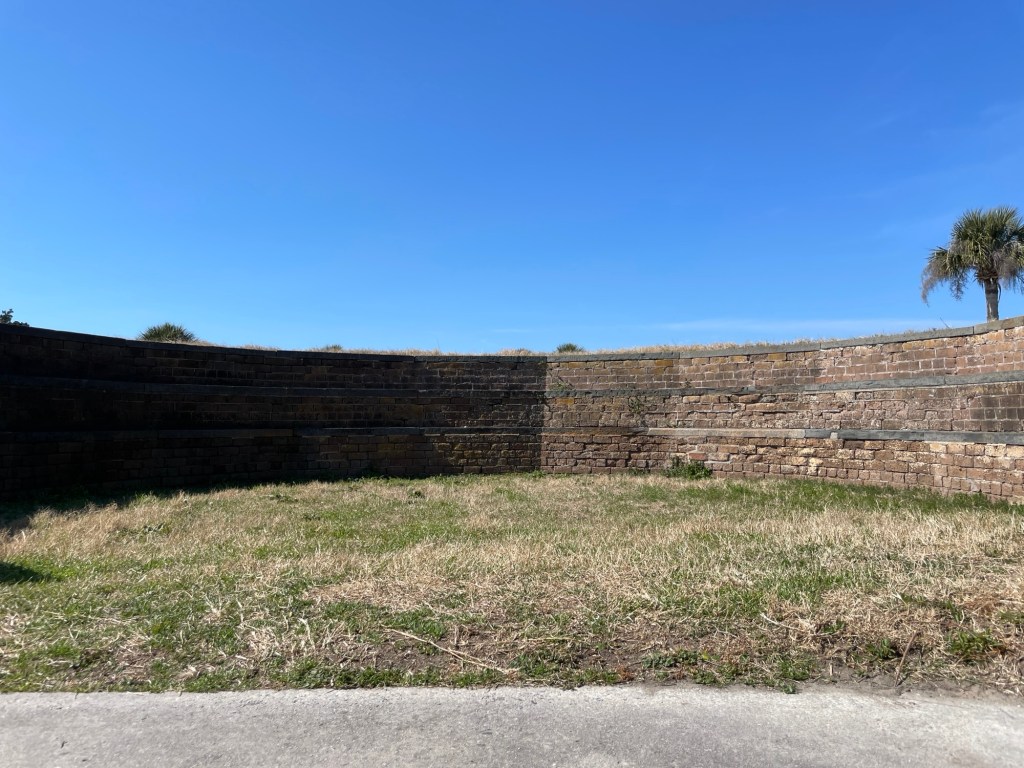
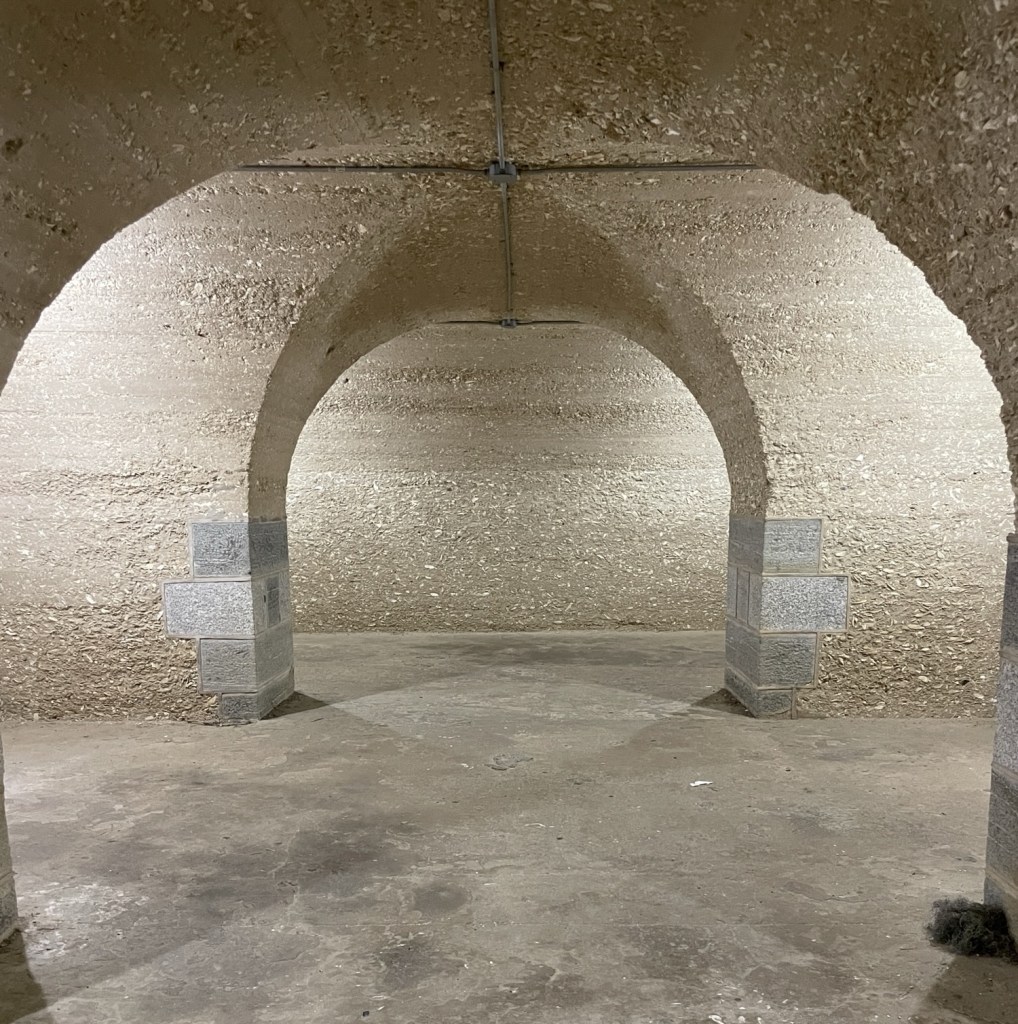
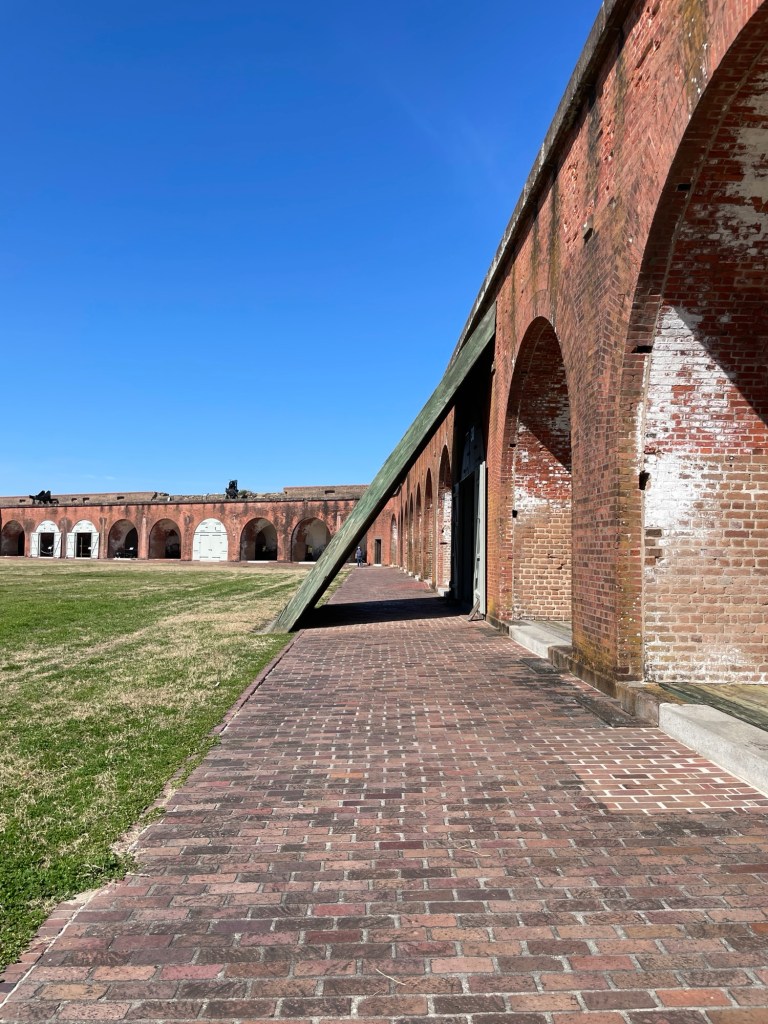
The arched tabby walls of the storage areas are strong, much like modern concrete. Unlike concrete, however, the tabby surface (which is just crushed shell and lime mixed with sand and water) is delicate and easily damaged, so No Touching!
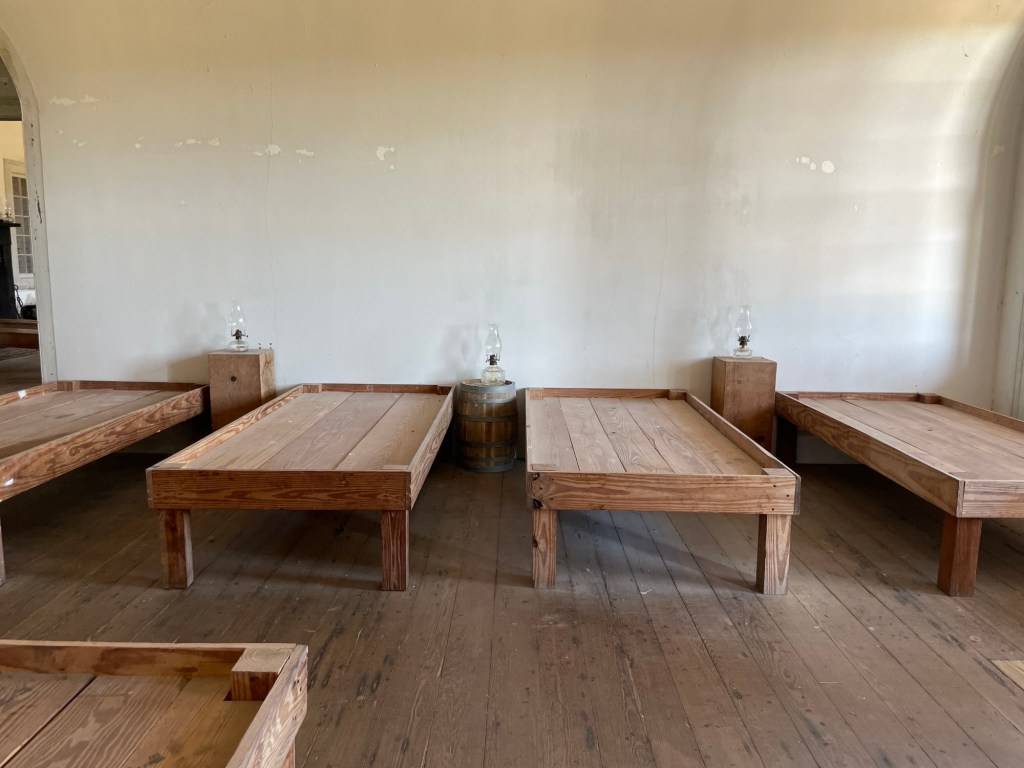
Inside Fort Pulaski, you can see the way the fort was set up, used, and lived in. If you click open each photo, you can see the details better.
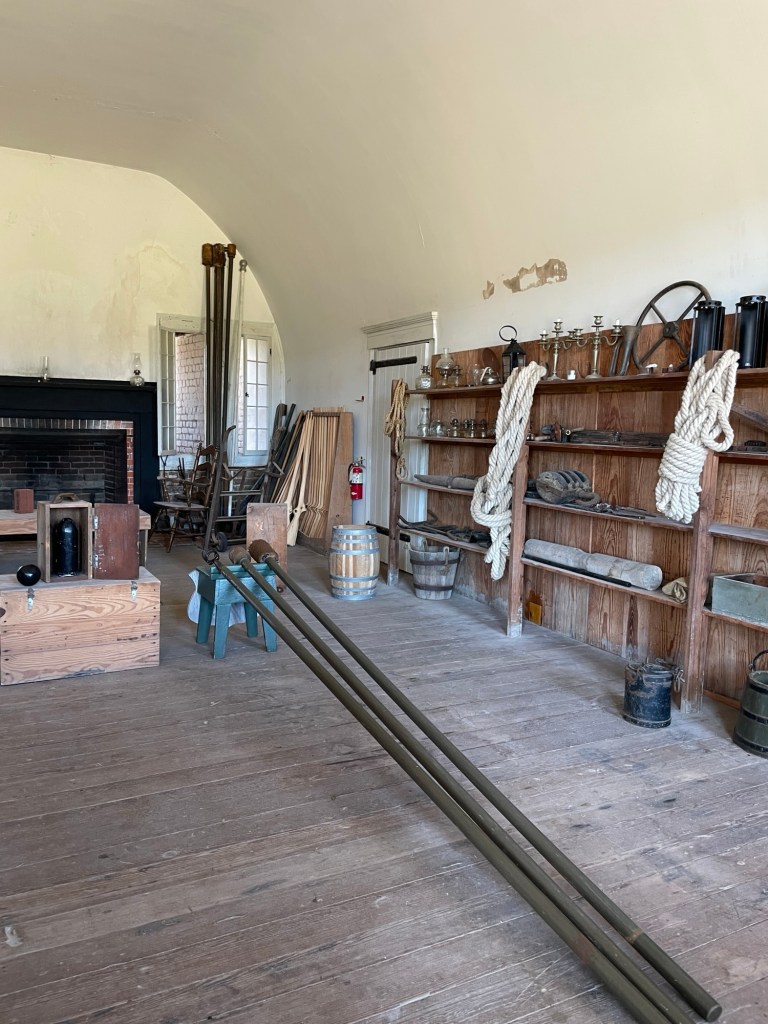
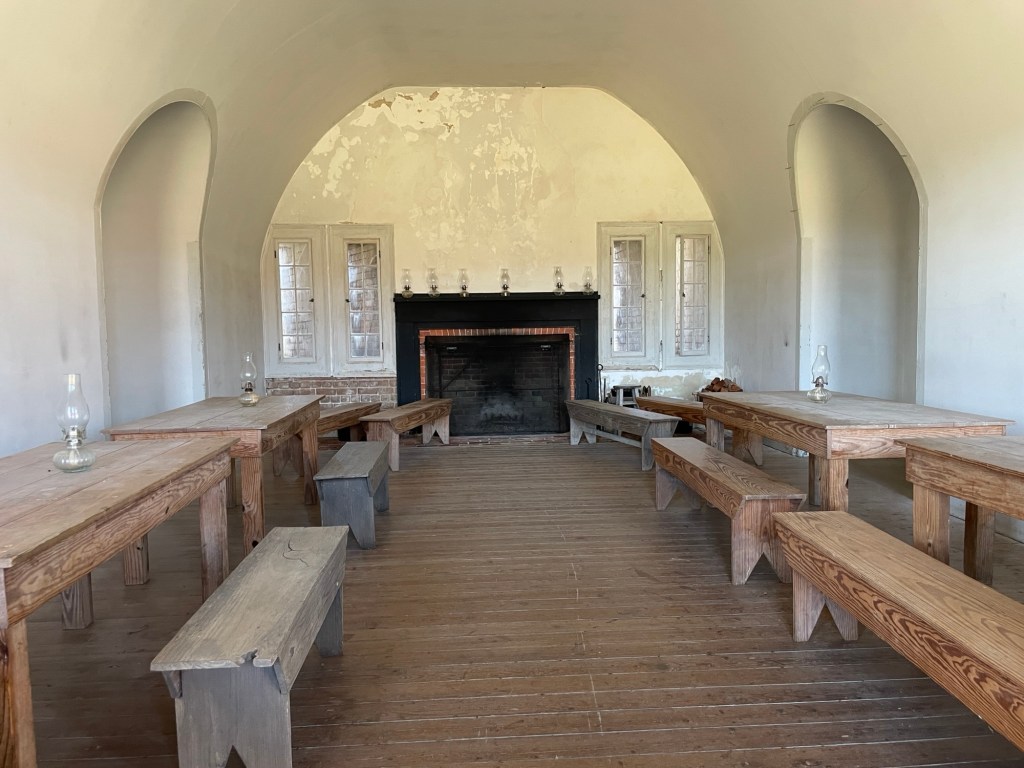
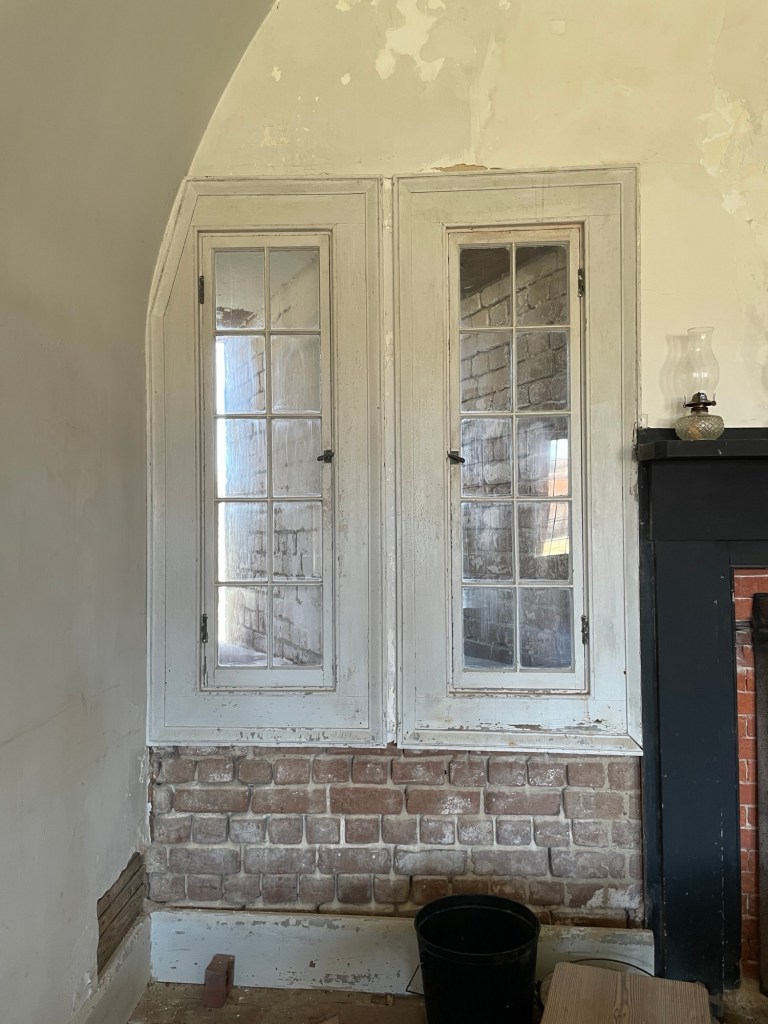
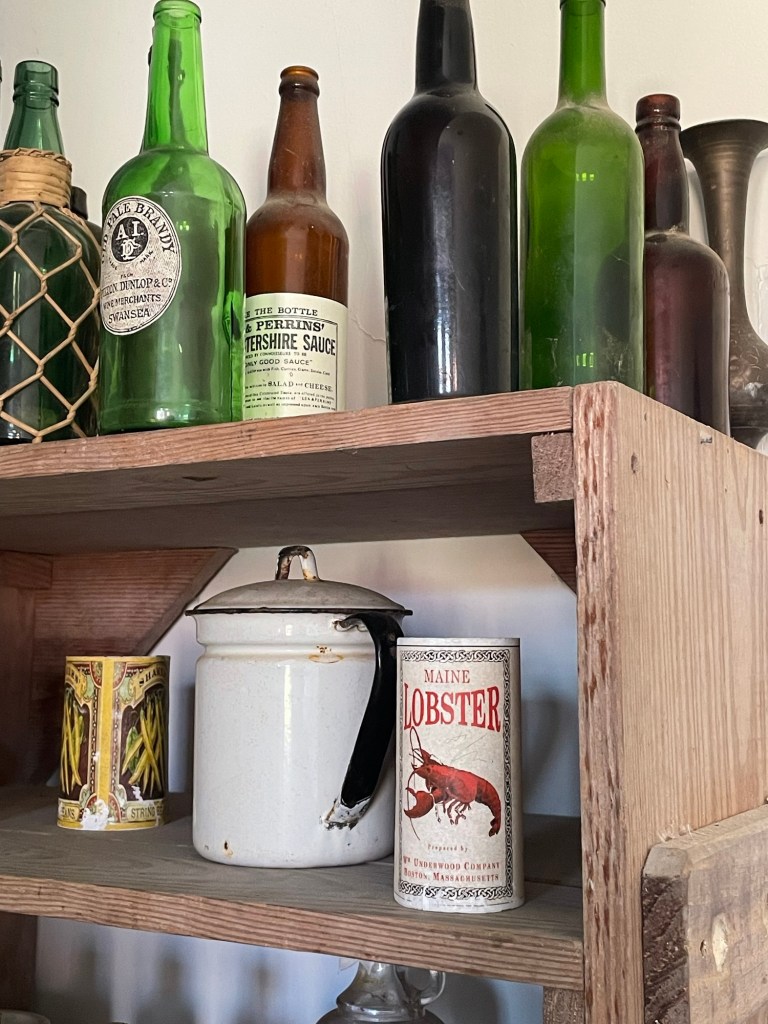
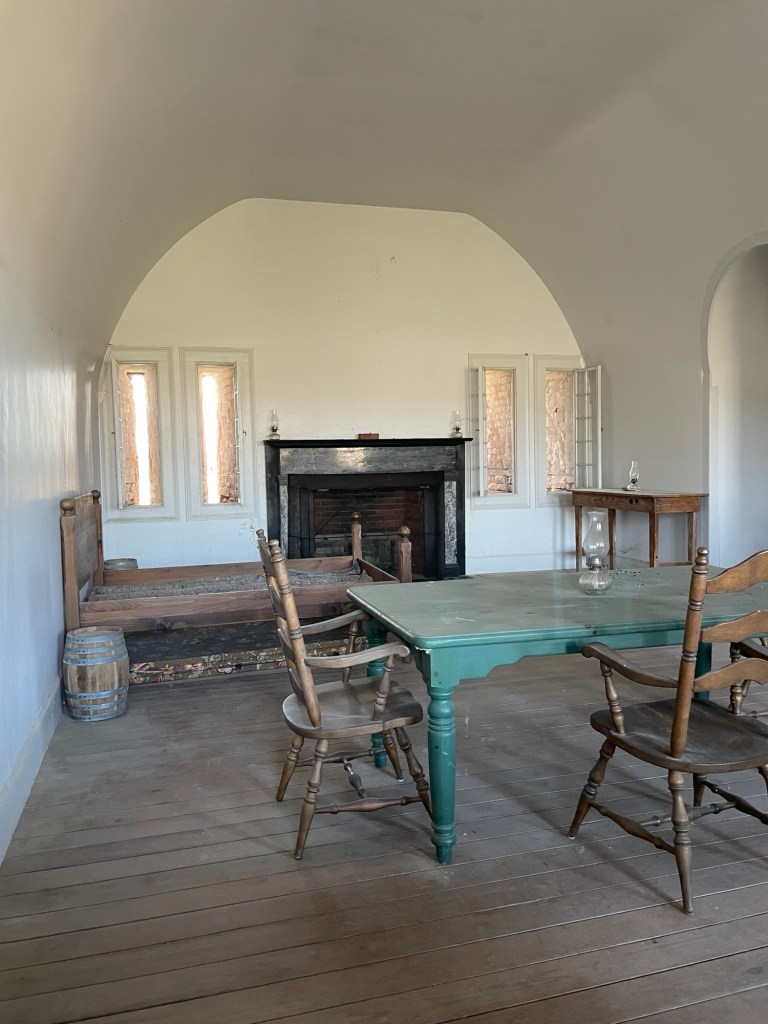
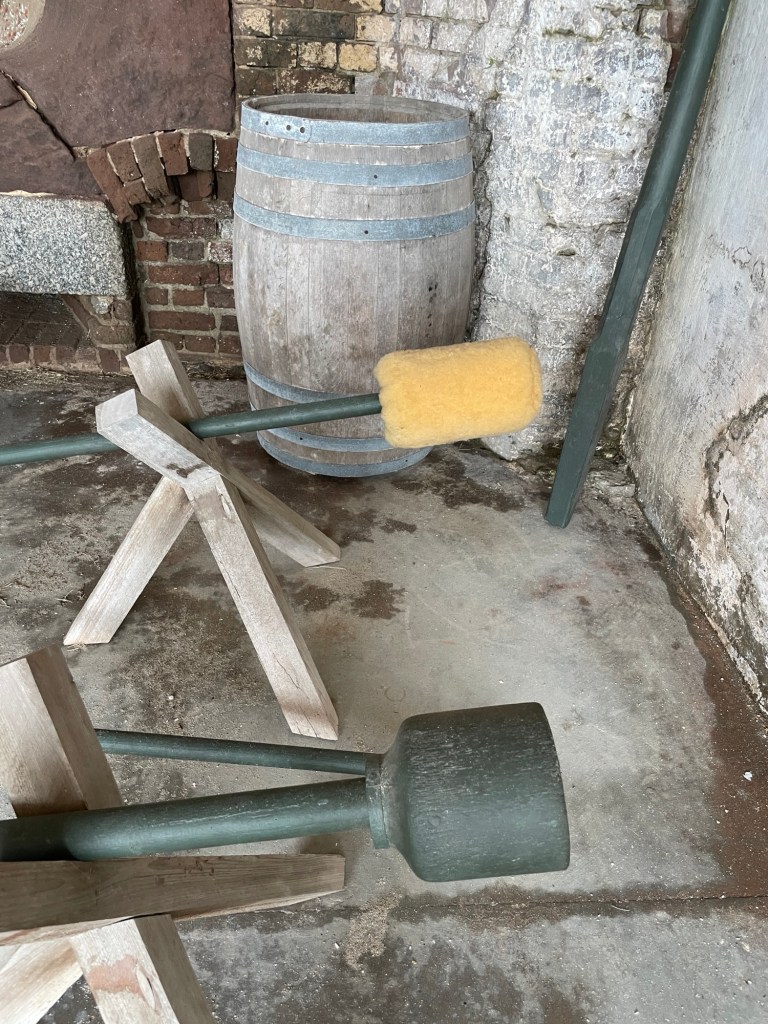
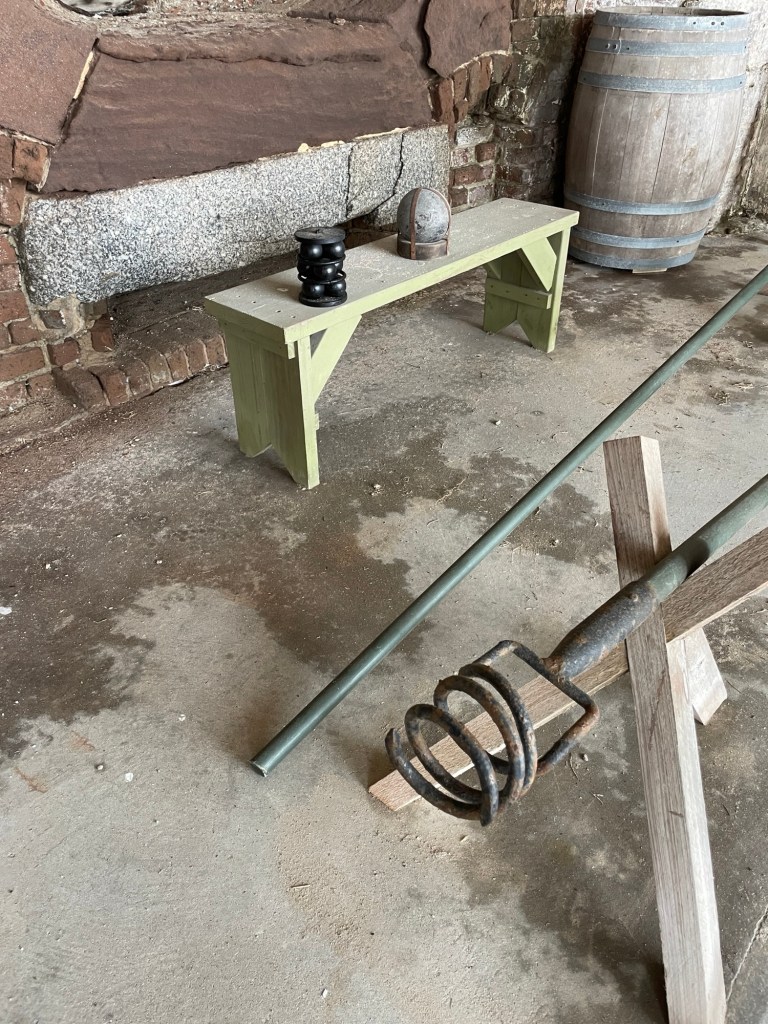
Being primarily a defensive fort, each of the nearly 50 arched bays around the inner parade ground initially housed a cannon, with another piece of artillery positioned above them on the terreplein. Can you even imagine the deafening roar and bone-rattling shake the soldiers inside Fort Pulaski must have experienced with so many guns going off all around them?
I did wonder how a cannon gin actually worked, so I was happy to see one in place here. The physics of a pulley system is a wonderful thing.
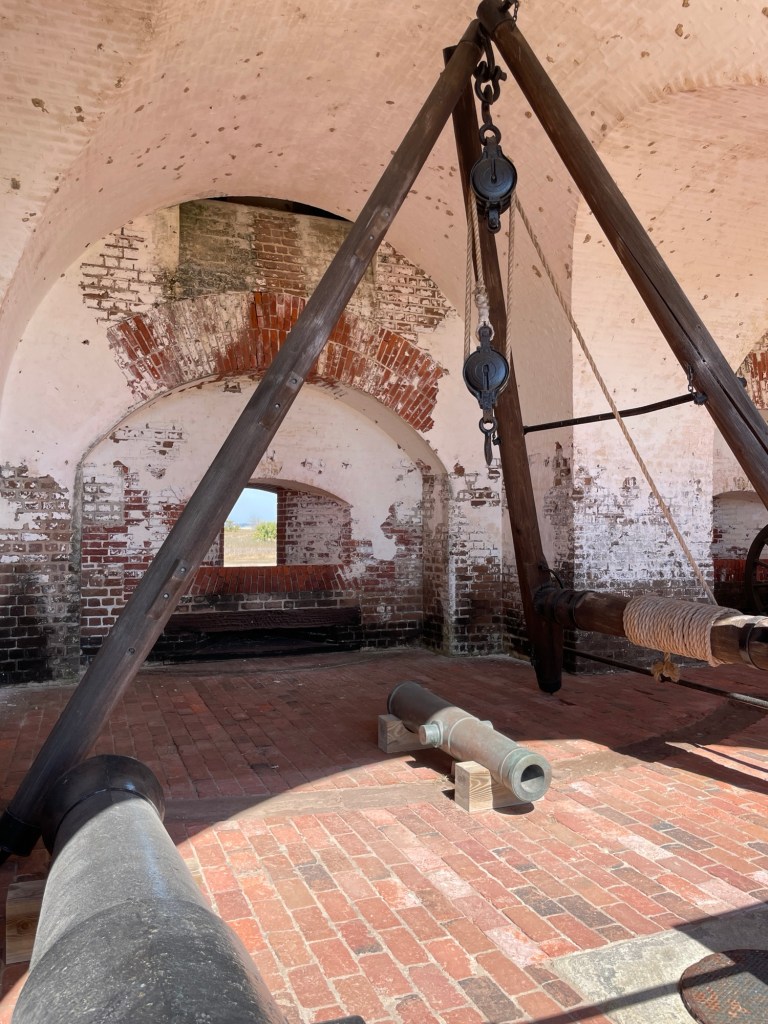
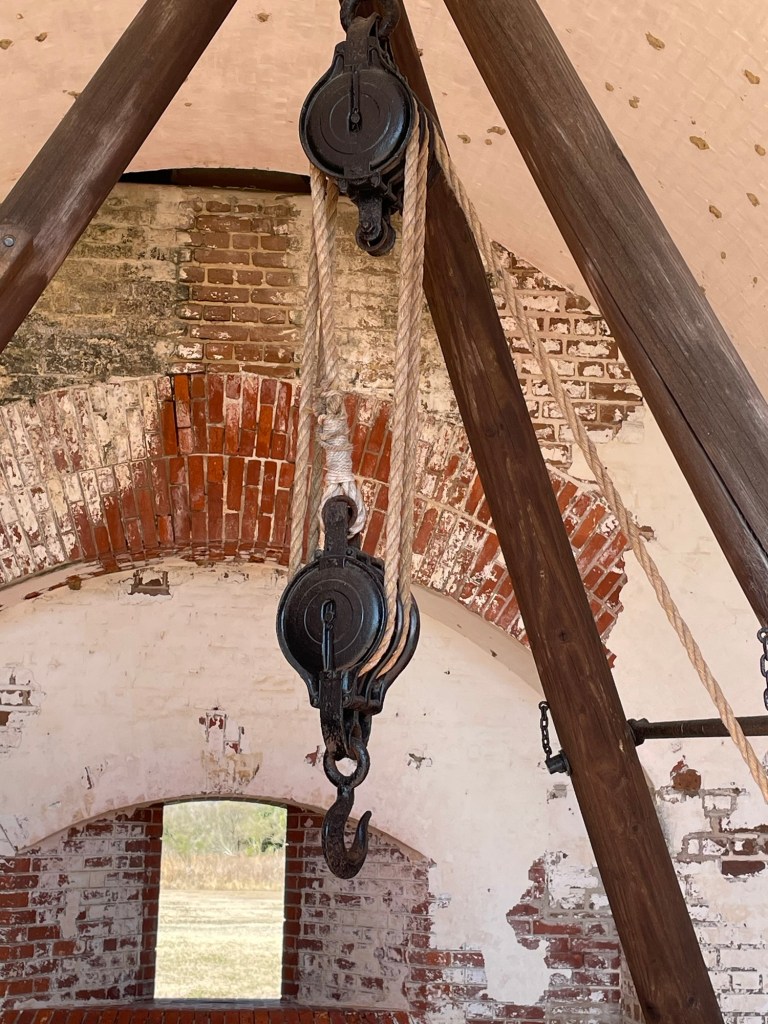
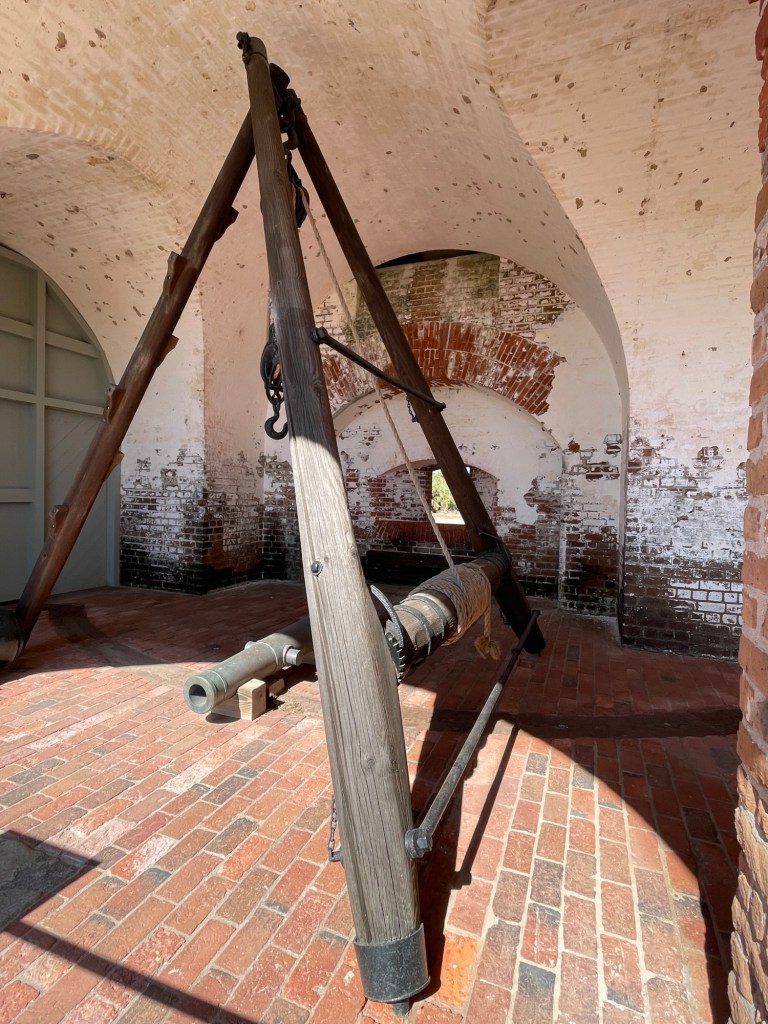
Looking at these purely utilitarian Civil War cannon makes me nostalgic for the beautiful pieces at Castillo de San Marcos.
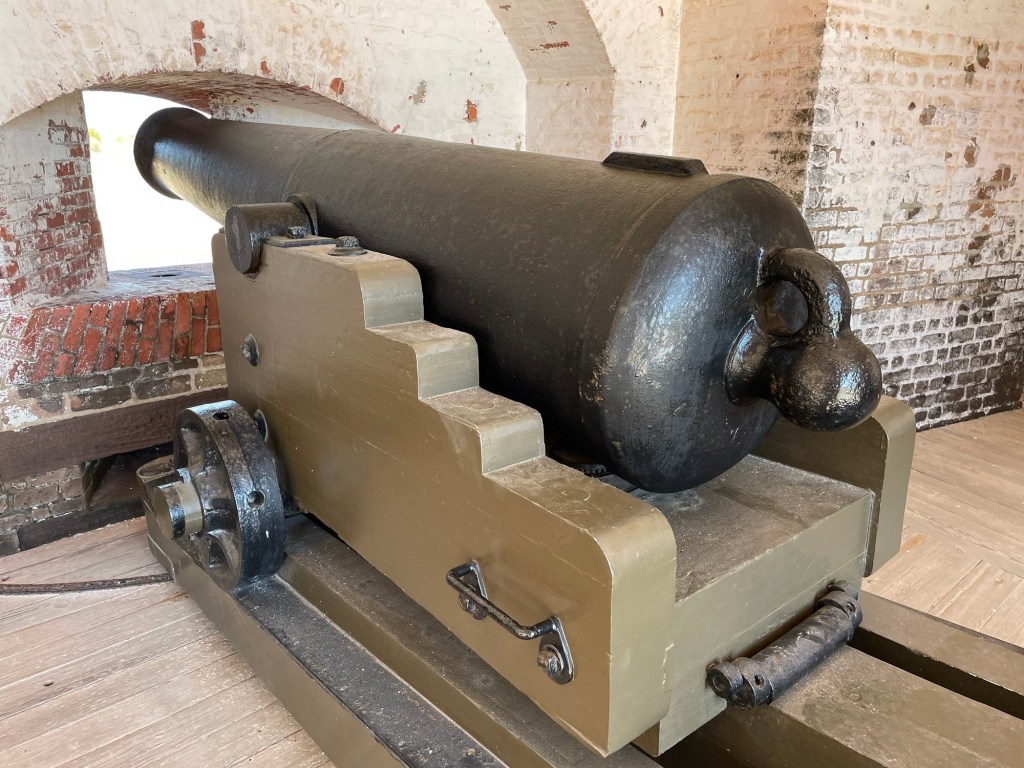
Since the cannon in the casemates (what I call the arches) had proven ineffective as defensive guns, Union forces converted most of them to living quarters (Yay, no more tents for the enlisted men!) and a few as prison cells.
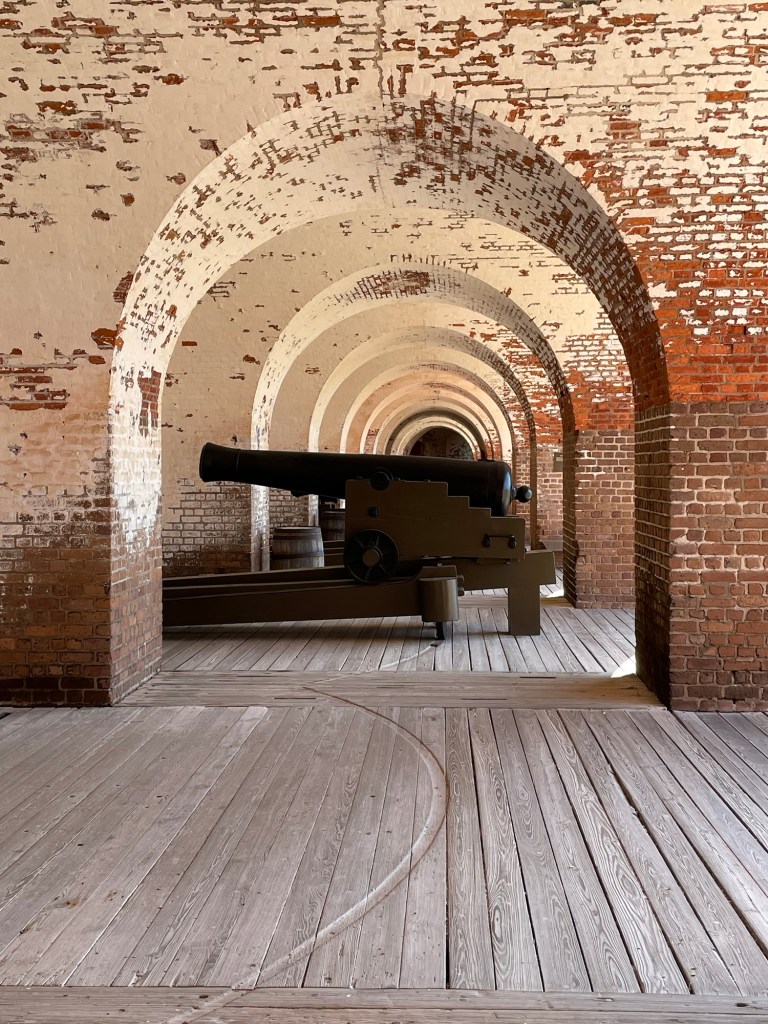
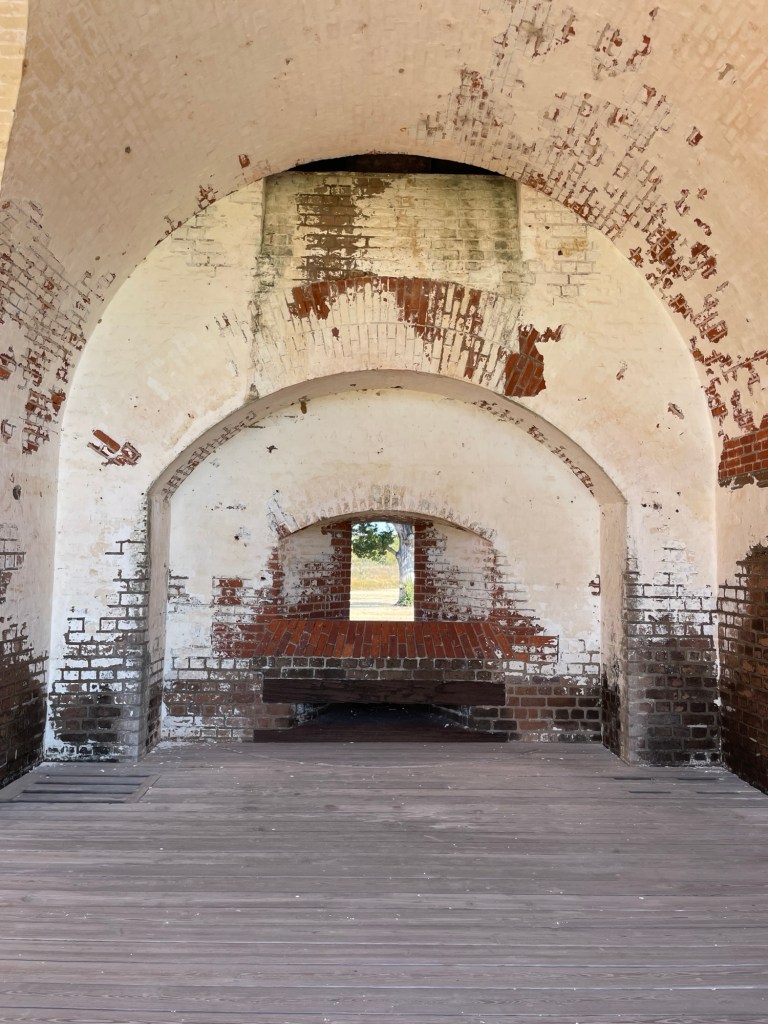
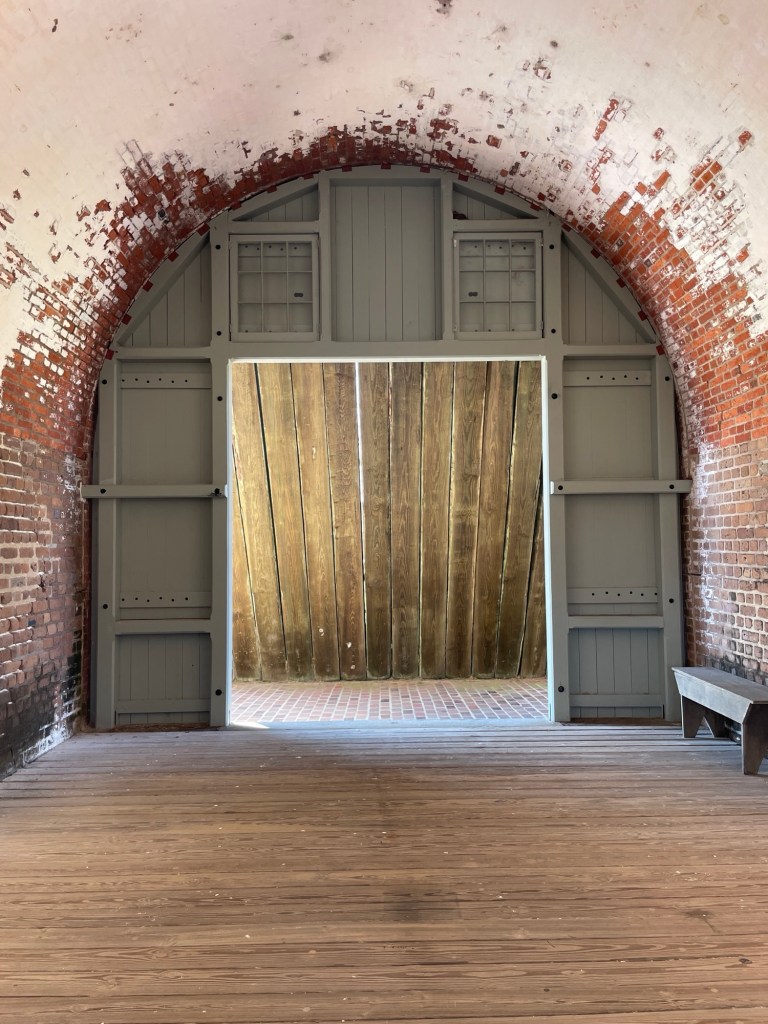
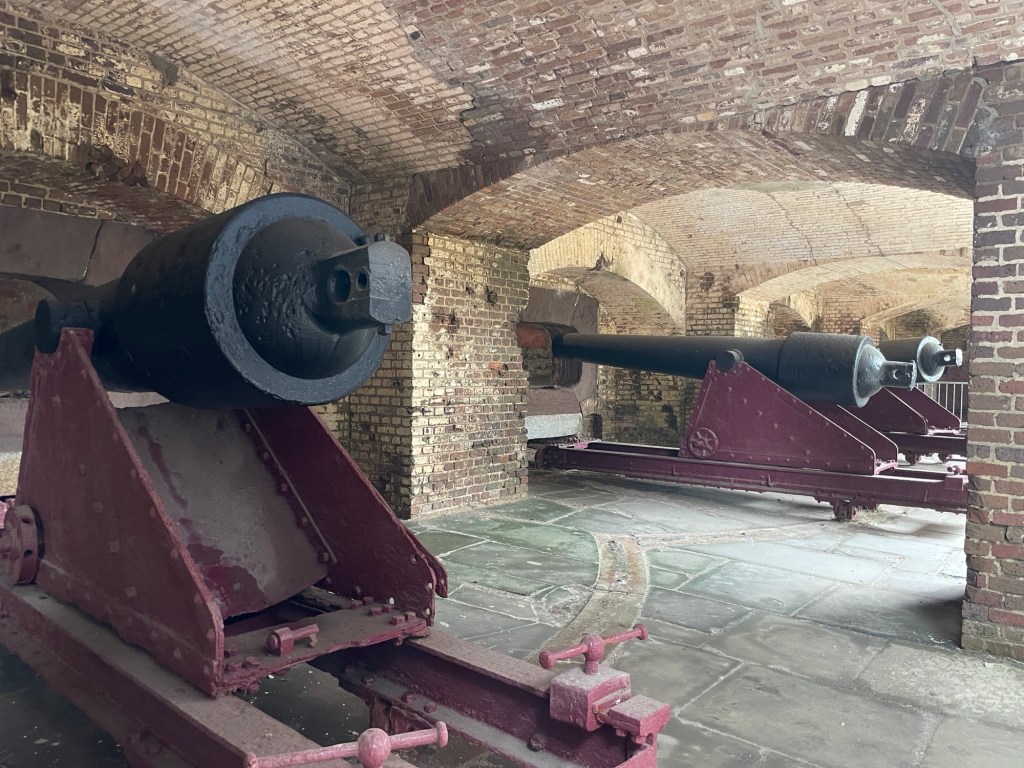
Because it was so dark inside the cannon arches, soldiers whitewashed the interiors to make them brighter and more homey. One bored soldier even chose to personalize his area. People don’t ever really change, do they? I find this soldier’s contribution quite beautiful.
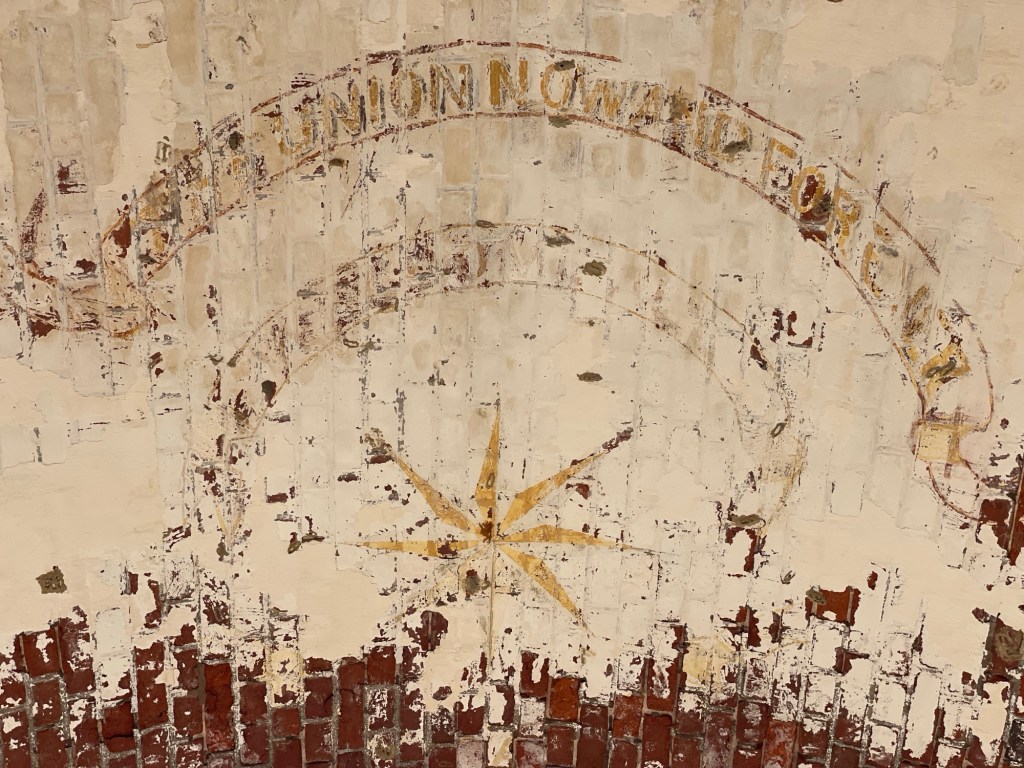
We all like to make a space our own. You see it all the time at campgrounds — ‘lawn’ decorations, personalized decals, statement awnings. Anything that says, this is mine and right now this is my patch of home.
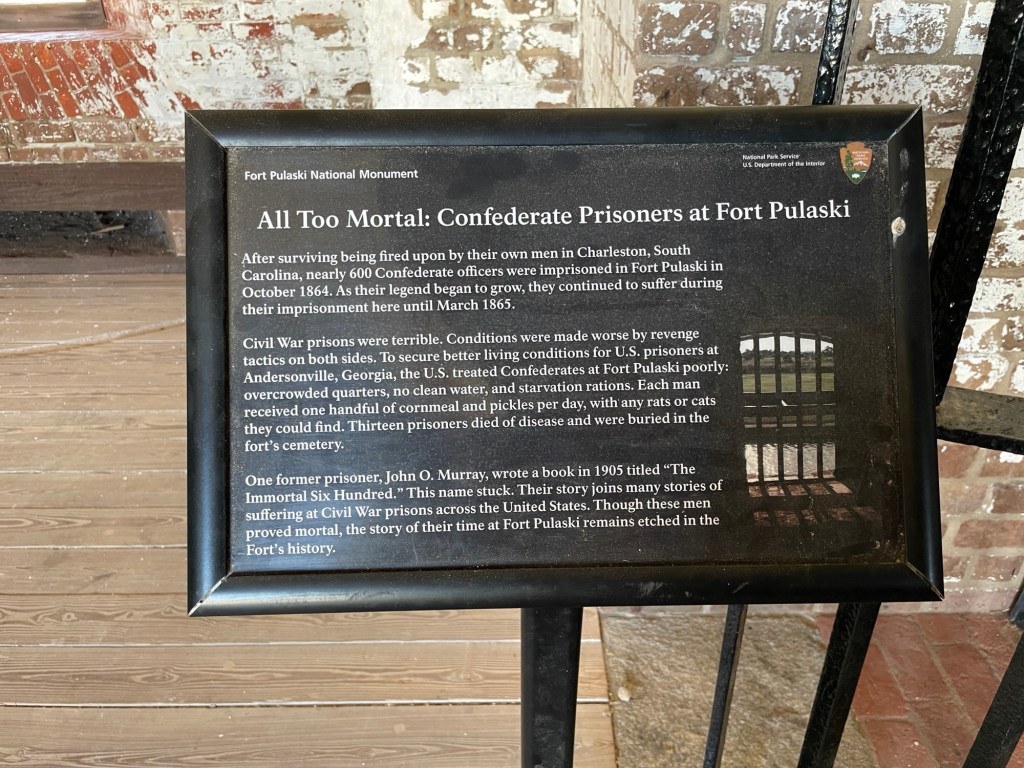
Prisoner of war prisons were horrible places regardless of which side was running them. Much has been said about the infamous state of the men penned up at Andersonville (Georgia) and how many had died horrible deaths there. It’s less well known that men were living and dying in much the same condition at Union prisons.
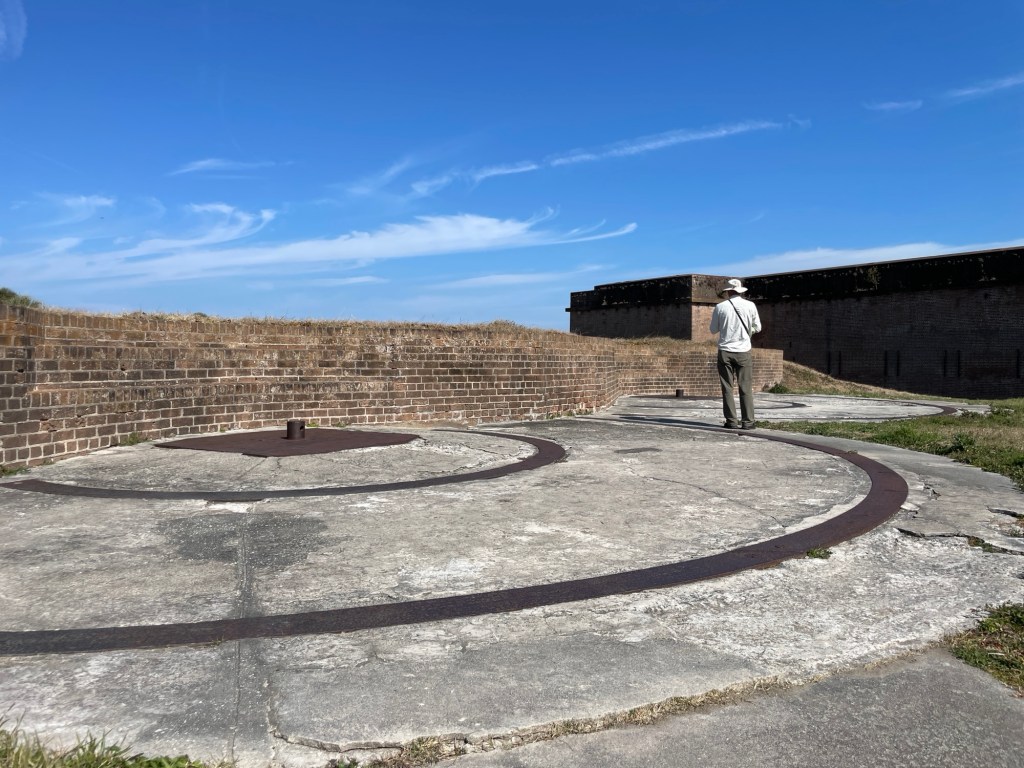
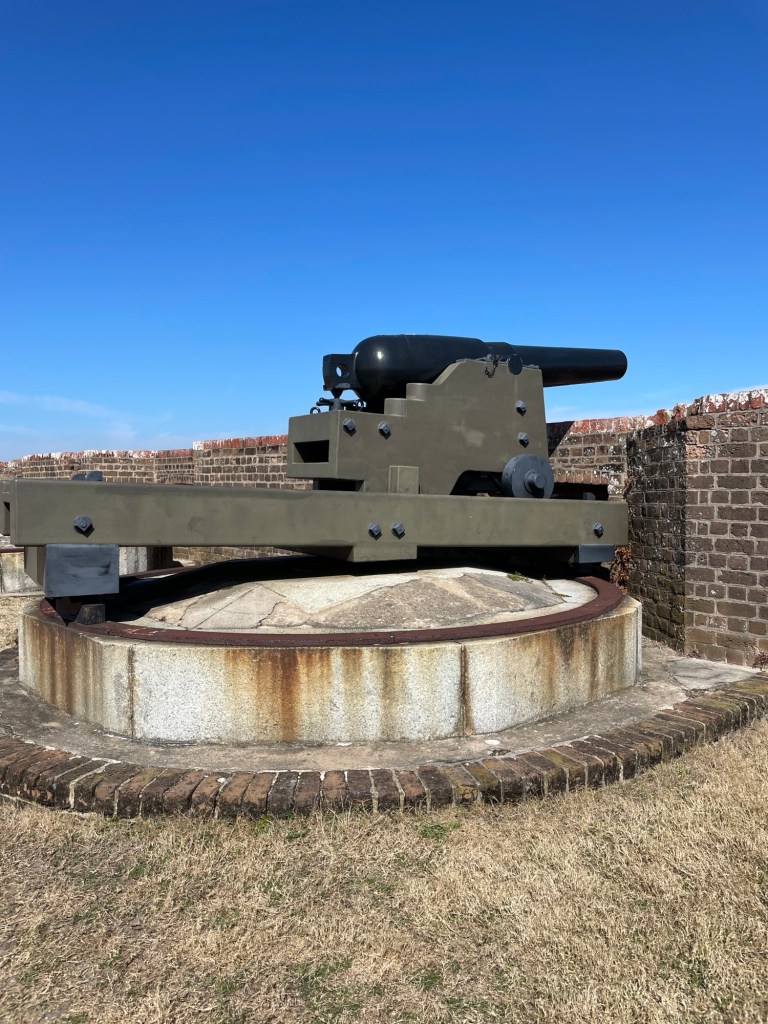
Up on the terreplein, guns were mounted on revolving turrets. The metal band allowed the mount to move and acted as a guide to keep it in place.
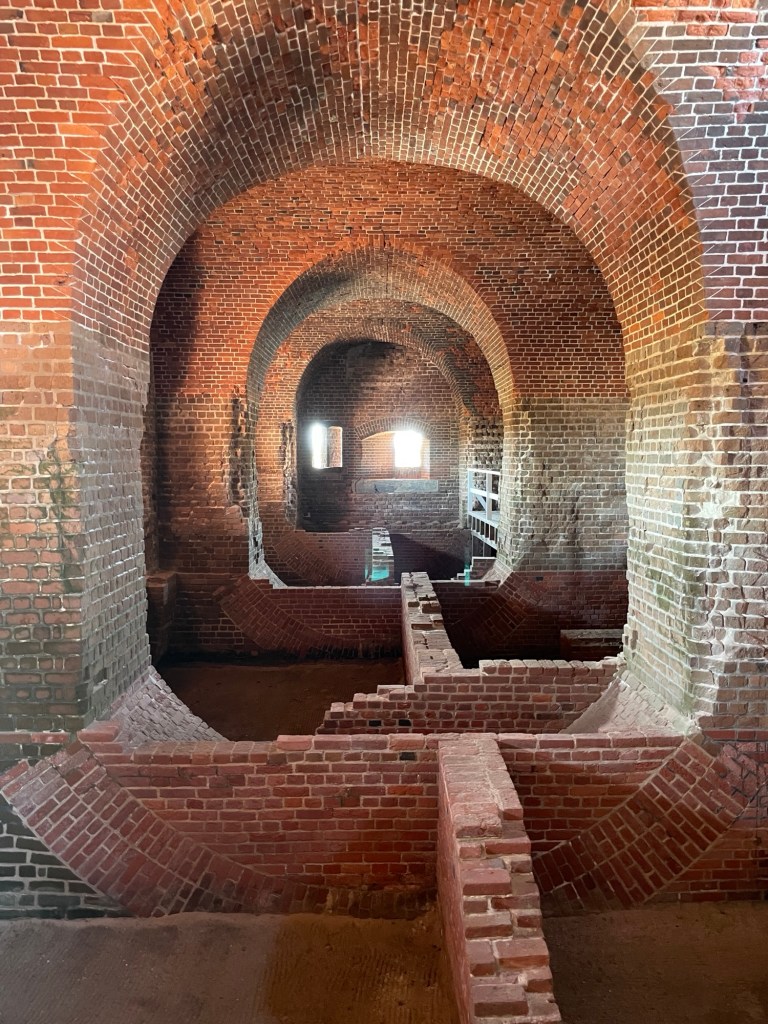
During restoration and during archaeological work, the staff learned that the arches make a complete circle underground. What an exciting discovery, and one that makes perfect sense after the fact. Arches are strong, but circles are even stronger. And these ones are beautiful too.


Leave a reply to Anonymous Cancel reply