Grab a snack, this is a long one.
The company that Jeff used to work for has an office in West Palm Beach so he wanted to make sure that we stopped there long enough for him to say hello to some of his former colleagues. Now that coastal community is rather $$$Fancy$$$ so we were surprised to find the John Prince Park Campground in Lake Worth, a fairly quick drive to the island beach area, an easy on-off Interstate 95, and not too far from the company office. We were even more shocked to find out how reasonable the price was for being right in the thick of it all. Sure, it takes an age to get anywhere regardless of distance in the Palm Beach area, especially during the commutes, but that’s the case all the way along the southern half of East Florida.
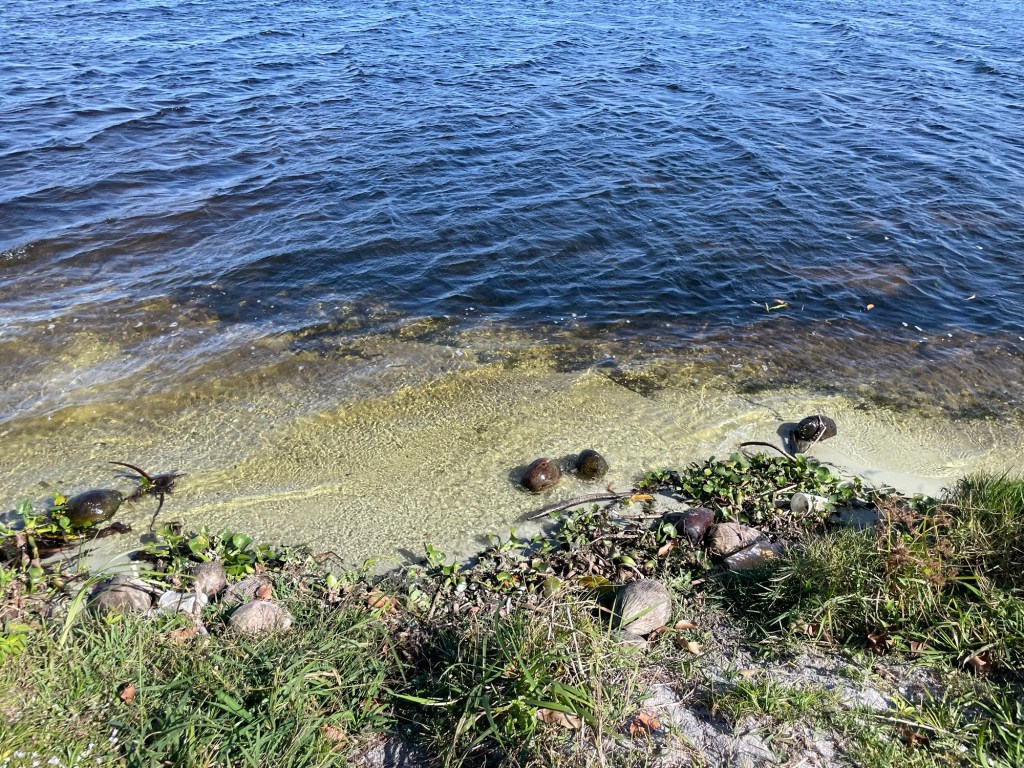
Our campsite was right on the water and a few coconuts were bobbing at the water’s edge. What a nice welcome. We had friendly and down to earth neighbors, with lots of them stopping by to chat. The HMS Beangle often draws a crowd. An iguana catcher made the rounds. I wish I’d taken a picture of him holding one because those things are HUGE.
After settling in, we headed over to Michael’s home and met his lovely wife and son. Jeff and Michael caught up on things, we all enjoyed a glass of wine, and in a truly amazing feat of spur of the moment cooking, his wife made Jeff and me the most shockingly delicious meal from what she termed ‘bits and pieces’. I could never.
I. Could. Never.
In the strangest twist of fate, Michael and I found out that we had both lived for a bit in the Netherlands — he for a year as a high school exchange student, me as a graduate student intern! It was such fun to randomly be speaking Dutch again and to talk about the country, the people we miss from there, and our desire to go back again.
As for West Palm Beach, Jeff and I spent two days relaxing, catching up on laundry, driving the A1A coastal road, and having some spectacular caught-that-morning ceviche with fried plantain strips. Highly recommended. I wish we could remember the name of the specific fish, as it was pretty rare and was only caught when the weather turned cold. It was very delicious. Meaty, mild, and firm textured. I’d order it again and again if we lived anywhere near there.
You know how when you buy a green car you see green cars everywhere? I experienced that after going to visit the Flagler House and Museum while Jeff had lunch with a few colleagues.
Henry Flagler made his fortune as one of the five men who founded The Standard Oil Company, with Flagler directing the accounting side of things. After amassing an absolutely obscene amount of money (from one of the dirtiest and most ruthless companies/industries in American Gilded Age history), Flagler went on to buy up disparate railroads around Florida and converted them to a standard gauge, initially to make travel to Jacksonville, FL where his first wife had moved for her failing health easier. He and his second wife, moved to St Augustine. Soon after, he and his third wife settled in West Palm Beach and it’s there that I toured their palatial home, now turned museum. His rail lines, like his infidelity, connected them all.
Later, he had new rail lines built along Florida’s eastern shoreline all the way to Miami (which he named), under the name of the Florida East Coast Railway. Eventually he extended that rail line all the way to Key West, despite advice and expense. You see, for every mile of rail installed, the state gave Flagler 8,000 acres of undeveloped land. You can see how it went. He built more rail; he got more undeveloped land. From his more than two million free acres, Flagler had towns built around his rail stations and brought people into Florida to build and work in those hotels and other businesses.
It’s not an exaggeration to say that Flagler is the father of modern, tourist-based Florida. He was also, quite probably, not a very decent husband, but you can decide that for yourself. Once you know the name, you see it everywhere: Flagler College, Flagler Station, Flagler Airport, Flagler County, Flagler High School. Like I said, ‘Green cars. Green cars everywhere you go.’
At the house museum, I didn’t take a single picture. I just enjoyed myself as I traveled from room to room and listened to the different tour guides. Sometimes you just have to relax and enjoy the ridiculousness.
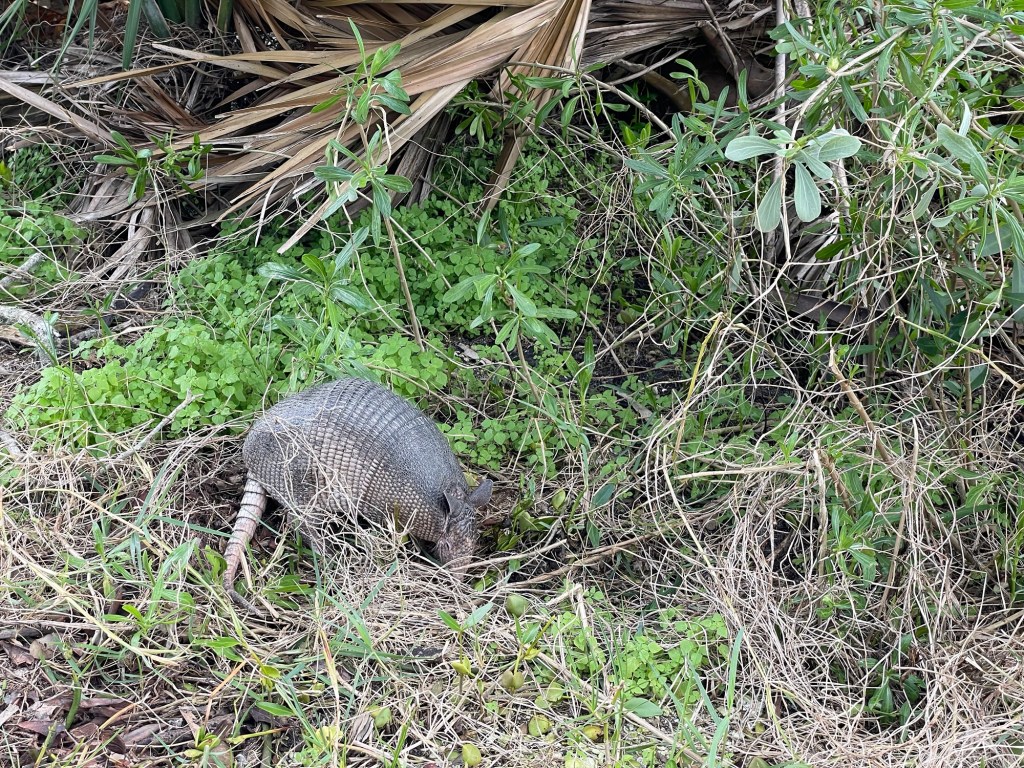
Heading further up the coast, we snagged a few nights at another Hipcamp. This one was a wonderful, private, campground-like spot with no trash on the ground and no random hippie encampments on the other side of the makeshift fence. Niiiice. They did have an Appalachian Trail-style mouldering privy, which would take some getting used to long-term, but like alligators way too close to the sidewalk, you can get used to a lot of things if you train yourself to not think about them too much.
We were quite fortunate to be close to Canaveral National Seashore, Merritt Island National Wildlife Refuge, and the Kennedy Space Center. Since we only had two days there, we planned to spend the first one following a 30 mile driving tour of the region to get an overall feel for things, starting at Canaveral National Seashore and finishing in nearby Titusville, FL. We never made it past stop one that first day.
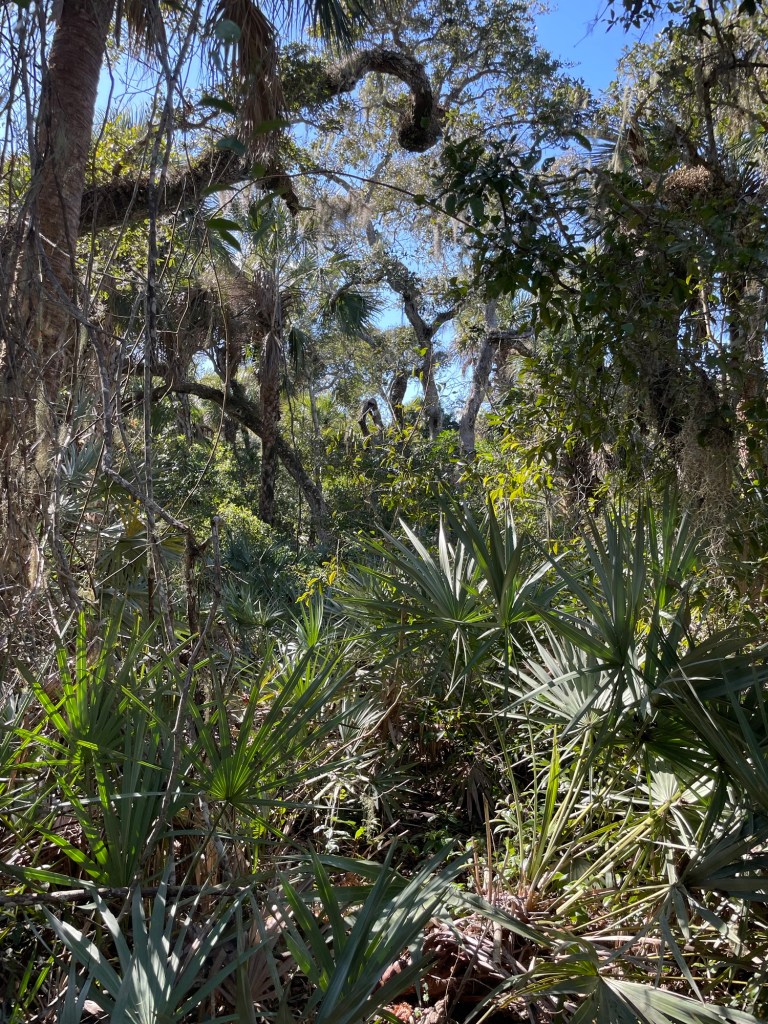
The road into the National Seashore looks like any other stretch of a Florida coastal neighborhood, which was a touch concerning. Miles and miles of condos, bars, large coral-colored houses on stilts, restaurants, and 55+ apartment complexes. But then, suddenly, you’re at the preserve and it’s all quiet dunes, sea grasses, saw palmettos, and brown signs. We showed our National Park Pass and proceeded to the visitor center. Following the park’s map, we noted which parking lots were closed for resurfacing and that the Eldora Statehouse (just a normal house) exhibit rooms were open.
Our lucky break came as we climbed out of the truck at the Eldora Trail and promptly met The Plant Guy. That’s how he introduces himself. The Plant Guy. He’s a volunteer and he walked to the Statehouse with us and showed us many different plants and artifacts along the way that we would have walked right past, such as the location where an abandoned building with a glass fronted porch used to be, a plant that locals used to make them throw up and a plant to bind them up, as well as additional epiphytic plants hidden up high, such as a fern that lives in palm trees and the butterfly orchid that lives on the branches of live oaks.
He told us about how the settlers used to harvest curved branches from massive Live Oak trees on the island which were then sold to build the hulls of ocean-going ships. He told us about the many crops that were raised (primarily cabbage) and if they were consumed locally or put on one of Flagler’s northbound trains for resale all along the eastern seaboard.
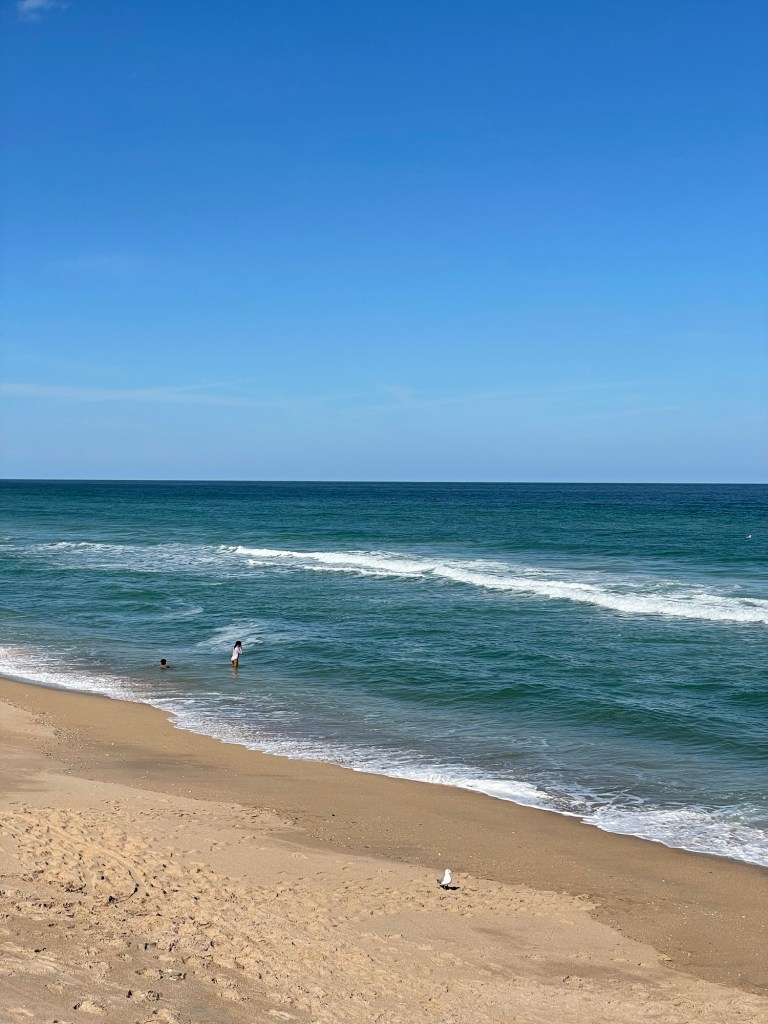
Driving further down the shore road, we stopped at a few boardwalks and took in the Atlantic Ocean. A few were braving the chilly water, but most people watched from the railings or their beach chairs.
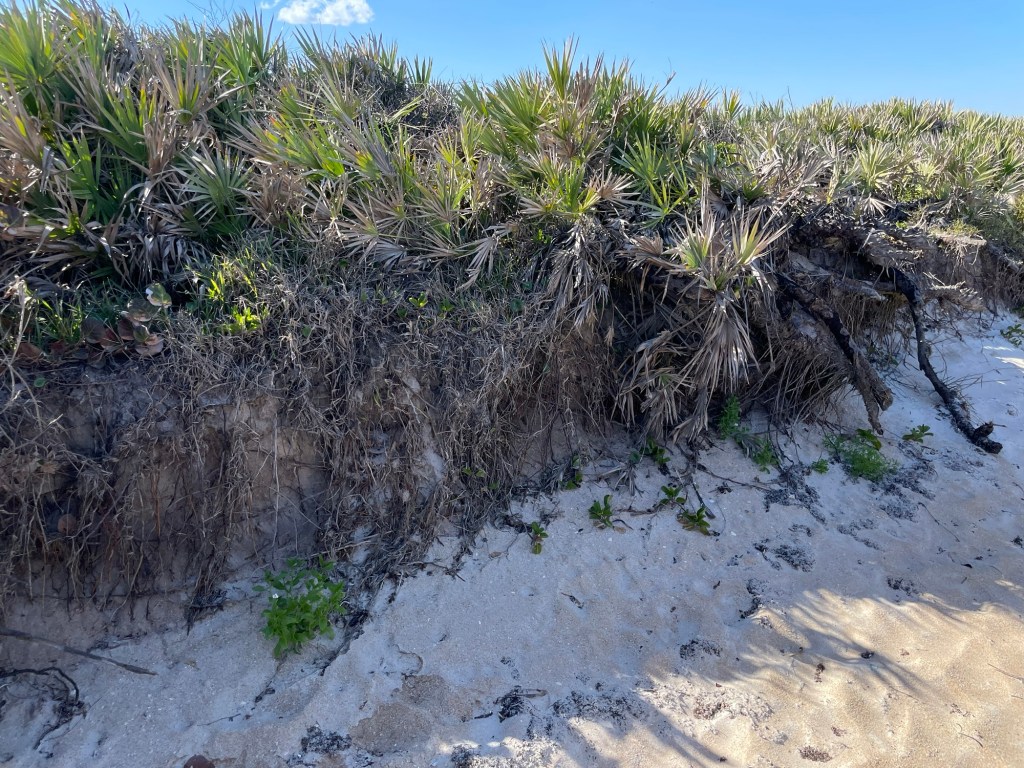
There are signs all along the beach, road, and boardwalks reminding you not to walk on the fragile dunes. I get the impression that most of Florida’s barrier island dunes are surviving on hope and saw palmetto.
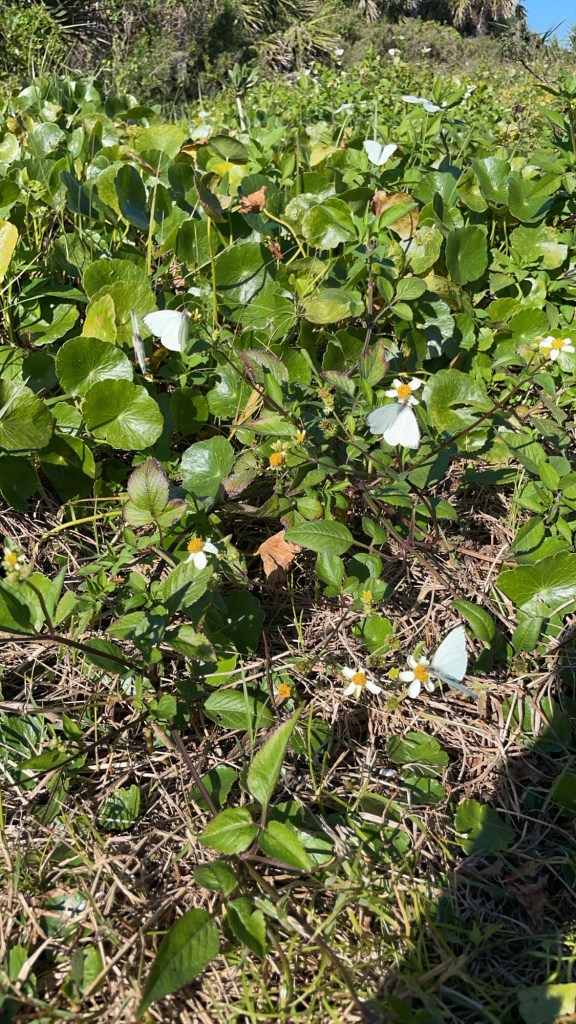
We’re told that the landscape throughout the National Seashore is very similar to what the indigenous population would have known before colonization. During the planting era, the landscape was changed dramatically and for the worse. Hurricanes scoured the land and tore apart the concrete barriers placed along the seashore. But once the planting pressure was removed and native plants were restored, the Canaveral National Seashore’s landscape rebounded and the coastline began to stabilize again. It’s almost like Nature knows best how best to protect and maintain a coastal landscape.
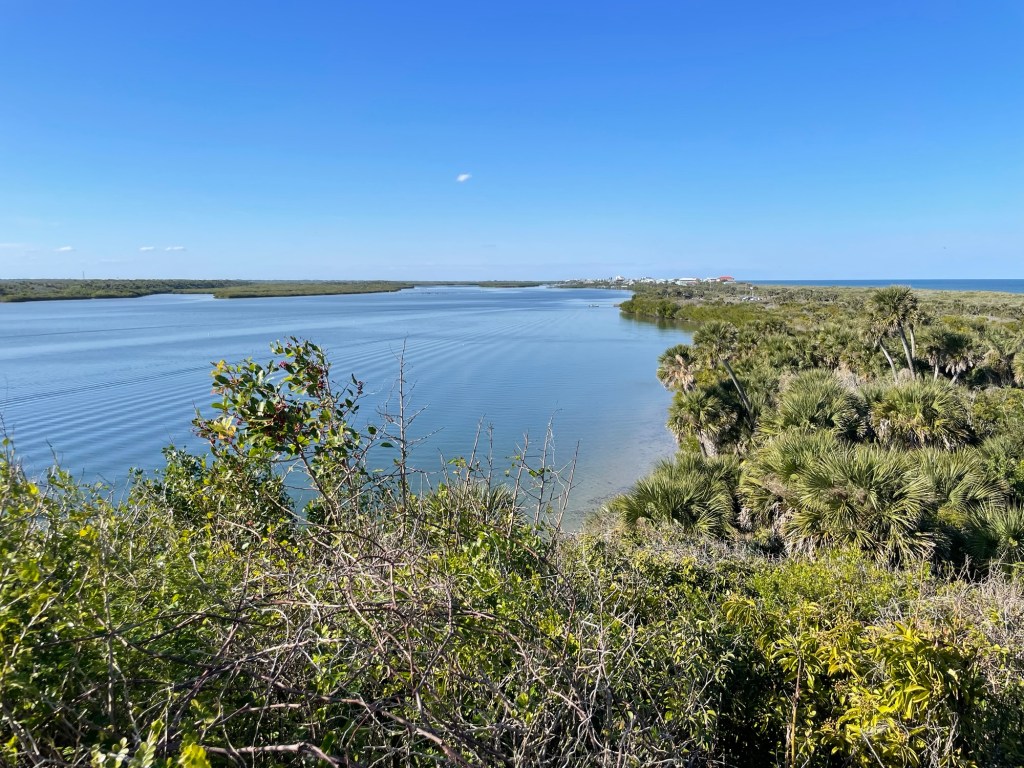
Throughout central-north Florida and south-east Georgia a group of indigenous tribes known as the Timucuan (also written Timucua) made large shell mounds called middens. (These are some of the same people that Hernando de Soto and his gang of ne’er do wells met, abused, and killed as they searched for gold.)
Midden, if you’re unfamiliar with it, is a fancy archeological term for trash heap. We never really throw anything away. There is no away. Maybe we burn it. Maybe we dump it in a lake, river, or the ocean. But throughout time, we humans have usually dumped our unwanted items in a hole or made of pile of refuse and moved on. Our hermetically sealed landfills — even when they become Midwestern ski hills — are really nothing but modern day middens.
Research trenches show that Turtle Mound is comprised of oyster shells, trash, and soil in uneven layers, over the course of about 600 years, from roughly 800 CE through 1400 CE. It reaches more than 50 feet (15.5 meters) high. That’s a lot of oyster shells.
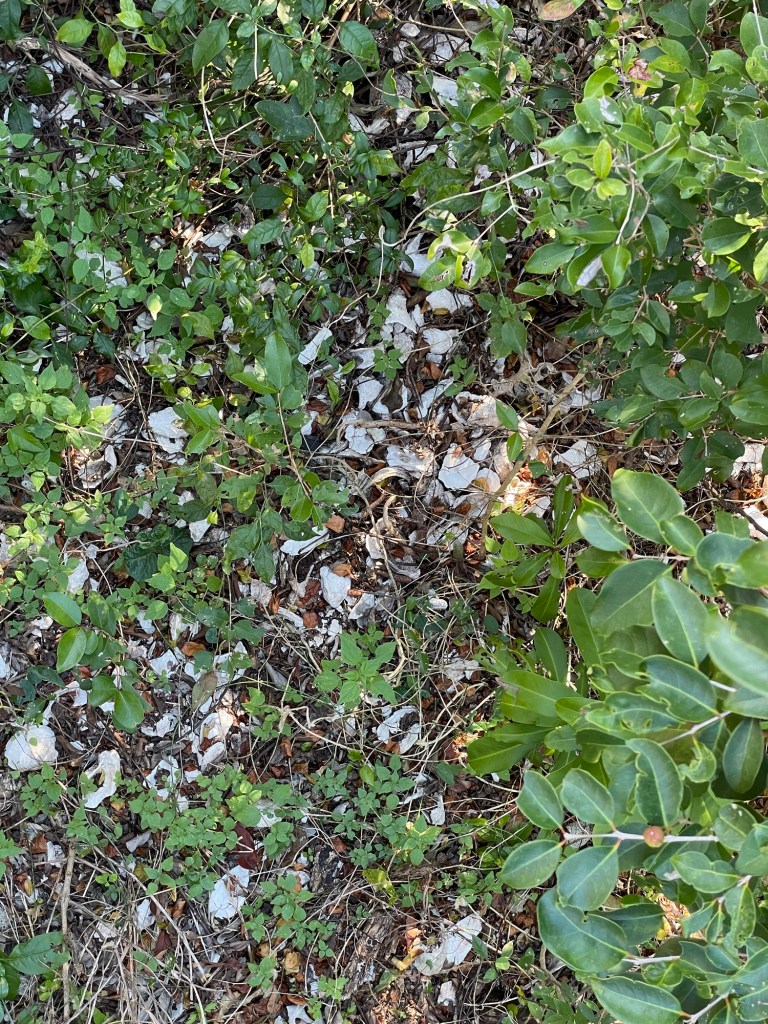
Now the question you might be asking is why there are so few oyster shell middens left. The answer is beneath our tires. Timucuan oyster shell middens all across the region were sliced into, scooped out, and the shells crushed down as a raw material during Florida’s road building boom days. The few middens that remain were saved by individuals who refused the lucrative offers of road construction firms, somehow understanding what was at risk.
Are these middens exciting? For you and me and The Average Joe, no, not really. But they’re all that’s left to tell us a bit about the day to day lives of an indigenous group of approximately 200,000 individuals in 1513 when Juan Ponce de Leon claimed Florida for the Spanish. By 1595 their population had dwindled to around 50,000, by 1700 that was a mere 1,000. The Timucuan were extinct as a society by 1800. And frankly, for that reason alone, I think the little bit that we have left of them is worth saving.
Day Two found us back on the grand tour path with a tighter focus: finish the driving tour, see the sights. We failed. We knew we would fail the minute we saw a wild momma boar and piglet cross the road in front of us while passing into the Merritt Island National Wildlife Refuge.
With the temps dropping quickly, we stopped at a manatee viewing area and saw a little one warming itself in the murky water. Shivering, I dug into the winter stuff bin in the back of the truck and pulled out my gate agent parka, insulated hat, and gloves. It might have looked ridiculous in Florida, but I was toasty warm.
We slid into the southern-most edge of Canaveral National Seashore, just to do it, and saw the Artemis II rocket up on its launchpad. Police were blocking every viewing platform, so you could only catch quick glances of it as you drove. Luckily one corner is a head on view, so I grabbed a terrible photo heading into the 90° turn. The launch ended up being delayed due to “hydrogen leaks and communication issues during the final ‘wet dress rehearsal.’” That sounds bad.
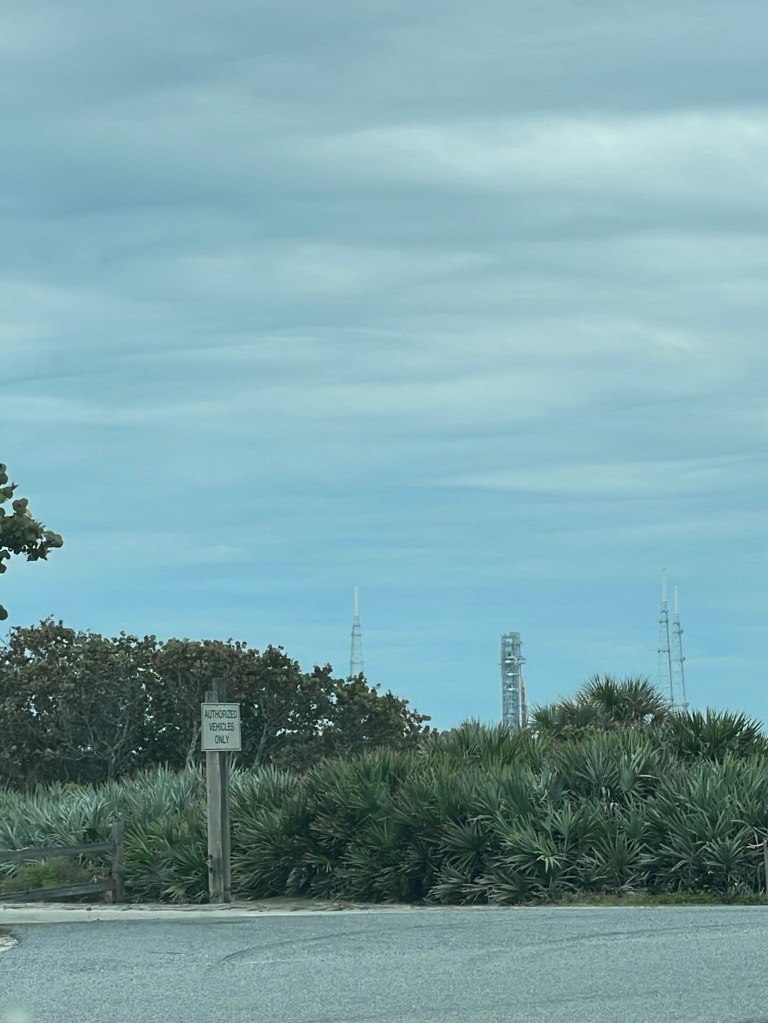
Having experienced a small satellite launch two nights before, from many miles away, with the roar and ground shaking, I can only imagine what that monster will be like going up. We mentioned the sound and shaking to our hosts and they said, “By the time that gets to us, the rocket is long gone.” I find that simply amazing.
Leaving the shoreline, we drove past the Kennedy Space Center’s staff entrance with its quite unfriendly looking security patrol and into Merritt Island National Wildlife Refuge, stopping at their quite informative Visitor Center. It’s a small space, but it does a very good job of highlighting the history and importance of this wetland area.
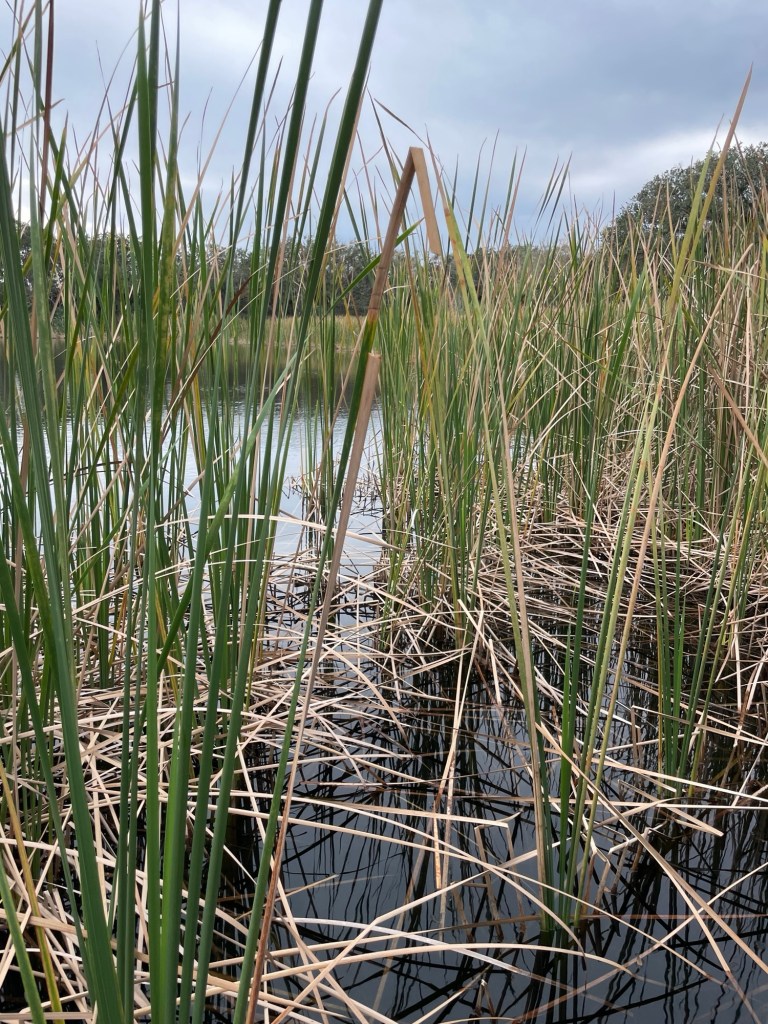
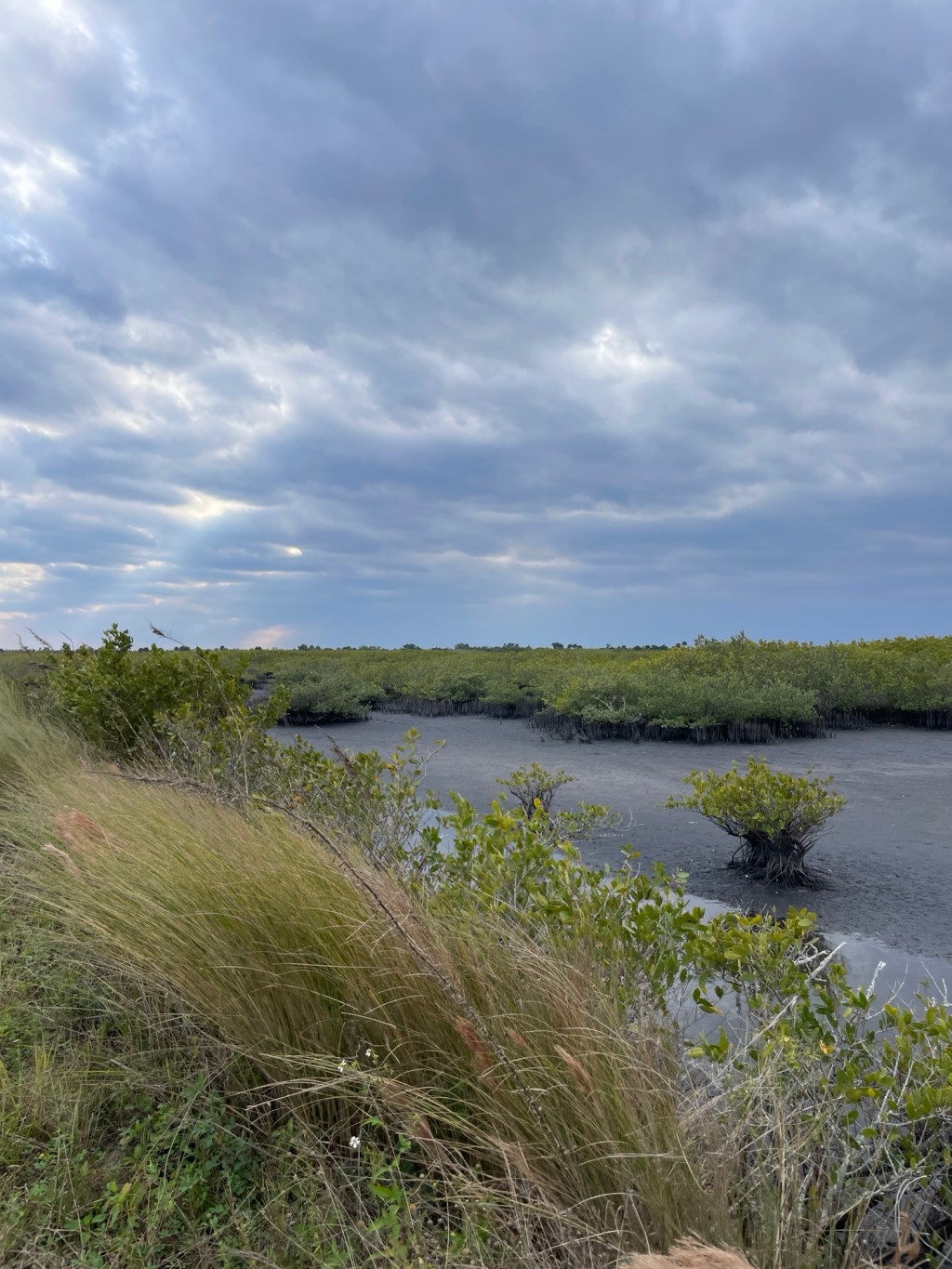
Jeff saw all kinds of birds in and around the visitor center and out on the driving/viewing loop. Sometimes I wish I could teleport some of our bird watching friends and family onto the truck with us, because below is as close as I get to spotting birds. Jeff tends to glaze over when I get excited about new-to-me plants and trees; I give him the awkward smile when he rambles on about the colorations on a non-breeding, female, southern whirdee doo.
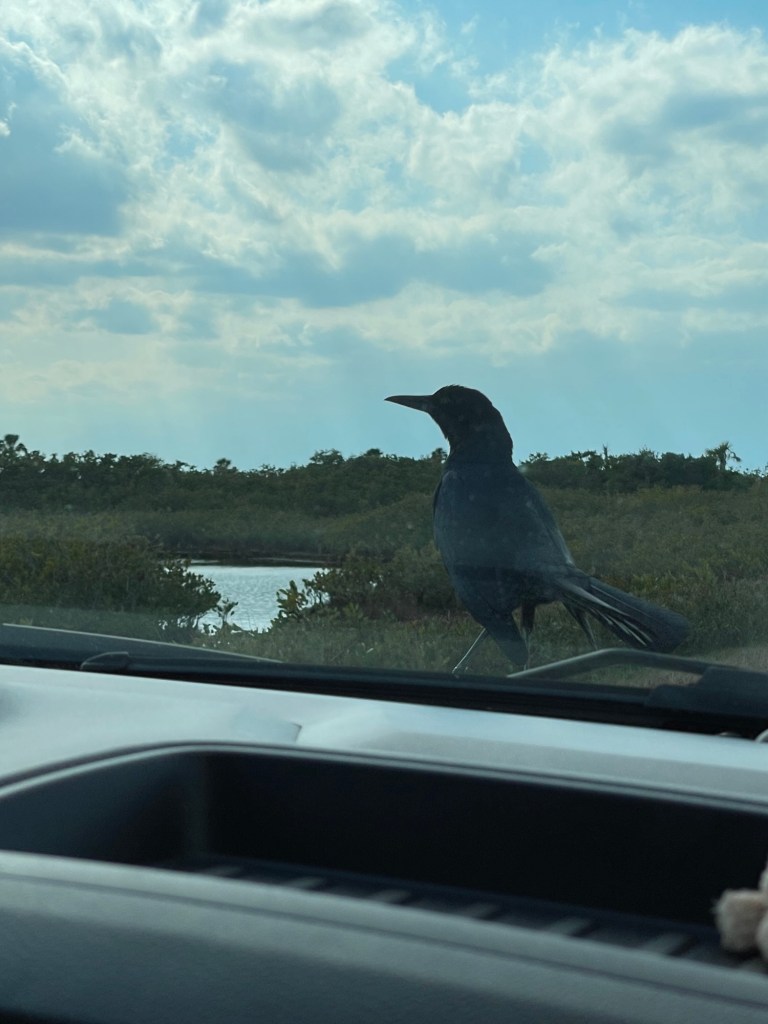
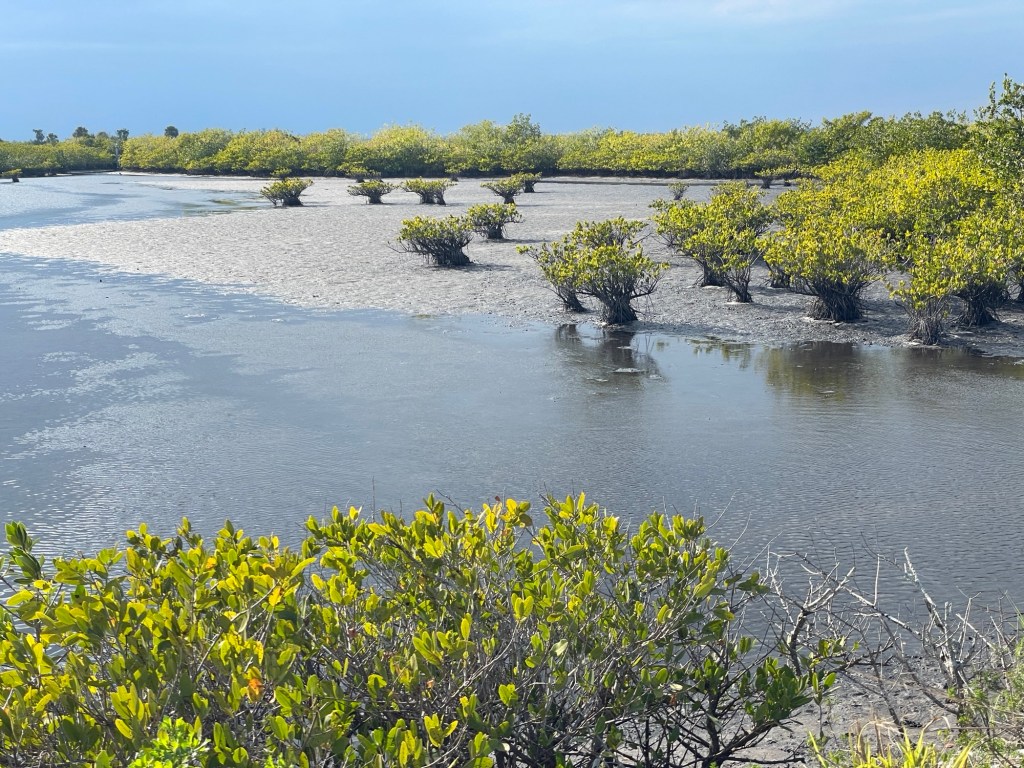
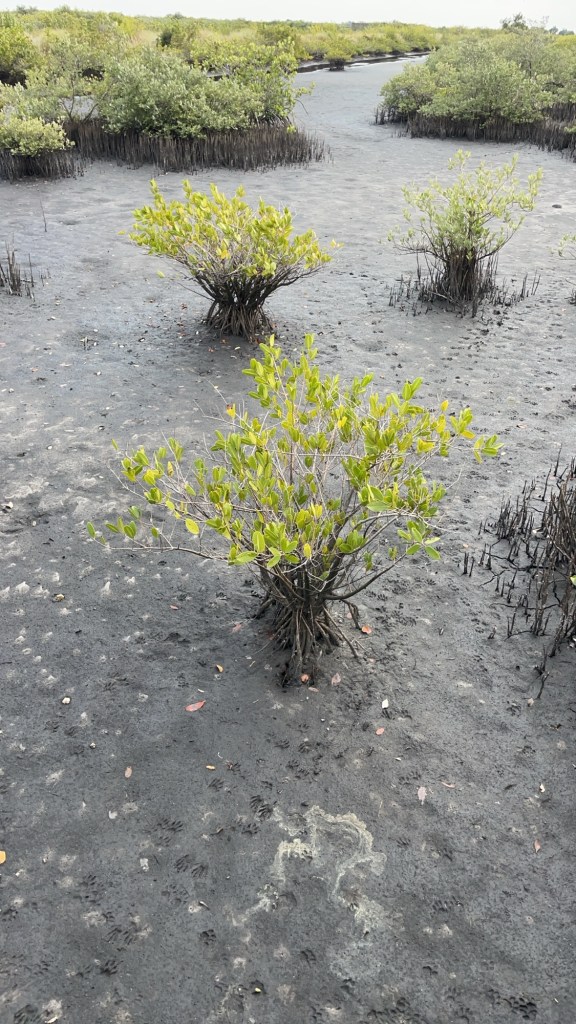
For the record I don’t know much about plants and trees, but I like them and I’m learning.
I guess if you can spend nearly all your free time with someone for 30+ years, pick up and move hundreds of miles with that person multiple times, and endure the worst pain of your existence together, you can tolerate differing obsessions with equanimity.


Leave a reply to HMS Beangle Cancel reply