The irony of writing about the warmest week we’ve spent in Florida while wearing parkas, gloves, and stocking caps is not lost upon me. It’s cold here in north-central Florida at the moment. Cold cold cold. My hope is we’ll soon see the back side of anything below 40°F for a while. I fear we have not seen the last of them.
Now, back to some remembered warmth.
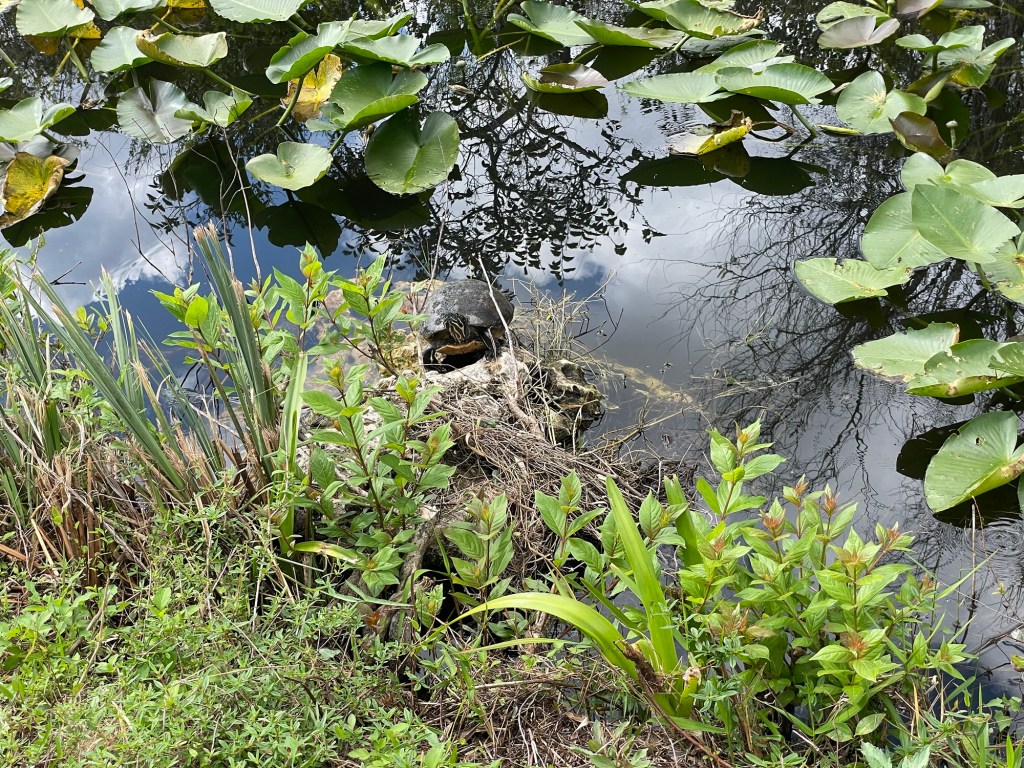
Upon entering the Big Cypress and Everglades National Parks region, I had one goal: I wanted to see alligators in a way that didn’t require binoculars or a zoom lens. The camp host at Monument Lake Campground assured me that no less than FOUR alligators lived in the campground’s lake. Four. We were off to a good start. As you can see below, a smallish one, Rocky, likes to warm itself on an outcropping right in front of the campsites.
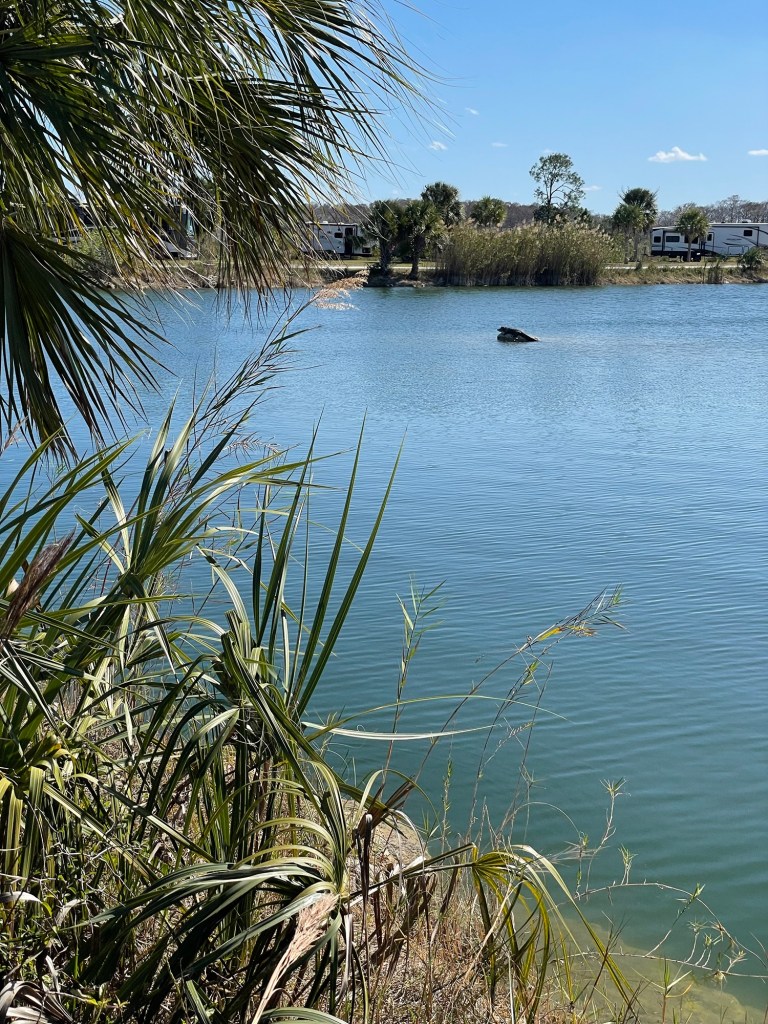
Quickly, we did see all four alligators, but with the exception of one, they didn’t often come close to the shore or even raise themselves too far up in the water. Eyes and snouts would follow you around the circular drive, but the gators themselves were elusive.
As we were parking the trailer, the host commented, “Please use a flashlight at night when walking to the bathroom as rattlesnakes and copperheads have been seen recently.” Gulp. Oh great. As if I needed another reason not to drink anything past 6pm.
Our first tourist stop was at the Big Cypress Visitor Center, an excellent intro to the region. We watched a video about the watershed and read all the informational boards inside and out and walked the boardwalks. I checked out this huge swamp buggy on display while Jeff was occupied elsewhere.
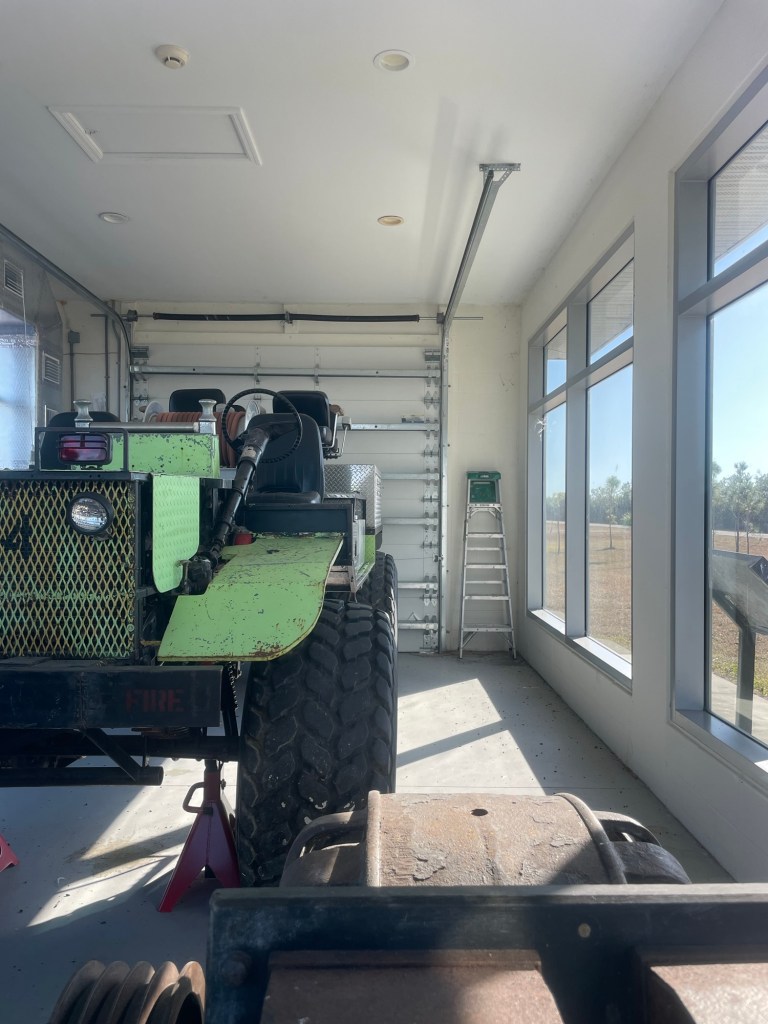
This big green machine is older, but locals still make them from scratch out of spare parts and determination. Just for a sense of how big they are, I’m 5’0” and my eyes were level with the bottom of this thing’s seat. Made to navigate the swamps during the wet and dry seasons, they go anywhere and everywhere, carry all their own supplies, and must be repairable in the back country – because no one is coming to save you if it breaks down.
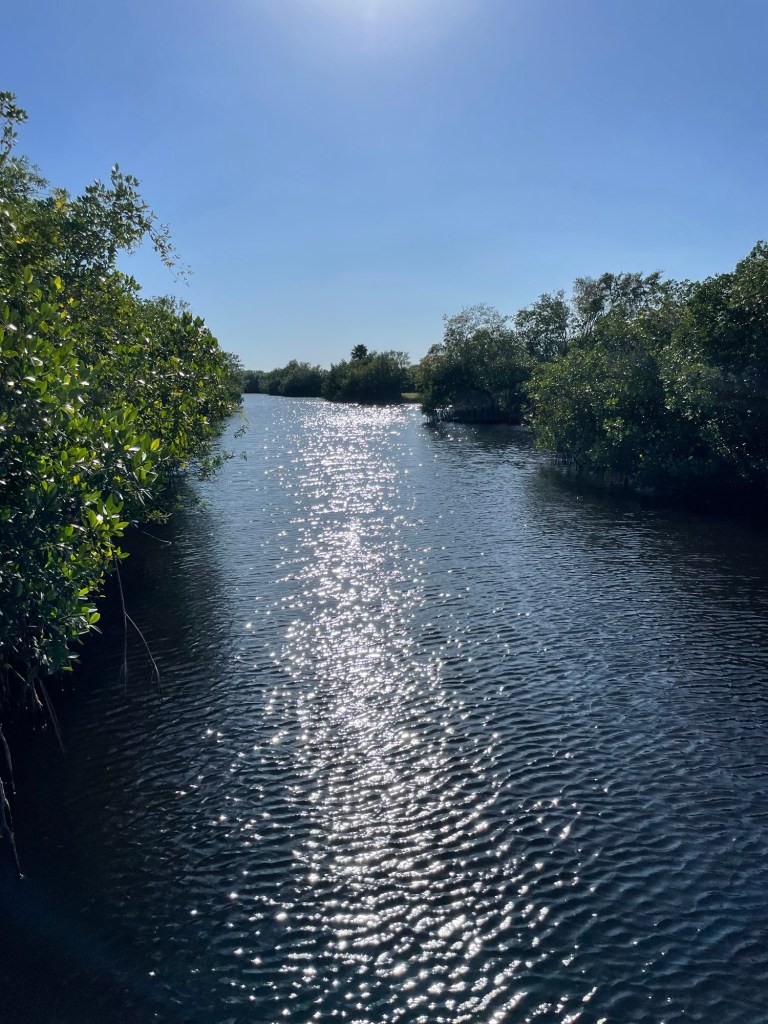
Florida’s state motto (In God We Trust) should actually be No Swimming or wading: Alligators. Those signs are everywhere. If there’s three tablespoons of water, an alligator has probably claimed it. Lakes and ponds, check. Canals and rivers, check. Swimming pools, check. Muddy banks along trails, check. One estimate we heard at Everglades National Park, was that there are at least a million alligators in the Everglades alone.
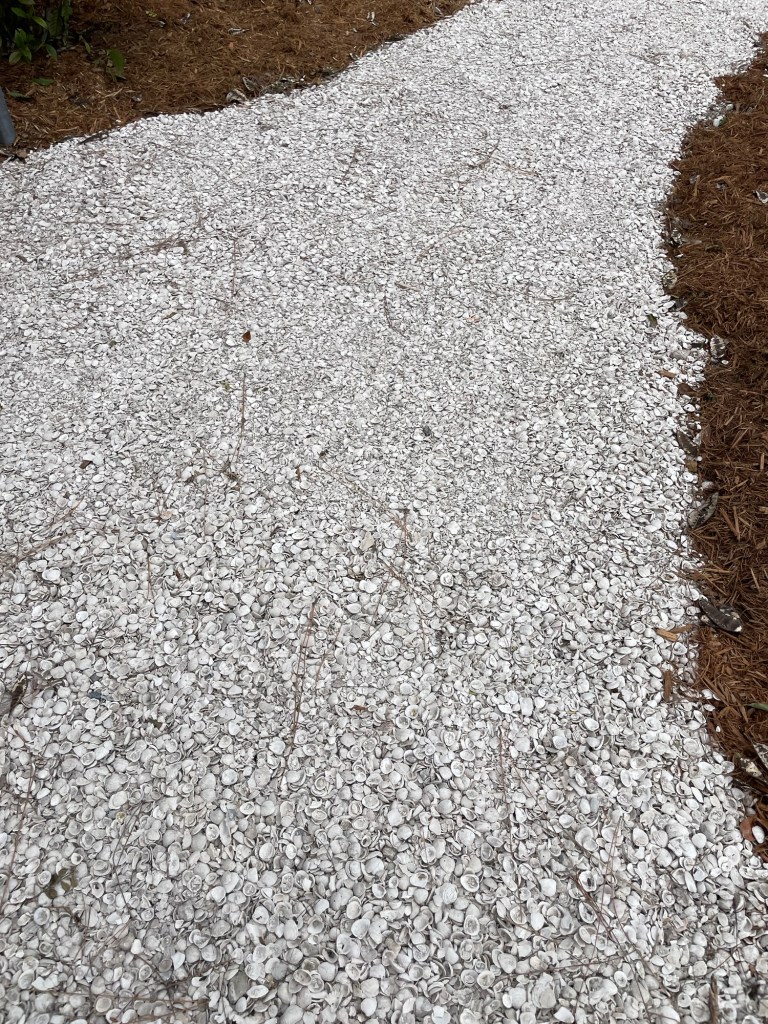
Definition
1: a soft whiteish limestone formed of broken shells and corals cemented together and used for building
2: a small wedge-shaped clam (Donaxvariabilis) used for broth or chowder and occurring in the intertidal zone of sandy Atlantic beaches from Delaware to the Gulf of Mexico
Little white coquina shells have been used for millennia. (It’s a Latin word that means kitchen, btw) We see them all the time in the form of crushed shell paths. You see them everywhere down here, both inland and along the Florida coastline.
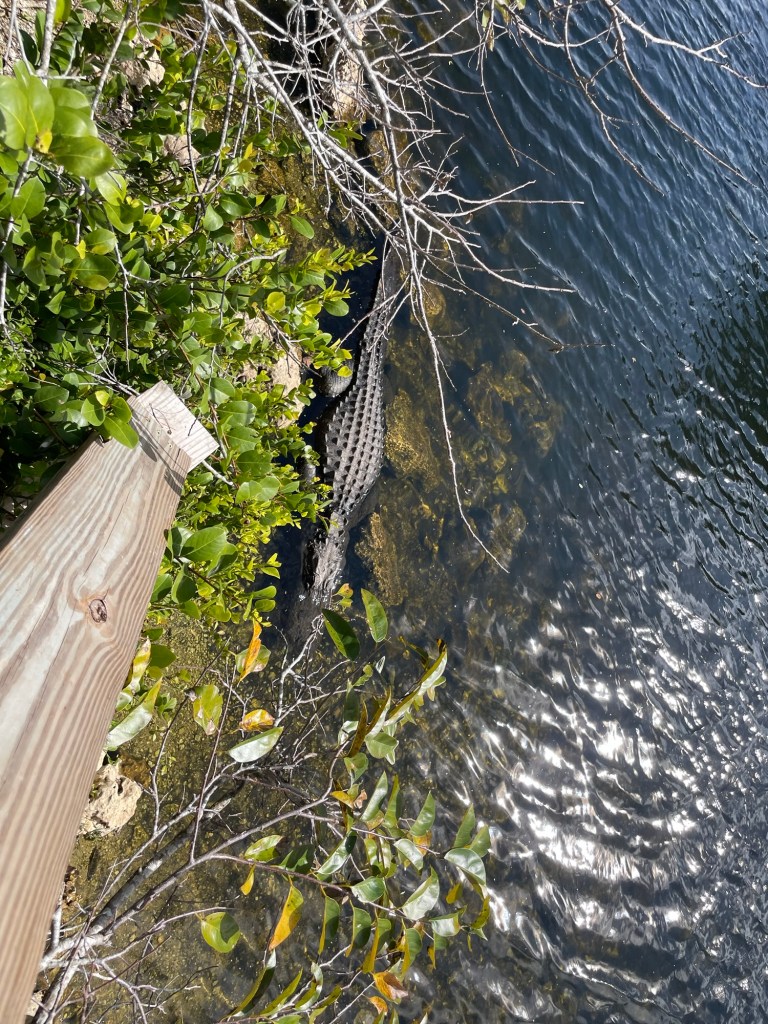
I recommend going to all the ranger talks you can. Even if they seem basic at first, I always find them to be informative after the fact. During one at the Shark Valley Visitor Center, for instance, the ranger explained that an alligator’s knobby back and tail is due to hundreds of small, square, pointed pieces of bone under its hide and attached to its skeleton, together acting as protective armor. We even got to touch a few of these bone tiles during the talk. An alligator’s belly, by contrast, is smooth and relatively unprotected.
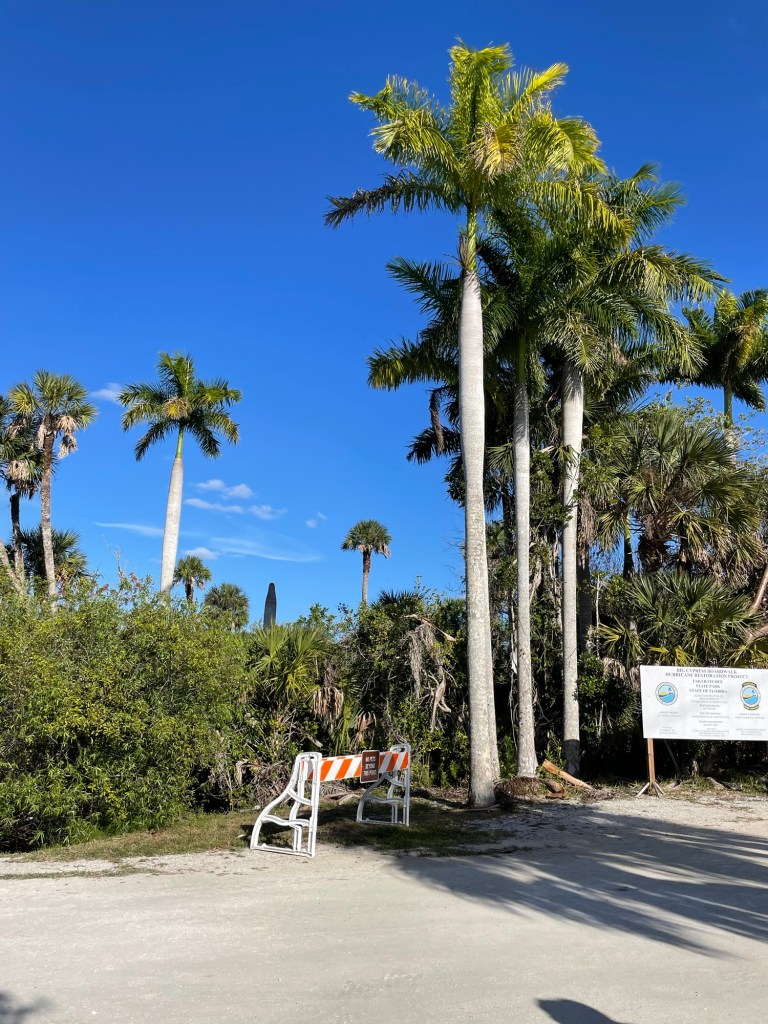
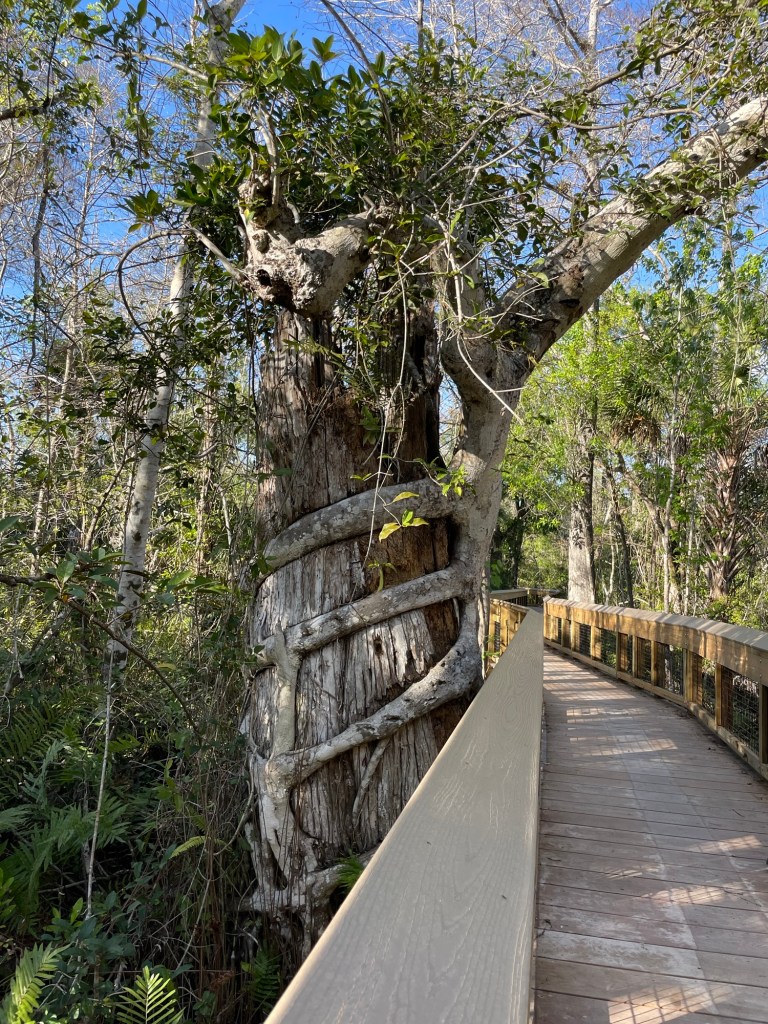
We spent a lot of time walking on boardwalks and appreciated them so much. I don’t think we’d have felt comfortable going into the swamps and hammocks otherwise. There was a lot of talk about how great it is to get out into the swamp on the north-south Florida hiking trail, but I just don’t see us doing that. Maybe if we’d grown up here and had experience doing that with family, school, or scouts and just being more comfortable with the biome overall. Maybe we’re just cowards. How about you? Would you feel comfortable hiking through a Florida wetland — alligators, snakes, and all?
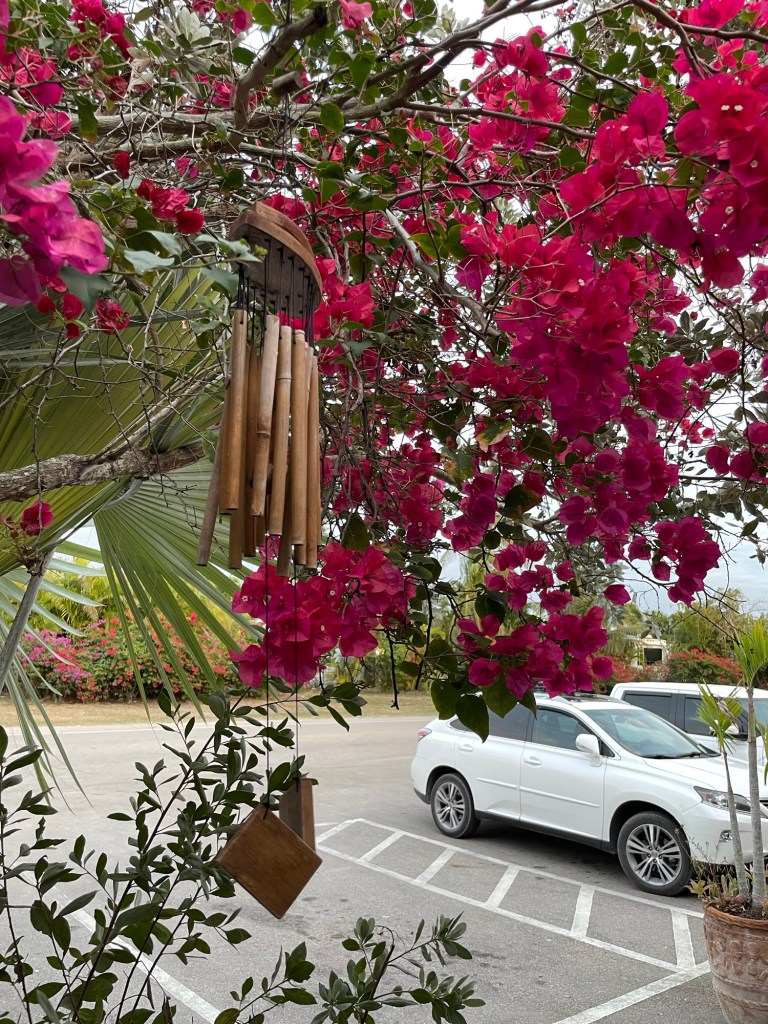
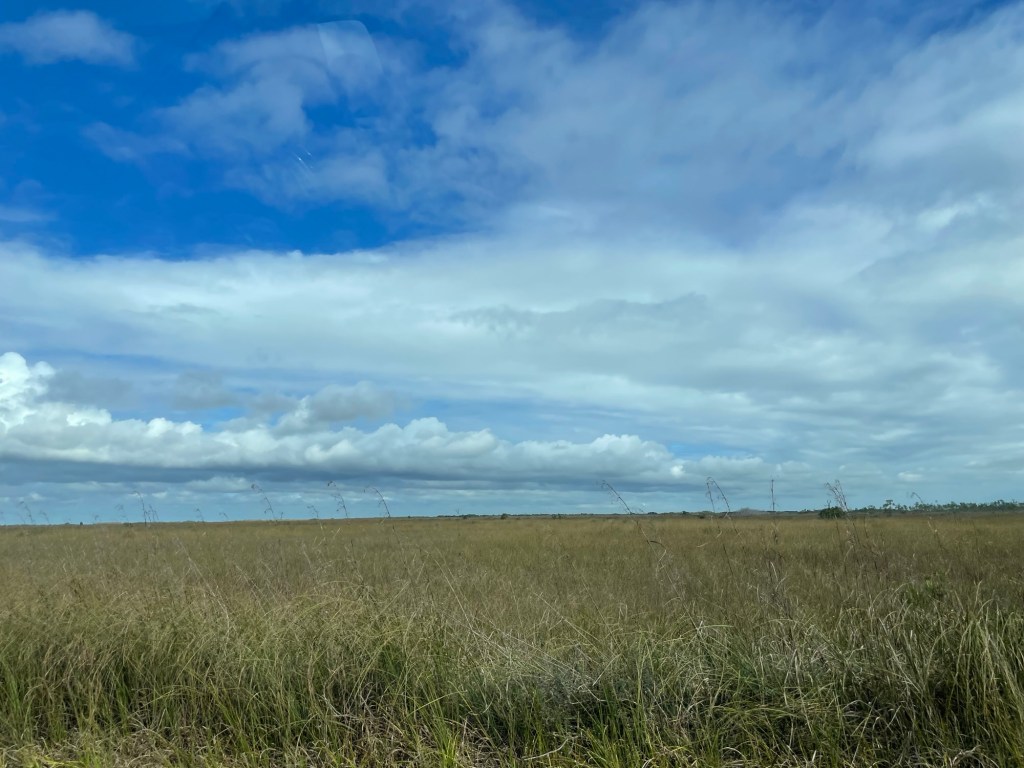
The Everglades surprised us at every turn. The landscape is far more varied than we expected. The source is also much farther away and was once much more extensive than we realized. The wildlife is more elusive, too. I don’t know why, but I guess I half expected to be tripping over black bears, storks, and panthers at every turn. The makers of Mutual of Omaha’s Wild Kingdom and I need to talk.
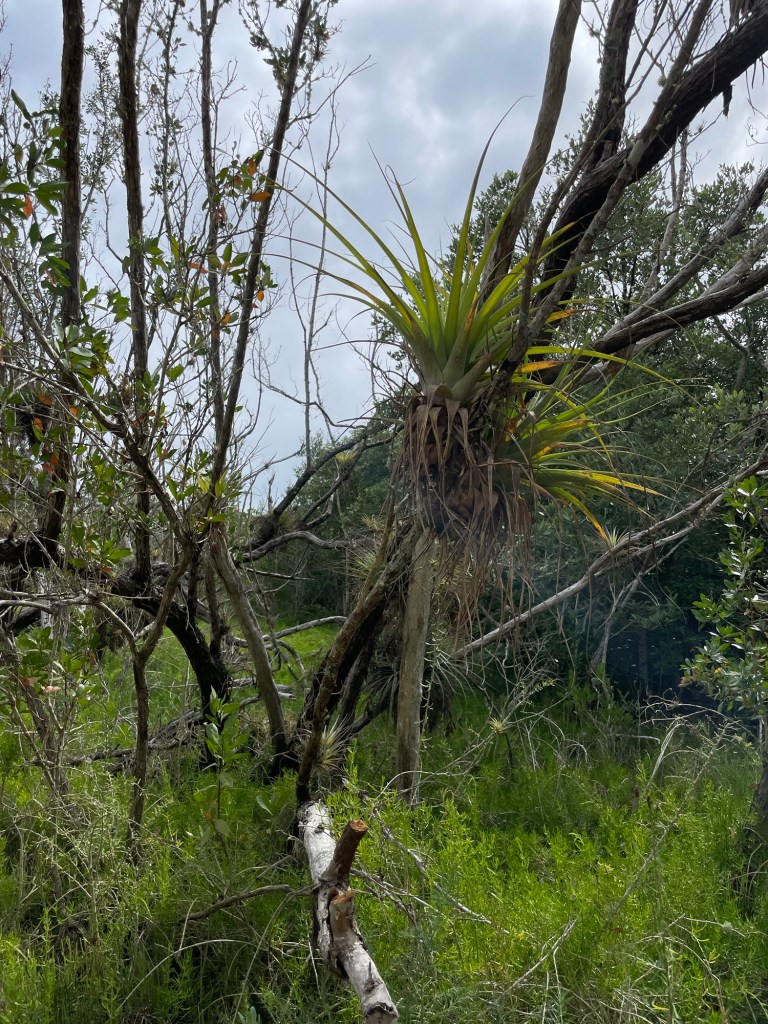
Jeff was adding birds to his life list at an unprecedented rate. Big birds, little birds, bright birds, camouflaged birds. He sees them everywhere. I nod and try to see where he’s pointing.
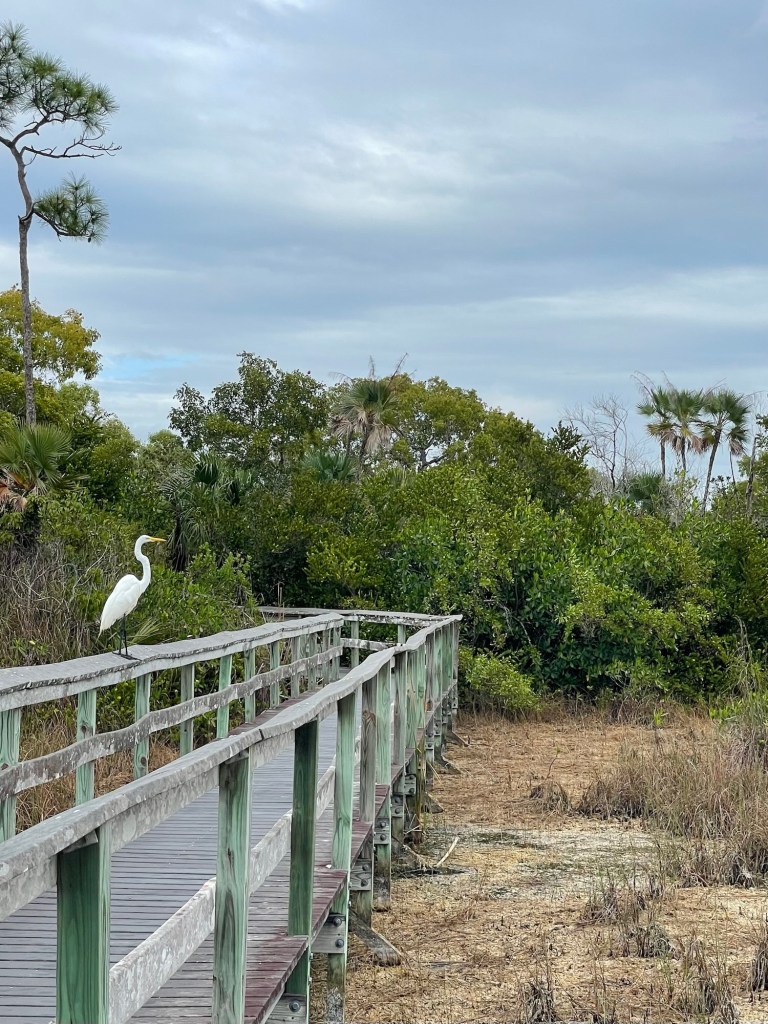
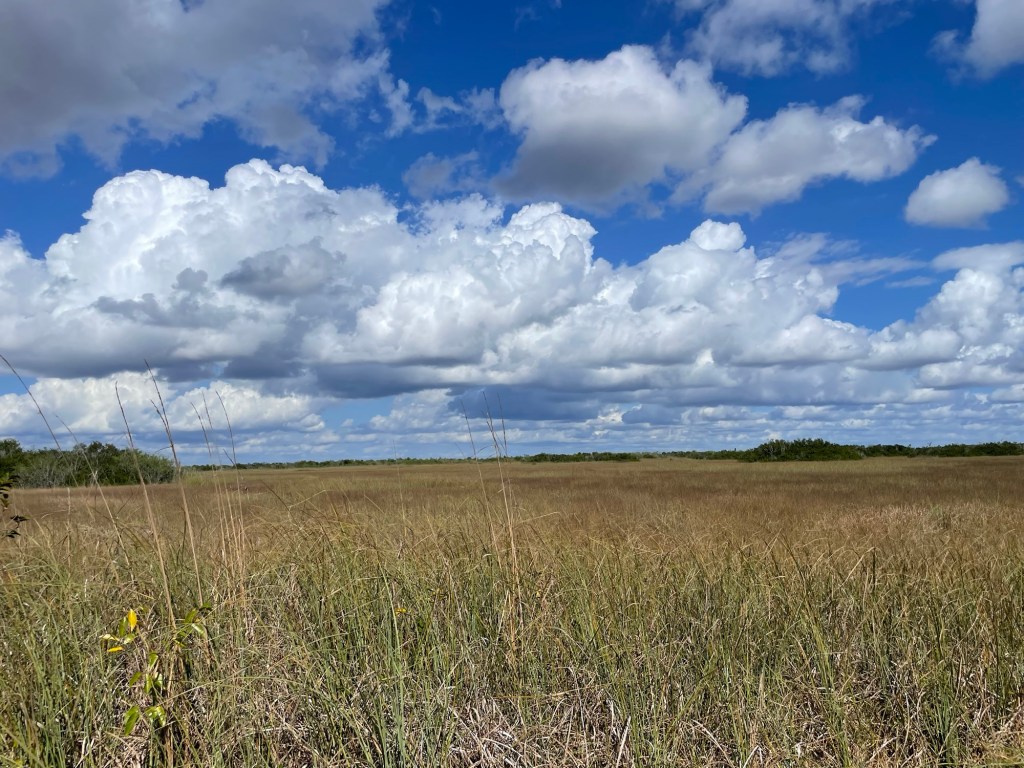
Above, you can see how dry the Everglades and Big Cypress regions are right now. At every visitor center, rangers were mentioning that it’s concerning how low the water levels are and how little rain the state has gotten. We passed a fire out on the plains as we drove in, so we didn’t need much convincing.
When the Tamiami Trail was built (Highway 41, that connects Tampa and Miami), it effectively cut the Everglades region in half. Any water that escaped being channelized east (in order to drain land for agriculture and to fill metro water towers) was now impeded between Lake Okeechobee and the southern tip of Florida’s peninsula, turning the natural wildlife corridors for panther, bear, tortoise, and etc into a deadly game of Frogger.
Although it’s a big pain to drive through right now, I was glad to see that raised bridges are getting built to allow both water and animals to move more naturally again.
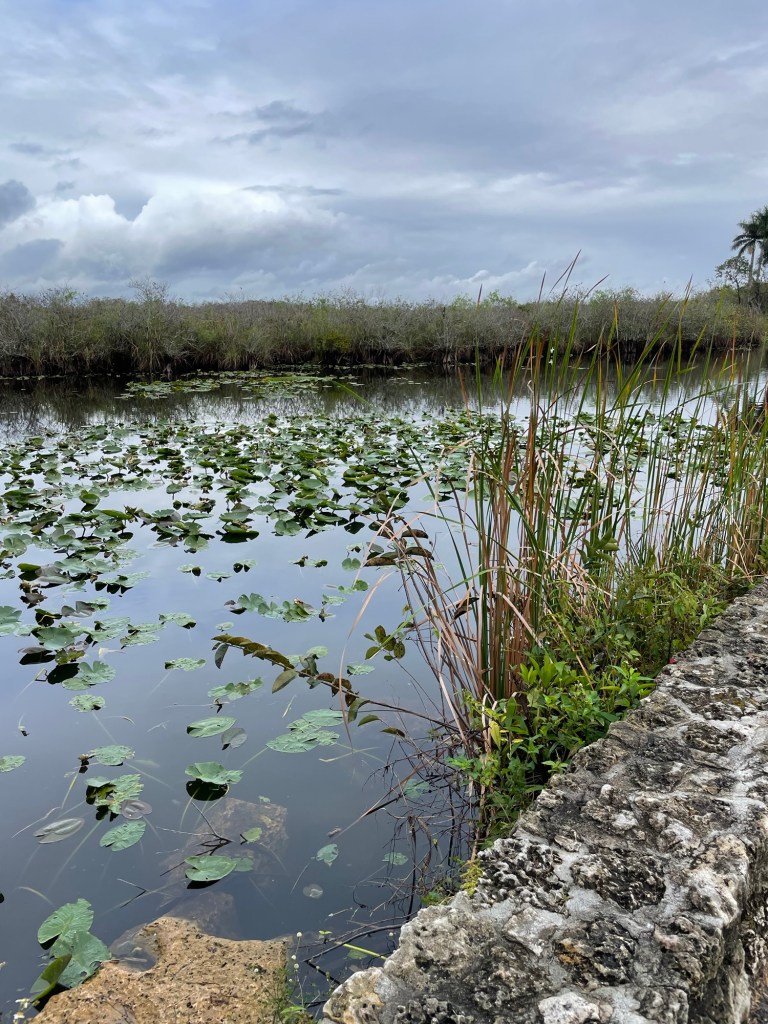
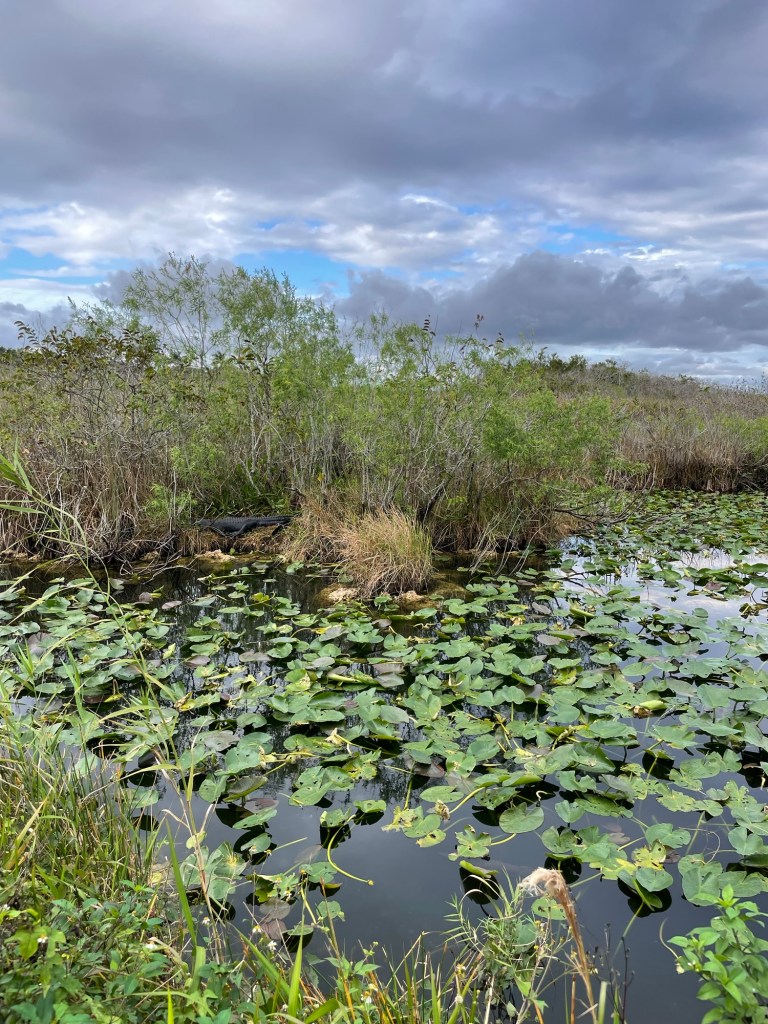
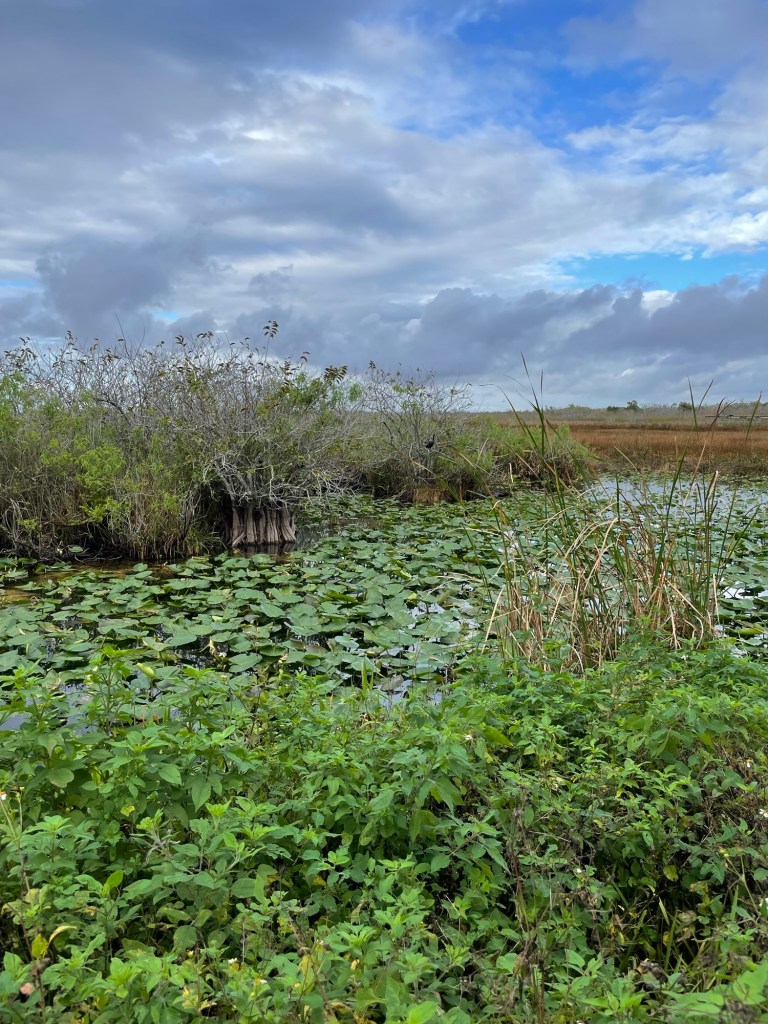
We got caught in a brief but intense rain storm while at the southern Everglades NP section and again while we drove back to the campground. Great clouds make for an excellent sunset.
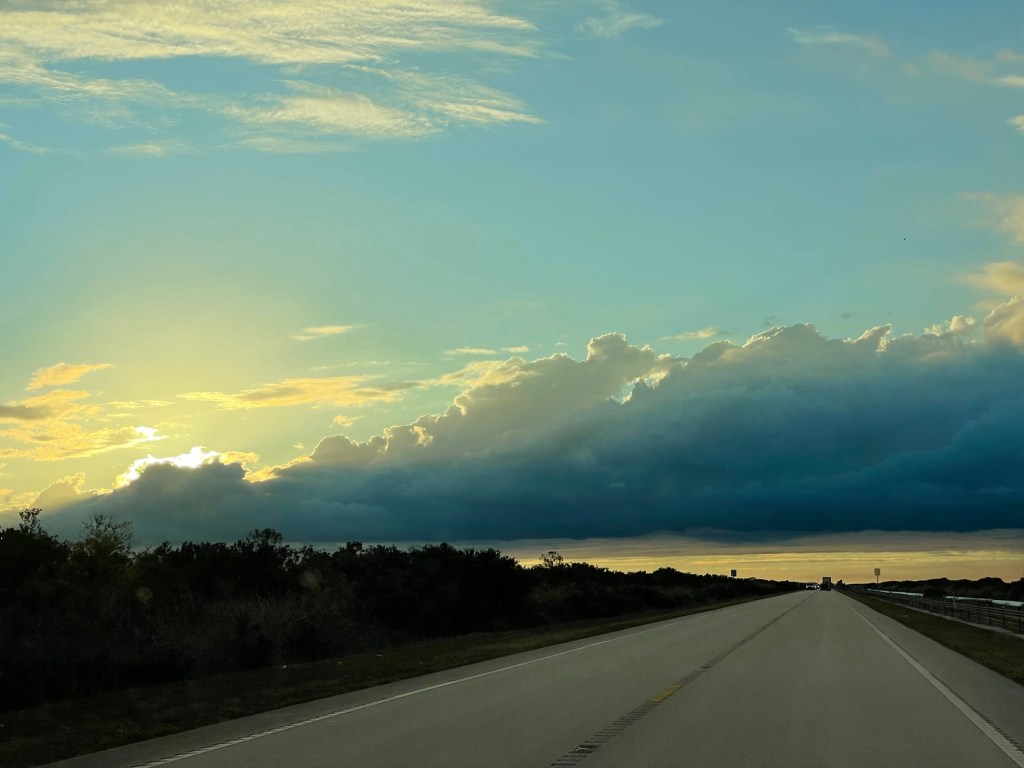
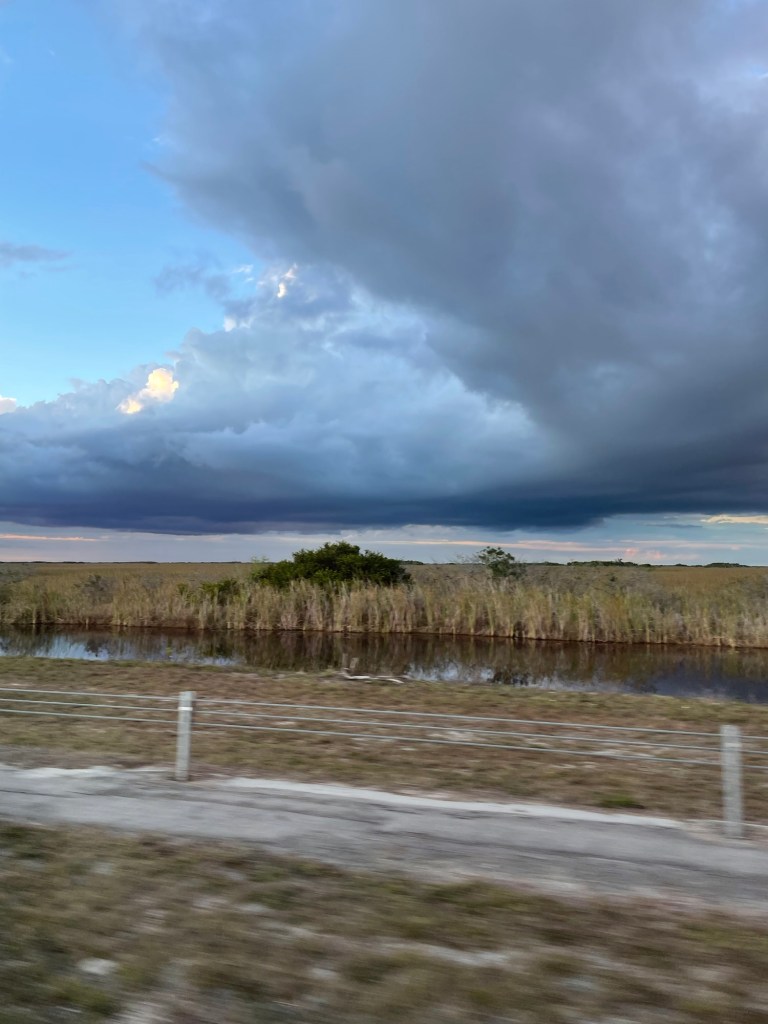
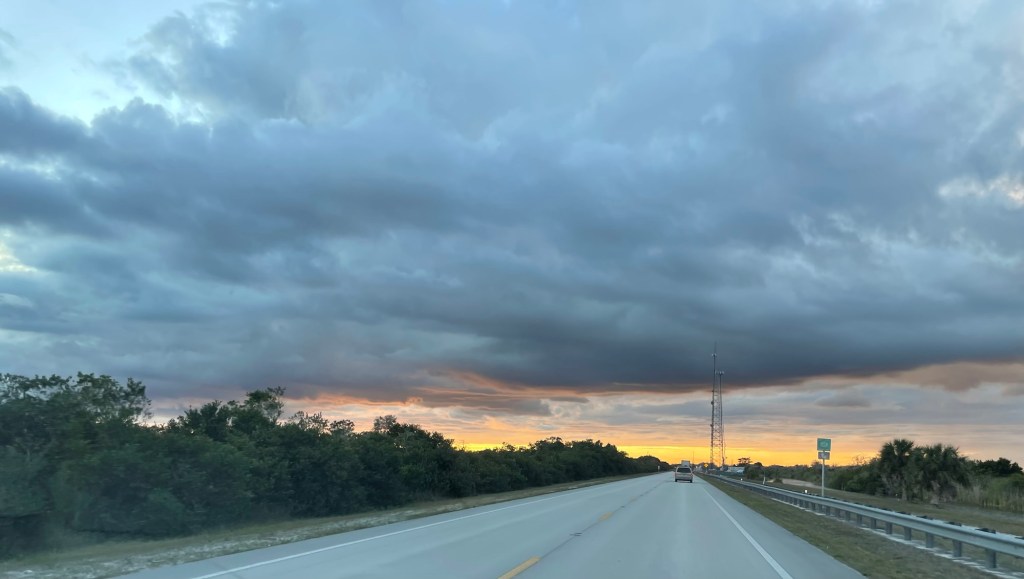
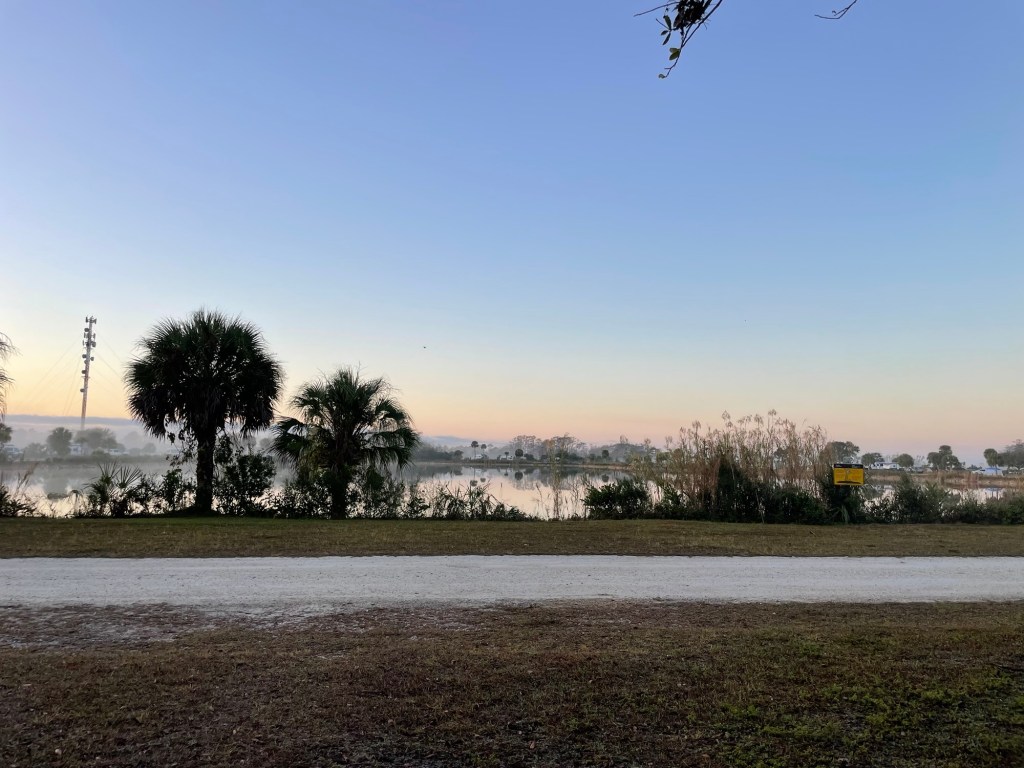
And the next morning, for a foggy sunrise.
Let’s take a momentary conversational left turn.
Campgrounds are interesting places. Unlike the long-term overwintering RV resorts, everyone in a state or national campground is only staying from 1-14 days. Being so fluid creates a unique community where people are instantly friendly and open, and where the old parlor room niceties are upheld — i.e., no politics and no religion talk.
Now yes, some campers do seem hell-bent on making sure everyone around them knows where they stand (bumper stickers, tee shirts, a sign in a window), but they tend to be exceptions more than the rule.
As a form of short-term community, I’m finding campgrounds to be rather pleasant. Strangers consistently wave to each other and stop to talk with people they’ve never met. Everyone feels ok walking to the bathroom at 2am and gets a compliment if breakfast smells good. You talk about each other’s camping setup and the pros and cons of different water filters. They leave their BlackStone mini grill out on a picnic table night after night. You just lean your bikes against a tree. Laundry areas do double duty as free book and gear exchange points.
In a world that seems increasingly determined to be nasty and tribalistic, it’s refreshing.
Forgetting to note the day of the week is a genuine problem these days. Not bothering to check the calendar, we drove 20 minutes to the northern, Shark Valley entrance of Everglades National Park on a Saturday. A Saturday. A beautiful, sunny Saturday. Not our brightest move. The line to get into the park was at least a dozen cars deep and the parking lot was at capacity. It took some time for enough cars to leave, but it was worth the wait.
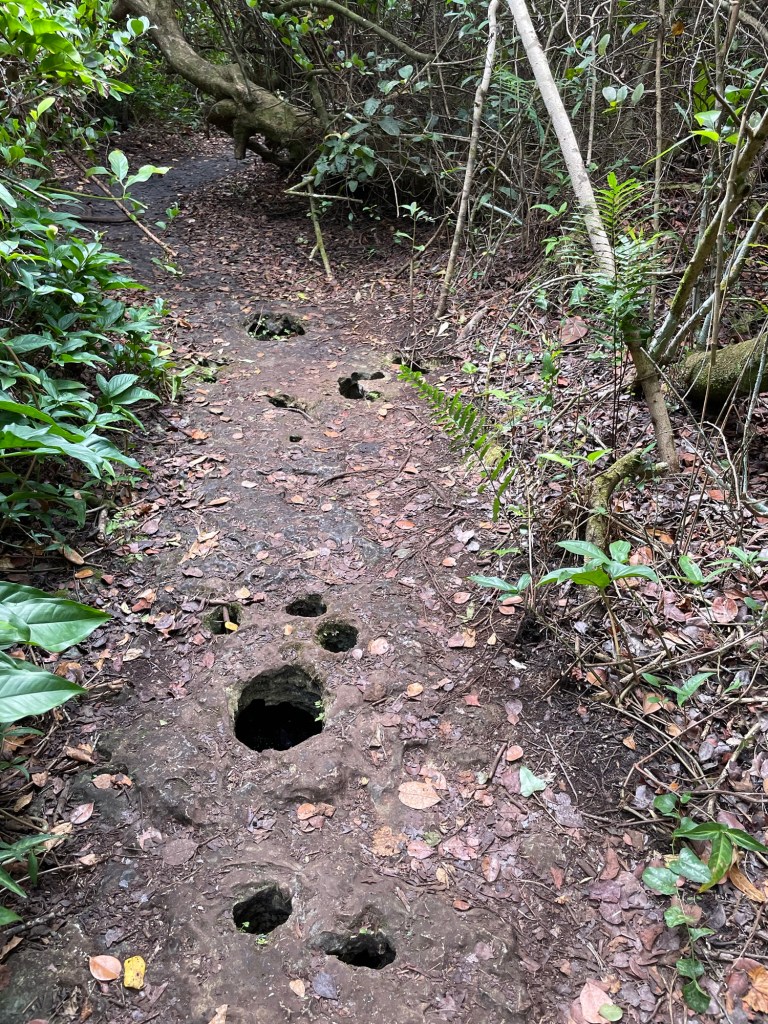
Initially we were bummed to not have our bikes with us as the trail to the observation tower is 15 miles and we didn’t want to spend $70 on the tram tour. With a shrug, we decided to just walk a few miles and head back to the campground. Talk about blessings in disguise, we saw more wildlife in that hour and a half than we ever would have ever seen speeding past on our bikes. We definitely would have missed the turtles and baby alligators (with mom hunkering down nearby).
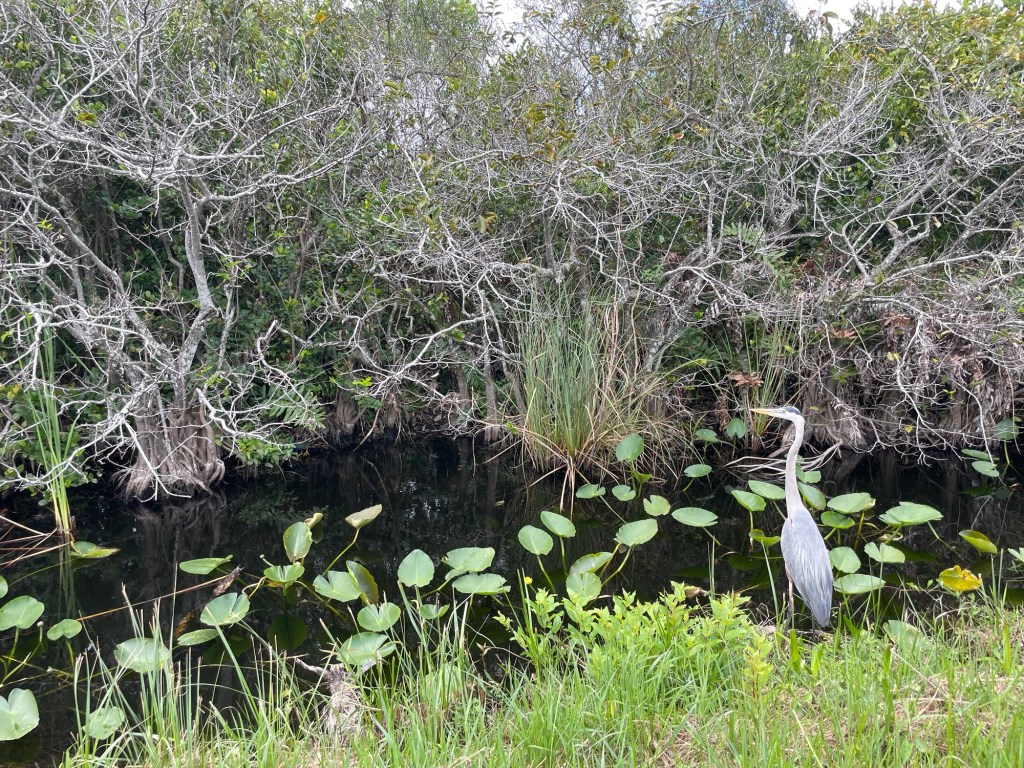
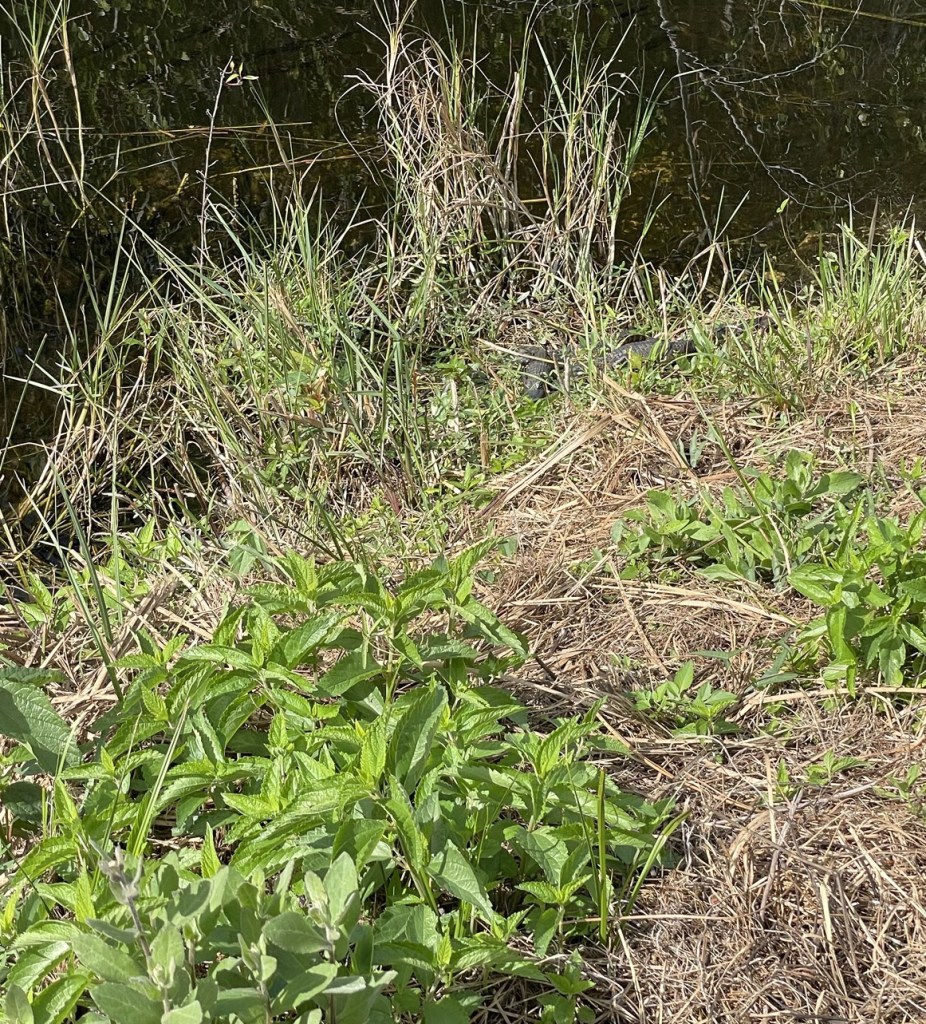
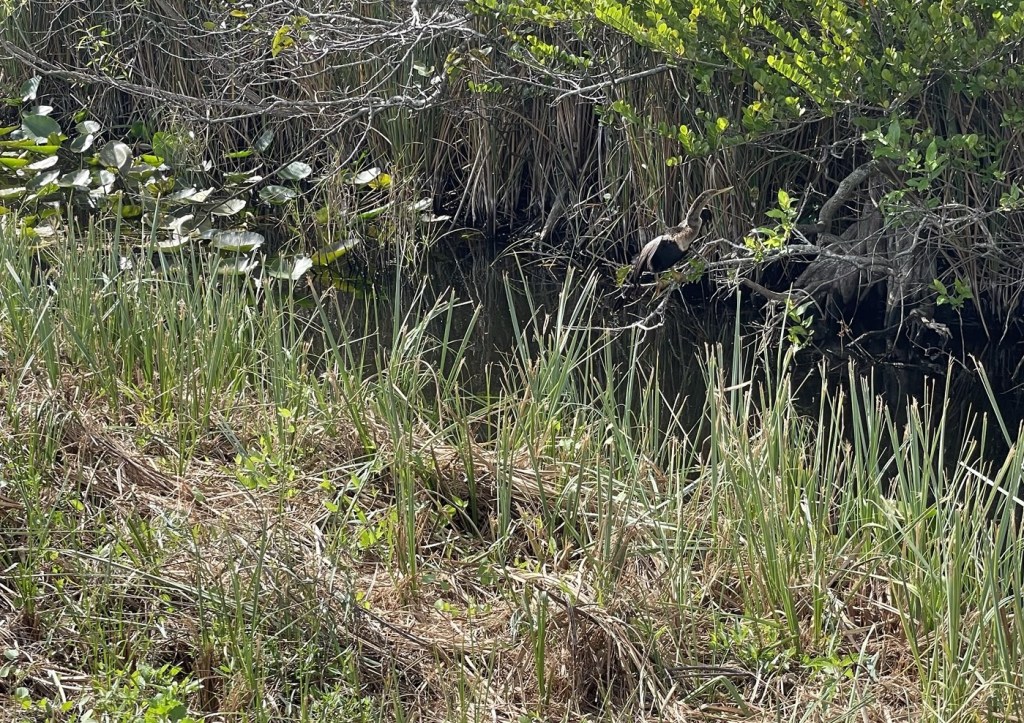
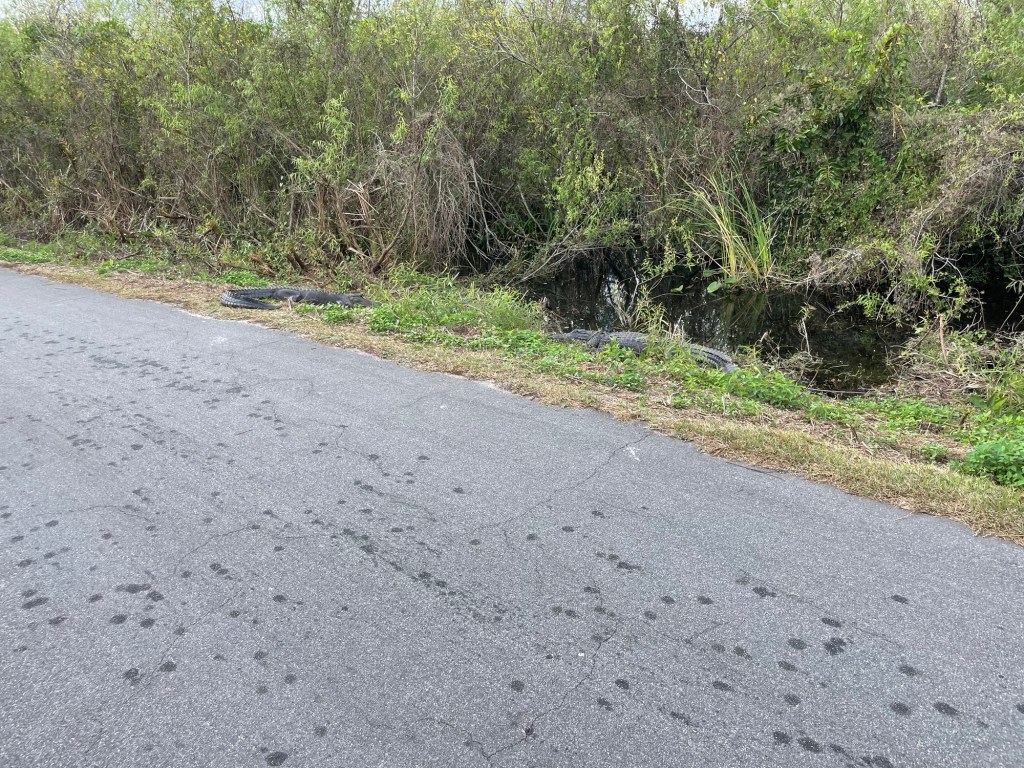
Gator goal more than reached! These two gators were a little too up close and personal. Check out the blog’s video page to see a different gator in motion.
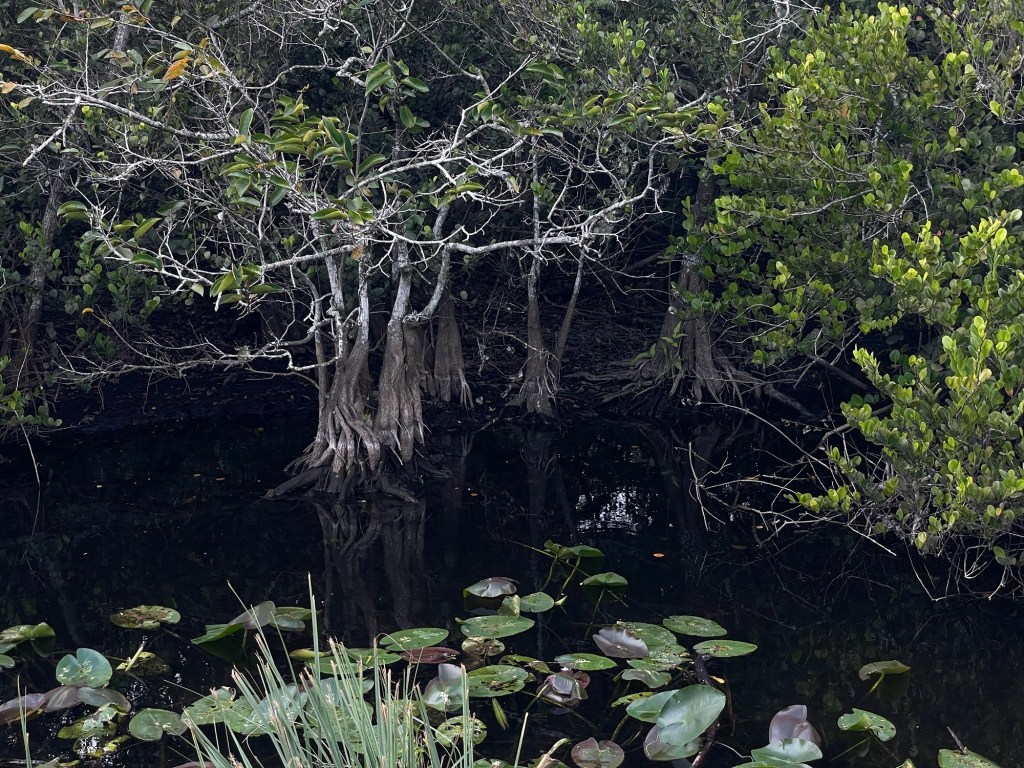
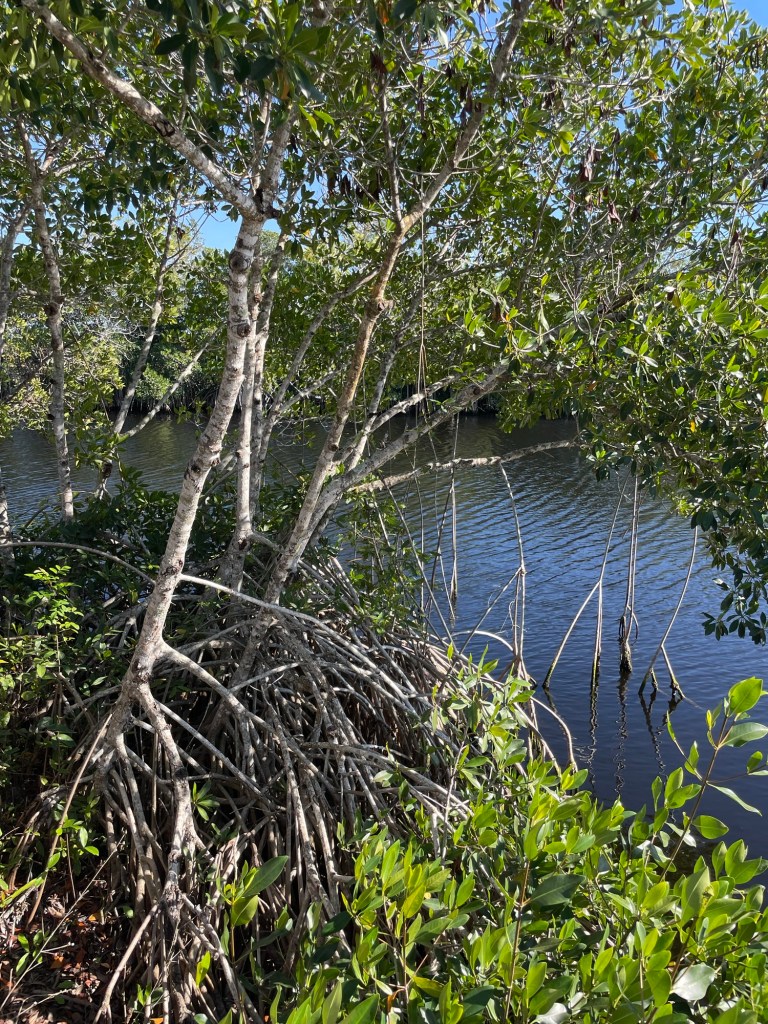
Ultimately that wide river of grass was my favorite part of the larger Everglades landscape. I enjoyed seeing the mahogany hammock, ponds full of lily pads and water birds, and mangrove stands in brackish water, of course, but somehow they didn’t compare to a seemingly endless swath of water grasses bending to the wind beneath low slung clouds.
Back at the campground, we stayed close to the trailer our last full day and rested up. Travel days are always a little stressful, so we try to keep things simple the day before.
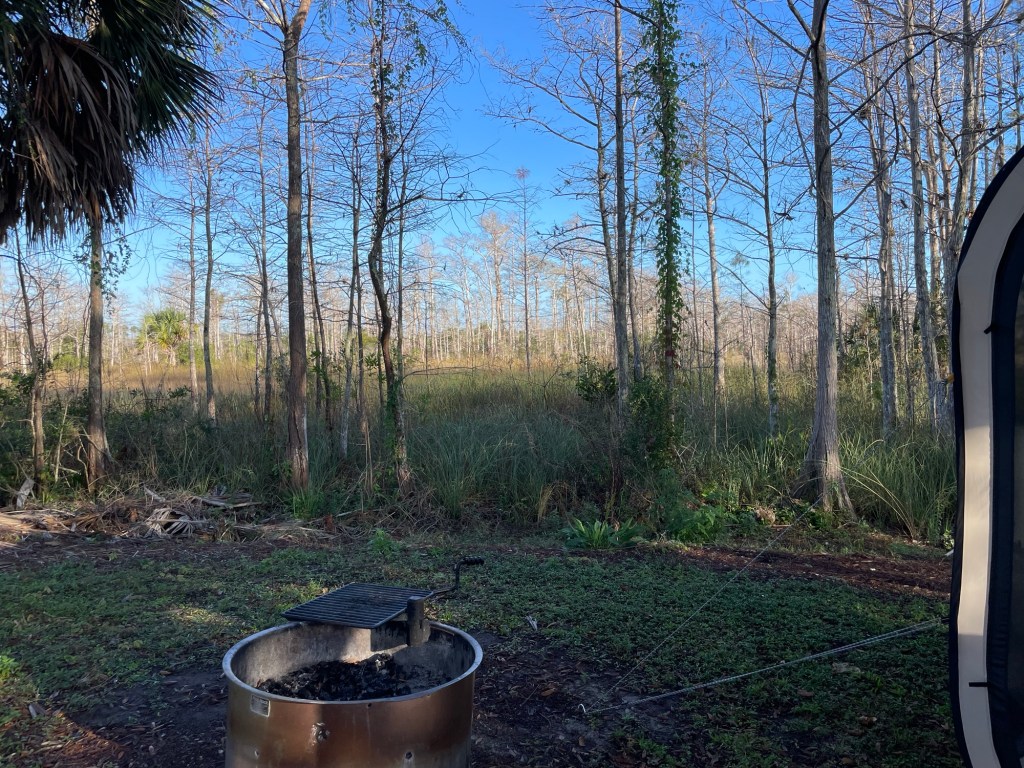
When we first arrived at Monument Lake Campground, the gentleman in the van next to us said that last year a snake hunter caught a 20ft Burmese python in the wetland behind our campsites. There was much fast blinking. What might look like a boring field behind a few trees is actually part of the Big Cypress wetland/swamp with all its usual critters living within it. You can be sure I spent a fair bit of time peering into those grasses.


Leave a reply to HMS Beangle Cancel reply