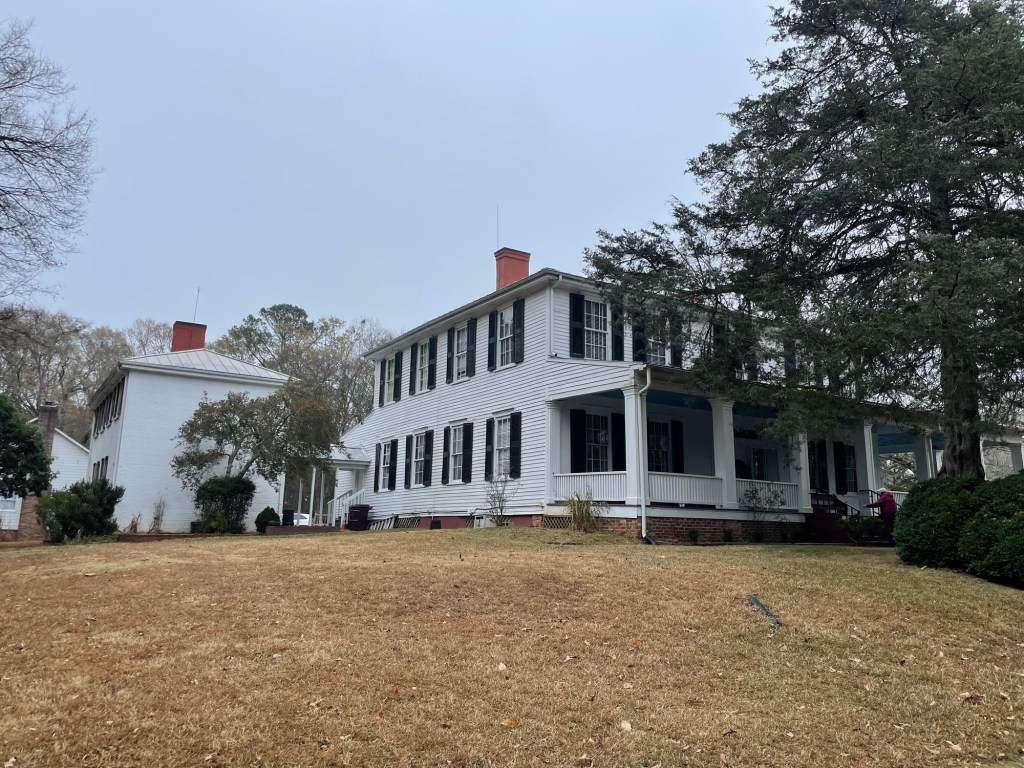
In Pendleton, South Carolina, two restored plantation homes are owned by a nonprofit organization tasked with researching, restoring, and educating the public about the area’s history through educational tours.
Educational tours, you say? Step aside, folks, step aside. I’m coming across that big veranda with its ceiling painted ‘haint’ blue to stop ghosts from crossing it and through those big double doors in 3-2-1.
We visited Ashtabula on a Thursday afternoon while everyone else was at school or work and had a wonderful tour guide all to ourselves. Following are some photos and snippets of its history. While the house has had many prominent owners, I found myself most interested in the original family.
Our guide told us about the research and restoration process (long, difficult, expensive), how and why the house was designed as it is, the different ways the house has been used over time, and about the many people who have called it home. She had a fun, dry sense of humor and didn’t fawn over the antebellum years, which we appreciated.
The family who built it, the Gibbes, were from Charleston, South Carolina, and brought the Lowcountry design ethos to the Uplands (the Northwestern-most part of SC) with them. Now why, you might ask, would someone from that cosmopolitan city want to move to the hinterlands? Well, first, Charleston in the summer was a humid, malaria-ridden nightmare. The higher elevation Uplands, along the edge of the Appalachian range, is cool in the summer and mosquito free. Second, a plantation needed a lot of land, and good cotton growing land was relatively cheap in the Uplands.
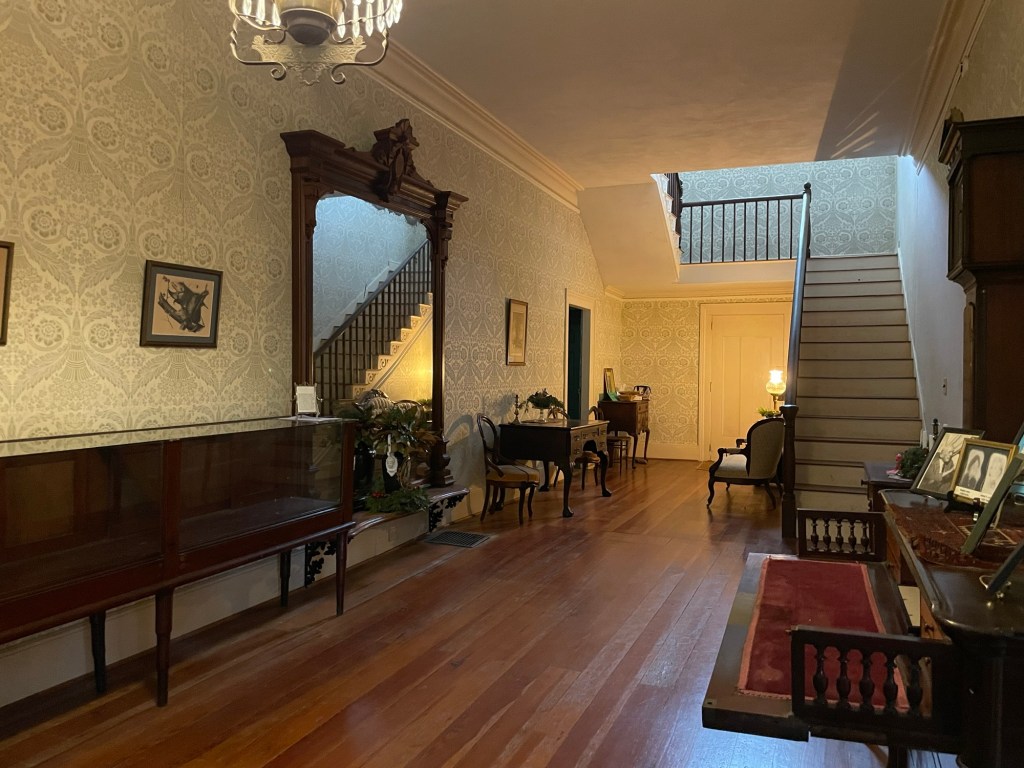
The first thing we noticed upon entering was that the house was cold — hats and coats and gloves cold. In fact, it felt colder in the house than outside it. That might be nice if it were summer, but in December it was a bit shocking.
It was noted that the wallpapers throughout the main floor and the upper hallway are reproductions based on the patterns found attached to the original muslin during restoration. Back then things were made to last.
Since its construction in 1828, the house has never had central heating. Each room’s fireplace kept the worst of the winter chill at bay, as well as blankets and body heat. More on that later.
The second thing I noticed was that massive entrance hall mirror. To give you an idea of how wide and tall that mirror is, the ceilings were about 12 feet tall (just under 4 meters). I stood before it and felt truly minuscule.
Mrs Gibbes had the windows above built in the Charleston manner, meaning that the bottom half of these very tall windows raise up and the lower, wooden sections swing open to effectively make two additional doors onto the 14 foot wide, three-sided wraparound porch. When visitors came — on that home’s designated calling day, of course — they could flow in and out of this area, getting some fresh air, gossiping, flirting, and socializing with the lady of the house and the town’s ‘Quality’ at their leisure.
Unfortunately, Mrs Gibbes died just before the home was completed (1826) and never lived a day under its roof.
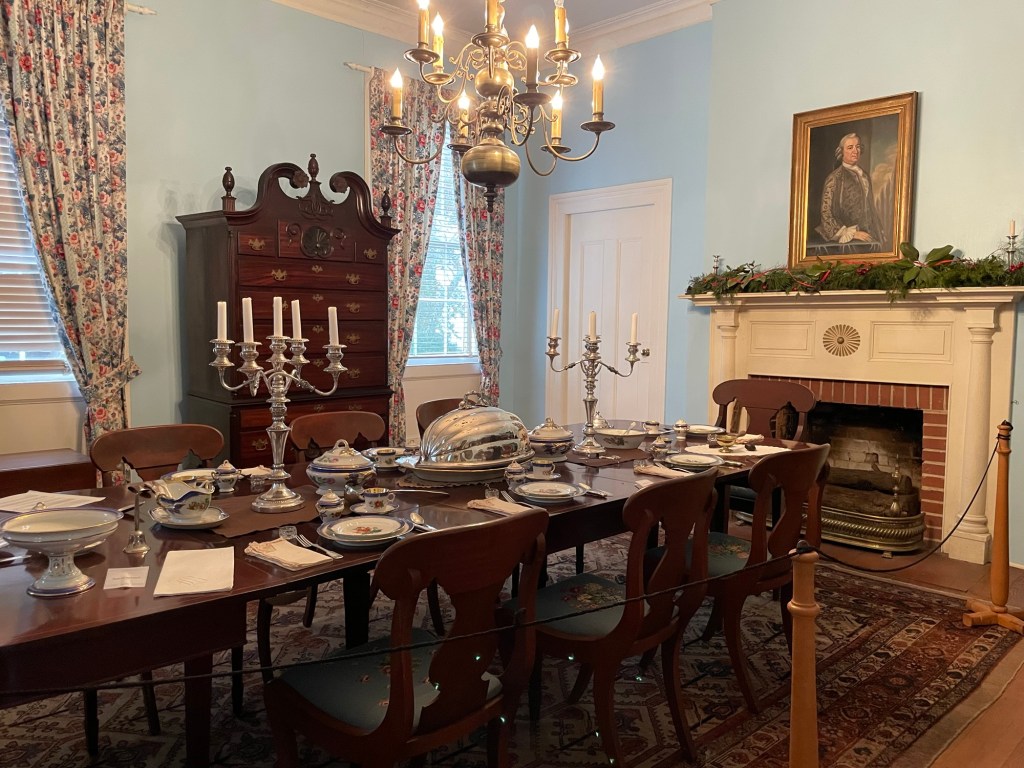
The owner would be seated next to the fireplace in the dining room and his wife, or in this case eldest daughter or sister, would be seated at the opposite end nearest the window. While he was toasting his buns, she was shivering next to a drafty window. So much for chivalry. To help her and the other people dining combat the cold, a warming closet was built next to the fireplace where enslaved household staff would retrieve and distribute the blankets being kept toasty next to the chimney. The warming closet’s door is behind the white door to the left of the dining room’s fireplace (above).
When guests stayed over, the dining room acted as additional sleeping quarters. The table would be folded up as much as possible and pushed against a wall. Loose mattresses would be brought in to accommodate the overflow here and in rooms throughout the house.
(Side note: When Sherman’s soldiers were raiding the area during their march to the sea, the owner’s wife threw her silver flatware up into the top of the tall cabinet, very effectively hiding it out of sight.)
Pictured below is the family room, which is behind the dining room. The warming closet is to the right of the fireplace in this room. It’s the only warming closet in the entire home.
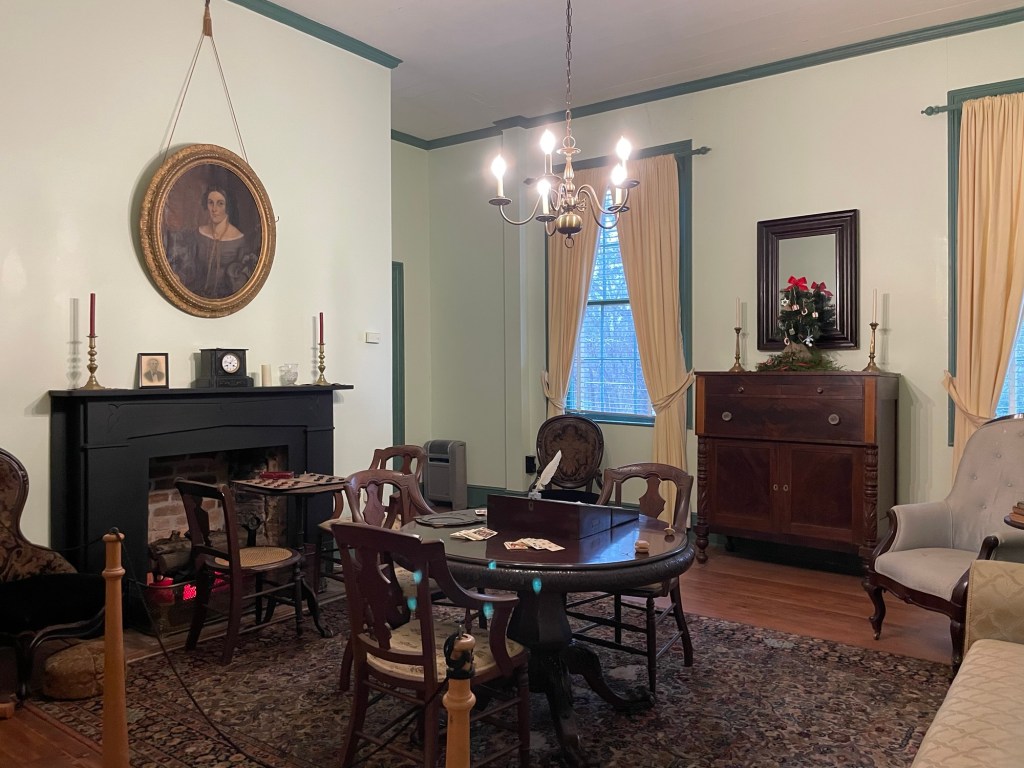
The family room had a few functions, but its primary one was for the immediate family to socialize, read, pray, and play games together when no visitors were present. Children ate all their meals in the family room, even when visitors weren’t present, because parents and children did not eat together, which makes me rather sad.
After dinner, men would gather in the room to smoke and drink before joining the women who had retired to the parlor.
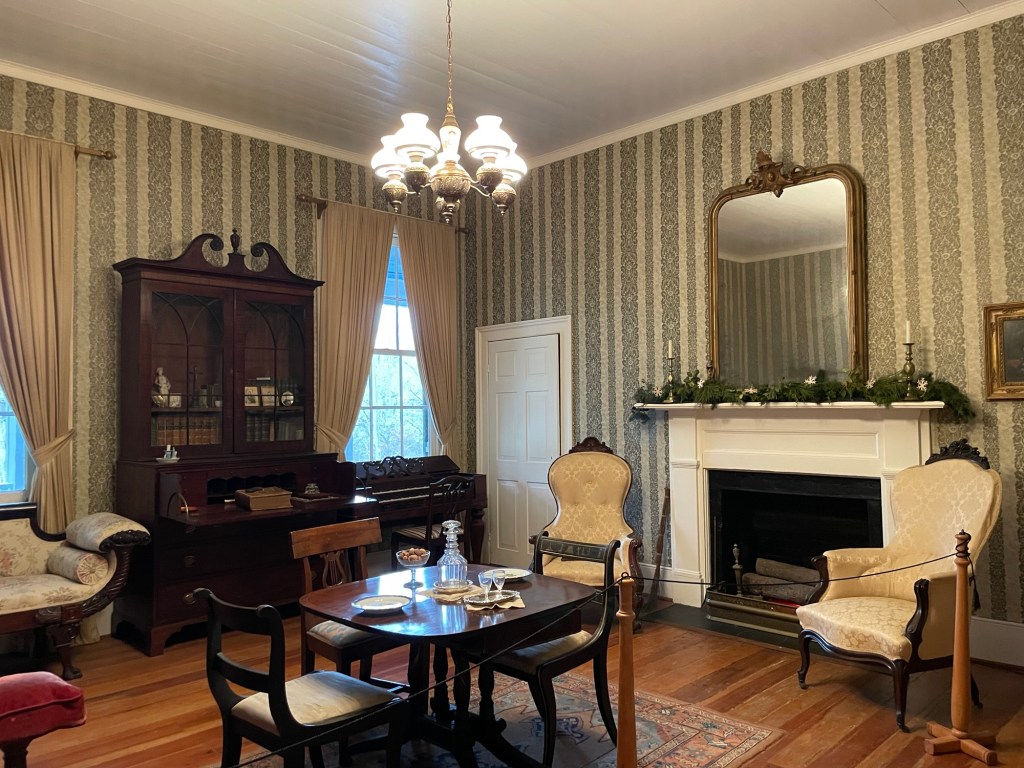
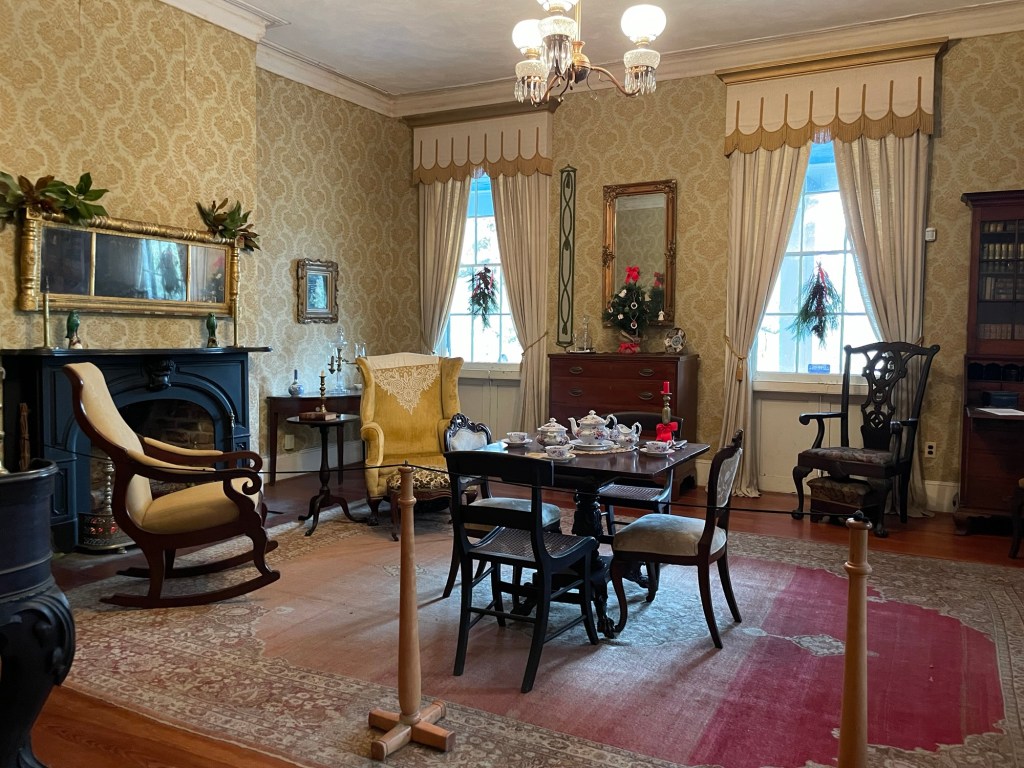
Here the guests would gather for music, cards, a glass of sherry, and to talk politics. The larger chair to the right is a gentleman’s chair and the smaller one on the left is a lady’s chair. The lower armrests encouraged good posture while seated (no slouching!) and allowed a woman’s voluminous skirts to flow around her. The piano was an important part of this room’s decor and purpose.
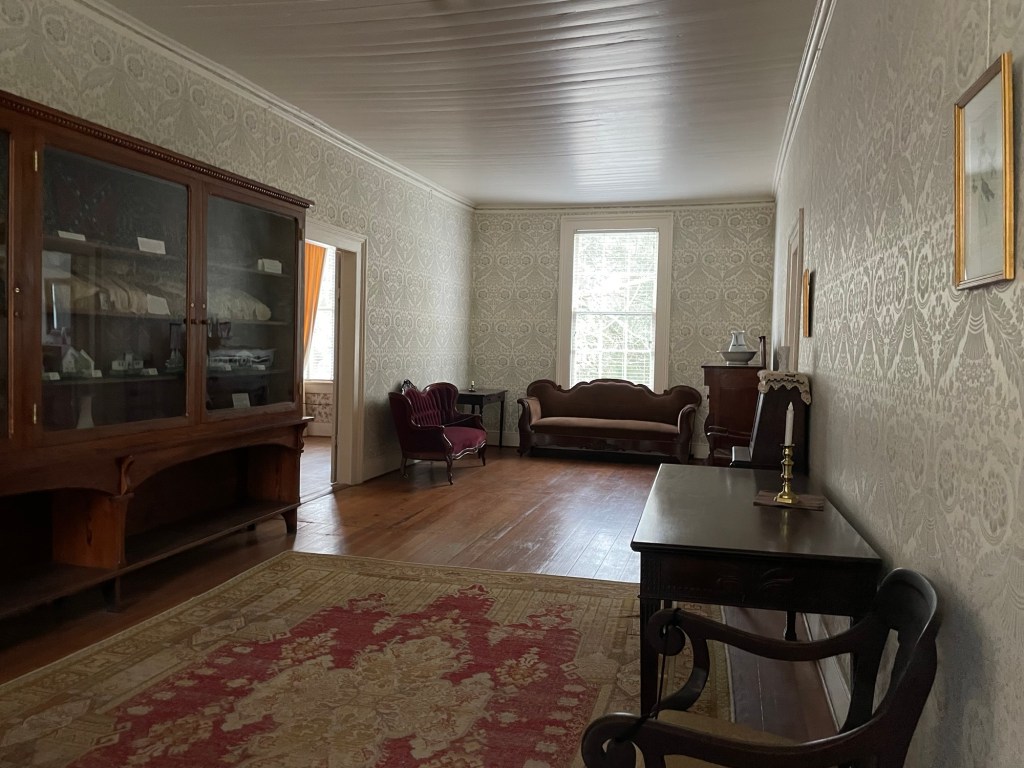
This wallpaper design bounces sunlight so well.
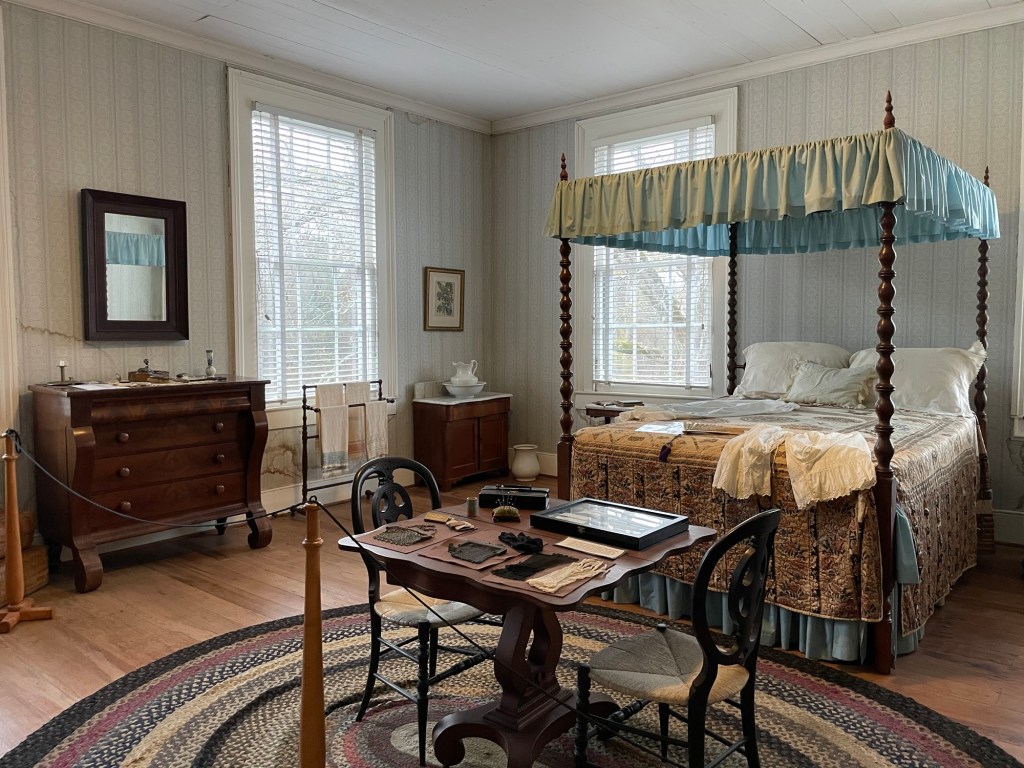
Unmarried ladies would retire together to this room, sleeping three or four to a bed as needed. Few people had the luxury of a bed to themselves in a busy house. When large numbers of guests were present, loose mattresses would be placed in here as well, thereby protecting each young lady’s honor throughout the night as well as harnessing their body heat to keep each other warm.
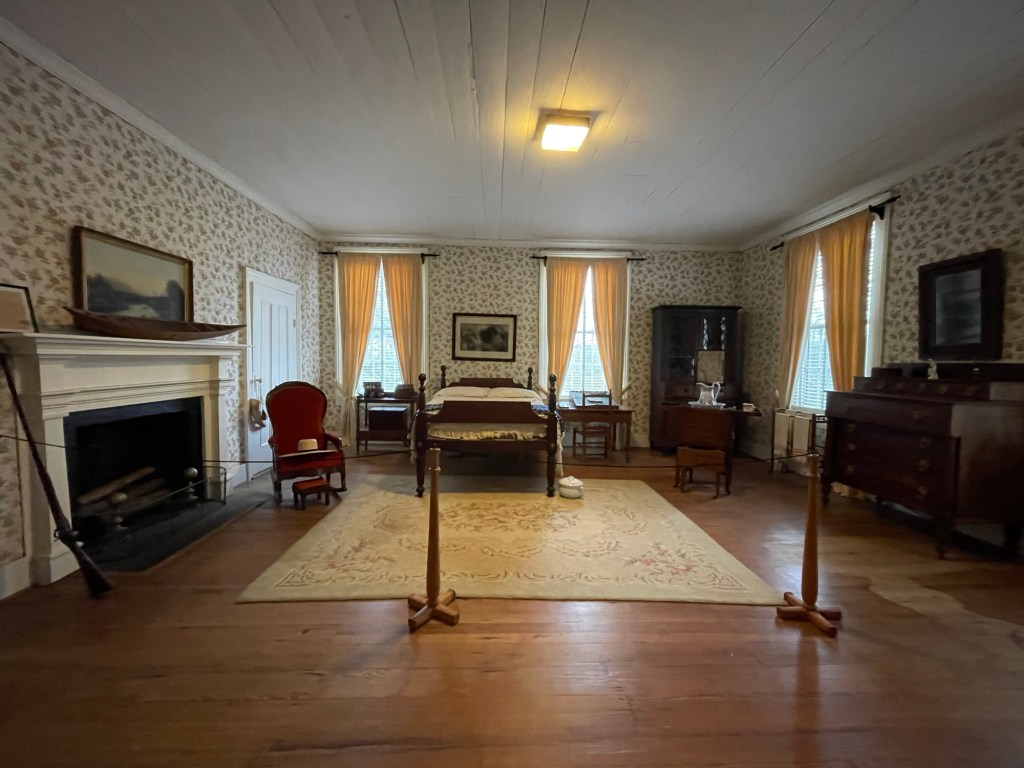
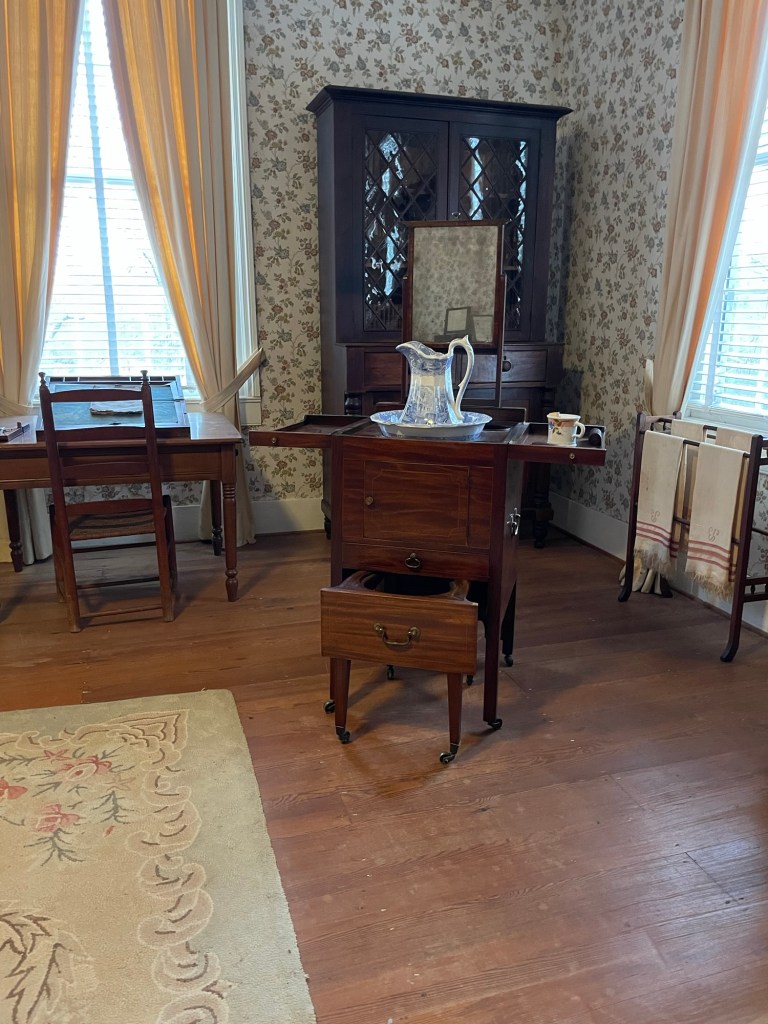
The master of the house had the biggest room. No shocker there. Closets on casters would be moved from home to home, like other pieces of furniture. A mobile writing desk like the one on the table here would have traveled with the owner wherever he went, carrying business papers, letters of introduction, and personal correspondence.
In this home, a wonderful old (military) campaign chest is on display. This type of box on wheels was used on both sides of a conflict and is a marvel of drawers and boxes, custom fitted for a chamber pot (lower pull out), wash basin and jug (middle door), shaving kit and dressing accouterments (top shelves) and mirror (drops into place at the back). It would have been carried by the owner’s personal servant from one military camp to the next.
Mr Gibbes, unfortunately, didn’t get much use out of this room as he died shortly after his wife (1828), but after the house was built, leaving his barely-an-adult oldest son and brood of younger children to try to carve a life out of the plantation on their own. At first an uncle came to help manage things, but the children ended up selling off land and several enslaved laborers to help pay the family’s debts and ongoing expenses, before selling the home and remaining land in 1837.
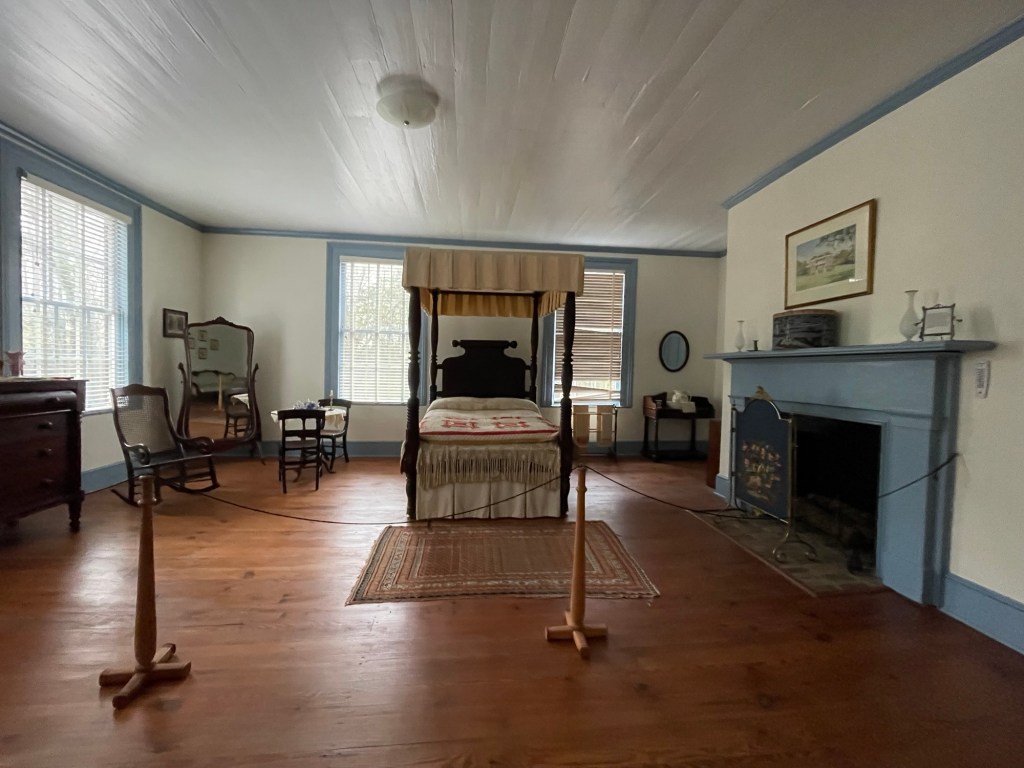
The wife of the a plantationnowner didn’t usually share a bedroom with her husband. In her room, she had her own space. For the most part. When guests stayed over, she was expected to share her bed and floor with other the married women.
Only as a very last resort, however, could the master of the house ever be expected to have other men (married and unmarried) camped out on loose mattresses on his floor. First, they would be accommodated in the downstairs rooms, then in some of the outbuildings or possibly in tents on the property if the weather allowed.
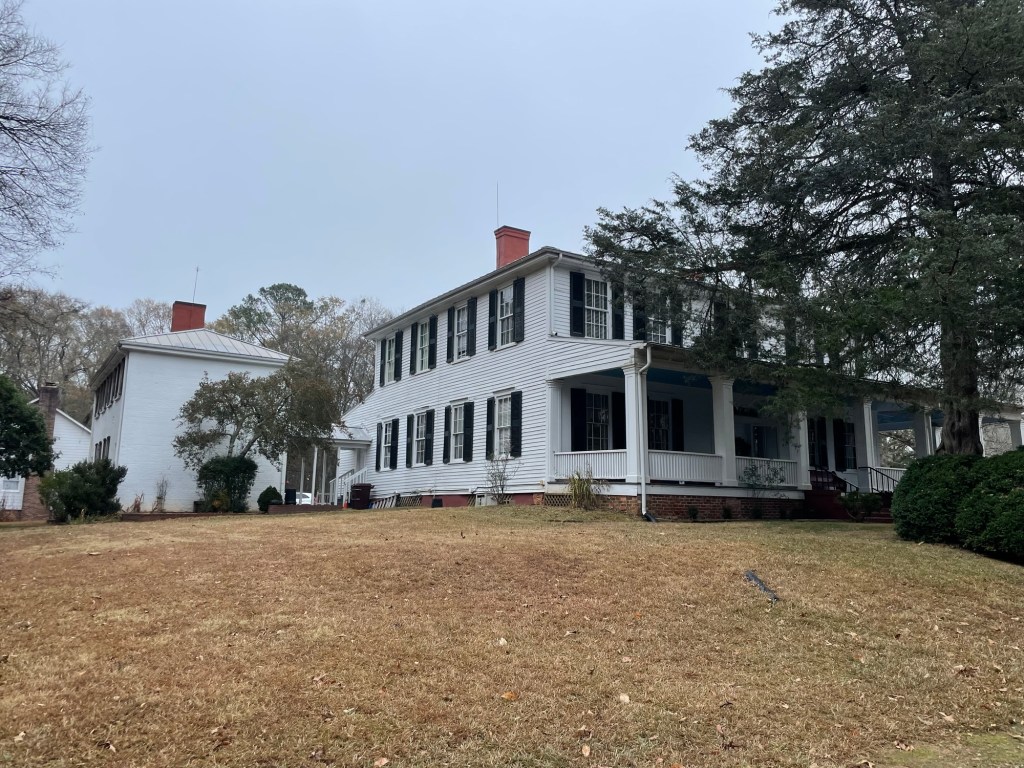
The porch originally wrapped around the front and both sides of the house. But mid-last century, the house was split up into apartments and one side of the porch was enclosed as an office for a local doctor. The enclosure remains and is used as the volunteers’ break room. (It even has a small heater in it!)
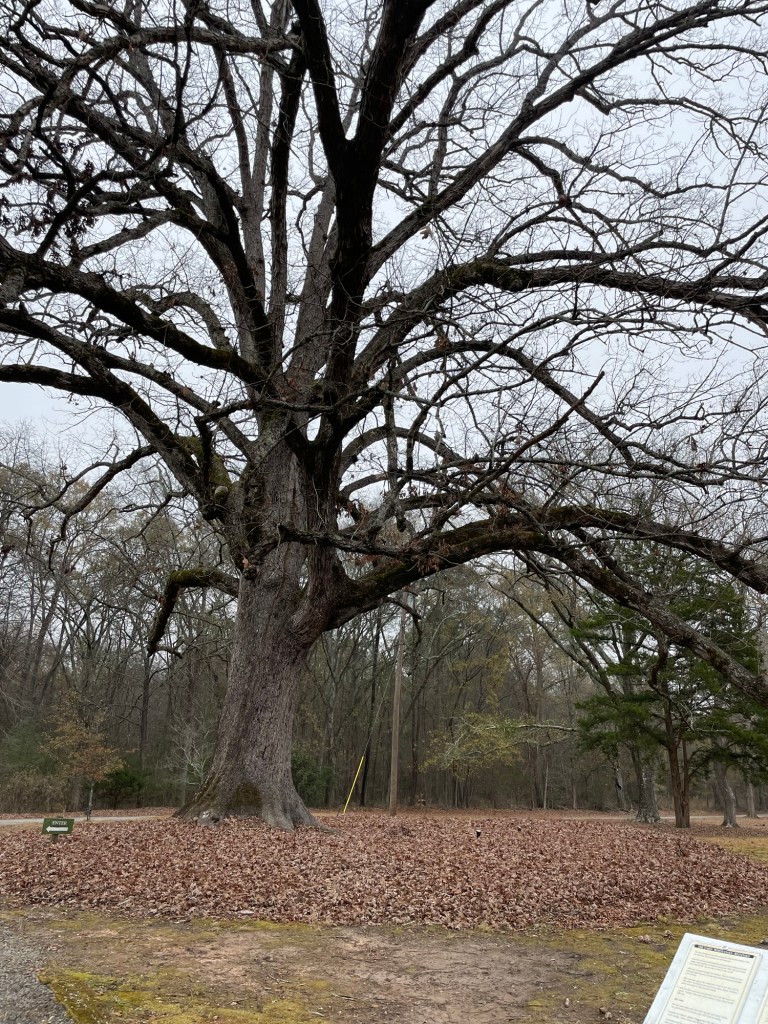
This tree was already called the old oak when the house was being built. It’s estimated to be the same age as the USA itself. Sadly, it’s no longer very healthy. An arborist is doing what he can, but its days are probably numbered.
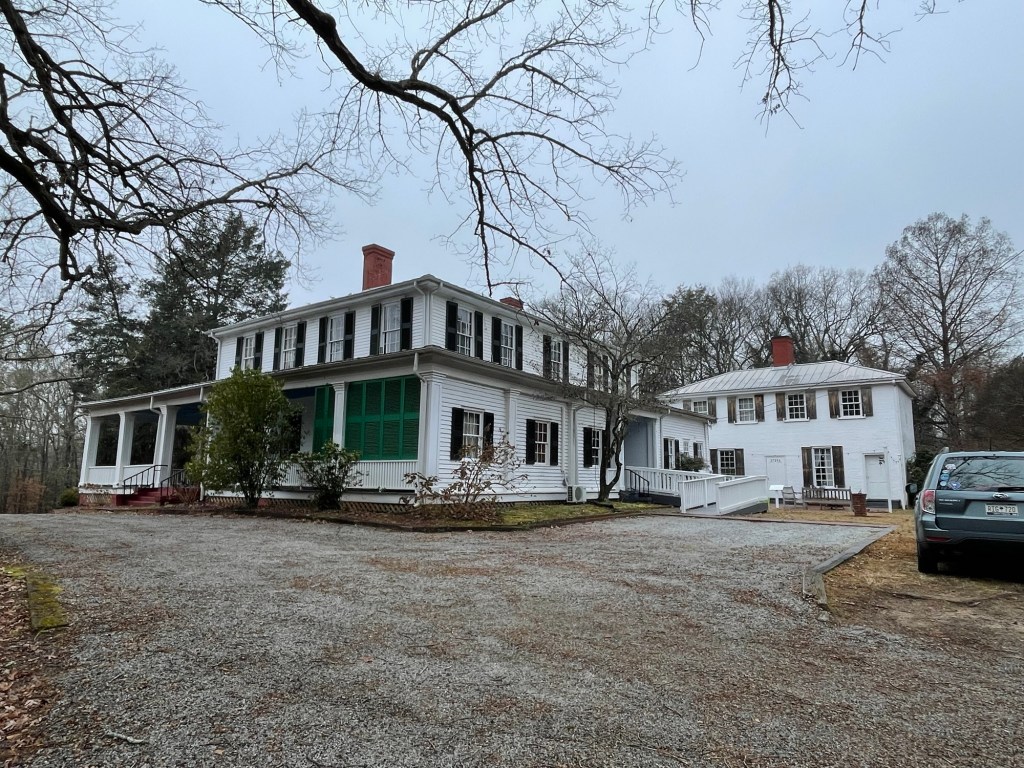
Our guide said that former tenants will occasionally tour the house and talk about what it was like to live there and how the house was configured at that time. Can you imagine calling this place home as a 20-something just starting out in the world?
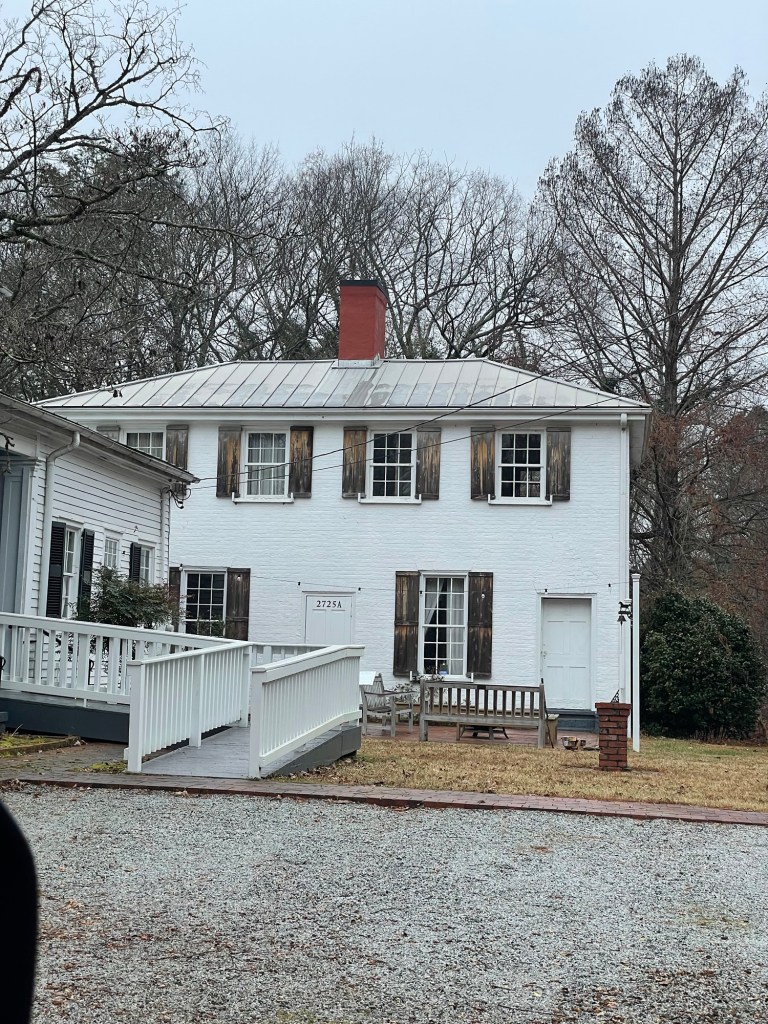
Although Ashtabula is one of the older homes in the area, the building you see behind it was built in 1790 as a tavern and coaching inn. Since the road out front is the old Greenville highway, this large rectangular building was no doubt a welcome sight after a long day on dirty roads.
The ground floor is divided into two sections, on either side of a fireplace wall. The right hand section acted as the entrance and dining area, and led to a bathing area in a small hut off the rear of the house. The left side area was the kitchen and had the ladder to the sleeping area on the upper floor.
The Gibbes lived in here while Ashtabula was being built.


Leave a reply to HMS Beangle Cancel reply