
is struggling.
We enjoy walking around the traditional business districts in the rural areas that we’ve been visiting. Happily there are frequently clear signs that efforts were or are being made to salvage the more architecturally and historically interesting buildings. Unfortunately, I haven’t been taking too many photos the last couple weeks, being a bit down after the truck’s accident, so bear with me.
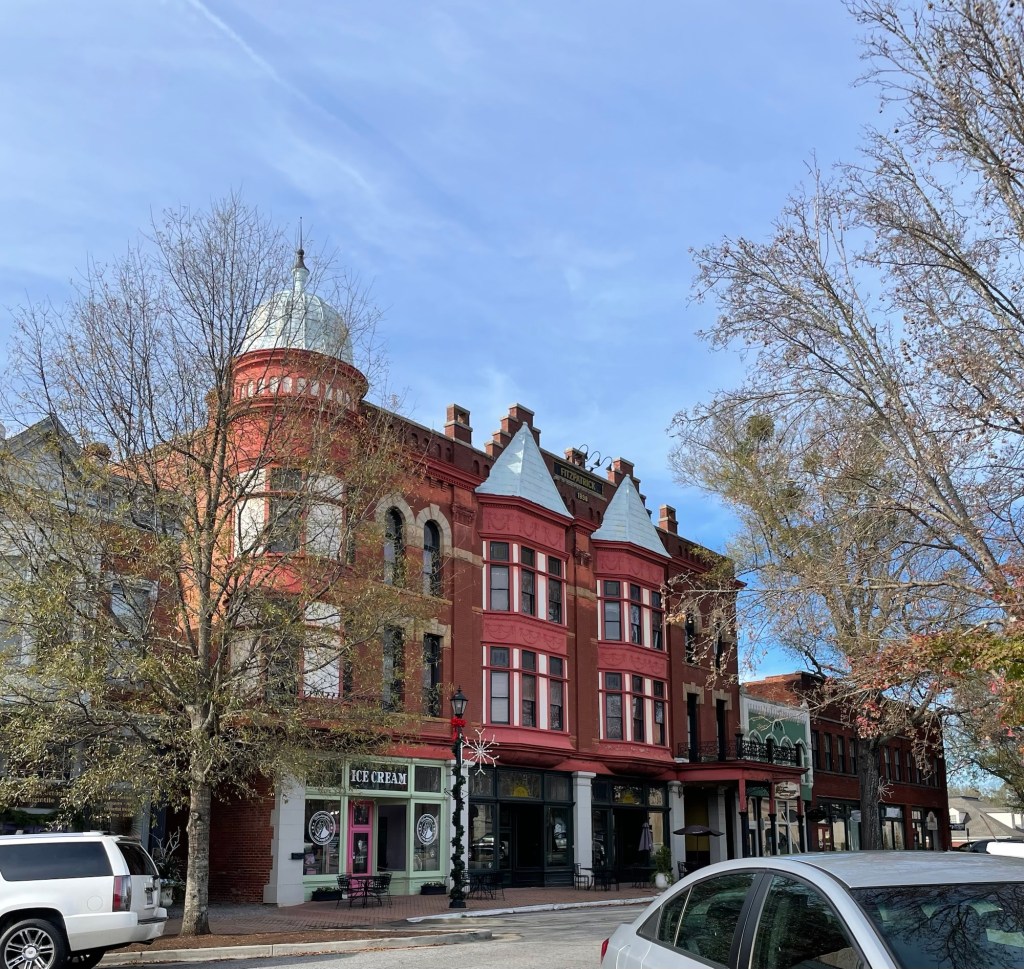
One inevitable sight is a former bank building, like above, often found on one of the corners. There are also the deep merchandising windows of early department, general and hardware stores. And strangely enough, the frontier jail site (usually long since moldered into dust) is likely to still noted somewhere around the town. The buildings square are almost exclusively made of brick.
While walking around, we’ll inevitably see a brass plaque commemorating the great fire (or fires) that ripped though the village and destroyed much (if not all) of the original wood-fronted businesses. Since eastern Georgia and western South Carolina, the area we’re in now, was colonized well before the American Revolution, those towns (full of fireplaces, blacksmith shops, open cooking hearths, and the like) inevitably had at least one massive conflagration in their several hundred years of existence.
Among the retail buildings, flat fronts with large plate glass windows and wrought iron or carved wooden window/door frames are common at ground level, with varying degrees of stone and brick window ornamentation on the upper floors. Upper floors were frequently added on as time and profits allowed. Bay windows on upper floors and false rooflines are commonly seen, with each little detail adding another delicious bit of visual interest. I’m especially found of the fact that these older buildings have a bit of individuality, even among various “types,” versus the homogeneous nature of modern business architecture. We’ve noticed that during the 1930s, builders still seemed to be adding decorative details to windows, door frames, and the cornices of commercial and residential buildings.
Although some buildings, like the livery stable below, served the most basic (and dirty) of a town’s needs, builders still seemed to understand that the eye deserves a bit of beauty.

Around 1940, the level of ornamentation dropped significantly, and by the 1950s and 1960s, buildings were becoming plain and utilitarian at best (see the two on the right hand side, below). John Calvin would have been so proud. But wait, pride is a sin. (Bit of a catch-22 there). Don’t even get me started on the “renovations” that happened to some of the more elaborate buildings during the 60s and 70s. It was like taking a razor blade to Venus or Aphrodite.

What’s most noticeable about these little business districts, however, is how many of the buildings are now sitting empty. I’d estimate that about 30-50% of the store fronts we come across are empty. In the six above, for example, only one building is occupied. Some have active for sale or for rent signs. Some signs are so old they can barely be read anymore. Some businesses were clearly abandoned mid-renovation quite a while ago, if the thick layer of dust on saw horses and tools are any indicator.
How does a town come back from this? Must we really accept the Dollar General, Amazon, and WalMart -ification of America? What will become of our small towns and rural hamlets? Can they keep more than a Mexican restaurant (almost always excellent), a musty antique/junk store, a hair salon or barbershop, and a liquor store with bars on its windows, in business again? I dearly hope so, but I have my fears. It’s a bit circular, isn’t it?
People frequently claim they want unique products, locally grown fresh foods, and a thriving local shopping district, but they shop at big box stores or one of the online behemoths for a smaller price or one stop convenience. Small stores go out of business and the village center becomes a ghost town. Heads shake. “Someone should do something,” is said. A brave entrepreneur goes out on a limb and carries unique items or local perishables. They charge a bit more to cover their costs and can’t carry everything imaginable. Shoppers go back to the big names. The village core erodes.
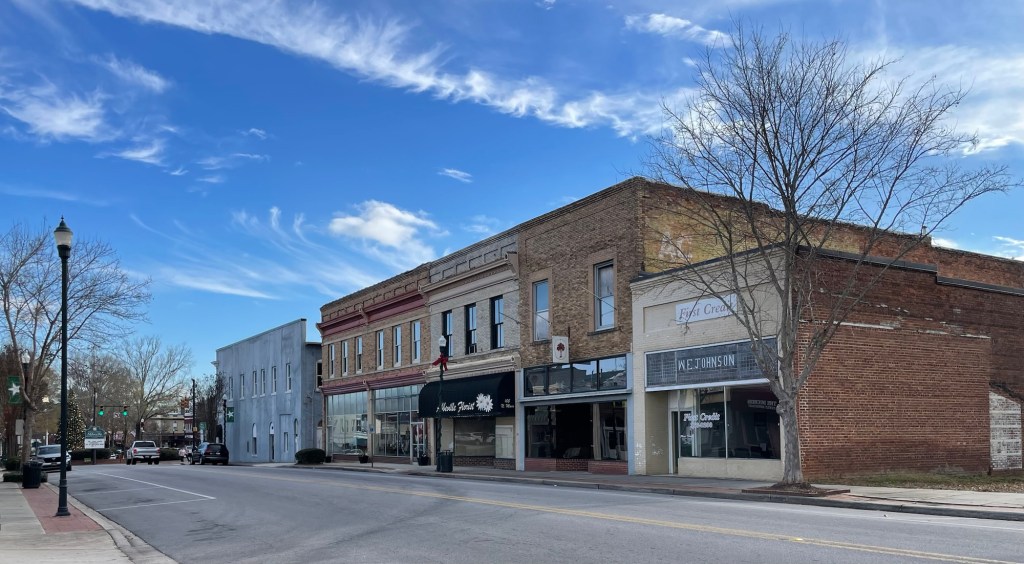
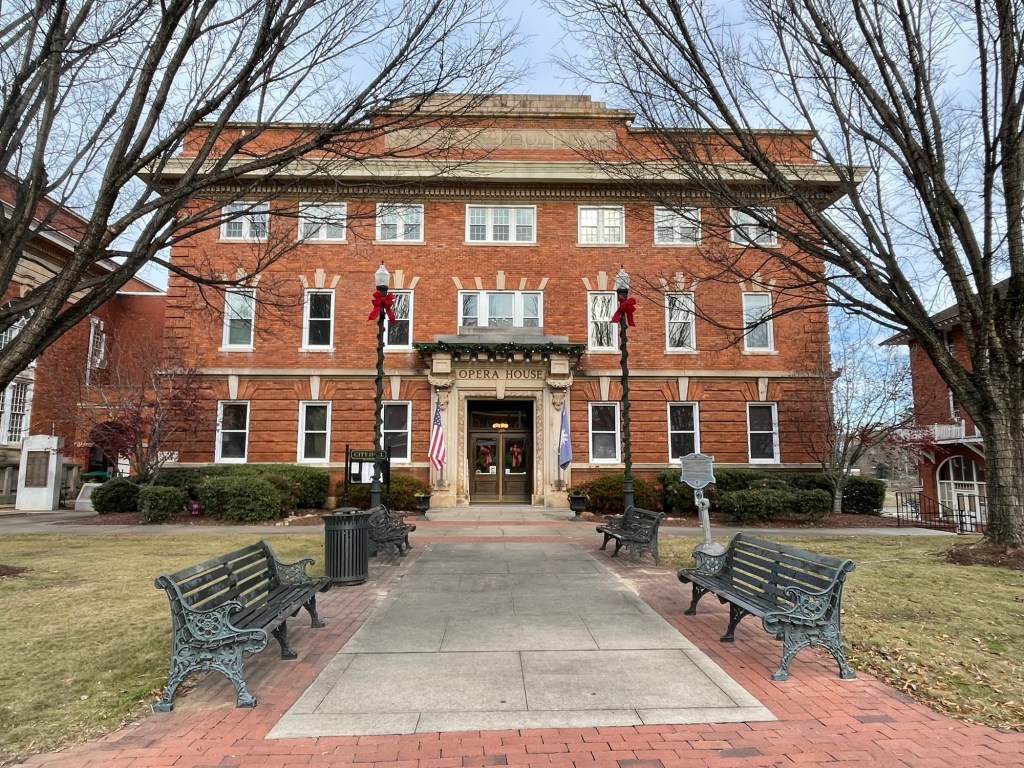
Don’t get me wrong, I see some encouraging things, too. Local chambers of commerce are trying so hard to keep a sense of community alive.
For example, the holiday decorations and Christmas tree in Abbeville, South Carolina, below, must have taken a team of volunteers days to put up. They also had signs for a musical public event, to give people a fun reason to come back to the business district this holiday season.

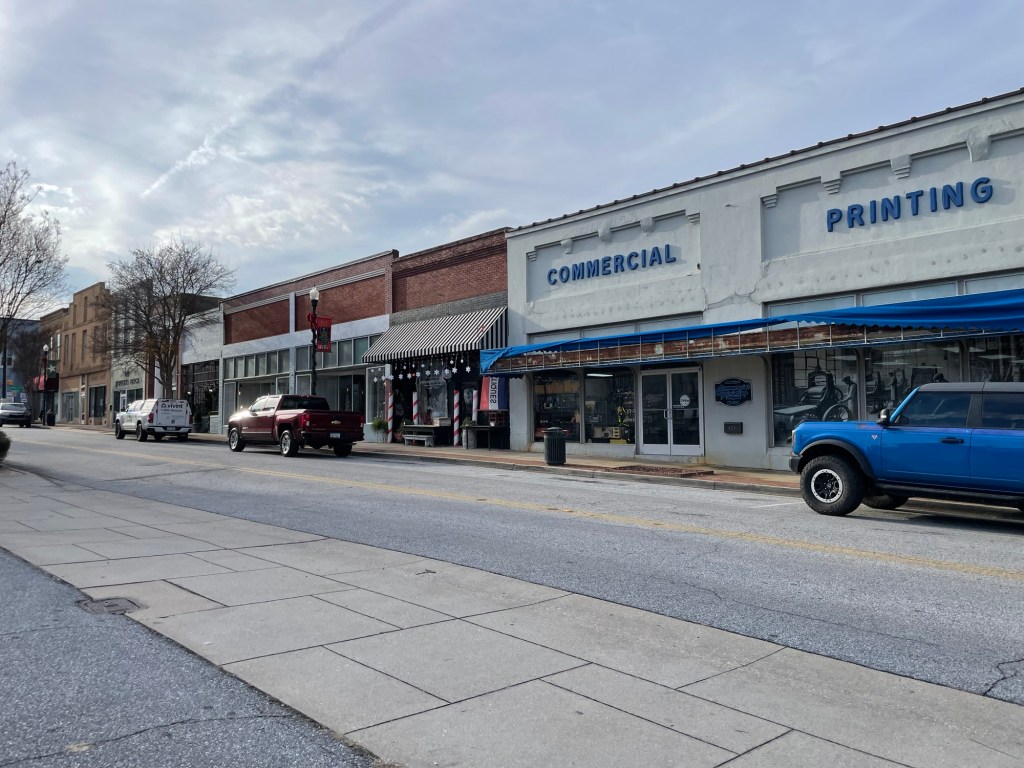
Another business district that is still doing rather well, Hartwell, Georgia, had a variety of public events listed this month — a tree lighting event, a holiday-themed theatre production, a local home tour, and a Christmas parade. But even they’re struggling to pull people into town due to the economy. We were often the only people in the shops when we visited them. And their annual home tour usually sells out almost immediately we were told, despite its $25 per person price tag, but this year there were still a lot of tickets left only a week before the event.
Walhalla, South Carolina — amazing museum telling the story of the Cherokee population that lived and continues to live in the area. Washington, Georgia — home of firsts: first county in GA, first library in GA, first cotton mill in the South, first gold stamping mill in the world. Anderson, South Carolina — ‘the electric city’ that early on powered its community with a hydroelectric dam.
Royston, Georgia. Seneca, South Carolina. Toccoa, Georgia. Westminster, South Carolina. I could go on and on. All of them are worth visiting and filled with interesting history, but for the most part that hasn’t been enough to keep the businesses open and the employees paid.
I don’t have the answers needed, and I certainly don’t want to knock these communities. They’re lovely. I hope they can find a way to thrive in the coming years.
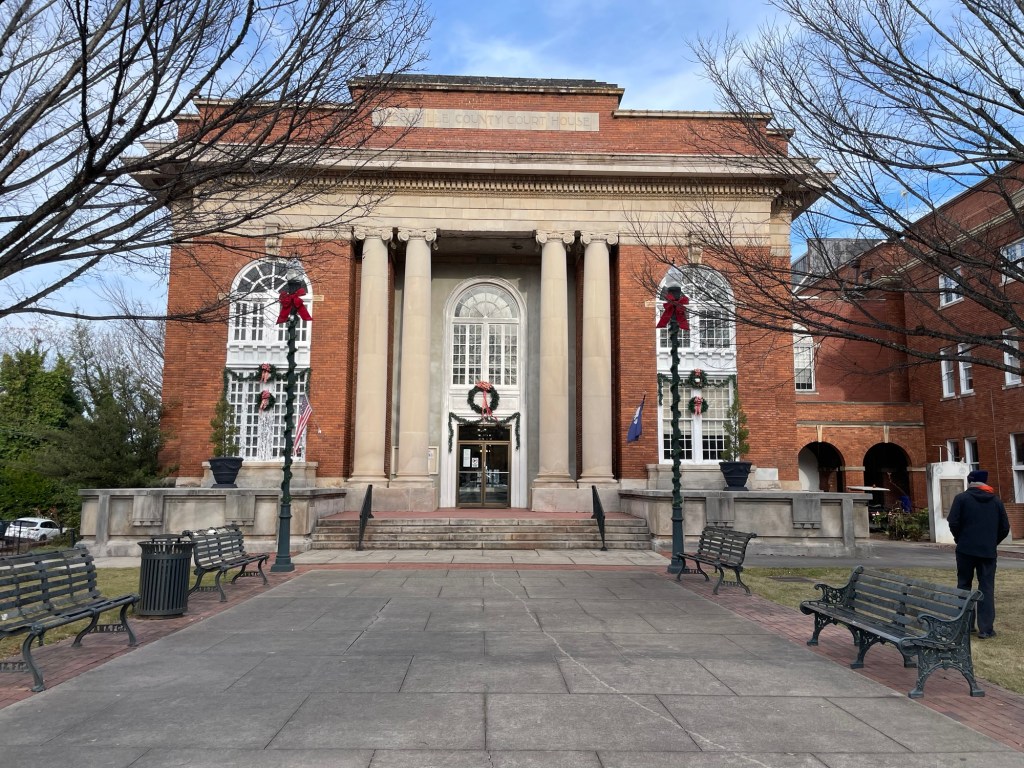
In honor of these sweet little towns, may I suggest that you buy less, if you must, but definitely buy better when you can? Find your next must-read at a local bookstore. Buy from farmers markets, crafts stalls, and roadside stands. Meet the people who grew/raised/made the things you purchase whenever you can. Eat at family run restaurants. Stuff your stockings with things an individual made. (Such as some fun stationary, pretty pottery, or even a lump of coal.)


Leave a reply to diverdutch Cancel reply