There’s an app for that! Ok, the Fort Sisseton Historic State Park app is a bit out of date for current events (hello, two years?) but the audio guides are useful and full of interesting information. I especially enjoyed the selected readings from Captain Bennett’s and Sergeant Andrew Fisk’s writings.
A quote that has stuck with me for a few days is about a young soldier traveling to the Fort in a terrible December snow storm. Several days after he was supposed to arrive, they found him sitting along the road with his back to a pole, unable to move. After a few days in the Fort’s hospital, Sgt. Fisk wrote in his journal, “Ben Franklin, whom I know, was frozen so badly that he will lose both legs and both arms.”
Of all the places I wouldn’t have wanted to be in the mid-1800s, the Dakota Territory as an enlisted soldier would be high on the list. The miserable conditions, the harsh climate, and (from every source) the unrelenting boredom is beyond what those of us living today can probably even imagine.
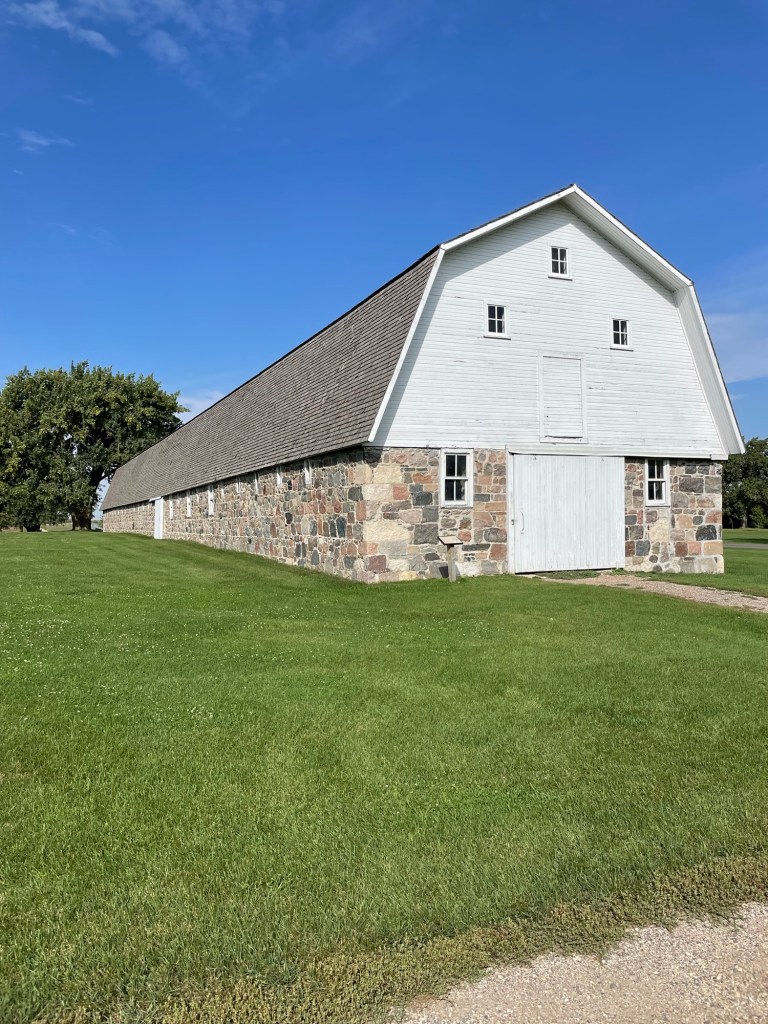
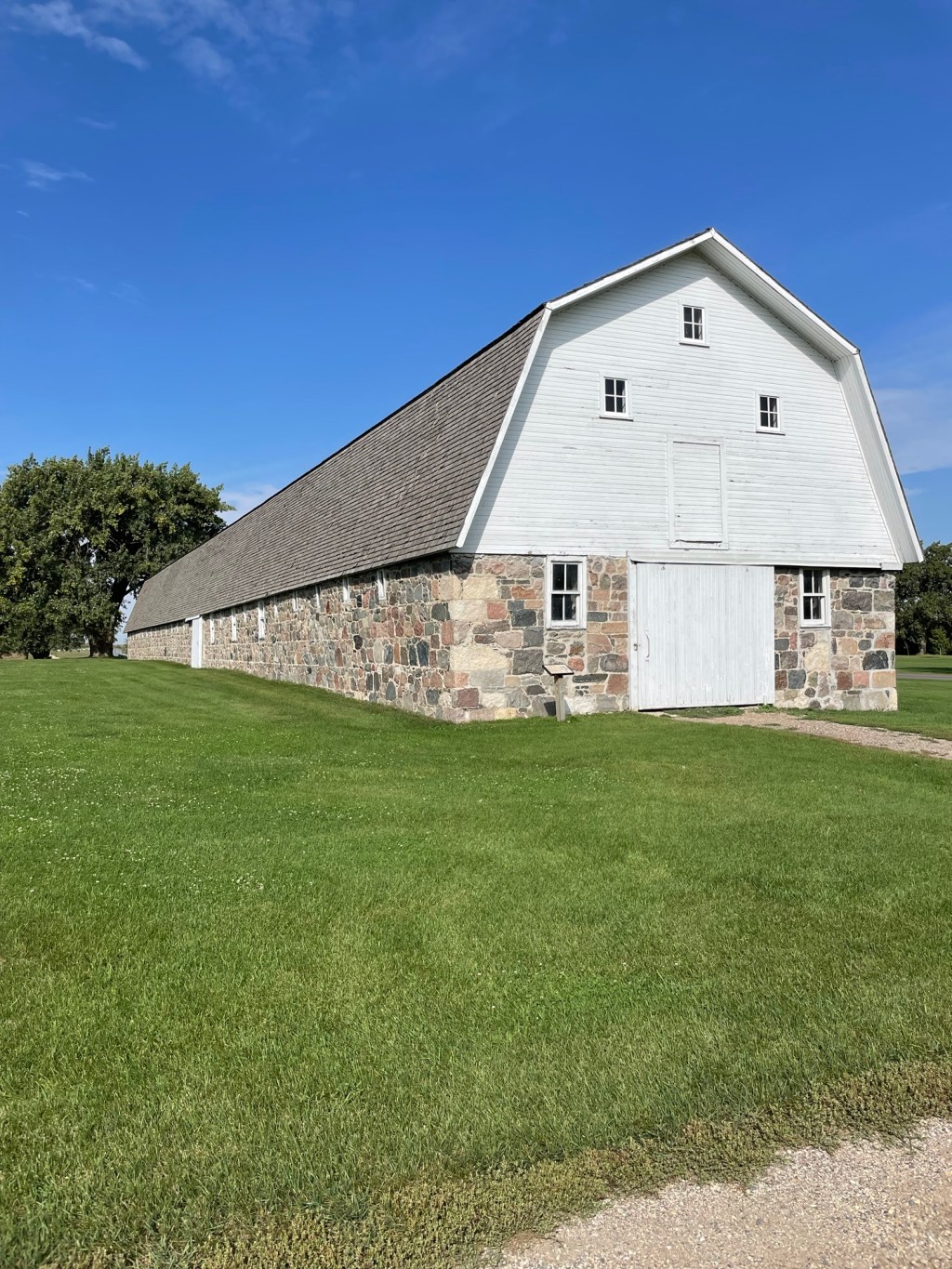
But then again, there were horses. Horses everywhere.
For each of the Fort’s buildings, a plaque at the front has a quote from one of the men’s writings. For instance, in front of the stables, above, Sgt. Fisk noted that his horse had slipped on the lake’s ice while being watered and fell through and the poor beast nearly died of exposure before Fisk could get it back to camp and warmed up. What a struggle these people and animals went through for basic living needs.
A stable like the one above was my idea of perfection and my greatest wish growing up. It still makes my heart beat a little faster and it put a huge smile on my face as we drove in on Saturday. What a beauty. Nowadays, it’s the main bathroom and shower building for the park and campgrounds.
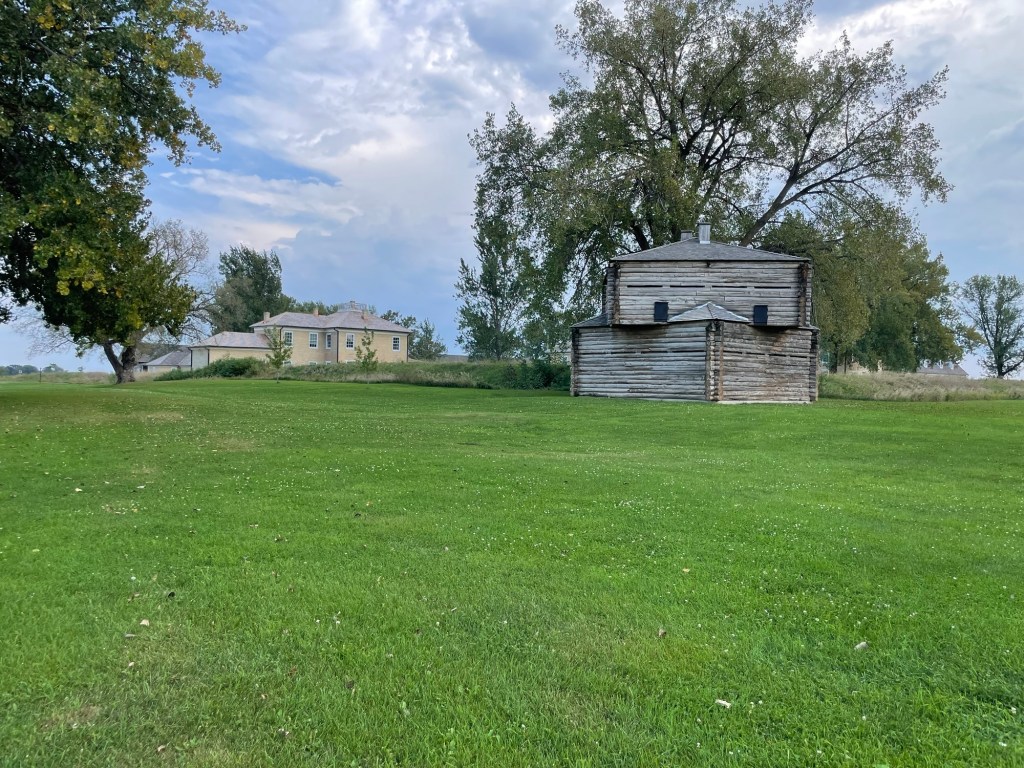
Many of the buildings at Fort Sisseton Historic State Park are partial reconstructions, like the security blockhouse below. The Works Project Administration did the bulk of the restoration (including corrective rebuilding) in the 1930s.
Just a side note, but it amazes me how much of our current National and State Park architecture, historical documentation, and public art — nationwide — was done during that period by the CCC and WPA. It amazes me even more that some people now think those were bad programs. They literally kept entire extended families from starvation while simultaneously creating our greatest public recreation and educational facilities — ones that are still in daily use nearly 100 years later.
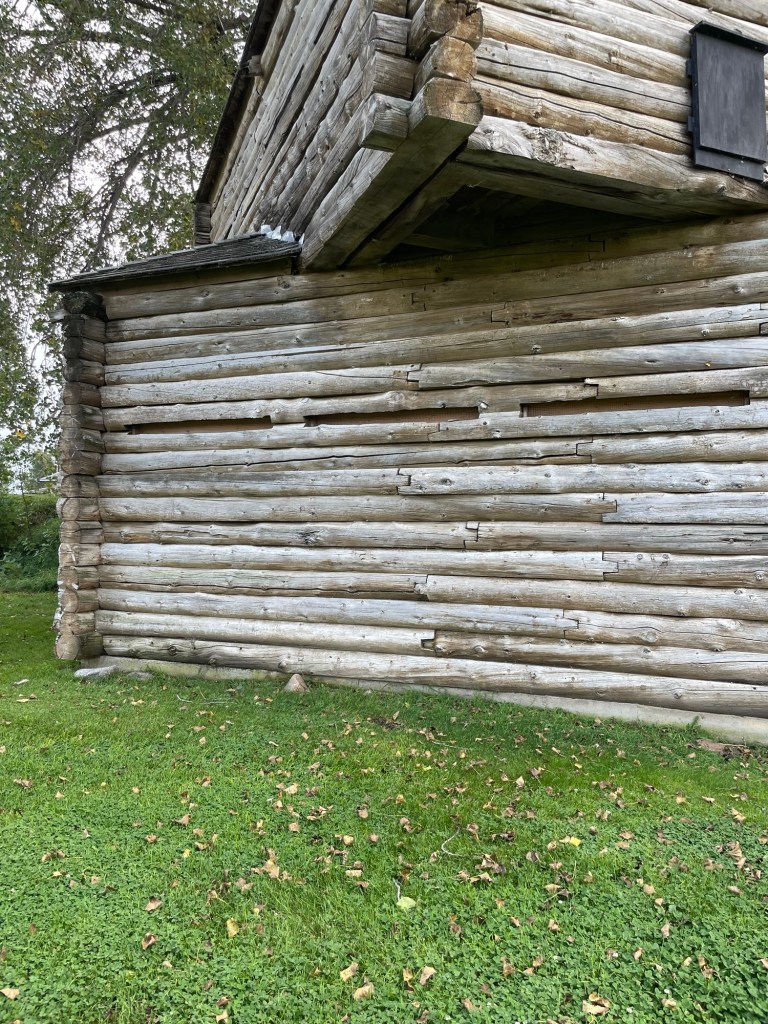
The way these logs are notched together is mind blowing.
You can see the side of the hospital (above) to the left of the blockhouse and (below) the front of it. Poor Ben Franklin. I wish I knew what became of him after all his limbs were amputated. Did he survive the surgeries? Did he want to? Was he shipped home? If so, who took care of him and how did he spend his remaining days? I have so many questions.
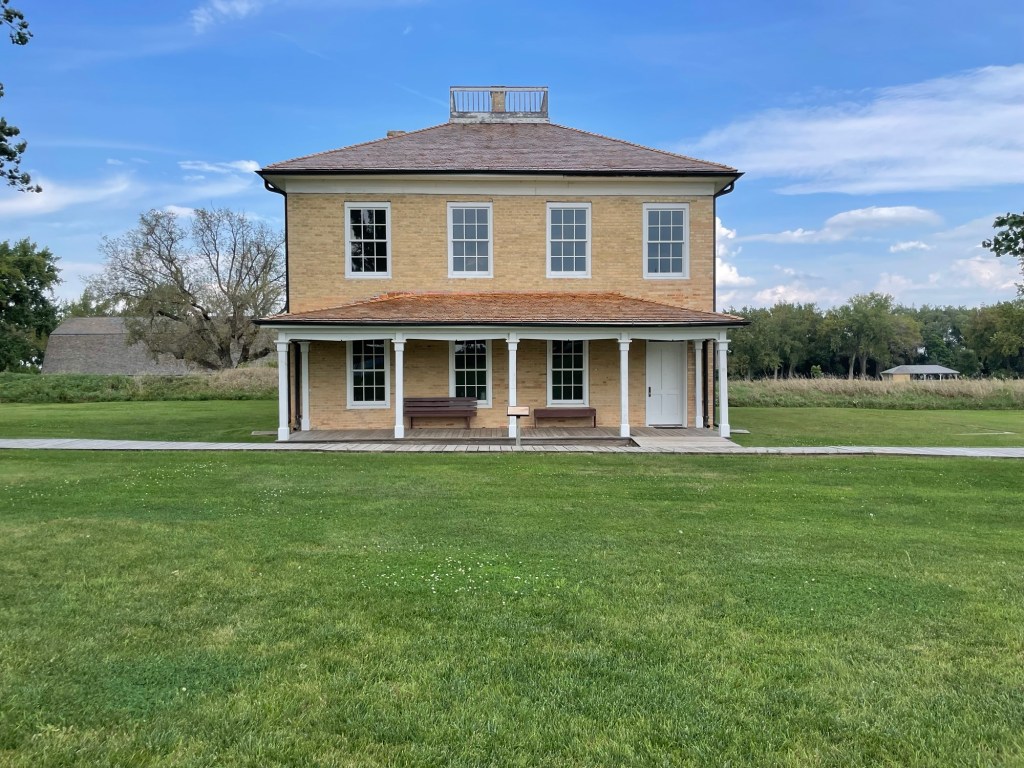
After the first two years, when the enlisted men were housed in tents — on the prairie, in the upper Great Plains, in winter, I can’t even imagine — Fort Sisseton finally constructed two bunkhouses (the South Barracks is shown below) for them. That is, after the Captain’s house, the Officers’ quarters, the Surgeon’s house, the Hospital, the Guardhouse (jail), and etc had all been built. Yes, I’m feeling a little bitter about it on behalf of poor Sgt. Fisk.
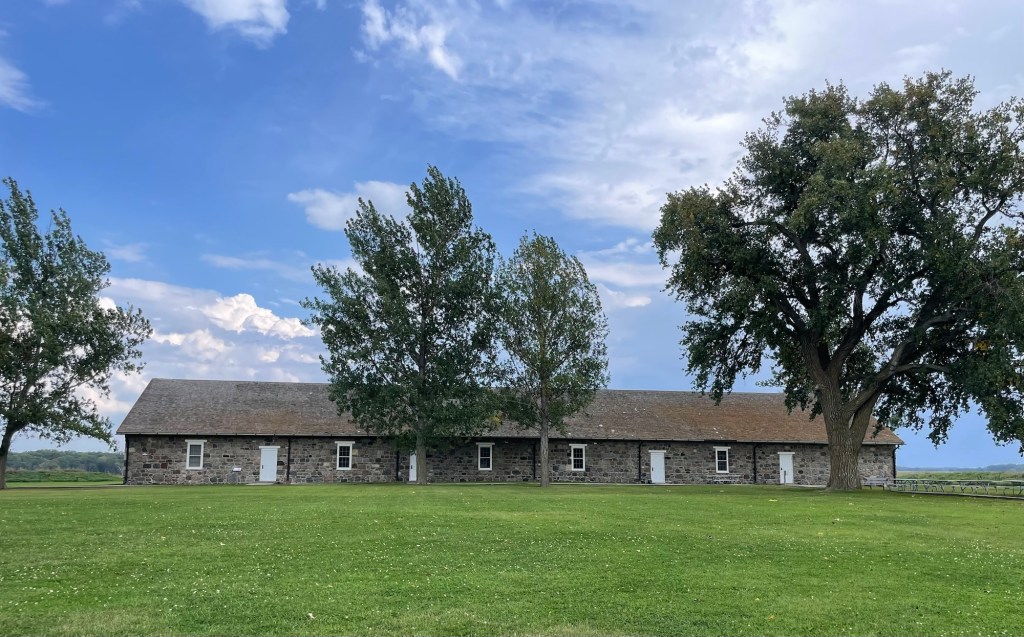
The Adjutant’s Office and Quarters (below) is my idea of the perfect little stone cottage. And since it matches my dream barn so perfectly, I call dibs. This one is mine. The central wood stove will keep it toasty.

The Powder Magazine is a strangely ornate, half-stone, half-brick, step-gabled building that was much, much closer to the residences, offices, and guardhouse than I would have expected or appreciated, being highly explosive and lethal and all, but what do I know? Front and rear views below. Yellow building between them is the Guardhouse.


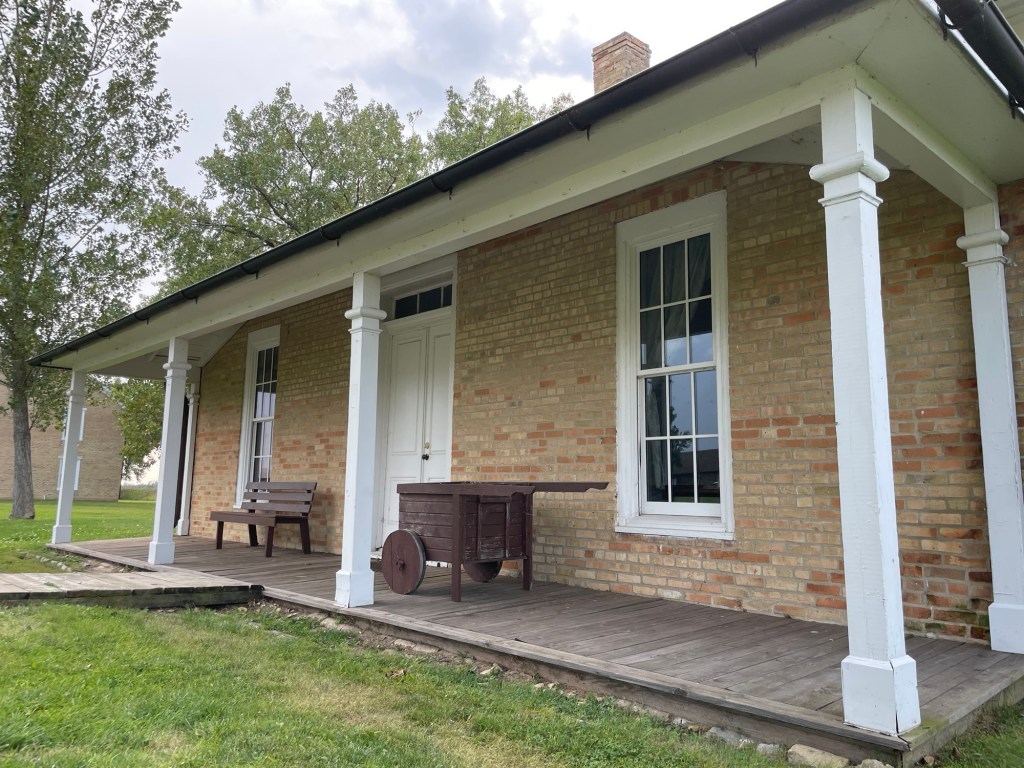
The officer’s quarters (below, left) also housed the officer’s families and servants. The Captain had a two story home (but was forced to share it with some unmarried officers due to a housing shortage), and the Surgeon and his family had a small bungalow to themselves.
Despite such luxurious digs, the frontier was still the frontier and it was still a rough place to live. The Captain’s house was so overrun by bedbugs, for example, that he eventually sent his family, servants, and furniture away while they tried to eradicate the pests.

I want to know what this cute little cart on the Surgeon’s porch was for. I think it was made to be pushed by a person versus dragged by a mule, but I can’t quite figure out what purpose it served. What do you think?
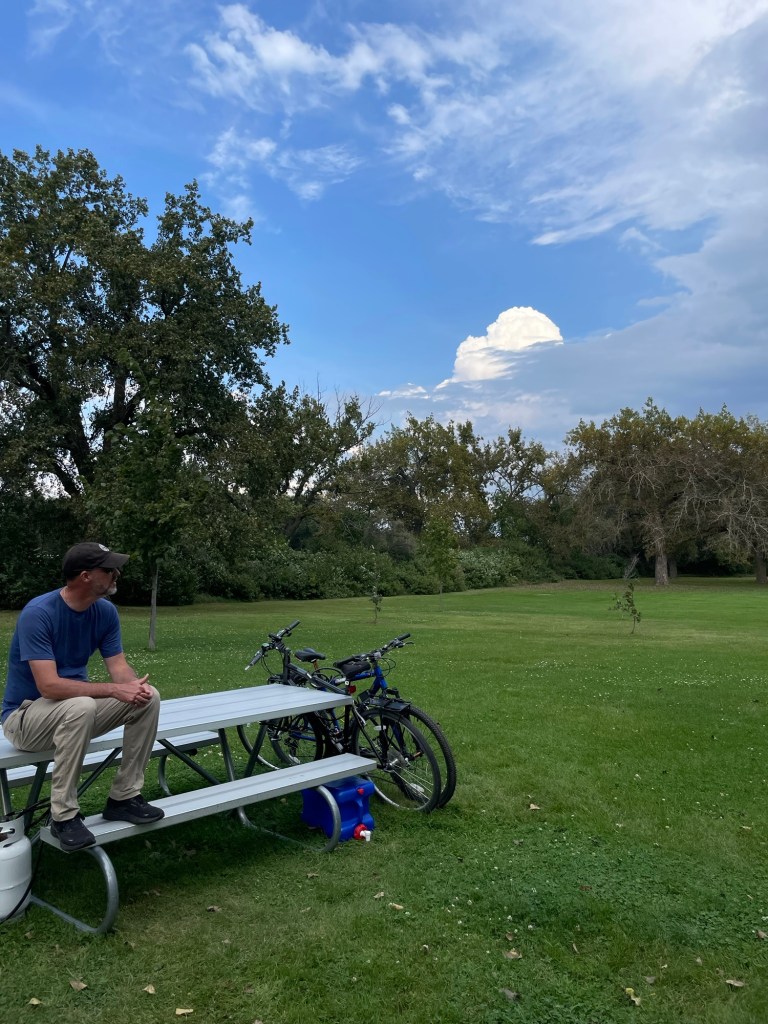
As Sunday afternoon wore on, we watched the clouds gather and got a bit concerned. The weather folks were talking of a strong storm in our area and the rising winds made that talk feel really likely, so we drove into the nearest little one horse town for dinner.
Technically there was one horse and two ponies. The food was decent, the welcome not so friendly. Apparently South Dakota does not participate in Midwest Nice.
The rain never materialized.
But man oh man, what great clouds. I mean, look at those things. You can hear the opening to Twister just by looking at it. But luckily the storm went around us on two sides. All the gorgeous skies, none of the wanton destruction.
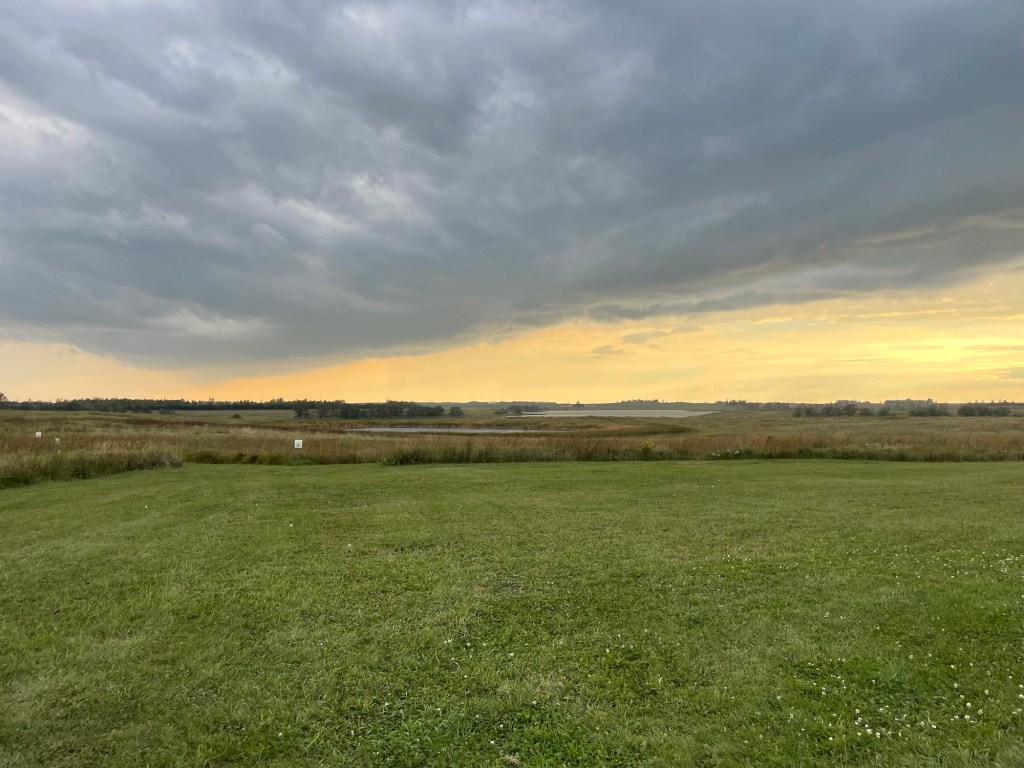
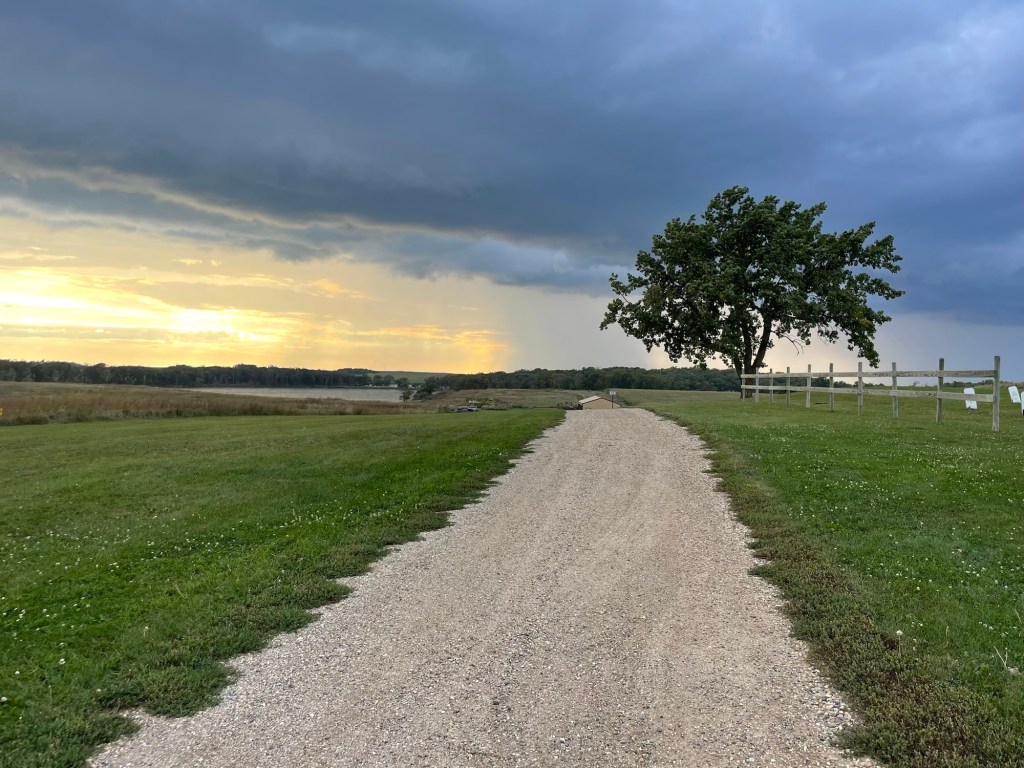
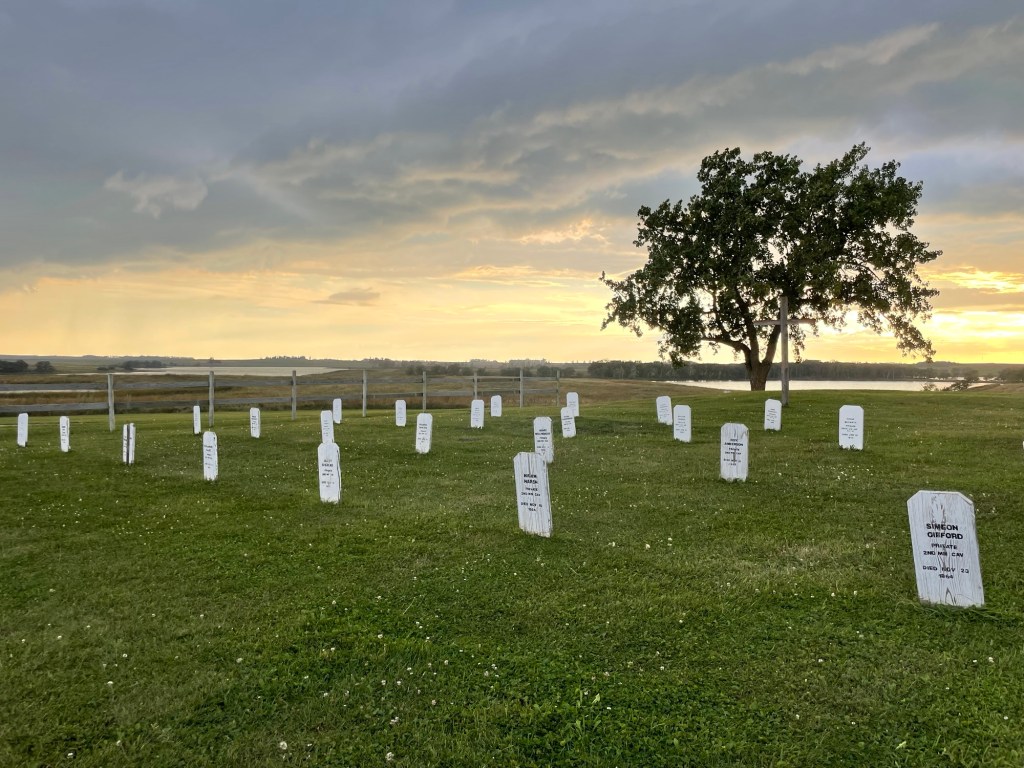
After dinner we took showers, watched the fading light, and climbed into bed. The mosquitoes and bugs had gone into hiding with the weather, so we could enjoy being out in the golden light without being covered in bug spray for a change. Glorious.
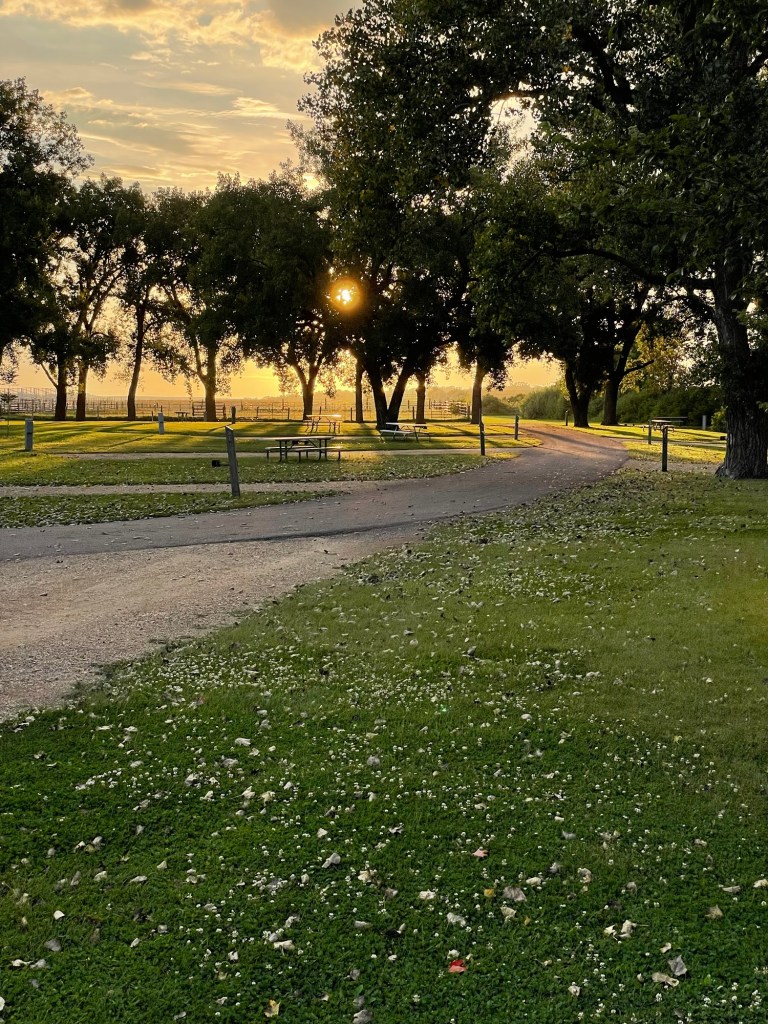
I was happy to see that the bathhouse and all four mini cabins had accessible ramps and one even had a raised fire pit. It takes so little extra effort to include more people in recreational spaces. Well done, Fort Sisseton.

On Monday, we found that the Fort Sisseton app’s 3D tours came in handy after the fact, too. Since the park isn’t open on the weekends during the off season, we did our own little walking tour, read all the plaques, and listened to the audio tours on Sunday.
The Visitor Center was supposed to open at 10am on Monday, which would have given us a just enough time to see the insides of the buildings that we’d peeked into over the weekend, but alas, no one had arrived by 11am to open things up so we left.
All in all, we were rather surprised by the unwelcoming attitude of the locals and the other campers in NE SD, but we quite enjoyed Fort Sisseton HSP itself, the history it’s trying to preserve, and the landscape it’s set in. I’m glad we stopped there.


Leave a reply to Anonymous Cancel reply