When I say the temperature dropped the last night we stayed near Cape Canaveral, I mean it dropped. The temps slid downward all day Sunday and the winds climbed steadily upwards. Overnight, wind gusted up to 50mph and the actual temperature fell to 20°F on Monday morning. Our camp hosts were so concerned about us freezing that they brought out a small electric heater Sunday night and insisted that we take it into the trailer with us. Based on experience, we knew that the electric blanket would be sufficient, but we appreciated their concern. We were more scared about the heater starting a fire, so it stayed unplugged and out of the way overnight and was returned the next morning.
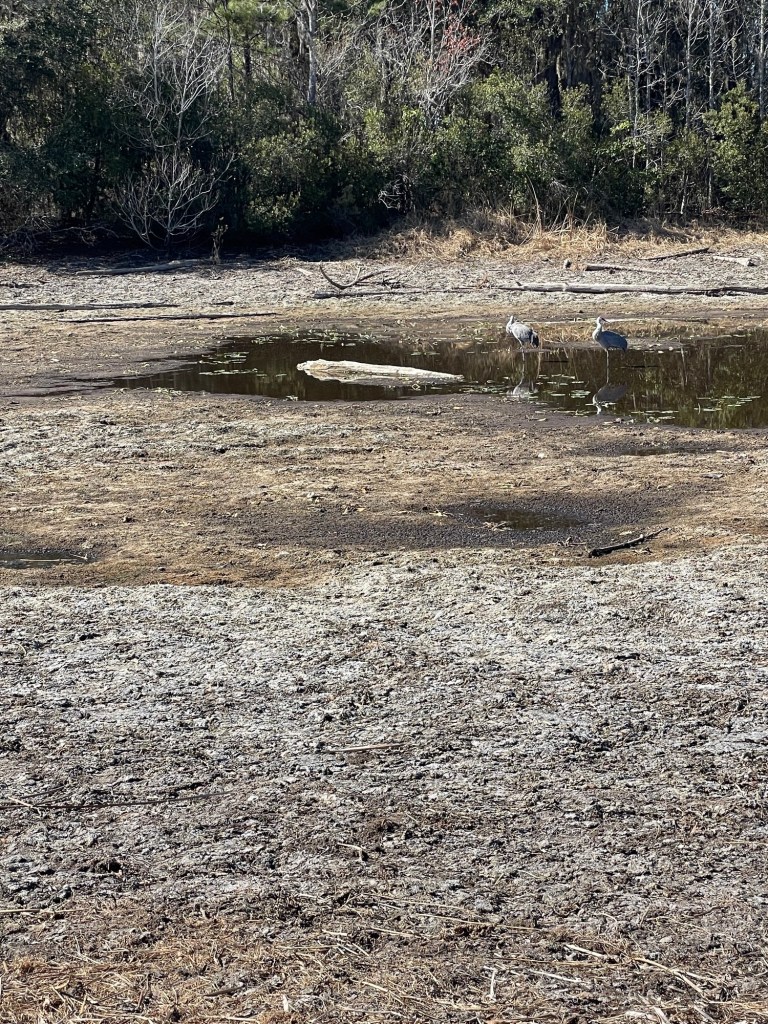
Arriving at Rodman Campground in Palatka, FL, we learned that Rodman Reservoir (if you’re pro-dam) / Lake Ocklawaha (if you’re not) was in its every 3-4 year drawdown cycle. To starve out aquatic invasive vegetation and manage sedimentation, the Kirkpatrick Dam is opened and the reservoir dries out significantly, dropping from 18 ft to 11 ft above sea level.
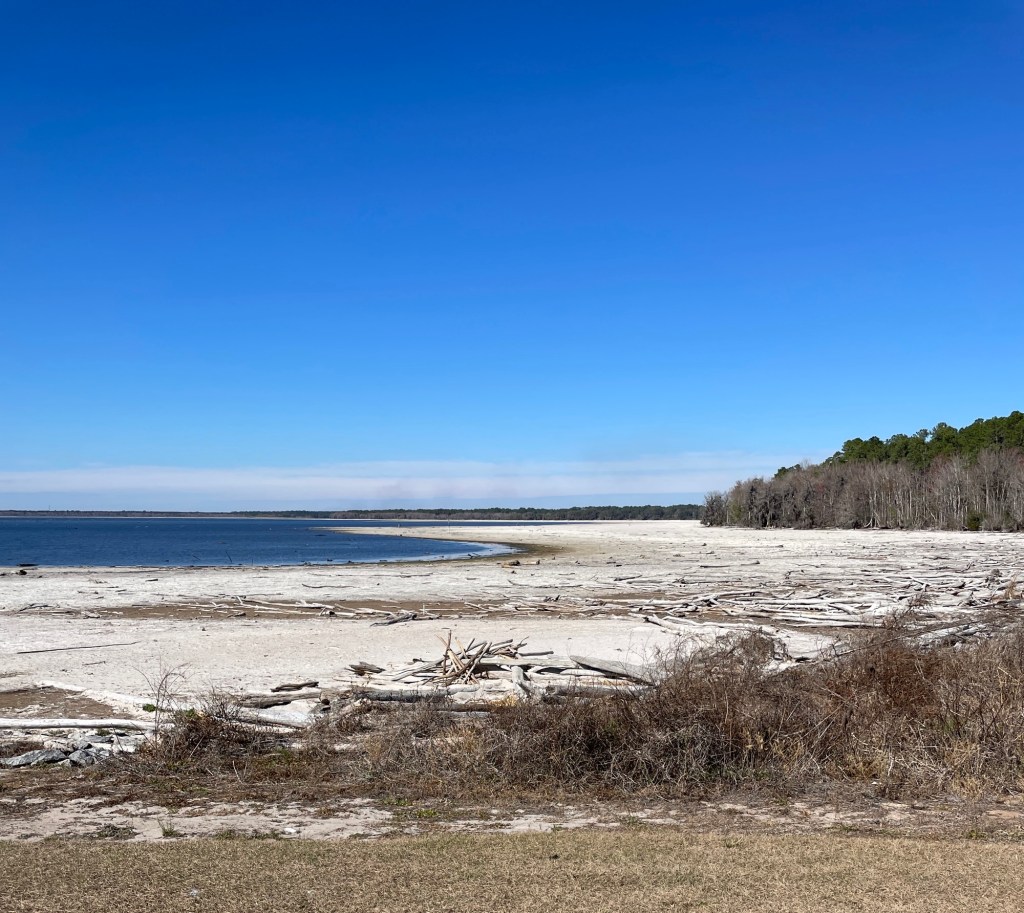
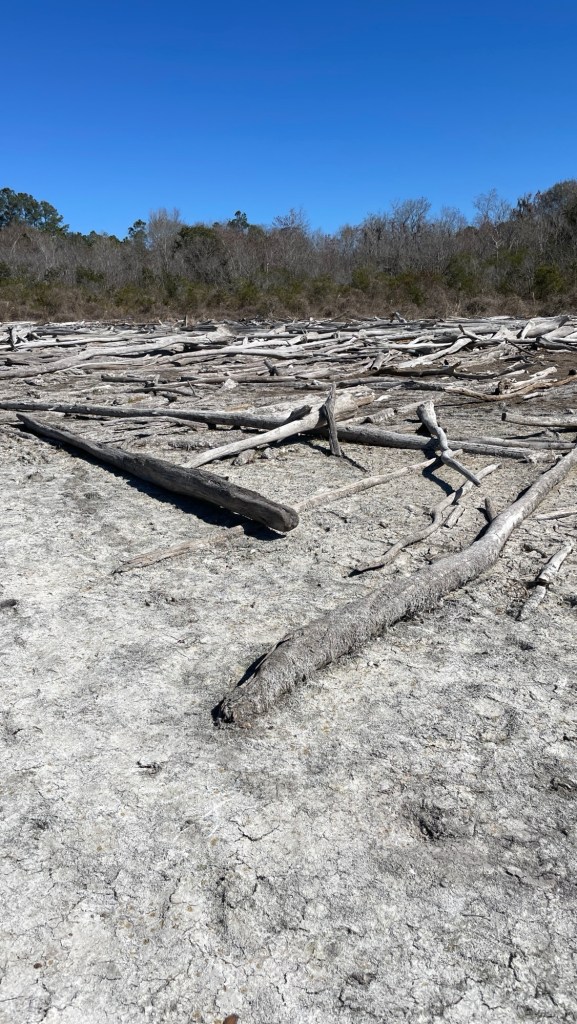
We learned that during the drawdown several inundated natural springs can again be seen, although we didn’t go looking for them. We did see the usually submerged remains of the forest that once lined the Ocklawaha River though. It’s a bit eerie to see a forest of bleached trunks standing upright above the waterline, with the skeletons of other trees piled along the shoreline.
Several days with 18+ hours below freezing meant that our campground’s waterlines froze two days in a row and the system had to be repaired the day after we arrived. Luckily the state park was able to get it fixed by the end of our first day there. If not, we’d have had to pull out the as yet untested bucket toilet system. Frankly I think we’re both ok with never having to put that to the test.
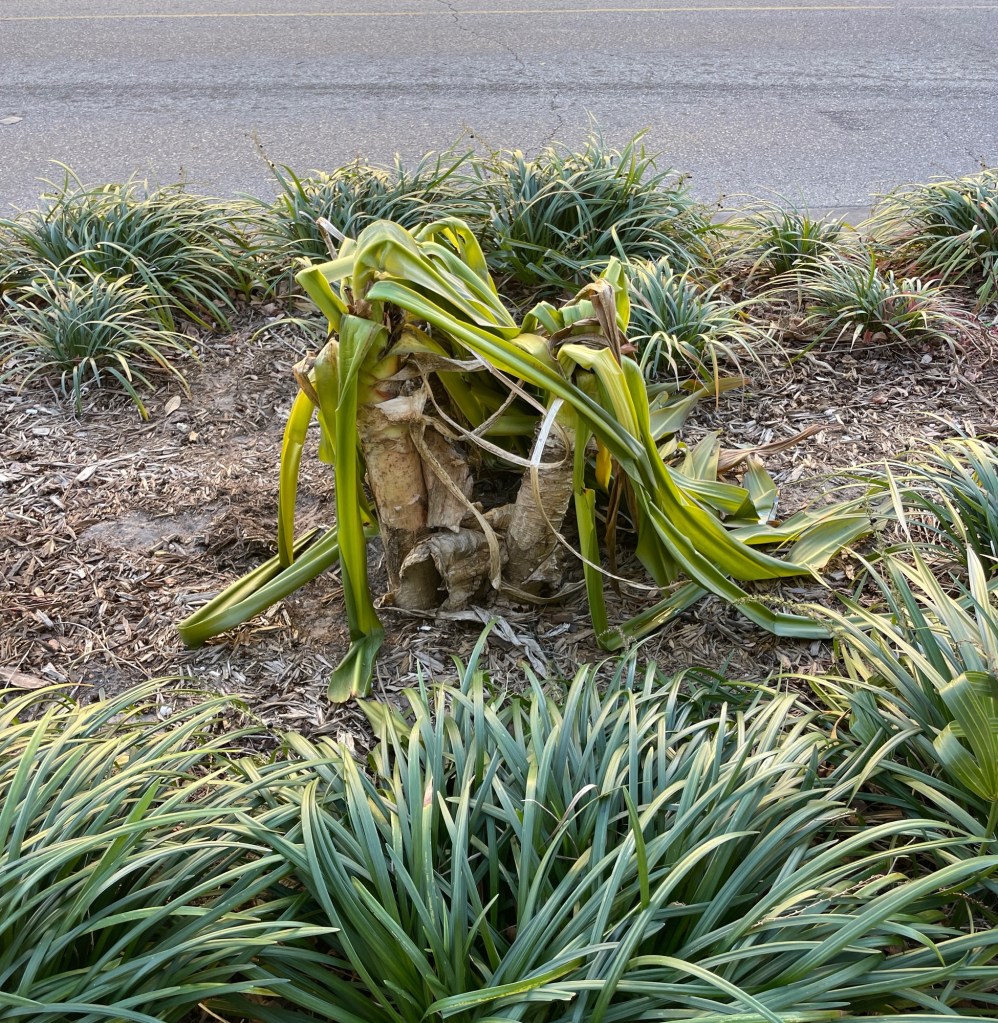
For the tropical plants in the region, the hard frosts meant either death or severe damage if they didn’t get covered. Only the temperate plants and trees, such as oaks and pines, appeared to have survived unaffected. It was really depressing to see the region’s beautiful, cheerful landscaping take such a hit. I hope it rebounds quickly.
Since the weather wasn’t conducive to relaxed hiking or biking, we decided to check out the nearby town, get groceries, and run some errands. Palatka struck me as a town we could live in — it has a nice small town feel, full of history, charm, and friendly residents. It’s clearly seen better days though, like much of Main Street USA.
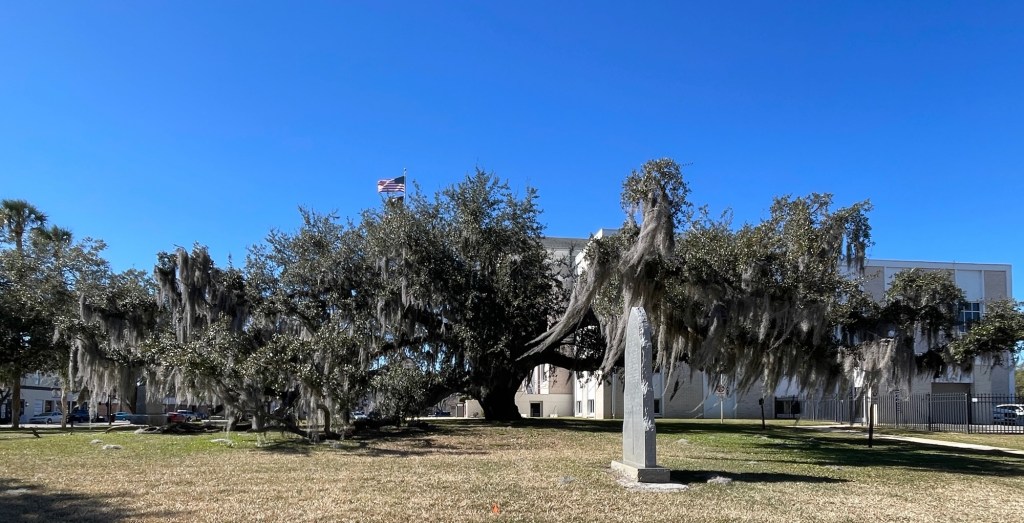
The giant, draping 200 year old Live Oak in the middle of town appears to be nearing its age limit. While it’s impressive to look at from a distance, up close you can see that it’s in significant decline. My guess is the town will go into a period of mourning once its beloved tree’s giant limbs begin snapping off. The near one is already on the ground and looking pretty bad.
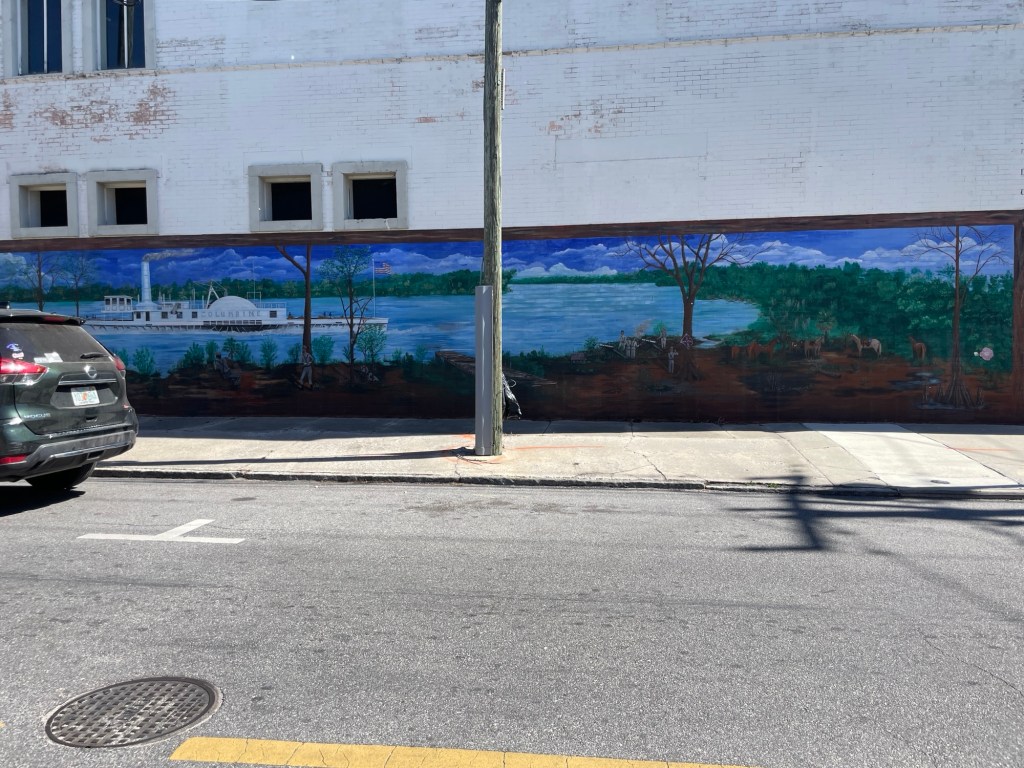
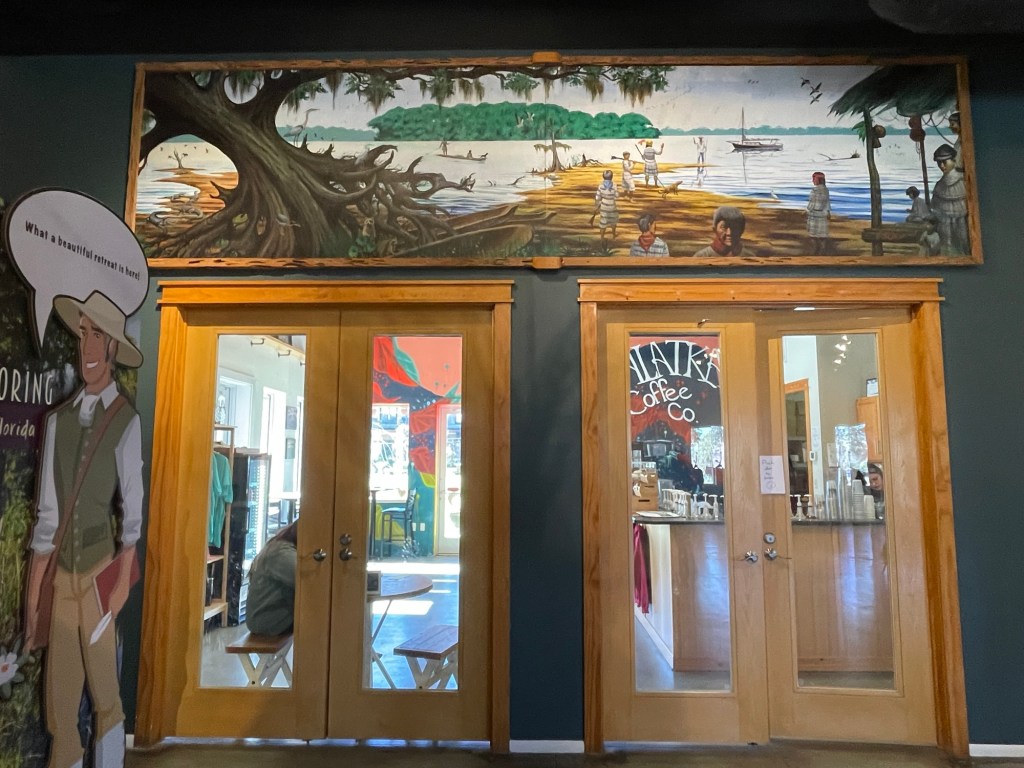
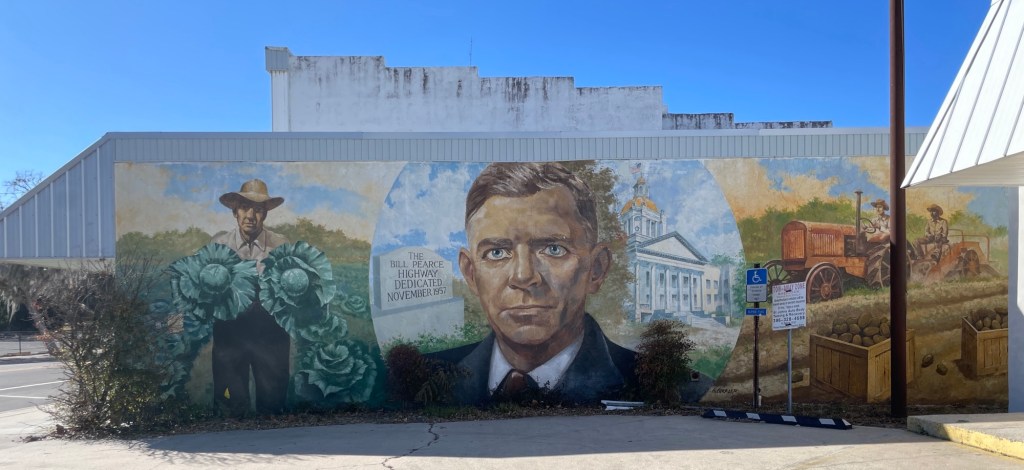
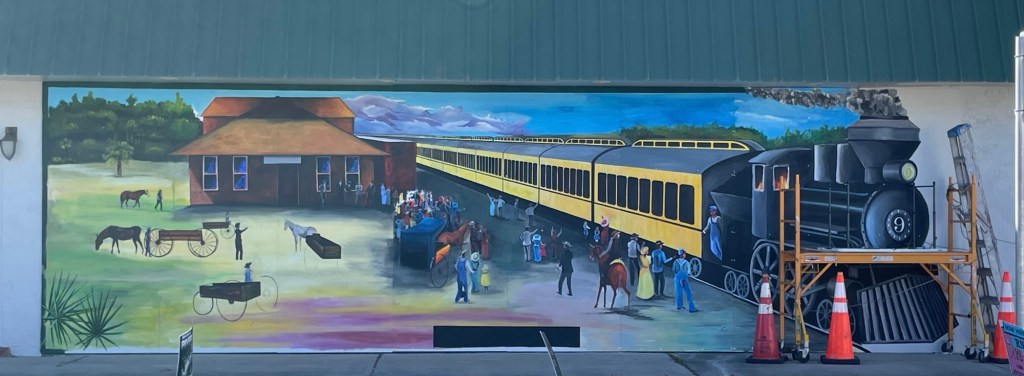
Palatka began funding murals some years back and the town has really gone all out. There are more than the ones highlighted below, but these were some of my favorites. Click on any that you wish to see in greater detail.
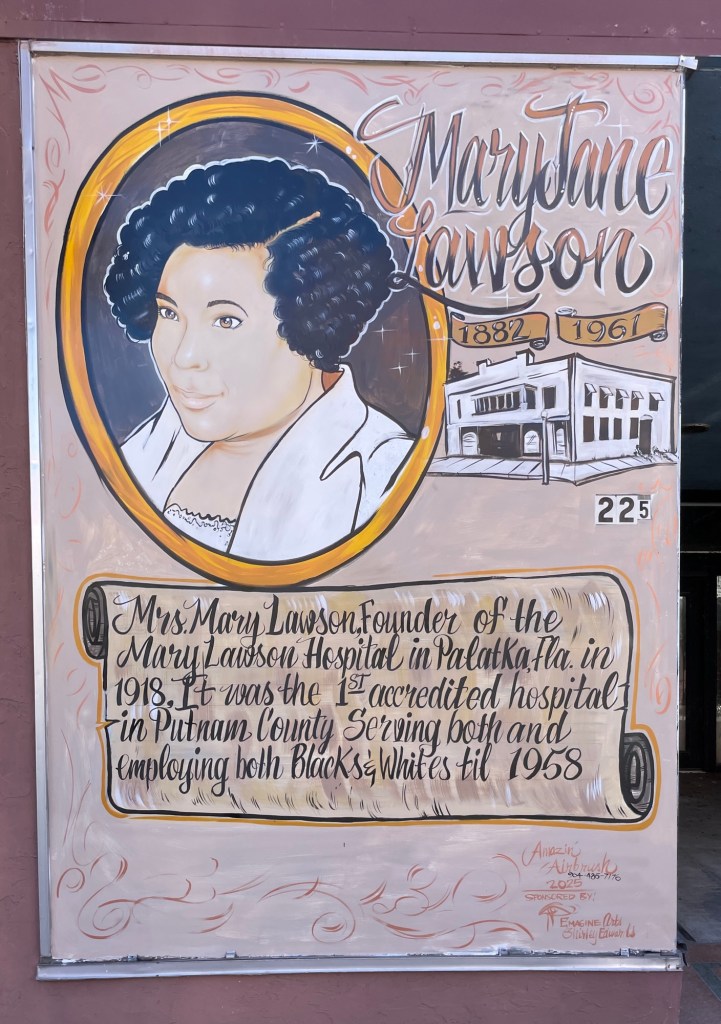
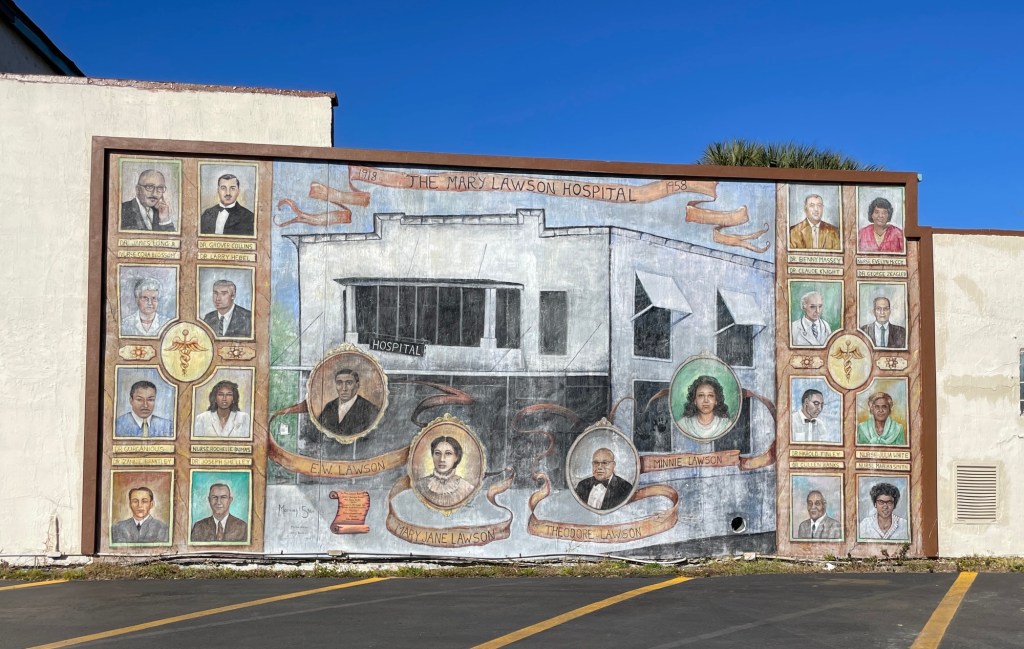
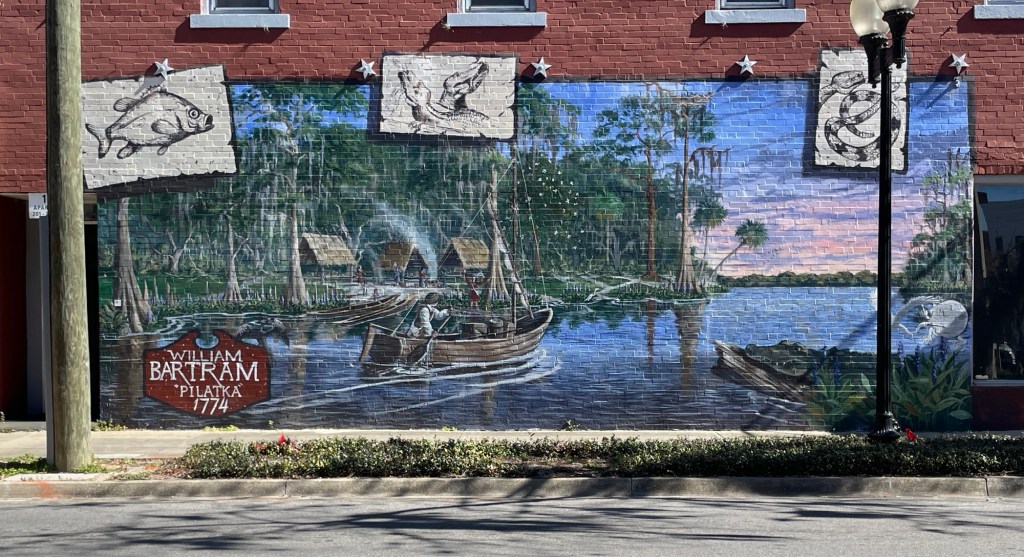
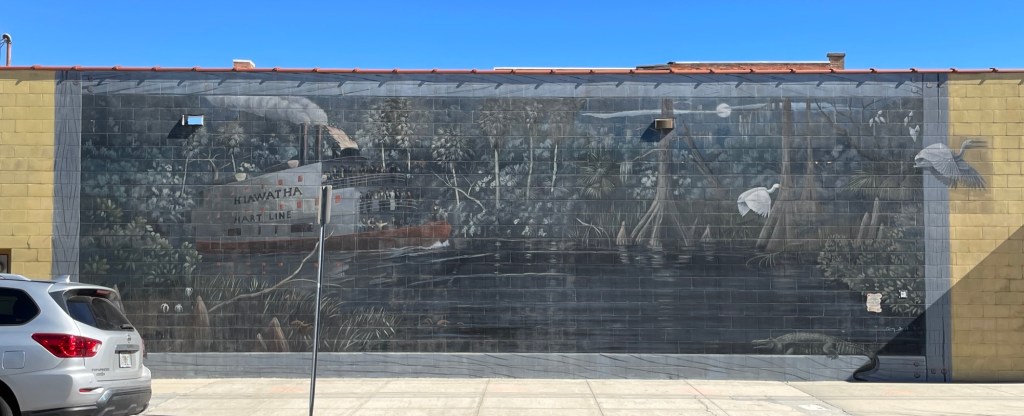
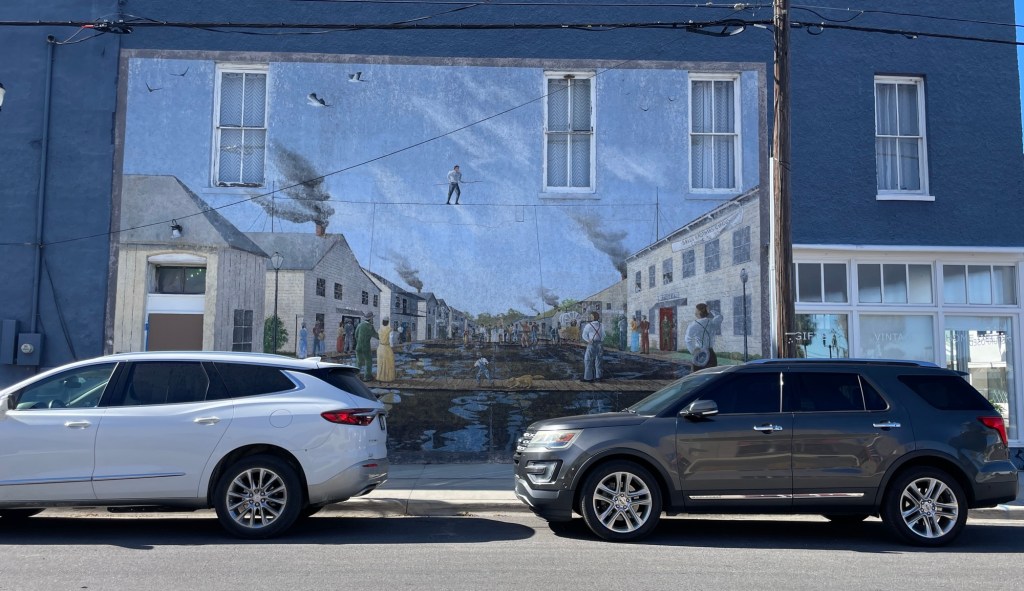
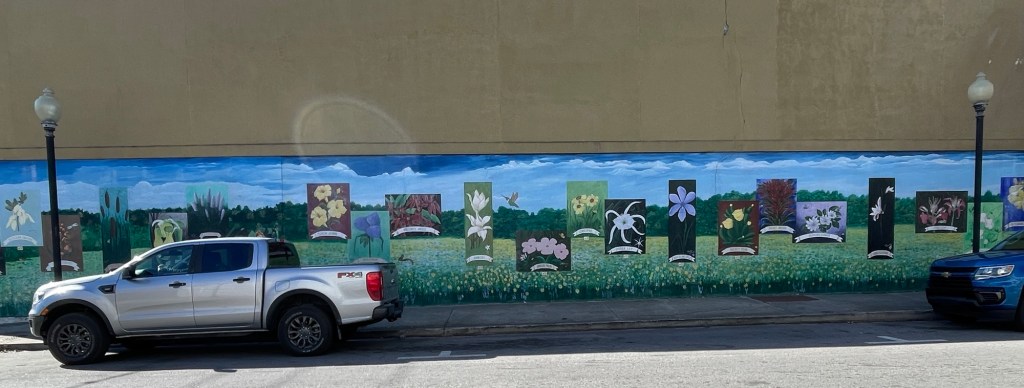
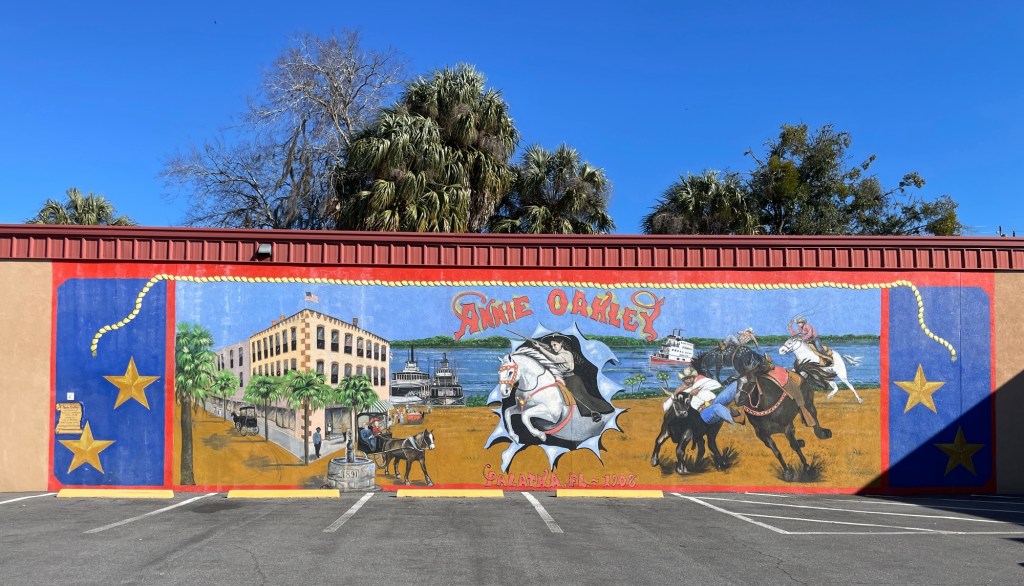
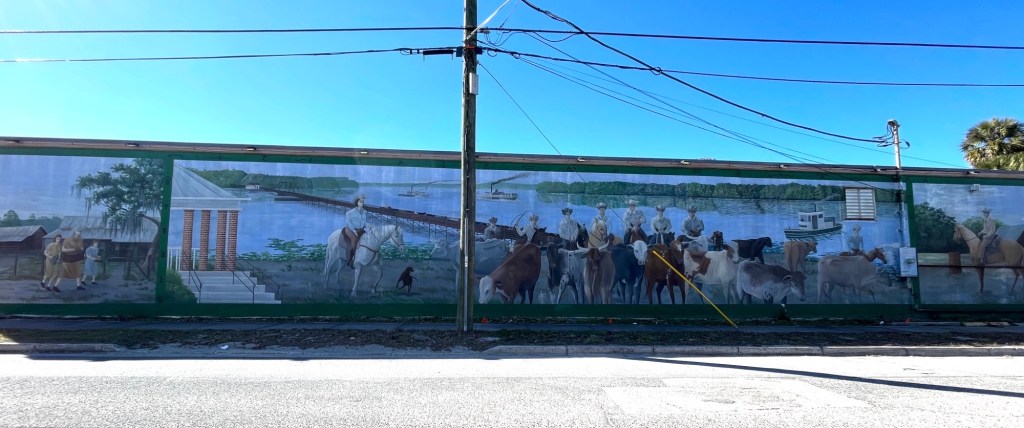
The Larimer Arts Center, below, is housed in the former library building. The simple, balanced design and its light stonework against Florida’s bright blue skies made me stop to look at it while we were out walking around. Peering closer, I saw that the upper columns had important reminders carved into them. I recommend taking a closer look at the building’s subtle stone work and detailing.
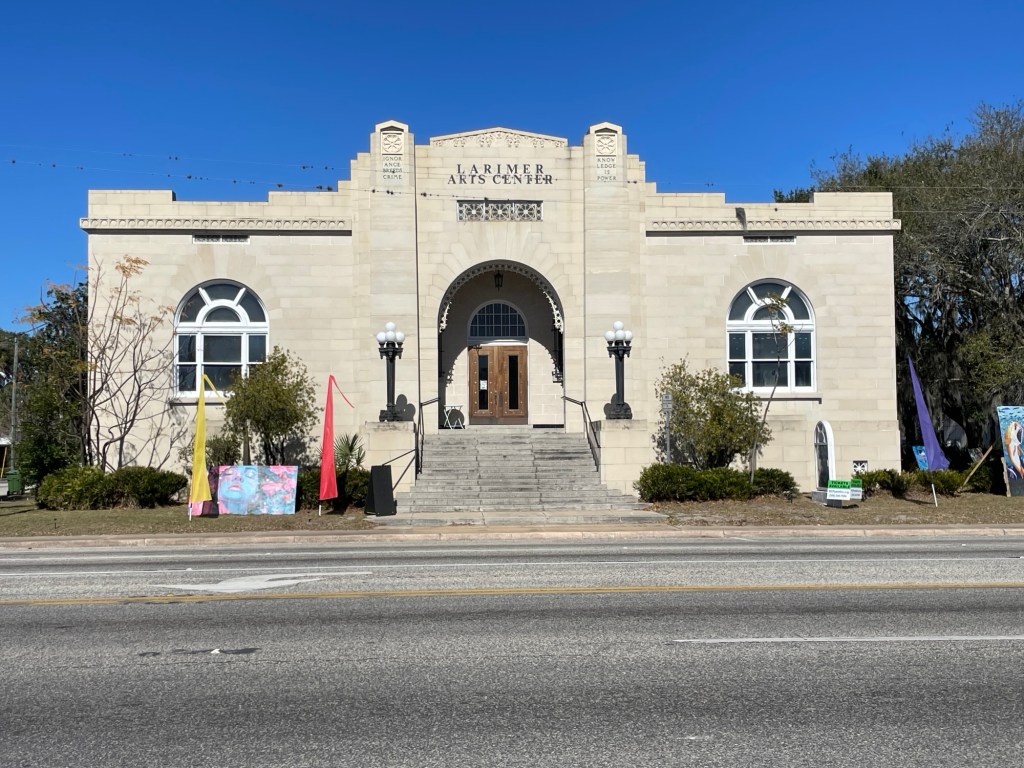
R – Knowledge is Power
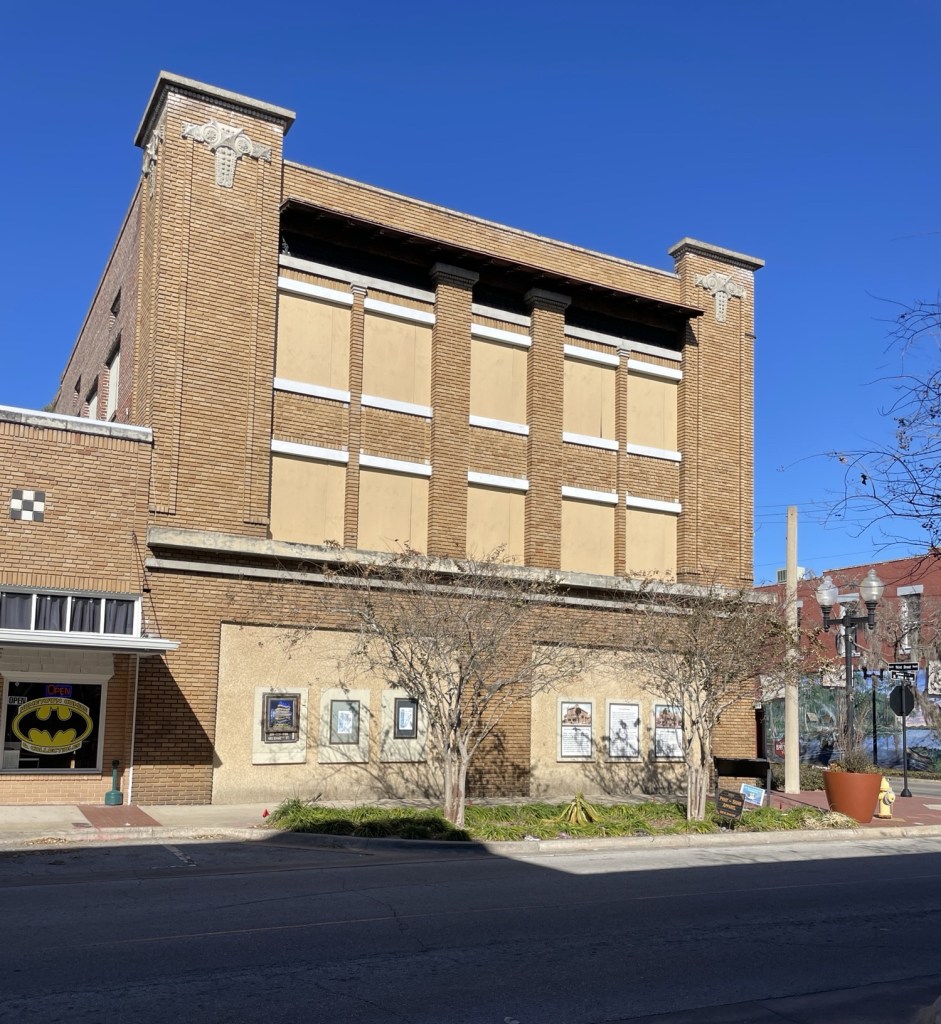
It’s hard to believe, but the building below was once a favorite of musicians and movie stars in the early-mid 1900s and was considered the high of luxury and elegance. It’s theoretically undergoing renovation to bring it back to life, but it doesn’t appear that much — inside or out — has been done since the project achieved National Register of Historic Places status and became eligible for restoration grant funding several years ago. I read that the LLC that bought it did some crowdfunding back in 2018 to get the ball rolling. The ball doesn’t appear to have rolled very far. A big part of me suspects that those well-intentioned dollars are long gone.
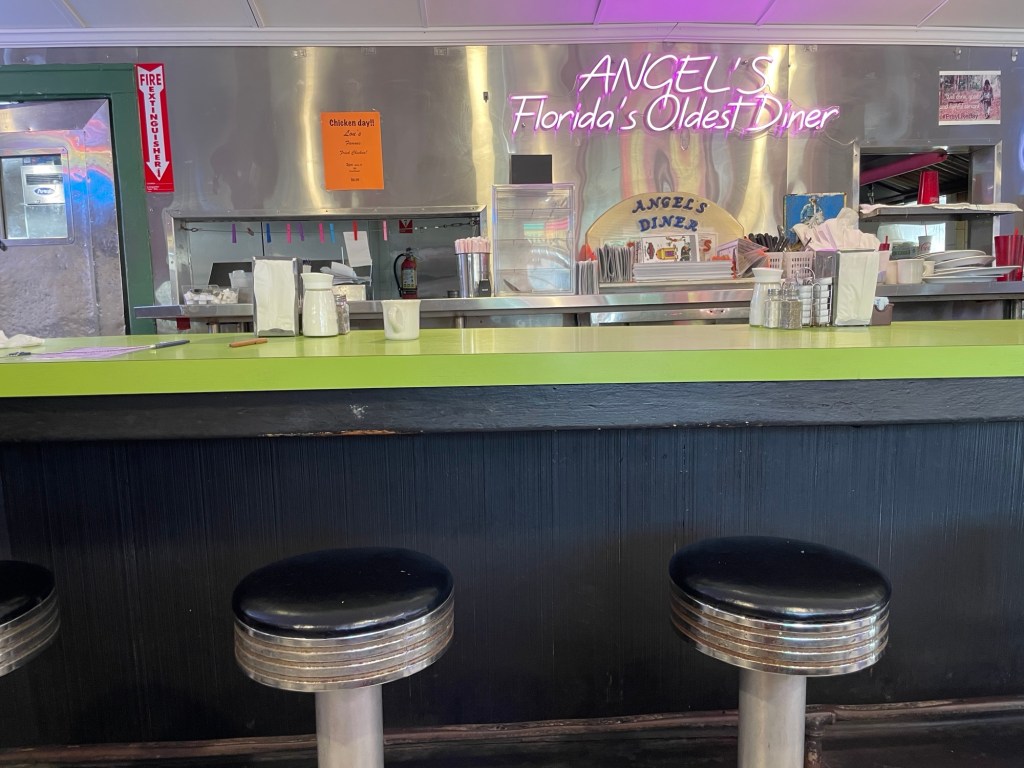
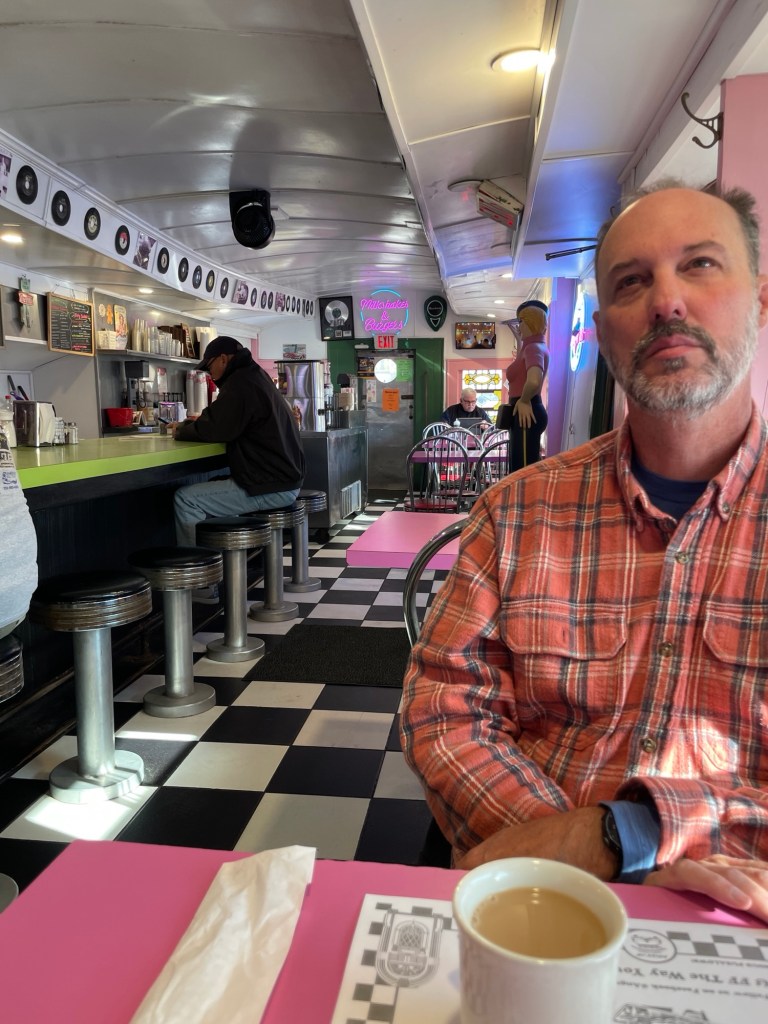
The oldest diner in Florida, apparently, is in Palatka in an old passenger rail car. The food is simple but freshly made. The waitstaff are probably the sweetest you’ll ever meet. I hope it’s in business for decades to come. The M and W toilets are outside on the back of the train ‘car’ and are an experience in and of themselves. I’m going to just leave it at that.
It’s off topic, but something I started doing last September, after we drove out of Denver, was to put my phone away more often. And once January arrived, I made the very deliberate choice to keep it zipped in my coat pocket for the bulk of each day with notifications and sound off, using it primarily for photos and the occasional text. What a change that has made!
I knew my attention level and ability to just be without some kind of distraction had dropped in the last decade and a half, but the extent to which they’ve come rebounding back is shocking. I’ve always been a big reader, that’s not new, but what is new is the ability to focus intently on 80 or so pages of a dense Civil War text. To just sit and read. I know that I couldn’t have done that nine months ago. Having just finished all the Civil War history books we brought along, I started a book about the Edmund Fitzgerald today. Fans of the Great Lakes, go grab a copy. It’s excellent.
But let’s return to Florida.
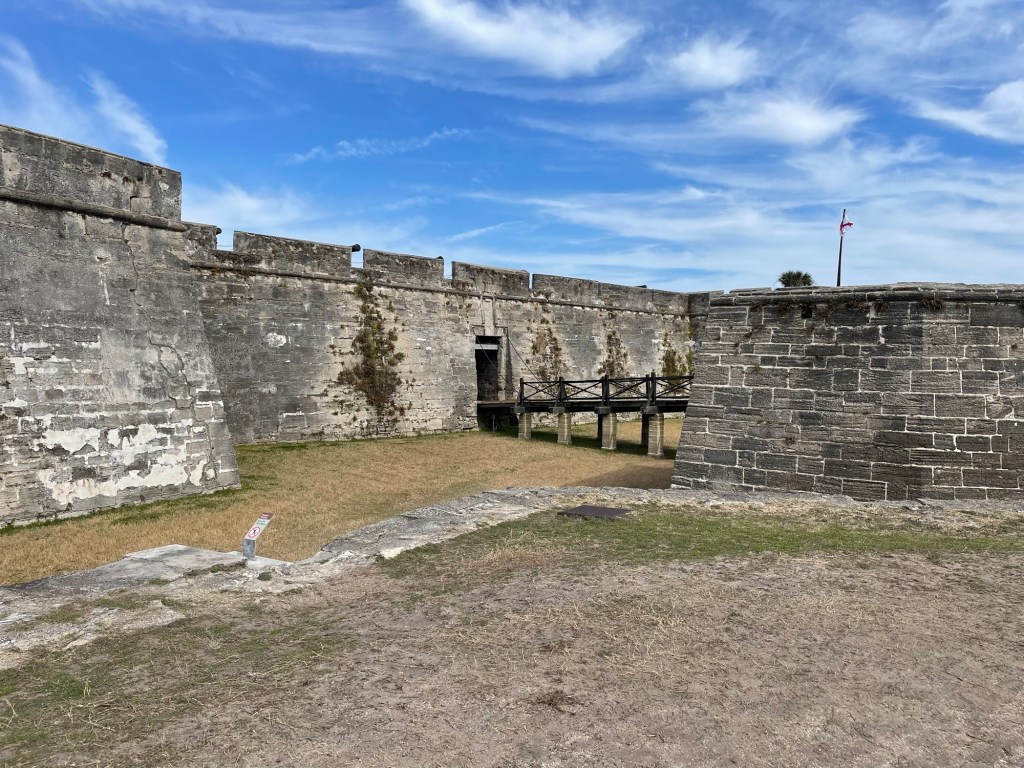
One of our primary goals for Florida was to see St. Augustine, or rather, to see the Castillo de San Marcos National Monument, the oldest masonry fort in the continental United States.
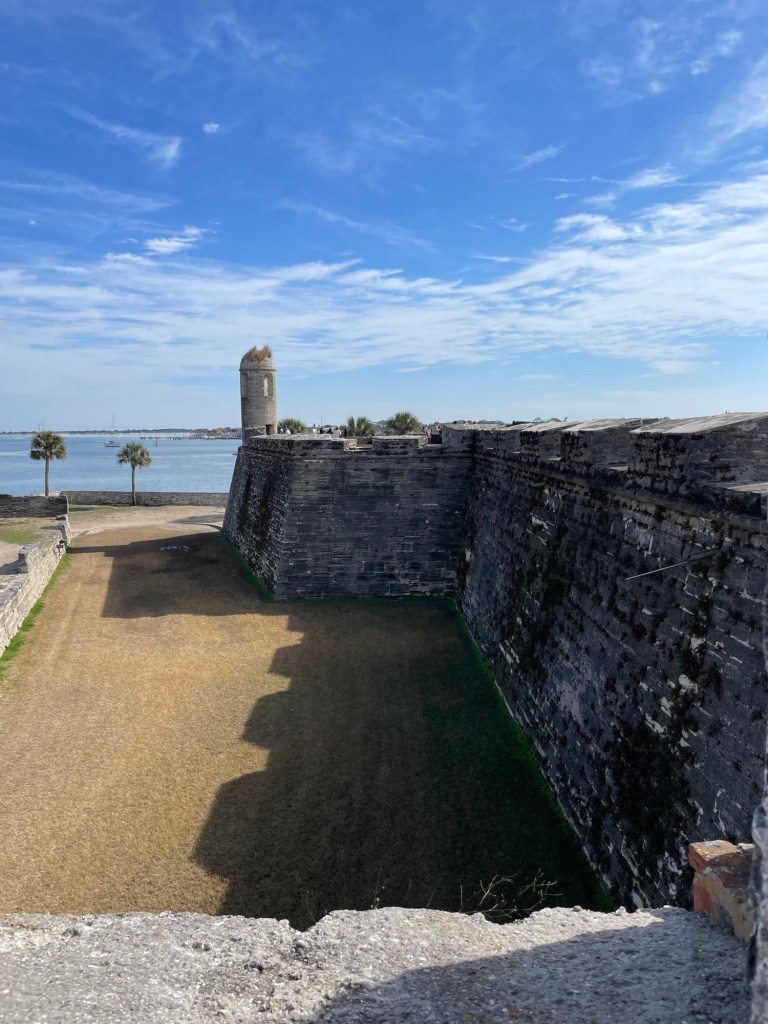
St. Augustine was established as the region’s capital city by the Spanish in 1565 as a way to protect their claim to the region of La Florida (roughly current Florida and a bit of the surrounding states). After a series of wood forts, the current Castillo (castle) was built 1672-1695.
Let’s do a quick overview of dates so that we’re all on the same page.
• In 1513, Juan Ponce de León claimed the region, La Florida, for Spain.
After this absolutely illegitimate claim about an already inhabited land:
(Remind me, who was calling who savages again?)
• In 1564, French Protestant Huguenots claimed an area just north of St Augustine (very much inside La Florida) for themselves. Spain was appalled.
“Who’s next? The Portuguese? The Dutch?! ¡Dios mío, no! ¡Imposible!”
After to a seemingly endless series of religious wars and political pissing contests all around the Atlantic:
• In 1763, the English took control of Florida at the end of the Seven Years’ War and the structure became known as Fort St. Mark.
As part of the post-Revolutionary War agreement:
• In 1783, _Castillo de San Marco_ was back on the mailbox when England was forced out of the region and returned Florida to Spain.
• In 1819, Spain ceded Florida to the United States in exchange for the US renouncing its claim to Texas (👀), and in 1825, the US changed the fort’s name to… Fort Marion.
• In 1861, Florida left the Union to join the Confederacy (1861-1865). Confederate troops demanded that the lone Union caretaker hand over Fort Marion. He asked for a receipt and travel money and walked out the door. Federal troops regained control of both St Augustine and Fort Marion a year later.
• In 1933, Fort Marion was decommissioned and passed to the National Park Service. The name was reverted back to Castillo de San Marcos by an act of congress, thereby acknowledging and honoring its Spanish origins.
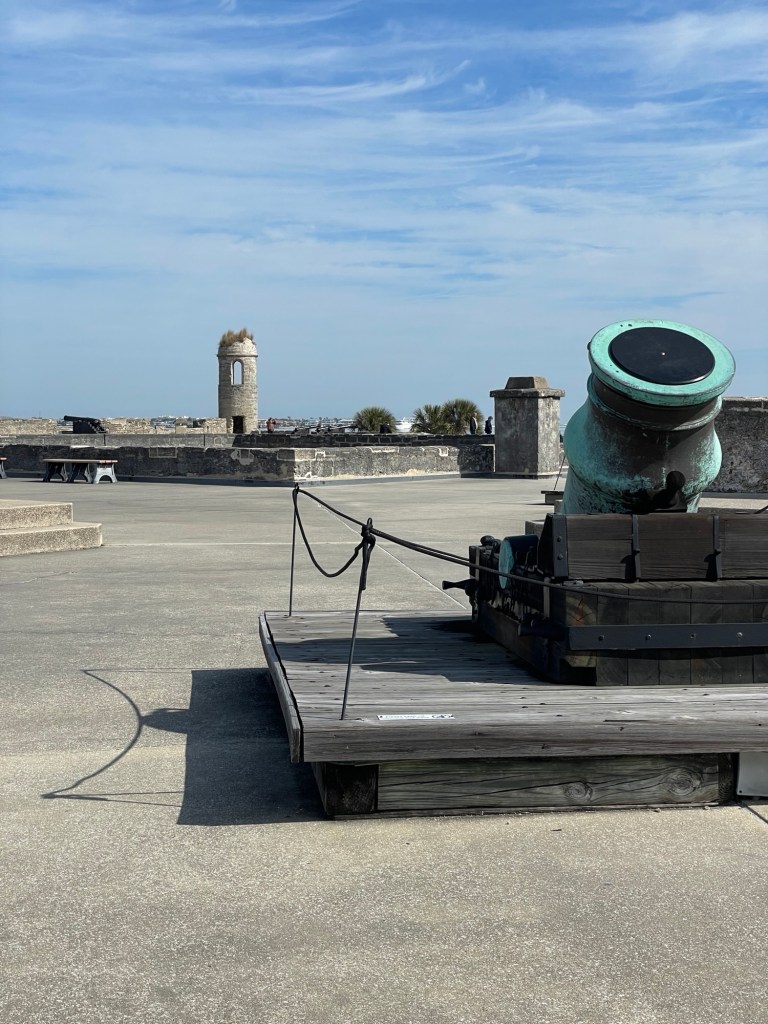
In all its long history, Castillo de San Marco/Fort St. Mark/Fort Marion was never breached or taken by force. Because it was made from slabs of naturally occurring coquina limestone, the natural give of the material absorbed the impact of naval shelling, protecting the fort’s walls from rupture. I imagine it Looney Tunes style, with cannon balls bouncing off in all directions accompanied by a springy ‘Boing!’ sound before harmlessly rolling away. Can you even imagine the first time Spanish soldiers and English sailors saw these walls absorb the impact of those cannon balls? It must have looked like divine intervention.
I wonder if the architect knew how much of the fort’s survival would rely on his decision to use this locally quarried stone. If he had had bricks to hand, would he have chosen them instead? Probably not! What a difference that would have made.
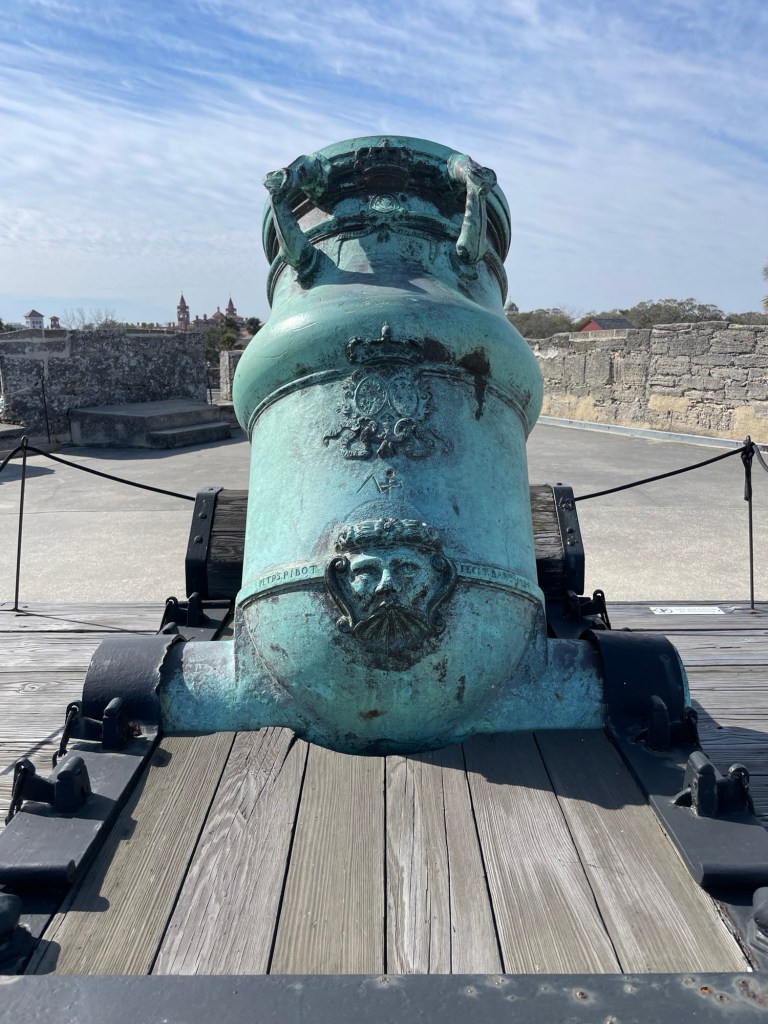
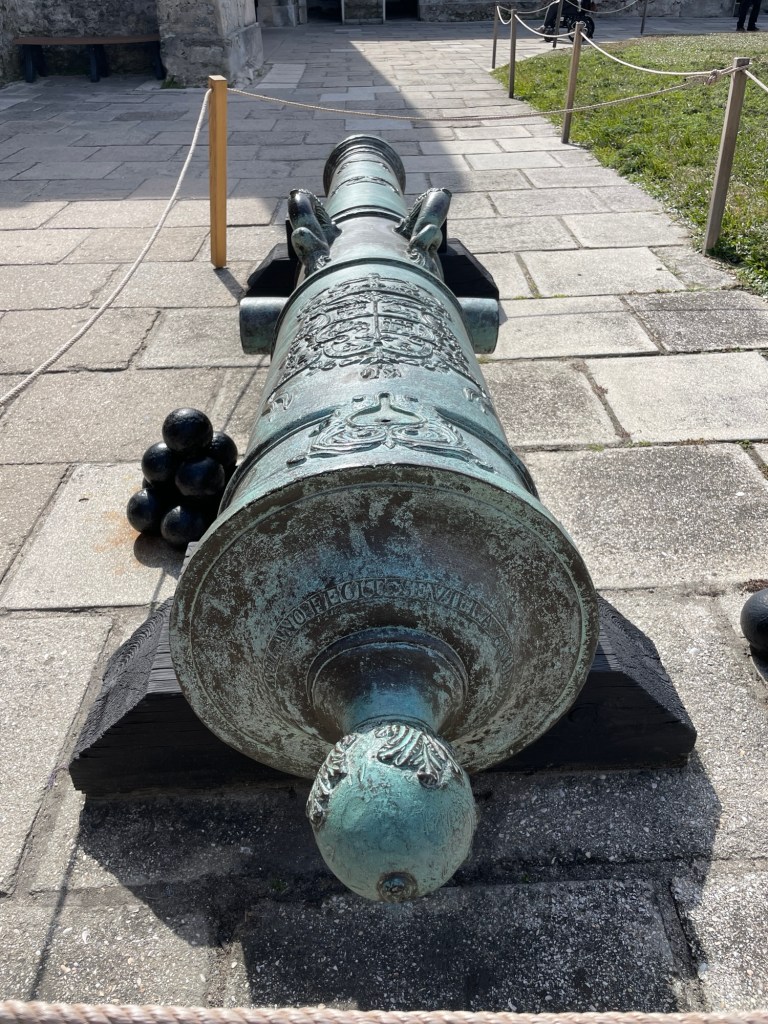
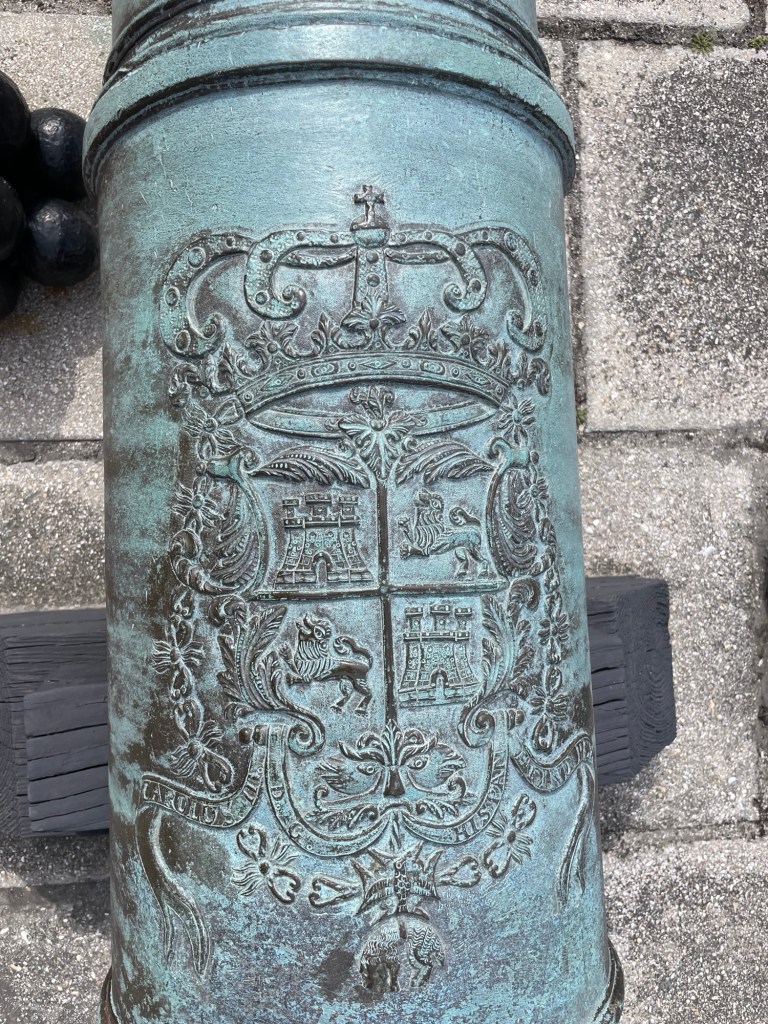
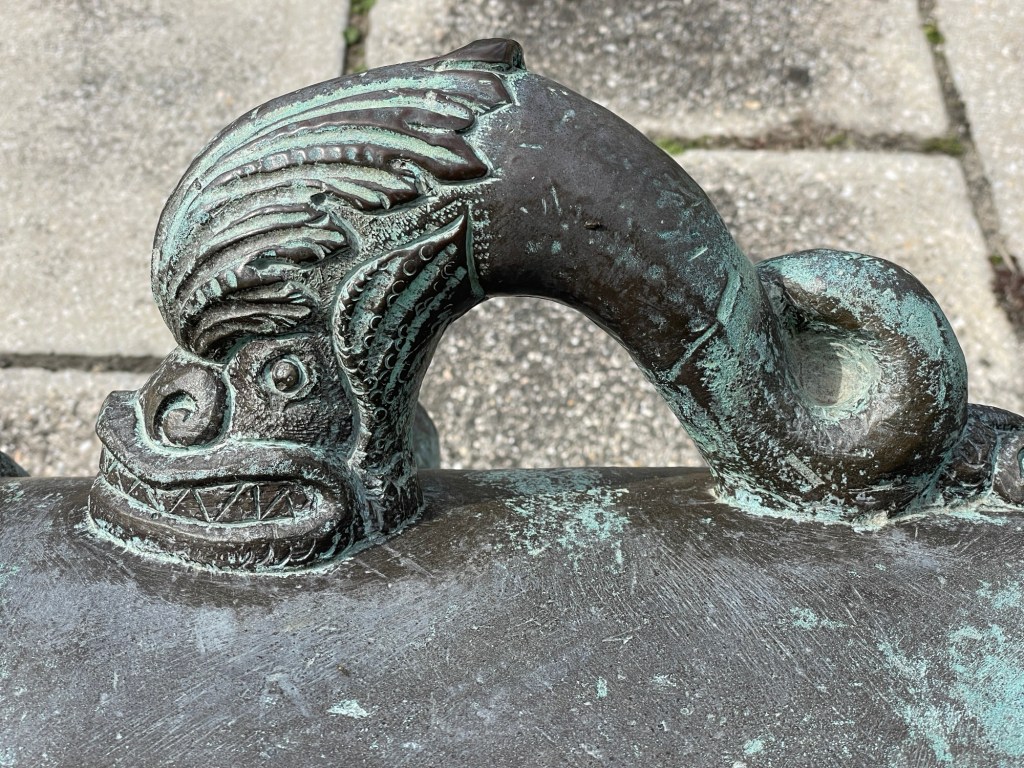
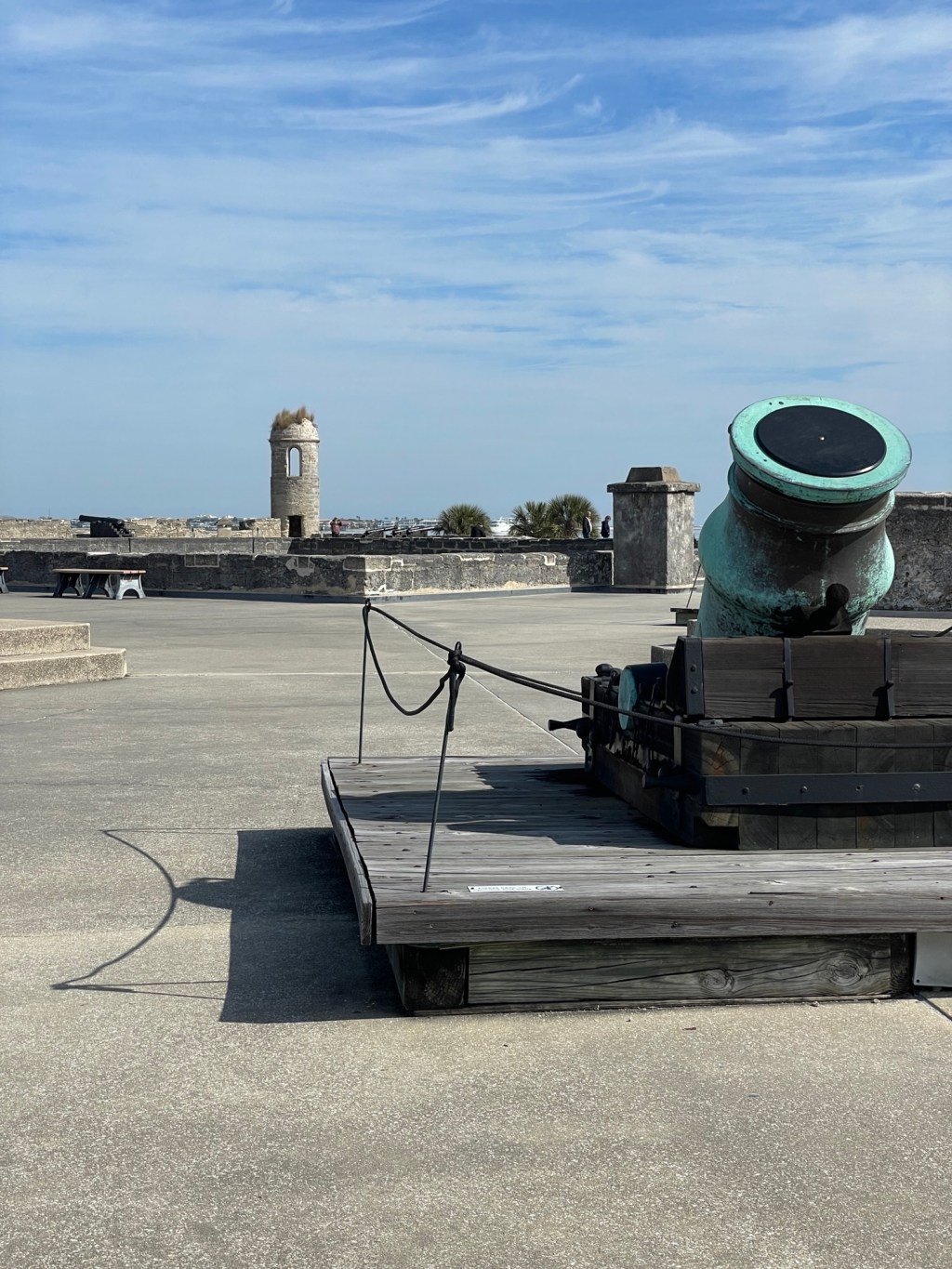
Something that endlessly delights and amazes me is the beautiful details for things as utilitarian as war machines, things that could reasonably be expected to explode if they were weren’t cleaned out meticulously after each use, to be blown up by enemy shot, or at the very least melted down and recast after they were fired too often and broke down. Yet, lavishly decorated they were. The King and Queen of Spain’s coat of arms in pride of place, quotes around the barrel, faces and flourishes, the manufacturer’s name and mark, plant and animal forms built into handles and hooks. They’re absolutely beautiful. Horrible, murderous machines, to be sure, but beautiful ones.
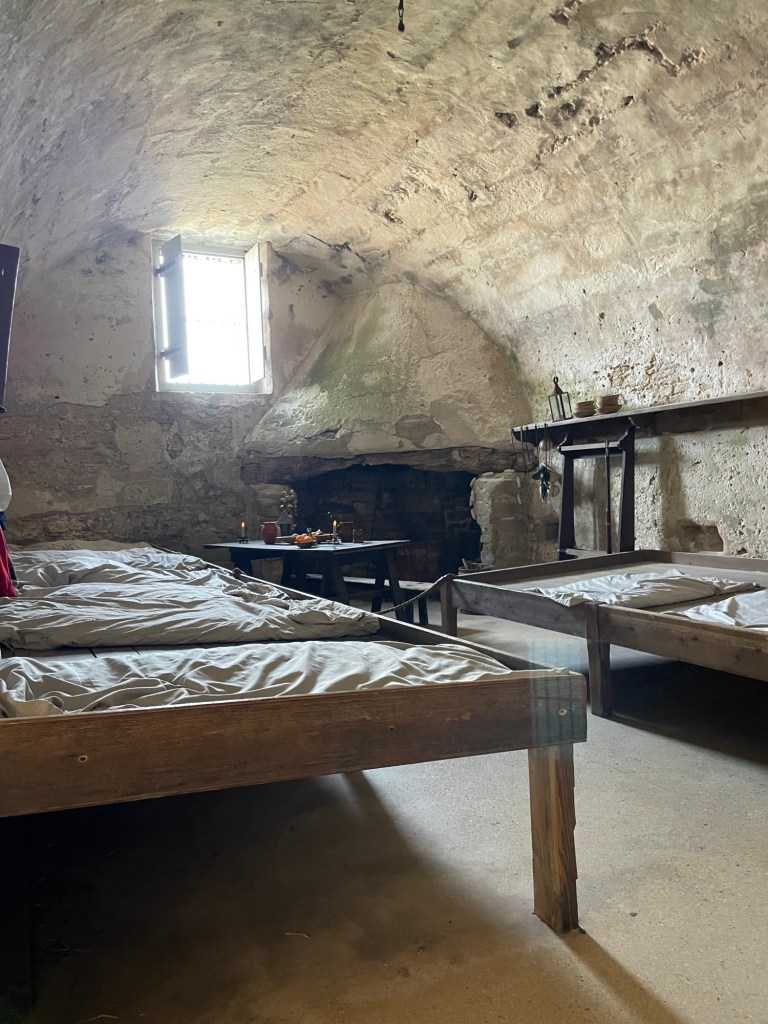
The Spanish guards slept and ate in this little room when not on duty, two to a bed, on their 24-hour rotation days — 4 hrs on duty, 4 hrs off. When not on rotation, they slept in their own residences in St Augustine. Prisoners were held in a similar, albeit less comfortable, room next to this one.
I don’t think I would have done well with a split 4 hr guard duty schedule, even if it was just for 24 hrs at a time.
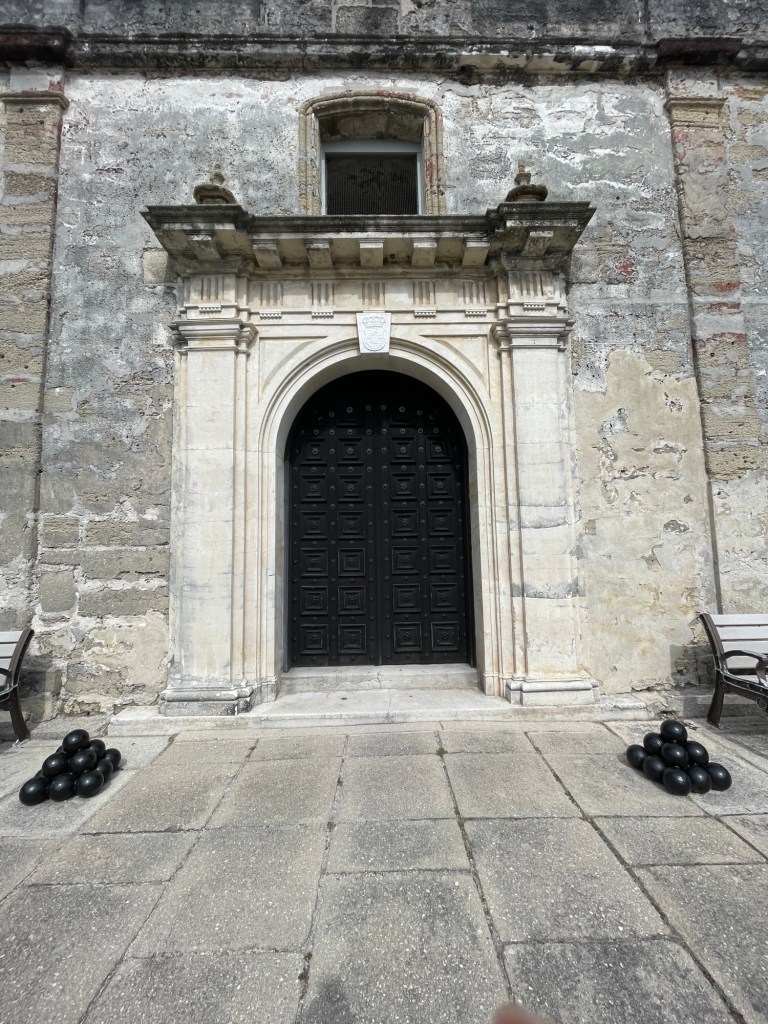
Inside the fort, most rooms are set up to look as they would have during its use by the Spanish soldiers. Their Catholic chapel has holy water basins on either side of the entrance shown above. Baskets of fruit, barrels of salt pork, and shelves of sundries line the walls in the kitchen and commissary. Black powder kegs and spare sponges are near the powder magazine. A sign near the latrines explains the twice daily ‘tidal cleansing’ process used to keep the fort from drowning in its own waste. Other rooms tell about the unexpected finds, restoration process, and preservation issues associated with the building and grounds. Another room tells about the fort’s use as a prison during the Seminole and Plains Indian Wars from a first person perspective.
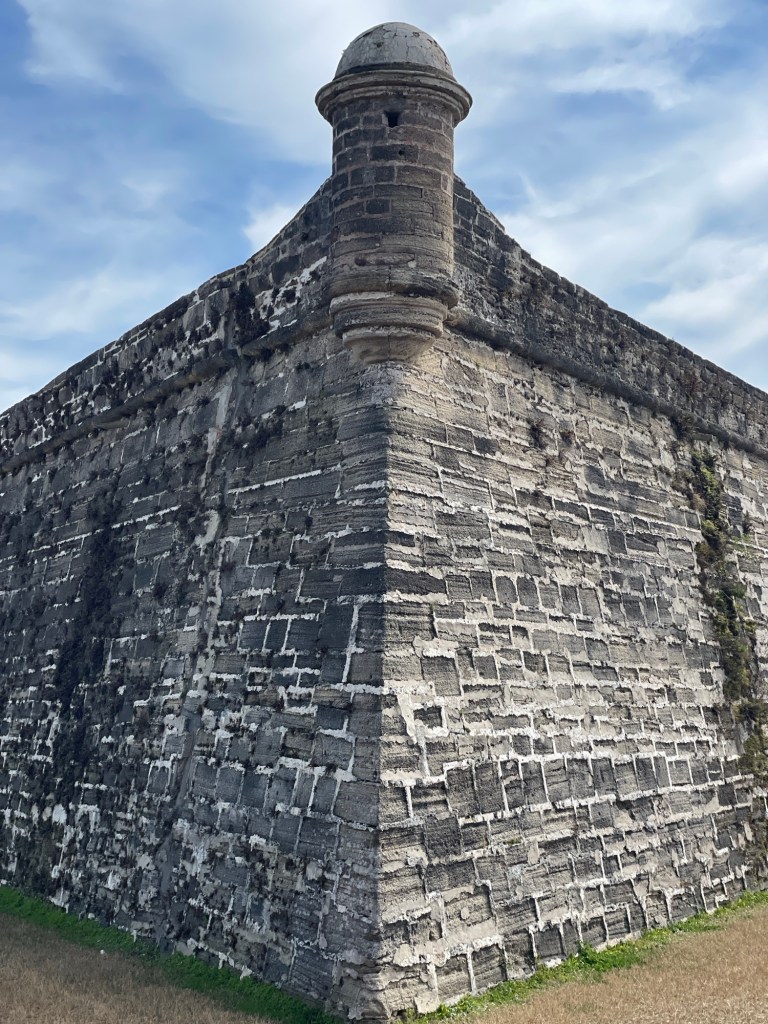
The Castillo de San Marcos National Monument met all of our expectations and then some. It’s clear that a lot of hard work has gone into the preservation and restoration of this remarkable place. Just reading about the triple challenge of protecting the soft & easily damaged coquina walls, and keeping the facility open and available to the public, while keeping lichen, mold, & mosses at bay in this perpetually humid city made my head spin.
We don’t — as a nation — give conservators, historians, preservationists, and National Park staff enough credit. Without them, publicly accessible history anywhere near this quality simply wouldn’t exist. Yes, it requires public funds and a good deal of it. But what would we, as a nation, have lost if this site had become just another golf course, members-only marina, or strip mall? I don’t even want to think about it.
With sore feet, we ran out of time in St Augustine and missed the chance to some of the other local attractions, such as the Flagler College campus and the Flagler Memorial Presbyterian Church. Green cars everywhere.
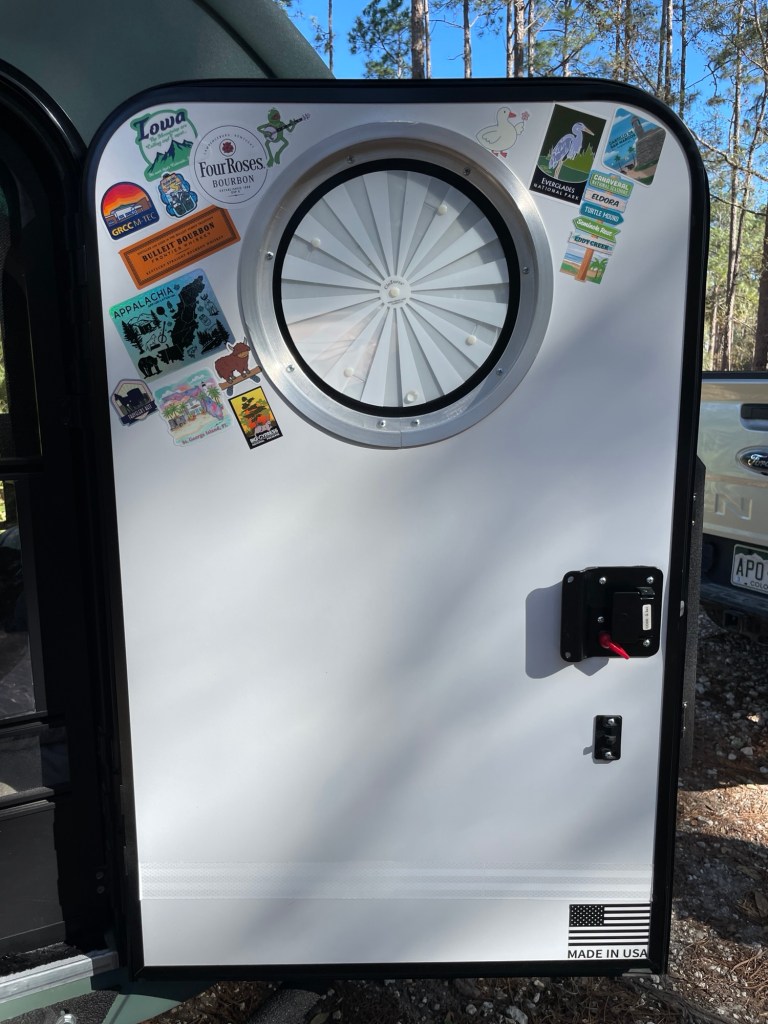
Back at the trailer, we pre-packed up so we were ready to head out of Florida first thing in the morning.


Leave a comment