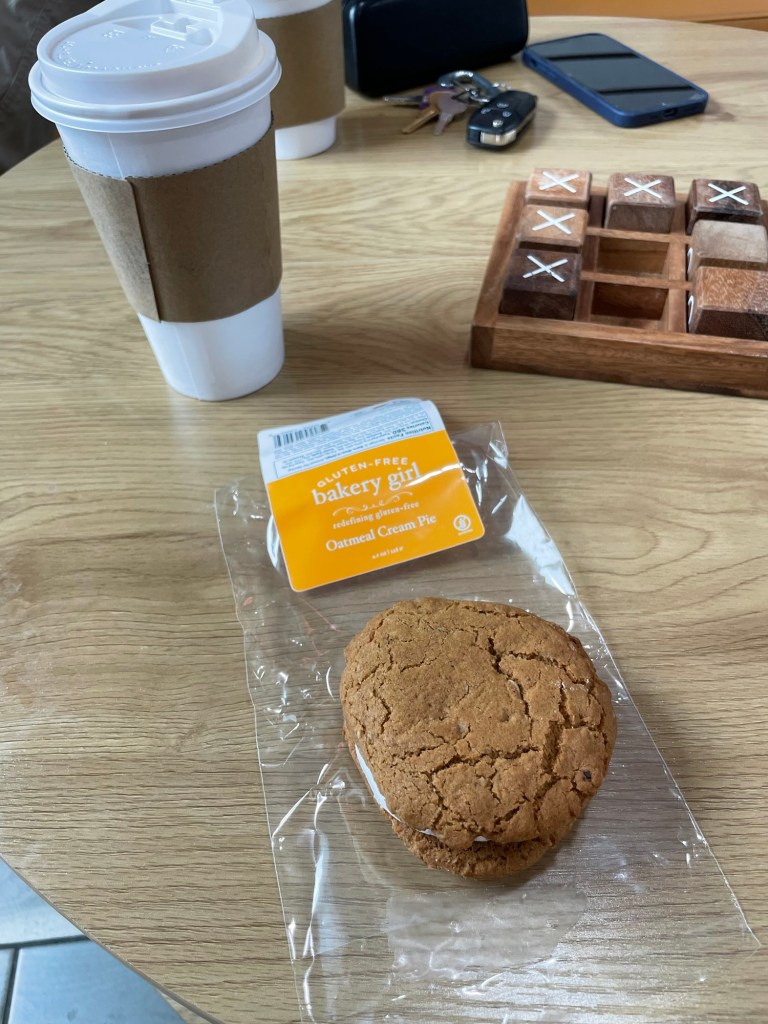
We finally made it out of Georgia on Monday the 5th and are now sitting on a very lovely, very sandy barrier island on the Florida panhandle. It’s quiet and peaceful and the local cafe has delicious gluten-free & dairy-free goodies. The Oatmeal Cream Pie made me close my eyes in awe. Gluten-Free Bakery Girl (in Maryland) deserves all the good things in life.
Now, back to Georgia for a few minutes.
While Ashtabula (last post) started out as a coaching inn and then became a single family’s plantation home, Traveler’s Rest only ever operated as a stagecoach inn. Devereaux Jarrett built it near the intersection of Old King’s Highway and the Unicoi Turnpike. In business from 1815 until 1877, it was granted to the State of Georgia in 1955 by a descendant of his for use as a historical and educational site. The inn now acts as a time capsule and includes a surprising number of pieces of the original handcrafted furniture. According to the video we saw, coaching inns were found about every 20 miles on these long distance highways, as that was about as far as someone could reasonable expect to travel in the days of poorly maintained roads and literal horsepower.
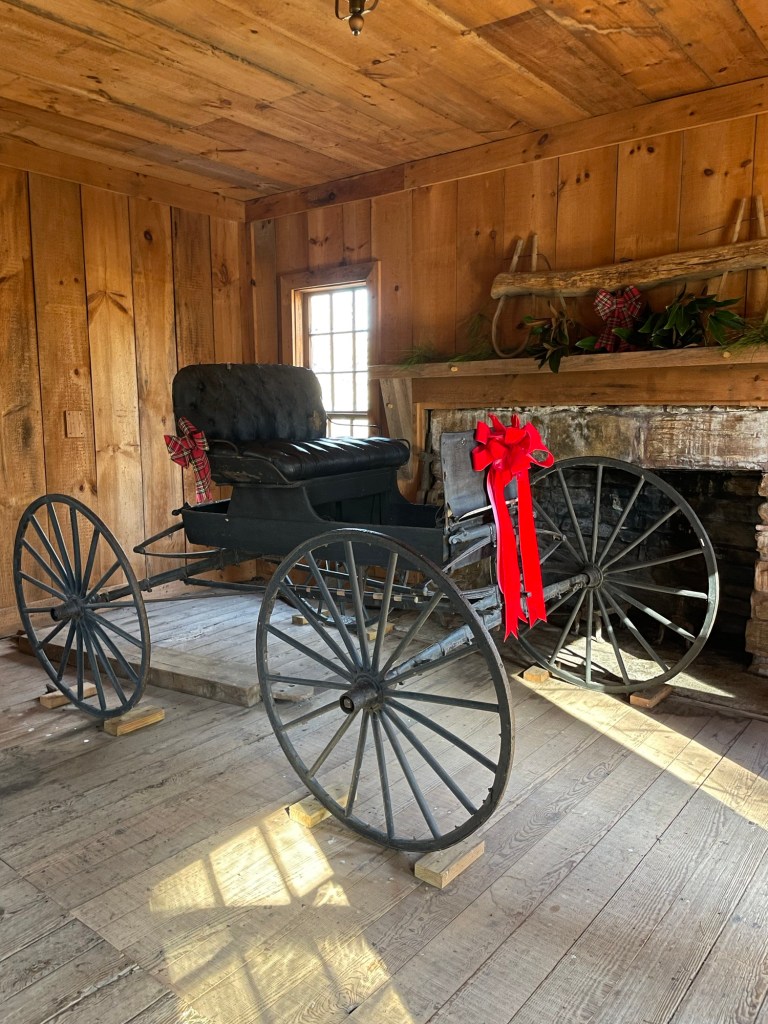
A few days before Christmas, the day after we found out that we were not getting the truck back as planned, we drove up to Toccoa and went to a little unassuming spot on the map that I’d been hoping to visit. But since it’s only open a few hours each week, we hadn’t gotten up there.
We sure got lucky with our timing. This coaching inn historical site was decked out in holiday decorations, a local dulcimer group was playing carols, volunteers were serving homemade refreshments in the cellar kitchen and in the upstairs pantry, and I got to learn about spinning wool and cotton thread from the most patient and enthusiastic spinner I could have asked for. I ask a lot of questions.
We lucked out on the weather, too. It was unseasonably warm and a soft breeze was blowing. They had all the doors thrown open which allowed guests to easily move in and out of the inn and around the property. No bunching up in hallways or following someone else’s pace while walking the same route.
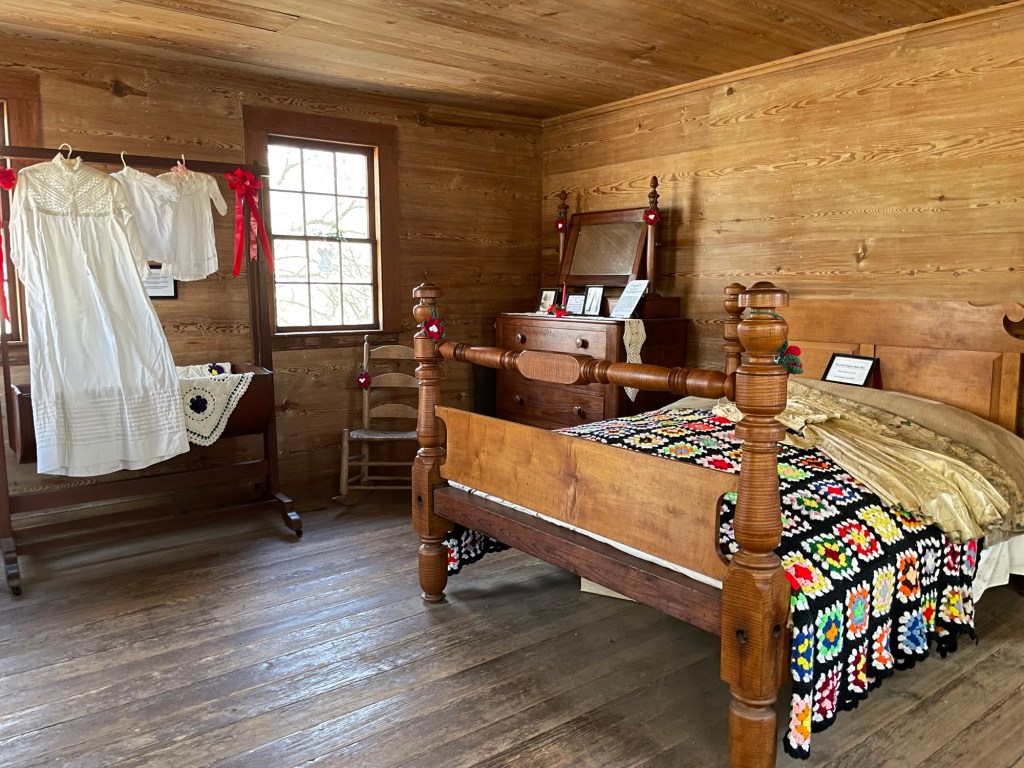
You see that rail at the end of the bed? A quilt was rolled around it, storing it out of the way, and then, when you got cold in the middle of the night, you just pulled it towards you. Instant presto! Nice and toasty. It’s so practical; why don’t we have that on beds anymore?

Travelers could pick from a private room and bed, heated $$$, a single room with two or more to the bed, unheated $$, or a group room with multiple beds of multiple people, unheated $ (to use the modern travel guide rating system). In this uninsulated hotel made of unfinished pine boards, a fireplace of your own would have made a big difference on a cold day.
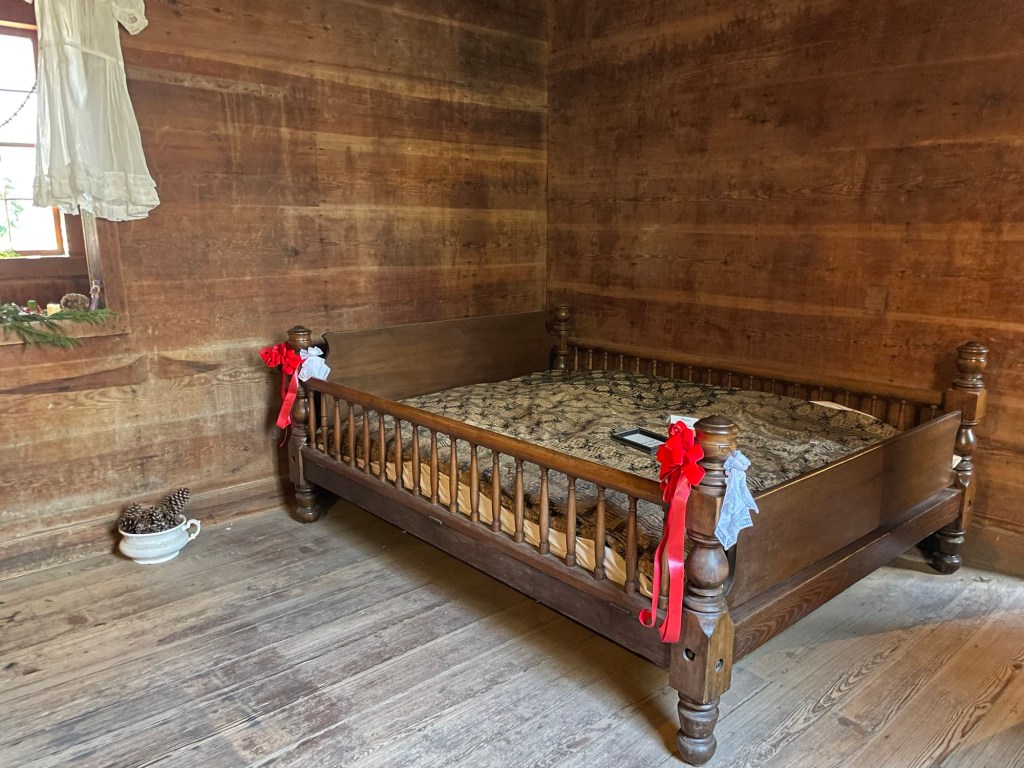
Can you guess why this bed looks so funny? If you imagine a long pillow going from one solid end to another, it makes more sense. This is where the children slept. Imagine just dumping your kid into the unheated communal kids’ bed and then heading off to sleep in another room. Modern parents would never.
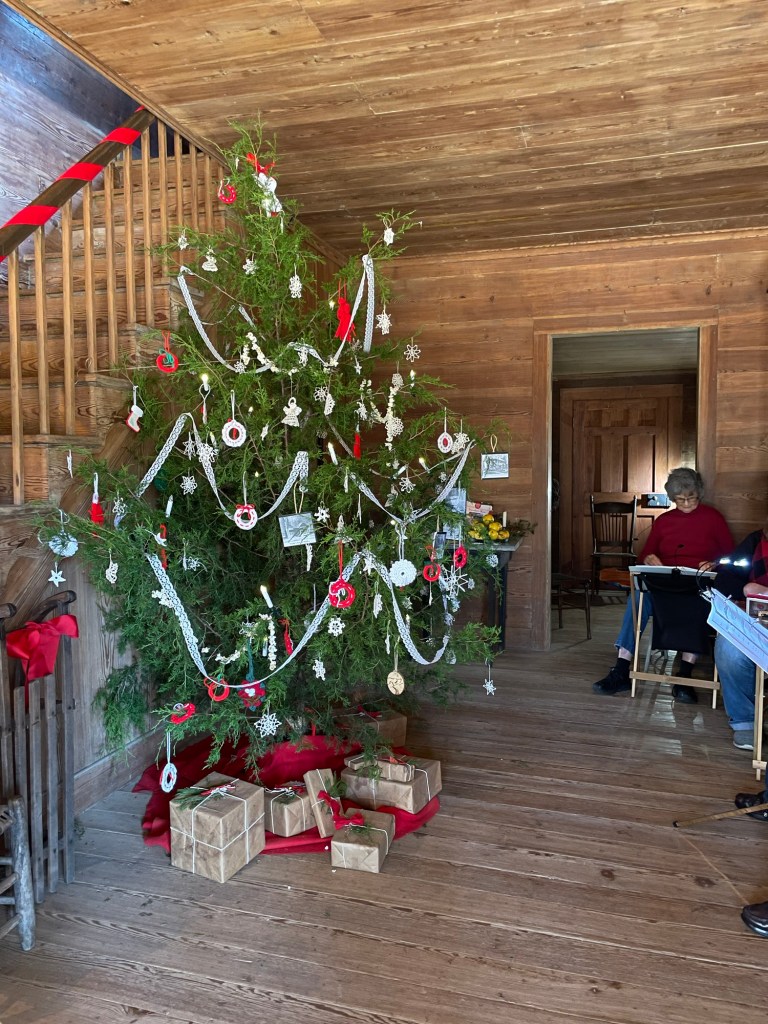
I wonder how well our ideas of decorating for Christmas line up with the actuality of homes from this time period. Not that I think it matters, and I liked seeing everything so cheerful and bright during this rather brown time of year. It’s just a random thing I thought here and at Ashtabula.
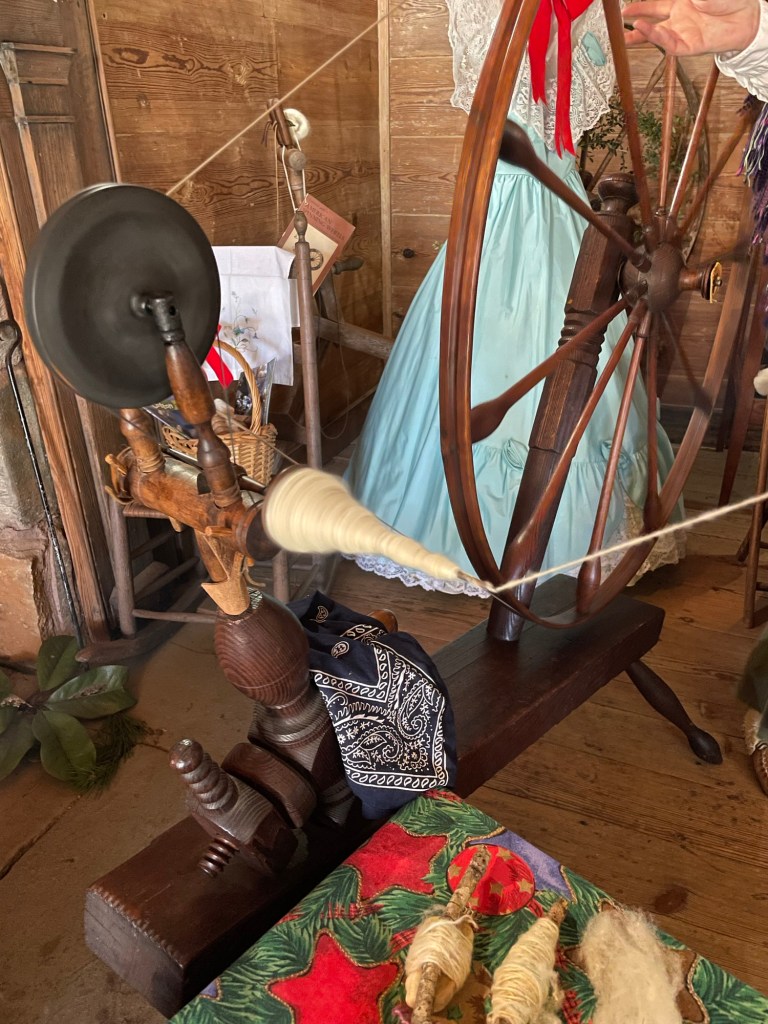
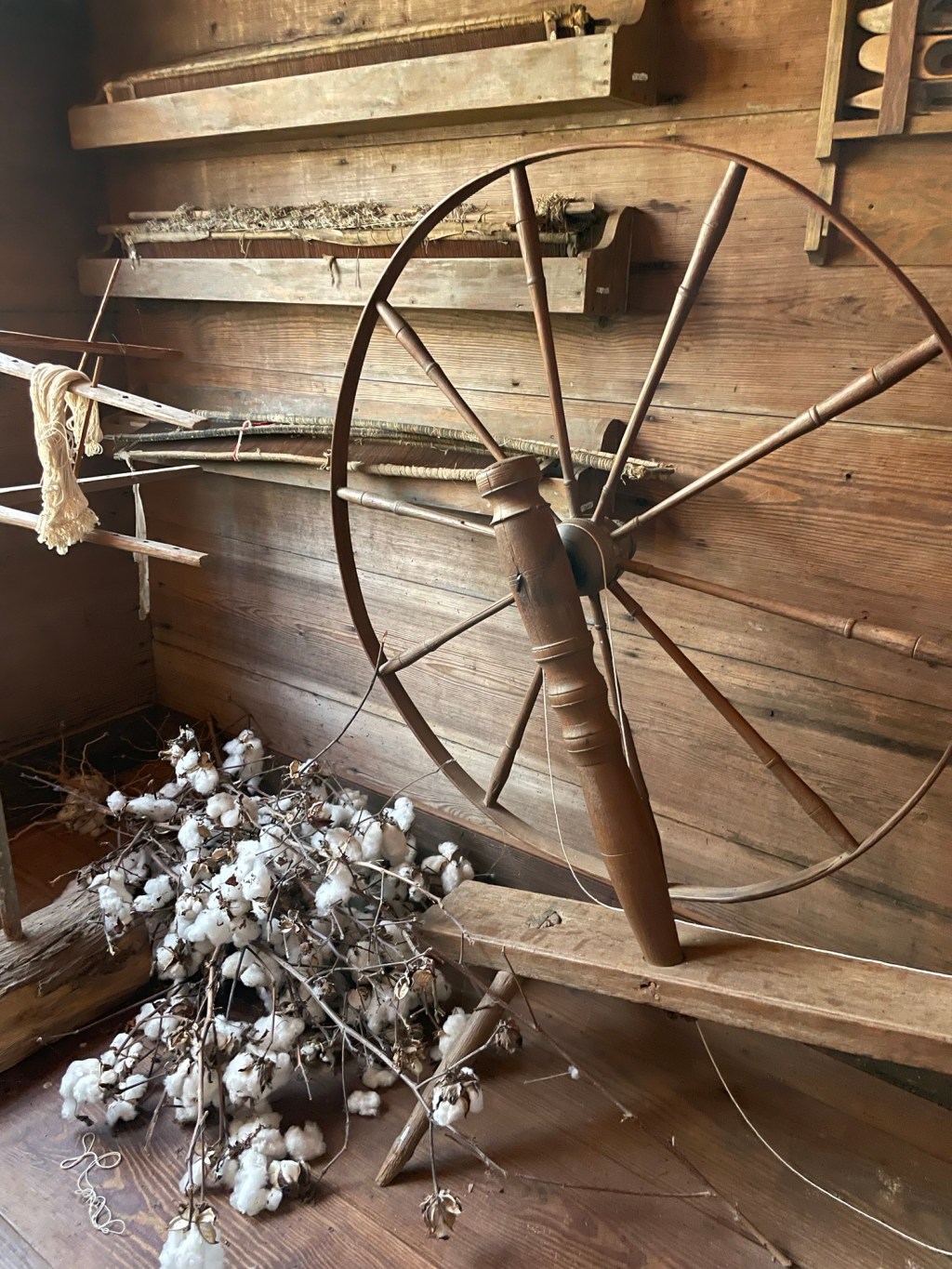
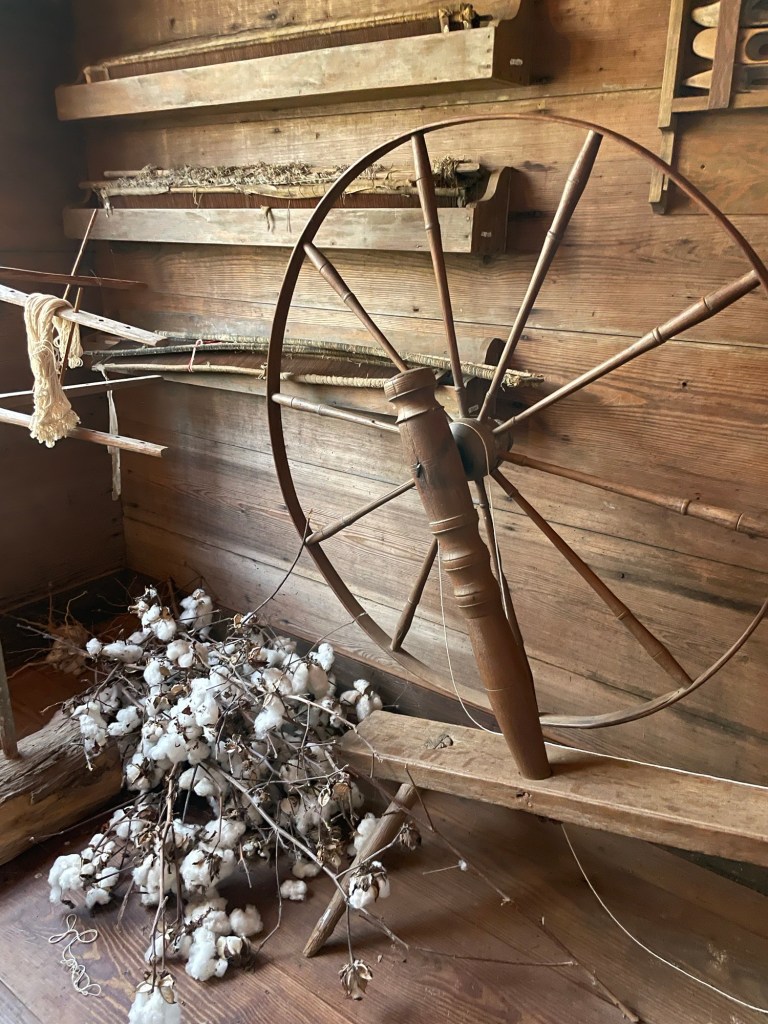
Now spinning. This, I found fascinating. First, let me say that Sherri has the patience of a saint. Second, she refers to her wheel as ‘she’ and talks about it having preferences, as in, ‘She doesn’t like too much humidity,’ and ‘She doesn’t appreciate being moved.’ Third, the end of that spindle will snag your fingertip something good if you’re not paying attention. Poor Sleeping Beauty.
Since nearly all of a household’s day to day textiles were made in house, spinning was an essential part of nearly every woman and child’s life. Sherri said it took between eight to twelve spinners to keep one weaver at a loom. That’s a lot of thread/yarn! I recently read that all children were taught to spin as soon as they were coordinated enough. Women spun whenever they weren’t occupied with other tasks, and people who couldn’t contribute to heavier tasks (such as the elderly, injured, or disabled) spun to assist in the support of the household. Even the men spun in their free time when there was a dire need or if finances were especially tight.
Since spun fiber (wool and cotton) was always in high demand, it was also a way for women who did not marry or were suddenly widowed to financially maintain themselves and any children. Although spinster eventually became a derogatory term meaning a never married women of a certain age, it wasn’t used that way originally. Rather, being a good spinner/spinster was seen as having a highly valued skill and was treated as such.
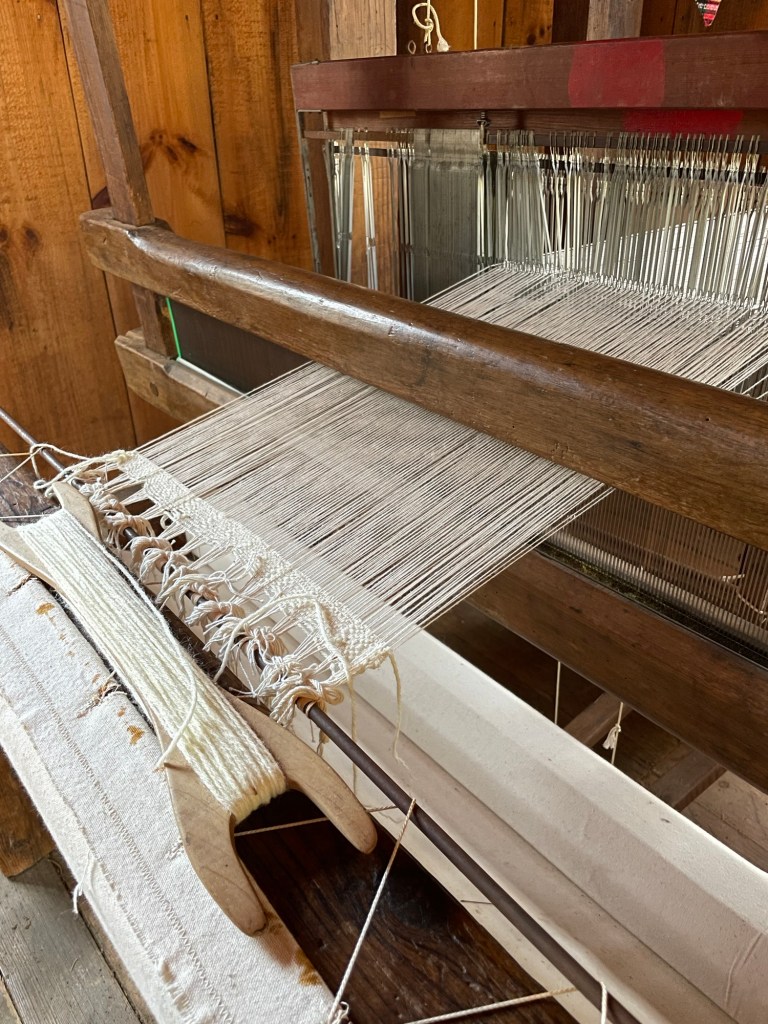
Think about the number of cloth goods a typical house would have used. Think about how many things are in your home right now that wouldn’t be out of place in the 1800s. Napkins and shirts, blankets and upholstery. Sheets and aprons, towels and socks. Now imagine making each one by hand. Thread by thread. Stitch by stitch. We didn’t replace things so quickly when we had to make them by hand.
Screw trends and keeping up with the Jones, we repaired things until they were beyond repair and used their scraps after that. Rag rugs, quilts, and saddle blankets, to name a few. We lost something important to the human race, I argue, when that type of thinking stopped being the norm.
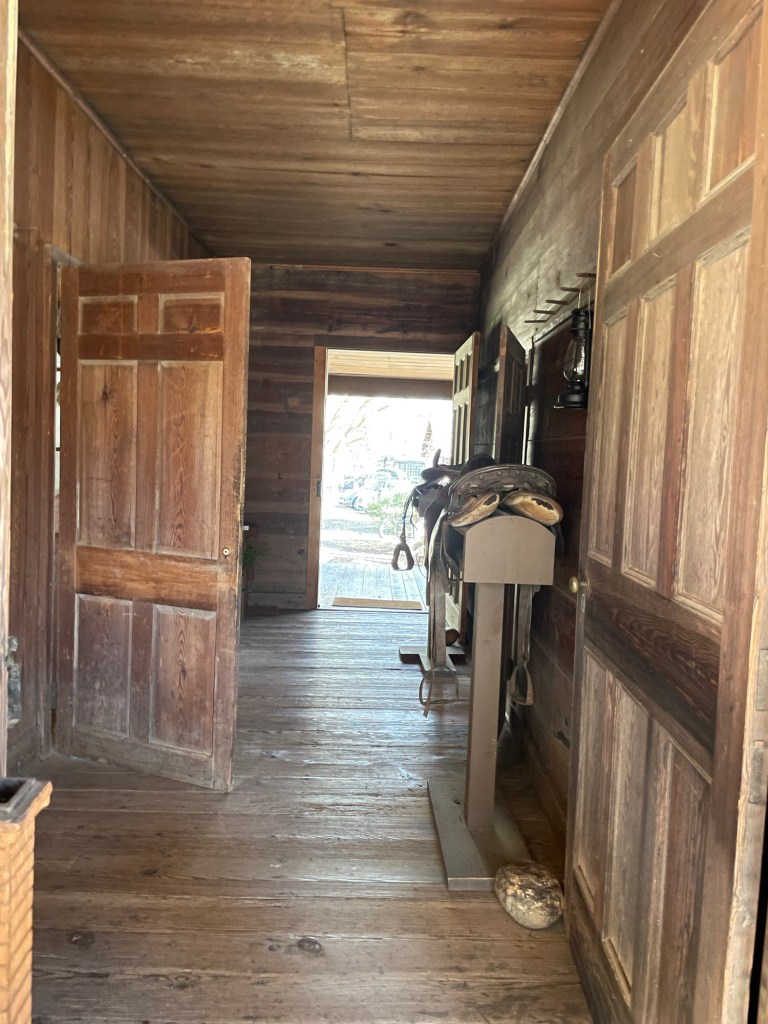
I imagine these big breezeways would have felt like the lap of luxury on a gorgeous warm day when a light wind was blowing. The cross breeze from the attached, covered porches would turn the air over quickly and freshen the house, whisking away cooking and other unpleasant smells, and probably drop the interior temps by at least 10°F.
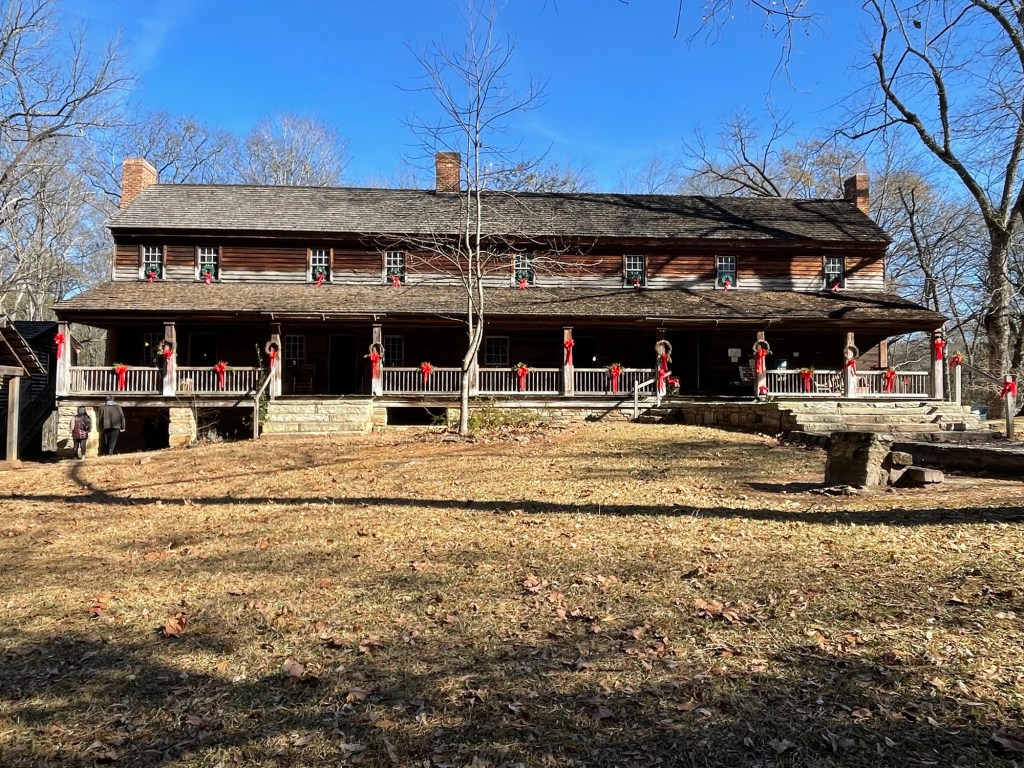
From here you can see how wide the building was when it stopped being an inn. The guest bedrooms are all upstairs, and the cellar kitchen is on the lower left, beneath the dining room. A small staircase connects the two, and the pantry is behind the dining room. The main staircase is sandwiched between the dining room and the left cross-hallway.
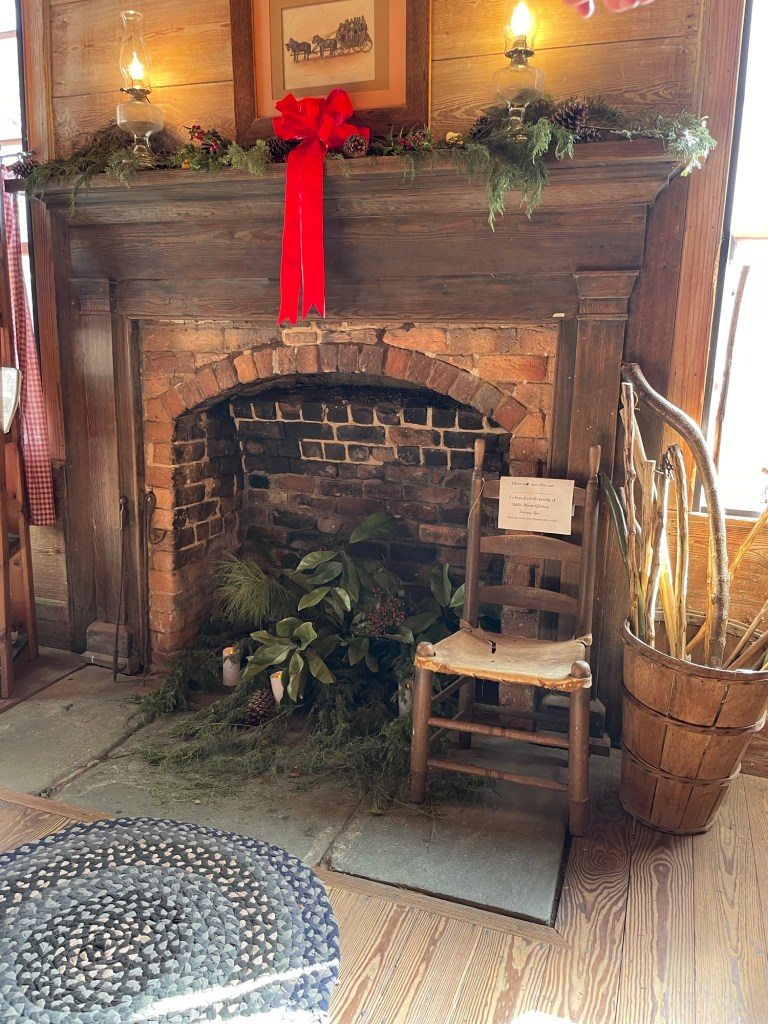
The reception hall is on the far right, with the right cross-hallway behind it. Between the two cross-hallways, the guests’ parlor (front left) and the family’s parlor (front right) sandwich the center fireplace. The lower rooms at the rear were for storage and the family’s use. The loom was housed in its own building, a short distance from the pantry.
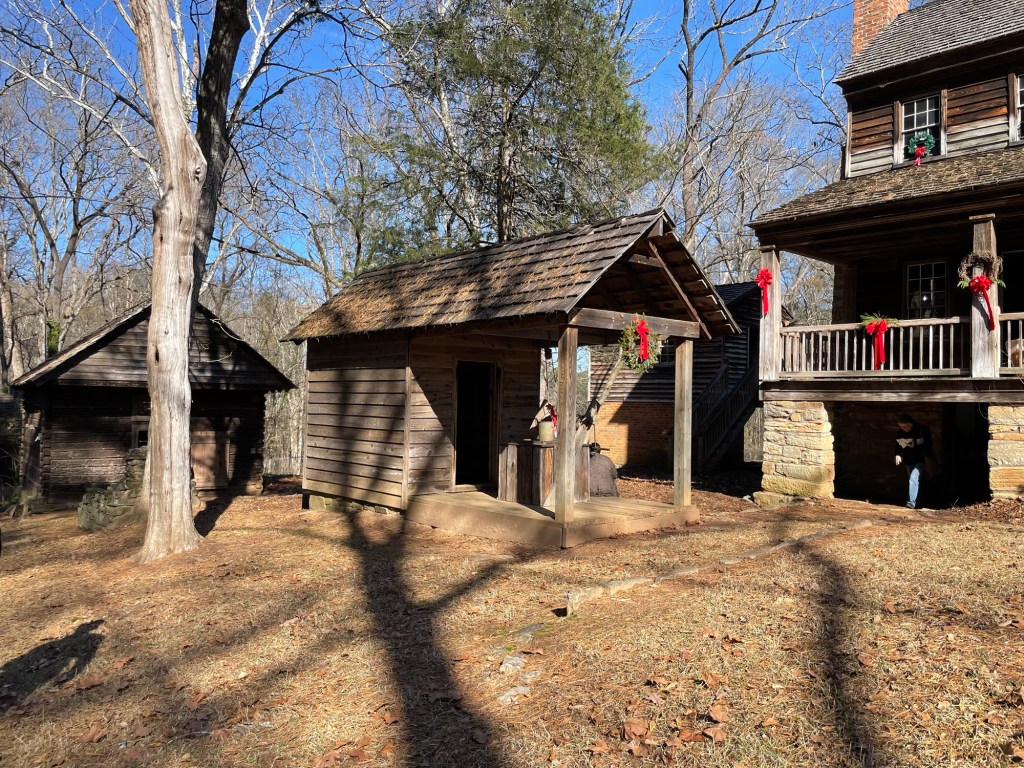
Outbuildings were all over the property. A well and ice house were must-haves. As were tool sheds, a simple forge with blacksmithing tools for repairs, a carriage house and stable, the necessities (aka outhouses), and cabins for enslaved labor.


The big vat above rocks back and forth and was used for boiling laundry and making lye soap. I’m not sure where the fire would have been built, maybe around it? Or perhaps under it, if the large slab isn’t original? Maybe in the brickwork behind it? I didn’t think about that until after we left.

If you zoom in, you can see the tool marks on the logs used to build this shed. It’s not original, but these tool marks are still impressive in my book.
On our way out of Georgia, we stopped at General Coffee State Park to break up the journey. It’s a nice campground with several different hiking trails, super friendly staff, and a cute demonstration farm. I spent some quality time getting to know this handsome bay.


Leave a comment