
Grab a cup of something, this is a long one.
We fairly raced south from Kentucky. The weather projections were looking quite bad across KY, with heavy rain and extreme cold in the forecast, even the possibility of tornadoes in northern Tennessee. Waking early, we slid well south to Chattanooga and set up camp for a week.
How’d we fare? Well, the rain missed us. The cold didn’t. Like the rest of the region, we were below freeing for two nights and barely made it above freezing the day in between. We made that day our Planet Fitness, laundry, and library day. Back at the trailer, we watched a few downloaded episodes of Ken Burns’ epic Civil War series, had easy snack-style meals, and cuddled up under a layer cake of blankets. All in all, we made do. My heart went out to the campers trying to stay warm in tents on those cold, cold nights.
If living in the road has taught me anything so far, it’s that there’s a wide difference among laundromats. While I’m not yet a laundromat connoisseur, I feel I will be by New Year’s Eve. My essentials are: scrupulously clean machines, a working change machine, and very few machines out of order. An owner on duty and credit card readers on the machines are a huge bonuses, and the more clothes trolleys available the better. I despise tv’s at the laundromat almost as much as I hate the invasive Asian beetle.
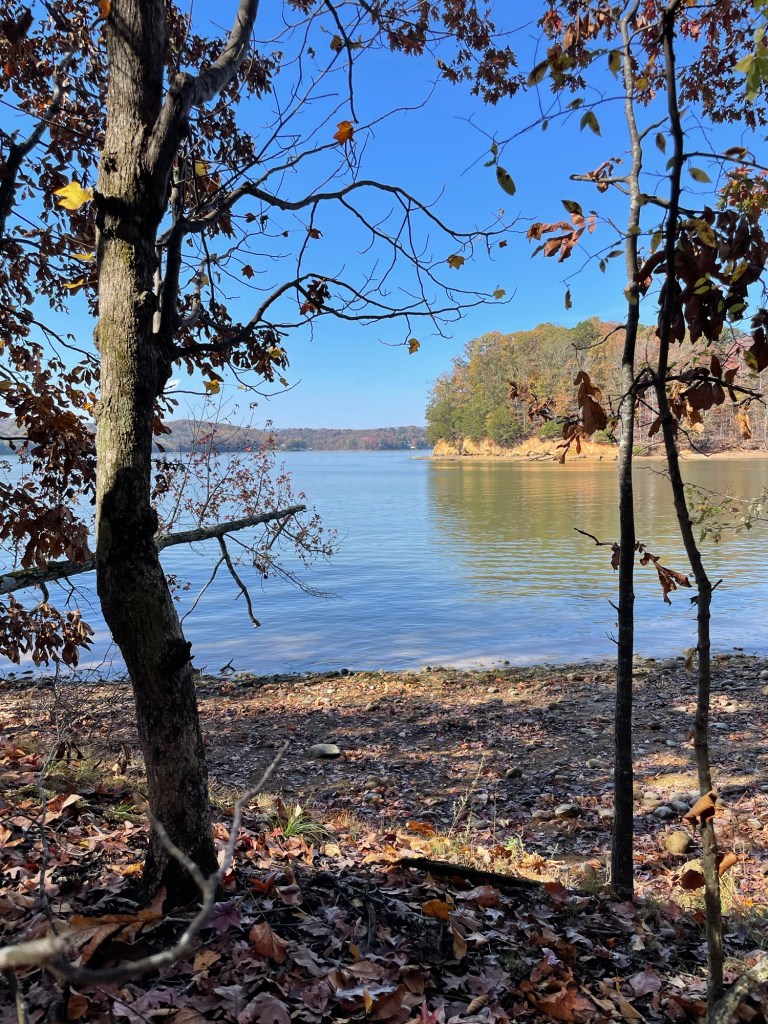
Since much of Harrison Bay State Park is near the shores of a massive reservoir, its hiking trails tend to hug the waterline. On the nicer days, we rode our bikes around, walked all the trails, and read about astronomy and the night sky by following their cute little Star Walk path. It had lots of informational boards and talked about the wide variety of problems associated with light pollution.
Did any of you happen to see the recent auroras? Sadly, we missed them.
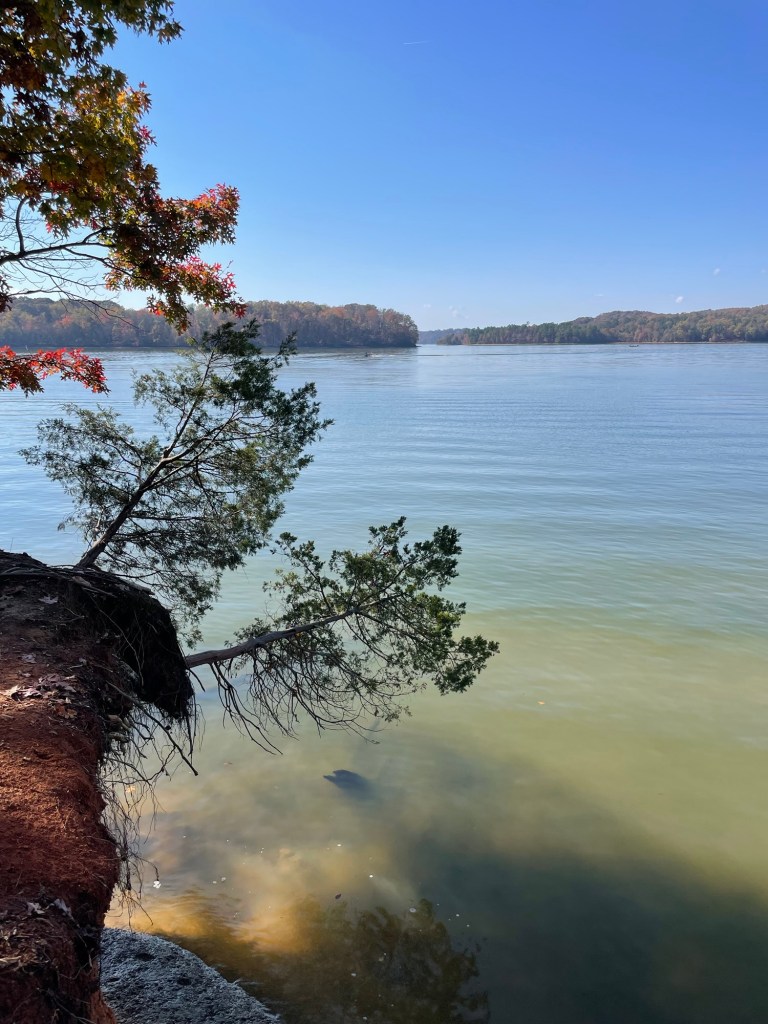
The park’s shoreline is getting undercut and eroding away in several spots, leaving trees like these reaching out above the water. For now.
Driving in, we saw that the park opened in 1937, the same year that the Ohio River had its devastating flood. Things are starting to knit together in my mind’s history calendar.
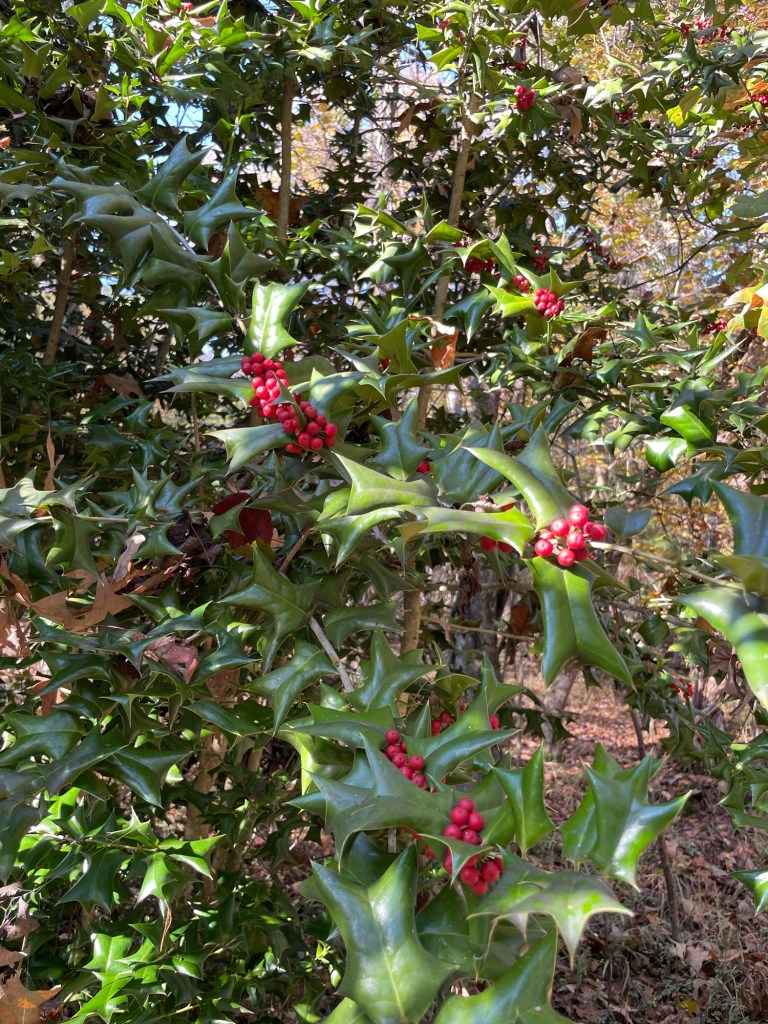

There was one log on a hike that was absolutely COVERED in these little pear-shaped puffballs. Don’t they look like a cartoon depiction of mushrooms? Wikipedia tells me that they’re “considered a choice edible when still immature and the inner flesh is white.”
Yeah, thanks, no.
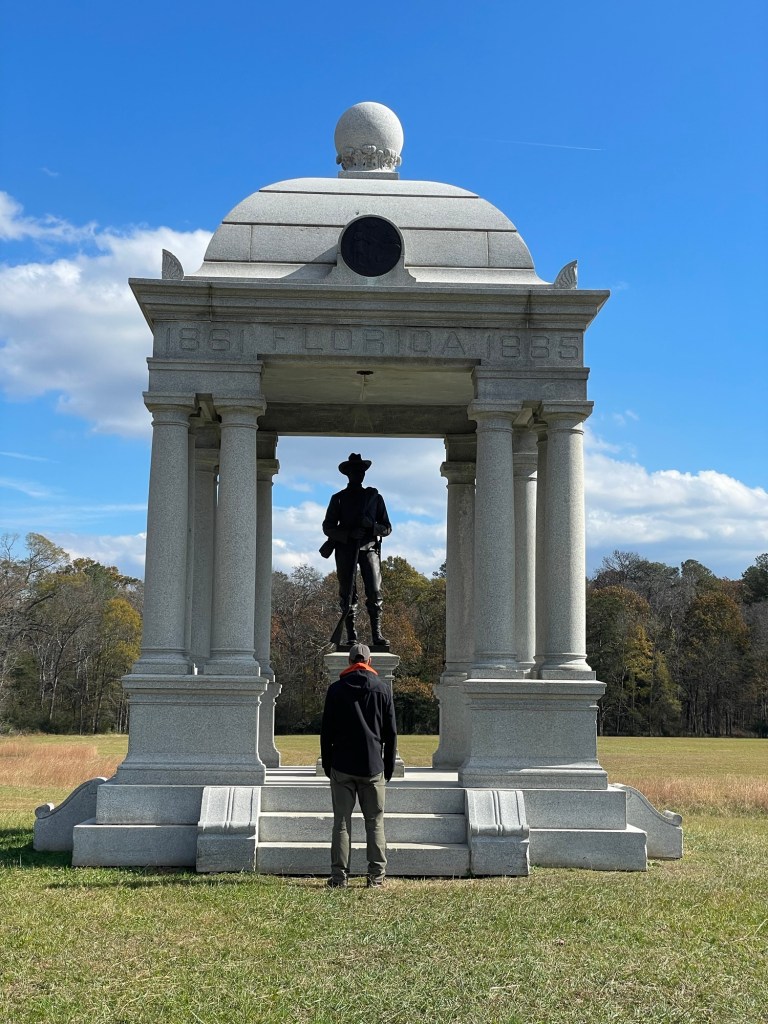
Despite the government shutdown, we wanted to see the nearby Chickamauga Battlefield site. I’m so glad we did. Five years ago we were planning to take a three week tour of the major Civil War sites. Instead we, like the rest of the world, were hunkering down in our home. We’re finally getting our chance now.
We spent most of one day following the NPS audio driving tour and wandering around at the stopping points. We both got fairly overwhelmed by the sheer volume of monuments, informational plaques, and the number of men that had assembled for battle in such a relatively small space. Since cannon and rifles were often firing at point blank range, the tallies of dead, injured, and missing for each company shouldn’t have been so shocking, yet they were. I don’t know if it’s possible to truly comprehend the human devastation wrought during the Civil War.
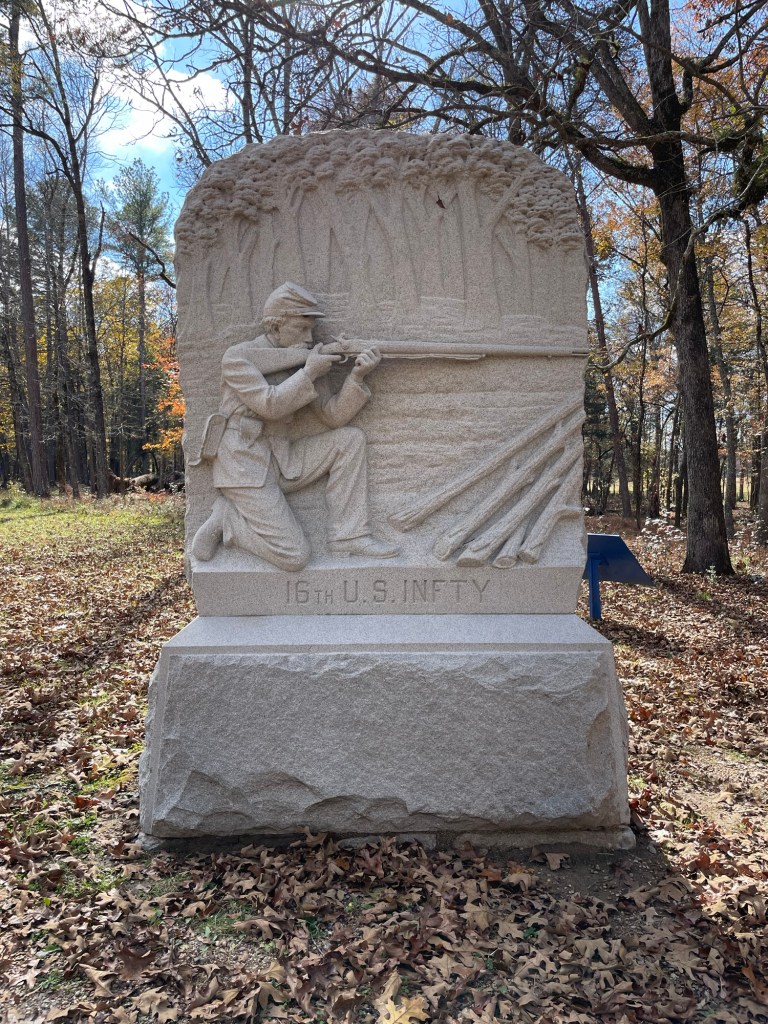

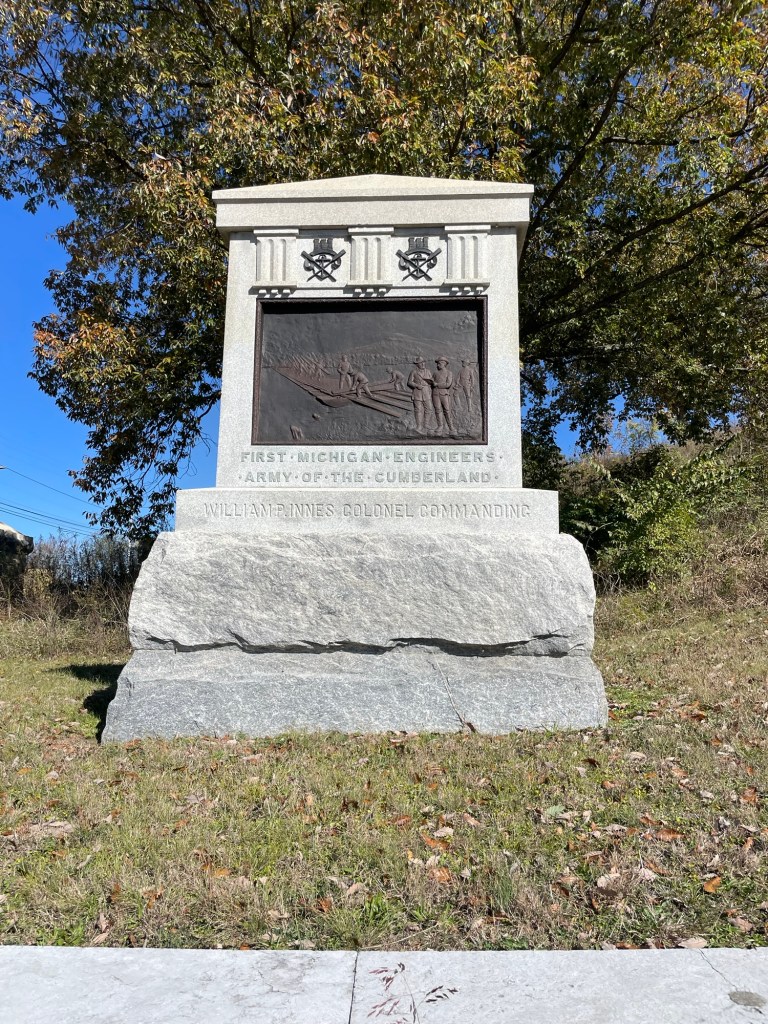
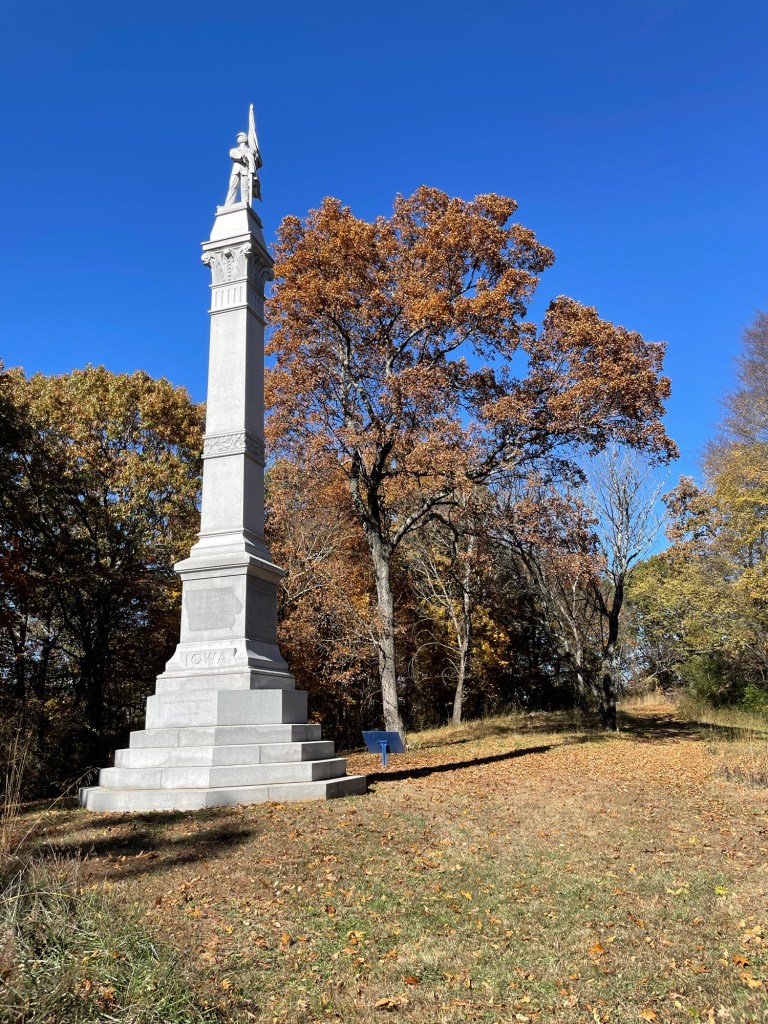
We initially read every plaque we came across. How can you not? Men fought and died there. But we’d still have been there four months from now if we’d kept at it. Everywhere you looked there was another red or blue plaque, a cannon, or a stone monument installed by the returning survivors in the 1890s. In the end, I had a fair bit of guilt driving past so many. It felt deeply disrespectful to bypass any of their stories.
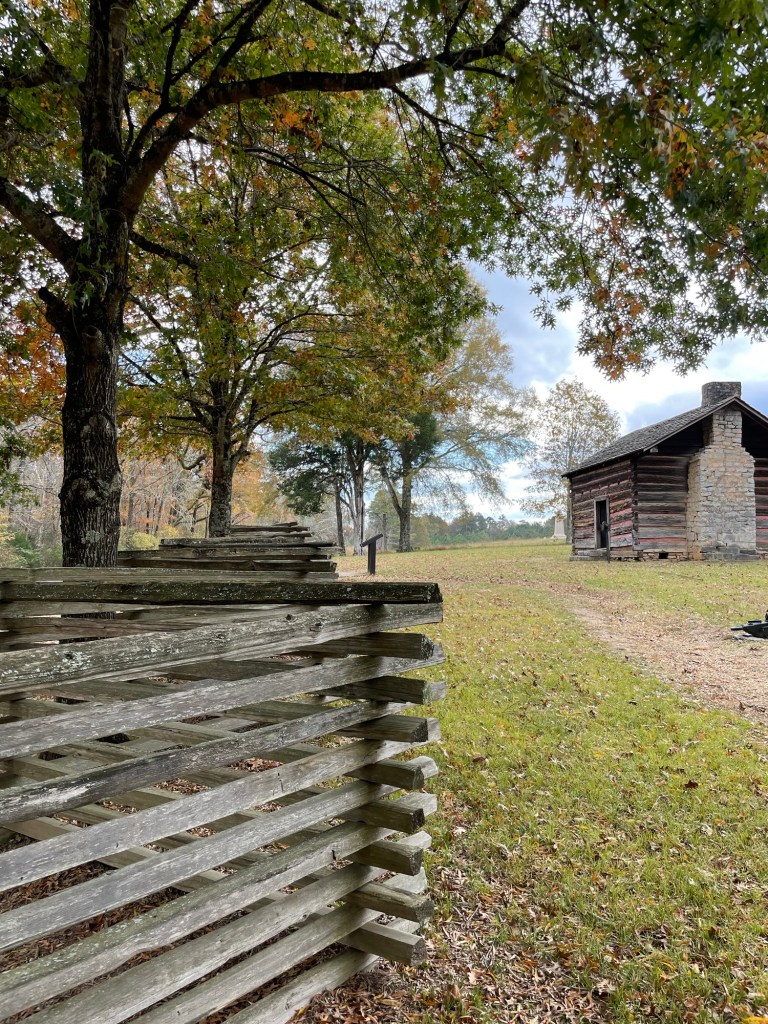
A general said afterwards that one battlefield was so thickly covered by fallen soldiers that you could walk from one end of the field to the other without ever touching the ground. Look out across an empty field, even a playground, football field, or soccer pitch if nothing else is available and just try to imagine it. Now multiply that image by eight or ten or twelve in your mind. That was the horror of Chickamauga.
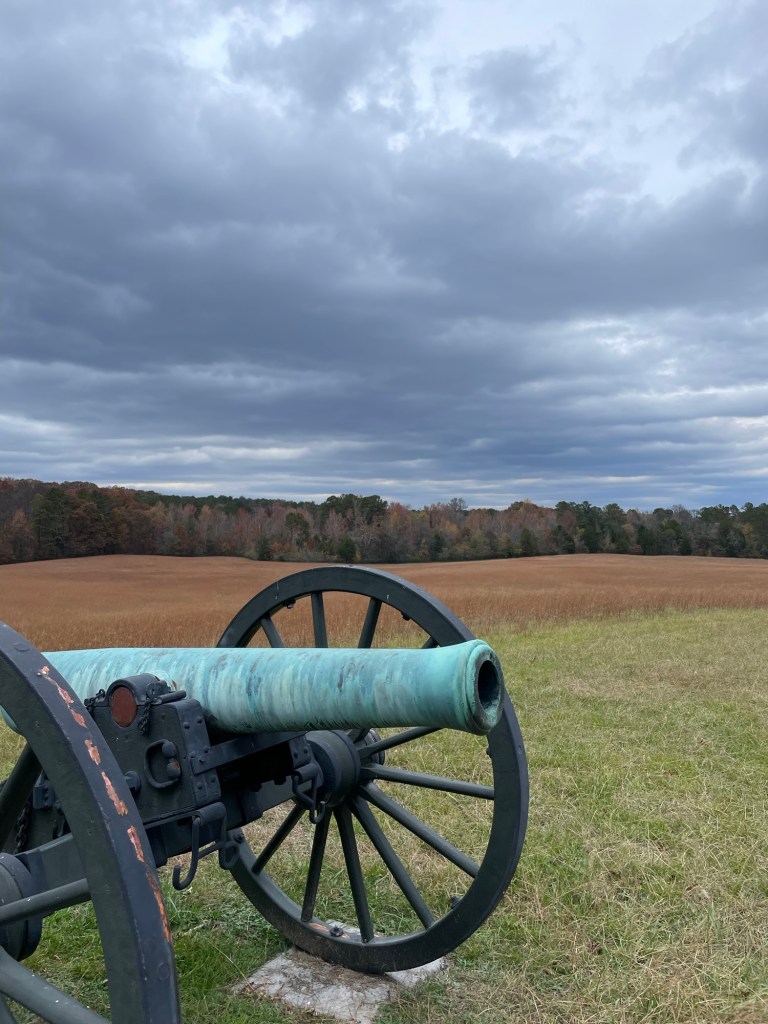
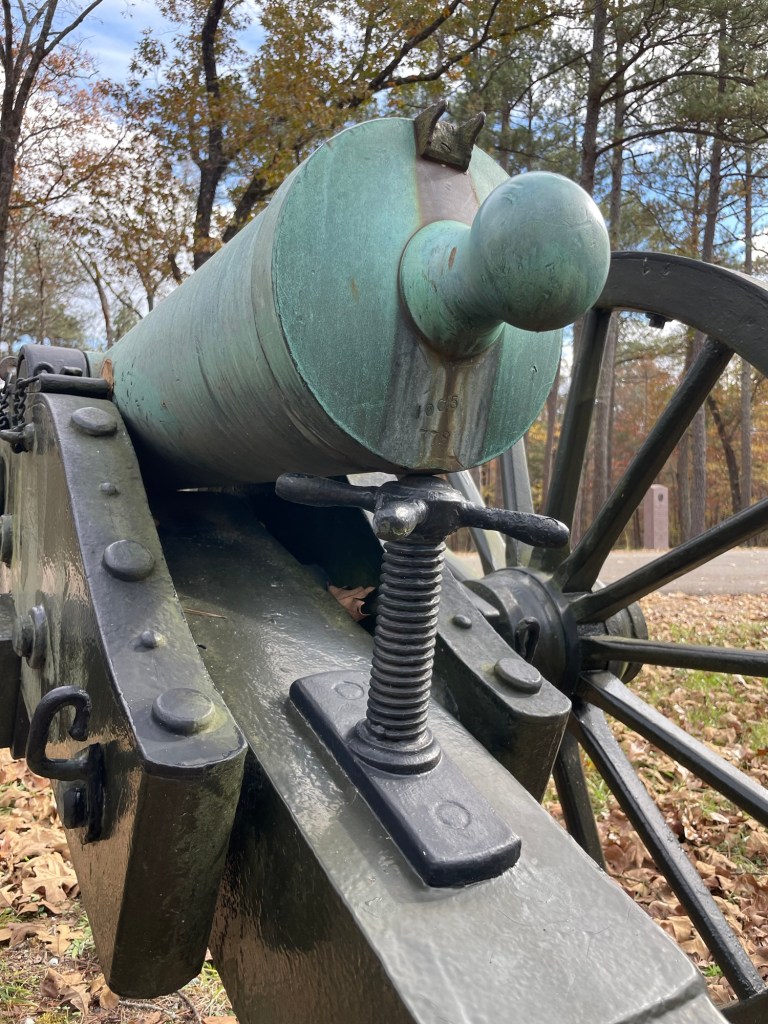
In the days following, we drove to the other half of the Chickamauga and Chattanooga National Military Park, Lookout Mountain, as well as to Orchard Knob and Missionary Ridge. The Lookout Mountain site was closed for safety reasons, so we couldn’t even walk around up there, but driving back down the hill we stopped at The Cravens House on a whim and got our fill of the views denied us above. Additional information located around the grounds told us about its importance for both sides’ Generals watching troop movements in the Chattanooga valley and across to Missionary Ridge. It’s also where William T Sherman began his march to Atlanta and ultimately to the sea.

Here’s my completely bare bones, probably not altogether perfectly remembered, rundown of the battles. Mistakes and omissions are inevitable. I recommend you look it up if you want a definitive timeline of events.
- Near a small creek in Georgia called Chickamauga, the Federal Army (US) was facing SE toward Atlanta and the Confederate Army (CSA) was facing NW toward Chattanooga, Tennessee.
- There was a stalemate on September 19, 1863. Despite fighting all day, neither army had gained more than a few yards anywhere along the line.
- Late in the afternoon of September 20, the Federal General mistakenly told a portion of his line to move, creating a gap which the CSA exploited, splitting the US forces in two. Ultimately routed, the US retreated back to the Federally held part of Chattanooga.
- In an effort to buy the retreating soldiers some time, US Corporal Wilder and his mounted cavalry unit, the Lightning Brigade, bore down on the CSA from a hilltop with their relatively new repeating rifle technology, mowing down any troops unfortunate enough to be charging at them.
- The US troops led by General George Henry Thomas (the Rock of Chickamauga) stayed in action, allowing the rest of the US troops to retreat in relative safety.
- It’s worth noting that, at this time, the CSA was still in command of Lookout Mountain and the strategically high points in the Chattanooga valley.
- In November, US Generals Ulysses S Grant and William T Sherman arrived under the cover of night, crossing the Chattanooga River from the north and northeast.
- Flanking Lookout Mountain from the southwest, one portion of Grant’s advancing forces snuck up Lookout Mountain during the night amid thick fog and drove out the CSA, which crossed the Chattanooga valley, climbing to the relative safety of CSA-held Missionary Ridge. This became known as the Battle above the Clouds.
- US troops soon followed and crossed the valley as well, scaling Missionary Ridge under heavy fire, despite receiving no orders to do so, yelling, “Chickamauga! Chickamauga!” The CSA was driven back toward Georgia. Chattanooga, home to several converging rail lines and the CSA’s seat of industry, remained under US control for the duration of the war, greatly affecting the CSA’s ability to move troops and supplies.
- From Chattanooga, General William T Sherman then led his famous march to Atlanta and then to Savannah, destroying all goods, property, and crops in his path.
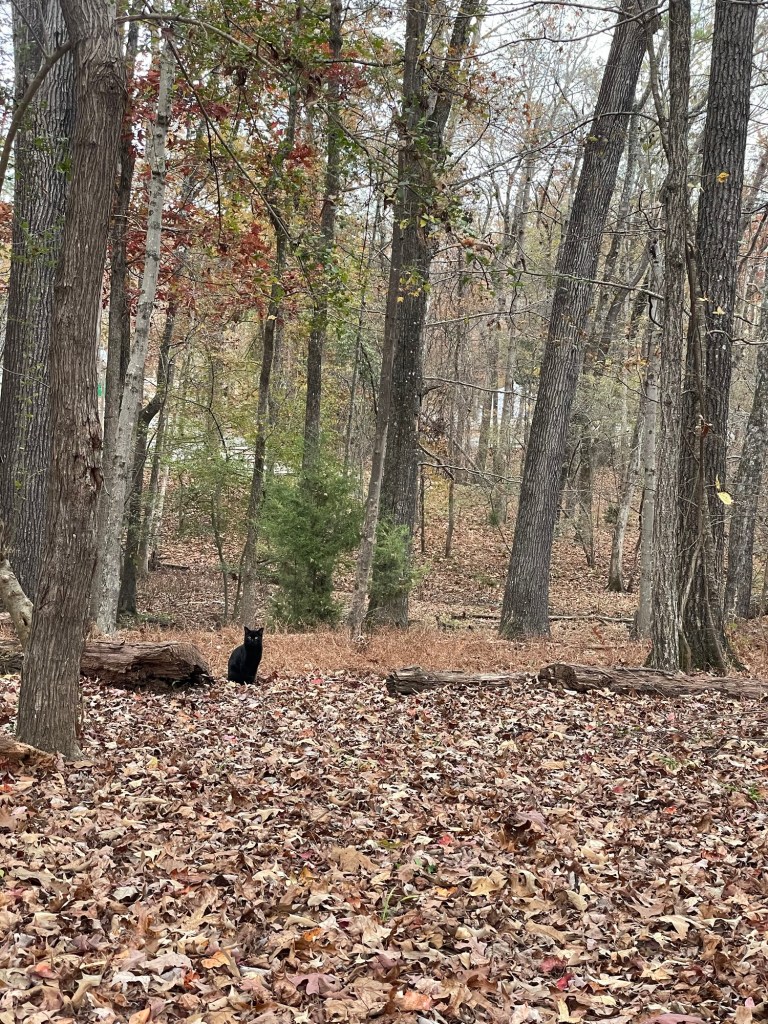
Mental relief moment: This sweet camp cat came by to visit us frequently, always staying outside of reach, but getting far closer to us than we expected. We enjoyed watching it hunt squirrels and birds, although we never saw it catch anything.
Ok, back to it.
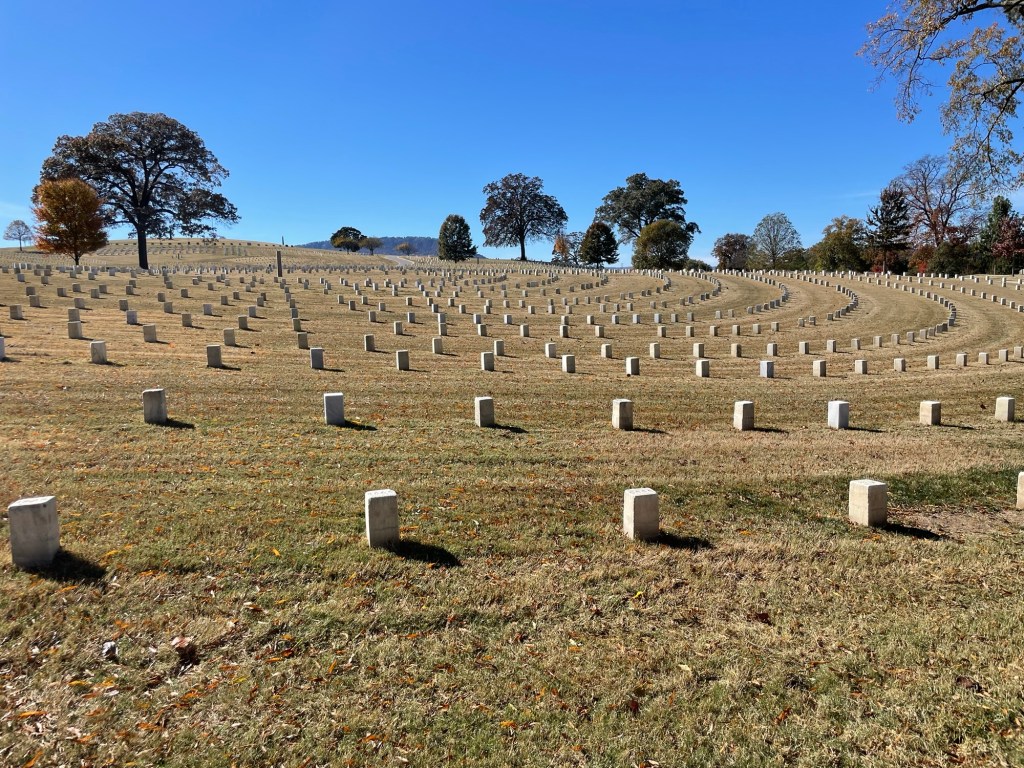
At the Chattanooga National Cemetery, each of the 6×6 markers above is for an unknown Union soldier, most from the battles of Chickamauga & Chattanooga. There are many more such markers throughout this cemetery, as well as regular military tombstones from the Civil War through today. The Confederate dead from the battle were interred in Georgia at the Marietta Confederate Cemetery.
Instead of leveling the ground, the gravestones were placed so as to complement and emphasize the natural terrain. Curves and swirls are fitted between the precise lines that we are traditionally used at military cemeteries.
I stood teary-eyed looking out across this patch of land, thinking, ‘Each of these unknown soldiers left people behind. People who mourned their soldier, mourned their inability to say a final goodbye, mourned their loved one’s’ lost future.’
Back at the trailer, I’d almost finished reading a book about Charleston, South Carolina’s role in pushing for secession in 1860 and 1861. I stood there remembering the cavalier, almost carnival atmosphere leading up to the vote for secession.
I took a moment to re-read Lincoln’s Gettysburg Address. I see too many similarities between his world and mine. I looked back over the graveyard stretching out before me and thought, ‘This is what happens when politicians and pundits encourage us to hate one another.’
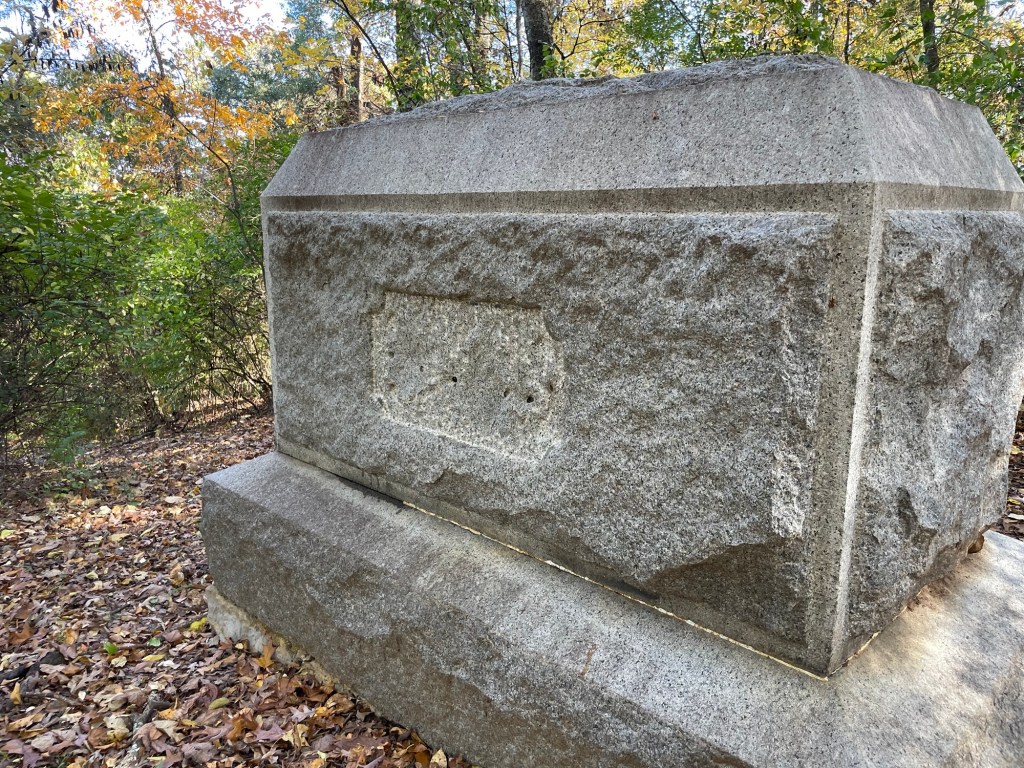
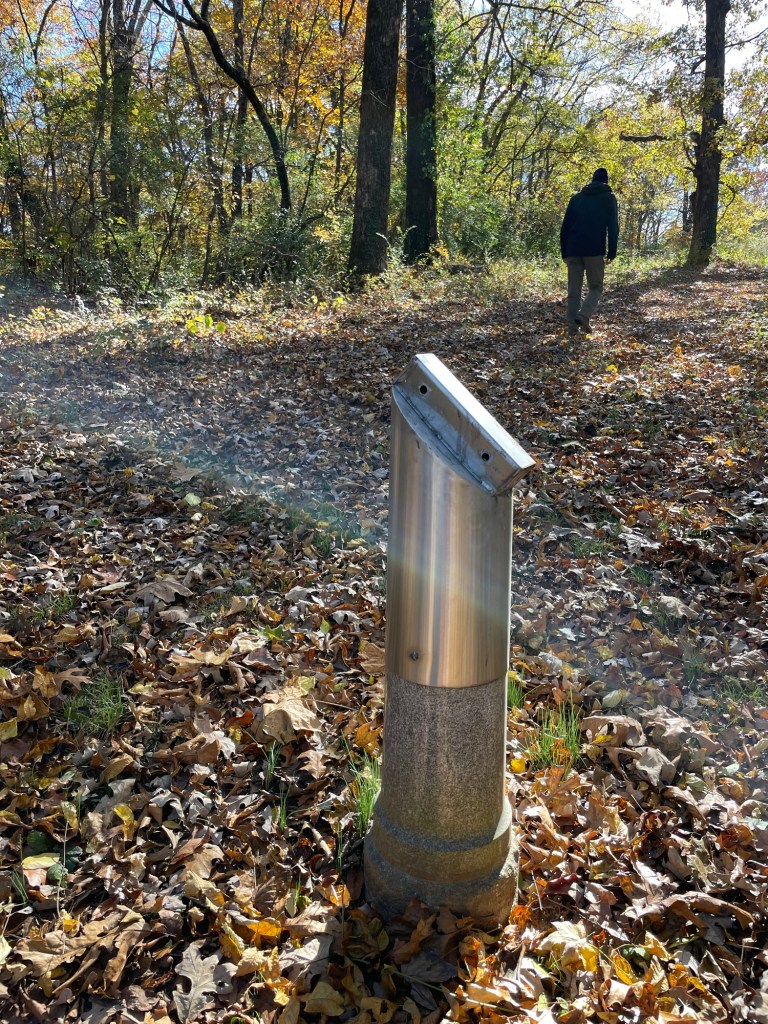

A few of the effects of another year’s government shutdown. Some people clearly have no sense of shame or decency.
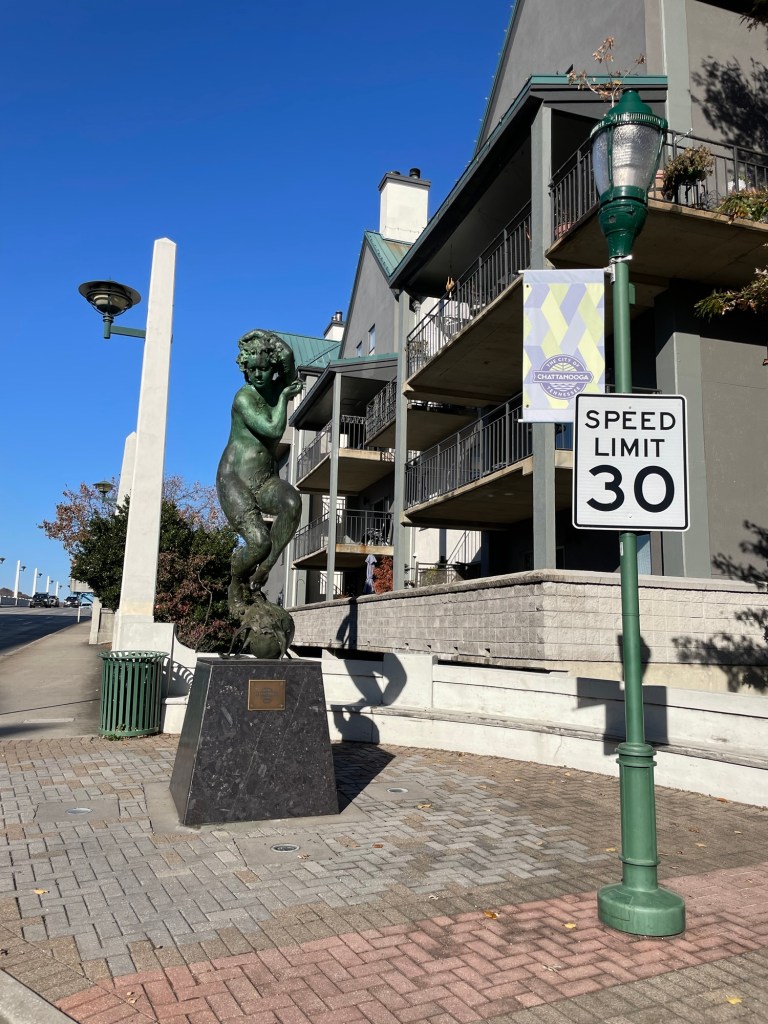
Finally, on the day that I had to get some bloodwork done, we wandered around the Chattanooga city center afterwards. While there’s nothing specific we could put a finger on, we both agreed that Chattanooga probably wasn’t for us. Not every place can be.
The day before we were scheduled to leave this campground, we saw that the government shutdown had ended. Finally! On the off chance that things had opened up already, we called ahead and learned that the Visitor Center at Chickamauga and Chattanooga National Military Park was indeed open. We packed up quickly and headed straight there.
Having seen so much of the physical sites, the introductory video and historical exhibits made so much sense. It acted as a ribbon tying all the pieces together. Seeing a diorama with a piece of equipment that I’d heard mentioned often but didn’t quite understand, I asked one of the park rangers for a brief explanation, knowing how much catch up work they likely have ahead of them.
What I got was a personal walk through, with visuals, of how the batteries were composed, what each of their pieces of equipment did, how many men and horses and cannon and munitions were needed for a complete fighting unit, and so much more. Afterwards, he even showed us an absolutely massive firearms collection that was donated to the Park, pointing out which guns were used during the Chickamauga and Chattanooga campaign, why the different guns styles mattered, and how they impacted the final outcomes.
Seriously, National Park Service staff are a class above. They often go out of their way to help you, clearly love the places they care for, and protect it all for us. For all of us. Indeed, that’s the beauty of our National Parks. They tell our story, the good the bad the pretty the ugly, and protect our most precious and unique landscapes. For all of us.
And in my opinion, that’s as good a reason as any why they shouldn’t be getting put through the financial, professional, and emotional wringer. Ever. Leave our National Park Service alone.

Leave a comment