
“It’s windy and there’s a cave,” as quipped by our tour guide, Ranger Franny.
Wind Cave National Park’s claim to fame is the fact that the cave system ‘breathes’ in and out of a small helmet-sized hole in the ground, adjusting the internal barometric pressure of the cave throughout the days and seasons. Winds in and out have been clocked as high as 70 mph. It’s also one of the most complex cave systems in the world, with nearly 100 miles of cave discovered, packed multiple levels deep, in an area that covers only slightly more than 1 sq mile.
There’s a long backstory on the modern history of the cave, and a wonderful Lakota creation story about it too. I’ll leave it to you to look them up, if you’re interested.
The National Park Service offers several tours daily; we took the Natural Entrance tour.

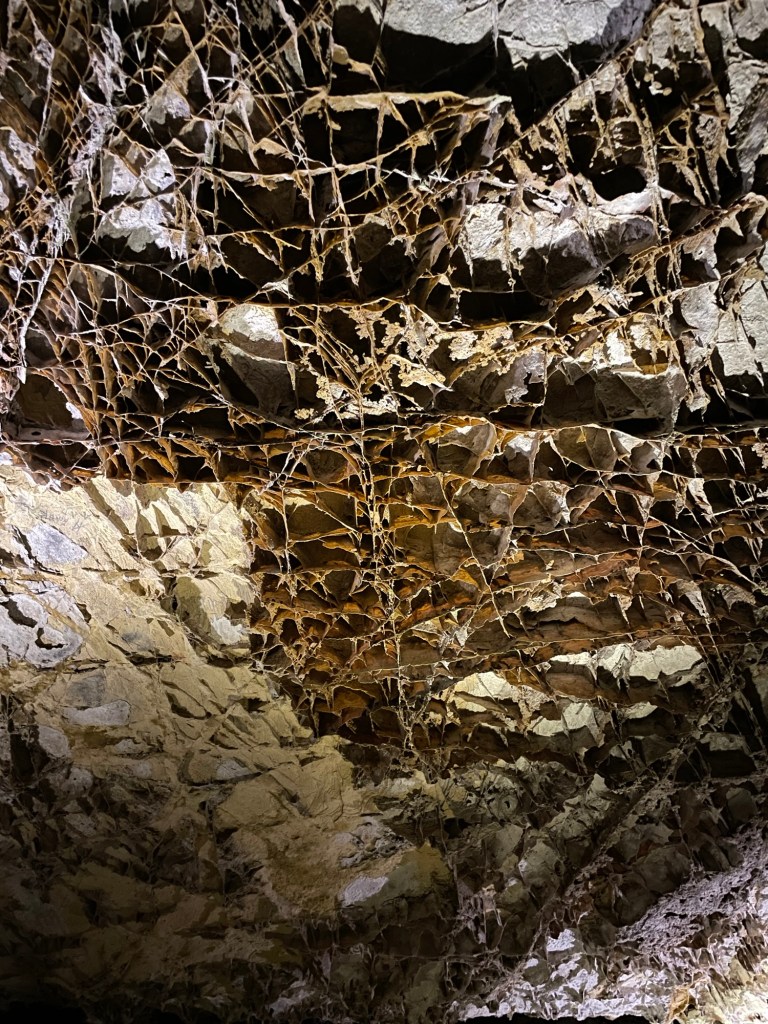
If you look below, you’ll see the extremely delicate boxwork formation for which these caves are famous. Almost all the boxwork found so far in the world is in Wind Caves. The flat yellow area you see on the left is what’s left over from decades of people taking home ‘a small souvenir’ when the property was in private hands. This kind of damage is in several sections. ‘Little bits’ really added up.
Right before our tour ended, one of the participants passed out, surprising us all. The Park’s medical system leapt into action and she was extracted in good shape, if a bit sheepish. Remember to eat before taking a tour, don’t lock your knees when you’re standing, and stay hydrated, folks.
After our tour, we set out to see the other half of the park, the wide and pristine mixed-grass prairie above it. It’s equally important and of great value to the nation. It protects several species, a fragile grassland habitat, and highlights the interconnectedness of the plants and animals living there.
Throughout our five nights at Elk Mountain Campground, we saw a maternal herd of bison with a primary bull and several lone males roaming around. It’s hard to express how massive these animals are, and how plodding they can appear (but are not).

We checked out a few different ‘good spots for viewing elk,’ such as the one below. We saw no elk. Our quest for elk continues, but with such a pretty landscape who can complain?

Because of some wildfire smoke drifting in, the sun hid for the first few days. It scattered the sun’s rays in a very pretty way and kept the temps down.

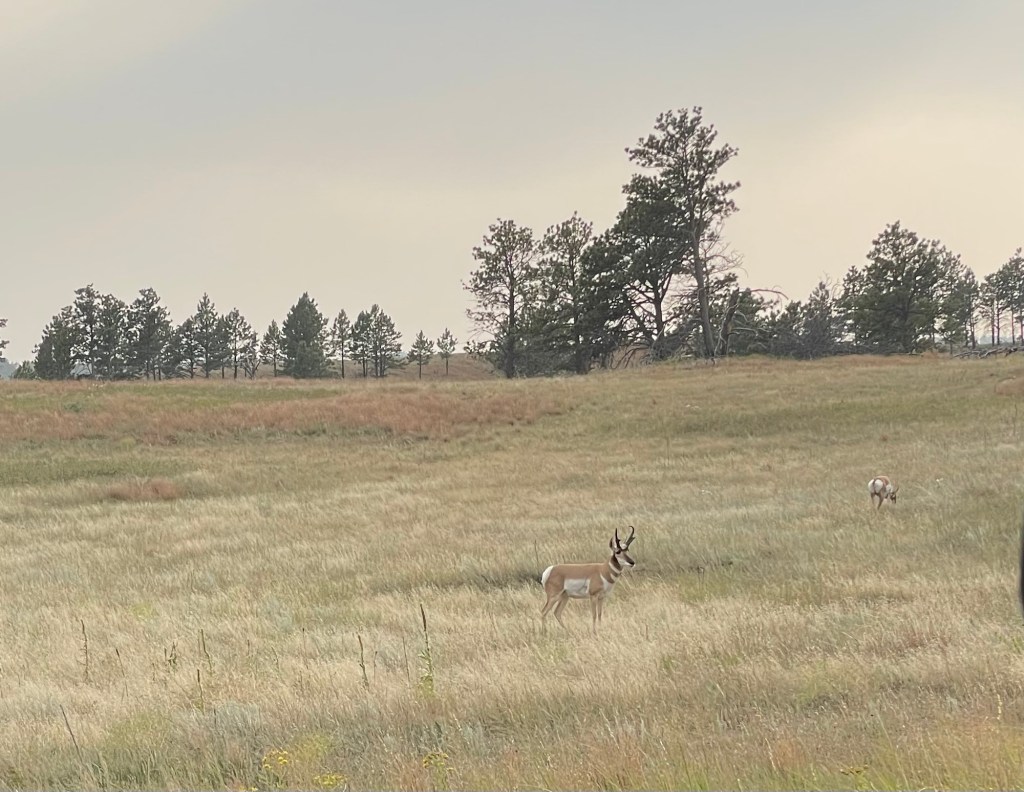
Pronghorn made a showing on the main road Friday, as did a coyote — slinking along the same field a day later. No mountain lion sightings to date. Here, kitty kitty!
A fire lookout on the far north section of the park, located up a ridge line, made for a pleasant walk on the day the sun returned.

The expansive grasslands, below, really came alive when the sun set, creating a golden-green carpet for this rainbow-colored moonrise a day before the full moon. We had walked up onto this plateau behind our campground to see if any animals were in the valley on the other side. A resident mule deer family was heading back into the forest for the evening, while the coyotes started their daily, evening calls to each other. That may have been my favorite part of each day at Wind Cave. There is something eternal, in the deepest sense, in those far-reaching calls.

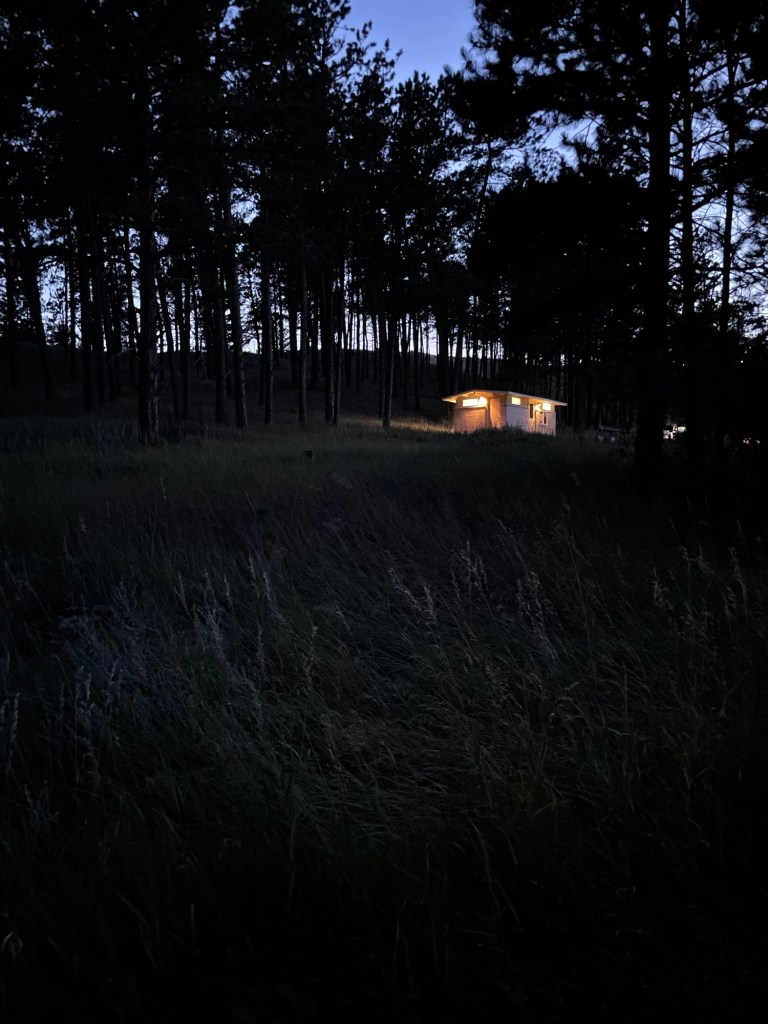
These lights glimmering in the dusk caught my eye one evening. Even a concrete bathroom on the edge of a forest is pretty with good lighting.
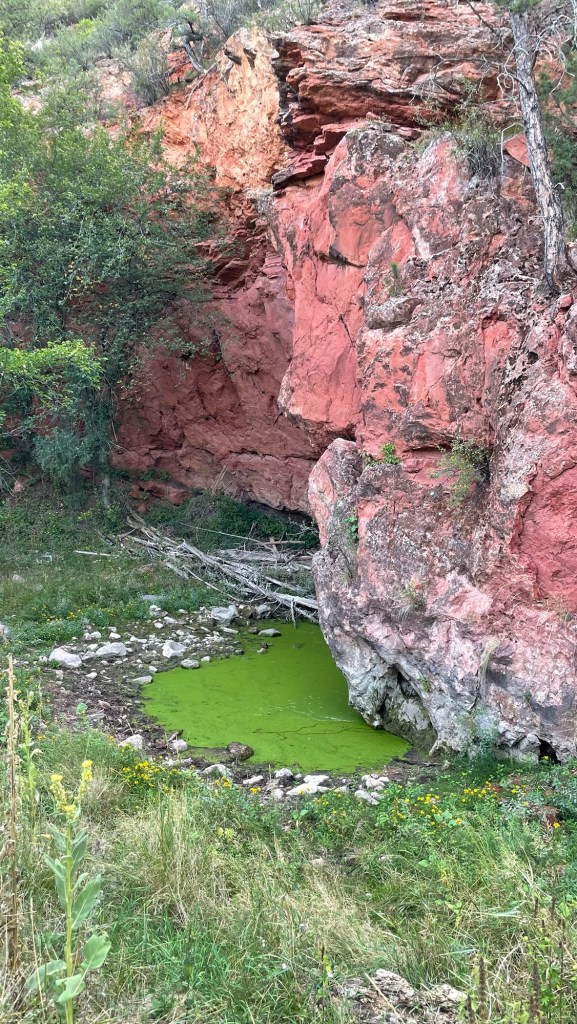
Our final hikes were to some cliffs to see the resident swallows, prairie falcons, and great horned owls. They alluded us as well — probably in cahoots with the elk! Instead we saw this great combination of red limestone and green algae.
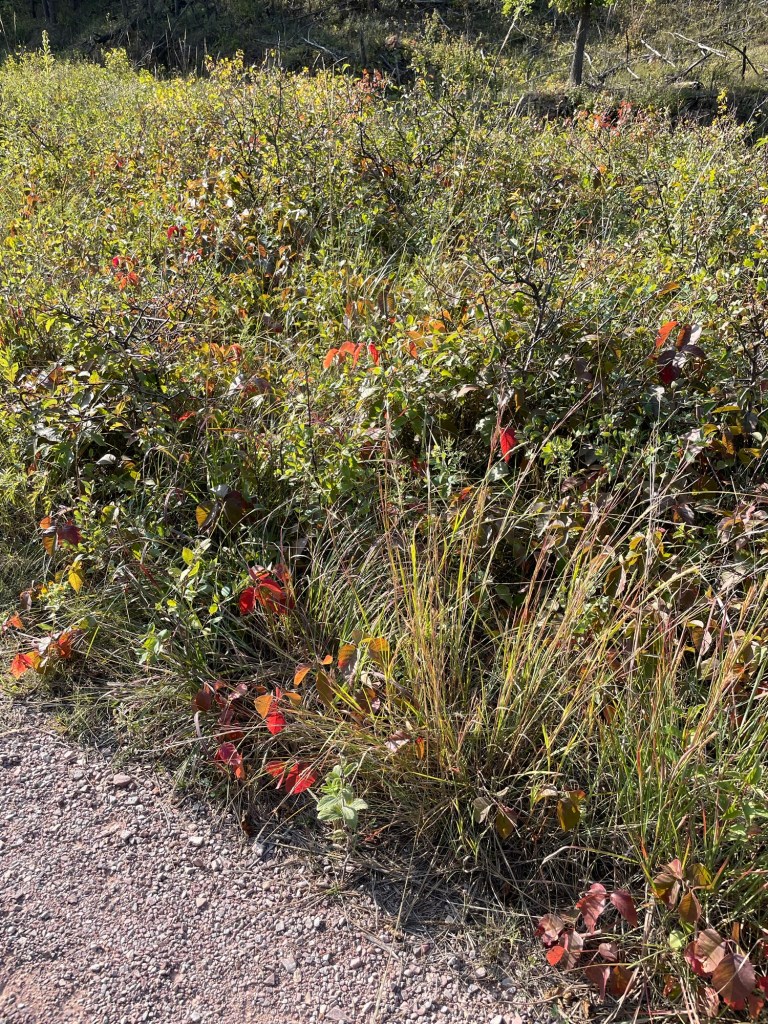
Thankfully the park’s copious amounts of poison ivy were starting to turn red with the approach of fall, so we were very cognizant of its location as we walked around. If I didn’t know better, I’d think the park planted it on purpose just to keep people on the paths. As a deterrent, it’s highly effective.
One animal we did see a lot of, and I mean A LOT OF, were prairie dogs. I know farmers and rancher hate them, but I love them. They yip yip yip in several different tones, stand up on their back feet to check things out, and scurry back to their dens after giving up all pretense of bravery when you come within their circle of comfort.
The little one below, though, couldn’t be bothered. Totally not impressed by the big two legged things. Yawn. Seen ‘em before. We got within two feet of it (while still on the trail) and it barely even looked up. That must be some Grade A grass it was munching.

On Saturday, we headed back into Hot Springs for showers, to do laundry, and to print off something at the library. I ended up on laundry duty and Jeff headed to the library. On the way back, we saw this frontier jail open to the public and had to stop in for a quick peak. The notice says it was found in the early 1980s, built into someone’s home, and was only found because they decided to do some renovations. In other words, someone built their house around the shell of the former jailhouse. Waste not, I guess. What an interesting piece of history. I’m glad they were able to save it.

(Oh, and we donated two more bags of odds and ends while in town.)


Leave a comment